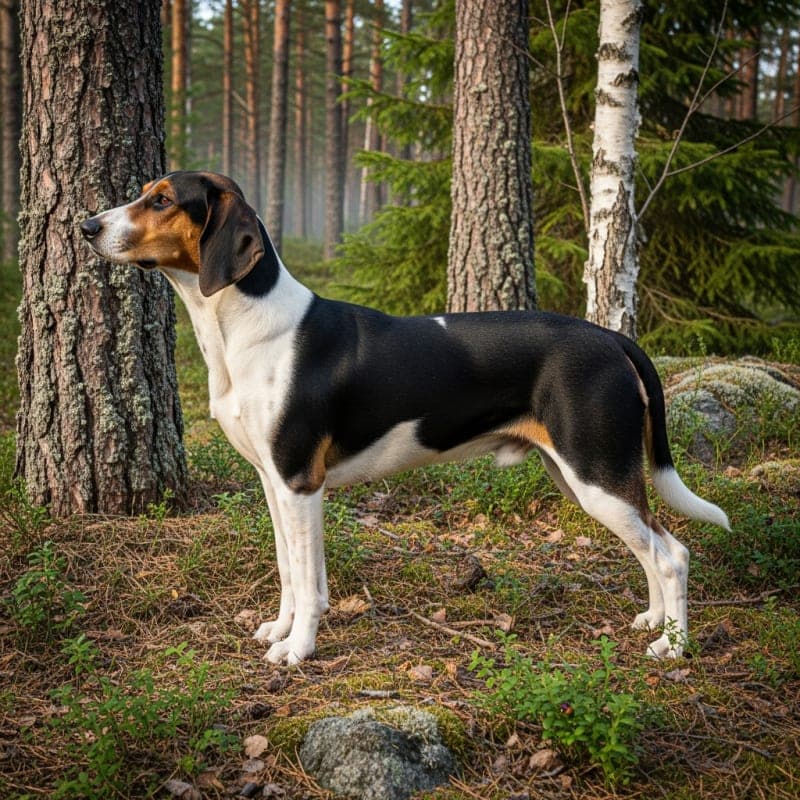
Drever
FCI Group
6• FCI 130
Size
Small
Origin Country
SE
Height
30-38 cm
Weight
14-16 kg
Lifespan
12-14 years
Temperament
Overview
The Drever, also known as the Swedish Dachsbracke, is a unique hunting dog breed that deserves special attention from hunting dog enthusiasts and active families. Bred in Sweden in the early 20th century, this energetic, balanced, and persistent dog has its roots deeply embedded in the history of Scandinavian hunting. As early as 1910, the Westphalian Dachsbracke arrived in Sweden from Germany, where it eventually evolved into the breed known today as the Drever. The official registration as a separate Swedish breed occurred in 1953, highlighting its long presence and significance in the northern European regions.
A characteristic feature of the Drever's appearance is its elongated body proportions and relatively short but strong limbs, which enable it to move efficiently across the challenging and varied terrain of Swedish forests, hills, and snowy areas. Thanks to this anatomical structure, the Drever is a superb tracker for hunters needing a dog capable of locating and following wild game such as deer, elk, foxes, or hares. Its short legs allow it to work at a pace suited to a hunter moving on foot, making it an ideal partner during hunts.
Despite its outstanding hunting skills, the Drever can also serve as a family companion, especially for those who value outdoor activity and understand the specifics of hunting breeds. What sets the Drever apart from other tracking dogs is its natural independence and confidence. It is not a typical social dog that will constantly seek human closeness or require constant attention. Instead, it respects its space and values the opportunity to work independently, making it a unique companion for experienced owners who understand the needs of working dogs.
Despite its independence, the Drever is intelligent and trainable, though it requires a consistent and patient approach. It learns quickly and adapts well to various living conditions, provided it receives the right amount of physical and mental activity. This is a dog that will certainly win the affection of those who can appreciate its unique working character and do not expect typical companion behaviors from it.
We invite you to further explore the Drever breed in our comprehensive guide, where we will discuss all the key aspects of this fascinating breed: health and longevity, coat care, exercise needs and activity, training methods, nutritional requirements, rich history, appearance standards, and character traits and behaviors. Each of these aspects will help you fully understand why the Drever is such a valued and unique representative of Scandinavian hunting dogs.
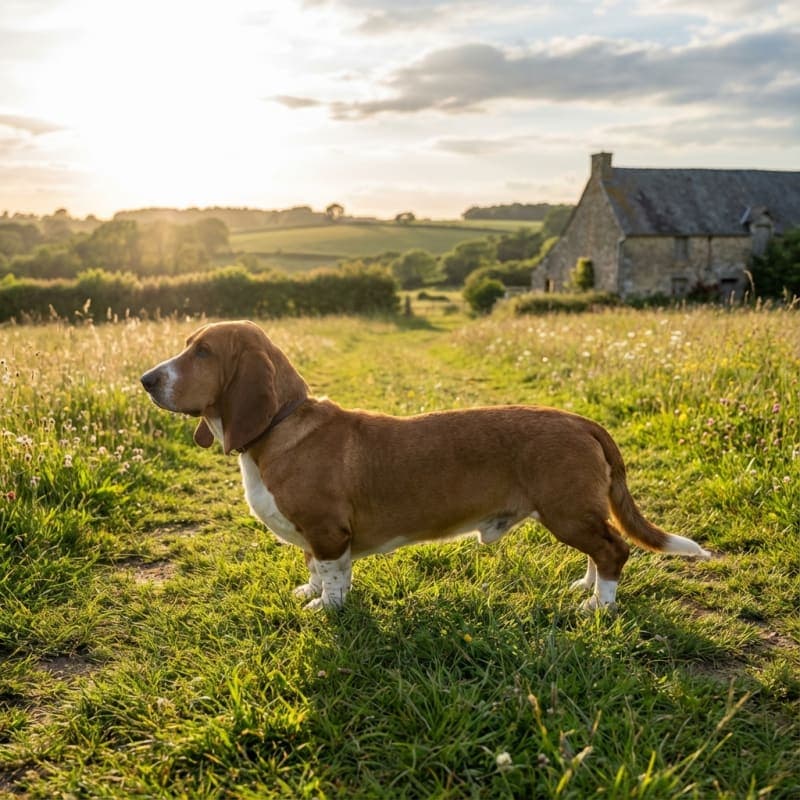
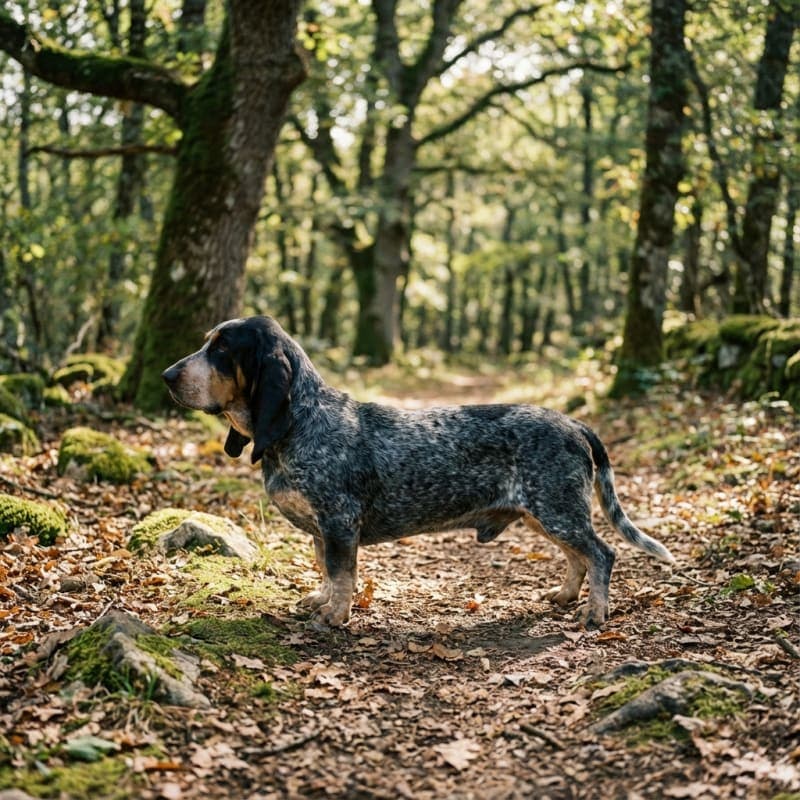
The Drever is a dog with a very characteristic and recognizable build, which combines features of a long, elongated body and relatively short, but strong and muscular limbs. Its stance is solid, compact, and definitely more strong than elegant, making it perfectly adapted for heavy work in the field. The silhouette should convey an impression of strength and endurance, rather than speed or agility.
Dimensions and proportions:
- Height at the withers: males 32-38 cm, females 30-36 cm (according to FCI standard)
- The distance from the ground to the chest should be about 40% of the height at the withers
- The length of the body exceeds the height, giving the dog elongated proportions
- Clear differences in build between males and females - males are noticeably larger and more massive
Head and skull: The head is proportionally large in relation to the body, with a long and gradually tapering muzzle. The stop (transition from forehead to muzzle) is clearly defined. The skull is slightly rounded, and the nose is always black with wide nostrils, which aids in excellent tracking skills.
Eyes: Dark, expressive and alert, of medium size. The gaze should be friendly, yet attentive and lively, reflecting the intelligence of the breed.
Ears: One of the most characteristic features of the Drever - set low, long and wide, hanging close to the cheeks. The ears should be flat, with rounded tips, covered with short hair.
Coat: Short, dense, rough to the touch, and closely adhering to the body. The coat length does not exceed 2.5 cm. The coat is weather-resistant, allowing the dog to work in various climatic conditions.
Coloration: All colors and combinations are allowed with distinct white markings, which are mandatory and constitute the breed's hallmark. White markings must be visible from all sides - from the front, back, and sides of the dog. Complete dominance of the white color is unacceptable. Typical are tricolor combinations: tricolor (black, brown, white), bicolor (red with white, black with white), and fawn shades with white markings.
Limbs: Strong, well-muscled, and perpendicularly set, providing the dog with stability and confidence in movement over difficult terrain. The front limbs are straight, with strong paws. The hind limbs are well angulated, with clearly defined hock joints.
Tail: Long, thicker at the base, tapering towards the end. Carried low or horizontally, it should never be carried curled over the back. In motion, it may be raised slightly higher.
The Drever is a dog with a balanced, composed temperament, combining traits of independence, confidence, and high working intelligence. It is a strictly hunting breed, which directly translates into its characteristic behavioral traits. The Drever is alert and attentive, but at the same time does not show aggression or excessive shyness towards people or other animals.
Character in relationships with people: The Drever is not a typically social or affectionate dog towards its owner. It is not a dog that will constantly seek affection or displays of love. Instead, it values its own space and acts in a more independent manner. It may be indifferent towards strangers, which does not mean aggression, but simply a lack of interest. This trait makes the Drever not the best guard dog - it will not alert with loud barking about strangers, although it will notice their presence.
Interactions with other dogs: The Drever usually gets along well with other dogs, especially if it has been properly socialized from a puppy. Its hunting roots make it accustomed to working in a pack, so it does not exhibit excessive dominance or problems with other canines. However, it is worth remembering that its strong tracking instinct may cause it to chase smaller animals if not properly trained.
Mental and physical needs: The Drever is a dog with very high exercise requirements. Without the appropriate amount of physical and mental activity, it can become destructive, restless, or develop behavioral problems. Its energy and hunting instincts require regular effort - daily long walks, opportunities to track scents, and free running. A dog confined in an apartment without access to a garden or area to explore will be unhappy and may destroy household items.
Leadership and training: The Drever needs a strong but fair leader who can channel its natural energy and hunting instincts. Without consistent upbringing, it may become stubborn and difficult to manage. It is intelligent and learns quickly, but requires patience, experience, and an understanding of the specifics of working breeds from its owner. This breed is not suitable for novice dog owners.
Ideal owner: The Drever is an excellent companion for active hunters or families leading a sporty lifestyle, with access to an area where the dog can move freely and work. It thrives best in rural or suburban conditions, where it has space to meet its natural needs. Families with children can coexist with it, provided the children are older and understand that the Drever is not a plush toy, but a working dog that requires respect for its space.
The Drever is generally a healthy, resilient, and long-lived breed, which is one of its main advantages. The average lifespan is between 12 and 15 years, which is a very good result for a hunting dog working in challenging terrain conditions. This breed evolved in the harsh climate of Scandinavia, making it naturally resistant to cold, moisture, and difficult weather conditions.
Resistance to climatic conditions: With its dense, short, and weather-resistant coat, the Drever does well in cool and variable climates. It can work in snow, rain, and frost without compromising its health. However, it is not a dog suited for extreme heat - on hot days, it requires access to shade and water.
Typical health issues:
- Ear infections - due to its long, drooping ears, the Drever is prone to bacterial and fungal infections of the ear canal. Dogs that spend a lot of time in the field, in bushes, tall grass, or water are particularly at risk. It is necessary to regularly check and clean the ears, especially after hunting or long walks.
- Elbow dysplasia - although it is not a common condition in this breed, some individuals may suffer from elbow joint dysplasia, leading to pain, lameness, and mobility issues. Responsible breeders should screen breeding stock for this condition.
- Injuries during hunting - as a working dog, the Drever is exposed to various mechanical injuries: cuts, abrasions, scratches from thorns, as well as tick bites. Owners actively hunting with their dogs should regularly check their bodies for wounds and parasites.
- Obesity - the Drever has a good appetite, and with insufficient activity, it can easily gain weight. Obesity puts a strain on the joints and heart, so weight control and a proper diet are crucial.
Prevention and veterinary care: Regular veterinary visits, vaccinations, deworming, and general health checks will keep the Drever in excellent condition for many years. It is also advisable to conduct periodic examinations of the joints, ears, and weight control. Dogs used for hunting should additionally be protected against ticks and fleas.
Recommendations for breeders: Responsible breeders should perform genetic testing and orthopedic examinations of the parents before breeding to minimize the risk of hereditary diseases in the offspring.
The care of the Drever is relatively simple and low-maintenance, which is an additional advantage of this breed, especially for those who appreciate uncomplicated dogs. The short, coarse, and dense coat of the Drever does not require intensive or specialized grooming, unlike long-haired breeds or those with a more delicate coat structure.
Brushing the coat:
- Regular brushing once a week is sufficient to keep the coat in good condition, remove dead hair, and minimize their presence in the home.
- During the intense shedding period (spring and autumn), it is advisable to increase the brushing frequency to 2-3 times a week to effectively remove undercoat and dead hair.
- It is best to use a brush with stiff bristles or a rubber grooming glove, which work well with short, close-lying hair.
Bathing: The Drever does not require frequent bathing. A bath every few months or in situations where the dog is particularly muddy after hunting or a long walk in difficult terrain is sufficient. Too frequent baths can remove the natural protective layer of the skin and lead to dermatological issues. It is important to use gentle shampoos designed for dogs with sensitive skin.
Ear cleaning: Due to their long, floppy ears, regular ear cleaning is crucial in the care of the Drever. One should:
- Check the ears at least once a week, especially after walks in the field, hunting, or contact with water.
- Remove accumulated dirt and wax using special dog ear cleaning solutions.
- Monitor for any unpleasant odor, excessive discharge, or redness - these may be signs of an infection requiring veterinary intervention.
Oral hygiene:
- Regular tooth brushing (2-3 times a week) prevents the formation of tartar, gum disease, and bad breath.
- Special dog toothpaste and brushes or oral hygiene gels can be used.
- Dental chews and chew toys also help maintain good dental health.
Nail care: If the Drever spends a lot of time on hard surfaces, the nails may wear down naturally. Otherwise, they should be trimmed every 3-4 weeks using special clippers or a nail grinder. Overly long nails can cause discomfort and walking problems.
Post-walk and hunting checks: After every activity in the field, it is advisable to:
- Check the dog's body for ticks, wounds, scratches, or thorns.
- Clean the paws of mud and check for any damage to the paw pads.
- Inspect the ears for foreign bodies (grass seeds, small stones).
The Drever is a dog breed with very high exercise requirements, which directly stems from its purpose as a hunting dog. It is a dog full of energy, endurance, and in need of daily, intense physical and mental activity. Without the appropriate amount of exercise, a Drever can develop serious behavioral problems, becoming destructive, restless, or hyperactive.
Minimum exercise requirements:
- At least 60-90 minutes of physical activity daily - this includes walks, running, scent tracking, and free play.
- Activities should be varied and mentally stimulating, not just monotonous circling around the area.
- Long walks in diverse terrain are ideal: forests, fields, hills, where the dog can freely explore scents and the environment.
Types of activities for the Drever:
- Walks and hikes - long, several-kilometer walks in forested areas where the dog can track natural scents and satisfy its hunting instincts.
- Running off-leash - the Drever loves to run freely in open spaces. It is important that it has access to a safe, fenced area where it can run without the risk of escaping in pursuit of a scent.
- Scent tracking and nose games - as a tracking dog, the Drever loves tasks that engage its sense of smell. Treats or toys can be hidden and the dog can be allowed to find them.
- Hunting - for dogs used for their intended purpose, hunting is the best form of activity, combining physical effort with mental fulfillment.
- Canine sports - mantrailing, nosework, or tracking are excellent activities for the Drever.
Housing conditions: The Drever is not a city or apartment dog. It feels best in rural or suburban conditions, where it has:
- Access to a garden or large area for free movement.
- The opportunity for regular trips to the field - forests, fields, mountains.
- Space to satisfy its natural needs for movement and tracking.
A dog confined in an apartment without access to a garden or area to explore will be unhappy, frustrated, and prone to destruction. It may destroy furniture, chew on objects, bark excessively, or try to escape.
Consequences of lack of exercise:
- Destructive behaviors - destroying furniture, scratching doors, chewing on objects.
- Hyperactivity - inability to rest calmly, constantly pacing around the house.
- Excessive barking - frustration expressed through loud behaviors.
- Attempts to escape - the dog may try to escape from the garden or during walks, seeking stimulation.
- Health problems - obesity, joint issues, decreased immunity.
Who is the Drever for: This breed is ideal for active hunters, athletes, outdoor lifestyle enthusiasts, and families living in rural or suburban areas who can provide the dog with at least 1.5-2 hours of daily activity. It is not suitable for elderly individuals, those who are less active, or those living in small apartments without access to walking areas.
Training a Drever requires patience, consistency, and experience in working with hunting breeds. Although the Drever is intelligent and capable of learning, its independent character and strong hunting instincts can pose a challenge for novice dog owners. The key to success is starting training early, using positive training methods, and establishing a clear hierarchy.
When to start training: Training for a Drever should begin as soon as the puppy arrives home, preferably at 8-10 weeks of age. The sooner rules and boundaries are established, the easier it will be to shape desired behaviors and prevent excessive independence or stubbornness.
Character traits affecting training:
- Intelligence - The Drever is a clever dog that quickly understands commands and new tasks.
- Stubbornness and independence - as a working dog, the Drever was bred to make decisions independently while tracking, which may lead to some resistance to absolute obedience.
- Strong hunting instinct - the scent trail may be more important to it than the owner's call, requiring special attention during recall training.
Training methods:
- Positive reinforcement - rewarding desired behaviors with treats, praise, and play yields much better results than punishment or coercion. The Drever responds well to positive motivation.
- Consistency - rules must be clear and unchanging. All household members should use the same commands and expectations.
- Short training sessions - it's better to conduct several 10-15 minute sessions daily than one long session that may bore the dog.
- Diversity - the Drever needs variety in exercises to maintain interest.
Key training areas:
1. Basic obedience commands:
- Sit, Lie Down, Stand - basic commands controlling the dog's position.
- Stay - particularly important for a hunting dog, which must be able to wait for a signal.
- Come / Here - the most important command for the dog's safety. It requires intensive training due to the strong tracking instinct.
- Leave it / No - prevents picking up dangerous objects or eating found food.
2. Socialization:
- Early exposure to various people, dogs, animals, places, and sounds is crucial for developing a balanced character.
- The puppy should experience positive interactions with other dogs in controlled conditions.
- Exposure to different environments: city, forest, parks, pet stores, visits to the veterinarian.
3. Leash walking:
- The Drever tends to pull on the leash, especially when it senses an interesting trail.
- Loose leash training requires time and consistency - the dog must learn that pulling does not lead to the goal.
- Training leashes or harnesses can be used to facilitate control.
4. Recall:
- This is the most challenging aspect of training a Drever due to its strong tracking instinct.
- Recall training must be intensive, positive, and regularly refreshed.
- Using high-value treats (meat, cheese) as motivation for returning is beneficial.
- Initially practice in controlled conditions (garden, fenced meadow), gradually increasing distance and distractions.
Challenges in training:
- Selective obedience - the Drever may obey commands when it benefits them but ignore them when it senses a trail.
- Distractions - smells and environmental stimuli can completely capture the dog's attention.
- Stubbornness - if the dog decides something is more important than the owner's command, it may ignore the call.
The role of the leader: The Drever needs a strong but fair leader who:
- Is consistent in demands and rules.
- Does not use violence or physical punishment but establishes clear boundaries.
- Understands the specifics of hunting dogs and does not treat them like companion dogs.
- Can motivate the dog to cooperate rather than force obedience.
Who it is suitable for: The Drever is not a breed for novice owners. It is best suited for experienced dog owners, hunters, or individuals who have previously worked with working breeds and understand their needs and training specifics.
Drever, as a working dog with high exercise requirements, needs a balanced, high-quality diet tailored to his activity level, age, and health condition. Proper nutrition is crucial for maintaining the condition, energy, and longevity of this breed.
Basic nutritional requirements:
- High-protein diet - As a hunting dog, Drever requires a large amount of high-quality protein (meat, fish, poultry) for muscle building and recovery. The optimal protein content in food is 25-30% for active dogs, 22-25% for less active ones.
- Fats - a source of energy for an active dog. The fat content should be 12-18%, depending on the activity level. Working dogs may require a higher fat content.
- Carbohydrates - provide energy but should come from good sources: rice, sweet potatoes, vegetables, not cheap grain fillers.
- Vitamins and minerals - support joint health, coat, skin, and overall immunity.
Types of feeding:
1. Dry food (kibble):
- Convenient, easy to measure and store.
- Choose premium or super-premium foods without artificial preservatives, colorings, and cheap fillers.
- Check the ingredients - the first ingredients should be meat or fish, not grains.
- Adjust to the dog's size - food for medium-sized dogs.
2. Wet food (cans, pouches):
- More palatable, contains more water.
- May be more expensive and less convenient to store.
- Good as a supplement to dry food or for dogs that drink little.
3. BARF diet (raw meat):
- A natural diet based on raw meat, bones, vegetables, and fruits.
- Requires knowledge and time to balance properly.
- Benefits: better coat condition, teeth, less feces.
- It's worth consulting with a veterinarian or a dog nutrition specialist.
4. Home-cooked diet:
- Cooked meat with vegetables and rice/buckwheat.
- More challenging to balance, requires supplementation of vitamins and minerals.
Amount of food:
- Depends on: age, weight, activity level, individual dog's metabolism.
- An adult Drever (about 15 kg) typically needs 250-350 g of dry food per day or the equivalent in wet/BARF food.
- Very active dogs (working, hunting) may require 20-30% more calories.
- Older or less active dogs require less to avoid obesity.
Feeding frequency:
- Puppies (up to 6 months) - 3-4 meals a day, puppy food for medium breeds.
- Young dogs (6-12 months) - 2-3 meals a day.
- Adult dogs (over 12 months) - 2 meals a day (morning and evening).
- Older dogs (over 7-8 years) - 2 meals a day, senior food with lower calories.
Weight control:
- Drever has a good appetite and can easily gain weight, especially with insufficient activity.
- Obesity puts stress on joints, heart, and shortens the dog's life.
- Regularly check the dog's condition: ribs should be felt under a thin layer of fat, a clear waist seen from above, a tucked belly seen from the side.
- Weigh the dog monthly and adjust food portions as needed.
Water:
- Constant access to fresh, clean water - a key element of nutrition.
- Change the water at least once a day.
- Active dogs, especially on warm days, need more water.
PROHIBITED products for dogs:
- Chocolate, cocoa, coffee, tea (theobromine - toxic to dogs)
- Onion, garlic, leek (damage red blood cells)
- Grapes, raisins (kidney damage)
- Avocado (toxic)
- Poultry bones (can splinter and cause blockages)
- Sweets with xylitol (deadly toxic)
- Alcohol, salt in large amounts
Supplements and additives:
- Flaxseed or salmon oil - supports skin and coat health, add 1 teaspoon to meals several times a week.
- Glucosamine and chondroitin - support joint health, especially in older or heavily working dogs.
- Probiotics - support healthy gut flora.
- Consult with a veterinarian before introducing supplements.
Special dietary needs:
- Working/hunting dogs - require food with higher calories and protein/fat content.
- Older dogs - senior food with fewer calories but higher fiber content and joint-supporting ingredients.
- Dogs with allergies/intolerances - hypoallergenic food with a limited number of ingredients, e.g., lamb with rice, salmon with sweet potatoes.
Consultation with a veterinarian: It is advisable to consult with a veterinarian to determine the optimal diet for a specific dog, taking into account his individual needs, activity level, and any health issues.
Characteristic Traits
Pros
- Balanced and composed temperament
- Excellent tracker in difficult terrain
- Resilient and resistant to harsh conditions
- Healthy and long-lived breed
- Uncomplicated coat care.
Cons
- Independent and less social character
- Very high exercise requirements
- Requires a lot of space and terrain
- Strong hunting instinct that is difficult to control
- Not suitable for novice owners.
Behavioral Ratings
Breed History
The Drever has a fascinating and relatively young history that dates back to the early 20th century and is closely linked to the development of hunting in Scandinavia. This breed originated in Sweden as a result of adapting imported German hunting dogs to the specific climatic and terrain conditions of northern Europe.
Beginnings - import of the Westphalian Dachsbracke: In 1910, small hunting dogs were brought to Sweden from Germany, known as the Westphalian Dachsbracke (Westfälische Dachsbracke). They were short-legged, long tracking dogs primarily used for hunting small game in dense forests and difficult terrain. The first dogs of this breed were officially registered in Swedish breeding books in 1913, although little is known about the breeding and use of this breed before 1930.
The 1930s - growing popularity: Since the 1930s, the Westphalian Dachsbracke began to gain a reputation as an excellent tracker of roe deer and elk in Swedish forests. During this period, the population of wild game, particularly roe deer, was relatively small, but over time it began to grow and spread further north in the country. Hunters quickly discovered that short-legged tracking dogs had a significant advantage in working on Swedish terrain - their slow yet persistent and methodical tracking allowed the hunter to keep up with the dog on foot while maintaining the game at a pace that enabled a precise shot.
1947 - the birth of the name Drever: As the breed developed in Sweden, breeders noticed that the Swedish variety was slightly larger than the original German - about 2 cm taller at the withers. These differences in structure and the growing breeding distinctiveness led to the decision to give the Swedish variety its own unique name. In 1947, the Swedish variety of Dachsbracke was officially named Drever, which in Swedish refers to the word driva (to drive, to urge), alluding to the way the dog works - slowly yet steadily driving the game towards the hunter.
1953 - recognition as a separate breed: In 1953, the Drever was officially recognized by the Svenska Kennelklubben (Swedish Kennel Club) as a separate Swedish hunting dog breed. This was a pivotal moment in the breed's history, confirming its distinctiveness from its German ancestor and establishing it as a national Swedish breed. The Drever quickly became the most important and popular hunting dog in Sweden, particularly valued for hunting roe deer and elk, but also used for tracking hares and foxes.
International recognition - FCI: The Drever was recognized by the International Canine Federation (FCI) as a Scandinavian breed and classified in Group 6 (Scenthounds and related breeds) Section 1.3 (Small scent hounds). The FCI breed standard number 130 specifies detailed requirements regarding the appearance, structure, and character of the Drever.
Drever as a strictly hunting dog: What distinguishes the Drever from many other hunting breeds is its almost exclusive use as a working dog. Unlike many other hound breeds that have become companion dogs over time, the Drever has remained primarily a hunting dog. In Sweden, it is rarely seen as an ordinary companion dog - most Drevers actively work in the field during hunts or participate in working trials.
Drever in modern times:
- In Sweden, the Drever remains one of the most popular hunting breeds, and breeding is strictly controlled to maintain working traits.
- The breed is commonly used for hunting roe deer, elk, foxes, and hares throughout Scandinavia.
- Outside Scandinavia, the Drever is relatively rare, although it is gaining some popularity in other European countries among hunting enthusiasts.
- Breeders are committed to preserving the working traits of the breed, and working trials are often a requirement for dogs permitted for breeding.
Working character of the breed: The Drever was bred as a slow and methodical tracking dog that drives the game towards the hunter at a pace allowing the hunter to keep up on foot. This trait sets it apart from fast hounds that chase game at high speed. The Drever's work is calm, persistent, and very effective in the challenging, dense forest terrain typical of Scandinavia.
The future of the breed: The Drever remains a vibrant, working breed with strong hunting traditions. Its future is closely tied to maintaining working traits and continuing the traditions of Scandinavian hunting. Through conscious breeding and attention to functionality, the Drever will undoubtedly remain one of the most valued hunting dogs in northern Europe.