Small Münsterländer
FCI Group
7• FCI 102
Size
Medium
Origin Country
DE
Height
54-56 cm
Weight
18-27 kg
Lifespan
12-14 years
Temperament
Overview
Small Münsterländer is a unique dog breed that attracts attention with its versatility and friendly disposition. Originating from Germany, this medium-sized hunting dog is valued for its unmatched hunting abilities. Its history dates back to the 19th century when these dogs were bred in the Münsterland region for hunting purposes. Thanks to its intelligence and energy, the Small Münsterländer can perfectly combine hunting duties with the role of a family companion.
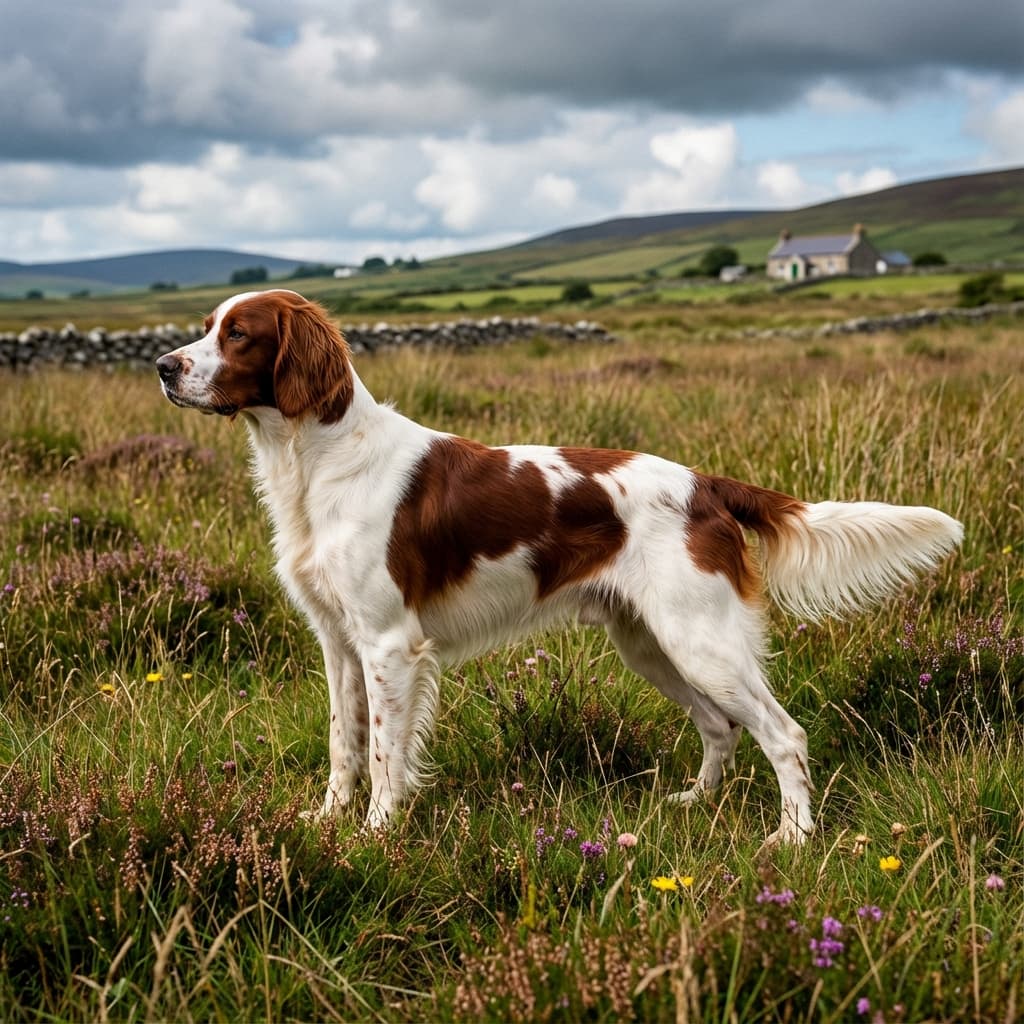
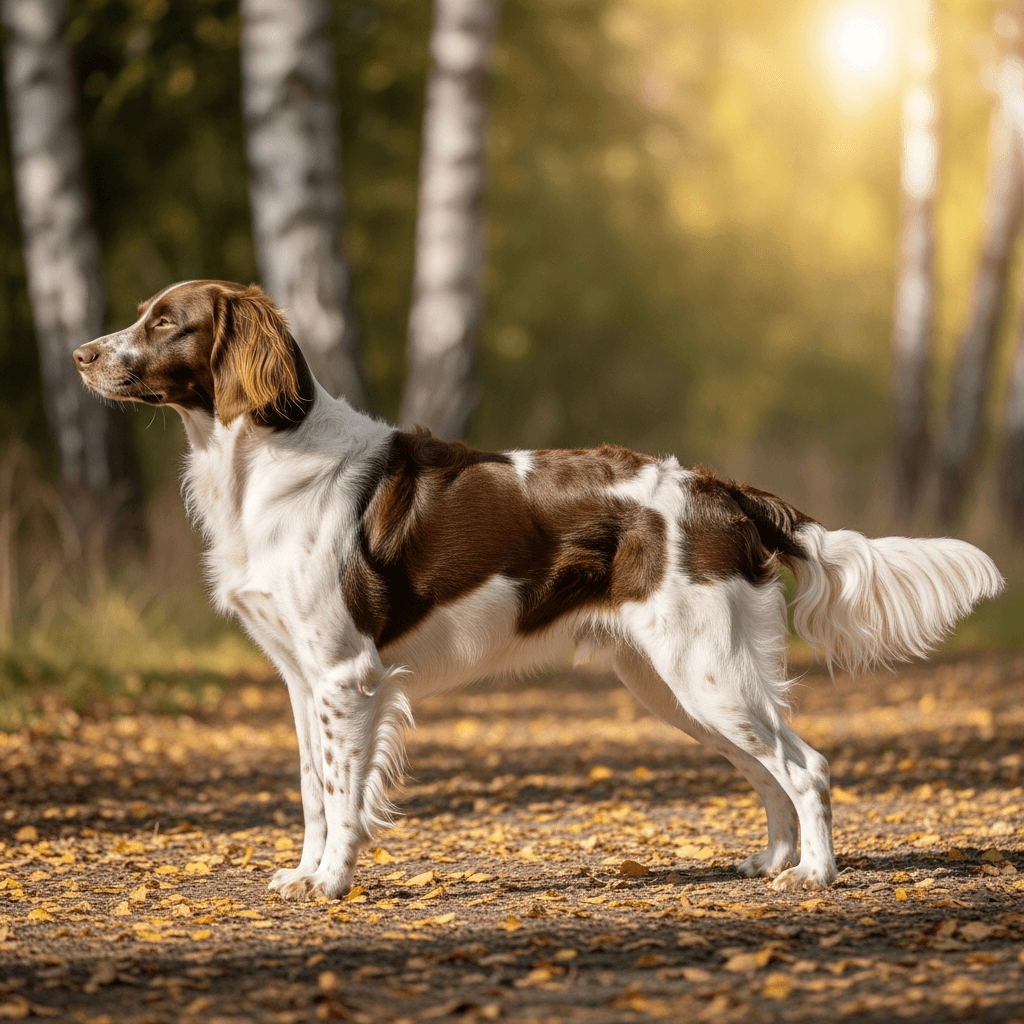
The Small Münsterländer has a harmonious body structure, making it an ideal companion both in the field and at home. Its shiny, dense coat, usually brown with white patches, adds to its elegance. Balanced body proportions and a noble head with medium-sized brown eyes make it a truly charming dog. Its wide, close-fitting ears are another element of its charm.
Collaboration with the owner is one of the main character traits of this breed. Its ease of training makes the Small Münsterländer an excellent dog for tasks in the field, forest, or water. However, its strong hunting instinct requires appropriate physical and mental stimulation. Therefore, owners should ensure that it gets enough exercise to avoid behavioral problems. The Small Münsterländer is a dog full of energy but also emotionally stable, making it an ideal choice for families.
Although this breed is known for its gentle character, one should not forget about its needs. Owners must dedicate time to regular exercise and activities so that the dog can fully utilize its potential. All these traits make the Small Münsterländer an ideal partner for both work and family life.
The small münsterländer is a medium-sized dog with a harmonious and balanced silhouette. The height at the withers is about 56 cm for males and 54 cm for females, with an allowable deviation of +/- 2 cm. This breed is characterized by a strong, well-muscled body structure, which emphasizes their suitability as hunting dogs.
The head of the small münsterländer is noble, with a slightly flat or slightly arched skull. The stop is only slightly pronounced, giving the dog an elegant appearance. The nose is uniformly brown, and the muzzle is long and strong, with a straight bridge of the nose. The lips are short and well-fitting, and the teeth are strong and regular. The eyes are brown, of medium size, which adds expressiveness to the dog.
The ears are wide, set high, close to the head, tapering towards the ends, giving them a distinctive appearance. The neck is strong and slightly arched, harmonizing with the rest of the body. The torso is strong, with a distinct withers and a well-muscled back. The chest is deep, and the line of the belly is elegantly drawn up.
The tail of the small münsterländer is of medium length, thick at the base, tapering towards the end. When at rest, it is carried low, while in motion, it is slightly raised above the line of the back. The coat is dense, of medium length, slightly wavy, and water-resistant, making it ideal for work in difficult weather conditions. The most common coloration is brown with white patches, but other color combinations may also occur.
The small münsterländer is a dog that certainly attracts attention with its elegant appearance and balanced proportions, and its overall look reflects its hunting utility.
The Small Münsterländer is a dog with a friendly and sociable temperament, making it well-suited for family life. These dogs are known for their intelligence and willingness to cooperate with their owner, which makes them easy to train. Their high intelligence and strong hunting instinct mean they are energetic animals that require plenty of exercise and mental stimulation to be happy.
Small Münsterländers are usually very friendly towards people, including children, making them ideal companions for families. Their moderate tolerance for solitude means they do not cope well with long periods spent alone. Owners should strive to provide their dog with an appropriate amount of social interaction and activities to avoid behavioral issues such as separation anxiety.
Although they are sociable dogs, Small Münsterländers can exhibit a strong hunting instinct, which means they may chase small animals if not properly socialized and trained. Owners should be aware of this trait and provide their dog with the right conditions for learning to manage their hunting instincts.
These dogs are also known to be quite vocal, which can be problematic in some situations. Small Münsterländers tend to bark at sounds they perceive as suspicious, making them less ideal as guard dogs but great as companions.
Overall, the Small Münsterländer is an active, friendly, and intelligent dog that requires an adequate amount of exercise and mental stimulation to lead a healthy and happy life. With their temperament and skills, they make excellent hunting dogs and wonderful family companions.
The small Münsterländer is a breed of dog that generally enjoys good health, but like any breed, it can be prone to certain conditions. The average lifespan of these dogs is between 12 to 14 years, and their overall health is quite good. They are strong and resilient dogs, which makes serious health issues rare. However, there are some health concerns that owners should be aware of.
One of the most common health problems that small Münsterländers may encounter is ear infections. Due to their long, drooping ears, they can trap moisture, which promotes the growth of bacteria and fungi. Owners should regularly check their dogs' ears and maintain their cleanliness to prevent these infections.
Another issue to be aware of is hip dysplasia. This genetic condition can lead to pain and difficulty in movement. Owners should pay attention to any signs of discomfort in their dogs, such as difficulty getting up, limping, or avoiding activity. Regular veterinary check-ups can help in the early detection of this problem.
Small Münsterländers can also suffer from skin infections, which may be caused by allergies or inadequate grooming. Owners should monitor any changes in their dogs' skin and consult a veterinarian if any problems arise. Overall, with proper care and regular veterinary visits, small Münsterländers can lead healthy and happy lives.
Grooming a small Münsterländer is an essential part of caring for its health and comfort. This breed has medium-length, dense fur that may be slightly wavy. Regular brushing is necessary to remove dead hair, dirt, and debris that can accumulate in the coat, especially after walks in the field. It is recommended to brush at least 2-3 times a week to keep the coat in good condition and prevent matting.
The small Münsterländer does not shed excessively, which makes grooming not too time-consuming. However, owners should be aware that the coat of this breed can collect leaves, dirt, and seeds, so it is advisable to regularly check for any debris in the fur, especially after outdoor walks. In the case of larger dirt, such as mud, the dog should be washed with a mild, hypoallergenic shampoo to avoid irritating its skin.
In addition to brushing and occasional bathing, it is also important to care for the ears of the small Münsterländer. Their long, drooping ears can be prone to infections, so they should be regularly checked for dirt and excess wax. If necessary, the ears can be gently wiped with a damp cotton ball.
Other grooming aspects include regular nail trimming to prevent overgrowth and dental care, which can be achieved through regular brushing or providing the dog with chew bones. Proper grooming not only affects the dog's appearance but also its health and well-being.
The small Münsterländer is a breed of dog that requires a lot of movement and activity. As a hunting dog, it has a natural need for exploration, running, and hunting, which means that owners should provide it with a daily dose of physical exercise. Ideally, this dog should have the opportunity to spend time outdoors, where it can run, play, and explore its surroundings.
It is recommended that a small Münsterländer has at least 1-2 hours of intense exercise each day. This can include long walks, running, playing fetch, as well as various sports such as agility or obedience. This dog will also enjoy water activities, such as swimming. With such activity, the dog will not only expend excess energy but also strengthen the bond with its owner.
Lack of adequate exercise can lead to behavioral problems, such as excessive barking, furniture destruction, or hyperactivity. The small Münsterländer is a dog that can be very active and joyful, but only when its exercise needs are met. Owners should be prepared to engage in various forms of physical activity and mental stimulation to ensure the dog has a healthy and happy life.
The small Münsterländer is a dog breed characterized by high intelligence and a willingness to learn, making it relatively easy to train. Owners should start training as early as possible, preferably at the age of 2-3 months. Early training is crucial to prevent the development of behavioral problems that may arise if the dog is not properly socialized and trained.
During training, it is important to use positive reinforcement methods, such as rewards in the form of treats, praise, or play. Small Münsterländers respond best to a gentle approach that emphasizes their desire to please their owner. The dog will be more inclined to learn if it feels that its efforts are appreciated and rewarded.
As a hunting breed, the small Münsterländer often exhibits natural abilities for tracking and retrieving, which can be utilized during training. Owners can introduce a variety of exercises to develop the dog's skills, such as retrieving, scent tracking, or following commands. It is important that the training is varied and tailored to the dog's needs to avoid monotony that could discourage the dog from learning.
Furthermore, it is essential to provide the dog with appropriate socialization with other animals and people. This will help the dog learn how to behave in different situations and become more balanced. Owners should also ensure that training is fun for both the dog and themselves. Training should be enjoyable and satisfying, which will build a strong bond between the dog and its owner.
The small Münsterländer, as a breed of hunting dogs, has relatively high nutritional needs that depend on their level of activity and age. Proper nutrition is crucial for maintaining the health and condition of the dog. Owners should place special emphasis on the quality of the food to ensure the dog receives an adequate amount of nutrients, vitamins, and minerals.
It is recommended that the diet of the small Münsterländer consists mainly of high-quality dog food that contains animal protein as the main ingredient. Protein is essential for muscle building and tissue regeneration, which is particularly important for active dogs. Additionally, the diet should include healthy fats, carbohydrates, and fiber, which support the proper functioning of the body.
Owners should adjust the amount of food given to the dog's level of activity. Too much food can lead to obesity, which is especially dangerous for hunting dogs that need to be in good physical condition. Conversely, too little food can lead to nutritional deficiencies. Regular consultations with a veterinarian can help determine the optimal diet for the dog.
It is also important to ensure that the dog has constant access to fresh water. Proper hydration is crucial for the dog's health, especially after intense exercise. Owners can also diversify their dog's diet by introducing fresh fruits and vegetables, which are sources of vitamins and fiber. However, before introducing new foods into the diet, it is always advisable to consult with a veterinarian to ensure they are safe for the dog.
Characteristic Traits
Pros
- Versatility in hunting
- Ease of training
- Friendly disposition
- Excellent family dog.
Cons
- Needs a lot of exercise
- Strong hunting instinct
- Requires regular mental stimulation.
Behavioral Ratings
Breed History
The small Münsterländer has a rich history that dates back to the late 19th century. This breed was developed in the Münsterland region of Germany, where hunters began crossing large Münsterländers with various breeds of spaniels to create versatile hunting dogs. The goal of the breeding was to produce a dog capable of working both on land and in water and possessing a strong hunting instinct.
In 1912, the Association for Small Münsterländer was established, aimed at preserving the breed and promoting it as a distinct group of hunting dogs. Dr. Friedrich Jungklaus, one of the first breeders, developed the first breed standard, which has since undergone continuous improvement. Over the years, the small Münsterländer has become one of the most sought-after hunting breeds in Europe and North America.
Thanks to its exceptional abilities, such as tracking, retrieving, and following commands, the small Münsterländer has gained a reputation as a versatile hunting dog. This breed has been and continues to be eagerly used for waterfowl hunting, as well as in other areas of hunting. Modern small Münsterländers are valued not only for their hunting skills but also for their friendly temperament, making them excellent family dogs.
Today, the small Münsterländer is recognized by the Fédération Cynologique Internationale (FCI) and is classified as a hunting dog. This breed enjoys great popularity among hunters and families looking for an active, intelligent, and devoted companion. Their history and development are a testament to how a passion for hunting can lead to the creation of a wonderful dog that combines both skills and a friendly disposition.