Russian Borzoi Chart
FCI Group
10• FCI 193
Size
Large
Origin Country
XX
Height
68-85 cm
Weight
27-48 kg
Lifespan
8-10 years
Temperament
Overview
Russian Borzoi, also known as Russkaya Psovaya Borzaya, is a dog of extraordinary elegance and dignity. It originates from Russia, and its history dates back to the 15th century. During the Mongol invasions, Russian hunters needed dogs capable of hunting game by sight.
As a result of crossbreeding with Tatar greyhounds, the Borzoi was created, which gained popularity due to its effectiveness and grace. Over time, through further crossbreeding with Polish greyhounds, the Borzoi took on the form we know today. Its aristocratic lineage makes it one of the most recognizable breeds of greyhounds in the world.
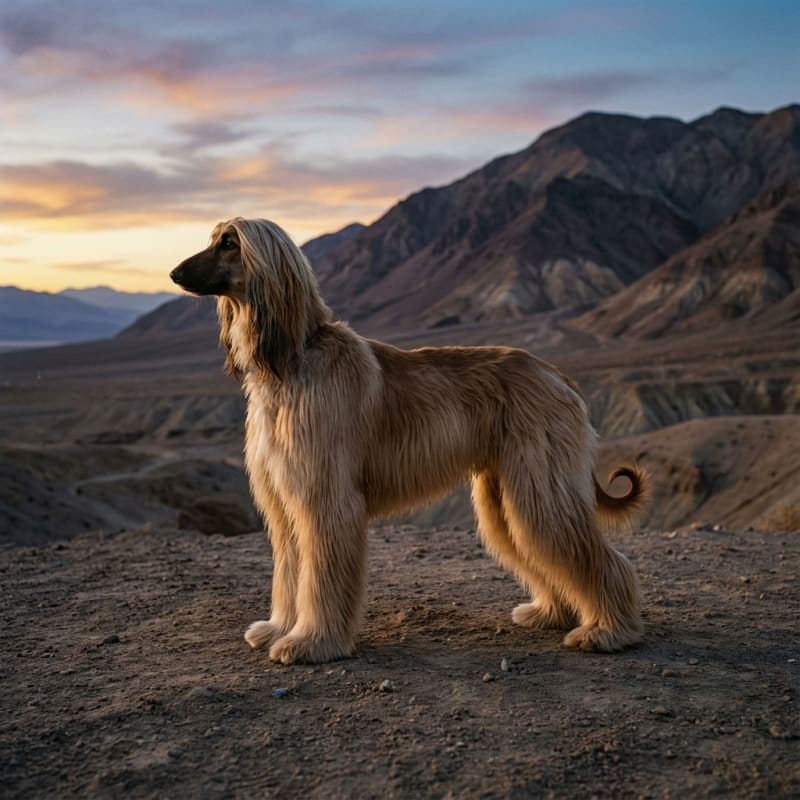
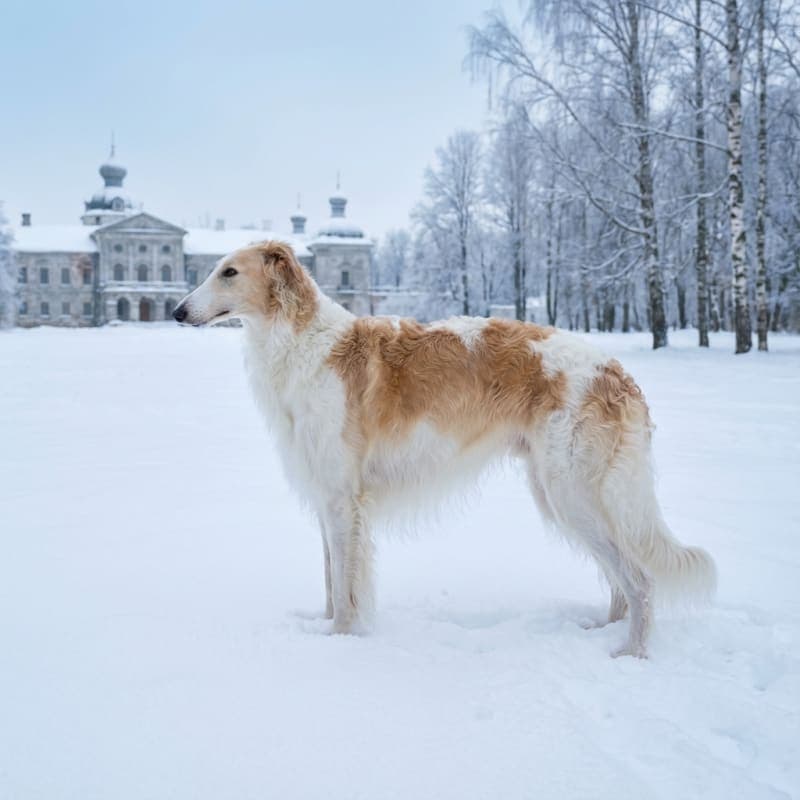
Male Borzois reach a height of 75 to 85 cm, while females range from 68 to 78 cm. Its slender silhouette and well-developed muscles give it an aristocratic appearance. A characteristic feature of this breed is its long, silky coat, which comes in various shades - from white, through fawn, to gray and black.
The head of the Borzoi is long and narrow, and its almond-shaped eyes add to its expressiveness. The dry, muscular neck and strong limbs allow it to achieve impressive speeds while hunting, which is one of its greatest assets. Its long, heavily feathered tail adds extra charm in motion.
The Russian Borzoi is sensitive to weather conditions, which requires special attention from the owner both in summer and winter. It is a dog that needs plenty of space to run, making it ideal for homes with large gardens. Its gentle temperament makes it get along well with family and children, although it may be wary of strangers.
It requires patient upbringing and time to adapt to new conditions, making it an ideal companion for patient owners. The Borzoi is a dog full of contradictions - on one hand, an incredibly fast and effective hunter, and on the other, a gentle family companion.
To better understand this unique breed, we invite you to continue reading our guide, where we will discuss in detail aspects related to the health, grooming, activity, training, diet, history, appearance, and behavior of the Borzoi.
The Borzoi is a dog with a refined appearance that exudes elegance and strength. Its silhouette is slender, and its body proportions are harmonious. Height at the withers ranges from 75 to 85 cm for males and from 68 to 78 cm for females, making it one of the taller representatives of sighthounds.
The body is long and narrow, with well-developed muscles that emphasize its athletic build. The head is long and narrow, with a distinct nose that is always black. The eyes are almond-shaped and are usually dark brown, giving the dog a striking, intelligent look.
The ears are small, thin, and mobile, set high on the head. The neck is long and muscular, and the torso is slender, with a well-defined chest. The line of the back forms a gentle arch, which is characteristic of hunting sighthounds.
The tail is long and thin, with a rich plume that adds lightness to its movement. It is carried low, and during running, it can be raised like a saber. The Borzoi's coat is long, silky, wavy, or forms loose curls, especially on the neck, belly, and hind legs.
The coloration can be diverse - from white, through red, gold, gray, to black, often with beautiful combinations of colors. Each Borzoi is unique not only in character but also in appearance. Their appearance is not only aesthetic but also functional, making them ideal hunting dogs capable of fast running over long distances.
The Borzoi is a dog with a unique temperament, combining gentleness with a natural hunting instinct. It is usually calm and balanced at home, but the moment it spots prey, its behavior undergoes a dramatic change. The hunting instinct is extremely strong and deeply rooted in this breed.
As a hunting dog, the Borzoi is characterized by a high hunting instinct and a strong drive for prey, which means that extra caution should be exercised during walks. It should not be allowed to run loose in areas where it might encounter small animals, as its natural instinct may outweigh its obedience.
In relation to people, Borzois are generally friendly, but they can be wary of strangers, making them good guardians. Their intelligence is moderate, which means they are not always easy to train. They tend to be independent and often need time to absorb new commands.
Despite this, they are affectionate and loyal dogs that form deep attachments to their owners and families. Borzois are also quite tolerant of children, but they may be sensitive to noise and overly intense play. It is important to provide them with peace and space when they need it.
In interactions with other dogs, Borzois typically behave calmly, although they may exhibit dominance over smaller breeds. They can coexist with cats if they are accustomed to them from puppyhood, but their strong hunting instinct can pose a challenge.
Overall, Borzois are dogs that combine elegance, strength, and gentleness, making them exceptional life companions for those who appreciate their unique character.
The Borzoi is a breed of dog that has an average lifespan of 10 to 12 years. In general, they are strong and resilient dogs, but like any breed of large sighthounds, they are prone to certain specific ailments. The most important thing is regular health monitoring by an experienced veterinarian.
The most common health issues in Borzois are food and environmental allergies, which can manifest as skin itching, hair loss, or digestive problems. Owners should be vigilant and consult a dog nutrition specialist if in doubt.
Other common conditions include gastric bloating (gastric torsion), which can lead to serious health complications and pose a life-threatening risk. Therefore, it is important to avoid overfeeding, feed the dog smaller portions several times a day, and ensure adequate exercise - but not immediately after meals.
This breed is also prone to cancers, especially in older age, and progressive retinal atrophy (PRA), which can lead to vision problems, and in extreme cases, blindness. Regular eye examinations can help in the early detection of this condition.
Additionally, Borzois may suffer from musculoskeletal issues, such as hip or elbow dysplasia, although this is less common than in other large breeds. Sensitivity to anesthetics also requires special attention during veterinary procedures.
Although Borzois are adapted to living in various weather conditions due to their thick coat, they may require more attention in terms of hydration and protection from overheating during the warmer months. Providing constant access to fresh water and shade is crucial.
Grooming a Borzoi is an essential part of its daily care. Their long, silky coat requires regular brushing, preferably every other day, to prevent matting and keep it in excellent condition. Proper grooming not only improves the dog's appearance but also affects its health.
During the shedding season, which occurs in spring and autumn, hair loss becomes significantly more intense, so it is advisable to increase the frequency of brushing to even daily. For grooming, it is best to use brushes with stiff bristles and combs with long teeth that effectively remove dead hair and prevent matting.
Baths should be given only when necessary - usually once every few months - as excessive washing can weaken the skin's natural protective barrier and cause dryness. It is important to use gentle shampoos specifically designed for long-haired dogs during baths.
In addition to coat care, it is also important to regularly check the condition of the ears, eyes, and teeth. The Borzoi's ears, although small, can accumulate dirt and require weekly cleaning with a gentle solution. If any abnormalities are noticed, such as redness, discharge, or an unpleasant odor, it is advisable to consult a veterinarian promptly.
Dental care is equally important - regular brushing prevents the formation of tartar and gum disease. It is also worth using special dental chews. Nail care also requires attention, especially for dogs that spend a lot of time on soft surfaces where nails do not naturally wear down.
Keeping a Borzoi clean and in good health is crucial for its comfort and overall well-being. Regular grooming is also an excellent opportunity to check for any concerning changes on the skin.
The Borzoi is a breed of dog that requires a lot of exercise and regular physical activity. Their body structure and high endurance mean they need long walks and the opportunity to run freely. They are sighthounds, which means they are dogs designed for fast running over long distances.
They are ideally suited to living in homes with large, fenced gardens where they can run freely and expend their energy. Although they can run long distances at a fast pace, this does not mean they need intense marathon training every day. Two long walks a day, lasting a minimum of 45-60 minutes each, should be sufficient.
However, it is important that the walks are varied and tailored to their natural hunting instincts. Borzois love open spaces where they can run and release their energy. A safe place to run, such as a fenced dog park, is ideal for this breed.
Borzois can also be wonderful companions for jogging or cycling, but caution should be exercised to avoid situations where they may get overly excited by the sight of small animals. Their hunting instinct is so strong that they may forget everything else and dash off in pursuit.
It is worth remembering that Borzois are dogs with a high hunting instinct, so they should be kept on a leash in areas where they may encounter small animals, rabbits, or other potential prey. Letting them loose is safe only in fenced areas.
Young Borzois, especially up to the age of 18 months, should avoid excessive physical exertion to prevent damage to their developing joints and bones. Activity should be gradually increased as the dog ages and gains fitness.
Training a Borzoi can be a real challenge, as they are dogs of moderate intelligence and great independence in thinking. They require a patient and consistent approach, and their high sensitivity means that harsh training methods can have the opposite effect of what is intended.
It is recommended that training be based on positive reinforcements, such as rewards in the form of treats, toys, or praise. Borzois tend to ignore commands if they are not interested or do not see the point, so it is important for training sessions to be short, intense, and engaging.
For puppies, it is essential to start with basic commands such as Sit, Stay, Come, or Lie Down, which will help build a solid foundation for future training. Socialization from a young age is crucial - puppies should be exposed to various environments, people, and other animals.
It is also beneficial to introduce a variety of activities, such as agility or coursing, which can help develop skills and strengthen the bond between the dog and the owner. These activities utilize the natural predispositions of the Borzoi and are very satisfying for them.
In addition to basic training, Borzois can also benefit from working on controlling their hunting instincts, for example, by introducing tracking games or retrieving exercises. Recall training is particularly important, although it can be challenging due to their strong chasing instinct.
It is important to remember that Borzois mature slowly, both physically and mentally, so full maturity may not occur until they are 2-3 years old. Training should be tailored to the needs and character of the dog, so that it is a pleasure for them, rather than a duty or a source of stress.
Managing a Borzoi's diet is crucial for its overall health, condition, and longevity. As large breed dogs, Borzois require high-quality food that provides the right nutrients in proper proportions.
It is recommended to feed them high-quality dry food that is rich in animal protein and healthy fats to meet their energy needs. A well-balanced diet should also include vitamins, minerals, and omega-3 fatty acids that support skin and coat health.
It is important to ensure that meals are tailored to the dog's age, weight, and activity level. For puppies, it is essential to use special food for large breed puppies that does not overload the body with excessive protein or calcium, as this can lead to musculoskeletal issues.
Due to the risk of bloat, it is recommended to feed Borzois 2-3 times a day in smaller portions instead of one large meal. It is also advisable to avoid intense physical activity immediately before and after feeding - it is best to wait at least an hour before and after meals.
Regular access to fresh, clean water should be ensured, especially during hot periods, to prevent dehydration. Borzois tend to drink large amounts of water after physical exertion, which is normal, but this should be monitored to avoid rapid stomach filling.
Borzois can be prone to weight gain if they do not receive adequate exercise, so it is important to monitor their weight and adjust the amount of food according to their activity level. Regular weighing and body condition assessment will help maintain a healthy weight.
If any health issues, food allergies, or changes in appetite are noticed, it is essential to consult a veterinarian promptly. Some Borzois may require a specialized diet tailored to their individual health needs.
Characteristic Traits
Pros
- Elegant and dignified appearance
- Good relationship with family and children
- Extraordinary speed and agility
- Gentle and calm disposition
- Loyal and attached to the owner.
Cons
- Requires a lot of space to run
- Sensitive to weather conditions
- Needs patient upbringing
- Strong hunting instinct
- May be distrustful of strangers.
Behavioral Ratings
Breed History
The history of the Russian Borzoi breed dates back to the 15th century, when Russian hunters, lacking access to sight hounds, used strong dogs called loshaja, which were capable of catching even deer or moose. However, they lacked the speed and agility characteristic of sighthounds.
After the invasion of the Tatars, who brought with them Arabian hounds of the koutsi type, crossbreeding of these dogs with local Russian breeds occurred, leading to the creation of the prototype of the modern Borzoi. These first dogs combined the strength of Russian hunting dogs with the speed and elegance of Arabian hounds.
In the 16th and 17th centuries, the breed was enriched with the blood of Polish hounds (Polsky Chart), which gave it even greater nobility and an aristocratic appearance. These crossbreeds were even immortalized in prayer books belonging to Grand Duke Vasily III, the father of Ivan the Terrible.
The further development of the breed was associated with the addition of Klock blood - huge, strong, and brave Kurla hounds with beards. Their descendants became dogs without beards, with long, delicate fur, giving rise to the type of Borzoi known as gustopsovaja.
In the 18th and 19th centuries, this breed began to gain immense popularity not only in Russia but also in other European countries, and its breeding gained significance among the aristocracy. Borzois were favorites of the tsars and Russian nobility, often bred in large packs numbering even hundreds of dogs.
In 1888, the Moscow Hunting Society introduced the first official breed standard, which standardized the Borzoi type and established breeding standards. This was an important moment in the history of the breed, ensuring its uniformity and recognizability.
Through further crossbreeding with various lines, different types of Borzoi emerged, including gustopsovaja (dense-haired) and chistopsovaja (pure-haired), which mainly differed in coat structure. By the 20th century, the breed was already known throughout Europe and America.
Today, the Borzoi is valued both as a companion dog and as an excellent dog for sight hound racing (coursing). Its elegant appearance and gentle temperament attract many dog lovers around the world, making it one of the most recognizable and valued sighthound breeds.