Scottish chart
FCI Group
10• FCI 164
Size
Large
Origin Country
GB
Height
71-76 cm
Weight
36.5-45.5 kg
Lifespan
8-10 years
Temperament
Overview
The Scottish Deerhound, also known as the Deerhound, is one of the most majestic dog breeds, with a history that dates back centuries. These powerful hunting dogs come from the Scottish Highlands, where they have accompanied the aristocracy in hunting red deer for centuries. Their impressive stature and unique combination of speed, strength, and endurance make them hard to take your eyes off. Despite their powerful appearance, the Scottish Deerhound is distinguished by a gentle, dignified temperament, making it an ideal companion for families that value tranquility and elegance.
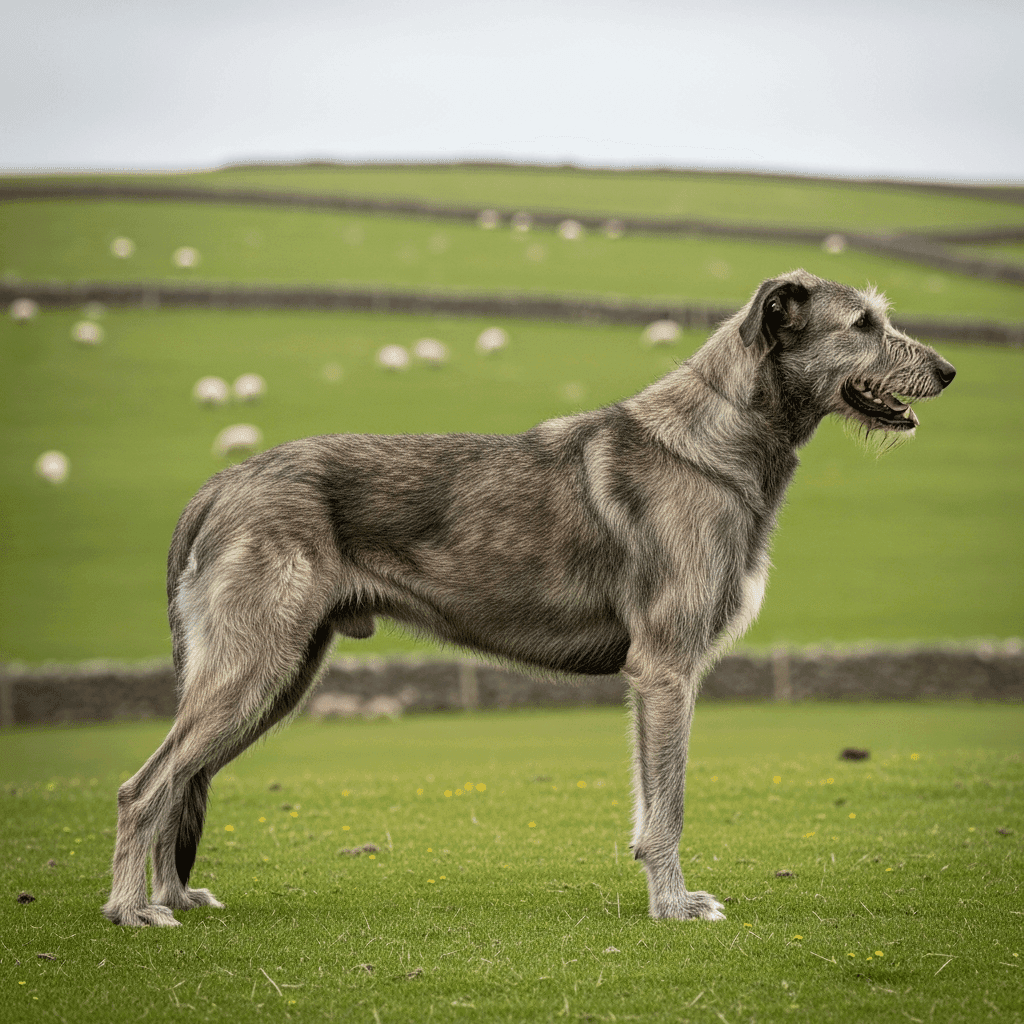
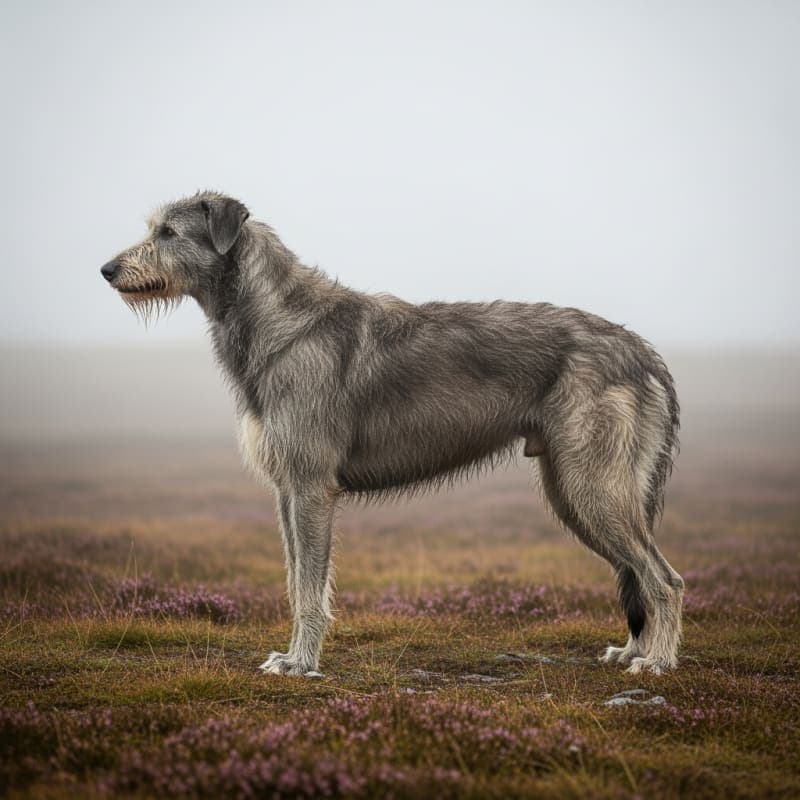
The appearance of the Scottish Deerhound resembles a rough-coated greyhound of larger size and stronger bone structure. The height at the withers ranges from 71 cm for females to 76 cm for males, with a weight oscillating between 36.5 kg and 45.5 kg. Their rough, dense coat, which lies close to the body, provides excellent protection against the harsh weather conditions of the Scottish Highlands. The coat colors include noble shades of dark gray, light gray-brown, brindle, sandy tones, and fawn-red, often with dark accents on the ears and muzzle.
Despite their impressive stature, the Scottish Deerhound deserves the title of gentle giant. Their temperament is a combination of gentleness, friendliness, and calm dignity. They are exceptionally sociable dogs that get along well with children – although due to their size, they require appropriate supervision when interacting with the youngest family members. The Scottish Deerhound is a loyal and devoted dog, forming deep emotional bonds with its family. Their obedient and eager-to-learn nature makes training, although requiring patience, yield satisfying results.
These dogs have significant exercise needs – they require daily long walks and opportunities to run freely in a safe environment. Their high intelligence allows for the learning of many commands, but the best results come from positive reinforcement and a patient, consistent approach. The Scottish Deerhound feels best in spacious conditions, so it is not recommended to keep them in small urban apartments. This breed is sensitive to stress and changes in their environment, making it crucial to provide them with a calm, stable living environment full of love and understanding.
The Scottish Greyhound is one of the most recognizable and impressive dog breeds, instantly attracting attention with its majestic silhouette. These large, noble dogs have long, slender bodies resembling a greyhound, but they are significantly larger and more muscular. The height at the withers ranges from 71 cm for females to 76 cm for males, while the weight oscillates between 36.5 kg and 45.5 kg. Their build harmoniously combines elegance with strength, creating the image of a dog capable of long runs in challenging terrain.
The head of the Scottish Greyhound is long and nobly shaped, with a flat skull gently rising above the eyes. The skull is widest around the ears and narrows towards the eyes. The nose is black, slightly upturned, and the dark eyes – brown or hazel – give the dog a gentle, dignified expression. The ears are set high, large, hanging, and soft, lying flat against the head at rest, and slightly raised when excited. The moderately long, well-muscled neck transitions into strong, well-shaped shoulders.
The body is characteristic of greyhounds – with a straight or slightly arched back, well-defined loins, and a deep chest providing ample space for the heart and lungs. The limbs are straight, strong, and muscular, ending in compact paws with well-arched toes. The tail is long, thick at the base and tapering towards the end, carried low with a slight curve at the tip, never raised above the line of the back.
The most distinctive feature of its appearance is the rough, dense, and close-fitting coat, which provides excellent protection against the rain and cold of the Scottish Highlands. The hair is hard and rough to the touch, 7-10 cm long, with a softer, velvety coat on the head, chest, and belly. The coloration includes a noble palette of colors: dark gray-blue, light gray-brown, brindle, sandy tones, and fawn-red pigment, often with dark accents on the ears, muzzle, and tip of the tail. The overall appearance of the Scottish Greyhound exudes strength, speed, elegance, and quiet dignity – traits that make it one of the most distinctive representatives of the greyhound group.
The Scottish Greyhound is a breed that fascinatingly combines seemingly contradictory traits: powerful physical strength with extraordinary gentleness of character. Its temperament is a blend of friendliness, calmness, and quiet dignity, making them excellent companions for families that value harmony and balance. These dogs are exceptionally sociable and friendly, eagerly forming close relationships with children and other pets. However, it is important to remember that they may have a tendency to chase smaller animals due to their strong hunting instinct – after all, they have been bred for centuries to hunt swift deer.
Despite their impressive size, Scottish Greyhounds are exceptionally gentle and cautious in their interactions with children. Their mild temperament and patience make them wonderful companions for younger family members, although due to their size, appropriate supervision is necessary to avoid accidentally knocking over little ones during play. The Scottish Greyhound is intelligent, although it may exhibit a certain independence of thought characteristic of hunting breeds – this trait sometimes makes training require more patience and consistency.
They are sensitive to stress and emotions, so it is crucial to provide them with a calm, stable environment without sudden changes and anxiety. A well-socialized Scottish Greyhound rarely barks and never shows unwarranted aggression, suspicion, or nervousness – its nature is calm and balanced. It carries itself with a quiet dignity that has been valued by the Scottish aristocracy for centuries. The attachment of a Scottish Greyhound to its owners is deep and lasting – they are loyal and devoted dogs that, under the right conditions, become true family members.
Despite their gentle disposition, the Scottish Greyhound requires proper socialization from a puppy age to develop positive behaviors and social skills. Their sensitivity allows them to sense their owners' emotions, making them empathetic companions capable of offering calmness, peace, and unconditional love. Their presence in the home brings an atmosphere of tranquility, elegance, and harmony – traits that make them some of the most cherished companion dogs in the world.
The Scottish Deerhound, as a breed belonging to the giant dog group, has specific health needs and predispositions to certain conditions that every responsible owner should be aware of. The average lifespan of this breed is between 8 to 11 years, which is typical for dogs of such large size. The key to ensuring them a long and healthy life is prevention, regular veterinary check-ups, and awareness of potential health issues.
One of the most serious health threats to the Scottish Deerhound is heart diseases, particularly dilated cardiomyopathy, which affects many giant breeds. Regular cardiological examinations, including echocardiography, should be conducted annually, especially for dogs over five years old. Another significant issue is gastrointestinal problems, especially bloat and gastric torsion – a sudden, life-threatening condition requiring immediate veterinary intervention. To minimize the risk, it is recommended to feed the dog two or three smaller meals a day instead of one large one and to avoid intense exercise immediately before and after meals.
Due to their large body mass and long limbs, Scottish Deerhounds may be prone to orthopedic problems, such as hip dysplasia, joint diseases, and osteosarcoma (bone cancer). Maintaining an appropriate weight is crucial – being overweight significantly increases the strain on the joints and can accelerate the development of arthritis. The diet should be balanced, rich in ingredients that support joint health, such as glucosamine and chondroitin.
Other conditions to be aware of include: hypothyroidism, dental and gum diseases, allergic skin inflammations, and Von Willebrand's disease (a blood clotting disorder). The Scottish Deerhound is also sensitive to extreme temperatures – both heat and severe cold can be problematic for them. On hot days, they should be provided with shade and access to fresh water, while in winter, despite their rough coat, they may require additional protection during long walks.
Owners should regularly observe their dog for symptoms of illness, such as: loss of appetite, lethargy, difficulty breathing, limping, coughing, or unusual swellings. Regular veterinary visits, vaccinations, deworming, and prevention against external parasites are the foundation of responsible care. Choosing puppies from responsible breeders who conduct genetic testing for hereditary diseases can significantly reduce the risk of health problems in the future.
The care of the Scottish deerhound, although not particularly complicated or time-consuming, requires regularity and consistency. Its rough, dense coat, which serves as a natural protection against the harsh weather conditions of the Scottish Highlands, needs proper attention to maintain a healthy appearance and functionality. Regular grooming is not only a matter of aesthetics but, above all, of the dog's health and comfort.
Brushing the coat should be done at least once or twice a week using a brush with stiff bristles or a comb with widely spaced teeth. This helps remove dead hair, prevent matting, and distribute the natural skin oils that protect the skin and give the coat a healthy shine. Special attention should be paid to the areas behind the ears, under the armpits, and around the tail, where the hair tends to tangle. During shedding periods – in spring and autumn – it is advisable to increase the brushing frequency to several times a week.
Bathing should only be done when absolutely necessary, when the dog is visibly dirty or emits an unpleasant odor. Too frequent baths can destroy the natural protective layer of the skin and lead to dermatological issues. When bathing, it is essential to use mild shampoos designed for dogs with rough coats. After bathing, the dog should be thoroughly dried, especially on cooler days, to avoid catching a cold.
Nail care is a crucial element of the routine – due to the significant weight of the Scottish deerhound, its nails tend to wear down quickly when walking on hard surfaces. However, if the characteristic clicking of nails on the floor can be heard, it means they are too long and need trimming. Overly long nails can cause walking problems and lead to joint pain. Regular trimming should be done every 3-4 weeks, taking care not to damage the so-called quick of the nail.
Oral hygiene is often neglected, yet it is of great importance for health – dental and gum diseases can lead to serious infections and health problems. It is recommended to brush the teeth regularly (ideally daily or at least 2-3 times a week) using a toothbrush and toothpaste designed for dogs. Additionally, dental chews can be used to help with the mechanical cleaning of teeth.
Ear inspection and cleaning should be done at least once a week. The hanging ears of the Scottish deerhound can be prone to infections, especially in humid conditions. It is important to regularly check for signs of redness, unpleasant odor, or excessive wax buildup. Cleaning the ears with special solutions and cotton pads will help prevent problems. The eyes also require regular checks – in case of excessive tearing or discharge, a consultation with a veterinarian is advised.
Overall, the Scottish deerhound does not require professional grooming or clipping, unlike some other terrier breeds or decorative dogs. Its natural, rough coat should maintain its original texture and functionality. Regular, systematic grooming performed at home is entirely sufficient to ensure the dog looks healthy and feels good throughout its life.
The Scottish deerhound is a breed that, despite its calm and gentle disposition at home, has significant exercise needs stemming from its hunting heritage. These powerful dogs, originally bred to hunt fast red deer in the challenging, hilly terrain of the Scottish Highlands, require at least 1-2 hours of activity daily to maintain physical health and mental balance. A lack of proper exercise can lead to behavioral issues, obesity, and frustration.
Although the Scottish deerhound can spend long hours peacefully resting at home, lying on the sofa like a true gentle giant, its nature demands regular, intense bursts of activity. The ideal solution is long, leisurely walks combined with the opportunity to run freely in a safe, fenced area. The Scottish deerhound loves to run – after all, it is one of the fastest land animals, capable of reaching speeds of up to 45 km/h. Therefore, access to open spaces where the dog can let loose and utilize its natural speed is invaluable.
In addition to regular walks, it is worth considering various forms of activity tailored to the dog's temperament and capabilities. Jogging, running alongside a bicycle (for older, fully developed dogs), fetch games, or coursing – simulated hunting with a mechanical lure – are excellent ways to channel the energy of a Scottish deerhound. However, it is important to remember that puppies and young dogs in the growth phase should not be subjected to overly intense exertion, as this can harm their developing joints and bones. Intense training should be introduced gradually after 18-24 months of age.
During walks in the vicinity of other animals, the dog should be on a leash, especially if it does not have a fully developed recall. A strong hunting instinct may prompt the Scottish deerhound to chase smaller animals – rabbits, cats, squirrels – and its speed makes regaining control over the dog extremely difficult. In safe, enclosed spaces, the dog can be allowed to run freely, but one must always remain vigilant and observe the surroundings.
It is also important to emphasize that the Scottish deerhound needs not only physical exertion but also mental stimulation. Monotonous walks along the same routes can become boring – therefore, it is good to introduce variety: new places, scents, scent games, simple training tasks, or interactive toys. Intellectual challenges help keep the dog in good mental shape and prevent behavioral problems arising from boredom.
Additionally, one should remember to provide appropriate protection in extreme weather conditions. Although the rough coat of the Scottish deerhound offers some protection against the cold, on very frosty days, it may require additional clothing. Conversely, on hot days, strenuous activity should be avoided during the hottest hours – deerhounds are prone to overheating, so activity should be scheduled for early morning or late evening. Ensuring access to fresh water before, during, and after exercise is absolutely crucial.
In summary, the Scottish deerhound is a breed for active individuals who appreciate long walks and outings in nature. This is not a dog for residents of small apartments or those who prefer a sedentary lifestyle. With the right amount of exercise and stimulation, the Scottish deerhound will become a balanced, happy, and healthy companion, who behaves calmly and dignified at home, while outside, it utilizes its hunting nature in a controlled, satisfying manner.
Training a Scottish Deerhound can be both a rewarding and challenging experience – it all depends on understanding the specifics of this breed and adapting training methods to its temperament. The Scottish Deerhound is known for its independence of thought and a certain degree of stubbornness, stemming from its hunting heritage – these dogs have been bred for centuries to make decisions independently while hunting, which has influenced their character. This means that teaching commands may require more time, patience, and consistency than with breeds that are unconditionally obedient, such as shepherds.
The key to effective training of a Scottish Deerhound is positive reinforcement – a method based on rewarding desired behaviors rather than punishing undesired ones. Treats, verbal praise, petting, and play are much more effective than harsh corrections or coercion. The Scottish Deerhound is sensitive to sharp remarks and criticism – overly harsh methods can discourage the dog from cooperating or cause stress and anxiety. A gentle, patient approach combined with consistency yields the best results.
The Scottish Deerhound tends to form strong attachments to its owner, which is a huge advantage in the training process. A strong emotional bond makes the dog eager to cooperate and strive to please its caregiver. Therefore, building a positive relationship based on trust and respect is the foundation of effective training. The stronger the bond between the dog and the owner, the easier it will be to teach basic and advanced commands.
It is good to start training with basic obedience commands, such as: Sit, Lie Down, Stay, Come, and No. These fundamental commands are crucial for the dog's safety and control in various situations. Then, one can gradually move on to more advanced exercises. Regular, but short training sessions – ideally 10-15 minutes, 2-3 times a day – are the most effective. The Scottish Deerhound can quickly lose interest in long, monotonous sessions, so it is important to maintain engagement through variety and positive energy.
Socialization is just as important as obedience training – Scottish Deerhound puppies should be exposed to a variety of stimuli from the youngest weeks of life: other people, dogs, animals, sounds, places, and situations. Proper socialization helps prevent behavioral problems in adult life, such as anxiety, excessive shyness, or reactivity towards other dogs. A well-socialized Scottish Deerhound is confident, calm, and friendly in various circumstances.
Due to its strong hunting instinct, it is particularly important to develop a reliable recall. A Scottish Deerhound that sees a smaller animal in motion may succumb to its instincts and dash off in pursuit, ignoring any commands. Therefore, recall training should be conducted systematically, in controlled conditions, gradually increasing the level of difficulty and distraction. It is worth using a long training leash in the initial stages to ensure that the dog does not escape.
It is also beneficial to introduce games and activities that develop the natural abilities of the Scottish Deerhound, such as coursing or scent exercises. These forms of activity not only provide physical and mental stimulation but also build the bond and give the dog satisfaction from using its natural instincts in a controlled manner. Mental stimulation is just as important as physical exercise – intellectual challenges help keep the dog mentally balanced.
Remember that training a Scottish Deerhound is a long-term process that requires patience, consistency, and a positive attitude. One should not expect immediate results or perfect obedience right away – every dog learns at its own pace. Over time, with the right approach and regular training, the Scottish Deerhound will become a well-behaved, obedient companion that retains its natural independence while eagerly cooperating with its owner. It is a wonderful feeling when a powerful Scottish Deerhound – an animal capable of incredible speed and strength – responds to your commands with respect and devotion.
The diet of the Scottish Deerhound is one of the most important elements in ensuring a long, healthy, and satisfying life. Due to its large size, active lifestyle, and specific metabolic needs of giant breed dogs, the Scottish Deerhound requires high-quality nutrition tailored to its individual needs. A properly balanced diet not only supports overall health but also helps in the prevention of many diseases characteristic of this breed.
The foundation of the diet should be high-quality foods specifically designed for large and giant dog breeds. Such foods contain the appropriate proportion of protein (a minimum of 22-26% for adult dogs), fats (12-15%), carbohydrates, and essential vitamins and minerals. Protein from meat – chicken, beef, turkey, lamb, or fish – should be the main ingredient, as it supports the development and maintenance of muscle mass. It is important to avoid foods based on low-quality grain fillers or by-products.
Due to the predisposition to bloating and gastric torsion – a life-threatening condition – it is extremely important to manage feeding appropriately. It is recommended to feed in two or three smaller meals a day instead of one large meal. This way, the stomach is not overloaded, and the risk of bloating decreases. Additionally, it is advisable to avoid intense physical exertion immediately before and after meals – it is best to wait at least an hour before and after feeding before the dog starts running or playing vigorously.
Weight control is crucial – Scottish Deerhounds are prone to gaining weight, especially if they do not get enough exercise or are overfed. Being overweight significantly increases the risk of joint problems, heart diseases, and diabetes. Regularly weighing the dog and observing its physical condition (the waist should be visibly defined, and ribs should be felt under a thin layer of fat) helps maintain an appropriate weight. If the dog is gaining weight, it is advisable to consult a veterinarian about adjusting portions or changing the diet.
In addition to dry or wet food, you can enrich the diet with fresh additions, such as: cooked meat (without spices and bones), vegetables (carrots, broccoli, pumpkin, spinach), fruits (apples, pears, berries – in moderation), or natural yogurts without added sugar. However, it is important to avoid ingredients harmful to dogs, such as: onions, garlic, grapes, raisins, chocolate, avocados, xylitol, or products containing caffeine. Cooked bones are dangerous, as they can splinter and cause injuries – if bones are given, they should be raw and appropriately large.
Access to fresh, clean water at all times is absolutely crucial, especially for such large dogs. The Scottish Deerhound can drink significant amounts of water, especially after exercise or on hot days. The water bowl should be regularly refilled and cleaned to ensure hygiene.
For older dogs, puppies, or dogs with health issues, it may be necessary to use specialized veterinary diets or dietary supplements. For example: glucosamine and chondroitin support joint health, omega-3 fatty acids improve skin and coat condition and support heart health, and probiotics help maintain a healthy gut flora. Before introducing any supplements, it is advisable to consult a veterinarian who can help choose the appropriate products and dosages.
Regular consultations with a veterinarian regarding diet are particularly important at key stages of a dog's life: during puppy growth, in adulthood, and in older age. Dietary needs change with age and activity level, so the diet should be flexibly adjusted. A proper, balanced diet is an investment in the health and longevity of the Scottish Deerhound – it helps maintain an ideal weight, supports physical fitness, protects against diseases, and provides the dog with energy for daily activities and joy in life.
Characteristic Traits
Pros
- Gentle and friendly temperament
- Ideal family companion
- High intelligence and eagerness to learn
- Loyalty and devotion to owners
- Majestic and elegant appearance
- Calm nature at home.
Cons
- Requires a large amount of exercise and space
- Strong hunting instinct requires control
- Large size unsuitable for small apartments
- Can be independent and stubborn
- Susceptibility to heart disease and bloating
- Short average lifespan of 8-11 years.
Behavioral Ratings
Breed History
The history of the Scottish deerhound is a fascinating tale that stretches back centuries, full of mysteries, legends, and a deep connection to the wild, picturesque landscapes of the Scottish Highlands. This ancient breed of hunting dogs has roots so deep that its exact origin is shrouded in the mists of time. There are speculations that the ancestors of today's Scottish deerhounds may have been brought to Scotland by Phoenician traders or that this breed developed from hounds present in the British Isles as early as Roman times. One thing is certain – deerhounds have been present in the Highlands for at least a thousand years.
In the Middle Ages, the Scottish deerhound, known at that time as the Scottish Deerhound, was a symbol of social status and privilege. The law allowed only those of the rank of earl or higher to own this breed – it was one of the most exclusive privileges of the Scottish aristocracy. These powerful, swift dogs were invaluable in hunting red deer, which were a primary source of meat and a symbol of hunting prowess. In the challenging, mountainous terrain of the Scottish Highlands, where traditional hunting methods were ineffective, the Scottish deerhound displayed unparalleled agility – its combination of speed, strength, and endurance allowed it to chase down and bring down even the largest stag.
In the 16th and 17th centuries, the breed reached the height of popularity among the Scottish nobility. Owning several Scottish deerhounds was a mark of prestige, and the most prized dog was one that could single-handedly take down an adult stag. Hunts were ritual events during which the hounds demonstrated their power and courage. Descriptions from that time speak of dogs with incredible strength, capable of long runs in difficult terrain and overcoming animals much larger than themselves.
In the 19th century, the breed stood on the brink of extinction for several reasons. The introduction of firearms changed the nature of hunting – shotguns were more effective than dogs, which reduced the demand for hunting hounds. Additionally, the drastic decline in the population of red deer due to overhunting and changes in land management significantly decreased the need for breeding Scottish deerhounds. By the mid-19th century, the breed was on the verge of complete disappearance.
Fortunately, a group of enthusiasts and breed advocates took it upon themselves to save it. A key figure in this process was Archbishop Duncan of Argyll, along with the McNeil brothers from the island of Colonsay, who maintained small breeding lines. In 1886, the first Scottish deerhound breeders' club was established, marking the beginning of systematic breeding and protection of the breed. The first breed standard was developed, outlining the desired traits of appearance and temperament, and dog shows became a venue for showcasing the best representatives.
The modern Scottish deerhound has retained many traits of its historical ancestors – it still possesses a majestic silhouette, a rough coat, and a gentle, dignified temperament. However, its role has changed significantly – instead of a hunting dog, the Scottish deerhound has primarily become a companion and show dog. Its gentle disposition, loyalty, and elegant appearance have made it a beloved member of families around the world. In some countries, they still participate in coursing competitions – simulated hunts with a mechanical lure – allowing them to utilize their natural instincts in a controlled manner.
The breed is currently recognized by all major kennel organizations, including the FCI (Fédération Cynologique Internationale), AKC (American Kennel Club), and KC (The Kennel Club in the UK). The Scottish deerhound remains a symbol of Scottish cultural heritage – its image appears in literature, art, and heraldry. In Scotland, it is considered a national breed, representing the spirit of the wild, untamed nature of the Highlands.
The history of the Scottish deerhound is also a story of friendship, loyalty, and a deep bond between man and dog. For centuries, these dogs have been not only tools for hunting but primarily companions who shared the hardships of life in harsh mountainous conditions with humans. Their presence in homes around the world attests to the unique character of this breed – a combination of physical strength with gentleness of spirit that makes the Scottish deerhound one of the most noble and respected dogs in the world.