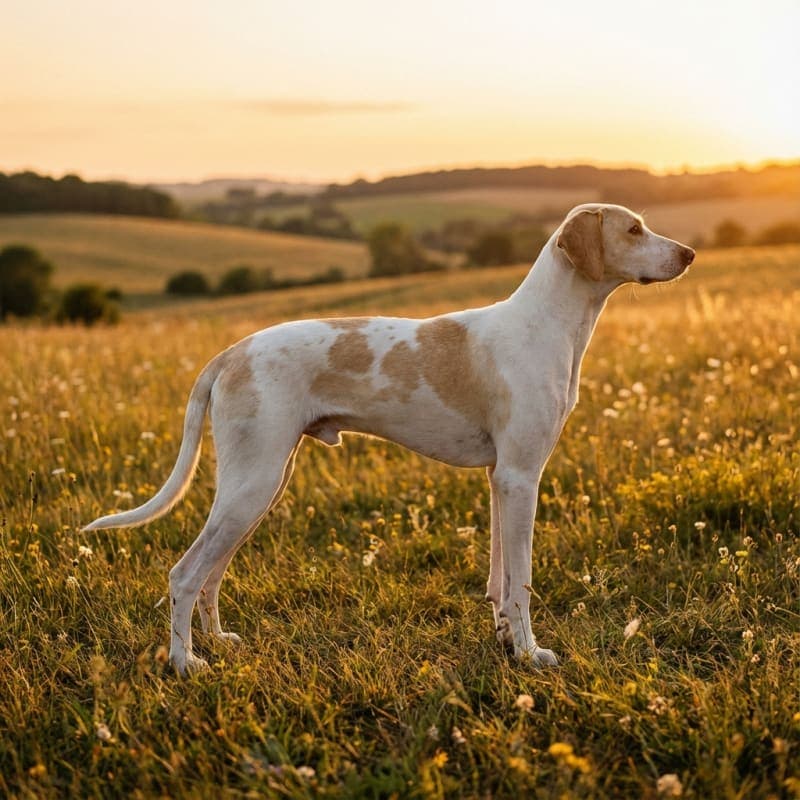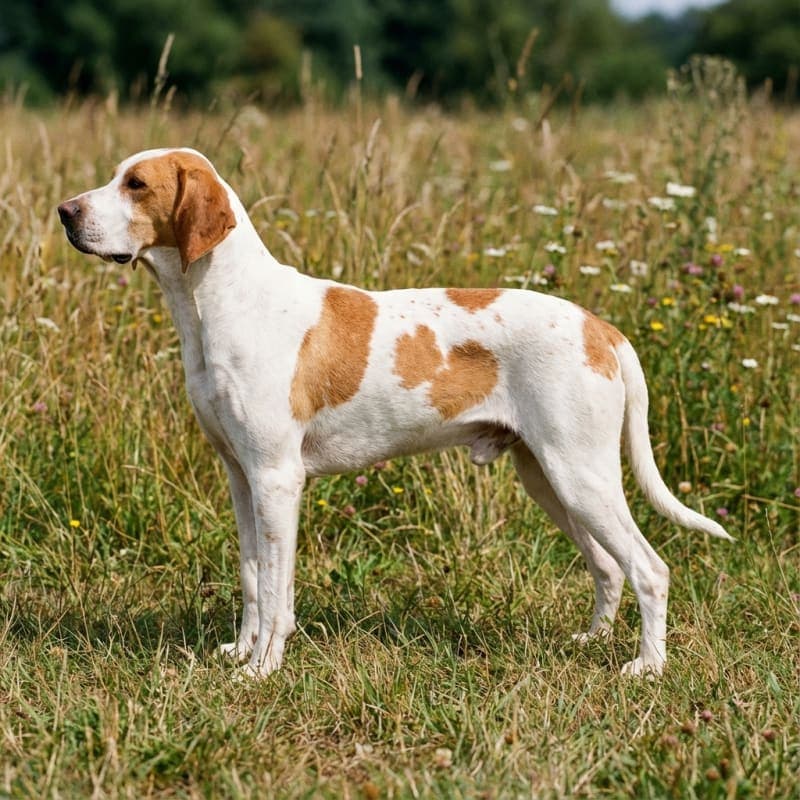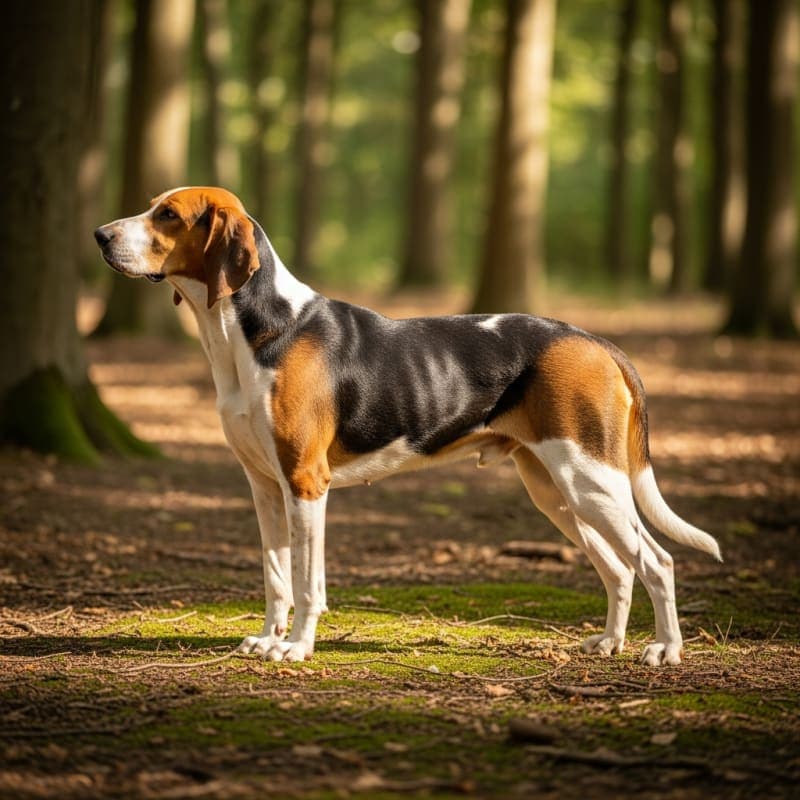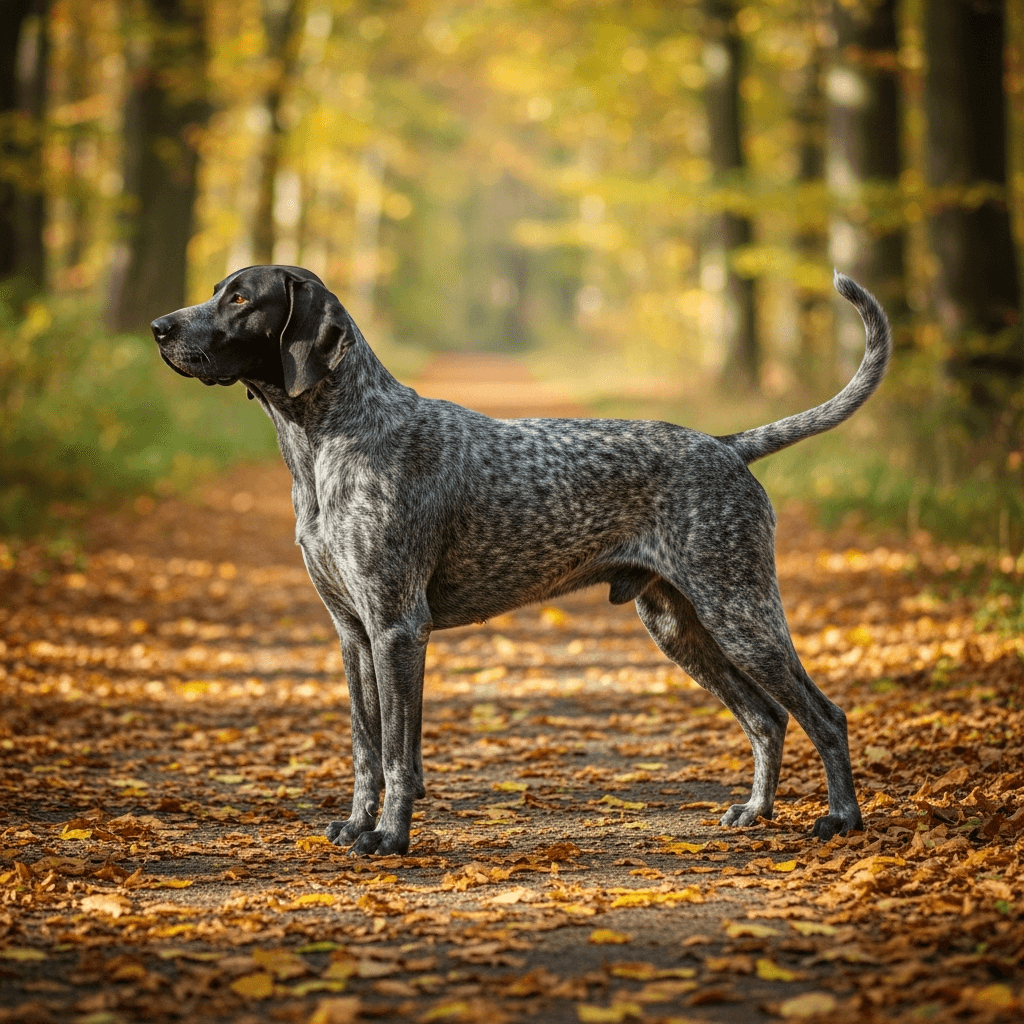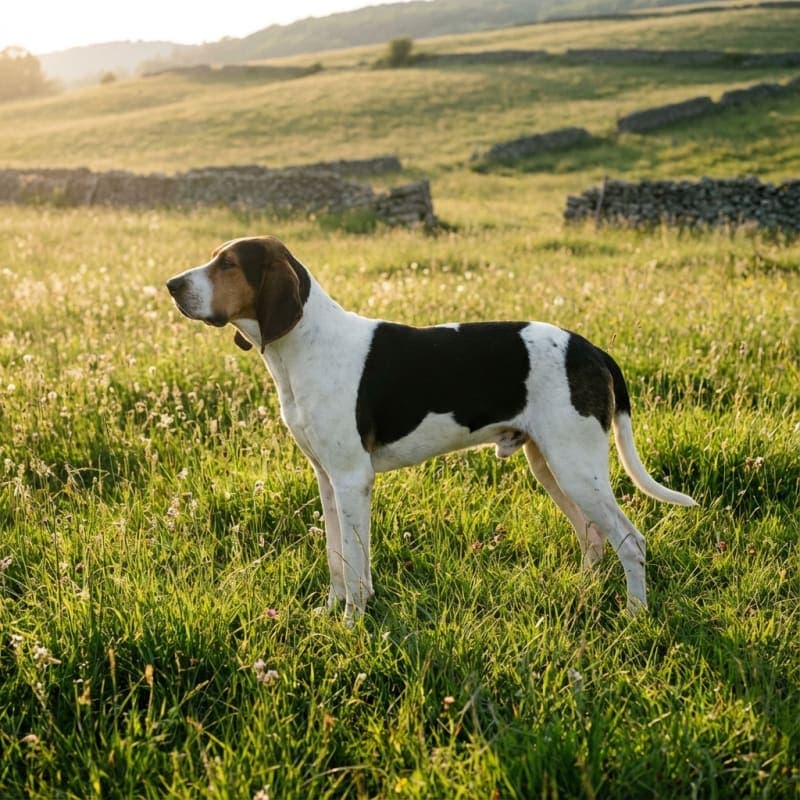
Large Anglo-French Hound, black and white.
FCI Group
6• FCI 323
Size
Large
Origin Country
FR
Height
62-72 cm
Weight
30-35 kg
Lifespan
10-15 years
Temperament
Overview
The Grand Anglo-French White and Black Hound, also known as Grand anglo-français blanc et noir, is an extraordinary breed of hunting dogs originating from France. It was developed in the mid-19th century as a result of crossing the Saintongeois with the Foxhound, creating a breed then referred to as Bâtard Anglo-Saintongeois. Today, the breed consists of about 2000 individuals with 200 births annually, mainly serving in packs during deer and roe deer hunts.
This impressive breed captivates with its strong build and excellent hunting skills, which have developed over centuries of selective breeding. These dogs were specifically created for hunting large game, giving them an extraordinary hunting instinct and a unique sense of smell. Their roots trace back to the combination of various types of hounds, including the Gascon-Saintongeois hound, which is evident in their structure and character.
The distinctly shaped head with a clear stop, wide black nose, and large brown eyes give this breed an intelligent and gentle expression. The standard calls for a strong neck and solid body, enabling them to work for long periods in the toughest terrain. Their coat is short, dense, and well-fitting, providing protection against adverse weather during hunts.
The characteristic coloration in the form of white coats with black patches, sometimes with blue or dark brown marbling, gives this breed a unique appearance. Adult males stand between 65 to 72 cm, while females range from 62 to 68 cm at the withers, making them impressive representatives of hounds.
This breed is known for its endurance and balanced temperament. These dogs excel in hunting deer and roe deer, especially in wet or brushy areas. They are friendly animals, close to people, and easy to handle in packs, making them excellent companions both during hunts and in the daily life of an active family.
The Grand anglo-français blanc et noir requires a significant amount of exercise and activity, making it an ideal choice for individuals leading an active lifestyle and having ample space. The intelligence of this breed makes it easy to train, but it requires consistent training and early socialization. In the following sections, we will discuss in detail the health, grooming, exercise, training, nutrition, and history of this magnificent dog, which, with proper care, can be a reliable companion for many years.
Grand anglo-français blanc et noir is a dog with a strong and powerful build, reminiscent of its gascon-saintongeois roots. It is a large representative of hounds, resilient and enduring, with a strong bone structure adapted for prolonged work in the field.
Body proportions are harmonious – the length of the body from the top of the shoulder blade to the ischial tuberosities equals the height at the withers. The muzzle is slightly shorter than the skull, forming a distinct stop. The height at the withers ranges from 65 to 72 cm for males and from 62 to 68 cm for females.
The head is strong and fairly flat, with a distinct stop. The nose is black, well-developed, and wide, with open nostrils, ensuring excellent scenting ability. The eyes are large, brown, with black rims, giving the dog an intelligent and gentle expression. The ears are wide at the base, set at the level of the eyes, slightly twisted, and hanging along the cheeks.
The neck is strong and well-muscled, without excessive throat. The chest is wide and deep, reaching at least to the level of the elbows, providing a large lung capacity necessary during prolonged chases. The back is straight and strong, and the loins are wide and muscular.
The tail is long and strong at the base, tapering gradually towards the end. It is carried elegantly in a sabre shape and should never be curled over the back.
The coat is short, dense, and well-adhering to the body. The characteristic coloration includes a white undercoat with black spots or a coat, often with blue marbling or dark brown markings. The white fur predominates, and the black spots create elegant patterns that give this breed a unique appearance of an aristocratic hunter.
The Grand anglo-français blanc et noir is a dog with a balanced and friendly temperament, combining the traits of an excellent hunter and a devoted family companion. It is an intelligent and easy-to-train breed, making it well-suited for both pack work and home environments.
This dog is friendly towards people and easy to handle in kennels, which is particularly appreciated by owners of hunting packs. It shows a strong bond with its caregiver, being loyal and devoted. It usually gets along well with children and other dogs, especially if properly socialized from a young age.
Due to its strong hunting instincts characteristic of hounds, it may have a tendency to chase smaller animals. During walks, it is important to remain vigilant, especially in areas where wild animals or free-roaming cats may be present. Its innate need to track and chase requires proper training in recall.
The Grand anglo-français blanc et noir needs a lot of attention and activity, so it is not a breed that tolerates prolonged solitude well. The owner should dedicate a significant amount of time to play, training, and outdoor activities to ensure adequate physical and mental stimulation.
This dog is very alert, making it a good watchdog – it loudly announces the presence of strangers on the property. However, it usually does not show aggression towards guests; after being introduced and familiarized, it quickly becomes friendly. It is important to remember that proper socialization from a young age is crucial for the correct development of social behaviors and a gentle temperament.
In hunting work, it stands out with its excellent voice carrying ability, allowing the hunter to track the progress of the chase even in dense underbrush. It works diligently and passionately, especially during deer and roe deer hunts, where its sense of smell and physical endurance come to full expression.
Grand anglo-français blanc et noir is generally a healthy and durable breed, bred for long-term work in difficult terrain conditions. However, like all large dog breeds, it may be prone to certain genetic and acquired conditions, requiring awareness from the owner.
The most common issue in large breeds is hip dysplasia, which can lead to discomfort and limited mobility in later age. Responsible breeders perform X-ray examinations of the joints in breeding dogs to minimize the risk of passing this defect to offspring. It is advisable to ask for the health results of the parents when choosing a puppy.
Eye problems, such as cataracts or progressive retinal atrophy (PRA), can also occur in this breed, although they are not as common as in some other breeds. Regular eye examinations, especially in older dogs, allow for early detection and appropriate treatment of these conditions.
As hunting dogs working in the field, Grand anglo-français blanc et noir may be exposed to mechanical injuries – cuts on the pads, skin abrasions, or injuries caused by thorns or sharp branches. After each hunt or long walk in the woods, it is important to thoroughly check the condition of the limbs, ears, and skin.
Ear infections are a common problem in dogs with drooping ears. Regularly checking and cleaning the ears helps prevent the development of bacterial or fungal infections, especially after working in damp terrain.
Regular veterinary visits, at least once a year, are crucial for the early detection and treatment of potential health issues. It is also important to ensure appropriate vaccinations, deworming, and flea and tick prevention, especially for dogs working in the field.
Maintaining a healthy diet and appropriate physical activity is the foundation of a long and healthy life. Avoiding obesity is particularly important, as excess weight increases the burden on the joints and heart. With proper care and prevention, Grand anglo-français blanc et noir can enjoy good health for 10-13 years.
Grooming the Grand anglo-français blanc et noir is relatively simple due to its short, dense coat that does not require complicated procedures. However, regular grooming activities are essential for maintaining skin and coat health as well as the overall condition of the dog.
Brushing the coat should be done at least once a week using a natural bristle brush or a rubber grooming glove. Regular brushing helps remove dead hair, dirt, and stimulates blood circulation in the skin. During shedding periods, which usually occur in spring and autumn, more frequent brushing is recommended – even daily – to minimize the amount of hair in the house.
Bathing should be done as needed, especially after long walks in the field or hunting when the dog gets muddy. Use high-quality shampoos designed for dogs with short coats that do not disrupt the skin's natural protective layer. Bathing too frequently can lead to dry skin and irritation.
Ears require special attention due to their drooping shape, which promotes moisture accumulation and the development of infections. Check the ears at least once a week, and always after walks in damp areas. Clean them gently using special ear cleaning solutions for dogs and cotton pads. Never insert cotton swabs deeply into the ear canal.
Dental care is often neglected, yet it is crucial for health. Brush your dog's teeth at least 2-3 times a week using dog toothpaste and a toothbrush. Dental treats and chew toys can also be used to help mechanically remove plaque.
Nails should be trimmed regularly when they become too long and start to hinder proper walking. In active dogs, who run a lot
The Grand anglo-français blanc et noir is a breed that requires a significant amount of exercise and physical activity. As a hunting dog, it was bred for long-lasting, intense work during chases, which is why it needs at least 90-120 minutes of vigorous effort every day.
Long walks are absolutely essential – at least twice a day, each lasting at least 45-60 minutes. Ideal outings are to the forest, park, or open areas where the dog can safely utilize its natural tracking instincts. Walks should be varied in routes to provide new scent stimuli.
Running alongside a bicycle is an excellent form of activity for this breed, allowing it to release excess energy. Jogging with the dog is also a great option, as it makes a wonderful running companion. However, before starting such intense exercises, it is important to ensure that the dog is of appropriate age (at least 18 months) and is healthy.
Nose work is particularly satisfying for this breed. Training activities such as nosework, mantrailing, or tracking hidden treats allow the natural hunting instinct to be utilized in a controlled manner. These types of activities provide not only physical exertion but also intense mental stimulation.
Playing with other dogs is an excellent form of socialization and exercise. The Grand anglo-français blanc et noir typically does well in dog parks, where it can run and play with representatives of other breeds. However, remember to control its chasing instinct, especially around smaller dogs.
Agility, coursing, or canicross are excellent sports for this active breed. They allow for energy release in an organized manner while simultaneously building a bond with the owner. Regular sports training helps maintain excellent physical and mental condition.
It is important to provide variety in activities – monotonous walks on the same route may not be enough to meet the needs of this intelligent breed. A dog that does not receive sufficient exercise may become restless, destructive, or develop undesirable behaviors such as excessive barking or escaping. Regular, intense exercise is key to a happy and balanced Grand anglo-français blanc et noir.
The training of the Grand anglo-français blanc et noir is extremely satisfying due to the natural intelligence and willingness to work of this breed. However, it requires a consistent, patient, and positive approach that takes into account both the strong character and the innate hunting instinct.
Early socialization is absolutely crucial and should begin during the puppy stage. Exposure to diverse environments, people, animals, sounds, and situations helps to develop a confident, balanced adult dog. Puppies should participate in puppy kindergarten classes where they learn the basics of social interaction.
Basic commands such as Sit, Stay, Come, Down, or Lie Down should be taught from the first days in the new home. Use positive reinforcement methods – reward desired behaviors with treats, praise, and play. Avoid physical punishment or yelling, which can damage the bond and make the dog become distrustful.
Recall training is particularly important for a hunting breed that has a strong instinct to track and chase. Start teaching in a controlled environment with a long leash, gradually increasing distances. Reward every return to the owner with abundant praise and favorite treats, so the dog always associates returning with something positive.
Consistency is the foundation of successful training. Everyone in the household should use the same commands and rules to avoid confusing the dog. Rules established at home (e.g., no jumping on furniture) must be followed at all times, without exceptions.
Play-based training is extremely effective for this breed. Incorporating elements of play into learning makes the dog more motivated and engaged. Activities such as nosework, agility, or competitive obedience allow for the utilization of natural abilities while simultaneously teaching obedience.
Training sessions should be short (10-15 minutes) but frequent – ideally several times a day. Long, monotonous training sessions can bore the dog and reduce its motivation. Always end sessions on a positive note when the dog has performed well.
For dogs intended for hunting work, specialized training under the guidance of an experienced hunter or hound trainer is essential. This includes learning tracking, loud barking during the chase, cooperation in a pack, and obedience in high-stimulation situations.
Regular training not only improves obedience but also between the dog and its owner, providing the mental stimulation necessary for this intelligent breed.
A proper diet is the foundation of health and vitality for the Grand anglo-français blanc et noir. As a large, active hunting breed, it requires well-balanced nutrition that provides all the essential nutrients to maintain muscle mass, condition, and energy.
High-quality premium food should form the basis of the diet. Choose products dedicated to large active breeds that contain the appropriate ratio of protein (minimum 25-30%), fats (12-18%), and carbohydrates. Check the ingredients – the first places on the ingredient list should be occupied by meat or fish, not grains or fillers.
High-quality protein is particularly important for maintaining developed muscle mass and tissue recovery after intense exertion. The best sources are chicken, turkey, beef, lamb, and fish. Protein also supports skin health and coat quality.
Fats provide the energy necessary for an active lifestyle and omega-3 and omega-6 fatty acids, which support joint health, skin, and cognitive functions. Sources can include salmon oil, flaxseed oil, or evening primrose oil.
Glucosamine and chondroitin are particularly important for large breeds prone to joint problems. Many premium foods contain these supplements, but they can also be given separately, especially to older or heavily working dogs.
The amount of food should be adjusted to the dog's age, weight, and activity level. An adult dog weighing around 30-35 kg typically needs 400-600 grams of dry food per day, divided into two meals. Dogs that work intensively or are very active may require larger portions.
Puppies require special food for large breed puppies, which supports proper bone and joint development without excessively accelerating growth. Feeding should be divided into 3-4 meals per day until about 6 months of age, then transitioning to 2 meals.
Fresh vegetables and fruits can serve as healthy snacks – carrots, apples (without seeds), blueberries, or green beans are rich in vitamins and fiber. Avoid grapes, onions, chocolate, avocados, and xylitol, which are toxic to dogs.
Access to fresh water is absolutely crucial, especially after intense exertion. A bowl of water should always be available, and the water should be changed at least once a day.
Avoid low-quality foods containing artificial colors, preservatives, excess grains, or fillers like cellulose. They can lead to food allergies, digestive problems, and deterioration of coat condition.
Weight control is extremely important – obesity increases the burden on joints and the heart and shortens lifespan. Regular weighing and visual and tactile condition checks allow for quick detection of abnormalities. Ribs should be palpable under a thin layer of fat, and the dog should have a visible waist when viewed from above.
Characteristic Traits
Pros
- Excellent sense of smell
- Exceptional physical endurance
- Friendly and gentle nature
- Easy to handle in packs
- Balanced temperament.
Cons
- Requires a lot of exercise
- Strong hunting instinct
- Needs consistent training
- Difficulty with recall
- May chase small animals.
Behavioral Ratings
Breed History
The history of the Grand anglo-français blanc et noir dates back to the mid-19th century, when intentional crossbreeding of local Saintonge hounds with English foxhounds began in France. The result of these breeding efforts was a breed originally referred to as Bâtard Anglo-Saintongeois, which over time evolved into today's Grand anglo-français blanc et noir.
The Saintonge hound, one of the ancestors of this breed, was highly valued by the French aristocracy since the 16th century. Regarded as one of the most beautiful and effective hounds, it was primarily used for hunting deer and roe deer in central and western France. Its elegant build, excellent sense of smell, and melodic voice made it a favorite companion of hunters.
In the mid-19th century, French breeders recognized the need to enhance the speed and endurance of traditional hounds. To this end, they began to introduce the blood of English foxhounds, known for their tenacity, speed, and excellent physical condition. This combination of traits from both breeds resulted in dogs with exceptional hunting abilities.
By the end of the 19th century, the breed gained a distinct identity and began to be systematically bred as the Grand anglo-français blanc et noir. The name reflects both its origin (Anglo-French roots) and its characteristic coloration (black and white). This breed became one of the three color variants of the Grand anglo-français, alongside tricolor and blanc et orange.
In the 20th century, the breed solidified its position in France as one of the most important hound breeds used in pack hunting. These dogs were particularly valued during hunts for deer, roe deer, and wild boar, where their endurance, sense of smell, and ability to work in difficult terrain were fully expressed.
The Fédération Cynologique Internationale (FCI) officially recognized the breed and published the standard under number 323. The current standard dates back to 2008, developed under the leadership of Pierre Astié, president of the Club du chien d'ordre, in collaboration with Raymond Triquet.
Today, the breed numbers around 2000 individuals with about 200 births per year. Most of them serve in packs during hunts – the breed forms packs of twenty or more dogs during deer hunts and one pack specializing in roe deer hunting. Although less popular outside France than some other hound breeds, the Grand anglo-français blanc et noir remains a vibrant symbol of French hunting heritage.
Today, the breed is valued not only as a hunting dog but also as a family companion for people leading an active lifestyle and appreciating traditional hunting values. Its elegance, intelligence, and devotion make it a unique representative of French canine culture.