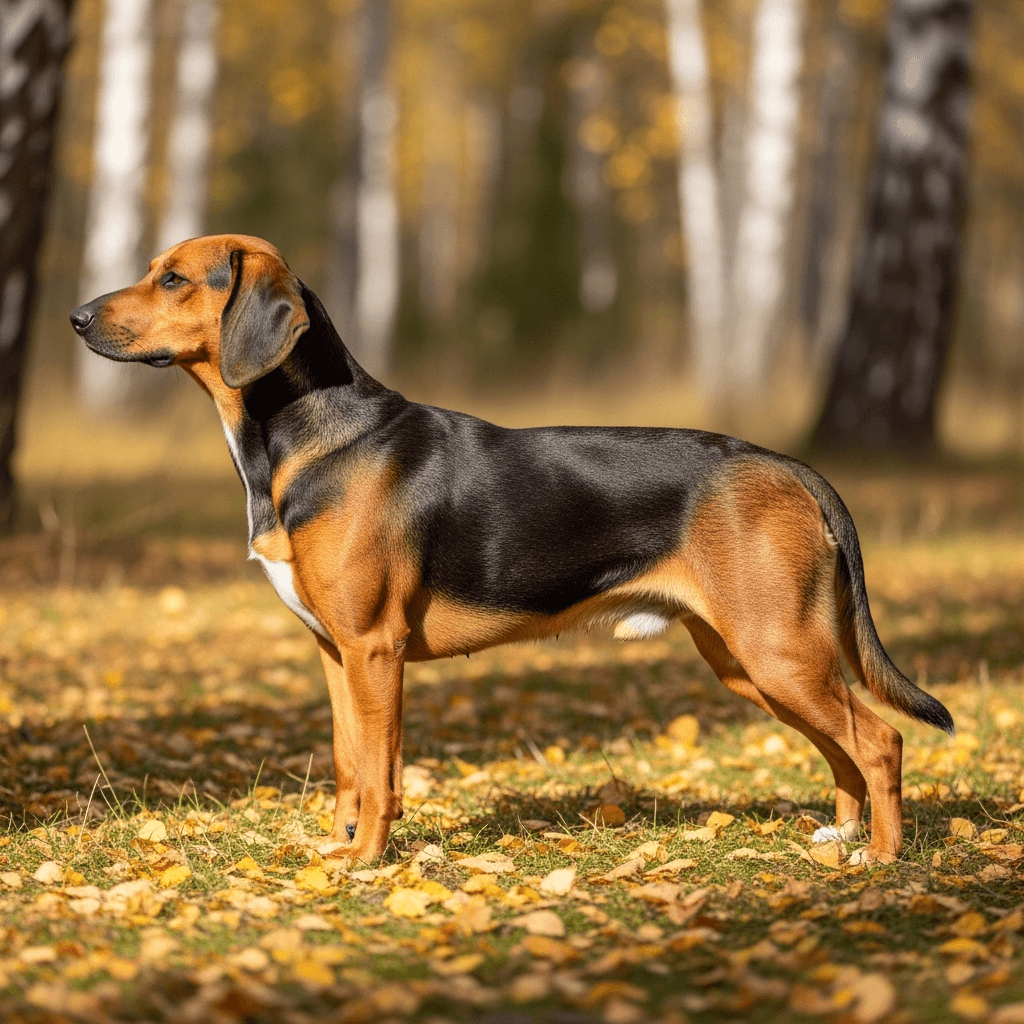
Estonian Hound
FCI Group
6• FCI 366
Size
Medium
Origin Country
XX
Height
42-52 cm
Weight
20-30 kg
Lifespan
10-15 years
Temperament
Overview
Estonian Hound, also known as Eesti Hagijas, is a fascinating hunting dog breed originating from picturesque Estonia. It belongs to group 6 FCI – hounds and related breeds, possessing exceptional hunting abilities. This medium-sized breed is characterized by a proportional build, strong muscles, and sturdy bones, making it an excellent choice for hunting enthusiasts.
The history of this breed dates back to the 1950s when attempts were made to create a national Estonian breed of shorter stature. The goal was practical – smaller dogs were meant to protect deer from being chased too quickly, which threatened the population's extinction. Through the crossbreeding of European and British hounds, a breed with excellent scenting ability and tracking skills in difficult terrain was developed. The Estonian Hound was originally bred for hunting hares, foxes, and lynxes, making it an indispensable companion for hunters.
However, the Estonian Hound is not just a hunting dog. Its balanced temperament makes it an excellent family dog. Intelligence and eagerness to work facilitate its training, making it an ideal companion for families with children. It loves being close to people and adapts well to a home environment. Nevertheless, to remain healthy and happy, it needs an adequate amount of exercise and physical activity – it is primarily a working dog that requires regular effort.
The distinctive appearance of the Estonian Hound attracts the attention of many dog lovers. Its short, rough, and shiny coat is resistant to various weather conditions, making it resilient to the whims of the weather. White markings on the body are particularly practical – they allow the dog to be easily spotted while working in the field. Due to its sociable nature, it gets along well with other animals and children, making it a popular choice for families looking for a friendly dog.
In summary, the Estonian Hound is a versatile dog that combines the traits of an excellent hunter and a loyal family companion. In the following sections of our guide, we will delve into details regarding the health, grooming, exercise, training, nutrition, history, appearance, and behavior of this extraordinary breed.
The Estonian Hound is a medium-sized dog with a proportional, harmonious body structure. According to the FCI standard, the height at the withers ranges from 45 to 52 cm for males and from 42 to 49 cm for females. The breed is characterized by a strong, dry build, sturdy bones, and well-developed muscles, which provide endurance during prolonged tracking.
The head is shaped like a blunt wedge, with a moderately wide skull. The eyes are dark, slightly slanted, expressing liveliness and intelligence. The ears are medium-sized, hanging down and well-adhering to the cheeks, giving the dog a characteristic hound appearance.
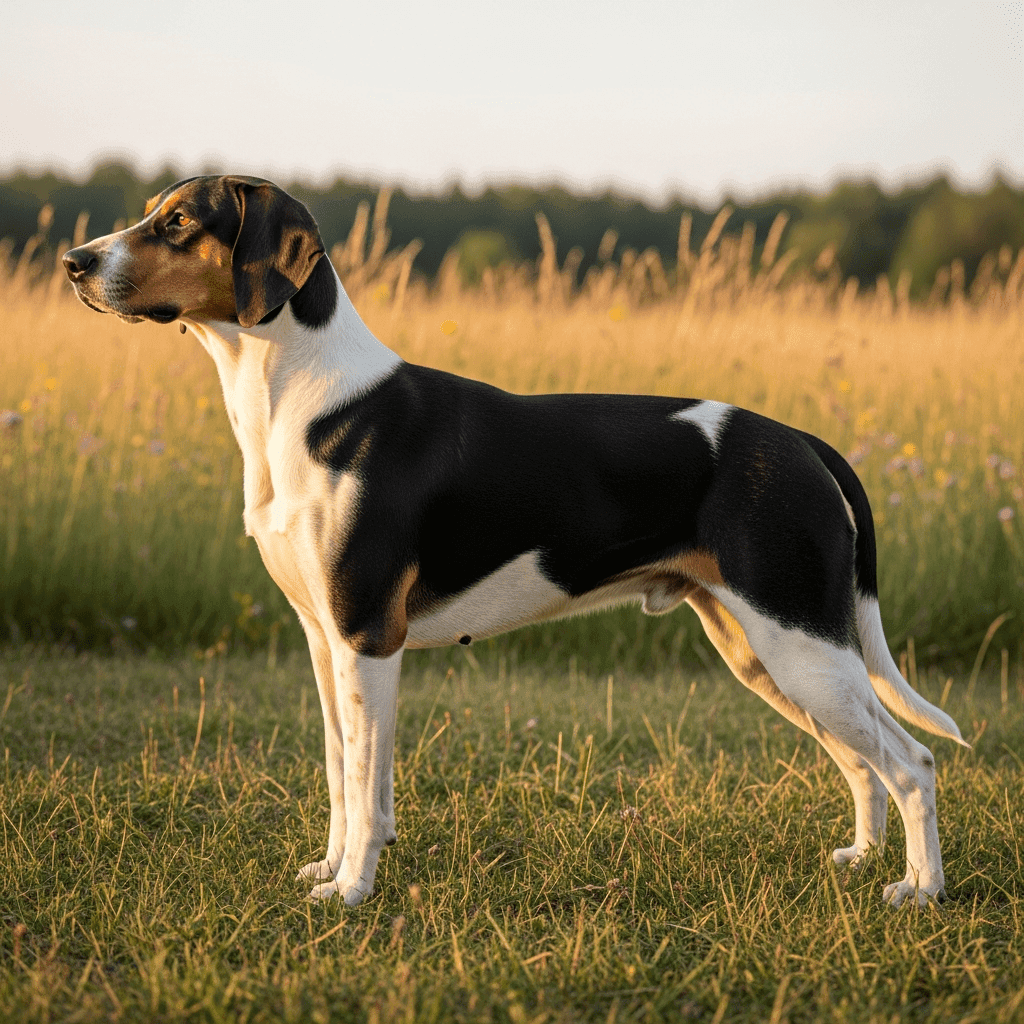
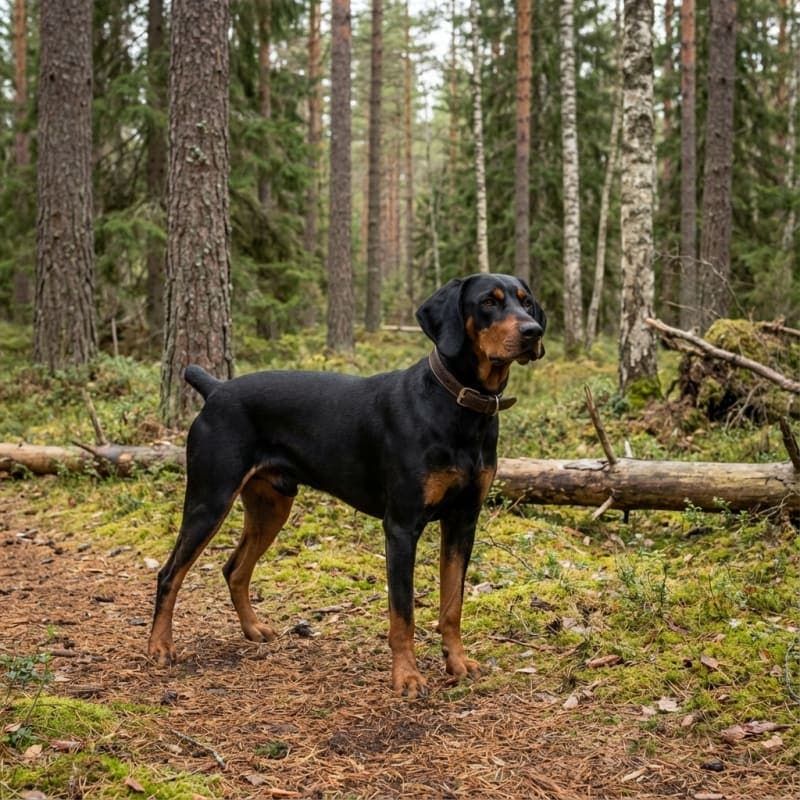
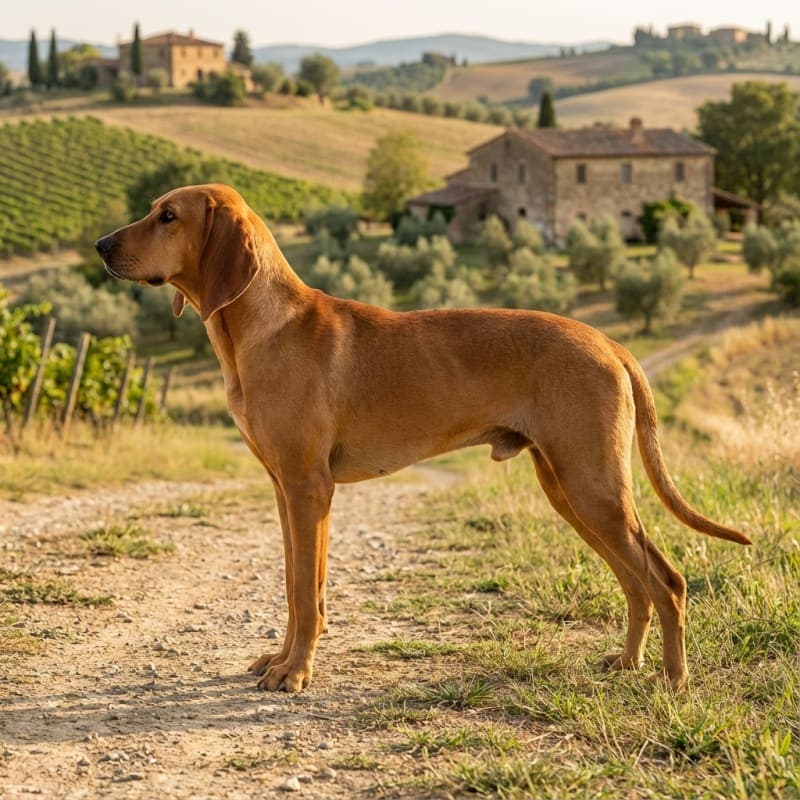
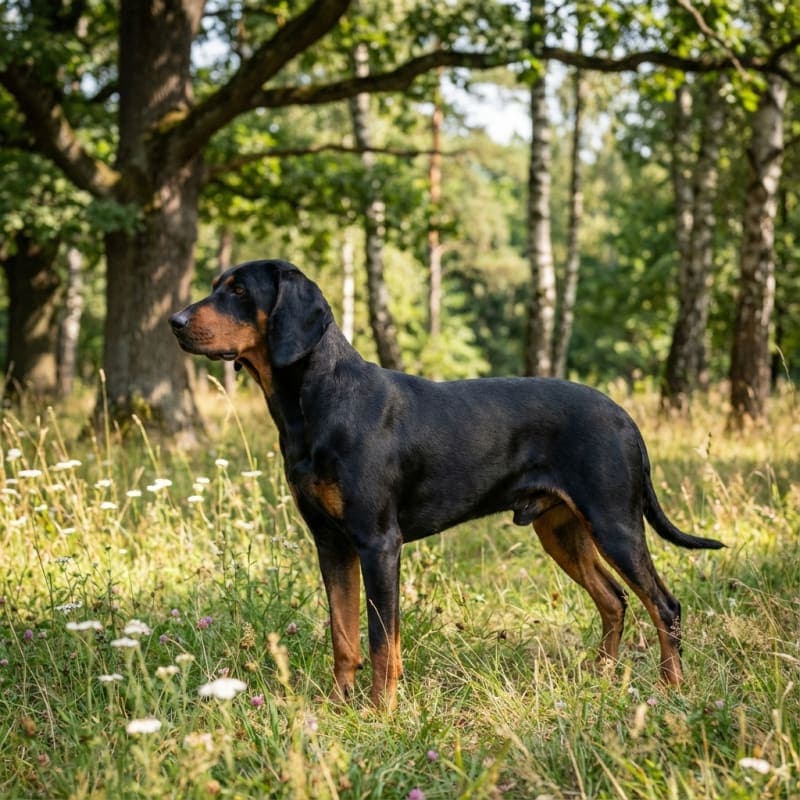
The coat is short, coarse, and shiny, occurring in various colors. The most common coloration is black patches with tan and white markings on the head, neck, chest, belly, and limbs. There are also lemon or golden coats with white patches. The white markings have practical significance – they allow the dog to be easily spotted while working in the field.
The tail is thick at the base, tapering towards the end, carried actively but not raised above the line of the back. The limbs make up about 50% of the height at the withers, providing a proportional silhouette. The body length clearly exceeds the height at the withers, with females being slightly longer than males.
The overall silhouette of the Estonian Hound is elegant and harmonious, combining the functionality of a hunting dog with an attractive breed appearance.
The Estonian Hound is a dog with a balanced temperament, combining the traits of an excellent hunter and a friendly family companion. It is friendly, sociable, and full of energy, making it an ideal dog for both work and family life.
Character traits:
- Outstanding sense of smell – the breed was developed for tracking game, which is why it has a well-developed hunting instinct and tracking ability
- Passion for hunting – a clear tendency to chase game can be a challenge in an urban environment
- Friendly and sociable – gets along well with children and other pets if properly socialized
- Intelligent and eager to learn – enjoys mental activities and quickly absorbs new commands
- Curious and exploratory – natural curiosity makes it love exploring its surroundings, which can lead to escapes if not properly supervised
Owners should remember that this breed requires proper socialization and training from a young age to avoid behavioral issues. It is important to provide the dog with a safe environment and plenty of opportunities for play and exploration. A well-raised Estonian Hound is a loyal and devoted dog that will be an excellent companion both at home and during hunts or long outdoor excursions.
The Estonian Hound is generally a healthy and resilient breed, but like any breed, it can be prone to certain health issues. The key to keeping the dog in good condition is regular veterinary visits and appropriate health prevention.
Possible health issues:
- Hip dysplasia – a genetic condition that can affect the dog's mobility
- Vision problems – including cataracts or progressive retinal atrophy (PRA)
- Heart diseases – regular cardiological examinations are recommended, especially for older dogs
- Ear infections – floppy ears require regular checks and cleaning
Preventive recommendations:
A proper diet, physical activity, and regular check-ups can help maintain the dog in good condition. Attention should be paid to the dog's weight to avoid obesity, which can lead to joint, heart, and metabolic problems. Owners should be vigilant for signs of discomfort or pain in their dog and respond as quickly as possible by consulting a veterinarian.
With proper care, the Estonian Hound can enjoy a long and healthy life, remaining an active companion for many years.
The Estonian Hound has a short, rough coat that requires minimal grooming. This dog's coat is resistant to various weather conditions and naturally resistant to dirt, which means it does not require complicated care.
Brushing:
Regular brushing is recommended once or twice a week to remove dead hair and minimize shedding. During heavy shedding periods (in spring and autumn), it is advisable to increase the brushing frequency to 3-4 times a week to reduce the amount of hair in the house. Use a brush with natural bristles or a grooming glove.
Baths:
Baths should be given only as needed – excessive washing can remove the natural oils that protect the skin and coat. Usually, a bath every 2-3 months is sufficient or when the dog is visibly dirty.
Other grooming tasks:
- Ears – regular inspection and cleaning once a week to prevent infections (hanging ears are more prone to moisture accumulation)
- Teeth – brushing 2-3 times a week to prevent tartar and gum disease
- Nails – trimming every 3-4 weeks or when you can hear the nails clicking on the floor
- Eyes – regular inspection and removal of discharge with a damp gauze
With simple grooming, the Estonian Hound stays clean and healthy with minimal effort.
The Estonian Hound is a breed that requires a lot of physical activity. These dogs are energetic and were bred for hours of tracking in the field, so they need regular exercise to stay healthy and happy.
Minimum exercise requirements:
- 2-3 long walks per day – each lasting 30-60 minutes
- Opportunity to run – preferably in a safe, enclosed area
- Mental activity – scent games, searching, training
- At least 2 hours of activity per day – including walks and playtime
Recommended forms of activity:
Running – the Estonian Hound loves to run and explore new areas. Long walks in the forest, meadows, or by the water are ideal ways for them to spend time. Fetching and search games are excellent activities that utilize the breed's natural instincts. Agility training, nosework, or mantrailing engage both the body and mind of the dog effectively.
Important warning:
Insufficient exercise can lead to serious behavioral problems, such as:
- Hyperactivity and difficulty concentrating
- Destruction of household items
- Excessive barking
- Escaping and wandering
- Obesity and related health issues
The Estonian Hound is a dog for active owners who enjoy spending time outdoors and can provide the dog with the necessary amount of exercise every day.
The Estonian Hound is a smart dog that responds well to training based on positive methods. This breed has a natural desire to work and learn, making it relatively easy to train, although it requires consistency and patience.
Training methods:
Use only positive training methods – rewarding with treats, praise, and play. Avoid punishments and dominance-based methods that can discourage the dog from cooperating. The Estonian Hound learns best when training is varied and fun.
When to start training:
Start training as early as possible – ideally from 8 weeks of age. Early socialization and basic obedience training are crucial for proper behavioral development.
Recommended forms of training:
- Basic obedience – Sit, Stay, Come, Lie down, Leave it
- Leash training – important due to the strong hunting instinct
- Recall – essential for the dog's safety in the field
- Agility – an excellent form of physical and mental activity
- Nosework/mantrailing – utilizing natural scenting abilities
- Hunting training – if the dog is to be used for hunting
Challenges in training:
Strong hunting instinct can make recall difficult when the dog picks up a scent. Therefore, it is especially important to consistently practice the Come command in various conditions and with increasing levels of distraction.
Socialization:
Socialization is key for this breed. Provide the dog with positive experiences in different environments – in the city, forest, with various people, children, other dogs, and animals. This will help develop confidence and balanced behavior in adult life.
Regular training not only helps raise a well-behaved dog but also strengthens the bond between the owner and the dog and provides the dog with essential mental stimulation.
A proper diet is key to the health of the Estonian hound. As a medium-sized dog with high physical activity, it requires a balanced diet that provides the energy and nutrients needed to maintain its condition.
Basic nutrition principles:
Choose high-quality foods appropriately balanced in terms of nutrients. Dogs of this breed need a diet rich in protein (at least 22-28% for adult dogs, 25-32% for puppies), which supports their activity and muscle development.
Recommended ingredients:
- High-quality meat – chicken, beef, turkey, lamb as the main source of protein
- Fish – salmon, mackerel as a source of omega-3 fatty acids
- Vegetables and fruits – carrots, broccoli, spinach, blueberries as a source of vitamins and fiber
- Healthy fats – fish oil, flaxseed oil supporting skin and coat health
- Carbohydrates – rice, oats, sweet potatoes as a source of energy
Portions and feeding frequency:
Adjust the amount of food to the dog's activity level. An active Estonian hound may require 20-30% more calories than a low-activity dog. Feed an adult dog twice a day, and puppies 3-4 times a day. Fresh water should always be available, especially after intense exercise.
What to avoid:
- Human food – many products are unhealthy or toxic to dogs (chocolate, onions, garlic, grapes, avocados)
- Excessive treats – should not exceed 10% of the daily calorie intake
- Feeding right before or after intense exercise – risk of gastric torsion
- Feeding table scraps – can lead to obesity and digestive problems
Weight monitoring:
Regularly monitor the dog's weight and condition. You should be able to feel the dog's ribs under a slight layer of fat, but they should not be visible. Obesity can lead to joint, heart, and metabolic problems, so maintaining a proper weight is crucial for long-term health.
With proper nutrition, the Estonian hound will have the energy for daily activities and maintain its health for many years.
Characteristic Traits
Pros
- Easy to train
- Child-friendly
- Excellent sense of smell
- Sociable and friendly
- Balanced temperament
Cons
- Requires a lot of exercise
- Strong hunting instinct
- Needs socialization
- May chase after a scent.
Behavioral Ratings
Breed History
The Estonian Hound is a breed that has its roots in Estonia and was created under specific historical conditions of the 20th century. The history of this breed is a fascinating example of intentional breeding engineering serving practical needs.
Breed origin:
Like many Scandinavian hound breeds, the foundation of the Estonian Hound consisted of Eastern and Western European as well as British hound breeds. Various hunting lines were crossed to produce a dog with specific traits adapted to Estonian conditions.
Key requirement – lower height:
A significant factor in the development of the breed was the restriction on height at the withers. The goal was very practical – smaller dogs were meant to protect the population of ungulates (moose) from excessive chasing. Large, fast hounds caused excessive losses in the population of game animals, which is why hunting authorities decided to introduce smaller breeds that were effective in hunting hares, foxes, and lynxes, but did not pose a threat to larger animals.
Official recognition:
In the 1950s, systematic breeding work began. Thousands of dogs were registered, evaluated, and recorded to be recognized as Estonian Hounds. In 1954, the breed was officially approved, and its standard was developed by the Estonian Kennel Club.
Development and international recognition:
Over the years, the Estonian Hound gained popularity not only as a hunting dog but also as a companion dog. Its balanced temperament and versatility made it a favorite among many families in Estonia. The breed was recognized by the Fédération Cynologique Internationale (FCI) and received the standard number 366. The current standard was approved on September 4, 2019.
Modern times:
Today, the Estonian Hound is appreciated both as a working dog and a companion. Although it is a relatively rare breed outside of Estonia, its hunting skills, friendly nature, and ease of training make it a valuable companion for hound enthusiasts around the world.