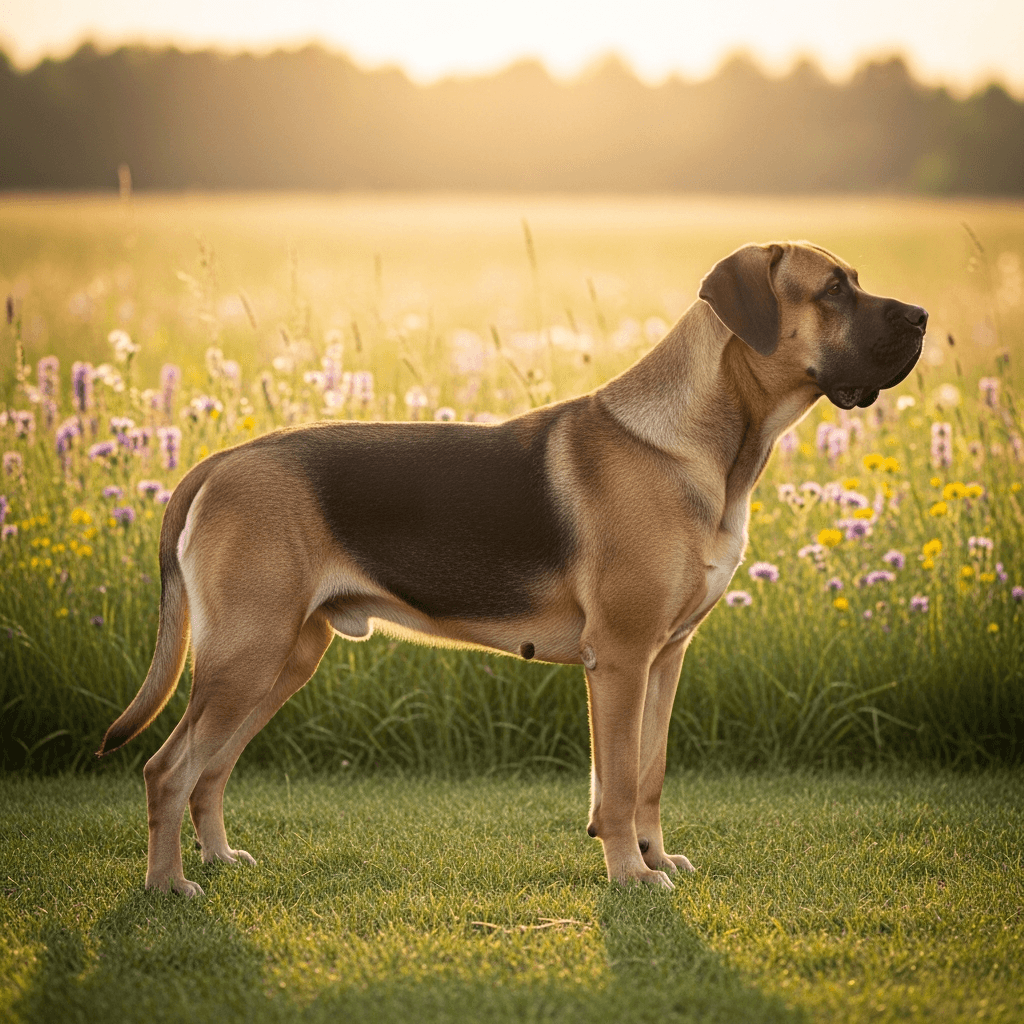
Polish hound
FCI Group
6• FCI 52
Size
Medium
Origin Country
PL
Height
56-65 cm
Weight
20-30 kg
Lifespan
12-14 years
Temperament
Overview
The Polish Hound, also known as brachet polonais, is an extraordinary dog breed that has earned recognition for its exceptional hunting traits and gentle nature. This medium-sized hound breed has deep roots in Poland and boasts a long and rich history dating back at least to the 11th century. At that time, the Polish Hound, with its invaluable tracking skills and distinctive loud barking known as granie, was an indispensable companion to Polish hunters.
Modern Polish Hounds still retain their legendary skills as hunting dogs, being particularly valued in challenging mountainous hunting grounds. Their endurance and determination in tracking make them irreplaceable during hunts for wild boars and foxes, which are now their main hunting targets in Poland.
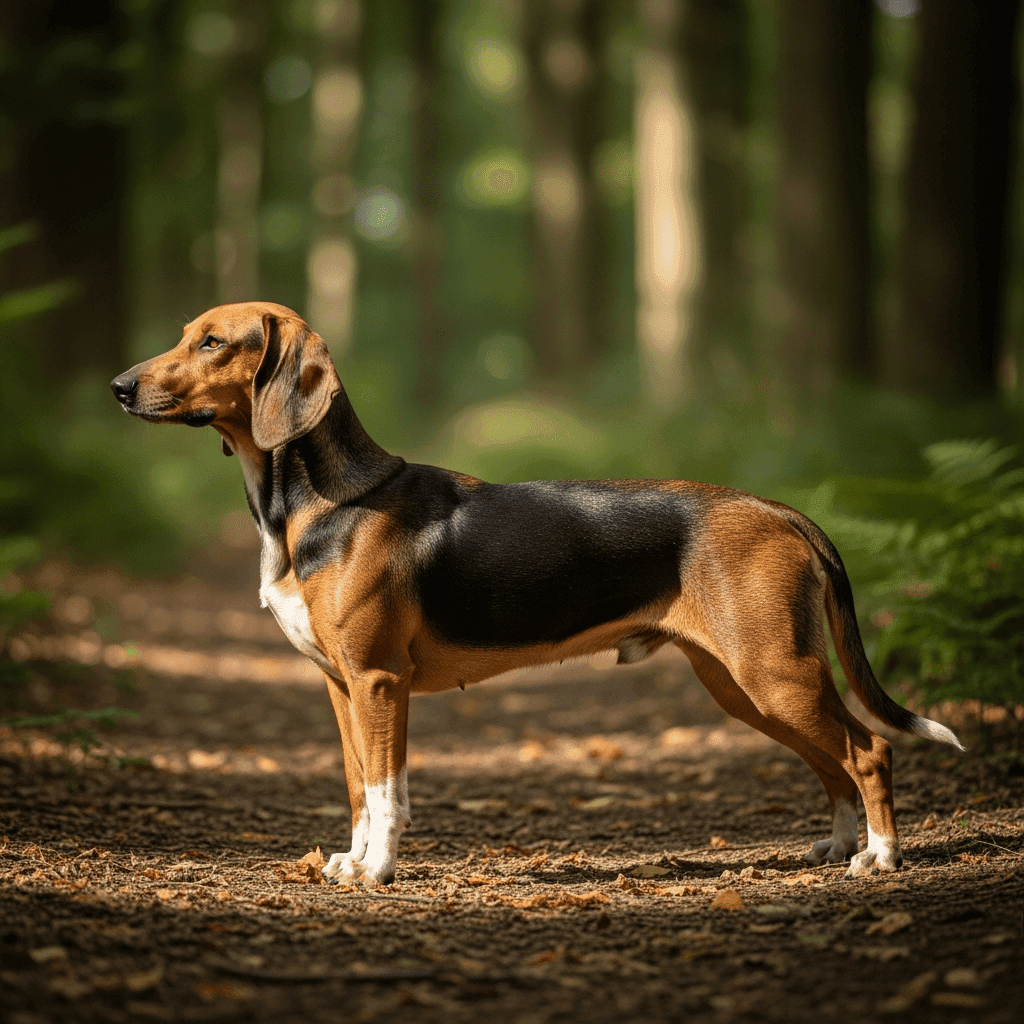
The Polish Hound features a strong, muscular build, which directly translates to its exceptional endurance and resilience to harsh conditions. Its silhouette takes on a harmonious rectangular shape – the length of the body is slightly greater than the height at the withers. The characteristic appearance is complemented by a heavy, noble head and penetrating dark brown eyes that express intelligence and alertness. Medium-length hanging ears add to its charm, while the short, smooth coat with a dense undercoat provides excellent protection against adverse weather conditions. The typical coloration is brindle with various shades of tan – from light gold to deep mahogany.
In terms of character, the Polish Hound is an extremely sociable dog that forms strong attachments to its owners. It combines natural, innate hunting instincts with a gentle, balanced temperament, making it an ideal family companion, especially in homes with children. Its temperament – a harmonious blend of an energetic, passionate hunter and a calm, devoted pet – allows it to integrate well into active families leading a busy lifestyle.
The intelligence of the Polish Hound greatly facilitates its training and daily cooperation with the owner. However, it is important to remember that its strong hunting instinct can lead to chases after smaller animals. Therefore, it requires appropriate, consistent training and early socialization to avoid potential behavioral problems.
Polish Hounds thrive best in active families that provide them with regular, long walks and outdoor play. Due to their natural love for movement, exploration, and tracking, they make wonderful companions for those leading a sporty, active lifestyle. In the further sections of the guide, you will find detailed information about the health, care, training, and fascinating history of this extraordinary Polish breed.
The Polish Hound is a dog with a strong, muscular build and medium size, characterized by endurance and natural elegance. The height at the withers is from 56 to 65 cm for males and from 55 to 60 cm for females. Their body weight is proportional to their height, usually falling within the range of 20-30 kg, and they generally appear to be strong, harmoniously built, and agile dogs with athletic condition.
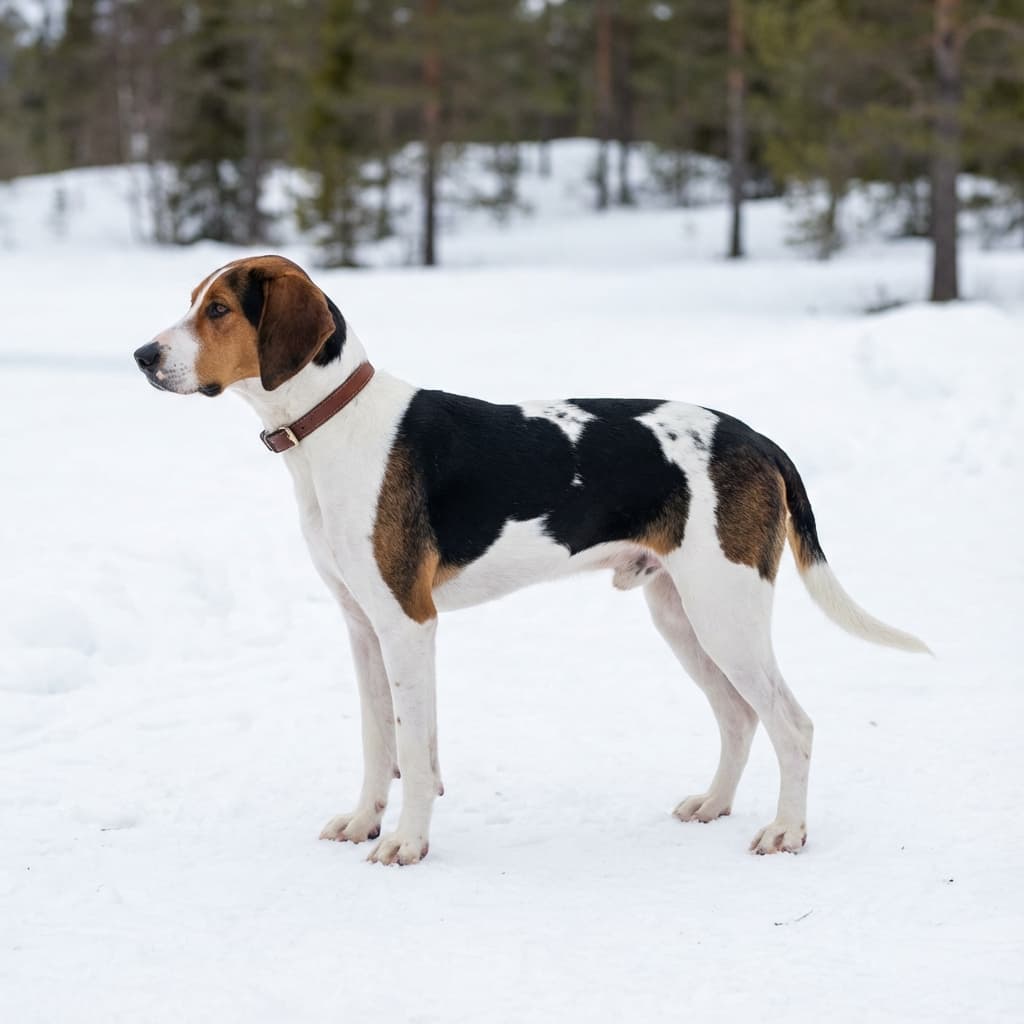
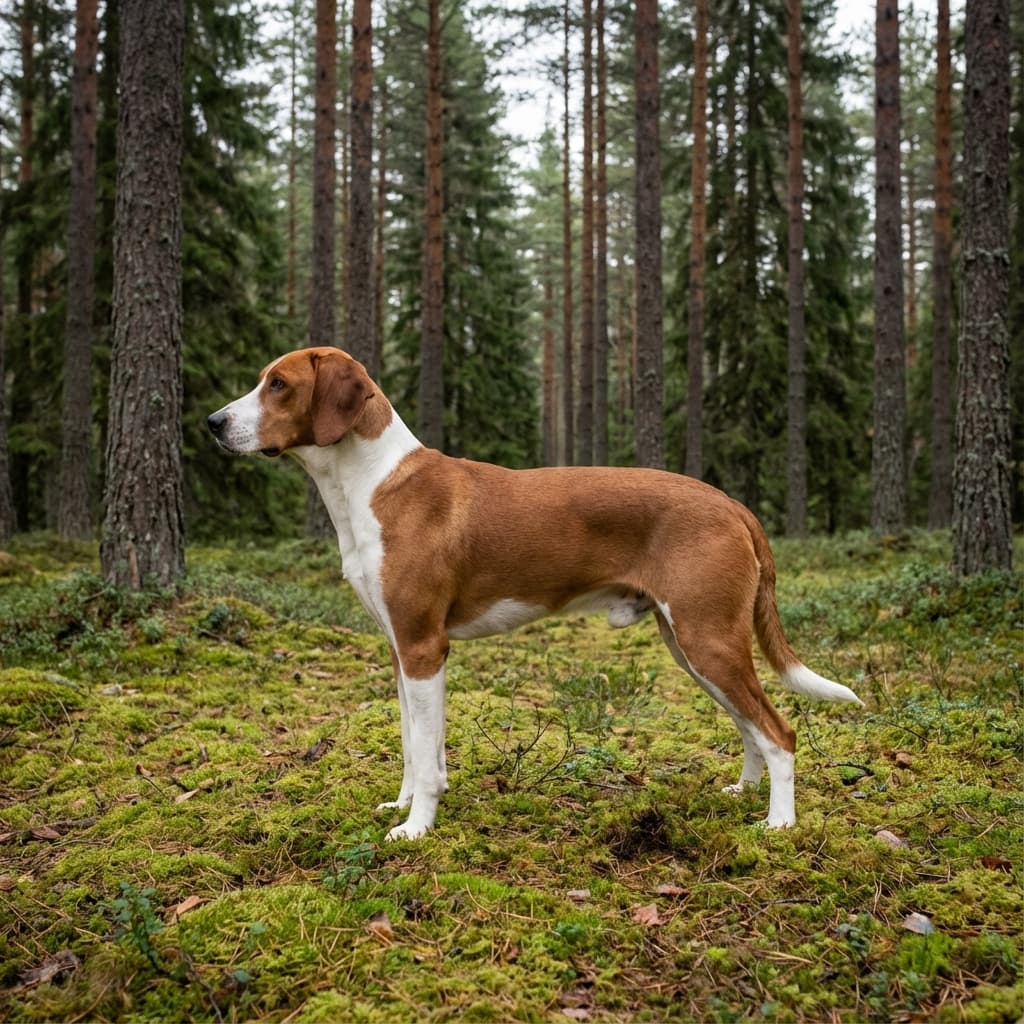
The Polish Hound has a distinctive head, which is quite heavy and rectangular in shape, giving it a noble, purebred appearance. The braincase is wide and slightly convex, while the muzzle is long and deep, ending with a straight nasal bridge. The nostrils are widely open, indicating excellent olfactory abilities of this breed. The eyes are medium-sized, dark brown, expressing intelligence and alertness. The ears are characteristically hanging, of medium length, set at the level of the eyes, with slightly rounded tips.
The coat of the Polish Hound is short and smooth, pleasant to the touch, and the dense undercoat makes it resistant to various, often harsh weather conditions. The coloration of the Polish Hound is most often:
- Brindle with black or dark gray shades on the back
- Various shades of tan – from light golden through red to deep mahogany
- On the head, especially above the eyes, on the muzzle, and ears, there are characteristic tan spots
- White markings on the chest and paws are permissible
The Polish Hound also has strong, muscular limbs, which are well-muscled and proportional to the rest of the body. The front limbs are straight and parallel, while the hind limbs are heavily muscled, providing excellent propulsion during movement. The paws are compact, oval-shaped, with well-arched toes. Their tail is thick at the base, tapering towards the end, hanging down at rest, and during a run, it is held at the level of the back line or slightly below, never curled over the back.
The Polish Hound is a dog that attracts attention with its majestic appearance, noble posture, and harmonious, strong physique – it emanates dignity and natural self-confidence.
The Polish Hound is a dog with a balanced temperament, which perfectly combines social and hunting traits. It is very strongly attached to its family, making it an excellent, devoted life companion. Polish Hounds are known for their gentle, friendly disposition towards household members, while also exhibiting a strong, innate hunting instinct that can make them somewhat cautious and reserved around strangers.
Their loud barking, traditionally referred to as playing, is a natural way of communication during tracking – their resonant, loud voice can be heard over very long distances, which has always been highly valued by hunters. This characteristic playing allows the hunter to follow the dog's progress in dense forests or mountainous terrain.
The Polish Hound is characterized by high intelligence and good memory, making it easy to train, although it may sometimes show a certain stubbornness and independence of thought – a trait typical of hound breeds. It requires a consistent yet gentle approach to training to teach it when it should be obedient and when it can express its natural curiosity and independence in the field.
In relationships with children, Polish Hounds are friendly, patient, and gentle, making them excellent companions for family play. Their stable character and balanced disposition mean they can be wonderful family dogs. However, it is important to remember:
- Early socialization – contact with various people, dogs, and situations from a young age
- Consistent upbringing – clear rules and boundaries from the first days at home
- Proper channeling of the hunting instinct – through appropriate activities and games
The Polish Hound is a dog that feels best in an active environment and eagerly participates in all family activities. It loves long walks, hiking in the mountains, tracking games, and any outdoor activities. Its joy of life and enthusiasm are contagious to the whole family.
The Polish Hound enjoys a well-deserved reputation as a breed with very good health and high resilience. The average lifespan is between 12 and 14 years, which is an excellent result for a dog of this size. This breed does not have documented serious hereditary health issues, making it relatively resistant to genetic diseases and a very healthy breed.
However, like all dogs, Polish Hounds can be prone to certain conditions, especially those related to their active lifestyle and hunting purpose:
- Injuries during hunting – cuts, sprains, paw injuries in difficult terrain
- Gastric dilatation (bloat, gastropexy) – a potentially life-threatening condition occurring in dogs with deep chests; it is recommended to feed 2-3 smaller meals a day instead of one large meal and to avoid intense exercise immediately after eating
- Ear infections – due to their floppy ears, which can limit ventilation of the ear canal; regular checking and cleaning of the ears is crucial
- Joint injuries – hip dysplasia may occur occasionally, although it is not typical for the breed
It is important for Polish Hound owners to regularly visit the veterinarian and provide appropriate health care to minimize the risk of diseases:
- Regular vaccinations and deworming
- Protection against external parasites (ticks, fleas)
- Veterinary check-ups every 6-12 months
- Blood and urine tests for older dogs
- Maintaining oral hygiene
Overall, the Polish Hound is a dog with a solid build and high resilience to harsh weather conditions, making it an excellent companion for long hikes and hunting in any weather, as well as for daily walks throughout the year. Their natural robustness and vitality ensure that, with proper care, they enjoy good health throughout their lives.
The care of the Polish Hound is relatively simple and not very time-consuming due to its short and smooth coat. This breed is considered to shed moderately, which means it does not require intensive daily brushing, but regular grooming is essential for maintaining skin health and the beautiful appearance of the coat.
Coat care:
- Weekly brushing – just once a week, use a natural bristle brush or a rubber glove to remove dead hair and minimize the amount of fur in the house
- Shedding season – in spring and autumn, the frequency of brushing should be increased to 2-3 times a week to help remove loose hair from the dense undercoat
- Bathing as needed – the Polish Hound does not require frequent baths, just once every 2-3 months or when the dog is visibly dirty after hunting or muddy walks
Ear care (CRITICAL):
The Polish Hound has drooping ears that tend to accumulate dirt, moisture, and debris, which can lead to bacterial or fungal infections. Therefore, regularly checking the ears (at least once a week) and cleaning them is extremely important. Use special ear cleaning solutions or veterinary wet wipes. Never use cotton swabs deep in the ear canal!
Nail and paw care:
- Nails should be trimmed regularly – usually once a month, to prevent them from growing too long, which can lead to discomfort and walking problems
- Check the paws after walks, especially in rough terrain – remove splinters, pebbles, and check for cuts
- In winter, wash the paws after walks to remove road salt, which can irritate the skin
Oral hygiene:
Dental care is also important, and it is recommended to regularly clean the teeth 2-3 times a week with a special toothbrush and dog toothpaste to prevent the buildup of tartar, cavities, and gum disease. Dental chews and toys can also be used to clean the teeth.
With proper, systematic care, the Polish Hound will be healthy, well-groomed, and beautiful, contributing to its overall well-being and long, happy life by your side.
The Polish Hound is a dog with very high energy and endurance, requiring a significant amount of exercise and physical activity every day. Due to its historical purpose as a hunting dog, this breed has an innate need for intense effort and is not suited for living in a small apartment without access to a garden or areas to run.
Minimum exercise requirements:
- At least 1-2 hours of intense physical activity daily
- Long walks – at least 2-3 times a day, including at least one long walk (60+ minutes)
- The ability to run freely in a safe, fenced area
- Active play – fetching, searching, scent tracking
Ideal forms of activity for the Polish Hound:
- Long hikes in forests, mountains, and natural areas – this is the favorite activity of the hound, satisfying its need for exploration and tracking
- Running – the Polish Hound is an excellent companion for runners and can easily accompany training sessions
- Hunting or mantrailing training (tracking a person) – perfectly utilizes the breed's natural instincts
- Cynological sports – agility, obedience, rally-o, nosework (working with the nose)
- Swimming – most hounds love water, making it a great form of full-body exercise
WARNING: Lack of adequate exercise can lead to serious behavioral problems, such as:
- Excessive barking and howling
- Destructive behavior – destroying furniture, digging in the garden
- Boredom and frustration leading to depression
- Attempts to escape in search of adventure
- Hyperactivity and difficulty concentrating
Due to their strong hunting instinct, it is important to provide proper security during walks in open areas. In cities and near roads, always use a leash, and in open areas, ensure that the dog responds well to recall commands or provide a fenced area for free running.
The Polish Hound is a dog that values activity and challenges, so owners should be prepared for daily, long-lasting activities related to their energetic lifestyle. In return, you will receive a loyal, happy companion who will joyfully share every outdoor adventure with you!
The Polish Hound is a very intelligent dog with a good memory, which makes training usually relatively easy and enjoyable for both parties. This breed eagerly learns new commands and tricks, especially if training is conducted in a positive manner, using food rewards, praise, and play. However, it is important to remember that Polish Hounds have a strong hunting instinct and a certain degree of independence, which is typical for hound breeds.
Key training principles for the Polish Hound:
- Patience and consistency – this is absolutely essential; the Polish Hound needs clear rules applied by all family members
- Positive reinforcement – reward desired behaviors with treats, play, and praise; avoid harsh punishments that can break the trust bond
- Short, intense sessions – it’s better to practice 3 times for 10 minutes a day than once for 30 minutes
- Diversity – Hounds quickly get bored with repetition, introduce new elements and challenges
Basic commands (PRIORITY):
Due to their hunting instinct, control commands are particularly important:
- Recall (Come, Here) – the most important command; practice in various environments with increasing levels of distraction
- Stay (Stay, Wait) – impulse control for chasing
- Drop it (Give) – safety during walks
- Sit, Down, Lie down – basics of obedience
Socialization training (CRITICAL):
Early socialization is absolutely crucial for the Polish Hound to ensure comfort in various situations and with different people and dogs. A Polish Hound puppy (from 8 weeks to 16 weeks of age) should be exposed to:
- Different environments – city, park, forest, dog-friendly stores
- Different people – children, seniors, people in uniforms, individuals with strollers
- Other dogs and animals – controlled meetings with dogs of various breeds and sizes
- Different sounds – traffic, thunder, fireworks, household appliances
- Different surfaces – grass, asphalt, gravel, metal grates
Advanced training forms:
Polish Hounds respond excellently to various forms of training, including:
- Group training – group classes allow interaction with other dogs and people, developing social skills
- Mantrailing – tracking a human, ideal for utilizing natural abilities
- Nosework – working with the nose, searching for hidden scents
- Agility – obstacle courses that develop agility and cooperation
- Obedience – obedience competitions for more advanced dogs
Training should be fun and engaging to maintain the dog's interest. Since Polish Hounds are social dogs and very attached to their owners, it is worth combining training with play and quality time together, which will make them more motivated to learn and eager to cooperate.
Remember: the Polish Hound is an intelligent partner, not a servant. Respect their independence, but demand obedience at key moments. With the right approach, you will have a well-trained companion who listens to you not out of compulsion, but from a deep bond and respect.
The Polish Hound has balanced nutritional needs that should be carefully tailored to their high level of physical activity, age, health status, and condition. Because they are active and muscular dogs, they require a high-quality diet rich in nutrients that support their energy and physical condition.
Choosing Food:
Owners should choose high-quality foods – both dry and wet – that provide the dog with all the essential nutrients. Key elements of good food for the Polish Hound include:
- High protein content (minimum 25-30%) – supports the development and maintenance of muscular build
- Healthy fats (15-20%) – a source of energy for active dogs, support for skin and coat
- Complex carbohydrates – rice, oats, sweet potatoes provide long-lasting energy
- Omega-3 and Omega-6 fatty acids – healthy skin, shiny coat, joint support
- Glucosamine and chondroitin – joint support for active dogs
- Vitamins and minerals – a complete set for optimal health
Feeding Schedule:
- Adult dogs (over 12 months): 2 meals a day – morning and evening
- Puppies (2-6 months): 3-4 meals a day
- Young dogs (6-12 months): 2-3 meals a day
- Senior dogs (over 8 years): 2 meals a day, possible adjustment of food composition
IMPORTANT – Preventing Gastric Dilatation:
Polish Hounds, like all dogs with deep chests, are at risk of gastric dilatation (bloat, gastropexy) – a potentially fatal condition. To minimize the risk:
- Feed the dog twice a day instead of one large meal
- Avoid intense exercise immediately before and after eating (at least 1 hour break)
- Provide a calm environment during feeding
- Avoid eating too quickly – use slow feeders or sniff mats
- Always provide access to fresh water, but limit large amounts of water immediately after meals
Weight Control:
It is important to avoid overfeeding the dog, as Polish Hounds tend to gain weight if fed too much food while their physical activity is reduced. Regularly monitor the dog's weight (monthly) and adjust the amount of food according to their:
- Level of physical activity
- Age and metabolism
- Health status
- Body condition (you should be able to feel the ribs under a thin layer of fat)
Dietary Supplements:
Supplements may be used if recommended by a veterinarian, especially in cases of:
- Very active dogs or those participating in hunts – joint supplements (glucosamine, chondroitin, MSM)
- Senior dogs – support for joints, liver, kidneys
- Skin or coat issues – fish oils, Omega-3
- Dogs in recovery – probiotics, vitamins
Overall, a healthy diet and proper nutrition are crucial for maintaining the Polish Hound in excellent condition, health, and vitality throughout their life. Always consult dietary changes with a veterinarian, especially if the dog has special health needs.
Characteristic Traits
Pros
- Exceptionally durable and resistant to harsh weather conditions
- Easy to train due to high intelligence and willingness to cooperate
- Friendly
- sociable
- and gentle towards families with children
- Excels as a hunting dog thanks to excellent tracking abilities
- Balanced temperament and stable character
- Low grooming requirements.
Cons
- A very strong hunting instinct can cause problems during walks. It requires a lot of movement and daily physical activity (at least 1-2 hours). It may chase smaller animals and small pets. Loud barking while tracking can be problematic in the city. It is not suitable for living in a small apartment without access to outdoor space.
Behavioral Ratings
Breed History
The Polish Hound is a breed with an incredibly rich and fascinating history that dates back deep into Polish medieval times. The first mentions of hunting dogs in Polish lands appear as early as the 11th century in the famous chronicles of Gallus Anonymus, the oldest preserved account of the history of Poland. This indicates how deeply rooted this breed is in Polish culture and tradition.
This breed was highly valued for centuries by Polish nobility and kings, who used hounds for hunting hares, foxes, deer, wild boars, and other game animals. Chronicles from the 14th century contain mentions that hounds were bred specifically for royal hunts, highlighting their prestigious status at that time.
The name hound appears in numerous historical texts:
- The Book on Farming by Piotr Krescentyn (published in Krakow in 1549)
- The Life of a Good Man by Mikołaj Rej from 1568
- In 1618, a Krakow publishing house released the work Hunting with Hounds by Count Jan Ostroróg, the voivode of Poznań – it can be considered the first Polish canine guide, containing principles of rational breeding
The first detailed morphological description of the Polish hound is found in the book Hunting with Hounds by Ignacy Count Wołkowski, published in 1823. The author described not only the appearance but also the character traits and training methods for hounds.
The Tragedy of the 20th Century:
In the 19th century, Polish hounds were already widely known and described in various canine publications throughout Europe. Unfortunately, during World War II, this breed found itself on the brink of total extinction. War destruction, occupation, and post-war chaos nearly completely decimated the population of Polish hounds in Poland.
Rebuilding the Breed – the heroic work of enthusiasts:
Thanks to the heroic efforts of several passionate enthusiasts and breed lovers, particularly Colonel Piotr Kartawik, the Polish hound was saved from complete extinction. In 1959, four Polish hounds were brought from Belarus, which had survived the war in the eastern territories of the former Commonwealth. These four dogs – two females and two males – became the foundation of a new breeding program in post-war Poland.
Colonel Kartawik, along with a group of breeders, undertook systematic work to rebuild the breed, conducting careful selection and controlled breeding. In 1966, the Polish hound was officially recognized by the FCI (Fédération Cynologique Internationale) under standard number 52, which was a milestone in the breed's history and helped in its further development and international popularity.
Modern Times:
Today, the Polish hound is not only a valued hunting dog in Poland and other European countries but also a wonderful family companion, known for its loyalty, gentle disposition, and balanced character. The breed is recognized as a Monument of Polish History and serves as a living symbol of Polish hunting and canine tradition.
The breeding of the Polish hound is currently conducted according to strict FCI standards, and the breed enjoys growing interest not only among hunters but also among families looking for an active, intelligent, and devoted companion. The Polish hound remains a living heritage of Polish culture and history, symbolizing the resilience, courage, and steadfastness of the Polish nation.