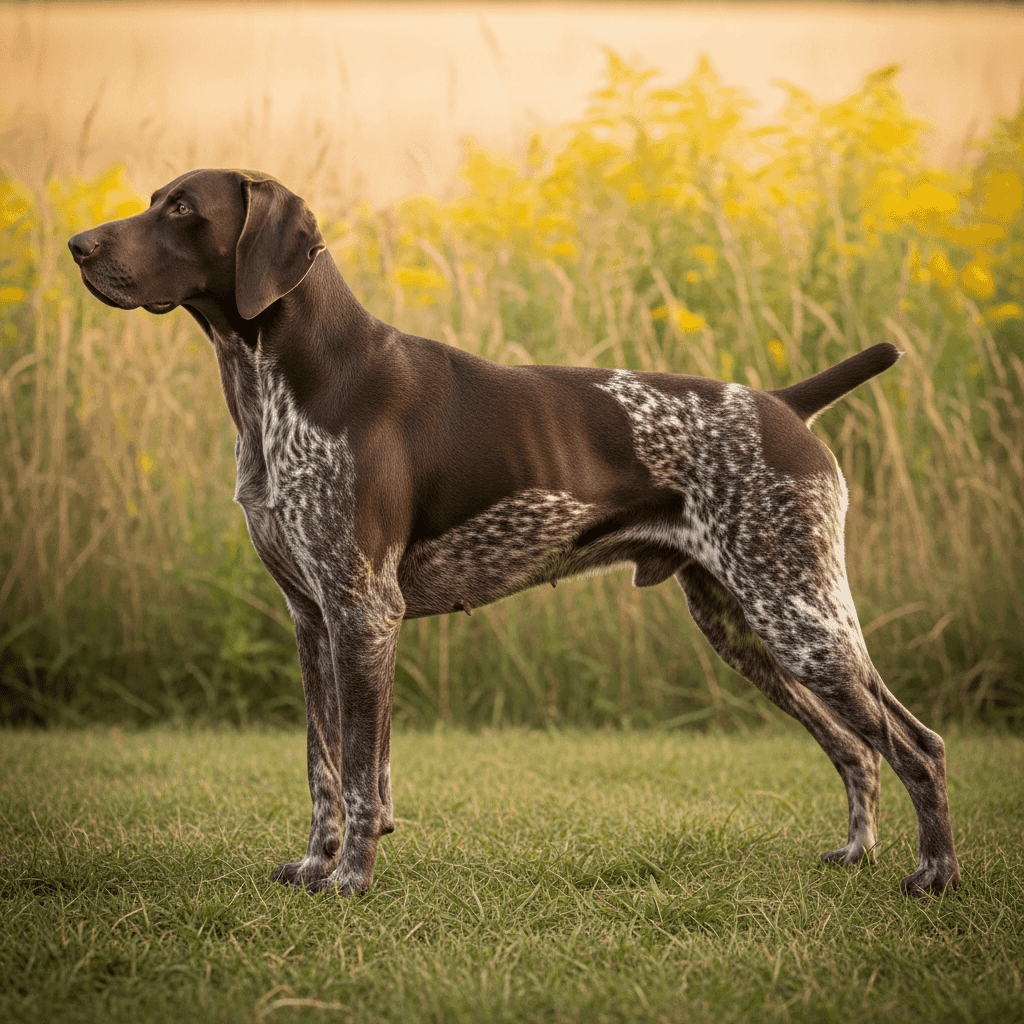
German Shorthaired Pointer
FCI Group
7• FCI 119
Size
Large
Origin Country
DE
Height
58-66 cm
Weight
20-32 kg
Lifespan
10-15 years
Temperament
Overview
German Shorthaired Pointer (Deutsch Kurzhaar, GSP) is one of the most versatile and popular hunting dog breeds in the world, valued by both professional hunters and active families looking for an energetic, intelligent companion. This elegant German breed combines excellent skills of a pointer (game indication), retriever (fetching), and spaniel (flushing), creating a complete, versatile gundog capable of working in any terrain and conditions.
The history of the German Shorthaired Pointer dates back to dogs used for bird hunting with nets in Mediterranean countries and in connection with falconry. Through France, Spain, and Flanders, pointers reached German courts. The most important distinguishing feature of these dogs was their ability to indicate game (pointing). After the invention of the first double-barreled shotgun (1750), the pointing dog became even more desirable, as birds were shot in flight within full view of the dog.
This marked the beginning of the transition from ordinary pointer to versatile hunting dog. As a fundamental basis for the structure and development of the breed, Zuchtbuch Deutsch-Kurzhaar (Stud Book) has been published since 1897. It was Prince Albrecht zu Solms-Braunfeld who gathered the breed characteristics, assessment principles, and ultimately also simple testing regulations for hunting dogs.
The modern German Shorthaired Pointer is a true versatile hunting dog that, according to the FCI standard, continues to pass through the filter of refined breeding regulations and tests. Its skills include searching for and indicating game, flushing birds, retrieving feathered and furred game from water and land, tracking wounded game, and working after the shot in the most challenging terrain conditions.
The characteristic proud stance, fluid and spacious movement, and harmonious body structure make it not only an excellent working dog but also an . Its short, dense coat in shades of brown, black, or with white markings is easy to maintain and provides excellent protection against unpleasant weather conditions.
Despite its strong hunting instinct, the German Shorthaired Pointer is also a wonderful family dog for active households. It is characterized by a balanced temperament without nervousness or aggression, is trustworthy, confident, and intelligent. It forms strong bonds with the family and is particularly patient and gentle with children.
This dog is for active, experienced owners who can provide it with at least 60-90 minutes of intense exercise daily and mental stimulation. This breed is not suitable for people leading a sedentary lifestyle. The German Shorthaired Pointer needs tasks, challenges, and close contact with its owner to be happy and balanced.
With its intelligence and willingness to cooperate, the German Shorthaired Pointer is well-suited not only for hunting but also for canine sports such as agility, obedience, tracking, nosework, or dog dancing. It is a breed that wants to work and fulfill tasks, making it an ideal partner for anyone who can meet its needs.
We invite you to further explore this fascinating, versatile breed of German hunting dogs – its detailed appearance, complex character, health requirements, grooming, nutritional, training needs, and rich history in the subsequent parts of our comprehensive guide. The German Shorthaired Pointer is much more than a hunting dog; it is a devoted friend, intelligent partner, and reliable companion for life's adventures.
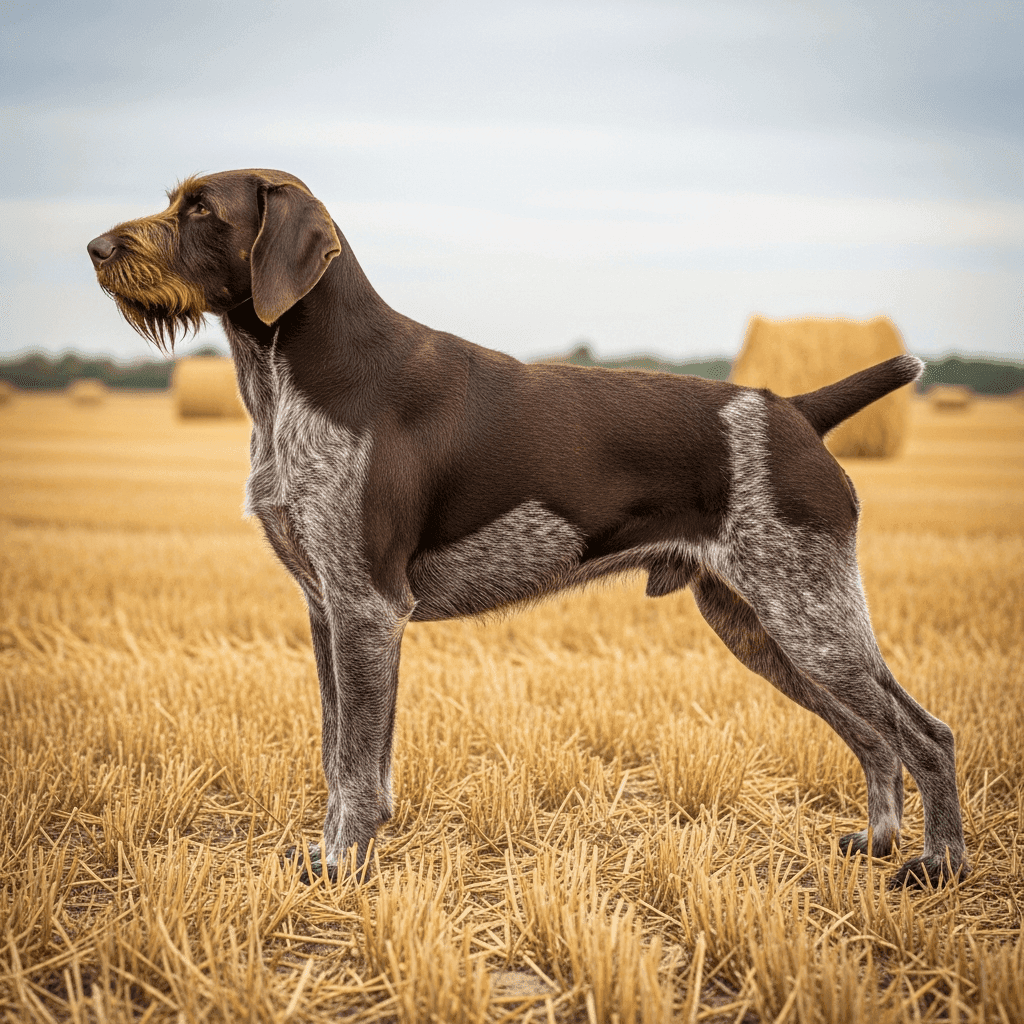
The German Shorthaired Pointer is a dog with harmonious proportions and noble structure, combining elegance with athleticism and the functionality of a working dog. Its silhouette is balanced, strong, and dignified, presenting a proud stance characteristic of pointing dogs.
Dimensions: According to the FCI standard, the height at the withers for males (dogs) ranges from 62 to 66 cm, and for females from 58 to 63 cm. Weight is not strictly defined in the standard but typically ranges from 25-32 kg for males and 20-27 kg for females, depending on build and condition. The body proportions are harmonious – the body length should slightly exceed the height at the withers (approximately 103:100).
The head is dry, well-shaped, neither too light nor too heavy, with proportions corresponding to the sex and overall body structure. The skull is wide, slightly rounded with a gently marked median groove. The stop (the transition between the skull and muzzle) is clearly defined but not abrupt. The muzzle is long, wide, and strong (never pointed), with a straight or slightly convex bridge of the nose, ending in a broad truffle. The color of the truffle depends on the coat color: brown for brown dogs, black for black and black-and-white dogs.
The eyes are medium-sized, neither protruding nor deeply set, preferably dark brown (the darker, the better), with an intelligent, attentive, and energetic, yet friendly expression. The eyelids are well-fitting and pigmented.
The ears are set high and wide, smooth, hanging without twisting along the cheeks, not too fleshy, of medium length (reaching approximately to the corners of the mouth). Rounded at the tips.
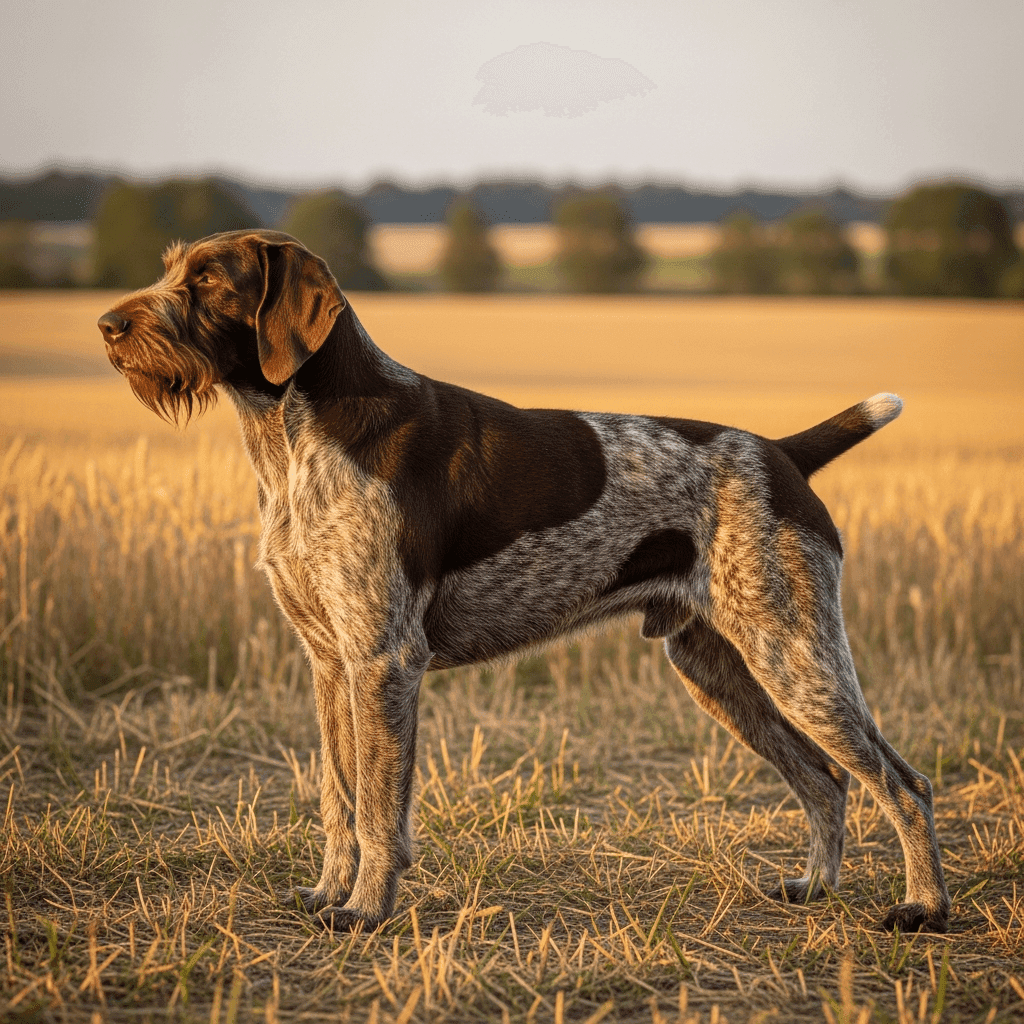
The coat is short and dense, rough to the touch, evenly covering the entire body. It is thinner and shorter on the head and ears, slightly longer on the underside of the tail. The coat is water-resistant and provides good protection against weather conditions. There is no undercoat or it is very sparse.
Coat colors: The German Shorthaired Pointer comes in the following color variations:
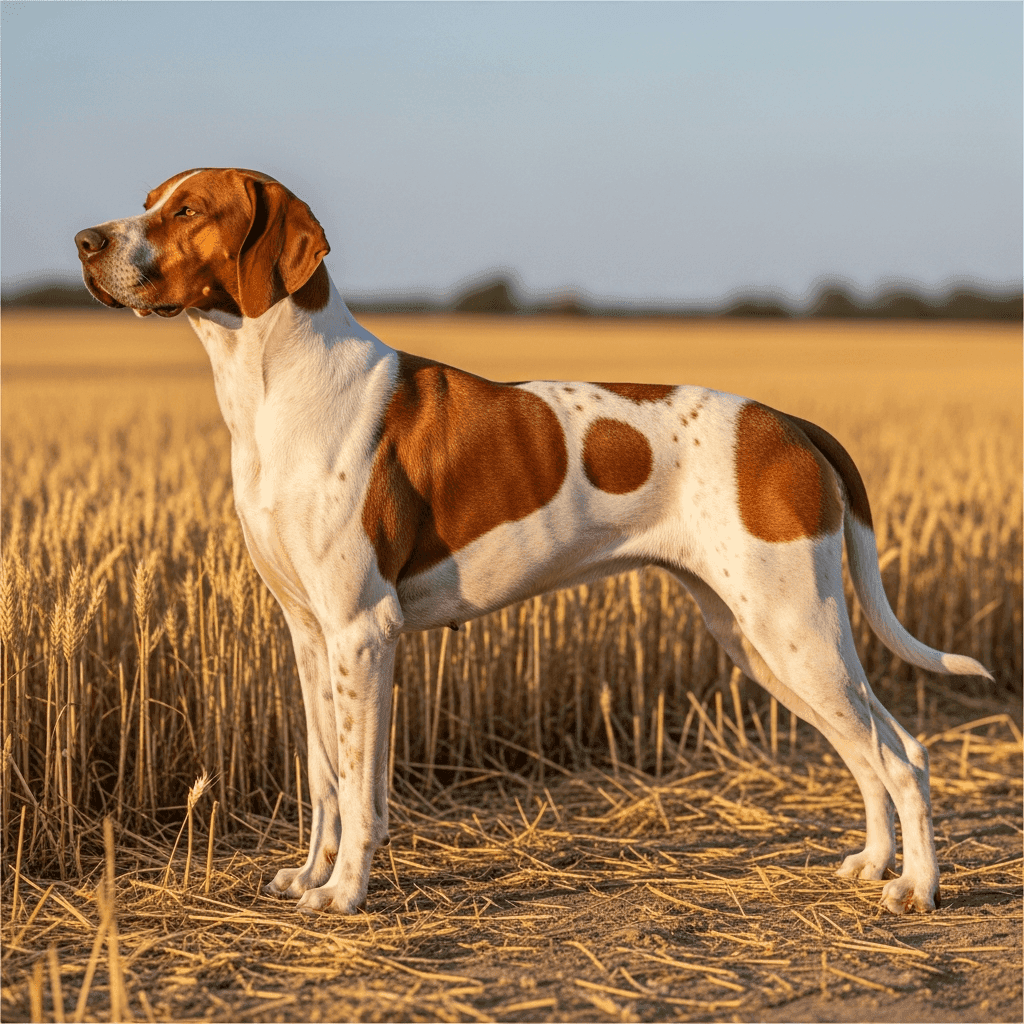
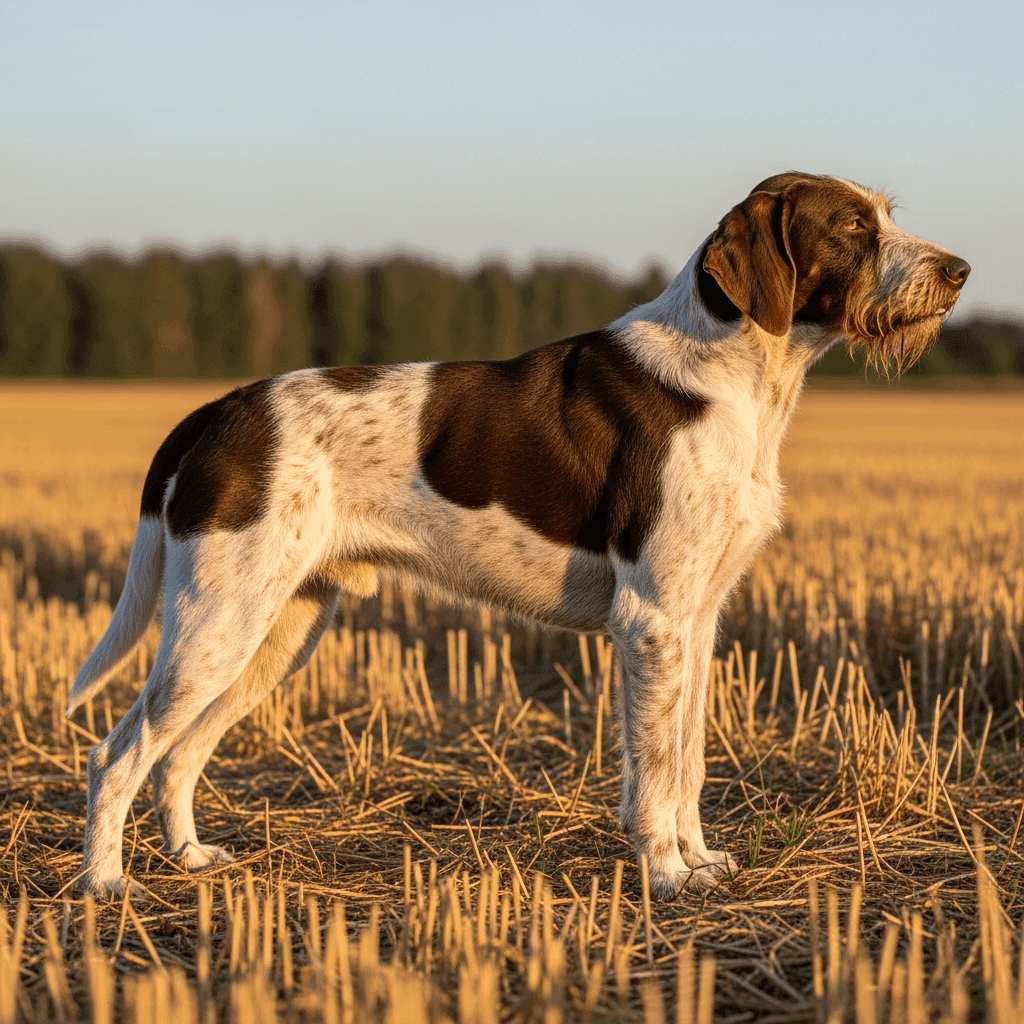
Brown (solid brown) without markings or with small white or speckled spots on the chest and legs. Brown with roaning (brown roan) – dark brown with a mixture of white and brown hairs, with a brown head and large brown patches or spots. Brown and white spotted/patched (brown and white spotted/patched) – brown head, large brown patches or spots on a white background. Light roan brown (light roan) – a mix of brown and white hairs with a brown head. Black (solid black) – rarer, acceptable. Black with roaning or spotting – similar to the brown variants but with black color instead of brown.
Tan markings are also permissible on all coat variations. White stripes or stars on the forehead and white spots on the legs and chest are accepted.
The body structure is strong, harmonious, and well-balanced. The neck is strong, muscular, slightly arched, without loose skin (no dewlap). The back line is straight and strong or slightly sloping from the withers to the hindquarters. The loins are short, wide, and well-muscled. The chest is deep (reaching at least to the elbows), well-developed, with well-arched ribs, providing enough space for the heart and lungs. The belly is slightly tucked up, creating an elegant line.
The limbs are strong, straight, parallel, and well-muscled. The front limbs have well-angled shoulders and upper arms (approximately 100-110 degrees angle between the shoulder and upper arm). The hind limbs are strong with well-angled hip, knee, and hock joints, providing excellent drive during movement. The paws are compact, round or oval, with well-arched toes, thick pads, and strong, short nails.
The tail is set high as an extension of the back line, carried horizontally or slightly raised, never distinctly curved upwards over the back. Traditionally, the tail was docke to about 50% of its length (for hunting purposes, to avoid injury in dense brush), but in many countries, tail docking is banned, so natural tails are becoming more common. The natural tail reaches to the hock joint, is strong at the base, and gradually tapers towards the end.
The movement is smooth, flexible, spacious, and graceful with excellent drive from the hind limbs and long strides from the front. When galloping, it moves quickly, with great endurance and agility. When pointing game, it assumes a characteristic frozen pose with one front paw raised, tail horizontal, and the whole body tense, indicating the direction in which the game is located.
The overall silhouette presents itself nobly, proudly, and with dignity, combining strength with elegance, making the German Shorthaired Pointer not only an excellent working dog but also an aesthetically pleasing companion with an athletic, harmonious build.
The German Shorthaired Pointer is a dog with a balanced, intelligent, and versatile temperament, combining the traits of an excellent hunting dog with a devoted, friendly family companion. Its character has been shaped by centuries of work alongside hunters, resulting in an extraordinary willingness to cooperate with humans, a strong desire to fulfill tasks, and nearly unlimited energy.
Basic character traits according to the FCI standard are: self-confidence, stability of character, balance without nervousness or shyness, and lack of aggression towards people and other dogs. The German Shorthaired Pointer is trustworthy, intelligent, and shows a natural passion for work, especially in the context of hunting.
Relationship with family and owner: This breed is extremely loyal and attached to its family, forming a deep emotional bond with its caregivers. The German Shorthaired Pointer wants to be close to its people and participate in all family activities. It does not tolerate prolonged solitude and may develop separation anxiety or destructive behaviors if regularly left alone for long hours. This is a dog for people who can spend most of their time with it or provide it with active companionship.
Relationship with children: The German Shorthaired Pointer usually gets along excellently with children and is patient, gentle, and playful with them. Its high energy level and eagerness to play make it a wonderful companion for older children (7+), who can engage in active play, walks, and games. However, due to its size, energy, and enthusiasm, it should be supervised around very small children (under 5 years old), who may be accidentally knocked over during play.
Intelligence and willingness to work: This is a very intelligent breed that learns quickly and is eager to cooperate with its owner, as long as the training is interesting, consistent, and based on positive reinforcement. The German Shorthaired Pointer was bred to make independent decisions in the field (when searching for and pointing game), which means it has a certain independence of thought, but not stubbornness. It needs an owner who will be a consistent, confident leader, offering clear guidelines and tasks to perform.
Hunting instinct: The German Shorthaired Pointer possesses a very strong hunting and retrieving instinct, which is deeply rooted in its genetics. It will naturally point at birds (pointing – the characteristic freeze in a pose with a raised paw when detecting game), track scents, retrieve items, flush game, and express immense joy in working in the field. This instinct means that it may chase small animals (birds, rabbits, cats, squirrels) if not properly trained and socialized. Strong recall and obedience training are absolutely essential.
Relationship with strangers: This breed is generally friendly and open towards strangers, although some individuals may show a bit of reserve upon first meeting. It is not an aggressive, distrustful, or overly protective dog (it is not a guard dog in the traditional sense), but alert and attentive. Proper socialization from a young age will ensure that it matures into a confident dog that can distinguish normal social situations from real threats.
Relationship with other dogs: The German Shorthaired Pointer usually tolerates other dogs very well and enjoys their company, especially if it has been socialized early and intensively. It is a friendly and sociable breed that loves to play with other dogs. Males may show some competitiveness towards other males, but they are generally not aggressive. Most individuals do very well in dog parks and in groups of dogs.
Energy and activity level: This is a dog with a very high energy level that requires a significant amount of physical activity and mental stimulation. Without the appropriate amount of exercise and tasks, it may become restless, hyperactive, bored, and develop destructive behaviors (chewing furniture, excessive barking, digging holes, escaping). Regular, intense exercise and work in the field are absolutely essential for its mental and physical well-being.
Characteristic behaviors of the breed include:
Pointing – the characteristic freeze in a pose with a raised front paw upon detecting the scent of game. Retrieving – the natural bringing back of items and game. Tracking – intensely following a scent trail. Sniffing and exploring – constantly investigating the environment with its nose. High alertness – observing the surroundings, reacting to sounds and movements. Closeness to family – following the owner, desiring physical contact. Excessive licking – expressing love by licking the owner's face and hands.
The German Shorthaired Pointer may be prone to certain behavioral issues if it does not receive adequate activity:
Separation anxiety (if left alone for long periods). Hyperactivity and lack of concentration (if not enough exercise). Destructiveness (from boredom – chewing furniture, shoes, cushions). Excessive barking and howling (frustration, boredom, anxiety). Escaping and roaming (strong hunting instinct, desire to track and explore). Jumping on people (excessive enthusiasm, lack of proper training).
In summary, the German Shorthaired Pointer is an energetic, intelligent, and versatile companion that combines a strong hunting instinct with a friendly family character. It requires an experienced, active owner who can provide it with the right amount of activity, training, tasks, and above all, participation in family life. For the right person, it will become the best friend, partner, and adventure companion both at work and at home.
The German Shorthaired Pointer is generally a healthy and resilient breed with a relatively long lifespan for large dogs. With proper care, a healthy diet, regular activity, and good breeding background, these dogs can enjoy good health for many years. The average lifespan is between 12 to 14 years, which is very good for a large breed, although some individuals with exceptional genetics and care can live up to 15-16 years.
Common health issues in the German Shorthaired Pointer that owners should pay special attention to:
Hip Dysplasia (Hip Dysplasia, HD) – a developmental defect of the hip joint leading to pain, lameness, and degenerative changes. Checking the parents for HD before breeding (X-rays, FCI or OFA evaluation) is crucial.
Elbow Dysplasia (Elbow Dysplasia, ED) – a similar condition affecting the elbow joints, leading to lameness and arthritis.
Progressive Retinal Atrophy (Progressive Retinal Atrophy, PRA) – a group of hereditary conditions leading to gradual degeneration of the retina and blindness. Genetic tests for parents are available.
Cataract (Cataract) – clouding of the eye lens leading to impaired vision or blindness. It can be hereditary or develop with age.
Entropion – inward rolling of the eyelids, causing irritation of the cornea. It may require surgical correction.
Von Willebrand's Disease (vWD) – a hereditary blood clotting disorder leading to excessive bleeding. Genetic tests are available.
Hypothyroidism (Hypothyroidism) – decreased production of thyroid hormones leading to metabolic issues, weight gain, skin problems, and lethargy.
Gastric Dilatation-Volvulus (Gastric Dilatation-Volvulus, GDV) – a sudden, life-threatening dilation and twisting of the stomach, typical for deep-chested dogs. It requires immediate veterinary assistance.
Lymphedema – a rare hereditary condition causing swelling of the hind limbs in puppies.
Epilepsy – seizures that can be hereditary or idiopathic (unknown cause).
Ear Diseases – ear infections (otitis externa) may occur due to floppy ears.
Cancer – mast cell tumors, lymphoma, hemangiosarcoma may occur, especially in older dogs.
Prevention and healthcare: To maximize the chances of a long, healthy life for the German Shorthaired Pointer, owners should ensure:
Regular veterinary visits (at least once or twice a year, more often for older dogs). Up-to-date vaccinations and deworming. Genetic testing of parents before breeding (HD, ED, PRA, vWD, eye exams). Monitoring weight and body condition (avoiding obesity). Appropriate diet and physical activity tailored to age and condition. Regular ear checks (cleaning, drying after swimming). Prevention of gastric torsion (small, frequent meals, avoiding exercise immediately after eating). Dental check-ups and oral hygiene. Regular blood tests for older dogs (monitoring organ function, thyroid).
Activity-related issues: As a working dog with a high energy level, the German Shorthaired Pointer requires regular, intense exercise. However, puppies and young dogs (up to 12-18 months) are prone to joint and bone injuries during intense exertion, as their musculoskeletal system is not yet fully developed. Long runs alongside a bicycle, jumping from heights, or intense training should be avoided until full skeletal maturity.
Weather resistance: Thanks to its short, dense coat, the German Shorthaired Pointer does well in moderate weather conditions. However, its short coat without an undercoat makes it sensitive to extreme temperatures – on very cold days, it needs access to warm shelter or protective clothing, and on hot days, it should be provided with shade, water, and avoid intense exertion in the middle of the day.
Obesity and weight control: The German Shorthaired Pointer tends to maintain a healthy weight with the right amount of activity, but with insufficient movement or overfeeding, it can gain weight. Obesity leads to serious health issues: increased strain on joints and accelerated degenerative disease, cardiovascular problems, diabetes, increased risk of gastric torsion, and significant shortening of lifespan (by up to 2-3 years).
Regular monitoring of weight, body condition (rib test – should be felt but not visible; visible waist when viewed from above) and adjusting food portions to activity level are crucial.
With proper, careful veterinary care, a healthy diet, regular (but not excessive) physical activity tailored to age, and love from the owner, the German Shorthaired Pointer can enjoy a long, healthy, and active life as a devoted family companion and work partner. Potential owners should choose puppies from responsible breeders who conduct health tests on the parents and can provide results of genetic tests and HD/ED certificates.
The care of the German Shorthaired Pointer is relatively simple and low-maintenance compared to many other breeds, making it an attractive choice for people who do not have much time for intensive grooming. Its short, dense coat is designed by nature to work in various terrain conditions and is easy to maintain.
Brushing the coat: The German Shorthaired Pointer has a short, sleek coat that requires minimal grooming. Regular brushing once a week with a rubber-bristle brush, rubber glove, or natural bristle brush is sufficient to remove dead hair and dirt, stimulate the skin and blood circulation, distribute natural skin oils for a healthy shine, and create an opportunity to check the skin for issues (ticks, wounds, rashes).
During shedding periods (spring and autumn), the frequency of brushing should be increased to 2-3 times a week or daily to minimize the amount of shedding in the home. The German Shorthaired Pointer sheds moderately throughout the year, with two periods of more intense shedding.
Bathing: The German Shorthaired Pointer does not require frequent baths. Its short coat has a natural protection that repels dirt. It is sufficient to bathe him once every 2-4 months or when he is really dirty (mud, unpleasant odor, contact with carrion). Bathing too frequently can disrupt the skin's natural lipid protection and dry out the skin. Mild shampoos designed for dogs should be used. After bathing, the dog can be dried with a towel – the short coat dries quickly.
Ear care: This is a important aspect of grooming for the German Shorthaired Pointer. Drooping ears can accumulate moisture, dirt, and wax, creating an environment for the growth of bacteria and fungi, leading to ear infections. Ears should be checked regularly (once a week or more often if the dog swims), cleaned with a specialized dog ear cleaning solution (not water!), thoroughly dried after bathing, swimming, or on humid days, and checked for redness, discharge, unpleasant odor, or scratching by the dog. If symptoms of infection appear – consult a veterinarian immediately.
Nail care: Nails should be trimmed every 3-4 weeks or when you can hear them clicking on a hard floor. Too long nails can cause discomfort and pain while walking, deformities of the paws and joints, balance issues, and ingrown nails into the paw pads. If the dog regularly runs on hard surfaces (asphalt, stones), the nails may wear down naturally to some extent, but still require monitoring.
Oral hygiene: Brushing teeth 2-3 times a week (ideally daily) with special dog toothpaste and a toothbrush will prevent tartar buildup, gum disease, bad breath, and tooth loss in older age. Dental chews and specialized treats that support dental hygiene can also be used.
Paw and pad care: Regularly check the paws for wounds, cracks in the pads, and foreign bodies (stones, thorns, pieces of glass) between the toes. In winter, protective balms for the paw pads can be used to prevent cracking from road salt.
Care after hunting or fieldwork: After intensive work in the field, especially in dense underbrush, water, or marshes, the dog should be thoroughly checked for ticks (especially in the ears, between the toes, in the groin, on the belly), wounds, scratches, or foreign bodies (grass blades, thorns), rinse the paws and belly of mud, and dry the ears.
Tick and flea control: The German Shorthaired Pointer, as a dog often in the field (forests, meadows, underbrush), is at risk for ticks and fleas. Regular checks after walks, using protective products (spot-on, collars, tablets), and vaccination against Lyme disease (where available) are recommended.
In summary, the care of the German Shorthaired Pointer is easy and low-maintenance, which is a significant plus for busy owners. Regular, basic grooming (brushing, ear checks, nail trimming, oral hygiene) is sufficient to keep the dog looking great and enjoying good health. It is one of the breeds that are practically self-cleaning – dirt and mud often fall off the short coat once dried.
The German Shorthaired Pointer is a dog with a very high energy level, bred for intensive, endurance work in the field for many hours a day. Its physical activity needs are significant and absolutely should not be underestimated. This is not a breed for people leading a sedentary lifestyle, living in small apartments without access to open spaces, or for those who can only spare a short walk for their dog.
Minimum activity requirements: An adult, healthy German Shorthaired Pointer requires a minimum of 60 to 90 minutes of intense exercise daily, preferably more (90-120 minutes). This does not mean a leisurely walk on a leash, but rather active, engaging effort that allows the dog to run, sniff, explore, and utilize its natural hunting instincts.
Ideal forms of activity for the German Shorthaired Pointer:
Hunting and fieldwork – this is the most natural and satisfying activity for this breed. If you are a hunter, your pointer will be happiest working as your hunting partner (pointing, retrieving, tracking).
Long walks and hikes – walks should last at least 60-90 minutes a day, divided into 2-3 sessions. Ideal are hikes in the woods, meadows, or by the water, where the dog can run freely (under recall control) and sniff around.
Running alongside a bicycle – for adult dogs (18+ months) with fully developed skeletal systems, running alongside a bicycle is an excellent form of intense endurance exercise (10-15 km). It should be started gradually.
Retrieving – playing fetch with balls, frisbees, or training dummies is an excellent way to burn energy and utilize the natural instincts of a retriever. This can be combined with obedience training.
Swimming – the German Shorthaired Pointer loves water, and swimming is not only a pleasure for them but also an excellent, low-impact exercise that engages the whole body.
Canine sports – agility, flyball, nosework, rally-o, tracking, obedience, dock diving, and canicross are great activities that engage both the body and mind of the dog.
Hunting training – for dogs used for hunting, regular training in pointing, retrieving, tracking, and fieldwork.
Play with other dogs – meetings at dog parks or organized gatherings with well-socialized dogs are an excellent form of social and physical activity.
Mental stimulation is just as important as physical: The German Shorthaired Pointer is an intelligent working dog that needs not only physical effort but also intellectual challenges. Mental boredom can be just as destructive as a lack of physical activity. It is important to introduce:
Scent games (hiding treats, searching for dummies, nosework). Interactive toys and puzzles for dogs (Kong, toys with hidden treats). Training new commands and tricks. Variety in walking routes and exploration environments. Practical tasks (fetching items, searching for people).
Care with puppies and young dogs: Puppies and young dogs (up to 12-18 months) are prone to joint injuries and growth plate damage during excessive or improper exertion. It is important to avoid:
Long runs alongside a bicycle (wait until 18 months). Intense jumps from heights or steep stairs. Long, monotonous runs on hard surfaces. Strenuous endurance training. Short (10-20 minutes), frequent activity sessions, free play on grass, swimming (an excellent, low-impact exercise), and gradually increasing intensity as the dog matures are better.
Consequences of insufficient activity: A German Shorthaired Pointer that does not receive adequate exercise and stimulation may develop serious behavioral problems:
Destructiveness (chewing furniture, shoes, destroying the house, tearing pillows). Excessive barking, howling, and whining (frustration). Hyperactivity, lack of concentration, and hyperactivity. Separation anxiety (unmet needs lead to stress). Escaping and roaming (will try to find activity on its own). Health problems (obesity, weakened muscles, joint issues). Jumping on people (excessive, uncontrolled enthusiasm). Frustration-induced aggression (rare, but possible).
Activity in various weather conditions: The German Shorthaired Pointer is a working dog that can work in various weather conditions, but its short coat without an undercoat makes it sensitive to extreme temperatures:
In winter – on freezing days (below -5°C), it is advisable to consider protective clothing (jacket, sweater), especially during longer periods outside without intense movement. During active running, the dog usually does not need clothing.
In summer – on hot days, provide shade, water, and avoid intense exertion during the middle of the day (10:00-18:00). The best times for walks are early in the morning (before 8:00) or late in the evening (after 20:00). Access to water for swimming is excellent for cooling.
Owners of German Shorthaired Pointers must be prepared to dedicate a significant amount of time to providing their dog with adequate activity. This is not a breed that will be satisfied with a 30-minute walk daily. If you lead an active lifestyle, love spending time outdoors, running, hiking, biking, swimming, or hunting – the German Shorthaired Pointer will be an ideal, tireless companion who will joyfully and enthusiastically follow you on every adventure.
The training of the German Shorthaired Pointer should start from the first days in the new home, ideally from the 8-10 weeks of age, when the puppy has the greatest ability to learn and socialize. Early training and intensive socialization is absolutely crucial for the development of a balanced, confident, and obedient dog, especially in a breed with such strong hunting instincts and high energy levels.
Breed characteristics in the context of training: The German Shorthaired Pointer is a very intelligent breed that learns quickly and is eager to cooperate with the owner, as long as the training is interesting, makes sense, and offers positive reinforcement. It was bred to make independent decisions in the field while searching for and pointing game, which means it has a certain independence of thought. It requires an owner who will be a consistent, confident leader, providing clear guidelines, positive reinforcement, and tasks to accomplish.
Key training principles for the German Shorthaired Pointer:
Only positive reinforcement – rewards (treats, praise, play, retrieving) are much more effective than punishment, coercion, or violence. The German Shorthaired Pointer is emotionally sensitive, and harsh methods can destroy its willingness to cooperate.
Consistency and patience – all commands and rules must be consistently applied by all family members. Inconsistency leads to confusion and behavioral problems.
Early start – socialization and basic training must begin from puppy age (8-16 weeks is a critical socialization window).
Interesting and varied training – the German Shorthaired Pointer quickly gets bored with monotonous repetitions. Training should be short (10-15 minutes), frequent (2-3 times a day), and engaging.
Utilization of natural instincts – incorporate elements of retrieving, tracking, searching, and pointing into the training, which will be naturally satisfying.
Socialization as important as obedience – exposure to diverse environments, people, dogs, animals, sounds, and situations is key.
Basic life commands to teach first:
Name – responding to their name (the basis of communication). Sit – basic command for order, control of the dog, calmness. Lie down – calming, relaxation, control. Stay – impulse control, safety, patience, steadiness (staying in place during shots for hunting dogs). Come – A KEY life command for the safety of a dog with a strong hunting instinct. No / Leave it – prevents dangerous behaviors. Heel – walking at heel without pulling on the leash. Fetch / Bring – a natural command, great for play and work. Search / Find lost – utilizing the sense of smell. Quiet / Enough – control of barking.
Early and intensive socialization is absolutely crucial. The puppy should be gradually and positively introduced to:
Different people (various ages, genders, appearances – children, adults, seniors, people in hats, glasses, with canes). Other dogs (different breeds, sizes, temperaments; regular, controlled meetings). Different environments (city, forest, meadows, water, beach, dog-friendly stores, means of transport, visits to the vet). Different sounds (traffic, thunder, firecrackers, gunshots – especially important for a hunting dog!, crying children, construction noise). Different surfaces (metal, glass, bridges, elevators, various pavements). Body manipulation (touching paws, ears, muzzle, tail). Different animals (cats, rabbits, birds, livestock – to learn control of the hunting instinct).
Recall training (Come) is absolutely critical for the German Shorthaired Pointer due to its strong hunting instinct. The dog may be inclined to chase birds, rabbits, or other game. Train recall from a young age, starting in controlled environments, using very high-value rewards, gradually increasing distance and distraction levels, never punishing the dog for coming, and regularly practicing throughout the dog's life.
Off-leash obedience training requires time and gradual increases in distraction levels. Start in a safe, controlled environment and gradually move to more distracting locations. The dog should have a solid recall before being let off-leash.
Hunting training (for working dogs): If you plan to use your pointer for hunting, professional hunting training should include:
Pointing game – characteristic freezing in position. Retrieving game from land and water. Steadiness – staying in place during shots. Tracking wounded game. Scaring birds. Working in various terrains (field, forest, water, brush). Cooperation with the owner-hunter. Ignoring non-target game.
Many owners use professional hunting dog trainers or hunting clubs to fully utilize the potential of this breed.
What to avoid in training: Yelling, physical punishment, yanking on the leash (especially with choke collars or electric collars). Long, boring, monotonous sessions. Lack of rewards and positive reinforcement. Suppressing natural instincts (instead of channeling them into appropriate activities). Inconsistency in applying rules. Harsh methods based on dominance and violence.
Behavioral problems and their resolution: If you encounter behavioral problems (excessive reactivity, chasing animals, fear, destructiveness), consult a professional behaviorist or dog trainer specializing in positive methods and hunting breeds.
With proper, consistent training based on positive methods, patience, understanding of the breed's natural instincts, and love, the German Shorthaired Pointer can become a well-behaved, obedient, and versatile companion that is safe, predictable, and enjoyable both at home, in the field, and in various social situations. The key is an early start, consistency, positive reinforcement, and treating training as a way to build a deep bond and partnership.
The diet of the German Shorthaired Pointer should be carefully balanced, high-quality, and closely tailored to its large size, very high activity level, age, and individual metabolic needs. As a working dog with a very high energy level, the German Shorthaired Pointer requires a diet rich in nutrients that supports its activity, endurance, joint health, and overall condition.
Basic nutritional recommendations:
Animal protein – 24-28% for adult, active dogs (for intensely working dogs, it can be 28-32%). Sources: meat (beef, poultry, lamb, game), fish, eggs. Protein builds and maintains muscle mass and supports recovery after exercise.
Fats – 14-18% for active dogs (for intensely working dogs, it can be 18-22%). Sources: poultry fat, fish oil, flaxseed oil. Fats provide energy, support healthy skin and coat, and are a source of omega-3 and omega-6 fatty acids.
Carbohydrates – rice, oats, sweet potatoes, pumpkin as a source of slowly released energy. Avoid excessive amounts of grains, corn, or wheat.
Glucosamine and chondroitin – for joint protection (minimum 400-800 mg/kg of glucosamine and 300-600 mg/kg of chondroitin), especially important for active breeds prone to dysplasia.
Omega-3 fatty acids (EPA and DHA) – to counteract inflammation, support joint, heart, and skin health. Sources: salmon oil, marine fish.
Antioxidants – vitamins E and C, beta-carotene to support the immune system.
Feeding schedule by age:
Puppies (8 weeks - 6 months) – 3-4 meals a day. Puppy food for large breeds with controlled calcium and phosphorus content. Protein 26-30%, fats 14-18%. Avoid overfeeding!
Young dogs (6-18 months) – 2-3 meals a day. Junior food for large breeds, gradual transition to adult food around 12-14 months.
Adult dogs (18 months - 7-8 years) – 2 meals a day. Adult food for large, active breeds or working dog food (if working intensively).
Senior dogs (over 7-8 years) – 2 meals a day. Senior food with lower calories, higher content of joint and heart-supporting ingredients.
Portion size: Depends on the dog's weight, age, activity level, and metabolism. A typical adult German Shorthaired Pointer (27 kg, very active) may require about 1300-1700 kcal per day (about 350-450 g of premium dry food), but an intensively working hunting dog may require even 2000-2500 kcal per day. Always adjust portions to individual needs and regularly monitor weight.
Weight control and obesity prevention: The German Shorthaired Pointer typically maintains a healthy weight with adequate activity, but may gain weight with insufficient exercise. Owners must:
Carefully measure portions according to the manufacturer's recommendations. Adjust the amount of food to the activity level. Regularly monitor weight and body condition (rib test). Limit treats to a maximum of 10% of daily calorie intake. Avoid giving table scraps.
Prevention of gastric torsion (GDV) – a life-threatening condition typical for deep-chested dogs:
Divide the daily portion into 2-3 smaller meals instead of one large one. Absolutely avoid intense exercise 1-2 hours before and after meals. Use a slow feeder bowl (prevents gulping food). Minimize stress during meals. Prevent drinking large amounts of water immediately before and after meals. Monitor for GDV symptoms: ineffective vomiting attempts, bloated abdomen, restlessness, heavy panting. Immediate veterinary assistance if GDV is suspected!
Healthy, natural treats: Fresh carrots, seedless apples, cucumbers, cooked meat without seasoning, fish (salmon), boiled eggs, dried meat or fish.
TOXIC FOODS – NEVER feed: Chocolate, cocoa (deadly!), xylitol (deadly!), grapes, raisins (damage kidneys), onions, garlic (destroy red blood cells), avocados, macadamia nuts, alcohol, caffeine, cooked bones, high-fat and high-salt products.
Access to fresh water: Always provide constant access to fresh, clean water, especially for a very active dog. Water should be changed daily. When working in the field, take water for the dog.
Types of diets: Premium dry food (convenient, economical, well-balanced), wet food (more palatable), BARF diet (requires knowledge and consultation), veterinary food (for dogs with health issues), home-cooked diet (requires balancing).
In case of doubts, food allergies (symptoms: skin itching, digestive problems, hair loss), special dietary needs, or health issues, it is advisable to consult a veterinarian or animal nutritionist.
Proper, balanced high-quality nutrition combined with weight control, adequate physical activity, and regular veterinary care is the foundation for the longest possible, healthy, and active life of the German Shorthaired Pointer. Remember that nutrition is an investment in your dog's health.
Characteristic Traits
Pros
- Versatile hunting dog for any terrain
- Very intelligent and easy to train
- Excellent companion for active families
- Friendly and gentle with children
- Devoted and loyal to the family
- Short coat easy to maintain
- Sociable with other dogs
- Great for canine sports
- Healthy breed with a long lifespan.
Cons
- Requires a lot of movement and activity
- Strong hunting instinct may lead to chasing
- Not suitable for inactive individuals
- May not cope well with prolonged solitude
- Requires consistent training from puppyhood
- Can be hyperactive without sufficient activity
- Sensitive to extreme temperatures
- Not for residents of small apartments.
Behavioral Ratings
Breed History
The history of the German Shorthaired Pointer is a fascinating tale of evolution from ancient bird dogs to one of the most versatile and popular hunting dogs in the world. Its roots go deep into the past, and the modern breed is the result of centuries of natural selection and planned breeding that shaped the perfect, versatile gundog.
Ancient roots – bird and falconry dogs: The history of the German Shorthaired Pointer begins with dogs that were used for netting birds (bird dogs, netting dogs) in Mediterranean countries, particularly in Spain, Italy, and southern France, as early as the Middle Ages. These ancient bird dogs were also used in conjunction with falconry – a highly valued form of hunting among European aristocracy.
The most important distinguishing feature of these dogs was their ability to point game – a characteristic freeze in position upon detecting the scent of a bird, allowing falconers or net hunters to prepare to catch the game. This trait became the foundation for all pointing dog breeds.
Arrival in Germany – through France, Spain, and Flanders: Through France, Spain, and Flanders (present-day Belgium and northern France), pointers reached the German princely and noble courts in the 16th-17th centuries. The German aristocracy quickly recognized the value of pointing dogs and began developing their own breeding lines by crossing the imported pointers with local hunting dogs.
The double-barreled shotgun revolution (1750) – a change in hunting: After the invention of the first double-barreled shotgun around 1750, the pointing dog became even more desirable and essential. Within the full range of the dog, birds were shot in flight (wing shooting), which required a dog that not only pointed game but also remained steady during the shot (steadiness) and subsequently retrieved the downed birds.
This marked the beginning of the transition from the ordinary pointer to the versatile hunting dog (versatile gundog), capable of working both before and after the shot, in various terrains and conditions. German breeders began intentionally crossing different lines of hunting dogs to create an ideal versatile dog capable of:
Searching for and pointing game (pointing). Flushing birds (flushing). Retrieving feathered and furred game from water and land (retrieving). Tracking wounded game (tracking). Working in fields, forests, water, and brush.
Formalization of the breed – Stud Book (1897): As a fundamental basis for the structure and development of the breed, Zuchtbuch Deutsch-Kurzhaar (Stud Book of the German Shorthaired Pointer) began publication in 1897. It was Prince Albrecht zu Solms-Braunfeld who collected and codified breed characteristics, conformation judging rules, and ultimately also simple hunting trial regulations for hunting dogs.
The publication of this stud book was a milestone that formalized breeding and ensured that the breed would be developed according to specific morphological and functional standards, rather than chaotically.
Development in the 20th century – breeding regulations and trials: In the 20th century, the breeding of the German Shorthaired Pointer became even more rigorous. Refined breeding regulations and working trials (working trials, hunt tests) were introduced to ensure that only dogs with the appropriate hunting traits, character, and conformation could be allowed for breeding.
As a result, the modern German Shorthaired Pointer continues to pass through the filter of elaborated breeding and trial regulations. This means that the breed has retained its functionality as a working dog and has not merely become a show dog bred solely for appearance.
World War II and post-war revival: Like many European breeds, the German Shorthaired Pointer suffered during World War II (1939-1945). Many dogs perished, breeding was halted, and genetic lines were interrupted. However, thanks to the post-war efforts of dedicated breeders, the breed was rebuilt and continued its development.
International recognition and expansion: After World War II, the German Shorthaired Pointer began to gain popularity outside of Germany:
United States – the breed was recognized by the American Kennel Club (AKC) in 1930 and quickly gained immense popularity among American hunters and active families. Today, it is one of the most popular breeds in the USA.
United Kingdom – The Kennel Club recognized the breed, and the German Shorthaired Pointer became popular among British hunters.
Canada, Australia, New Zealand – the breed is widely distributed and valued in these countries.
Europe – the German Shorthaired Pointer is popular in most European countries as a versatile hunting dog and family companion.
Fédération Cynologique Internationale (FCI) recognized the breed and classified it in Group 7 (Pointers), Section 1.1 (Continental Pointers). The FCI standard was last updated in 2001 (standard validity date: 25.10.2000, publication date: 25.04.2001).
Modern German Shorthaired Pointer (21st century): Today, the German Shorthaired Pointer is one of the most popular hunting dog breeds in the world, valued for its versatility, intelligence, athleticism, and friendly character. Its popularity is growing not only among hunters but also among active families looking for an energetic, devoted companion.
The breed has retained its functionality as a working dog. In Germany and many other European countries, dogs still must pass working trials to receive full breeding rights, ensuring that the breed does not lose its natural hunting abilities.
Characteristic traits that have survived centuries:
Versatility – ability to work in fields, forests, and water, before and after the shot. Pointing – natural freeze upon detecting game. Retrieving – bringing game from land and water. Tracking – following wounded game. Flushing – flushing birds from cover. Intelligence and independent thinking in the field. Devotion to the owner and willingness to cooperate. Endurance and energy. Short, easy-care coat.
Despite its long history – from ancient netting bird dogs of the Mediterranean countries, through medieval falconry, the double-barreled shotgun revolution, to modern working trials – the German Shorthaired Pointer has preserved its identity as a versatile, functional hunting dog with a wonderful character.
Its long, fascinating history from netting bird dogs through pointers to modern versatile gundogs makes it one of the most unique, noble, and valued breeds in the world of hunting dog cynology. This history also demonstrates how planned breeding based on functionality, rather than just appearance, can create a breed that serves humanity excellently for centuries while preserving its natural abilities and health.