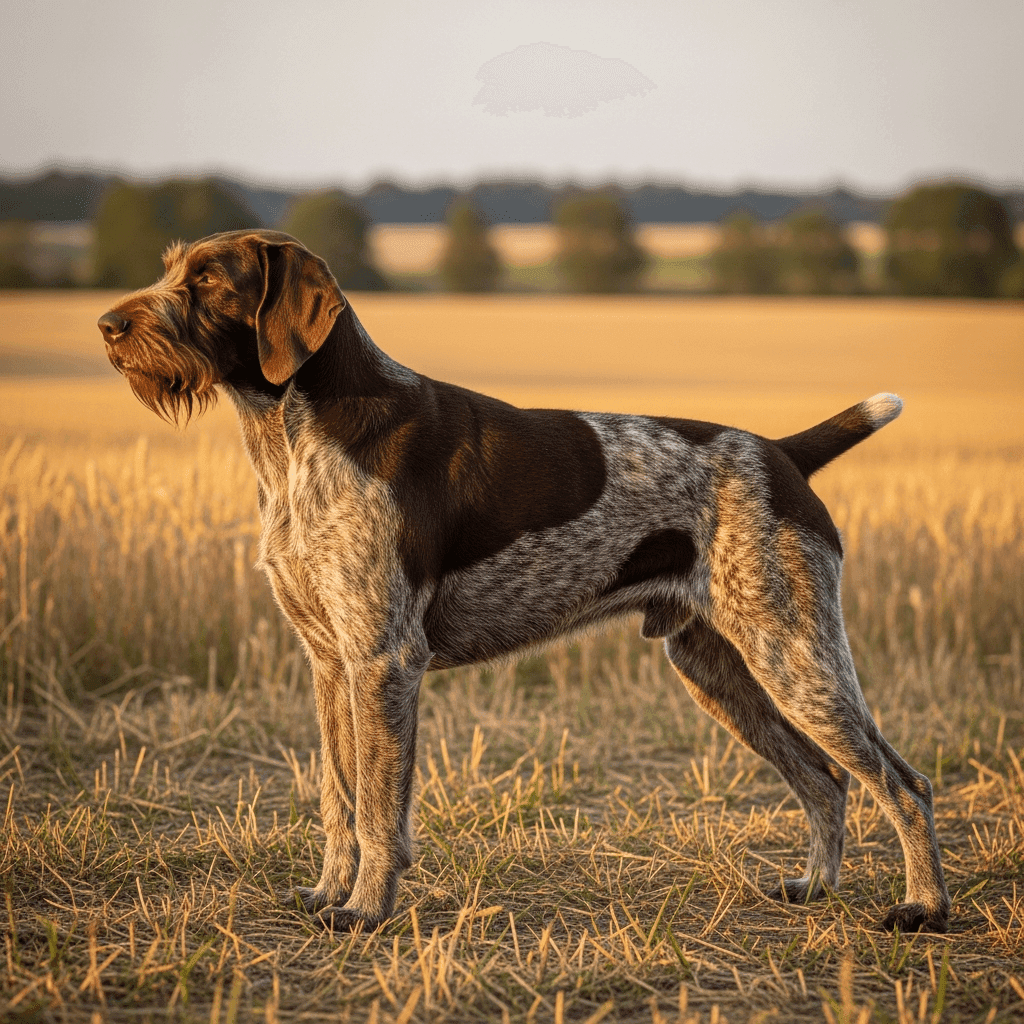
German Wirehaired Pointer
FCI Group
7• FCI 98
Size
Large
Origin Country
DE
Height
57-68 cm
Weight
23-32 kg
Lifespan
10-14 years
Temperament
Overview
The German Wirehaired Pointer, also known as Deutsch Drahthaar, fascinates with its versatility and extraordinary hunting skills. Originating from Germany, this hunting dog has won the hearts of many dog lovers around the world. Its history dates back to the late 19th century when breeders aimed to create the ideal hunting dog. Today, the German Wirehaired Pointer is not only an indispensable companion for hunters but also a wonderful family member.
What distinguishes this breed? First and foremost, its hard, wiry coat, which protects against harsh weather conditions and provides excellent thermal insulation. The German Wirehaired Pointer is also a dog with a strong build and impressive endurance. Its height ranges from 61 to 68 cm for males and from 57 to 64 cm for females, with a weight of 27 to 32 kg for males and 23 to 27 kg for females. Such a harmoniously built physique makes it an ideal companion for active owners who value long hikes and outdoor play.
In terms of temperament, the German Wirehaired Pointer is a balanced and composed dog. It is not afraid of challenges, making it a reliable companion during hunts for any type of game. Its extraordinary intelligence and natural eagerness to learn mean it quickly absorbs new commands and tasks. This dog requires consistent yet gentle training and regular tasks to fully utilize its natural hunting potential. Its friendly and sociable nature also makes it an excellent family companion that adapts well to home life.
Although the German Wirehaired Pointer requires regular grooming, its coat is easy to maintain in good condition with proper care. Weekly brushing helps keep it healthy, removes dead hair, and prevents matting. Owners should also ensure a balanced diet rich in high-quality protein and essential nutrients. Adequate exercise and a variety of activities such as retrieving, tracking, or running in the field are essential for maintaining its physical and mental health.
In summary, the German Wirehaired Pointer is not only an outstanding hunting dog with versatile skills but also a loyal companion that brings joy, energy, and satisfaction from working in the field to its owner's life. We encourage you to delve deeper into this fascinating breed to discover all its secrets and unique character traits.
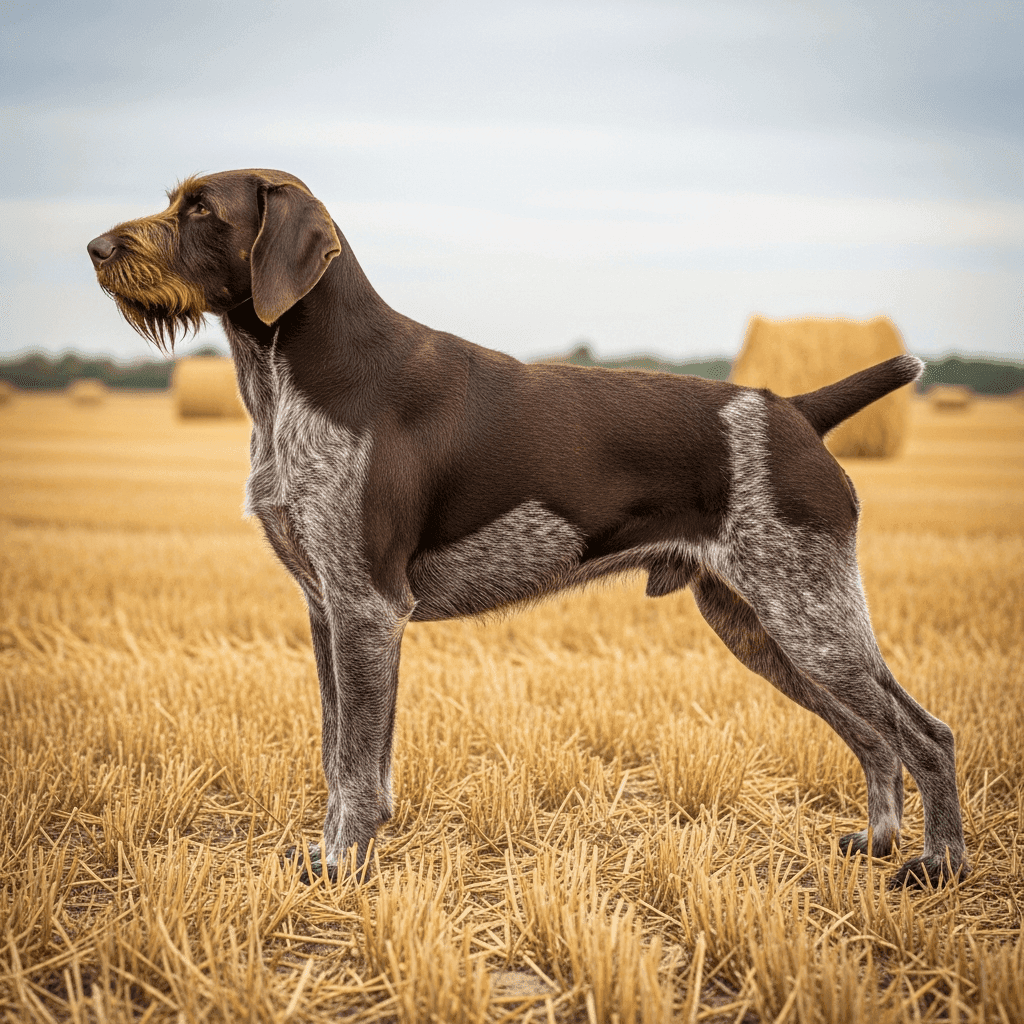
The German Wirehaired Pointer is a dog with a noble and strong appearance, which perfectly reflects its hunting purpose and versatility in work. Its body structure is harmonious and proportional, allowing the dog to move with grace, confidence, and great agility. The height at the withers ranges from 61 to 68 cm for males and from 57 to 64 cm for females, while the weight oscillates between 27-32 kg for dogs and 23-27 kg for bitches, making it a medium-sized hunting dog with a strong build.
The most characteristic feature of the breed is its hard, rough, and dense coat measuring 2 to 4 cm in length, which provides excellent protection against adverse weather conditions, water, and thorny underbrush. The undercoat is dense and waterproof, allowing the dog to work in any weather conditions. The fur on the head forms distinctive brows, a beard, and whiskers, giving the pointer a striking, almost rugged expression.
The head of the German Wirehaired Pointer is proportional to the body size, with a clearly defined stop and well-developed brow ridges. The eyes are as dark as possible, medium-sized, lively, and alert, emphasizing its intelligence and vigilance. The ears are medium-sized, set high, hanging flat against the cheeks, and not twisted, giving it an energetic and attentive expression. The muzzle is long and strong, with a well-developed grip and a complete scissor bite, which is essential for a hunting dog working in retrieving game.
The body of the German Wirehaired Pointer is strong and well-muscled, with a straight or slightly sloping topline. The chest is wide and deep, reaching to the elbows, providing the dog with adequate lung capacity and endurance during prolonged work. The back is straight and strong, the loins are short and muscular, and the croup is slightly sloping. The limbs are straight, parallel, and well-muscled, with strong joints. The tail is carried horizontally or slightly raised during movement, traditionally docked to about half its length (in countries where permitted), which adds to its confidence and balance.
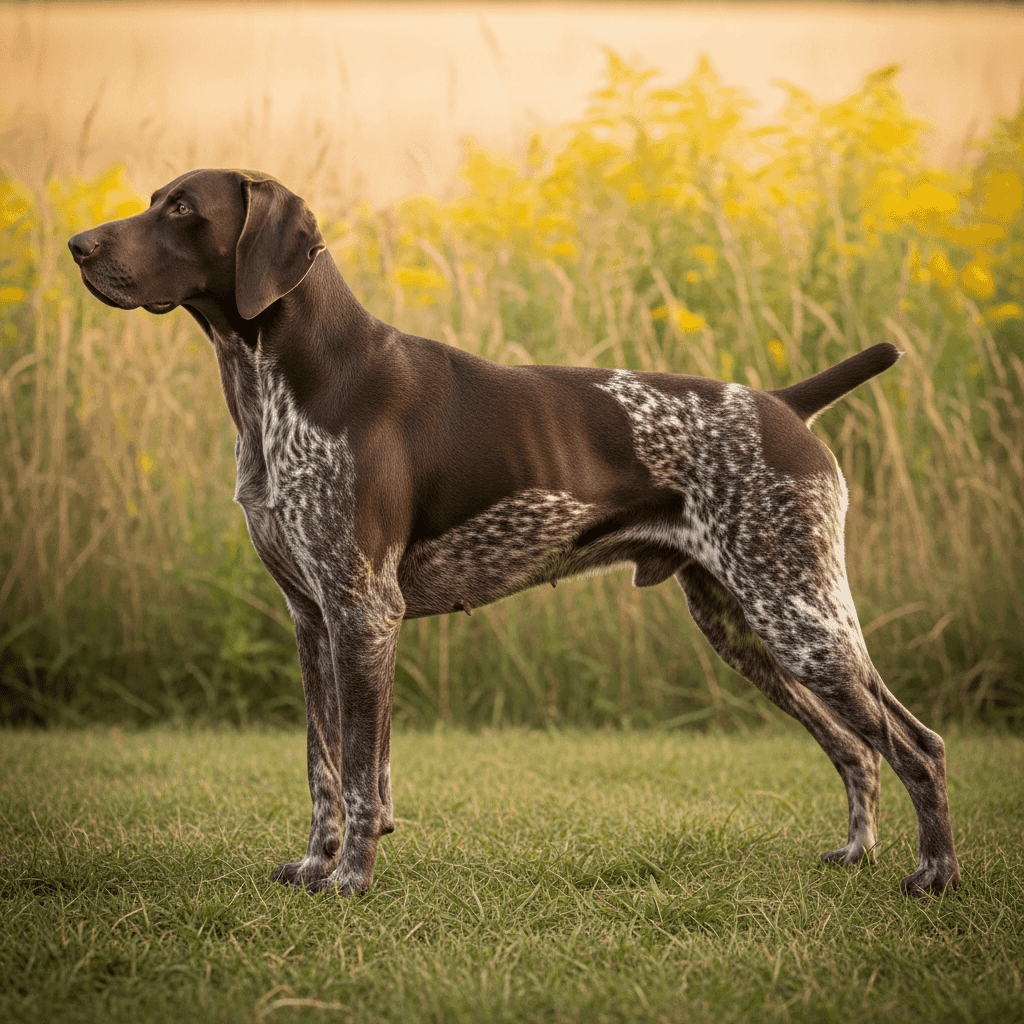
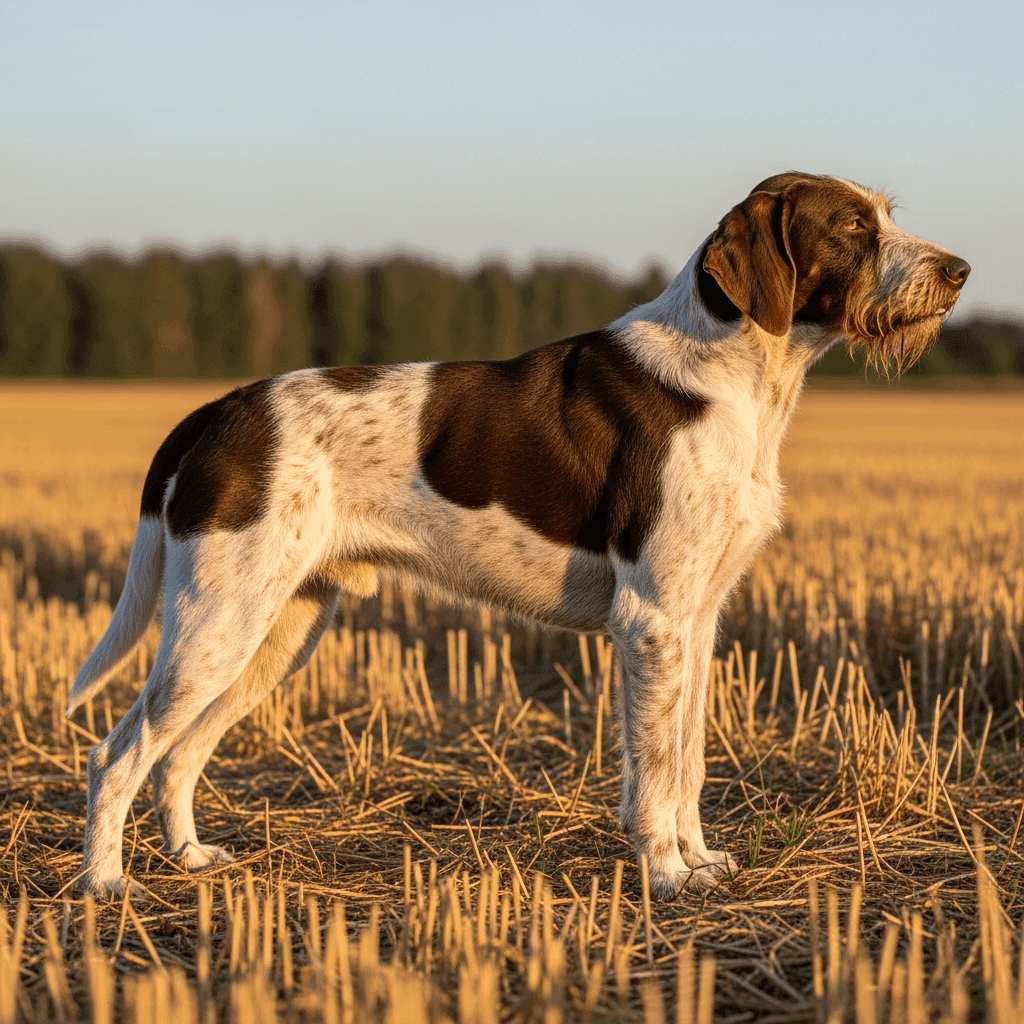
The coat color of the German Wirehaired Pointer can be diverse and includes:
- Brown with patches or without patches
- Black with patches or without patches
- Brown with a white spot on the chest
- Light brown
Other colors are not accepted by the breed standard. This distinctive appearance makes the German Wirehaired Pointer not only a beautiful dog but also an excellent representative of its breed, combining aesthetic qualities with practical hunting functionality.
The behavior of the German Wirehaired Pointer is one of the key elements that has made this breed so popular among hunters and families looking for an active companion. This dog is known for its mental balance, composure, and lack of fear of game, making it an ideal companion in the hunting field. German Wirehaired Pointers are social and friendly dogs that get along well with other dogs and people, which makes them wonderful family members.
They are not aggressive towards people or other pets, and their temperament is rather balanced and self-confident, making them suitable dogs for homes with children. The German Wirehaired Pointer is patient and gentle with children, although, like any dog, it should be taught the rules of safe play. However, owners of German Wirehaired Pointers should remember that these dogs need consistent training and regular socialization from a young age to fully utilize their social traits and become confident dogs.
With proper training, the dog will learn appropriate behaviors both at home and among other dogs and in various situations. Their high intelligence means they quickly learn new commands and tasks, exhibit excellent memory, and have the ability to make independent decisions in the field. This makes them easy to train, provided positive motivational methods are used to encourage the dog to learn and cooperate.
The German Wirehaired Pointer is a very active dog that requires regular exercise, work, and mental stimulation. Lack of adequate activity can lead to behavioral problems such as hyperactivity, destructive behaviors, or constant barking. It is particularly important to provide the dog with regular hunting tasks or alternative forms of activity, such as dummy training, retrieving, searching, or dog trekking.
In hunting work, the German Wirehaired Pointer demonstrates versatility and commitment. It excels in both pre- and post-shot work, in open terrain, in the woods, and in water. Its natural retrieving instinct, excellent sense of smell, and willingness to cooperate with the hunter make it an indispensable assistant during hunts for various game.
In summary, the German Wirehaired Pointer is a dog with a wonderful, balanced temperament that combines hunting and social traits. Its ease of learning, friendly disposition, and versatility make it an excellent choice for families and hunters looking for a loyal, intelligent, and balanced companion.
The German Wirehaired Pointer is generally a healthy and resilient breed, characterized by good physical condition and longevity. The average lifespan is between 12 to 14 years, although many individuals live longer with proper care. Like any other breed, the German Wirehaired Pointer can be prone to certain health issues that are worth knowing about.
Among the most common ailments is hip dysplasia (HD - Hip Dysplasia), which is hereditary and can lead to pain, stiffness, and limited mobility. Responsible breeders perform X-ray examinations of the joints in dogs intended for breeding to minimize the risk of passing on this defect. It is advisable to ensure that the parents have current HD tests when purchasing a puppy.
Additionally, dogs of this breed may have a tendency to skin problems, especially if they are not properly groomed or are exposed to environmental allergens. Their dense, wiry coat requires regular brushing to avoid matting, skin irritation, and secondary bacterial or fungal infections. Regular skin checks will allow for early detection of potential problems.
It is also important for owners to take care of their dog's dental health. Regular tooth brushing (ideally several times a week) and providing appropriate chewing treats help remove plaque, prevent tartar buildup, and gum diseases that can lead to more serious health issues.
Attention should also be paid to the dog's diet. Improper nutrition can lead to obesity, which in turn increases the risk of various health problems, including heart disease, diabetes, joint issues, and a shortened lifespan. The German Wirehaired Pointer, being an active dog, requires a balanced diet rich in high-quality protein and essential nutrients.
Regular veterinary visits and vaccinations according to the schedule are crucial for keeping the dog in good health. Annual preventive check-ups are recommended to allow for early detection of potential health issues. In older dogs (over 7-8 years), it is also advisable to perform blood tests and ultrasound examinations of internal organs.
Proper veterinary care, a balanced diet, regular physical activity, and appropriate grooming are essential to ensure that the German Wirehaired Pointer has a long, healthy, and active life. With proper attention to the dog's health, this breed remains fit and energetic for many years.
Grooming a German Wirehaired Pointer is a key element in ensuring its health, well-being, and maintaining the breed's characteristic appearance. Its coat is hard, rough, and dense, which means it requires regular, though not overly complicated, grooming to maintain its proper condition and protective functions.
Brushing should be done at least once a week using a special brush designed for rough coats to effectively remove dead hair, dirt, and prevent matting. During the shedding season, which typically occurs in spring and autumn, brushing should be more frequent (2-3 times a week) to minimize the amount of fur in the home and help the dog shed its old undercoat.
In addition to regular brushing, the German Wirehaired Pointer requires trimming (hand plucking of dead hair) about 2-3 times a year. This procedure helps maintain the proper structure of the rough coat, removes dead guard hairs, and stimulates the growth of new, healthy hair. Clipping with a machine is not recommended, as it destroys the structure of the hard coat and can lead to softening and loss of protective properties.
Bathing should be done only when necessary, when the dog is truly dirty or starts to smell unpleasant. Too frequent bathing can strip the skin of its natural protective oils and lead to irritation. A shampoo specifically designed for dogs with rough coats should be used.
Additionally, owners should regularly check their dog's ears, eyes, and teeth:
- Ears - should be clean and dry, without any unpleasant odor. The hanging ears of the pointer are prone to infections, so they should be checked at least once a week and cleaned with a special ear care product. If you notice discharge, redness, or an unpleasant smell, consult a veterinarian.
- Eyes - should be clean, bright, without excessive tearing or discharge. In case of any abnormalities, visit a veterinarian as soon as possible.
- Teeth - regular tooth brushing (ideally several times a week) will help prevent issues such as tartar and gum disease. Special dental treats and chew toys can also be used.
- Nails - should be checked for length and trimmed if necessary, although active dogs often wear them down naturally when running on hard surfaces.
After hunting or a long walk in the field, it's worth thoroughly checking the dog for ticks, wounds, scratches, or foreign bodies (thorns, grass awns) trapped in the coat or between the toes. Special attention should be paid to the ears, interdigital spaces, and armpit areas.
Grooming a German Wirehaired Pointer is not just a matter of aesthetics, but above all the health and comfort of the dog. Regular care of the coat, ears, eyes, and teeth will help avoid many health problems and ensure the dog has a long, active, and comfortable life.
The German Wirehaired Pointer is a dog with very high energy and significant needs for physical and mental activity. This breed was created for versatile hunting, which means it requires a considerable amount of movement, work, and stimulation to satisfy its natural hunting instincts and maintain mental balance.
Daily activity is absolutely crucial for maintaining the physical and mental health of the German Wirehaired Pointer. It is recommended that the dog has at least two long walks a day (45-60 minutes each), as well as additional activity sessions such as running, retrieving, swimming, or playing in the water. A short walk around the block is NOT sufficient for this breed - the pointer needs real physical effort and opportunities to expend its energy.
Thanks to its intelligence and willingness to work, the German Wirehaired Pointer responds very well to various forms of activity. You can engage in canine sports with it, such as:
- Agility - an obstacle course that perfectly engages both the body and mind of the dog
- Obedience - precise obedience and cooperation with the handler
- Dog trekking - long hikes in the mountains or forests
- Dummy training - simulating hunting work with retrieving dummies
- Tracking - utilizing natural scenting abilities and hunting instincts
- Swimming and retrieving from water - pointers love water and are very agile in it
Regular exposure to various stimuli and providing physical and mental stimulation will help maintain emotional balance and prevent behavioral issues such as hyperactivity, destructive behaviors, constant barking, or escaping. A pointer that does not receive enough exercise and activities may become unhappy and difficult to manage in daily life.
It is also worth remembering the possibility of socialization with other dogs and people during activities. The German Wirehaired Pointer, being a sociable dog, enjoys interacting with others. Introducing it to group activities, such as training sessions in a field or meet-ups in a dog park, will allow it to develop social skills and improve obedience in the presence of distracting stimuli.
For working hunting dogs, regular work in the field is the best form of activity that satisfies all their natural needs. For non-hunting dogs, it is important to find alternative forms of work that engage their instincts - dummy training, mantrailing, or nosework are excellent alternatives.
Remember that a lack of adequate exercise can lead to serious health problems, such as obesity, weakened muscles and joints, as well as negatively affect the dog's mental state, leading to frustration, depression, or destructive behaviors. The German Wirehaired Pointer is a dog that needs an active owner ready to dedicate time to shared activities every day.
The training of the German Wirehaired Pointer is a key element in raising this intelligent and hardworking dog. This breed is characterized by high intelligence, excellent memory, and a natural willingness to cooperate with humans, making it relatively easy to train using appropriate methods.
Owners should start training from as young an age as possible, preferably during the puppy stage (from 8-10 weeks of age), to ensure the dog develops the right skills, habits, and social behaviors. Early socialization and exposure to various stimuli (people, dogs, sounds, environments) are absolutely crucial for the development of a confident and balanced dog.
It is best to use positive training methods based on positive reinforcement, such as rewarding with treats, praise, play, or the opportunity to work, to motivate the dog to cooperate and learn. The German Wirehaired Pointer responds excellently to such an approach and quickly associates desired behaviors with rewards. Methods based on coercion or punishment are not only ineffective but can destroy the dog's natural desire to work and harm the relationship between the dog and the owner.
Regular training sessions (preferably short, 10-15 minutes, several times a day) are important to maintain the dog's interest and avoid monotony and boredom. It is worthwhile to introduce a variety of exercises that will stimulate both the mind and body of the dog. For the German Wirehaired Pointer, training should include:
- Basic commands - Sit, Lie down, Stay, Come, Leave it
- Hunting skills - retrieving, bringing, tracking, working on command
- Field obedience - recall, walking on a leash without pulling, calm behavior towards game
- Water work - if the dog is to be used for hunting waterfowl
- Impulse control - self-control and patience exercises
As a result, the dog will gain confidence and be better prepared for life in society and work in the field.
Socialization is also an essential element of training and should be conducted throughout the dog's life. Owners should expose their pointer to various situations to teach it how to cope with new stimuli and interactions with other dogs and people. This will enable the acquisition of appropriate social skills and increase the dog's comfort in different life situations.
It is also important to remember that the German Wirehaired Pointer requires a consistent but gentle approach to training. Excessive harshness, shouting, or physical punishment can lead to fear, insecurity, and a loss of trust in the owner, negatively affecting the relationship and the effectiveness of training. Instead, it is better to focus on positive reinforcement, patience, and building a bond based on mutual trust and respect.
For dogs intended for hunting work, professional training under the guidance of an experienced trainer or hunter is recommended, which will help develop the dog's natural abilities and teach it the proper work before and after the shot. German Wirehaired Pointers are among the most versatile hunting dogs and can achieve excellent results with proper training.
With appropriate training, the German Wirehaired Pointer will become not only a obedient and reliable working dog but also a wonderful family companion that knows how to behave in any situation.
Feeding a German Wirehaired Pointer is a key element of its health, physical condition, and longevity. This breed, being active and energetic, requires a balanced diet rich in high-quality protein and essential nutrients, vitamins, and minerals.
Owners should choose high-quality dog food that provides all the necessary micronutrients in appropriate proportions. Ideally, the food should be tailored to the dog's level of physical activity, age (puppies, adult dogs, senior dogs), health status, and any special dietary needs.
Proportions of nutrients should include:
- Protein (25-30%) - crucial for muscle development and maintenance, recovery after exercise, and overall condition. The best sources are meat (chicken, beef, lamb, game), fish, and eggs.
- Fats (12-18%) - provide energy and support the absorption of fat-soluble vitamins. Healthy sources include fish oil (rich in omega-3 fatty acids), flaxseed oil, and poultry fat.
- Carbohydrates (30-40%) - a source of energy and fiber that supports digestion. The best sources are rice, oats, sweet potatoes, and vegetables.
- Fiber - supports proper digestion and intestinal peristalsis.
For very active or hunting working dogs, the demand for protein and fats may be higher to ensure adequate energy levels and support muscle recovery. For such dogs, higher-calorie foods (performance, active, sport) are recommended.
It is also beneficial to include healthy supplements in the diet, such as fish oil, which provides omega-3 fatty acids that are beneficial for skin, coat, joints, and cardiovascular health. Natural supplements supporting joints (glucosamine, chondroitin) and probiotics supporting gut flora can also be used.
The amount of food depends on the dog's weight, age, and activity level. Typically, an adult pointer weighing 25-30 kg needs about 350-450 g of dry food per day, divided into 2 meals. Puppies require more frequent meals (3-4 times a day) and food specifically tailored to their growth needs.
It is also important to provide the dog with an adequate amount of fresh water. Clean, fresh water should always be available, especially after intense physical activity, on hot days, and during feeding with dry food. Water in the bowl should be regularly changed, and the bowl should be kept clean.
One should avoid feeding the dog table scraps, which can be harmful to its health, lead to obesity, and teach undesirable habits (begging at the table). Foods that are dangerous for dogs include chocolate, onions, garlic, grapes, raisins, avocados, xylitol, and poultry bones (which can splinter and cause intestinal perforation).
Proper nutrition is key to keeping a German Wirehaired Pointer in good physical condition and preventing health issues such as obesity, diabetes, heart disease, or joint problems. The dog should have a visible waist (when viewed from above) and ribs that are palpable but not protruding.
It is also worth remembering to have regular veterinary visits, which will help monitor the dog's health status, body weight, and adjust the diet to its individual needs, especially for older, ailing dogs, or those with special dietary requirements. Proper nutritional care, combined with physical activity and veterinary care, will ensure a long, healthy, and energetic life for the German Wirehaired Pointer.
Characteristic Traits
Pros
- Versatility in hunting
- Balanced and self-confident character
- High intelligence and ease of training
- Friendly and sociable disposition
- Resilience to harsh weather conditions.
Cons
- Requires a lot of movement and activity
- Needs consistent training from a puppy age
- Regular grooming (brushing
- trimming)
- Not suitable for less active owners.
Behavioral Ratings
Breed History
The history of the German Wirehaired Pointer dates back to the late 19th century, when this breed began to be systematically developed in Germany. Its origins are linked to the desire to create a versatile hunting dog that could work effectively both on land and in water, before and after the shot, in various terrain and weather conditions.
As a result, breeders began to cross various breeds of wirehaired dogs, including Korthals Griffons (Griffon Korthals), Pudelpointer, and German Shorthaired Pointers (Deutsch Kurzhaar), which led to the creation of the German Wirehaired Pointer. A key figure in the development of the breed was Sigismund Freiherr von Zedlitz und Neukirch, known by the pseudonym Hegewald, who formulated the breeding principle in the early 20th century: through performance to type (Durch Leistung zum Typ).
This breeding philosophy meant that the most important factors were hunting abilities and versatility in work, followed by appearance. Breeders deliberately maintained some flexibility in the standard, allowing for the crossing of the best individuals from different wirehaired lines to create a dog perfectly adapted to German hunting conditions.
In a short time, a hunting dog emerged that stood out with its practical, weather-resistant coat and versatility in working in the field, forest, and water. The tough, wiry coat provided excellent protection against thorny underbrush, cold, rain, and water, making the pointer a reliable companion in any conditions.
Thanks to these traits, the German Wirehaired Pointer became one of the most popular and valuable hunting dogs not only in Germany but also in other European countries and the United States over the decades. Its versatility, resilience, and reliability in work earned it recognition among hunters worldwide.
In 1902, the first breed club was established - Verein Deutsch Drahthaar (VDD), which still conducts strict breeding selection based on hunting performance tests. Every dog intended for breeding must pass tests in the field and water, ensuring high standards of the breed's utility are maintained.
In 1954, the breed was officially recognized by the International Canine Federation (FCI) as Deutsch Drahthaar (group 7, section 1.1 - continental European pointers). The current breed standard was approved in 2000 and published in 2002.
Today, German Wirehaired Pointers are among the most popular hunting dogs in Europe, especially in Germany, where they are the most frequently chosen breed among hunters. They are often used in various sports disciplines, such as agility, obedience, and dummy training, as well as companion dogs in families, where they serve as loyal, active, and intelligent companions.
Due to their versatility, loyalty, intelligence, and excellent hunting skills, the German Wirehaired Pointer has become a favorite among many hunters and families seeking an active and balanced companion. Its history is a testament to how a passion for hunting and wisely conducted breeding can create a breed that combines outstanding utility traits with wonderful social predispositions.