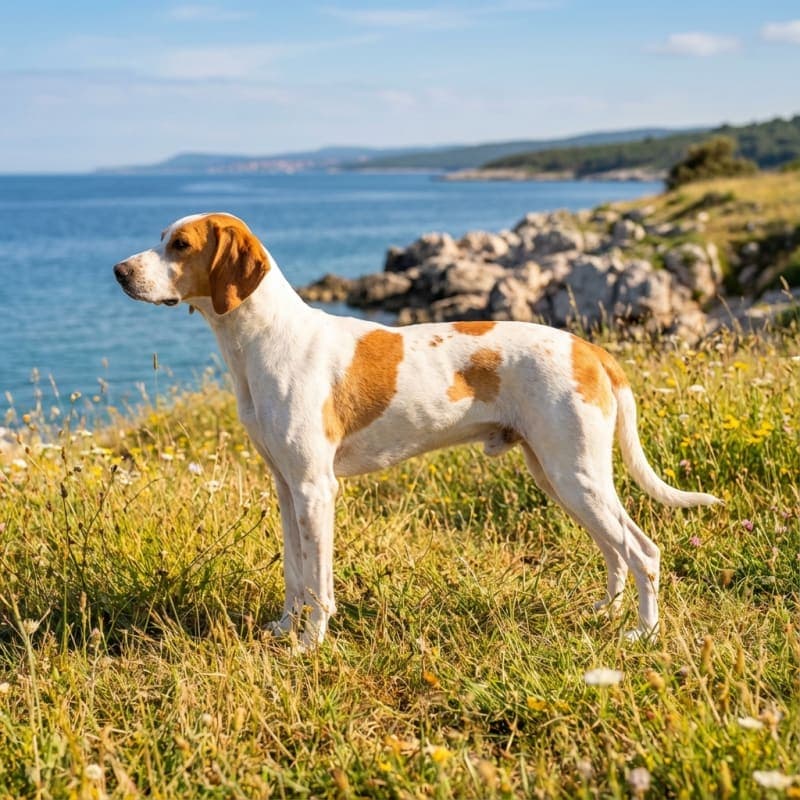
Istrian Shorthaired Hound
FCI Group
6• FCI 151
Size
Medium
Origin Country
XX
Height
48-56 cm
Weight
18-20 kg
Lifespan
12-14 years
Temperament
Overview
The Istrian Shorthaired Hound, also known as Istarski Kratkodlaki Gonič, is a hunting dog breed with an extraordinary history and exceptional tracking skills. Originating from the picturesque Istria in Croatia, this medium-sized hound gained official recognition from the International Canine Federation (FCI) on January 15, 1973. Its excellent sense of smell and tireless temperament make it an indispensable companion for hunting hares, foxes, and wild boars. Although its primary task is to assist hunters in the field, the Istrian Shorthaired Hound is also a family dog that can surprise with its friendly nature and devotion to its guardians.
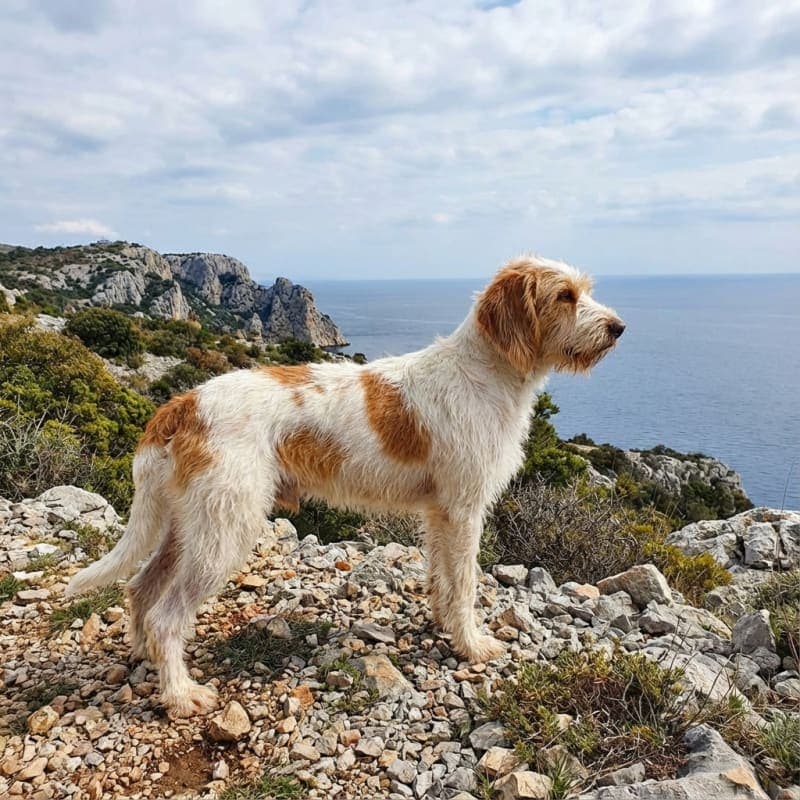
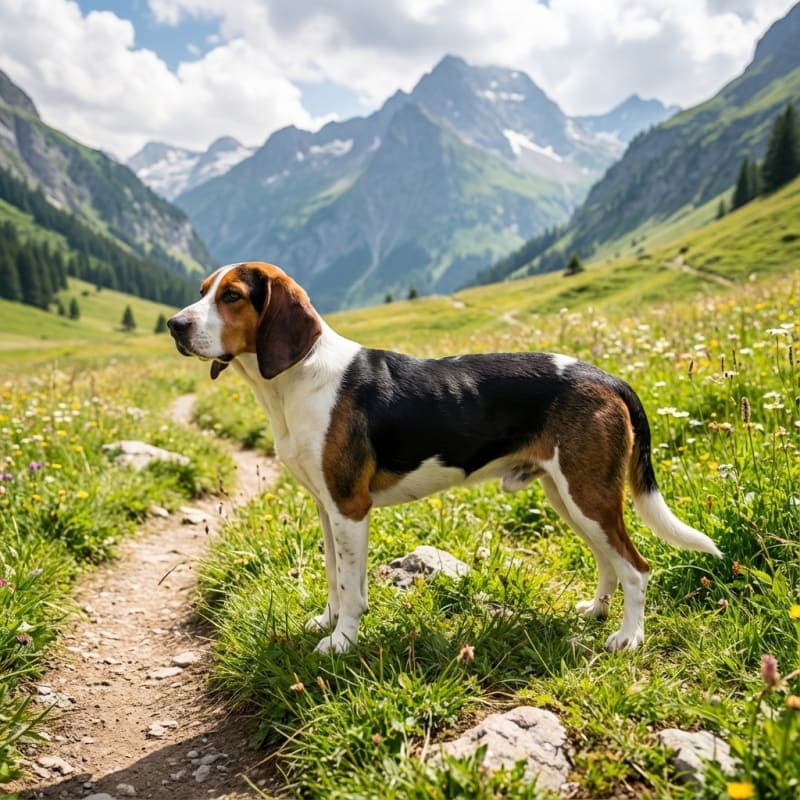
Its noble silhouette, characteristic white coat with orange spots, and dense, shiny fur attract attention and give it elegance. A dog with strong legs and a sturdy body, it easily traverses difficult terrains—from mountain slopes to dense underbrush. Despite its independence in the field, at home it becomes a loyal companion that loves to spend time with the family. Its balanced temperament makes it an ideal dog for active families with children, with whom it quickly forms a bond. Due to its intelligence and willingness to cooperate, the Istrian Shorthaired Hound is relatively easy to train, making it a grateful student in the training process.
In the field, it shows its true face: focused and determined, with a melodic bark that informs the hunter of its progress on the trail. The breed standard states that the height of this dog ranges from 44 to 56 cm at the withers, and its weight hovers around 18 kg, with males typically being larger and more massive. Its long, narrow head, straight back of the nose, and black or gray nose add to its noble character.
To meet the needs of this energetic dog, daily long walks and opportunities to run outdoors are essential. Thanks to its intelligence and eagerness to learn, the Istrian Shorthaired Hound responds well to positive reinforcement techniques. However, its high energy requires consistent leadership and varied exercises to avoid boredom and destructive behaviors. Owners should be prepared for an active lifestyle that allows this wonderful dog to develop its natural talents.
We invite you to read our guide, where you will find detailed information about the health, grooming, exercise, training, nutrition, history, appearance, and behavior of this fascinating breed. The Istrian Shorthaired Hound is a dog that certainly deserves the attention of every hunting dog enthusiast and those looking for an active, intelligent, and devoted companion.
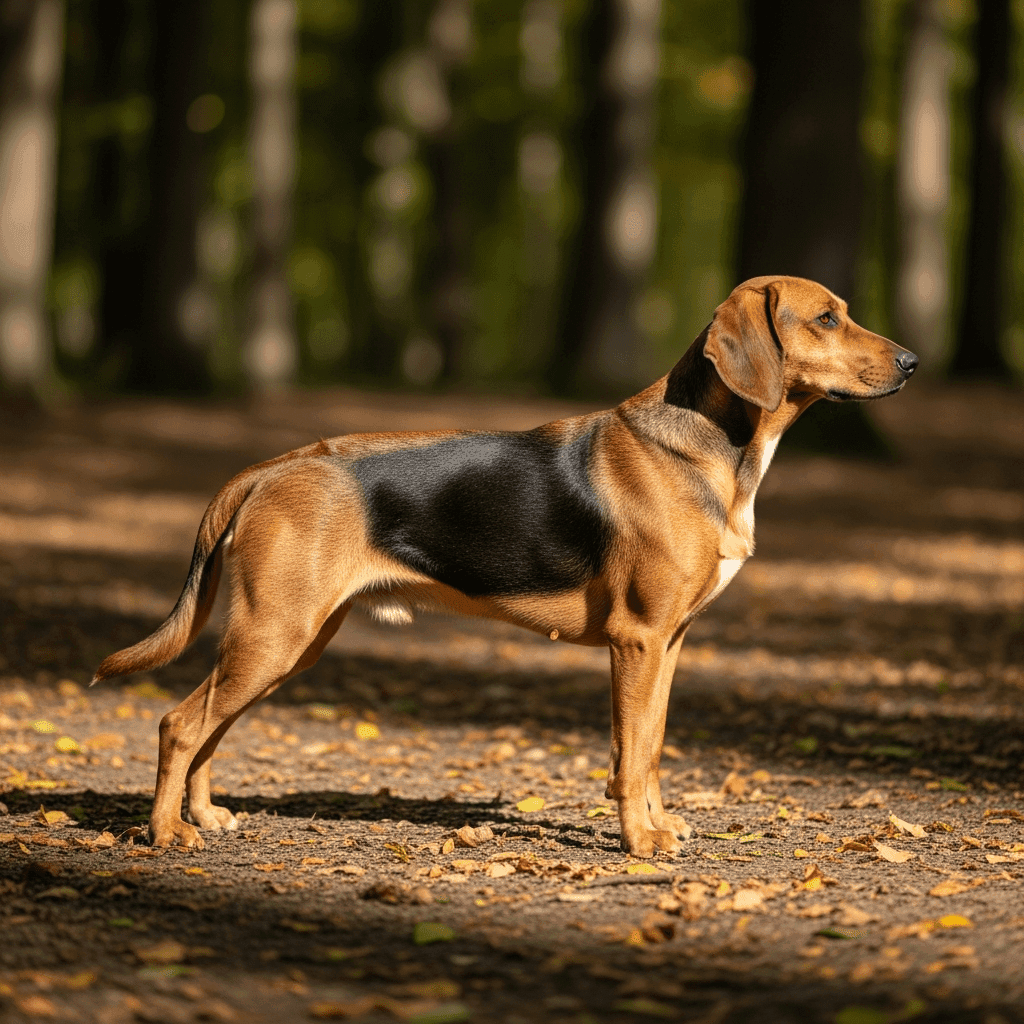
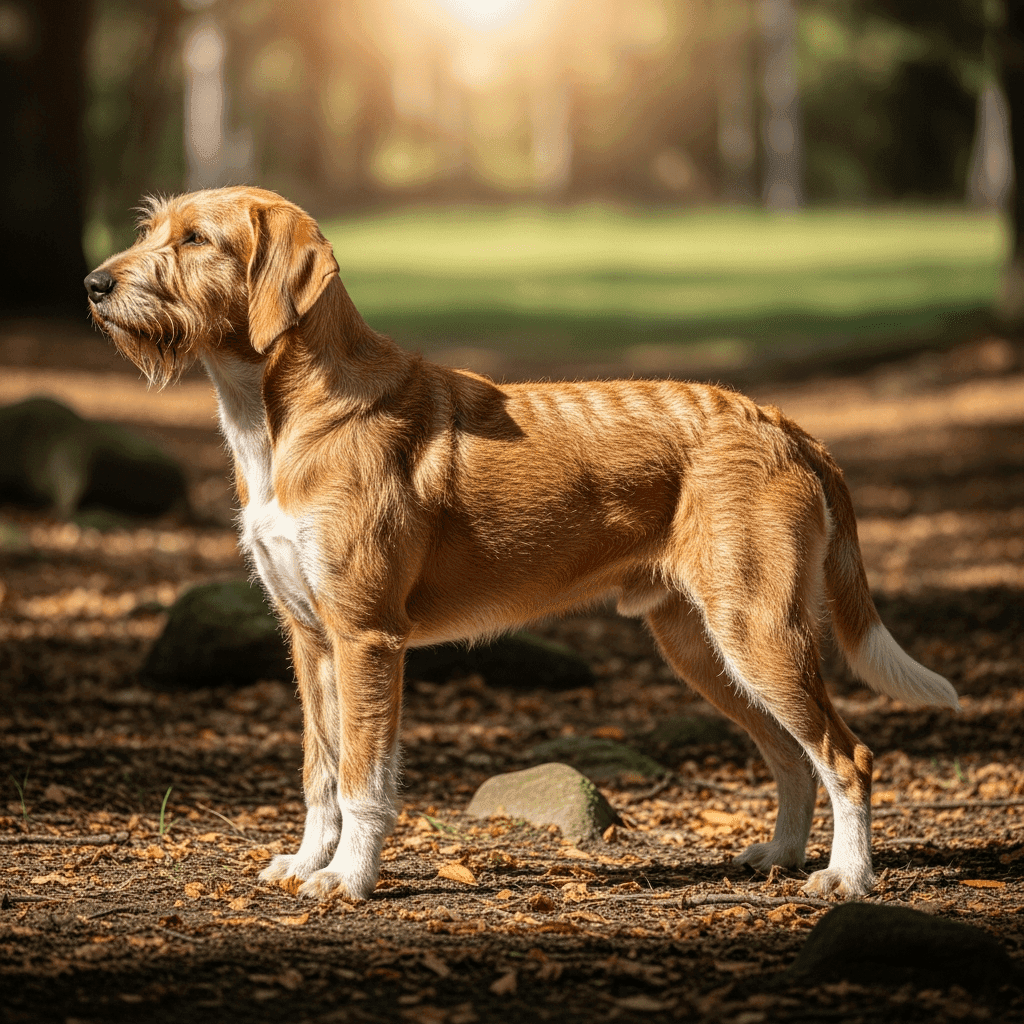
The Istrian Shorthaired Hound is a dog with an elegant and noble silhouette, exuding strength and endurance. Its height at the withers ranges from 44 to 56 cm, and its weight hovers around 18 kg. Males are usually larger and more massive than females, which is typical for hunting dogs. This breed is characterized by a long, narrow head with a straight nose bridge and oval, expressive eyes with dark irises that convey intelligence and alertness. The nose is black or gray, and the lips are tight and adhere to the jaws, giving the dog a focused expression.
The ears of the Istrian Shorthaired Hound are of medium length, delicate and wide at the base, tapering towards the end. They have a velvety texture and hang along the cheeks, emphasizing its gentle character. The coat is short, dense, and shiny, with the base color being snow-white, adorned with orange spots. A characteristic orange mask appears on the head, and smaller or larger yellow-orange patches may appear on the body. A completely white coat without any spots is also acceptable, although it occurs less frequently.
The body of the hound is elastic and harmonious, with a straight, wide back and a deep chest that reaches at least to the elbows. This build provides the dog with excellent lung capacity, essential for long-distance running and working in the field. The limbs are strong and well-muscled, ensuring excellent mobility, stability, and the ability to run for extended periods over diverse terrain. The tail is strong at the base, tapering towards the end and carried slightly curved. In motion, the dog moves very flexibly, lively, and gracefully, highlighting its dynamic silhouette and innate hunting skills.
The Istrian Shorthaired Hound has a balanced temperament, making it a friendly, intelligent, and energetic dog. It is very attached to its owner and enjoys spending time with the whole family, showing affection and loyalty. This breed is known for its strong hunting instinct, which can cause the dog to become quite independent while hunting. In such situations, the Istrian Shorthaired Hound can be very focused on its task, following a trail with exceptional determination and perseverance.
In interactions with children, the Istrian Shorthaired Hound is usually very friendly and forms strong emotional bonds. Its gentle nature makes it an excellent playmate. However, due to its energy and tendency to joyful jumps, it should be supervised around small children to avoid accidental injuries. This breed can be somewhat wary of strangers, making it a good guard dog, although this is not its primary role. After proper socialization, the hound will quickly accept guests and other people.
On the other hand, the Istrian Shorthaired Hound shows a moderate tendency to escape, especially when it senses game or an interesting trail. Therefore, it is important to use a leash during walks or provide the dog with safe, fenced areas for free running. Without adequate physical and mental stimulation, the dog may become noisy or destructive, which is a natural consequence of unused energy. Owners should ensure that their hound gets enough exercise, interaction with other dogs, and playtime to maintain mental and emotional balance.
The Istrian Shorthaired Hound is also easy to train and willingly follows commands, making it a valuable companion for active families. Its intelligence and willingness to cooperate allow for effective teaching of various commands and household rules. Regular training and positive reinforcement will help shape a well-mannered and happy dog.
The Istrian Shorthaired Hound is a breed of dog that enjoys generally good health, with an average lifespan of 12 to 14 years. This breed is quite resilient; however, certain health issues may arise related to hunting injuries, hip dysplasia, and ear infections. Dogs of this breed have strong legs and excellent stamina, allowing them to track for long periods in challenging terrain, even in mountainous regions or dense underbrush.
It is important to provide them with a proper diet and regular exercise to avoid obesity, which can lead to joint and circulatory system problems. This breed performs well in various weather conditions – both warm and cold – thanks to its endurance and dense coat. Regular veterinary check-ups, vaccinations, and proper grooming will help maintain the health of the Istrian Shorthaired Hound for many years.
Owners should pay special attention to the dog's ears, which tend to accumulate wax and may be prone to infections. Regular cleaning and inspection of the ears will help prevent problems. Hip dysplasia, although occurring sporadically, can be an issue in some individuals, so it is recommended to conduct tests before breeding. Caring for health and regular visits to the veterinarian will ensure the dog has a long and healthy life.
The care of the Istrian Shorthaired Hound is relatively simple and not very time-consuming. Their short, dense coat does not require much attention, and regular brushing every few weeks should be sufficient to remove dead hair and ensure a healthy, shiny appearance of the coat. Brushing also helps distribute natural skin oils, which affects the condition of the coat.
However, it is important to regularly check the dog's ears, as they tend to accumulate wax and can be prone to infections. It is recommended to clean the ears at least once a week to prevent health problems. Gentle ear cleaning solutions, available at pet stores or from a veterinarian, should be used. Additionally, nails should be trimmed as needed, especially if the dog does not naturally wear them down during walks on hard surfaces.
Baths should only be given when necessary – ideally a few times a year – to avoid disrupting the skin's natural protective layer. Proper grooming and care for the health of the skin and coat will help keep the hound in good condition throughout its life. It is also worthwhile to regularly check the dog's teeth and maintain oral hygiene to prevent tartar buildup and gum problems.
The Istrian Shorthaired Hound is a breed of dog with high energy that requires a significant amount of movement and activity. Daily long walks are essential to meet its physical and mental needs. Ideally, this dog should have the opportunity to run outdoors, where it can freely explore its surroundings and expend energy. This breed has high endurance and can participate in various forms of activity, such as running, cycling, and even agility.
Owners should be aware that a lack of adequate exercise can lead to boredom, which in turn can result in destructive behavior. Regular physical and mental challenges are crucial for maintaining the health and happiness of the Istrian Shorthaired Hound. Well-organized walks, interactive toys, and opportunities to play with other dogs will benefit its well-being. A minimum of 60-90 minutes of activity per day is recommended, ideally divided into several sessions.
It is also important to remember that this breed has a strong hunting instinct, so it is advisable to use a leash during walks and ensure proper recall training. Without sufficient exercise, the dog may become excessively noisy or destructive. Owners should provide the dog with the opportunity to run in a safe, enclosed area where it can freely follow scents and fulfill its natural instincts. Agility activities, scent training, or simulated hunting are excellent forms of exercise that will allow the dog to develop its natural talents and maintain excellent fitness.
The Istrian Shorthaired Hound is a breed of dog that is relatively easy to train, thanks to its high intelligence and willingness to learn. Owners should use positive reinforcement techniques, such as treats, praise, and play, to encourage the dog to follow commands. This breed has a natural desire to please its owner, making it more inclined to cooperate during training.
It is important to start training as early as possible – ideally during puppyhood – to establish a strong bond between the dog and the owner and to ensure that the dog will be well-behaved. Training should include basic commands such as Sit, Lie Down, Stay, and Come Here, as well as a recall, which is particularly important due to the strong hunting instinct of this breed. Owners should be consistent in their actions to prevent the development of bad habits and reinforce desired behaviors.
Additionally, the Istrian Shorthaired Hound can benefit from various forms of mental activity, such as agility classes, scent training, or simulated hunting, which will help in its development and maintain a healthy mind. Socialization with other dogs and people is also crucial for the dog to become a well-adjusted and confident adult. Socialization should begin at an early age by exposing the puppy to a variety of stimuli, people, and situations.
Owners should also remember that due to the dog's high energy, daily exercise and play are essential for its well-being. Training should be positive, short, and engaging to maintain the dog's attention. Avoid punishment and harsh training methods, as they can harm the relationship with the dog and weaken its motivation to learn. Consistency, patience, and positive reinforcement are the keys to success in training the Istrian Shorthaired Hound.
The diet of the Istrian Shorthaired Hound should be well-balanced and tailored to its active lifestyle. Owners should provide their dog with high-quality food that meets its energy needs. It is advisable to choose foods rich in high-quality protein, which support muscle development and recovery after physical activity. For this breed, meat-based diets – chicken, beef, fish, or turkey – with the addition of vegetables, fruits, and healthy fats (omega-3 and omega-6) are the best options to ensure an adequate amount of nutrients.
It is also important to monitor the amount of food provided to avoid obesity, which can lead to health problems such as hip dysplasia, diabetes, or cardiovascular diseases. Owners should adjust the amount of food according to the dog's activity level, age, weight, and health condition. Regular meals, ideally 2-3 times a day, will help maintain a healthy weight and overall well-being. Puppies and young dogs require more calorie-dense meals, while older dogs may need a diet with lower calorie content.
It is also essential to ensure that the dog has constant access to fresh water, especially after intense exercise, to avoid dehydration. Owners should avoid feeding their dog table scraps and harmful products such as chocolate, onions, grapes, or products containing xylitol. Regular consultations with a veterinarian will help in selecting the appropriate diet and monitoring the dog's health throughout its life.
Characteristic Traits
Pros
- Child-friendly
- Easy to train
- Exceptional sense of smell
- Great hunting companion
- Balanced temperament
Cons
- Requires a lot of movement
- Can be independent
- High energy demands attention
- Tendency to follow a scent.
Behavioral Ratings
Breed History
The history of the Istrian Shorthaired Hound dates back many centuries, to medieval times. The first documented evidence of the existence of this breed can be found in the Franciscan monastery in Dubrovnik, where there are paintings from the period between 1327 and 1348, depicting dogs with a distinctive appearance similar to today's Istrian Hounds. Another piece of evidence is a painting from 1474 titled The Adoration of the Magi in the cemetery chapel near the village of Beram in Istria, which shows a dog resembling the modern Istrian Shorthaired Hound.
This breed likely originated from a combination of European scent hounds and trade dogs from the ancient Phoenicians, who settled along the Mediterranean coast. The Istrian Shorthaired Hound has been valued for centuries for its hunting skills and exceptional sense of smell. Owners of dogs of this breed appreciated their ability to track and chase game, making them excellent companions for hunting hares, foxes, and wild boar.
This breed was particularly popular in the Istria region, where it adapted well to the local terrain and climatic conditions – from rocky hills to dense forests and thickets. Over the years, the Istrian Shorthaired Hound gained recognition among hunters, and its skills were passed down from generation to generation. The first official breed standard for the Istrian Shorthaired Hound was published in the early 20th century, and the Fédération Cynologique Internationale (FCI) officially recognized the breed on January 15, 1973.
As time went on, this breed began to be appreciated not only as a hunting dog but also as a family companion. Modern dogs of this breed are still regarded as excellent hunters, but also as friendly and devoted companions. Their history is rich and filled with respect for their hunting abilities, which makes them valued by both hunters and dog enthusiasts. Today, the Istrian Shorthaired Hound is one of the symbols of Croatia's and Istria's canine heritage, and its unique character attracts the attention of dog lovers worldwide.