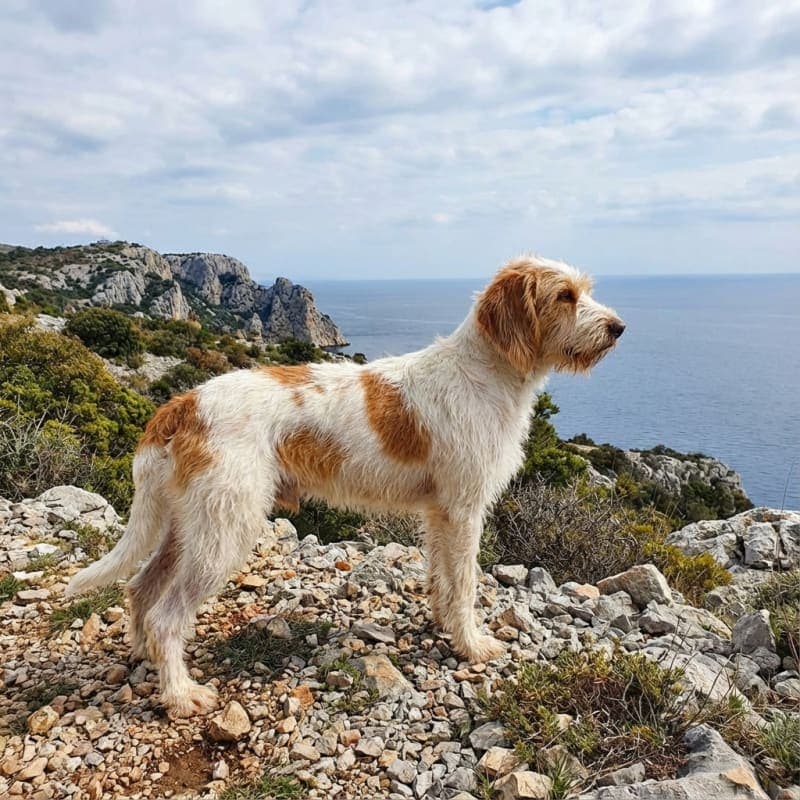
Istrian Coarse-haired Hound
FCI Group
6• FCI 152
Size
Medium
Origin Country
XX
Height
44-58 cm
Weight
16-24 kg
Lifespan
12-14 years
Temperament
Overview
Istrian Coarse-haired Hound, also known as Istarski Ostrodlaki Gonič, is a fascinating breed of hunting dog originating from the picturesque Istrian peninsula in Croatia. Its history dates back to the 14th century when these resilient dogs accompanied hunters in the challenging, mountainous terrain of the eastern Adriatic coast.
It is characterized by a medium size, strong build, and exceptional endurance and agility. These traits, combined with an excellent sense of smell, make it an ideal companion for hunting hares, foxes, and wild boars. It can also be used as a tracking dog on a leash.
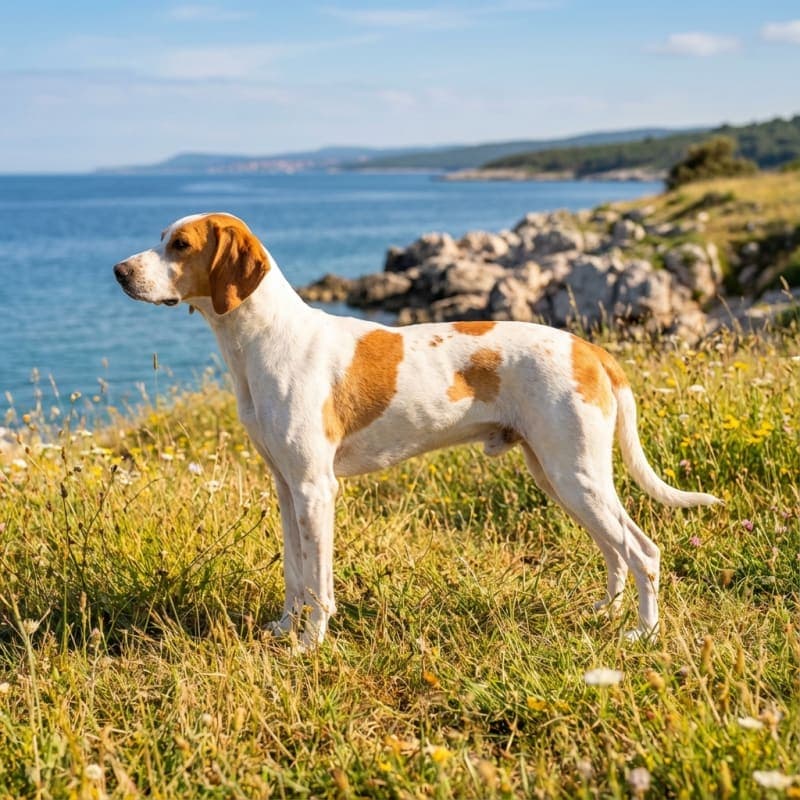
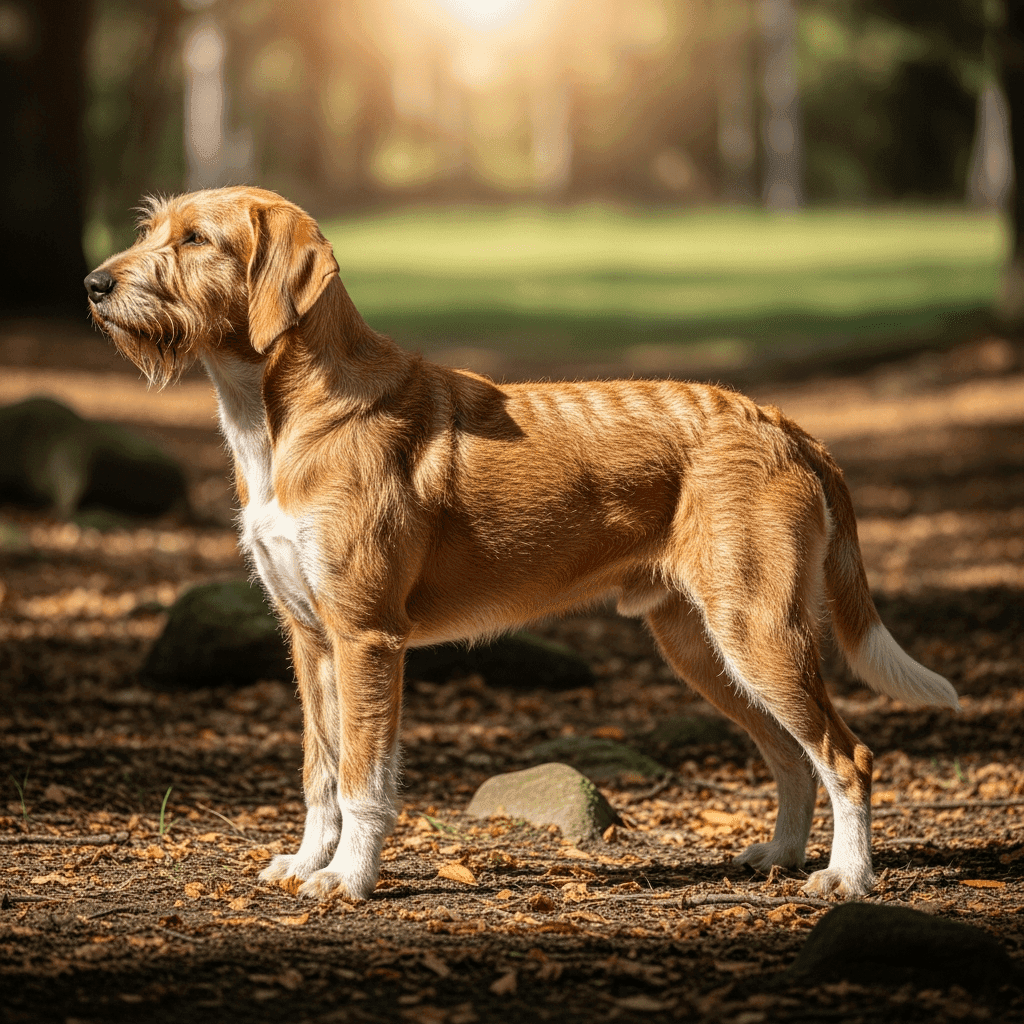
Unique coat color is the hallmark of the breed – its snow-white fur adorned with yellow-orange markings on the head and body catches the eye and makes the Istrian Coarse-haired Hound unmistakable among other breeds. The coarse, hard coat measuring 5-10 cm in length provides excellent protection against adverse weather conditions, which is crucial during long expeditions in cool, mountainous terrain.
This is a dog with a rustic appearance and a strong, characteristic build typical of hounds. Its rough coat gives it an impression of strength and resilience. The difference between males and females is clearly visible – males have a more massive build.
Breed requirements:
- Needs regular, intense physical activity and mental stimulation
- Requires a large space to run and explore due to its strong hunting instinct
- Forms a strong bond with its owner, becoming a loyal companion
- Needs an experienced handler who can manage its strong, independent character
- Not suitable for living in small apartments – requires space and movement
In interactions with other dogs, it is usually friendly but may exhibit dominant behaviors if not properly socialized from puppyhood. Ideal for active individuals, the Istrian Coarse-haired Hound is a dog that brings energy, joy, and a passion for shared adventures into its owner's life.
Its unique traits – a combination of hunting endurance, distinctive appearance, and loyal character – make it an excellent choice for lovers of an active lifestyle and outdoor sports.
Istrian Shorthaired Hound is a dog with a rustic appearance and a strong, characteristic build typical of hounds. Its rough coat gives the impression of being solid and resilient. There is a noticeable difference between males and females – males are more massive and impressive.
Physical parameters (according to the FCI standard from 2014):
- Height at the withers: males 46-58 cm, females 44-56 cm
- Weight: about 18 kg (proportional to height)
- Build: medium size, strong construction, rectangular format
Characteristic features of the head:
- Long, rectangular muzzle with a wide bridge of the nose
- Dark, expressive eyes giving a serious, focused expression
- Long ears set low, hanging along the cheeks
- Black, well-developed nose
Coat and coloration:
The coat is rough, hard, and dense, with a length of 5-10 cm, providing excellent protection against adverse weather conditions. Beneath the rough outer coat is a dense undercoat.
The coloration is a snow-white base with characteristic yellow-orange patches (orange color) mainly found on the head (especially on the ears) and scattered across the body. The markings can vary in size, giving each dog an individual appearance.
Body structure:
- Strong, slightly curved tail carried in a saber shape
- Well-developed chest, deep and spacious
- Strong, muscular limbs with a solid bone structure
- Compact paws with hard pads adapted to rough terrain
Movement: Flexible, dynamic, and harmonious, reflecting energy and agility. When working in the field, it moves confidently and economically, effortlessly overcoming difficult obstacles.
Overall impression: the dog gives the impression of being serious, sometimes gloomy, which stems from its natural temperament and focused expression in its eyes. It is a true working dog, whose appearance reflects its purpose – a durable hound adapted to work in demanding terrain.
Istrian Coarse-haired Hound is a dog with a balanced temperament, showing loyalty and attachment to its owner in relationships with people. It is primarily a working dog, whose character has been shaped over centuries of selection for hunting skills.
Family relationships:
- Friendly and loyal to family members
- Forms a strong bond with the owner
- Requires consistent but patient treatment
- Needs a sense of purpose and tasks to perform
Behavior towards strangers: In unfamiliar situations, it may be somewhat distrustful of strangers, making it a good watchdog. However, it is not aggressive – its distrust stems more from caution than hostility. Over time, and after getting to know new people, it becomes more open.
Relationships with other dogs: Usually well-disposed towards other dogs, provided there is appropriate early socialization. Its strong hunting instinct may lead to dominant behaviors towards other dogs, especially of the same sex. It feels best in the company of dogs with a similar energy level.
Children: This breed is not an ideal companion for small children. It may be somewhat distrustful and overwhelmed by the noise and chaos that children generate. It works better in homes with older, responsible children who understand the dog's needs and respect its space.
Temperament and needs:
- At home: calm and well-behaved, provided sufficient activity is ensured
- Intelligence: high, which facilitates training, but it can be stubborn and independent
- Independence: strongly independent, requires a consistent owner
- Separation anxiety: does not like to be left alone for long periods, may develop separation anxiety
Hunting instinct: This is a dominant trait in the character of this breed. The dog has a strong desire to track and chase, which means that:
- Requires a safe, fenced area
- May run away in pursuit of an interesting scent
- Needs training in recall
- Should not be let off-leash in unfenced areas
Boredom and destructiveness: Without proper physical and mental stimulation, it may develop destructive behaviors – chewing furniture, digging holes in the garden, excessive barking. This is a dog that must have something to do.
Character summary: The Istrian Coarse-haired Hound is a wonderful companion for an experienced owner who understands the needs of a hound breed and can provide the right amount of activity, consistent training, and mental stimulation. In good hands, it becomes a loyal, devoted, and fulfilling partner for shared adventures.
Istrian Coarse-haired Hound is generally a healthy and resilient breed, which stems from the fact that it was primarily bred for working abilities rather than appearance. Such functional selection has helped avoid many health problems associated with inbreeding and extreme conformation.
Average lifespan: 12-14 years with proper care and health management.
Most common health issues:
1. Hip Dysplasia (HD):
- The most common problem in the breed
- Can lead to pain, limping, and mobility issues
- Requires X-ray examinations for dogs intended for breeding
- Prevention: maintaining a proper weight, avoiding excessive strain on joints in puppies, supplementation
2. Ear Infections:
- Related to long, drooping ears and coarse hair in the ear canal
- Limited airflow promotes the growth of bacteria and yeast
- Requires regular ear checks and cleaning (at least once a week)
- Symptoms: scratching ears, shaking head, unpleasant odor, discharge
3. Injuries during hunting:
- Cut paws, thorns, abrasions
- Muscle and tendon injuries from intense work
- Prevention: regular paw checks after each outing, proper warm-up before intense activity
Preventive care:
Regular veterinary visits:
- Annual check-ups with assessment of joints and overall condition
- Current vaccinations and deworming
- Blood tests for older dogs (over 7 years)
- Dental check-ups and tartar removal
Parasite prevention:
- Regular use of tick and flea treatments (especially important for dogs frequently outdoors)
- Checking coat after every walk in forests and meadows
- Deworming according to veterinarian recommendations
Maintaining proper weight:
- Overweight puts strain on joints and heart
- Body condition check – ribs should be palpable under a thin layer of fat
- Adjusting food portions to activity level
Warning signs requiring veterinary consultation:
- Limping, stiffness, reluctance to move
- Scratching ears, shaking head, unpleasant odor from ears
- Sudden change in appetite or weight
- Lethargy, weakness, decreased activity
- Breathing problems during exertion
- Skin changes, itching, hair loss
Summary: With proper care, a balanced diet, regular exercise, and veterinary check-ups, the Istrian Coarse-haired Hound can enjoy a long, healthy life. The key is prevention, early detection of problems, and collaboration with an experienced veterinarian.
The care of the Istrian Coarse-haired Hound is relatively simple but requires regularity and consistency. The coarse, hard coat of this breed was created by nature to protect the dog from harsh weather conditions, making it naturally resistant to dirt.
Brushing the coat:
Basic frequency: Once a week is sufficient to keep the coat in good condition. Brushing:
- Removes dead hair and undercoat
- Minimizes shedding in the house
- Stimulates the skin and distributes natural oils
- Allows detection of parasites, skin changes, or injuries
Periods of intense shedding: Twice a year (spring and autumn), the dog goes through intense shedding. During this time:
- Increase brushing frequency to 2-3 times a week
- Use an undercoat rake to remove dead undercoat
- Consider professional stripping (removing dead hair) at a groomer
Grooming tools:
- Slicker brush – for daily brushing of the outer coat
- Metal comb – for detangling mats and checking the undercoat
- Undercoat rake – for removing undercoat during shedding periods
- Stripping knife – for advanced owners or groomers
Bathing:
- The coarse coat is naturally resistant to dirt and water
- Bathe only when absolutely necessary (heavy dirt, unpleasant odor)
- Too frequent baths can strip natural protective oils
- Use a shampoo for coarse-haired dogs
- Thoroughly dry after bathing, especially the ears
Ear care (CRITICAL!):
Long, hanging ears with coarse hair create an ideal environment for bacteria and yeast. Regular inspection and cleaning are an absolute necessity.
Ear cleaning procedure (at least once a week):
- Gently pull back the ear and check the ear canal
- Use a veterinary ear cleaning solution
- Massage the base of the ear to distribute the solution in the canal
- Wipe away visible discharge with a clean gauze
- DO NOT use cotton swabs in the deep ear canal
- Thoroughly dry the ears after bathing or swimming
Signs of a problem: Unpleasant odor, discharge, redness, scratching – contact your veterinarian immediately.
Nail care:
- Regularly trim nails to prevent discomfort while walking
- Overgrown nails can alter walking and strain joints
- If the dog spends a lot of time on hard surfaces, nails wear down naturally
- Active dogs in the field may require less frequent trimming
- Check length every 2-3 weeks
Paw care:
Especially important for active dogs in the field:
- Check paws after every long hike
- Look for cuts, thorns, stones between toes
- Check the condition of pads – cracks, abrasions
- In winter, protect from road salt (rinse paws after walks)
- Trim hair between toes to prevent dirt accumulation
Oral hygiene:
- Regularly brush teeth (ideally daily, minimum 2-3 times a week)
- Use dog toothpaste
- Offer dental chews
- Check the condition of gums and teeth
- Regular tartar removal at the veterinarian
Check after being outdoors:
- Check the whole body for ticks (especially ears, armpits, groin)
- Look for thorns, grass awns
- Check the condition of paws and nails
- Brush off leaves and twigs from the coat
Summary: Although the Istrian Coarse-haired Hound does not require complicated grooming, regular brushing, care for ears and paws is absolutely essential. Establishing a grooming routine from puppyhood will make the dog treat these activities as a normal part of life and time spent with the owner.
Istrian Coarse-haired Hound is a breed with high exercise requirements. It is a working dog, bred for long hours of hunting in difficult terrain, which is why it needs a significant amount of physical and mental activity to remain healthy and balanced.
Minimum daily requirements:
- At least 1-2 hours of intense effort daily
- A calm walk on a leash is not enough – the dog needs the opportunity to run
- It is best to divide the activity into 2-3 sessions a day
- Weekend: longer outings (3-4 hours) in natural terrain
Types of activities:
1. Running and hiking:
- Long walks in varied terrain (forests, meadows, mountains)
- Jogging with the owner (after growth is complete, around 12-15 months)
- Mountain hiking – ideal for this hardy breed
- Exploring new trails and scents
2. Play and games:
- Fetching (balls, frisbees, artificial retrieves)
- Tracking and searching games (hidden treats, toys)
- Playing with other dogs of similar energy levels
- Training tricks as a form of mental activity
3. Activities utilizing hunting instincts:
- Mantrailing – tracking human scent trails
- Nosework – searching for hidden scents
- Hunting – the breed's natural purpose (for hunters)
- Simulated trails – laying artificial trails in the terrain
4. Dog sports:
- Canicross – running alongside the dog
- Bikejoring – biking with the dog (after proper training)
- Tracking competitions – official hunting trials
Terrain characteristics:
The Istrian Coarse-haired Hound loves:
- Diverse terrain with opportunities for exploration
- Forests with natural scents of game
- Safe, fenced areas where it can run freely
- Mountains and hills – natural terrain for this breed
NOTE – Safety:
- DO NOT let it off-leash in unfenced areas – strong hunting instincts may lead to a chase after game
- Use a long leash (5-10 m) if there is no fenced area
- Intensively train the recall command
- In urban areas, always on a leash
Mental stimulation:
In addition to physical effort, the dog needs mental activity:
- Obedience training with new commands
- Puzzles and interactive toys (Kong, Nina Ottosson)
- Scent games and tracking
- Learning new tricks
- Changing walking routes – new scents and surroundings
Consequences of insufficient exercise:
Without adequate activity, the Istrian Coarse-haired Hound may develop behavioral problems:
- Hyperactivity and inability to relax at home
- Destructiveness – chewing furniture, destroying items
- Excessive barking and howling
- Digging holes in the garden
- Escaping in search of adventures
- Separation anxiety and issues with independence
- Frustration-induced aggression
Housing conditions:
❌ NOT suitable for:
- Small apartments without access to a garden
- Living in the city center without opportunities for regular outdoor trips
- Owners leading a sedentary lifestyle
✅ Ideal conditions:
- A house with a large, fenced garden
- Access to natural terrain (forests, meadows, mountains)
- Active owners who engage in sports, hiking, hunting
- Opportunity for daily long outings
Adjusting activity to age:
Puppies (0-12 months):
- Short, frequent play sessions
- Avoid intense jumping and running on hard surfaces (protecting developing joints)
- Focus on socialization and basic commands
- Rule: 5 minutes of exercise for each month of age, twice a day
Adult dogs (1-7 years):
- Full intensity – 1-2 hours of intense movement daily
- Dog sports, hunting, long hikes
- Peak condition and endurance
Seniors (7+ years):
- Gradually reducing intensity but maintaining regularity
- Shorter, more frequent walks instead of long outings
- Avoid extreme conditions (heat, frost)
- Adjust activity according to joint health
Summary: The Istrian Coarse-haired Hound is a dog for truly active people. It requires daily commitment to ensure it receives the appropriate amount of exercise and stimulation. In return, it offers wonderful companionship during outdoor adventures, tireless energy, and joy in shared time. It is not a dog for everyone – but for the right owner, it becomes an ideal life partner.
Training the Istrian Coarse-haired Hound is crucial for its proper development, behavior, and safety. This breed combines high intelligence with a strong hunting instinct and an independent character, which presents interesting training challenges for the owner.
Training characteristics:
- High intelligence – learns quickly, understands commands
- Stubbornness and independence – may selectively listen if it doesn't see the point in the command
- Strong hunting instinct – tracking is a priority, not always obedience
- Sensitivity – responds well to positive reinforcement, poorly to punishment
- Motivation – best responds to food rewards and praise
Profile of the ideal owner:
- Experienced in training dogs, especially hound breeds
- Consistent but patient
- Understanding the specifics of hunting dogs
- Ready to dedicate time to regular training
❌ NOT recommended for novice dog owners!
Training methods:
✅ Positive reinforcement (RECOMMENDED):
- Rewarding desired behaviors with treats, praise, play
- Building positive associations with training
- Motivating the dog to cooperate
- Utilizing natural instincts (scent, tracking) as rewards
❌ Physical punishment and yelling (PROHIBITED):
- Destroys the bond with the owner
- Causes fear and distrust
- In sensitive dogs, can lead to behavioral problems
- Not effective with independent hound breeds
Early socialization (CRITICAL!):
The period of 3-16 weeks of life is the socialization window when the puppy should meet:
People:
- Different individuals – men, women, children, seniors
- People in various outfits (uniforms, hats, backpacks)
- People in wheelchairs, with crutches
Animals:
- Other dogs of various breeds and sizes
- Farm animals (horses, cows, sheep)
- Cats (if they are to live together)
- NOTE: Controlled meetings, always under supervision
Environments:
- Different surfaces (grass, asphalt, sand, metal)
- Stairs, walkways, bridges
- Noisy places (city, traffic)
- Quiet places (forest, park)
- Car, means of transport
Sounds:
- Thunder, fireworks (recordings at low volume)
- Vacuum cleaner, washing machine, other household appliances
- Street noise, sirens
- Children playing loudly
Basic commands (ESSENTIAL):
1. Recall – THE MOST IMPORTANT COMMAND:
- Absolute basis for safety for a hound dog
- Train in controlled conditions with a long leash
- Gradually increase distance and distractions
- Use super high-value rewards (meat, cheese)
- NEVER punish a dog that has returned (even if it returned late)
- Practice daily in different locations
2. Sit:
- Basic control command
- Useful when crossing the street, greeting guests
3. Stay / Wait:
- Teaching self-control and patience
- Safety (not running out through doors, gates)
4. Lie down:
- Calming in various situations
- Veterinary visits, travel
5. Leave it / No:
- Safety (not picking up food from the ground, dangerous objects)
- Control of hunting instinct
6. Heel / By my side:
- Walking on a loose leash without pulling
- Safety in the city
Specialized training:
Hunting training (for working dogs):
- Tracking game trails
- Chasing with voice (making noise)
- Cooperation with the hunter
- Retrieving (optional)
- Getting used to gunshots
Scent training (for non-hunting dogs):
- Nosework – searching for hidden scents
- Mantrailing – tracking people
- Simulated trails in the field
Frequent training challenges:
1. Selective deafness to recall:
- Cause: Strong hunting instinct – scent is more important than command
- Solution: Intensive recall training with super rewards, long leash, gradually increasing difficulty
2. Pulling on the leash:
- Cause: Desire to explore and track
- Solution: Loose leash training, rewarding for walking by the side, changing direction when the dog pulls
3. Stubbornness and independence:
- Cause: Hound breed – bred to make decisions independently
- Solution: Patience, consistency, making training interesting and valuable for the dog
4. Escaping in pursuit of a scent:
- Cause: Instinct stronger than control
- Solution: Safe, fenced areas, long leash, intensive recall training, do not let loose in unfenced areas
Training schedule:
Puppy (2-6 months):
- Short sessions (5-10 minutes), 3-4 times a day
- Socialization – PRIORITY
- Basic commands (name, sit, here, no)
- Getting used to the leash and collar
- House training
Young dog (6-12 months):
- Sessions 10-15 minutes, 2-3 times a day
- Reinforcing basic commands
- Introducing recall on a long leash
- Learning to walk on a loose leash
- First scent exercises
Adult dog (12+ months):
- Sessions 15-20 minutes, 1-2 times a day
- Advanced obedience
- Specialized training (hunting, nosework)
- Maintaining and refreshing learned commands
Key rules for success:
- Consistency – the same rules always, all household members
- Patience – hound breeds learn at their own pace
- Positive approach – rewards, not punishments
- Short, frequent sessions – better than long, exhausting ones
- Ending on a success – always finish training with something the dog knows well
- Variety – diversify exercises to avoid boredom
- Utilizing instincts – instead of fighting tracking, channel it into productive activities
Frequent mistakes to avoid:
- ❌ Letting loose before mastering recall
- ❌ Punishing the dog for returning (even if it returned late)
- ❌ Long, monotonous training sessions
- ❌ Inconsistency in enforcing rules
- ❌ Lack of early socialization
- ❌ Using physical punishments
- ❌ Giving up training after achieving basic obedience
Summary: The Istrian Coarse-haired Hound requires a experienced, consistent owner who understands the specifics of hound breeds and is willing to dedicate time to regular training. With the right approach, it becomes a well-trained dog that combines hunting instincts with controlled behavior. The key is early socialization, intensive recall training, and positive methods that build a bond and motivation to cooperate.
Proper nutrition for the Istrian Coarse-haired Hound is crucial for its health, condition, and longevity. This active, working breed requires a diet tailored to its high level of physical activity and specific needs arising from its structure and purpose.
General nutrition guidelines:
Quality of food:
- High quality – a key factor for health
- Premium or super-premium food with a high meat content
- Avoid low-quality foods with fillers (corn, wheat as the main ingredient)
- Read the ingredients – meat should be the first ingredient
- Avoid artificial colors, preservatives, and flavors
Composition of optimal food for the Istrian Hound:
- Protein: 24-30% (for active working dogs even 30-35%)
- Fat: 12-18% (for very active dogs 18-22%)
- Carbohydrates: Moderate amount from high-quality sources (rice, oats, sweet potatoes)
- Fiber: 3-5% for proper digestion
- Omega-3 and Omega-6: For healthy skin and coat
Types of feeding:
1. Dry food (kibble):
- Advantages: Convenient, long shelf life, helps clean teeth
- Disadvantages: Processed, may contain more carbohydrates
- Dosage: According to the manufacturer's guidelines, adjusted for weight and activity
2. Wet food (cans, pouches):
- Advantages: High meat content, good moisture, tasty
- Disadvantages: More expensive, shorter shelf life after opening
- Usage: As a supplement to dry food or the basis of the diet
3. BARF diet (Biologically Appropriate Raw Food):
- Composition: Raw meat, meaty bones, offal, vegetables, supplements
- Advantages: Natural, high-quality ingredients, control over the diet
- Disadvantages: Time-consuming, requires knowledge of balancing, risk of bacteria
- NOTE: Requires consultation with a veterinarian or animal nutritionist
4. Home-cooked diet:
- Composition: Cooked meat, vegetables, rice/grains, supplements
- Advantages: Control over ingredients, freshness
- Disadvantages: Time-consuming, difficult to balance
- NOTE: Absolutely requires supplementation with vitamins and minerals
Adjusting the diet to the level of activity:
Moderately active dog (1 hour a day):
- Standard food for moderately active dogs
- Protein: 24-26%, Fat: 12-15%
Very active dog (2+ hours of intense effort):
- Food for active or performance dogs
- Protein: 28-30%, Fat: 18-20%
- Increased portion or more frequent feeding
Working dog during the hunting season:
- High-calorie food (performance, sport)
- Protein: 30-35%, Fat: 20-22%
- Possible additional meals or energy snacks
Feeding frequency and portions:
Puppies (2-6 months):
- 3-4 meals a day
- Puppy food for medium breeds
- Amount: according to the manufacturer's guidelines for age and weight
Young dogs (6-12 months):
- 2-3 meals a day
- Transition to junior or adult food (around 10-12 months)
Adult dogs (1-7 years):
- 2 meals a day (morning and evening)
- Possible 1 meal for less active dogs
- Amount: 300-450g of dry food per day (for about an 18kg dog, moderately active)
- Adjust according to individual condition and activity
Seniors (7+ years):
- 2 meals a day
- Senior food with reduced calories, joint support
- Reduced portion if activity decreases
Weight control:
Proper body condition:
- Ribs should be felt under a thin layer of fat
- Visible waist when viewed from above
- Tucked belly when viewed from the side
Overweight:
- Ribs not felt
- No waist
- Solution: Reduce portions by 10-15%, increase activity, switch to light food
Underweight:
- Ribs and spine clearly visible
- Solution: Increase portions, check health status with a veterinarian (parasites, diseases)
Water:
- Constant access to fresh water – CRITICAL!
- Change water at least 2 times a day
- Additional bowl during long walks
- In hot weather and after exercise – increased water demand
- Monitor intake – sudden increase may indicate health problems
Recommended ingredients and supplements:
Protein sources (in food or BARF):
- Chicken, turkey, beef, lamb, fish (salmon, herring)
- Offal (liver, heart, kidneys) – rich in vitamins
Carbohydrate sources:
- Brown rice, oats, grains, sweet potatoes
- Avoid wheat and corn – common allergens
Vegetables (in BARF or home diet):
- Carrots, broccoli, spinach, pumpkin (cooked or chopped)
- Avoid: onion, garlic, grapes (toxic to dogs)
Supplements (after consulting a veterinarian):
- Glucosamine and chondroitin – joint support (especially important for active dogs)
- Salmon oil (Omega-3) – healthy skin and coat, reduction of inflammation
- Probiotics – gut health
- Vitamins and minerals – only with home diet
Treats and snacks:
- Maximum 10% of daily caloric intake
- Healthy options: dried meat, vegetables (carrots), fruits (apple without seeds)
- Avoid: sweets, chocolate (toxic!), fatty snacks
- Use during training as rewards
Feeding schedule:
Sample schedule for an adult dog (2 meals):
- Morning (7:00-8:00): First meal (50% of daily portion)
- Evening (18:00-19:00): Second meal (50% of daily portion)
- NOTE: Feed at least 1-2 hours before intense effort and at least 1 hour after (to prevent gastric torsion)
Special situations:
Food allergies:
- Symptoms: itching, skin problems, diarrhea, vomiting
- Common allergens: chicken, beef, wheat, corn, soy
- Solution: Hypoallergenic food with a new protein source (fish, lamb, duck)
- Elimination diet under veterinary supervision
Sensitive stomach:
- Easily digestible food, with probiotics
- Small, more frequent meals
- Avoid sudden changes in diet
Storing food:
- Dry food: in an airtight container, in a dry, cool place
- Wet food: after opening in the fridge max 2-3 days
- BARF: frozen, thaw daily portions
- Check expiration date
Changing diet:
- Gradually! – Sudden changes cause stomach problems
- Days 1-2: 75% old food + 25% new
- Days 3-4: 50% old food + 50% new
- Days 5-6: 25% old food + 75% new
- Day 7: 100% new food
Prohibited products (TOXIC!):
- Chocolate
- Onion and garlic
- Grapes and raisins
- Avocado
- Xylitol (sweetener)
- Alcohol
- Cooked bones (can splinter)
Summary: Proper nutrition for the Istrian Coarse-haired Hound is a balanced diet based on high-quality food, tailored to the level of activity, age, and health status. Key elements include: appropriate protein content for active dogs, weight control, constant access to water, and avoiding sudden changes in diet. With proper nutrition, the dog will enjoy good condition, a shiny coat, and energy for many years.
Characteristic Traits
Pros
- Exceptional endurance and energy
- Excellent sense of smell
- Distinctive
- unique coat
- Loyal and attached to the owner
- Resilience to harsh weather conditions.
Cons
- Requires a lot of movement and activity
- Unsuitable for small apartments
- Strong hunting instinct may lead to escapes
- Requires an experienced owner
- Can be stubborn and independent.
Behavioral Ratings
Breed History
The history of the Istrian Coarse-haired Hound dates back deep into the past of the Istria region and the eastern part of the Adriatic coast. It is one of the oldest hound breeds in the Balkans, whose roots and development are inextricably linked to the geography, climate, and hunting culture of this area.
Earliest mentions (before the 14th century):
The oldest known document describing the Istrian Coarse-haired Hound dates back to 1719 – a manuscript by Bishop Peter Bakic from Đakovo. In his notes, the bishop mentions that the breeding of this breed was already known before the 14th century, making it one of the oldest documented hound breeds in Europe.
The earliest visual representation of the breed can be found in the Cathedral of St. Mark in Makarska in Croatia, confirming the long history of these dogs in the region.
Origin of the breed:
The Istrian Coarse-haired Hound descends from the East Adriatic white hound with markings. The characteristic coarse coat developed as a natural adaptation to the mountain climate of the eastern Istria region and the Adriatic coast.
Climate conditions that shaped the breed:
- Mountainous terrain on the eastern Adriatic coast
- Low temperatures in mountainous regions
- Humid, variable climate
- Difficult terrain conditions requiring endurance
The coarse, dense coat provided natural protection against cold, moisture, and the sharp vegetation of the mountainous terrain. It is these environmental conditions that distinguished the coarse-haired variety from its short-haired cousin – the Istrian Short-haired Hound.
Traditional hunting role:
For centuries, the Istrian Coarse-haired Hound was a working dog used by hunters in the Istria region (now part of Croatia and Slovenia) for:
- Hunting hares – the primary game
- Hunting foxes – controlling predator populations
- Hunting wild boars – requiring endurance and courage
- Tracking on a leash – following injured game
The breed was characterized by extraordinary endurance allowing for long hours of work in difficult, mountainous terrain and a superb sense of smell that enabled effective tracking even in complicated conditions.
Official recognition of the breed:
The FCI (Fédération Cynologique Internationale) published the first official standard for the Istrian Coarse-haired Hound on April 6, 1955. This was a key event that:
- Formally recognized the breed on the international stage
- Established uniform breeding criteria
- Enabled participation in FCI exhibitions and hunting trials
- Preserved the unique characteristics of the breed for future generations
FCI classification:
- Group 6: Hounds, scent hounds and related breeds
- Section 1.2: Medium-sized hounds
- Working trials: Required (working trial)
- Country of origin: Croatia
- Standard number: 152
- Current standard: Approved on 03.11.2014
Decline in popularity and threat:
In the second half of the 20th century, the breed began to lose popularity for several reasons:
- Urbanization: Reduction of hunting grounds and the number of hunters
- Social changes: Decrease in interest in traditional hunting
- Competition from other breeds: The emergence of popular Western breeds
- Small populations: Limited breeding pool
In the 1980s and 1990s, the breed found itself in a critical state – the number of individuals dramatically decreased, and in some regions, the breed was on the brink of extinction.
Contemporary efforts to preserve the breed:
Since the late 20th century, breeders and cynological organizations in Croatia and Slovenia have undertaken intensive actions aimed at:
- Registration and monitoring of all individuals
- Controlled breeding maintaining breed standards
- Working trials testing hunting skills
- Promotion of the breed at international exhibitions
- Education about the value of local indigenous breeds
Current status:
Currently, the Istrian Coarse-haired Hound is recognized as a rare breed. Its population is limited, mainly concentrated in:
- Croatia – the historical cradle of the breed, the largest breeding population
- Slovenia – active breeding and hunting trials
- Northern Italy – a small group of enthusiasts
- Other European countries – sporadic breeding, mainly among enthusiasts of rare breeds
Contemporary use:
Despite its rarity, the breed is still valued by:
- Traditionalist hunters – appreciating authentic hunting skills
- Indigenous breed enthusiasts – engaged in preserving local kynological heritage
- Dog sports participants – competitors in tracking and nosework
- Active families – seeking a durable, loyal companion for adventures
Cultural significance:
The Istrian Coarse-haired Hound is a part of Croatian and Slovenian cultural heritage. It symbolizes:
- The hunting traditions of the Istria region
- The natural adaptation of animals to the local climate and terrain
- The historical bond between humans and dogs in work and everyday life
- The value of indigenous breeds in the age of kynological globalization
Future prospects:
The future of the breed depends on:
- Continuation of breeding programs preserving breed characteristics and working skills
- International cooperation among breeders and kynological organizations
- Promotion of the breed as a companion for active people, not just hunters
- Preservation of genetic diversity and avoidance of inbreeding
- Government support for indigenous breeds as national heritage
Summary: The Istrian Coarse-haired Hound is a living monument of history – a breed with over 600 years of documented tradition, shaped by the climate and terrain of eastern Istria. From medieval hunts to contemporary hunting trials, this rare breed has survived thanks to its endurance, skills, and loyalty. Today, despite its small population, it is protected and valued by enthusiasts who understand its worth as a cultural heritage and a wonderful working dog.