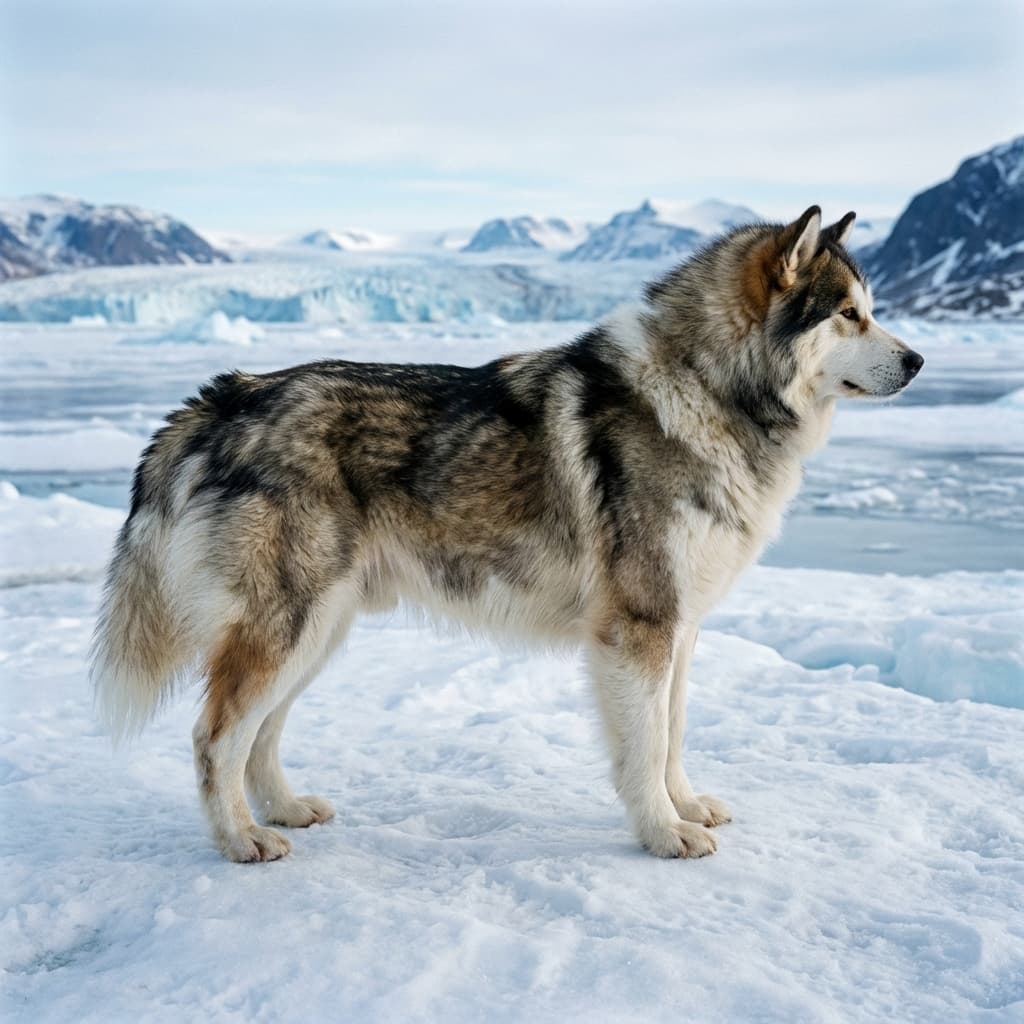
Greenland Dog
FCI Group
5• FCI 274
Size
Large
Origin Country
XX
Height
55-66 cm
Weight
28-32 kg
Lifespan
10-14 years
Temperament
Overview
The Greenland Dog, also known as Grønlandshund or Qimmeq Qimuttoq, is one of the oldest dog breeds in the world, with a history that dates back thousands of years. It is a classic sled dog that has been an invaluable companion and helper for the Inuit people inhabiting the harsh Arctic regions since time immemorial. Its extraordinary physical strength, endurance, and mental resilience make it an ideal companion for those leading an active, sporty lifestyle and passionate about outdoor challenges.
This breed was officially recognized by the Fédération Cynologique Internationale (FCI) under standard number 274. It belongs to group 5, which includes spitz and primitive breeds, section 1 – Nordic sled dogs. Its agile, muscular build and remarkable working abilities allow it to pull sleds over difficult, snowy terrain for extended periods, which has been crucial for the survival of Greenland's inhabitants for millennia. The height at the withers ranges from 51 to 68 cm (males are usually larger than females), and the weight oscillates between 30 and 32 kg for adult males.
Its thick, double coat provides natural protection against extreme weather conditions – freezing winds, snow, and low temperatures reaching as low as -50°C. The temperament of the Greenland Dog is characterized by full energy, courage, a passion for work, and independence. It is a dog that excels as a companion for outdoor adventure lovers, winter sports enthusiasts, and sledding activities. Although it is friendly towards people, including strangers, it does not bond closely with one person, making it less suitable as a typical family or guard dog.
Strong hunting instincts and working abilities mean that the Greenland Dog was used by the Inuit not only for pulling sleds but also for hunting seals, walruses, and polar bears. Therefore, it requires an experienced owner who understands its natural needs – both physical and mental. Regular, intense exercise and mental stimulation are absolutely crucial for its well-being and emotional balance. It is ideally suited for active families or individuals leading a sporty lifestyle who can provide it with appropriate conditions, enough space, and a minimum of 2-3 hours of intense exercise daily. Therefore, it is worth getting to know this exceptional dog better in the following sections of our guide, where we will discuss its health, grooming, nutritional needs, training, and many other aspects of life with this fascinating breed.
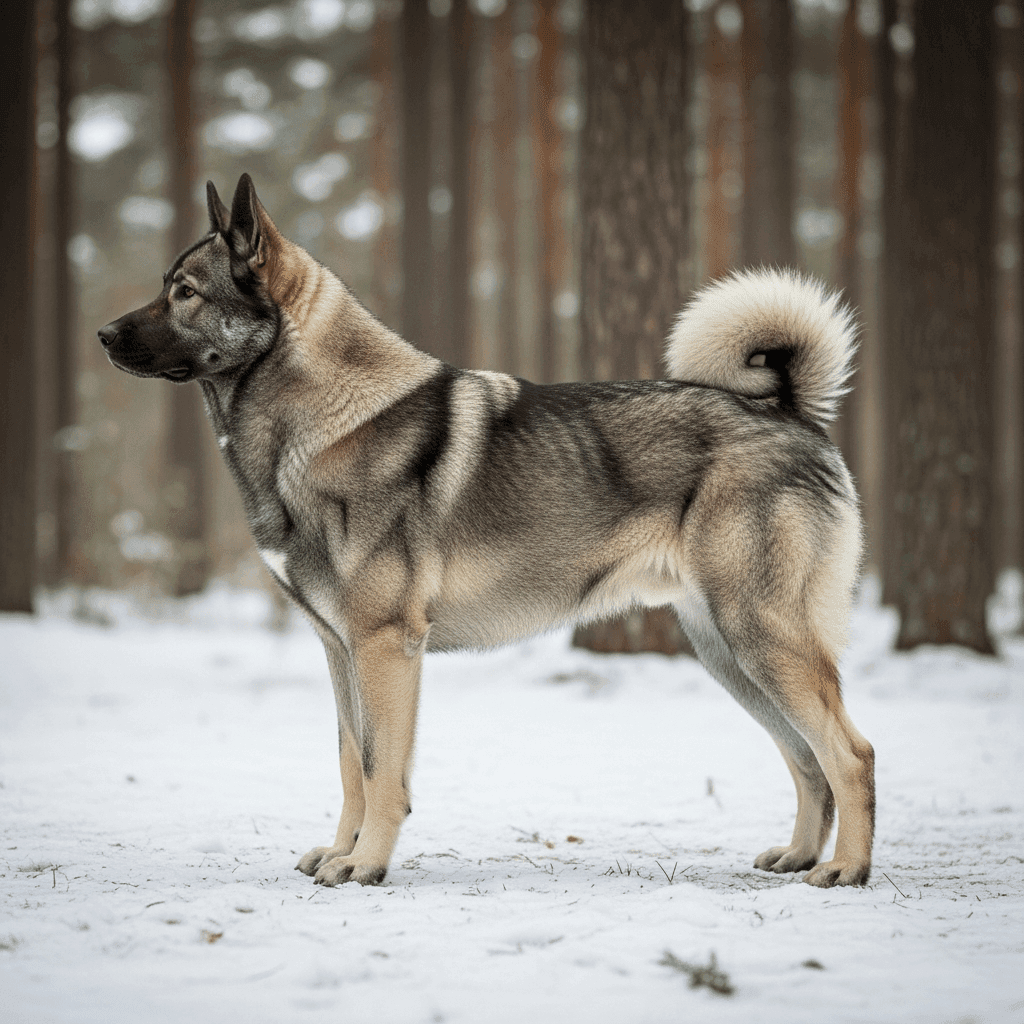
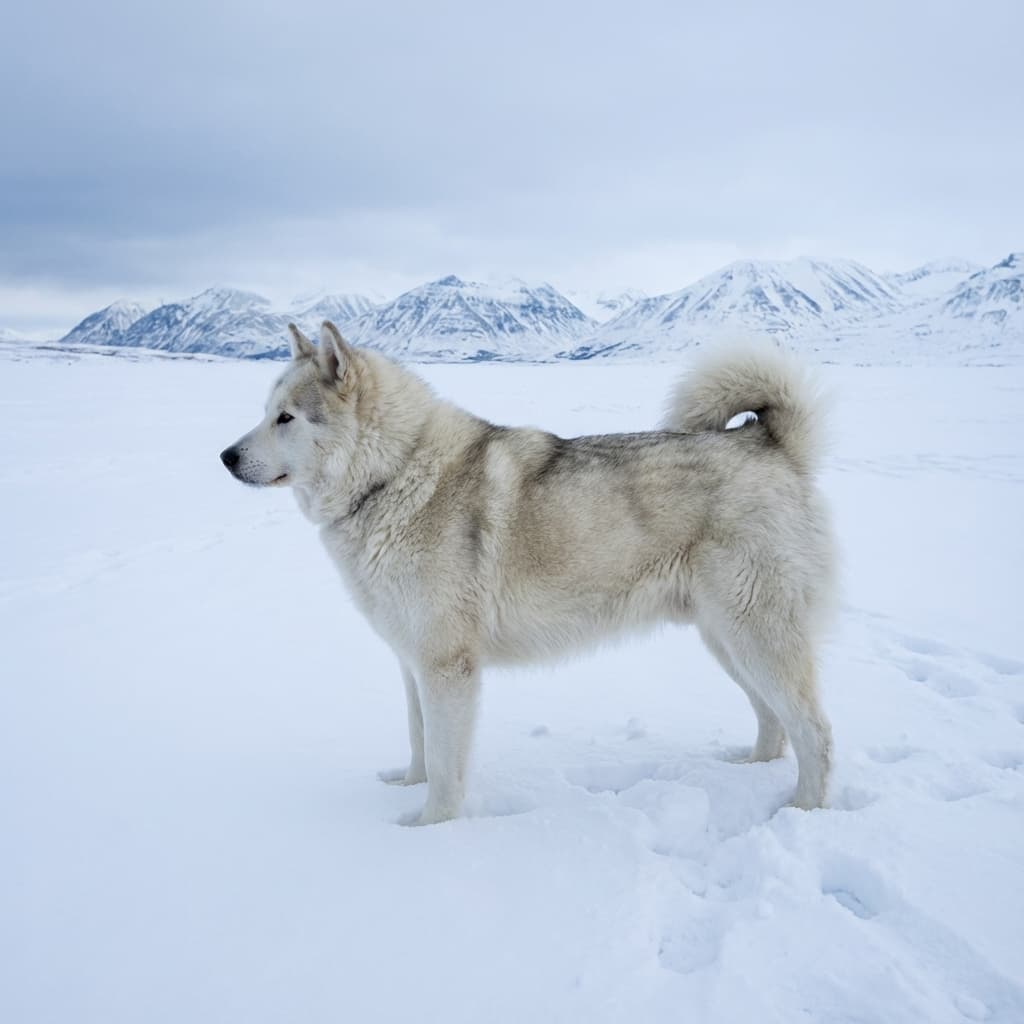
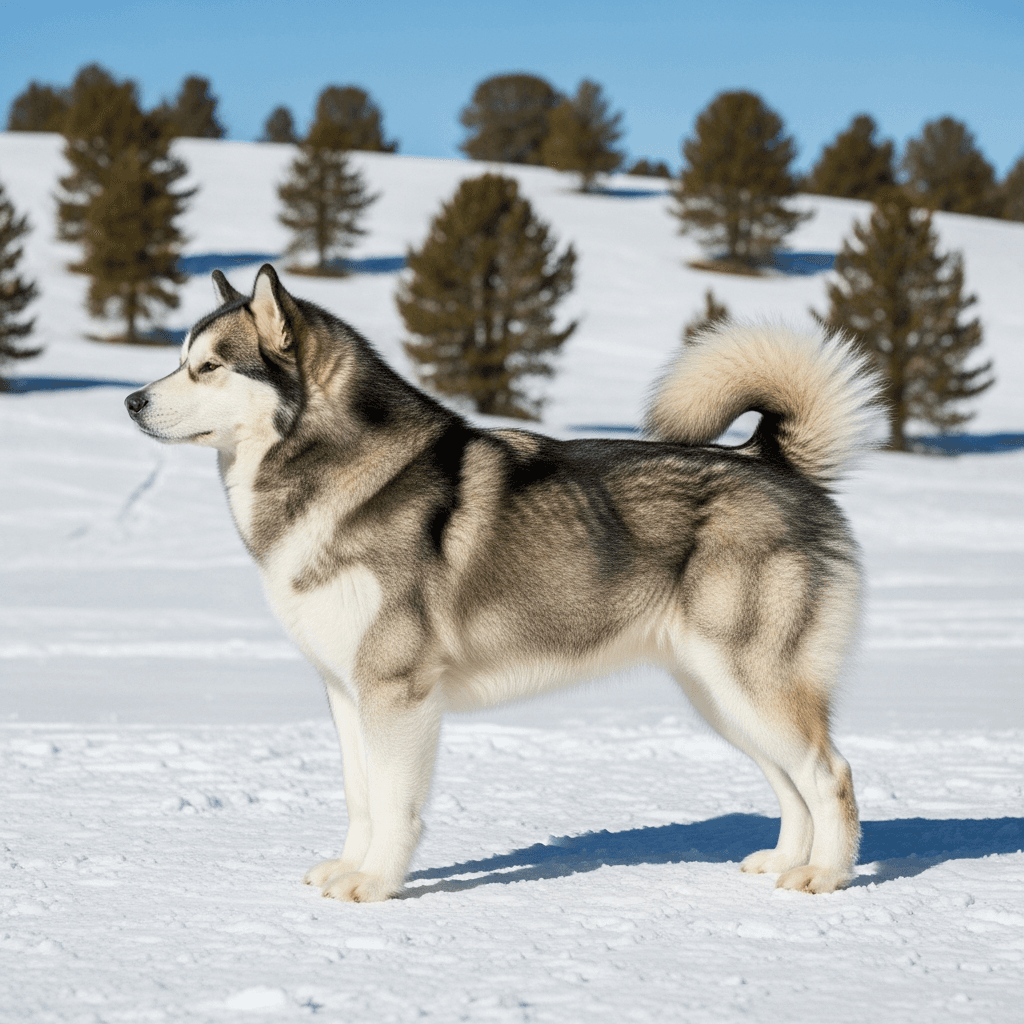
The Greenland dog is a large, strongly built polar dog with a distinctive, impressive appearance that immediately catches the eye. Its silhouette is short and rectangular, with proportions of height at the withers to body length of 10 to 11. Females may have slightly longer bodies, which is permissible according to the breed standard. The height at the withers for males ranges from 60 to 68 cm, for females from 51 to 61 cm, and the weight oscillates between 30 and 32 kg for adult males. The body structure is massive, muscular, and solid, adapted for strenuous work in extremely harsh Arctic conditions.
The head is wide, wedge-shaped, and strong, with a slightly domed skull, giving the dog a dominant and confident presence. The ears are relatively small, triangular, thick, and held erect, adding an expression of alertness and readiness for action. The eyes, of dark color, are set slightly obliquely, and their expression is bold, determined, and confident, reflecting its primal character. The muzzle is strong and wide, gradually narrowing towards the black tip of the nose, without a distinct stop.
The body of the Greenland dog is stocky, solid, and harmonious, with a straight or slightly sloping back and a wide, deep chest, which provides endurance during prolonged, intense physical exertion. The tail is set high, thick, and bushy, usually carried curled or slightly arched over the back, especially during movement or in a state of alertness, giving it a distinctive, recognizable appearance.
The coat is double, dense, and very abundant, consisting of a soft, thick undercoat and straight, coarse guard hair of medium length, making the dog perfectly resistant to extreme cold, moisture, and wind. The coloration can be very diverse – from pure white, through shades of black, brown, red, gray, to combinations of these colors with white markings. Each individual is unique in its appearance, adding even more diversity and charm to the breed. Only albinism is not acceptable according to the FCI standard. The overall appearance of the Greenland dog reflects strength, endurance, primal beauty, and the wildness of nature, making it an ideal working dog adapted to extreme climatic conditions and physical challenges.
The Greenland Dog is a breed with a strong hunting instinct and a very independent and confident character, which is a legacy of its millennia-long history as a working dog in the Arctic. Its temperament is full of energy, courage, passion for work, and mental endurance. This is a tireless dog that requires constant activity and tasks to perform, making it an excellent companion for those who value intense outdoor activities, sporting challenges, and living close to nature.
In relationships with people, the Greenland Dog is friendly, open, and sociable, even towards strangers, which can be surprising in the context of its primitive, wild appearance. However, it does not form a strong attachment to one person, which makes it not an ideal guard dog or a typical family dog in the traditional sense. Its character is more independent, and loyalty is directed more towards the whole group (family, pack) rather than to a single individual.
This breed is known for its high tolerance to cold and extreme weather conditions, but it definitely does not cope well with high temperatures and can suffer from overheating on hot days. The Greenland Dog can be very vocal – it often barks, howls, or makes other sounds typical of Nordic breeds, which is a characteristic inherited from its Arctic ancestors. Its independence and strong will can lead to behavioral problems if the dog is not properly trained, socialized, and mentally stimulated from a young age.
For this reason, it is extremely important for owners to be patient, consistent, confident, and experienced in working with primitive breeds to help the dog develop appropriate social skills and obedience. The Greenland Dog requires a large amount of exercise and intense physical activity – a minimum of 2-3 hours a day. Lack of adequate effort and stimulation can lead to frustration, excessive barking, destruction of household items, escapes, and other behavioral problems that can be difficult to manage.
Despite its strong, independent personality, the Greenland Dog is very sociable with other dogs and thrives well in a pack or working group, which is a legacy of its past as a sled dog working in a team. In families with children, it can function well, provided that the children are older, mature, understand the dog's needs, and can interact with it in a respectful manner. Younger children may not be able to meet its energy, strength, and independence. This is definitely a dog for experienced owners who understand the specifics of primitive and Nordic breeds and are willing to dedicate time, energy, and commitment to the proper training and socialization of this wonderful animal.
The Greenland dog is a breed known for its excellent health condition, extraordinary endurance, and impressive longevity, with an average lifespan of 12 to 14 years, and even longer for dogs living in optimal conditions. It is a strong, resilient, and hardy dog that copes well with extreme weather conditions, especially low temperatures, wind, snow, and harsh working conditions in the Arctic. Thanks to centuries of natural selection, the Greenland dog has developed exceptional resistance to diseases, physical fitness, and mental stability.
However, this breed is prone to certain genetic disorders that can occur in large working breeds, such as hip dysplasia (HD) and patellar luxation. For this reason, it is extremely important for owners to pay special attention to their pets' health from a young age. Regular veterinary visits, screenings, and joint checks should become routine, especially for actively working dogs, those trained for sled sports, or those engaging in intense physical efforts.
Although the Greenland dog has a natural, exceptional resistance to cold due to its dense, double coat, it definitely does not cope well with high temperatures and heat. On hot days or in warm, humid climates, it may suffer from overheating, heatstroke, and breathing problems, so it is essential to avoid exposing it to prolonged high temperatures, intense sunlight, and strenuous activity during hot hours. Providing access to shade, fresh, cool water, and a cooled, air-conditioned space is crucial during the warmer periods of the year.
Maintaining a proper diet, balanced nutrition, and regular, intense exercise is absolutely key to preventing problems with overweight and obesity, which can lead to more serious health issues, including joint strain, heart disease, diabetes, or a shortened lifespan. Proper eating habits, physical activity tailored to the dog's age, condition, and health status, and regular weight checks are essential for keeping the Greenland dog in excellent condition throughout its life. With proper veterinary care, appropriate nutrition, and sufficient activity, the Greenland dog can enjoy a long, healthy, and active life as a loyal, reliable companion to its owner.
The Greenland dog requires regular, systematic grooming to keep its coat in excellent condition and to fulfill its protective function against extremely low temperatures. Due to its dense, double coat, consisting of a soft, abundant undercoat and straight, coarse guard hairs, it should be brushed at least 2-3 times a week using a brush or comb designed for double-coated fur. Regular brushing helps remove dead hair, prevents matting and tangling of the coat, and improves blood circulation in the skin, which positively affects its condition and appearance.
During the spring and autumn, when the dog undergoes a natural, intense shedding process, it may require daily brushing to effectively remove dead hair and minimize shedding in the home. At this time, the Greenland dog may lose huge amounts of hair, which is a natural adaptive process to changing climatic conditions. Owners should be prepared for a significant increase in the amount of hair in the home during shedding, and daily brushing will become an absolute necessity.
The Greenland dog does not require frequent baths, as excessive bathing can lead to the removal of natural oils that protect its skin and coat, weakening their insulating, waterproof, and thermoregulating properties. Usually, 2-3 baths a year are sufficient or when truly necessary, for example, after intense play in the mud, contact with unpleasant-smelling substances, or after outdoor activities. It is advisable to use gentle shampoos specifically designed for dogs, preferably for Nordic breeds, long-haired dogs, or those with double coats.
In addition to coat care, it is also important to take care of the ears, teeth, and nails. The condition of the ears should be checked regularly for signs of infection, excessive discharge, unpleasant odor, or redness. Ears can be gently cleaned with special products available in pet or veterinary stores, ideally once a week or as needed. Brushing teeth at least 2-3 times a week using a toothbrush and toothpaste for dogs will help prevent problems with tartar, gum disease, and bad breath, which is crucial for maintaining oral health and the overall well-being of the dog. Nails should be trimmed as needed if they do not wear down naturally during activities on hard surfaces – usually once a month or according to the individual needs of the dog. Regular, holistic grooming will help keep the Greenland dog in excellent physical, aesthetic, and health condition throughout its life.
The Greenland dog is a breed that requires a very large amount of exercise and intense physical activity on a daily basis. It needs at least 2-3 hours of daily exercise, which can be divided into several sessions – walks, intense running, play, working training, or sled sports. Without the appropriate amount of effort, the Greenland dog becomes bored, frustrated, and may develop serious behavioral problems such as excessive barking, howling, destroying objects in the house, digging in the garden, or escaping. This is a dog that has been genetically created for hard, strenuous work in extreme Arctic conditions, so its exercise needs are exceptionally high and cannot be underestimated.
Thanks to its strength, endurance, and sled dog nature, the Greenland dog excels in various forms of activity, such as running alongside a bike, mountain hiking, long trekking, sled training, sledding, skijoring (pulling a skier), mushing (dog sledding sport), canicross (running with a dog in harness), or bikejoring (pulling a cyclist). Due to its roots as a sled dog, it loves to pull weights, work in a team, and perform work tasks, making it an ideal companion for those passionate about winter sports, outdoor activities, and extreme adventures.
Owners should provide the dog not only with physical activity but also with regular mental stimulation, such as scent games, tracking exercises, obedience training, problem-solving tasks, learning new commands, or dog puzzles. The Greenland dog is intelligent, learns quickly, and likes to have specific tasks to perform. It loves to run, explore new areas, discover scents, and have the opportunity to move freely in a safe, well-fenced environment, where it can release its natural energy without the risk of escaping, getting lost, or posing a danger to itself or others.
It is important to adjust the intensity and type of exercise to the age, condition, and health status of the dog. Young puppies should not be overloaded with long runs, intense exertion, or jumping, as their joints, bones, and cartilage are still developing and are prone to injury. On the other hand, older, senior dogs may require gentler, calmer forms of activity, such as walks, swimming, or short hikes, to avoid excessive strain on their joints and muscles.
Remember that a lack of adequate exercise can lead not only to behavioral problems but also to obesity, frustration, depression, aggression, and a decrease in the dog's quality of life. For the Greenland dog, regular, intense movement is not a luxury but an absolute necessity resulting from its genetic predispositions and natural needs as a working dog. Owners must be aware that engaging in providing adequate activity is a daily, long-term obligation that requires time, energy, motivation, and appropriate living conditions.
Training a Greenland dog can be a serious challenge, especially for less experienced owners or those used to working with breeds that are easily trainable, such as retrievers or shepherds. This breed is characterized by high intelligence, independence, and a strong will, which means it can quickly learn new commands and skills, but it also requires a great deal of consistency, patience, experience, and clear, decisive leadership from the owner.
Owners should use only positive training methods, focusing on rewarding desired behaviors with treats, verbal praise, play, petting, and other forms of positive reinforcement. The Greenland dog, due to its strong instincts, primitive nature, and tendencies towards dominance, may show stubbornness, independence, and resistance in action, so it is extremely important to establish clear rules, boundaries, and hierarchy from the very beginning. The dog must understand that the owner is the pack leader and that obedience brings benefits, pleasure, and rewards.
Early socialization is absolutely crucial and should begin as early as possible, ideally during the puppy stage, between 3 and 14 weeks of age, when the puppy's brain is most open to new experiences. It should include contact with other dogs of various breeds, sizes, genders, and temperaments, as well as with people – both adults and children, seniors, and individuals with different appearances. It is also important to acclimate the dog to various environments, sounds, smells, surfaces, situations, and stimuli (cars, bicycles, trams, rowdy people, stores, parks), which will help develop balanced, appropriate social skills and reduce the risk of fears, phobias, or aggression. A Greenland dog that has been properly, consistently, and positively socialized will be more confident, open, and better adapted to life in various conditions and situations.
Regular training sessions that are engaging, diverse, stimulating, and positive will help keep the dog in good mental and physical shape. Owners should be aware that the Greenland dog can exhibit strong independence, stubbornness, and sometimes clear resistance to commands, especially if it does not see the point, feels insufficient motivation, or believes it can make a better decision on its own. Therefore, it is essential that training is not only effective but also enjoyable, interesting, and satisfying for the dog, to maintain its interest, motivation to learn, and positive attitude towards cooperating with the owner.
Training should be short (5-10 minutes per session), intense, and always end on a success, which reinforces positive experiences, builds the bond between the dog and the human, and increases motivation for further learning. We should avoid long, monotonous training sessions that can discourage the dog and cause it to lose interest. The Greenland dog is definitely not a breed for novice owners – it requires experience, confidence, consistency, knowledge of dog behavior, and a willingness to commit long-term to the training and upbringing process.
The Greenland dog is a large working dog with very high energy needs that requires a balanced, high-quality diet to meet the demands of its intensely active nature and to maintain health, fitness, and vitality at an optimal level throughout its life. Proper nutrition is absolutely crucial for providing the dog with energy, endurance, proper body function, physical fitness, and longevity. The diet should be rich in high-quality animal protein sourced from meat, poultry, fish, or game, which is essential for building and regenerating muscles, tissues, organs, and supporting immune and hormonal functions.
Appropriate amounts of healthy fats, such as omega-3 and omega-6 fatty acids from fish oil, flaxseed oil, or salmon oil, are an important source of energy for active dogs and support skin and coat health, which is particularly important for a breed with such a dense, double coat. Additionally, fats play a key role in regulating metabolic processes, supporting brain, heart, and nervous system functions, and in the absorption of fat-soluble vitamins (A, D, E, K). Owners should choose premium or super-premium quality foods that contain natural ingredients, a high meat content (at least 30-40%), an appropriate amount of vegetables and fruits, and are free from artificial colors, preservatives, low-quality fillers, and harmful additives.
It is also important for the dog to have constant access to fresh, clean drinking water throughout the day, especially after intense physical exertion, training, play, or on hot days. Proper hydration is crucial for the proper functioning of the body, regulating body temperature, transporting nutrients, removing toxins, and supporting all metabolic, digestive, and excretory processes. Due to the high physical activity and the hardworking, intense nature, the Greenland dog may tend to lose weight during intense training, sledding seasons, or winter sports, so it is necessary to adjust the amount and caloric content of the food provided to the level of activity, age, weight, condition, and health status of the dog.
During intensive training, sledding season, or increased physical activity, it may be necessary to increase the daily food portion or switch to a higher-calorie food with higher protein and fat content to provide the dog with the appropriate amount of energy for performing demanding work tasks. On the other hand, less active, older, senior dogs, or during periods of lower exertion may require a reduction in portions and a switch to lower-calorie food to prevent problems with overweight and obesity, which can lead to serious health issues, including joint diseases, heart problems, diabetes, liver diseases, and a shortened lifespan.
Owners should regularly monitor the weight and body condition of the dog, observing whether its ribs are palpable under gentle pressure from the hand, but not visible to the naked eye, and whether it has a visible waist when viewed from above and from the side. It is also advisable to regularly consult with a veterinarian or animal nutritionist to select an optimal diet tailored to the individual needs, lifestyle, age, and health status of the dog. Some owners opt for a BARF diet (Biologically Appropriate Raw Food), which is based on raw meat, meaty bones, offal, vegetables, and fruits; however, this requires knowledge, time, diligence, and an understanding of nutrition principles in composing balanced meals to avoid nutrient, vitamin, and mineral deficiencies as well as the risk of bacterial infections. Regardless of the chosen feeding method, it is crucial to provide a balanced, complete diet that supports the health, energy, vitality, and longevity of the Greenland dog throughout its life.
Characteristic Traits
Pros
- Extraordinary physical strength and endurance
- High resistance to extreme cold and harsh conditions
- Intelligence and ability to learn
- Loyalty and courage
- Friendly nature towards people
- Excellent working and sled dog
- Longevity and good health condition.
Cons
- Very high need for intense physical activity
- Strong hunting instinct
- Unsuitable as a guard dog
- Independent and stubborn character requiring an experienced owner
- Not suitable for living in high temperatures
- Intense shedding twice a year
- Can be loud and howl.
Behavioral Ratings
Breed History
The Greenland dog has a remarkably rich and fascinating history, dating back thousands of years, making it one of the oldest and most primitive dog breeds in the world. Its ancestors, originating from northern Siberia, were brought to North America by the Thule tribes around 1000 years ago, and possibly even earlier, during the great migrations of Arctic peoples across the Bering Strait. Genetic, archaeological, and paleontological studies confirm that the Greenland dog belongs to a group of spitz-type dogs with a very ancient, primitive lineage, closely related to the gray wolf and other Nordic breeds.
This breed was used by the Inuit for hunting seals, walruses, polar bears, and other Arctic animals, as well as for pulling heavy sleds across difficult, snow-covered terrain in the extreme climatic conditions of the Arctic, where temperatures could drop to -50°C. The Greenland dog was an invaluable companion, a partner in survival, and an integral part of Inuit life – without it, life in Greenland, northern Canada, and other Arctic regions would have been virtually impossible. Its strength, endurance, resistance to cold, and ability to work in a sled team made it a key element of the culture, daily life, hunting, and transportation of the Inuit for millennia.
As tribes intermingled and migrations continued, the Greenland dog gained popularity among various Arctic cultures that appreciated its unique working abilities, endurance, loyalty, and survival skills in the harshest conditions on Earth. In the 19th century, this breed made its way to Europe, where it began to attract the interest of European explorers, polar travelers, scientists, and dog breeders. Greenland dogs participated in many famous polar expeditions, including those of Roald Amundsen to the South Pole, Robert Peary to the North Pole, and other pioneering journeys in polar regions, where they played a crucial role in the success of these historic expeditions.
In 1870, the first dog shows were organized in Europe, and in 1880, the first British kennel club was established, contributing to the formal recognition and promotion of many breeds, including the Greenland dog. Despite its long, centuries-old history, the Greenland dog remains popular to this day, especially in Scandinavian countries, Greenland, Canada, Alaska, and among enthusiasts of sled sports, outdoor adventures, and primitive breeds worldwide. It is still used for traditional sled pulling, winter sports such as mushing and skijoring, polar expeditions, and as a companion for active families and individuals leading an intense, sporty lifestyle.
In Greenland, this breed is protected by special law, which prohibits crossbreeding the Greenland dog with other breeds to maintain its genetic purity, primitive character, unique working traits, and authenticity. This has allowed the Greenland dog to preserve its originality, endurance, and natural qualities that make it a living testament to millennia of cooperation between humans and dogs in the harshest conditions on Earth. It is a breed that evokes respect, admiration, fascination, and recognition among dog breeders, historians, scientists, as well as dog lovers, athletes, and adventurers worldwide. The Greenland dog is a living monument to history, culture, and the relationship between humans and dogs that has endured for millennia and continues to inspire future generations.