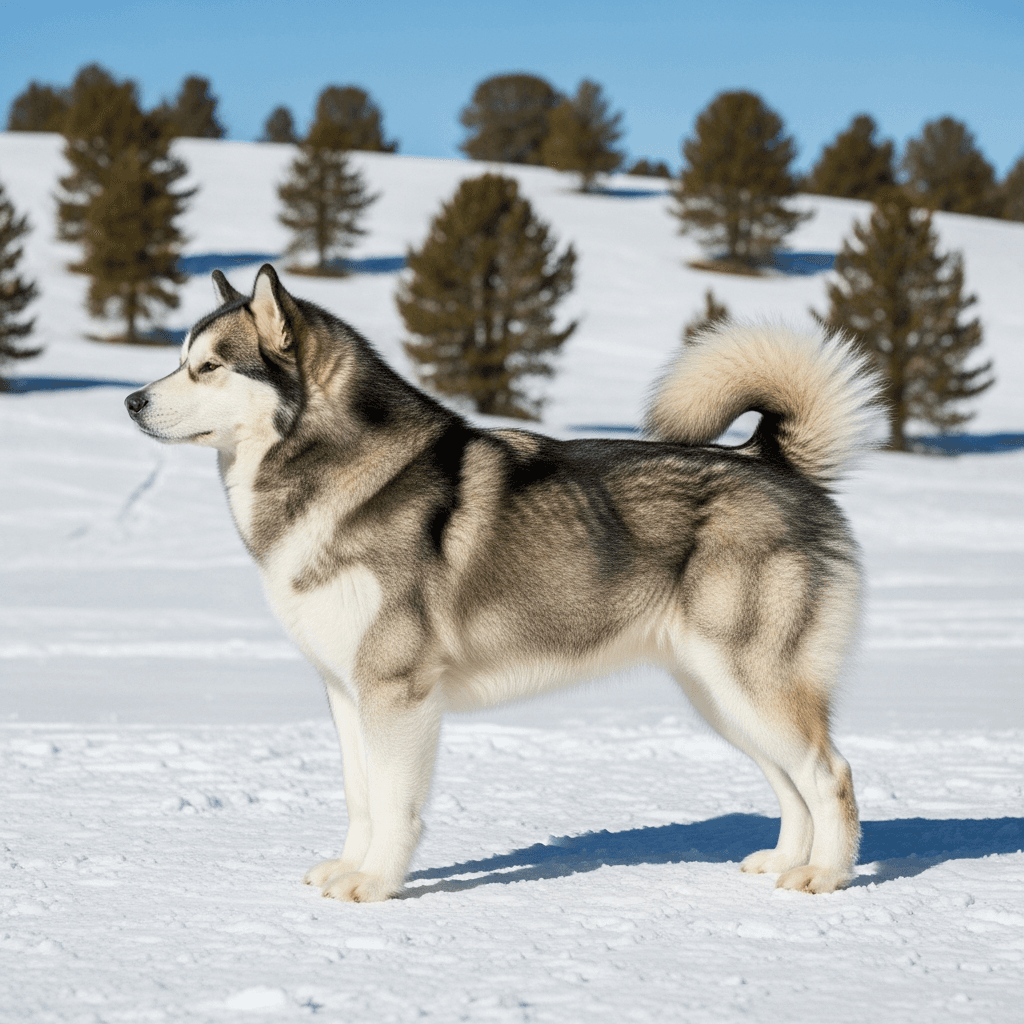
Alaskan Malamute
FCI Group
5• FCI 243
Size
Large
Origin Country
XX
Height
58-63 cm
Weight
34-38 kg
Lifespan
12-14 years
Temperament
Overview
The Alaskan Malamute, often simply called Malam, is a fascinating dog breed with a rich history that dates back to the indigenous people of Alaska – the Mahlemut tribe. These experienced hunters and adventurers bred these powerful dogs for transporting heavy loads across the harsh Arctic terrain. Malamutes became indispensable companions during caribou hunting expeditions and played a key role in transporting food and supplies during the gold rush. Their extraordinary strength and endurance made them ideal sled dogs, ready to face even the most extreme weather conditions.
The Alaskan Malamute is a dog with an impressive, athletic build. Its solid, muscular body, deep chest, and strong limbs testify to its exceptional physical strength. The thick, double coat – consisting of long, coarse guard hairs and a soft, woolly undercoat – effectively protects against frost and wind. However, their majestic appearance is just part of the charm of this breed. Malamutes are extremely social, affectionate, and devoted to their families. Although their independent nature requires an experienced handler, they can be loyal companions who form deep bonds with their caregivers.
Despite their dignity and impressive stature, the Alaskan Malamute retains a joy for life and a need for play. These dogs love to spend time with their families and engage in active games. Their balanced temperament makes them ideal companions for active individuals who can meet both their physical and mental needs. As they age, Malamutes become more dignified, but they never lose their cheerfulness and friendly disposition towards the world. This is why they make excellent family dogs, bringing plenty of joy, energy, and a positive atmosphere into the home. Discover more about this extraordinary breed with us in the following sections of the guide, where we will discuss health, grooming, nutritional needs, and the fascinating history of this Arctic giant in detail.
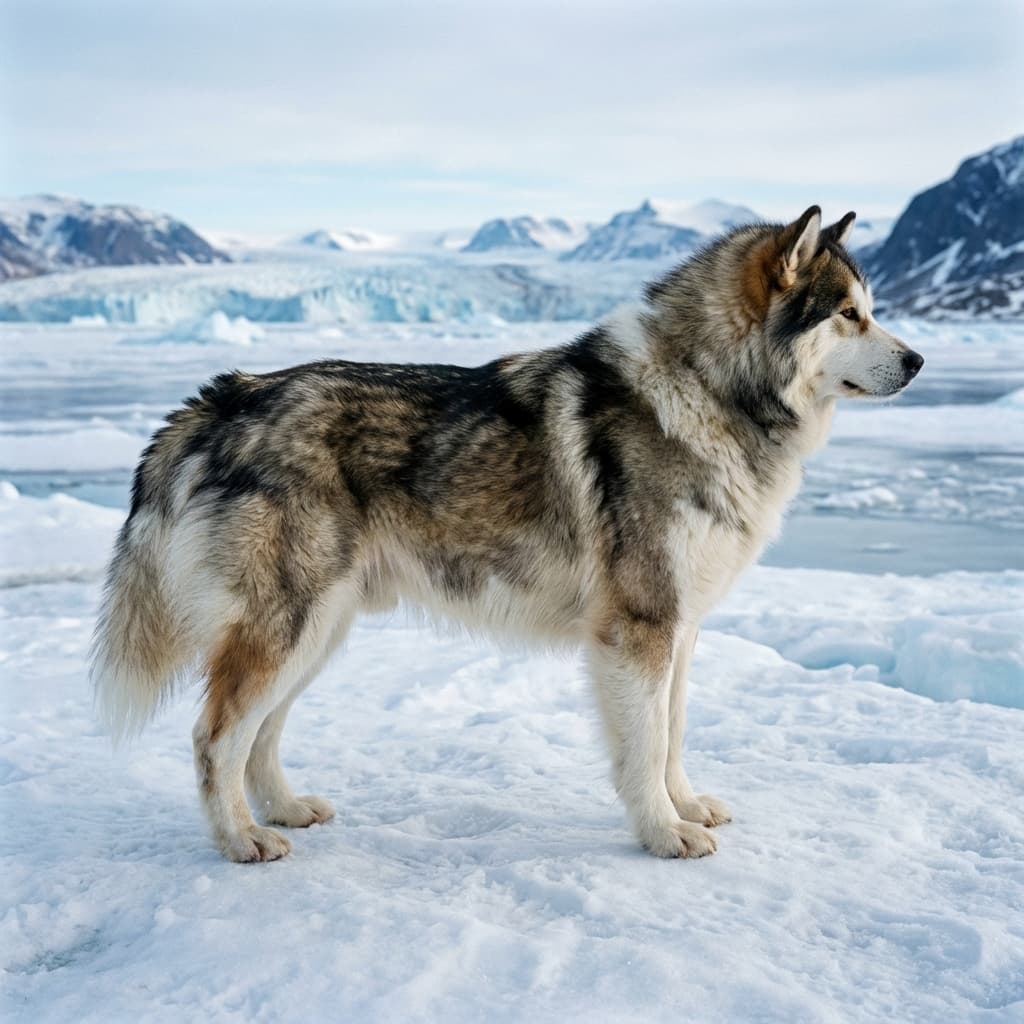
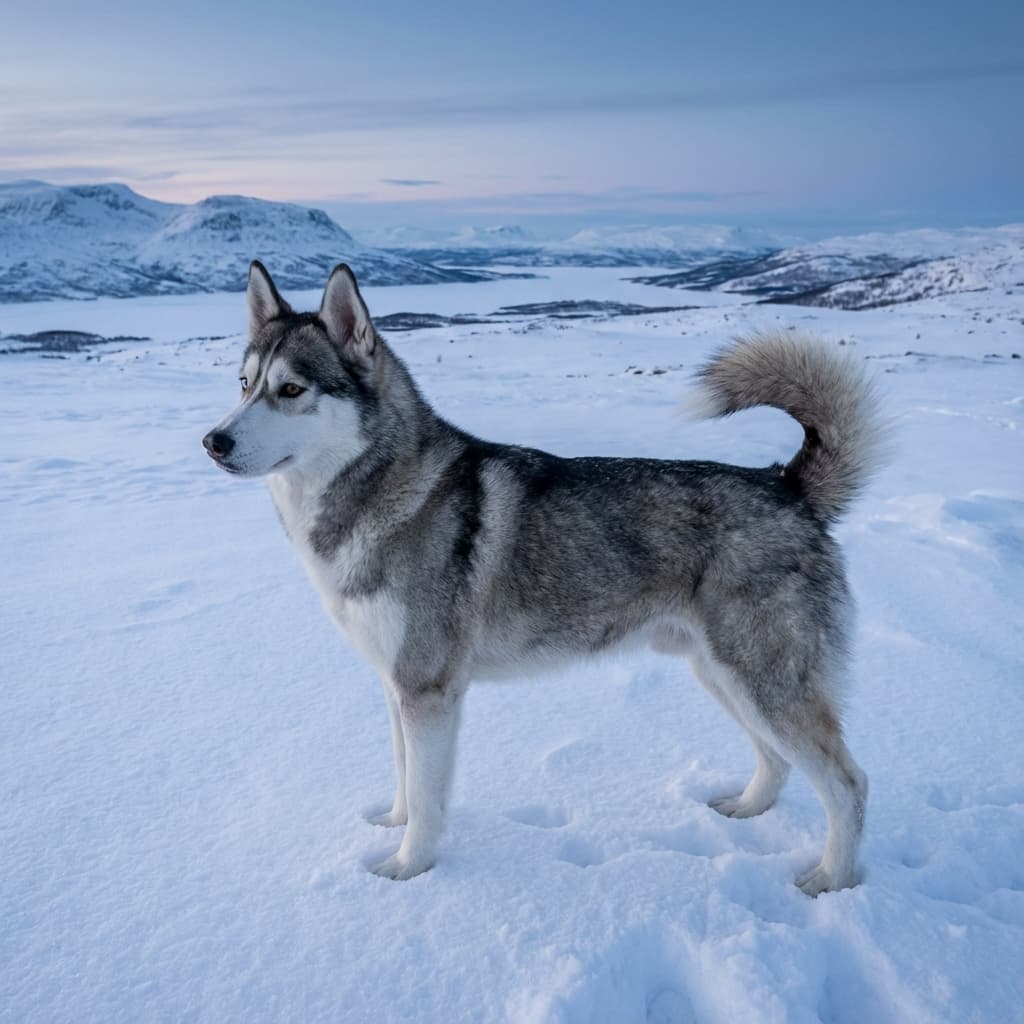
The Alaskan Malamute is a dog with a solid, muscular build that impresses with both its strength and natural elegance. Its height at the withers ranges from 58 to 63 cm, and its weight falls between 34 to 38 kg. Malamutes are characterized by a broad head with a rounded skull that gradually narrows towards the muzzle. The muzzle is strong, massive, and well-filled, neither too long nor too short or pointed.
Their eyes are usually brown (never blue according to the FCI standard), almond-shaped, and are positioned obliquely on the head, giving them a keen, intelligent expression. The triangular ears are medium-sized, slightly rounded at the tips, and always stand erect, emphasizing their attentiveness and readiness for action. When the dog is in motion, the ears are often slightly directed backward.
The coat of the Alaskan Malamute is thick and double-layered, consisting of a hard, coarse protective outer coat and a soft, woolly undercoat that provides excellent protection against extreme weather conditions. The coloration can be very diverse – ranging from light gray-silver, through dark gray-mottled, to black, brown, sable, and red shades. Characteristic are the white markings on the muzzle (mask or speckling), on the chest, legs, and underside of the tail. The typical pattern on the head is the so-called cap contrasting with a white stripe or mask on the muzzle.
The tail is well-furred, has a dense, long coat, and is carried high over the back in a characteristic arc, resembling a waving plume – which gives the dog a majestic, proud appearance while in motion.
The Alaskan Malamute is a dog with a balanced temperament and an extremely friendly disposition. They are social animals that thrive in the presence of people and usually tolerate other dogs well, especially if they have been properly socialized since puppyhood. Their strong hunting instinct and history as working dogs mean they may show interest in or distrust towards smaller pets – hence proper training and socialization are crucial for harmonious coexistence.
Malamutes are typically very attached to their family and love spending time with children. They are patient and gentle, although due to their large strength and size, they should be supervised when playing with small children. Their independent, sometimes stubborn nature requires a consistent and firm, yet always positive, approach to training. The owner must be a strong leader who establishes clear rules and boundaries.
Malamutes are also known to be destructive or excessively noisy (howling, whining) if left alone for long periods or if they do not have enough physical activity and mental stimulation. They thrive in an active environment where they can accompany their owner in various outdoor activities – from hiking to pulling sleds in winter.
Although they are not typical guard or protection dogs (they are usually too friendly towards strangers), their impressive stature and deep, wolf-like howl can deter intruders. Malamutes rarely show aggression towards people. They are wonderful, devoted companions for active families who can provide them with the right amount of exercise, stimulation, and spend plenty of time with them.
The Alaskan Malamute is a dog breed known for its exceptional resilience and overall good health. The average lifespan of these Arctic dogs ranges from 10 to 14 years, and with proper care and good nutrition, many individuals exceed this limit. Although they are generally healthy and robust, there are several conditions they may be prone to that are worth knowing about.
One of the most common ailments is hip dysplasia (HD - Hip Dysplasia), a genetic condition that leads to improper development of the hip joint, which can cause mobility issues, pain, and arthritis in later years. Responsible breeders perform X-ray examinations of the parents before breeding to minimize the risk.
Additionally, Malamutes may develop benign fatty tumors known as lipomas, which are usually harmless but may require monitoring or surgical removal if they grow too quickly or cause discomfort. The breed is also susceptible to certain skin diseases, such as alopecia X (hair loss of unknown cause), and neurological conditions, including polyneuropathy (damage to peripheral nerves).
Other possible health issues include chondrodysplasia (a cartilage growth disorder), eye diseases (including cataracts, progressive retinal atrophy - PRA), and hypothyroidism (underactive thyroid). It is also worth mentioning the risk of gastric torsion (GDV), a life-threatening condition in large deep-chested breeds.
Regular veterinary visits, annual check-ups, a diet appropriate for their activity level, and daily exercise are crucial for keeping the Alaskan Malamute in excellent health for many years.
The Alaskan Malamute requires regular and systematic grooming to keep its thick, double coat in excellent condition and to avoid skin problems. Since this breed sheds very heavily—especially during the two main shedding periods in spring and autumn—daily brushing is absolutely essential.
Owners should use a comb with long teeth and an undercoat rake to effectively remove dead hair from both the top coat and the dense undercoat. During intense shedding (known as blowing coat), it is advisable to increase the frequency of brushing to 2-3 times a day to control the amount of hair in the home and prevent the coat from matting.
Malamutes are naturally clean and usually do not emit an unpleasant dog odor. Therefore, they do not require frequent baths—too frequent washing can strip the coat of its natural protective oils, leading to dry skin and a decline in coat quality. Bathing should only be done when the dog is truly dirty or has a specific odor.
Important grooming elements also include:
- Nail trimming and control – every 2-3 weeks to prevent excessive growth and walking problems
- Ear cleaning – regular checks and gentle cleaning with a damp gauze
- Oral hygiene – brushing teeth 2-3 times a week prevents tartar buildup
- Paw pad inspection – especially in winter (ice, road salt) and summer (hot asphalt)
Proper, regular grooming not only improves the dog's appearance and the comfort of household members but also significantly contributes to skin health, coat quality, and the overall well-being of the animal.
The Alaskan Malamute is a breed that requires a large amount of exercise and intense physical activity to remain happy, healthy, and mentally balanced. These are strong, resilient working dogs that have been used for hundreds of years to pull heavy loads across the Arctic wilderness – which is why their natural energy needs are very high.
Owners should provide the Malamute with at least 1.5-2 hours of intense effort daily, spread over several sessions. Ideal forms of activity include:
- Long walks and mountain hikes – with a dog backpack, which adds extra weight and purpose
- Bikejoring – pulling a bike by the dog using a special harness
- Canicross – running with the dog on a harness
- Pulling sleds or carts (sledding/carting) – the most natural activity for this breed
- Swimming – an excellent complement to training, especially in summer
- Scent games and treasure hunt activities – mental stimulation is just as important as physical
Without the right amount of exercise, Malamutes can become bored, frustrated, and start exhibiting undesirable behaviors such as destructiveness (destroying furniture, digging holes in the garden), excessive howling, or escaping. These dogs are known for their ability to dig under fences and jump over low barriers – which is why physical activity is crucial not only for their health but also for their safety.
It is also worth engaging Malamutes in various dog sports, such as rally obedience, weight pulling, or nose work, which helps develop their natural abilities and strengthen the bond with the owner. However, remember to avoid intense exercise on hot days – Malamutes do not tolerate heat well due to their thick, insulating coat.
Training an Alaskan Malamute can be a significant challenge even for experienced owners due to their independent, sometimes stubborn nature and strong will. Malamutes are intelligent dogs, but their intelligence often comes with independent thinking – after all, for centuries they had to make decisions on Arctic trails without human assistance.
Therefore, it is extremely important to start the training process as early as possible, preferably when the puppy is 8-10 weeks old. Early socialization and positive experiences with various people, animals, sounds, and environments are absolutely crucial for proper development.
Owners should use only positive training methods based on rewards (treats, play, praise) that motivate the dog to cooperate. Malamutes do not respond well to harshness, punishment, or violence – such an approach is not only ineffective but can destroy the trust and bond between the dog and the owner, as well as provoke resistance and defensive aggression.
Basic commands, such as Sit, Lie down, Stay, Come, and Leave it, should be taught regularly, consistently, and briefly (5-10 minute sessions several times a day). The recall command is particularly important because Malamutes have a strong hunting instinct and may chase animals or simply run off on their own during walks.
Key principles for effective Malamute training:
- Consistency – the same rules from the whole family, always
- Patience – Malamutes learn at their own pace, without rushing
- Short sessions – better 3x10 minutes than 1x30 minutes
- Diversity – avoid monotony, introduce new elements and challenges
- Strong leadership – but based on respect, not fear
- Positive reinforcement – reward even small successes
It is worth considering participating in group puppy training classes, and later in obedience classes – this is an excellent opportunity for socialization and learning under the guidance of an experienced instructor. Well-conducted training not only improves obedience but also significantly strengthens the bond between the dog and the owner and provides the Malamute with the mental stimulation it desperately needs.
The diet of an Alaskan Malamute should be carefully tailored to their level of physical activity, age, health condition, and individual metabolism. These large, strong working dogs require the right amount of calories and nutrients to maintain their muscle mass, energy, and overall vitality.
Owners should choose high-quality foods – both dry and wet – that contain meat as the first ingredient (poultry, beef, fish, game) and are rich in high-quality animal protein. The optimal protein content in food for active adult Malamutes is about 25-30%, and for puppies and young dogs in the growth phase – even 28-32%.
Additionally, it is worth paying attention to the content of:
- Omega-3 and omega-6 fatty acids (from fish oil, flaxseed, salmon) – support healthy, shiny fur and proper skin function
- Glucosamine and chondroitin – support healthy joints, which is particularly important for this large breed prone to dysplasia
- Antioxidants (vitamins E, C, beta-carotene) – strengthen the immune system
- Prebiotics and probiotics – support gut health and digestion
Portions should be strictly adjusted to the dog's activity level – a very active Malamute pulling sleds may require 2-3 times more calories than a moderately active dog. It is also important to adjust the diet to age: puppies need food specially formulated for large breeds in the growth phase, adult dogs require adult dog food, and seniors need senior dog food with reduced calorie content.
It is critically important to avoid overfeeding, as Malamutes tend to gain weight, especially if their diet is not controlled or when their activity level decreases. Overweight leads to additional strain on the joints, increases the risk of dysplasia, diabetes, and heart disease.
It is recommended to feed an adult Malamute twice a day (morning and evening) instead of one large meal – this reduces the risk of dangerous gastric torsion (GDV), to which large deep-chested breeds are particularly susceptible. Always provide access to fresh, clean water, especially after intense exercise.
Characteristic Traits
Pros
- Strong and resilient
- Sociable and devoted to family
- Excellent for active owners
- Balanced and friendly
- Beautiful
- majestic appearance.
Cons
- Requires an experienced
- consistent handler
- Needs a lot of exercise and activity
- Independent and stubborn nature
- Intense shedding
- Struggles with heat.
Behavioral Ratings
Breed History
The Alaskan Malamute is one of the oldest sled dog breeds in the world, with a history that dates back thousands of years. It originates from the remote, harsh terrains of Alaska, where it was bred by the Mahlemuts (Mahlemiut or Mahlemut) – an indigenous Inuit people inhabiting the northwestern coast of Alaska, particularly around Kotzebue Bay and the Kobuk River valley.
The Mahlemuts bred these powerful, resilient dogs primarily as sled dogs for transporting heavy loads across difficult, snowy, and icy Arctic terrains. Malamutes were also invaluable companions during hunts for large animals, such as caribou (reindeer), as well as seals and bears. Unlike fast racing dogs, Malamutes were bred for strength and endurance – they could pull heavy loads for many hours in extreme conditions.
Their significance for the survival of the local population was immense – without these dogs, life in the Arctic climate would have been nearly impossible. Malamutes provided not only labor but also warmth (they slept with people in igloos) and a sense of security.
During the Alaska gold rush (late 19th century, particularly 1896-1899), Malamutes became highly valued and sought after by gold seekers and traders who needed strong dogs to transport food, mining equipment, and gold across the wild terrains. Unfortunately, this period also posed a threat to the purity of the breed – Malamutes were crossbred with other breeds (including Saint Bernard, Newfoundland) in attempts to create even stronger dogs, which could have led to the extinction of the original line.
After the arrival of the first Europeans and Americans in Alaska, the breed was transported to the continental United States, where enthusiasts began systematic breeding according to specific standards to preserve the original characteristics of Malamutes. In 1935, the American Kennel Club (AKC) officially recognized the Alaskan Malamute breed.
During World War II, Malamutes played an important role in military operations – they were used as rescue dogs, for transporting equipment, weapons, and wounded soldiers in hard-to-reach mountainous and Arctic areas. Unfortunately, many dogs perished during missions, and after the war, the breed's population dramatically declined. Thanks to the efforts of just a few breeders, the breed was successfully rebuilt in the 1950s.
In 1963, the FCI (Fédération Cynologique Internationale) officially recognized the Alaskan Malamute breed and classified it in Group 5 (Spitz and Primitive breeds), Section 1 (Nordic Sled Dogs).
Today, Malamutes are primarily companion and show dogs, although they have retained their natural working instincts, strength, and endurance. They are popular in dog sports such as weight pulling, sledding, bikejoring, and skijoring. In 2010, the Alaskan Malamute was officially declared a symbolic dog of the state of Alaska, highlighting its historical and cultural significance to the region.