Presa Canario
FCI Group
2• FCI 346
Size
Large
Origin Country
ES
Height
56-66 cm
Weight
40-65 kg
Lifespan
8-12 years
Temperament
Overview
Presa Canario, also known as the Canary dog or Dogo Canario, is a unique representative of the molosser breed, originating from the picturesque Canary Islands – Tenerife and Gran Canaria. This breed impresses with its powerful build and striking silhouette, making it not only beautiful but also incredibly functional.
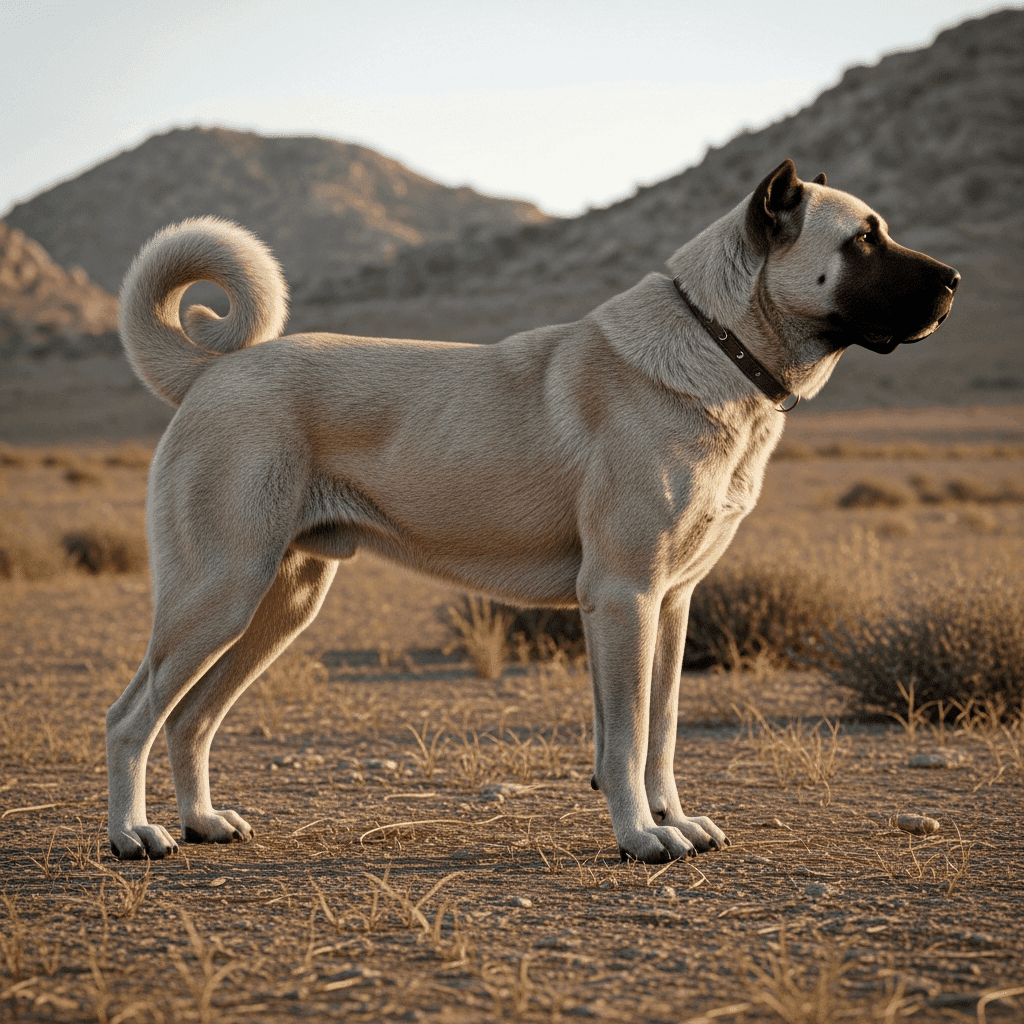
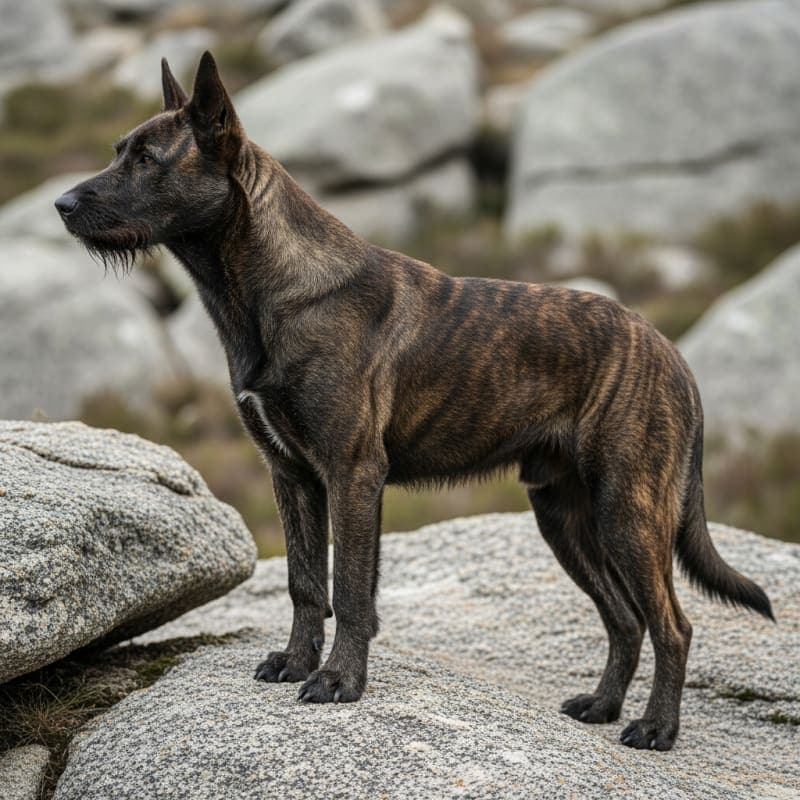
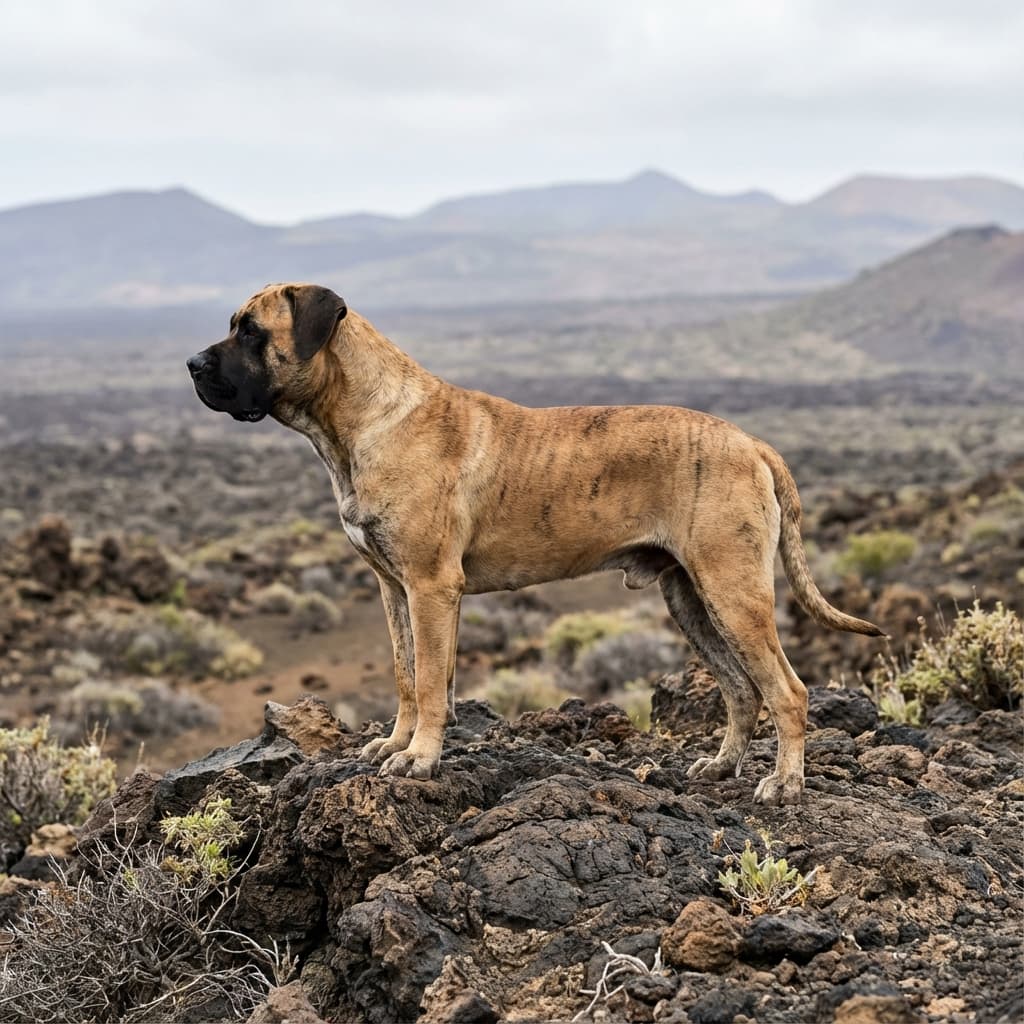
Presa Canario is a medium-sized dog, distinguished by its strong, rectangular head and characteristic black mask on its muzzle, which gives it a distinctive, dignified appearance. Its large, slightly oval eyes express intelligence and alertness, while the short, close-lying coat in brindle or fawn colors highlights its muscular body. Every element of its build speaks to the strength and endurance developed over centuries of selection.
Over the centuries, Presa Canario has served as a guard dog and protector of cattle herds in the demanding terrains of the Canary Islands. These tasks required not only strength and courage but also intelligence, independence, and the ability to cooperate with humans. With a strong protective instinct combined with natural alertness, Presa Canario has become an excellent guardian of herds and properties. Although it was historically used for dog fighting – practices that are now completely banned – the breed has retained its original, balanced temperament. It combines caring and vigilance with independent thinking, making it a dog that requires an experienced handler.
The loyalty of Presa Canario to its owners is boundless, while it shows natural reserve and distrust towards strangers, making it an ideal guardian of the home and family. Among close ones, it is gentle, affectionate, and protective, especially towards children, whom it treats with great care. This is one of its greatest assets – beneath its powerful, intimidating appearance lies a devoted family friend.
Despite its impressive, almost rugged appearance, Presa Canario can adapt well to family conditions, provided it is given the right amount of physical activity, consistent socialization, and mental stimulation. It is worth emphasizing that it requires consistent, positive training and the right approach to upbringing from a puppy age, so that its natural protective and guarding instincts develop in a controlled manner and do not turn into undesirable behaviors.
When properly raised and socialized, Presa Canario becomes a wonderful life companion that not only guards the home and provides a sense of security but also joyfully participates in the family's daily activities. This is a dog that, thanks to its unique combination of traits – strength, intelligence, loyalty, and gentleness towards loved ones – can become an invaluable member of any responsible and experienced family. We invite you to further explore information about the health, care, physical activity, training, diet, history, appearance, and behavior of this fascinating breed in the following chapters of our guide.
The Presa Canario is a dog with a massive, harmoniously built silhouette that exudes strength and confidence. Representatives of this breed are distinguished by their characteristic, wide and strongly defined head with a rectangular shape, which is one of their most recognizable breed traits.
The skull is wide and slightly convex, with a clearly marked stop. The forehead is flat, which emphasizes the powerful construction of the entire head. The muzzle is wide, massive, and slightly shorter than the skull, maintaining a proportion of about 40% to 60%. A characteristic breed feature is the black mask on the muzzle, which should not exceed the line of the eyes and gives the Presa Canario a dignified, almost stern expression.
The eyes are medium-sized, slightly oval, widely set, and dark brown in color. Their gaze expresses intelligence, alertness, and confidence. The ears are medium-sized, set high, and naturally hanging down the sides of the head. In countries where ear cropping is not prohibited, they may be cropped, giving the dog an even more alert appearance.
The silhouette is strong, muscular, and well-proportioned. The body is slightly longer than the height at the withers, especially in females, giving the dog a slightly rectangular outline. The chest is deep, wide, and well-developed, indicating excellent physical fitness. The back is strong, straight, and slightly rising towards the loins. The loins are short and strong, with the croup slightly sloping.
The limbs are strong, straight, and parallel, ending in compact, cat-like paws with strong, dark claws. The movements of the Presa Canario are agile, flexible, spacious, and full of power, highlighting its athletic build and physical agility despite its impressive body mass.
The coat is short, hard, dense, and perfectly adhering to the body, without an undercoat. It does not require intensive grooming and is practical for maintaining cleanliness. The following coat colors are acceptable:
- Brindle (tigrado) – all shades, from dark brown through medium brown to light gray with distinct stripes
- Fawn (leonado) – all shades from dark gold to light sandy
- Combinations of brindle and fawn
White markings on the chest, at the base of the neck, and on the toes are permissible, but they should be kept to a minimum. The black mask is mandatory and must not exceed the line of the eyes.
Physical dimensions according to the FCI standard:
- Height at the withers (males): 60-66 cm
- Height at the withers (females): 56-62 cm
- Weight (males): minimum 50 kg
- Weight (females): minimum 40 kg
The tail is thick at the base, tapering gradually towards the end, reaching down to the hock. At rest, it hangs naturally, while in motion it may be raised in a saber shape, but it should never be carried curled over the back or between the hind legs.
The overall appearance of the Presa Canario commands respect and arouses interest. Its massive, harmoniously built silhouette and dignified expression reflect the nature of a guarding and defensive dog, while also presenting an aesthetic and functionality shaped by centuries of selection.
Presa Canario is a dog with a balanced, confident, and composed temperament, harmoniously combining protective, defensive, and independent traits. Its behavior is the result of centuries of selective breeding aimed at creating a guard dog capable of making independent decisions in the face of danger, while also being loyal and obedient to its handler.
Towards its family, the Presa Canario is exceptionally devoted, loyal, and protective. It forms a deep emotional bond with household members and considers their protection as its natural duty. This breed shows remarkable tenderness and gentleness in interactions with children, treating them with great patience and tolerance. A properly socialized Presa Canario is a wonderful family companion that joyfully participates in the daily life of the home.
In relation to strangers, representatives of this breed are naturally reserved, distrustful, and alert, which is a normal and desirable expression of their defensive instinct. They are not aggressive without reason, but they can quickly assess a situation and react decisively when they perceive a potential threat to their family or territory. This trait makes them excellent guard dogs that do not require special defensive training – their natural instincts are sufficient.
The Presa Canario exhibits dignified, calm, and composed behavior in everyday situations. It is not an overly reactive or nervous dog – on the contrary, it demonstrates impressive calmness and self-control. At the same time, it remains constantly alert and aware of its surroundings, ready to act when necessary.
The energy level of the Presa Canario is moderate to medium. They are not hyperactive dogs, but they require regular, daily physical activity and mental stimulation to remain balanced and happy. They can be both active during play and training, as well as calm and relaxed at home. This versatility makes them excellent companions for owners leading an active lifestyle, while also valuing quiet evenings at home.
Dogs of this breed tolerate solitude well, as long as they have been accustomed to it from a young age. They are not overly dependent on the constant presence of their owner, making them suitable for working individuals. However, they should not be left alone for too long – prolonged isolation can lead to boredom, frustration, and the development of undesirable behaviors.
The intelligence of the Presa Canario is high, which, combined with their independent nature, means that they require consistent, wise, and positive training from the earliest days of life. They are thinking dogs that can assess situations and make independent decisions. This trait, while valuable in guarding work, requires the owner to establish a clear hierarchy and rules. The Presa Canario responds well to positive reinforcement, consistency, and respect – harsh training methods are completely inappropriate and can lead to behavioral problems.
In interactions with children, a well-raised Presa Canario is patient, caring, and gentle. It instinctively understands that the youngest family members require special care and protection. Nevertheless, due to its large body mass and strength, interactions between the dog and small children should always be supervised by adults to avoid accidentally knocking the child over during play.
In terms of interactions with other animals, especially same-sex dogs, there may be issues with dominance and rivalry. The Presa Canario has a strong character and does not shy away from confrontation, so early and consistent socialization with other dogs is absolutely crucial. Towards household pets it has grown up with, it is usually tolerant and accepting, although its hunting instinct may manifest towards small, fast-moving animals.
In summary, the Presa Canario is a breed for experienced dog owners who understand the specifics of the character of molosser dogs and can provide them with proper socialization, consistent training, physical activity, and clear rules of coexistence. In the right hands, they become reliable guardians and wonderful family companions, combining strength with gentleness and devotion with independence.
Presa Canario is a dog breed characterized by generally good health and vitality, which is a result of natural selection in the harsh climatic conditions of the Canary Islands. The average lifespan of representatives of this breed ranges from 9 to 11 years, although with proper care, a balanced diet, and regular physical activity, many dogs reach the age of 12 years or more.
Like any large dog breed, Presa Canario is prone to certain health issues characteristic of large and heavy molosser dogs. Knowledge of these potential health problems allows for early detection of symptoms and effective prevention.
The most common health issues in Presa Canario:
- Hip Dysplasia (HD) – an orthopedic condition involving improper development of the hip joint, leading to pain, stiffness, and lameness. This is a common problem in large breeds. Responsible breeders perform radiological examinations on breeding dogs and select only those with proper joint structure for reproduction.
- Elbow Dysplasia (ED) – improper development of the elbow joint, which can cause pain and limited mobility in the front limbs. Like HD, it requires breeding examinations and selection.
- Panosteitis – inflammation of the bone marrow primarily occurring in young, rapidly growing large breed dogs. It manifests as sudden lameness, bone pain, and reluctance to move. The condition usually resolves on its own as the dog finishes growing, but it requires monitoring by a veterinarian and pain management.
- Osteochondritis Dissecans (OCD) – a joint condition occurring in young dogs during the growth period, most often affecting the shoulder, elbow, or knee joints. It involves improper formation of articular cartilage, which can lead to pain, lameness, and early degenerative changes.
- Gastric Torsion – a sudden, life-threatening condition characteristic of large breeds with deep chests. It involves the stomach filling with gas and twisting on itself, leading to blood circulation failure and requiring immediate surgical intervention. Prevention includes feeding smaller portions 2-3 times a day and avoiding intense exercise immediately after meals.
- Dermatological Issues – due to their short coat and skin sensitivity, some individuals may be prone to allergic dermatitis, bacterial or fungal infections, especially in skin folds.
- Epilepsy – idiopathic epilepsy may occur in Presa Canario, although it is not a common condition. It requires veterinary diagnostics and long-term pharmacological treatment.
Prevention and health care for Presa Canario:
Presa Canario owners should take care of their dogs' health by:
- Regular veterinary visits – annual check-ups, vaccinations, deworming, and prevention against external parasites
- Weight control – Presa Canario tends to gain weight, especially with insufficient physical activity. Overweight puts stress on the joints, heart, and respiratory system, increasing the risk of many conditions
- Proper diet – high-quality food tailored to the dog's size, age, and activity level. Large breed puppies require special food to control their growth rate to prevent orthopedic problems
- Avoiding excessive strain at a young age – intense exercise, jumping, running up and down stairs, and strenuous training in puppies and young dogs (up to 18-24 months) can lead to joint damage and orthopedic problems in the future. Activity should be moderate and age-appropriate
- Breeding examinations – when purchasing a puppy, it is advisable to ensure that the parents have up-to-date results for HD and ED dysplasia and that the breeder conducts responsible selection
Presa Canario is a breed adapted to life in the warm, subtropical climate of the Canary Islands, which makes it well-suited to high temperatures. However, their short coat and lack of undercoat make them more sensitive to cold and low temperatures. In the colder months of the year, especially in countries with freezing winters, they should be provided with suitable living conditions – a warm, dry space and the possibility of shortening walks during extreme cold. Some dogs may need protective clothing during winter walks to avoid hypothermia or colds.
With proper veterinary care, a balanced diet, regular physical activity, and preventive measures, Presa Canario can enjoy a long, healthy, and fulfilling life as a loyal family companion.
Presa Canario is a breed that does not require much grooming, making it attractive for those who value simplicity and functionality in dog care. Their short, hard, and close-fitting coat is practical, easy to keep clean, and does not require professional grooming services.
Coat care:
The coat of the Presa Canario is short, dense, hard, and perfectly adheres to the body. The breed does not have an undercoat, which means that it does not shed heavily throughout the year. Shedding occurs seasonally – usually in spring and autumn – and is moderate. Regular brushing once or twice a week with a natural bristle brush or rubber grooming glove is sufficient to:
- Remove dead hair and shedding skin
- Stimulate blood circulation in the skin
- Distribute natural sebum, giving the coat a healthy, shiny appearance
- Keep the home clean and reduce the amount of hair on furniture
During periods of more intense shedding, it is advisable to increase the brushing frequency to 3-4 times a week to effectively remove dead hair before it falls out on its own.
Bathing:
The Presa Canario does not require frequent baths. Their coat has a natural protective layer that shields the skin from external factors and should not be removed too often through washing. Bathing is recommended:
- Once every 2-3 months under normal conditions
- More often if necessary – after intense play in muddy areas, contact with unpleasant odors, or visible dirt
- Using gentle, dog-specific shampoos with a pH suitable for the dog's skin
Too frequent bathing can lead to dry skin, irritation, and dermatological problems.
Ear care:
The ears of the Presa Canario require regular care and inspection to prevent infections and inflammations. Due to their drooping structure, the ear canal is less ventilated, creating an environment conducive to the growth of bacteria and fungi. It is recommended to:
- Perform a weekly visual and scent inspection of the ears – healthy ears are light pink, without unpleasant odors or discharge
- Gently clean the ear flaps once a week using a special ear cleaning solution for dogs and cotton balls or gauze
- Never insert cotton swabs deeply into the ear canal – risk of damaging the eardrum
- If redness, swelling, unpleasant odor, or excessive discharge is noticed – consult a veterinarian immediately
Oral hygiene:
The health of the teeth and gums of the Presa Canario requires regular attention. Tartar, gingivitis, and tooth decay can lead not only to pain and tooth loss but also to serious bacterial infections affecting the entire body. Recommendations:
- Brush teeth 2-3 times a week (ideally: daily) using a toothbrush and toothpaste designed for dogs
- Provide natural dental chews that mechanically remove plaque and massage the gums
- Regular veterinary check-ups – if necessary, professional ultrasonic teeth cleaning under general anesthesia
Nail trimming:
The nails of the Presa Canario should be regularly checked and trimmed to ensure the dog's comfort while moving and avoid orthopedic problems. Overgrown nails can lead to:
- Pain while walking
- Improper positioning of paws and joints
- Cracking and ingrowth of the nail into the pad
If the nails click on the floor while walking, it means they are too long and need trimming. Frequency:
- Once every 3-4 weeks with moderate activity
- Less frequently for dogs that move a lot on hard surfaces (carpets, concrete), which naturally wear down their nails
- More often for older and less active dogs
Nail trimming requires caution to avoid damaging the living part of the nail (the quick), which causes pain and bleeding. If the owner does not feel confident, it is advisable to seek help from a veterinarian or groomer.
Skin fold inspection:
Although the Presa Canario does not have excessive skin folds like some molosser breeds, it is worth regularly checking areas where the skin may fold (e.g., around the neck, near the tail) to ensure they are dry and clean. Moisture and dirt accumulating in folds can lead to irritations and skin infections.
Summary:
Overall, grooming the Presa Canario is relatively easy, inexpensive, and not overly time-consuming, making this breed attractive for those who do not have the time or desire for intensive grooming procedures. Regularity and consistency in basic hygiene practices ensure the dog’s health, comfort, and beautiful appearance.
Presa Canario is a dog with moderate to high exercise needs, requiring regular daily physical activity to maintain physical health, mental balance, and proper condition. Although it is not a hyperactive breed like the Border Collie or Australian Shepherd, their natural strength, energy, and build require systematic effort.
Minimum activity requirements:
An adult Presa Canario needs a minimum of 60-90 minutes of physical activity per day, divided into several sessions. However, if possible, it is recommended to extend this time and diversify the forms of activity to provide not only physical exercise but also mental stimulation.
Ideal forms of activity for Presa Canario:
- Long walks – daily walks at a moderate pace lasting 30-45 minutes, 2-3 times a day. Walks should be varied in terms of route and environment to provide the dog with new sensory and visual stimuli.
- Running beside a bike – for healthy adult dogs, running beside a bike is an excellent form of endurance exercise. Start with short distances and gradually increase the intensity.
- Mountain and forest hikes – Presa Canario excels in varied terrain and enjoys accompanying its owner on longer excursions.
- Fetch games – throwing a ball, frisbee, or other toys engages the dog physically and mentally. However, it is important to monitor the intensity of this play to avoid excessive strain on the joints.
- Swimming – an excellent, low-impact form of activity that engages all muscle groups without excessive stress on the joints. Ideal for older dogs or those with orthopedic issues.
- Protection sports and IPO – Presa Canario can excel in protection sports that utilize their natural instincts and intelligence. This, however, requires an experienced trainer and owner.
- Agility and obedience – although Presa Canario is not a typical sporting dog, many individuals enjoy participating in these activities that stimulate their minds and strengthen the bond with their owner.
- Obedience training and scent games – searching for hidden treats, scent trails, and other activities engaging the sense of smell are excellent complements to physical effort.
Activity for puppies and young dogs (up to 18-24 months):
It is important to remember that puppies and young Presa Canarios are in a phase of intense growth of bones, joints, and soft tissues. Excessive exercise, jumping from heights, running up and down stairs, or strenuous training can lead to serious orthopedic problems in the future, including joint dysplasia, cartilage damage, and premature degenerative changes.
Recommendations for puppies and young dogs:
- Short, calm walks – 5 minutes for each month of the puppy's age, 2-3 times a day (e.g., a 4-month-old puppy: 20 minutes of walking)
- Free play on grassy areas where the dog can control the pace and intensity
- Avoiding jumps, running up and down stairs, jumping into or out of the car
- Gradually increasing effort as the dog ages and matures
Mental activity is as important as physical activity:
Presa Canario is an intelligent and thoughtful dog that needs not only physical exercise but also mental stimulation. A boring, monotonous lifestyle can lead to frustration, boredom, and the development of undesirable behaviors (destruction of objects, excessive barking, aggression). It is worth introducing:
- Obedience training and learning new commands
- Strategic games and puzzles for dogs
- Regular changes in walking routes and exploring new places
- Socialization with other dogs under control
Activity as a bonding element:
Presa Canario is a dog that loves the company of its owner and shared activities. All forms of effort and play should be done together, which fosters a deep emotional bond between the dog and its caregiver. Spending time together during walks, training, or play strengthens the relationship, improves obedience, and makes the dog happier and more balanced.
Consequences of lack of appropriate activity:
Failure to provide regular physical and mental activity can lead to:
- Overweight and obesity – which burden the joints, heart, and respiratory system
- Behavioral problems – destruction of objects, excessive barking, aggression, nervousness
- Frustration and boredom
- Deterioration of mental and physical health
In summary, Presa Canario is a breed for active individuals who can provide the dog with daily, regular physical and mental activity. The appropriate level of effort ensures that the dog is healthy, happy, balanced, and makes a wonderful family companion.
The training of the Presa Canario is absolutely a key element of upbringing, which allows for achieving a harmonious, safe, and satisfying relationship between the dog and its owner. Due to the strong character, independence, large body mass, and natural defensive instincts of this breed, proper training from the youngest days of life is essential.
Key principles of Presa Canario training:
1. Early start – socialization from puppy age
The most important period in a puppy's life is the first 16 weeks when its social behaviors and attitude towards the environment are formed. During this time, the Presa Canario puppy should:
- Experience diverse environments – streets, parks, forests, shops, public transport
- Meet many different people – children, adults, seniors, people in hats, glasses, with umbrellas, etc.
- Have positive interactions with other dogs – of various breeds, sizes, and genders
- Experience various stimuli – sounds, smells, surfaces (grass, concrete, stairs, bridges)
A well-socialized Presa Canario grows into a confident, balanced, and friendly dog that can appropriately respond to various life situations without fear or aggression.
2. Positive training methods
The Presa Canario is an intelligent dog, sensitive to the way it is treated, and learns very quickly. The most effective and safest are positive training methods based on:
- Rewarding desired behaviors – treats, verbal praise, petting, play
- Ignoring undesirable behaviors – instead of punishing, we teach the dog that inappropriate behavior brings no benefits
- Redirecting energy – if the dog is doing something wrong, we offer it an alternative
- Consistency – rules must be clear and applied by all family members at all times, without exceptions
Brutal methods based on dominance, physical punishment, or intimidation are completely inappropriate for this breed and can lead to:
- Losing trust in the owner
- Development of fear and defensive aggression
- Behavioral problems
- Destruction of the emotional bond between the dog and humans
3. Consistency and clear hierarchy
The Presa Canario is a dog with a strong character that needs clear rules and a consistent leader. This does not mean using brutal methods, but establishing a clear structure and rules of coexistence:
- Setting boundaries – what is allowed and what is not (e.g., whether the dog can get on the couch, go through the door first, beg at the table)
- Consistency among all household members – all family members apply the same rules
- Calmness and confidence of the leader – the dog needs a leader who is calm, composed, and predictable
4. Basic obedience commands
Every Presa Canario should master basic commands that ensure safety and control in everyday situations:
- Sit – a basic calming and controlling command
- Down / Stay – waiting in position, necessary in various situations
- Lie down – a relaxing and controlling position
- Come / Recall – the most important safety command, the dog must always come when called
- Leave it / Drop it – abandoning an object or giving up something interesting
- No – a universal command to stop undesirable behavior
- Walking on a loose leash – extremely important for a dog of such strength to make walks enjoyable and safe
All commands should be introduced gradually, in short training sessions (5-10 minutes), using positive reinforcements.
5. Training the defensive instinct – cautiously and wisely
The Presa Canario has a natural, strong defensive instinct that does not require additional reinforcement. This breed of dog will protect the home and family when necessary without special training. Self-training for defense by unqualified owners is not recommended, as it can lead to:
- Excessive aggressiveness
- Lack of control over defensive behaviors
- Threats to the environment
If the owner wants to develop the dog's defensive instincts in a controlled manner, they should seek the help of a experienced, professional trainer specializing in protection dogs and IPO/Schutzhund sports.
6. Continuation of training throughout life
Training the Presa Canario is not a one-time action, but a process that lasts throughout the dog's life. Regularly reminding commands, introducing new challenges and activities, and constant mental stimulation ensure that the dog remains obedient, balanced, and happy.
7. Professional help – when is it worth it?
Due to the specifics of the breed, it is worth considering seeking help from a professional behaviorist or dog trainer, especially if:
- This is your first large breed dog or a molosser
- Behavioral problems arise – aggression, fear, destructiveness
- You want to participate in dog sports
- You need support in socializing and raising a puppy
Summary:
A properly trained Presa Canario is a wonderful family companion, a reliable guardian, and an obedient partner in everyday life. It requires a consistent, positive, and wise approach to training, but the results of working with this intelligent, loyal dog are extremely satisfying. The key to success is early socialization, positive training methods, clear rules, and patience.
Proper nutrition for the Presa Canario is a key element in ensuring health, appropriate physical condition, energy, and a long life. Due to their large body mass, specific structure, and energy needs, dogs of this breed require a carefully balanced diet tailored to their age, activity level, and health status.
Basic principles of feeding Presa Canario:
1. High-quality food
The Presa Canario should receive premium or super-premium food, specially formulated for large breed dogs. Such food contains:
- High-quality animal protein (chicken, beef, fish, turkey) as the main ingredient – essential for building and repairing muscles
- Proper calcium to phosphorus ratio – crucial for the proper development of bones and joints in puppies and young dogs
- Glucosamine and chondroitin – supporting joint health, particularly important in large breeds prone to dysplasia
- Omega-3 and omega-6 fatty acids – for healthy skin, shiny coat, and immune system support
- Vitamins and minerals – for the proper functioning of the body
- Antioxidants – supporting the immune system and slowing down aging processes
It is important to avoid low-quality food that contains fillers, artificial colors, preservatives, and unspecified protein sources, as they can lead to:
- Obesity and overweight
- Digestive problems
- Food allergies
- Nutrition deficiencies
- Deterioration of coat and skin condition
2. Adjusting the diet to age and life stage
The nutritional needs of the Presa Canario change depending on their age:
Puppies (up to 12-18 months):
- Require special puppy food for large breeds that controls growth rate and provides the appropriate nutrient ratio
- Too rapid growth can lead to orthopedic problems (dysplasia, OCD, panosteitis)
- Feeding 3-4 times a day with smaller portions to avoid overloading the digestive system
- Avoiding calcium supplementation – excess calcium in large breed puppies is harmful
Adult dogs (18 months – 7 years):
- Food for adult large breed dogs, adjusted to activity level
- Feeding 2 times a day with equal portions
- Monitoring body weight and adjusting portions as needed
Senior dogs (over 7-8 years):
- Food for older large breed dogs – lower in calories, richer in antioxidants and joint-supporting ingredients
- Feeding 2 times a day, monitoring weight – older dogs tend to gain weight with reduced activity
- Possible supplementation (after consulting with a veterinarian) – glucosamine, chondroitin, omega-3 fatty acids
3. Portion control and preventing obesity
The Presa Canario has a tendency to gain weight, especially with insufficient physical activity. Overweight and obesity are very dangerous for this breed because:
- They burden the joints, increasing the risk of dysplasia and degenerative changes
- They strain the cardiovascular and respiratory systems
- They shorten lifespan
- They reduce quality of life and mobility
Weight control recommendations:
- Follow the manufacturer's recommendations regarding daily portions, adjusting them to the individual needs of the dog
- Regularly weigh the dog and assess its physical condition
- Ribs should be felt under a thin layer of fat, but not visible
- The waist should be visible when viewed from above
- Limit treats – they should not make up more than 10% of daily caloric intake
- In case of overweight – reduce portions or switch to light food
4. Feeding and the risk of gastric torsion
The Presa Canario, as a large breed dog with a deep chest, is prone to gastric torsion – a sudden, life-threatening condition. To minimize the risk:
- Feed the dog 2-3 times a day with smaller portions instead of one large meal
- Avoid intense physical activity immediately before and after meals (1-2 hours break)
- Provide a calm, relaxing environment during eating
- Avoid feeding the dog from elevated bowls – studies suggest this may increase the risk of torsion
- Ensure constant access to fresh water, but do not allow excessive drinking of large amounts of water immediately after meals
5. BARF diet and natural feeding
Some owners choose the BARF diet (Biologically Appropriate Raw Food) or other forms of natural feeding (cooked meat, vegetables). This approach can be beneficial if:
- The diet is properly balanced in terms of all nutrients (proteins, fats, carbohydrates, vitamins, minerals)
- The owner has adequate knowledge or consults with a veterinary nutritionist
- Hygiene rules are followed when preparing and storing raw meat
An improperly balanced BARF diet can lead to nutritional deficiencies, health problems, and bacterial infections.
6. Water – constant access
The Presa Canario must have constant access to fresh, clean drinking water. Water should be changed daily, and the bowl should be regularly cleaned. Attention should be paid to the amount of water consumed – excessive thirst may be a sign of health problems (diabetes, kidney diseases).
7. Introducing changes to the diet
Any changes in the diet of the Presa Canario (changing food brands, switching from dry to wet food, introducing the BARF diet) should be made gradually over a period of 7-10 days to avoid gastrointestinal problems (diarrhea, vomiting, bloating). Recommended scheme:
- Days 1-3: 75% old food + 25% new food
- Days 4-6: 50% old food + 50% new food
- Days 7-9: 25% old food + 75% new food
- Day 10: 100% new food
8. Consultation with a veterinarian
For dogs with health problems (food allergies, kidney diseases, liver diseases, diabetes, overweight), it is recommended to consult with a veterinarian or veterinary nutritionist to develop a specialized diet tailored to individual needs.
Summary:
Proper nutrition affects not only the physical health of the Presa Canario but also its well-being, energy, coat condition, and overall quality of life. Investing in high-quality food, portion control, and adjusting the diet to age and activity level are the foundations of a long, healthy, and happy life for your dog.
Characteristic Traits
Pros
- Exceptional loyalty to family
- Excellent guard and protection dog
- Patient and caring towards children
- Intelligent and capable of learning
- Balanced temperament
- Short coat easy to maintain.
Cons
- Requires consistent training from puppy age
- May be wary and reserved towards strangers
- Needs plenty of physical and mental activity
- Not suitable for novice dog owners
- May show dominance towards other dogs.
Behavioral Ratings
Breed History
The history of the Presa Canario breed is a fascinating tale of survival, determination, and the passion of people who saved this unique breed from total extinction. The roots of the Presa Canario go deep into the past of the Canary Islands, where for centuries these dogs played a key role in the lives of the archipelago's inhabitants.
The beginnings of the breed – pre-Hispanic times and colonization
The earliest traces of the ancestors of the Presa Canario date back to pre-Hispanic times, when local dogs known as majorero lived on the Canary Islands – particularly in Tenerife and Gran Canaria. These were native dogs, adapted to the harsh climatic conditions of the islands, used by the indigenous Guanche people for guarding and hunting.
In the 15th and 16th centuries, with the Spanish conquests and colonization of the archipelago, various breeds of molosser dogs were brought to the islands from the European continent, including probably the Spanish Alano, Portuguese molossers, and other guard and defense dogs. Crossbreeding local majorero dogs with imported molossers led to the emergence of a new, uniform group of dogs – the ancestors of the modern Presa Canario.
The development and functions of the breed – 16th-19th century
In the 16th and 17th centuries, the population of these dogs significantly increased. Numerous pre-colonial historical documents, especially the so-called Cedularios del Cabildo (city registers), contain many mentions of these dogs and their tasks. The Presa Canario primarily served as:
- Guard dogs – they protected farms, homes, and property from intruders
- Herding dogs – they watched over herds of cattle, protecting them from wild animals and thieves
- Catch dogs – they assisted in catching and controlling semi-wild cattle in the open areas of the islands
These versatile functions required the dogs to possess strength, courage, intelligence, independence, and loyalty – traits that still characterize the breed today.
The era of dog fighting and the threat of extinction – 20th century
Unfortunately, in the 19th and early 20th centuries, the Presa Canario began to be used for dog fighting – a practice that was popular at the time in many parts of the world. Although these fights were brutal and are now completely banned, they contributed to an increase in the breed's population, as breeders selectively developed traits of strength, courage, and determination.
However, in 1946, when dog fighting was officially banned in Spain, the breed lost one of its main uses. In the following decades, with the modernization of agriculture, a decrease in cattle herds, and the ongoing urbanization of the Canary Islands, the demand for the traditional functions of the Presa Canario dramatically declined. The breed's population sharply decreased, and the Presa Canario found itself on the brink of total extinction.
The revival of the breed – the 1970s and 1980s
In the 1970s and 1980s, a small group of enthusiasts, breed lovers, and breeders from the Canary Islands undertook a heroic effort to revive and preserve the Presa Canario. They sought out the last pure representatives of the breed on remote farms and in mountain villages, where the traditional functions of guard and herding dogs were still needed.
Through systematic, thoughtful breeding, based on careful selection of morphological and behavioral traits, the breed began to revive. Breeders aimed to preserve the authentic type of Presa Canario – a dog with a balanced temperament, functional build, and natural protective instincts, free from the excessive aggression characteristic of fighting dogs.
Recognition by FCI and modern times – 21st century
The efforts of breeders and breed enthusiasts were rewarded. In 2011, the Presa Canario was officially recognized by the FCI (Fédération Cynologique Internationale) as a distinct breed under standard number 346, in group 2 – Pinschers and Schnauzers, Molossers, Swiss Cattle Dogs, and other breeds, section 2.1 – Molossers of the mastiff type.
This recognition was the culmination of many years of effort and confirmation of the unique character, history, and value of this breed.
Today, the Presa Canario enjoys growing popularity worldwide as a guard, companion, and family dog. It is valued for:
- Exceptional loyalty and devotion to family
- Excellent guarding and protective abilities
- Balanced, composed temperament
- Impressive, majestic physique
- Gentleness and patience with children
Modern breeding of the Presa Canario focuses on preserving the authentic breed type, health, and proper temperament, while eliminating undesirable traits such as excessive aggression or fearfulness.
Summary
The history of the Presa Canario is an example of determination, love for the breed, and responsibility for cultural heritage. Thanks to the passion of a handful of people, this breed survived the threat of extinction and today captures the hearts of dog lovers around the world. Each Presa Canario carries within it the legacy of centuries – the strength, intelligence, loyalty, and resilience of its ancestors, who guarded herds and homes on the picturesque Canary Islands.