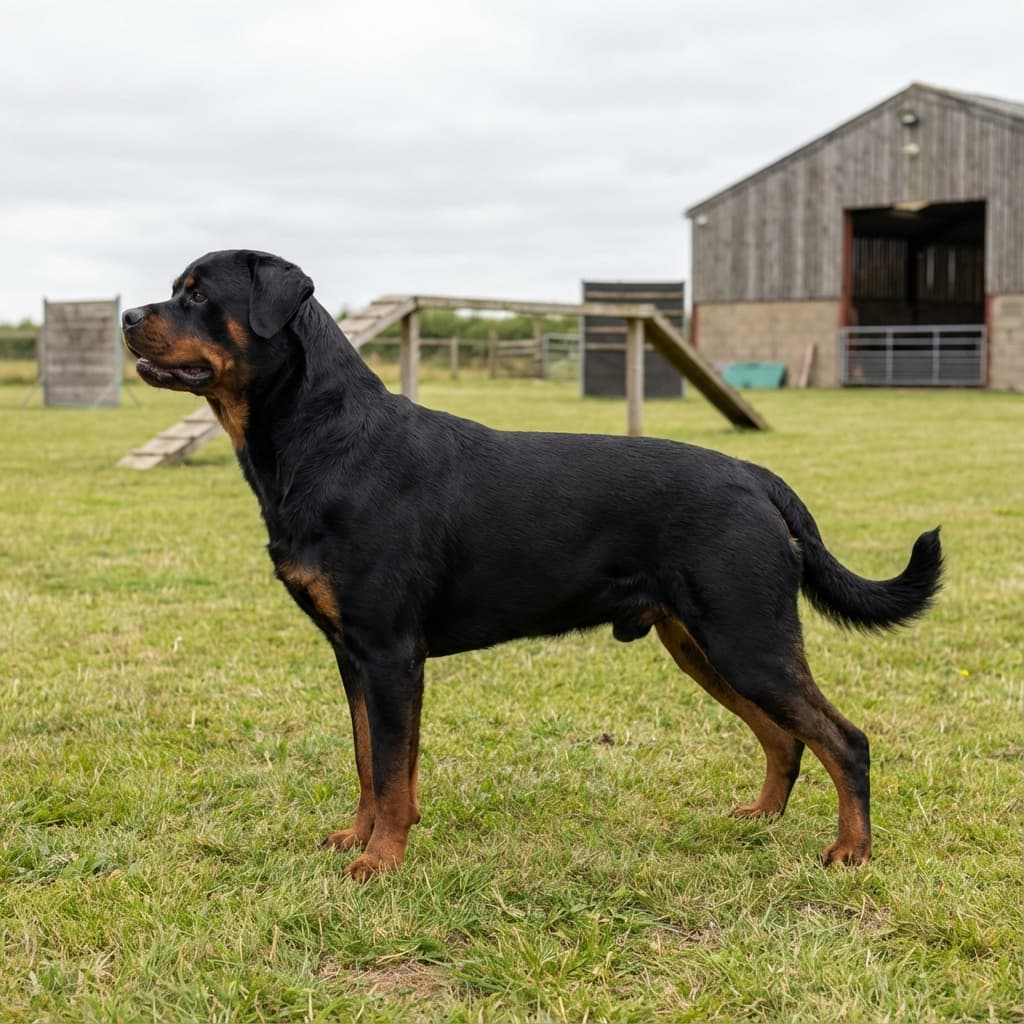
Rottweiler
FCI Group
2• FCI 147
Size
Large
Origin Country
DE
Height
56-68 cm
Weight
42-50 kg
Lifespan
8-10 years
Temperament
Overview
The Rottweiler is one of the most recognizable and respected dog breeds in the world, with roots tracing back to ancient Rome. These impressive quadrupeds accompanied Roman legions during their march through the Alps, playing a key role as herding and guarding dogs. Their task was to protect soldiers and civilians and lead herds of cattle, which provided food for the troops. This long history of cooperation with humans has shaped the breed's character – Rottweilers are extremely loyal, intelligent, and ready to work.
The breed's name comes from the German town of Rottweil, where these dogs found their place alongside local butchers. They were invaluable in guarding cattle, protecting property, and transporting goods. Thanks to their physical strength and determination, Rottweilers could pull carts filled with meat while simultaneously protecting their owner and the cargo from thieves. Their versatility earned them the nickname butcher's dog from Rottweil.
Modern Rottweilers have retained many of these original traits. With their massive build, musculature, and confident silhouette, they are seen as excellent guard and protection dogs. Their natural alertness combined with extraordinary intelligence makes them well-suited for police work, rescue operations, and as therapy dogs. In the right hands, Rottweilers are also wonderful family dogs that love children and are protective of them.
However, it is important to realize that Rottweilers are dogs with strong personalities that require consistent training and early socialization. Their natural protective instinct can turn into excessive suspicion or aggression if the dog is not properly raised. An experienced owner who can be both firm and gentle will be able to develop a wonderful companion in a Rottweiler – calm, obedient, and reliable.
Rottweilers love physical activity and need regular, intense exercise to remain healthy and balanced. Daily long walks, games of fetch, swimming, or obedience training are not only ways to maintain good condition but also to satisfy their need for work and mental stimulation. Their short, dense coat in the characteristic black color with rust markings is easy to care for and requires only regular brushing.
This breed is prone to obesity, so a balanced diet and adequate exercise are crucial for a Rottweiler's health. Owners should also be aware of potential health issues such as hip dysplasia, heart diseases, or gastric torsion that can affect this breed. Regular veterinary visits and preventive care will allow for early detection of any problems and ensure the dog has a long, happy life.
If you are ready to invest time and energy into raising and caring for a Rottweiler, you will surely be rewarded with unwavering loyalty, devotion, and love that only this exceptional breed can provide. The Rottweiler is not a dog for everyone, but in the right hands, it becomes a true friend for life.
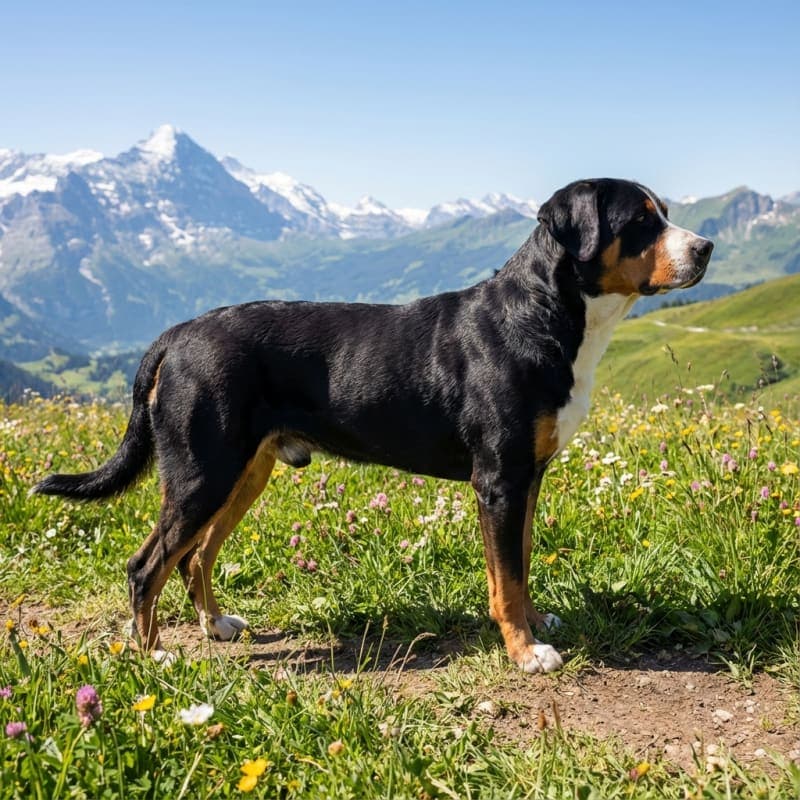
The Rottweiler is a dog with a massive, muscular build that exudes strength and confidence. Its appearance is unmistakably recognizable and commands respect. The head is relatively large, broad in the skull, with well-defined cheekbones. The muzzle is strong and wide, with a proportional length in relation to the skull. The nose is always black, and the jaws are powerful, with an excellent scissor bite.
The eyes of the Rottweiler are medium-sized, almond-shaped, and dark brown, giving them an expression of intelligence and alertness. The dog's gaze is confident and attentive, reflecting its nature as a guardian. The ears are medium-sized, triangular, and hanging, set high on the head, which further emphasizes the shape of the skull.
The neck of the Rottweiler is strong, muscular, and of medium length, smoothly transitioning into a straight, strong back. The chest is wide, deep, and well-developed, providing the dog with excellent lung capacity and stability during movement. The line of the back is straight and horizontal, with short and strong loins.
The front and hind limbs are well-muscled, straight, and parallel, giving the dog excellent balance and strength while moving. The paws are round, compact, with strong pads and black claws. The tail is natural, an extension of the line of the back, and is carried freely in a horizontal or slightly raised position.
The coat of the Rottweiler consists of a short, dense outer coat and a soft undercoat. The color is always black with clearly defined, rich rust-colored markings. The markings appear on the cheeks, above the eyes, on the muzzle, neck, chest, limbs, and under the tail. This distinctive color pattern is one of the breed's identifying features.
The overall appearance of the Rottweiler is a picture of strength, compactness, and athleticism. It is a dog built for work, combining physical power with elegance and harmony of movement.
The Rottweiler is a dog with a balanced, calm, and confident temperament. Its character has been shaped over centuries of working alongside humans as a guard dog, herding dog, and protector. The natural protective instinct makes Rottweilers extremely loyal to their family and ready to defend them against threats. At the same time, a properly raised Rottweiler is a gentle, friendly, and composed dog.
Rottweilers are very attached to their family and love to be in their company. They are protective of children and can be wonderful playmates for them. However, it is important to remember that due to their strength and size, Rottweilers should not be left unsupervised with small children – an unintentional push or pull could lead to a child's fall.
When it comes to strangers, Rottweilers are reserved and alert, but they should not exhibit unwarranted aggression. This suspicion towards unknown individuals is a natural trait of the breed and forms the basis of its guarding abilities. The key to proper behavior is early socialization – puppies should be exposed to various people, sounds, places, and situations from a young age so that they are confident and calm in adulthood.
Rottweilers are extremely intelligent dogs that learn quickly and are eager to cooperate with their owner. Their working abilities make them excel in various sports and disciplines such as obedience, protection, rescue, and agility. At the same time, their strong character and independence can pose a challenge for an inexperienced owner. Rottweilers require consistent, confident handling based on mutual trust and positive reinforcement.
In relationships with other dogs, Rottweilers can be dominant, especially towards individuals of the same sex. Therefore, socialization at a young age is crucial, as well as teaching the dog appropriate behaviors in contact with other animals. A properly raised Rottweiler can live harmoniously with other dogs and cats in the home.
In summary, the Rottweiler is a loyal, brave, intelligent, and protective dog that, in the right hands, becomes a wonderful family companion and a reliable guardian. However, it requires an experienced owner who will dedicate time to its upbringing and socialization.
The Rottweiler is generally a healthy and resilient breed, which, with proper care, can enjoy life for 8 to 10 years, although some individuals live up to 11–12 years. Like all large dog breeds, Rottweilers can be prone to certain genetic and acquired conditions that owners should be aware of.
One of the most common health issues in Rottweilers is hip and elbow dysplasia. This developmental disorder of the joints leads to improper formation, which consequently causes pain, limping, and arthritis. Dysplasia has a genetic basis, but its development is also influenced by environmental factors such as rapid growth, obesity, or improper loading during the puppy stage. Therefore, it is important that Rottweiler puppies are not subjected to excessive physical exertion and that their diet is properly balanced.
Another serious health problem is gastric torsion (GDV – gastric dilation and volvulus), which occurs in deep-chested breeds and can be life-threatening. Gastric torsion requires immediate veterinary intervention. To minimize the risk, it is recommended to feed the dog several smaller meals a day, avoid intense exercise immediately before and after eating, and use slow-feed bowls.
Rottweilers can also suffer from heart diseases, including subaortic stenosis (SAS) and dilated cardiomyopathy. Regular cardiological examinations, especially in dogs intended for breeding, allow for early detection of problems and appropriate treatment.
Eye conditions, such as progressive retinal atrophy (PRA) and cataracts, can also occur in this breed. Ophthalmic examinations should be conducted regularly, especially in breeding dogs.
Rottweilers also have increased risk of developing cancers, including bone cancer (osteosarcoma) and lymphoma. Regular veterinary visits and monitoring the dog for unusual symptoms can help in the early detection of disease.
Other conditions include neurological diseases (e.g., epilepsy) and dermatological problems (allergies, Rottweiler fever). A proper diet, regular physical activity, weight control, and preventive veterinary check-ups are key to keeping a Rottweiler in excellent condition for many years.
When choosing a puppy, it is worth reviewing the health test results of the parents for dysplasia, heart diseases, and eye conditions – a responsible breeder will always be happy to provide such information.
Grooming a Rottweiler is relatively simple and not very time-consuming, which is an additional advantage of this breed. Their short, dense coat does not require complicated grooming procedures, and regular brushing is enough to keep it in excellent condition.
The Rottweiler's coat consists of a hard outer coat and a soft, dense undercoat. This dog sheds seasonally, mainly in spring and autumn, when it changes its undercoat. During this time, it is advisable to increase the frequency of brushing to several times a week to remove dead hair and speed up the shedding process. Outside of shedding season, brushing once a week is sufficient.
For coat care, a natural bristle brush or a rubber grooming glove works best, effectively removing dead hair while also massaging the skin and stimulating blood circulation. Rottweilers generally enjoy being brushed, especially if they are accustomed to it from a puppy age.
Bathing should be done only when necessary – Rottweilers are generally clean dogs and do not tend to have an unpleasant odor. Too frequent baths can lead to the removal of natural oils from the skin, resulting in dry skin and a worsening coat condition. Bathing the dog a few times a year or when it is really dirty is sufficient. Gentle shampoos designed for dogs should be used.
Ears, teeth, and nails require regular checks. Ears should be checked weekly and cleaned with a special ear solution if necessary to prevent infections. Teeth should be brushed several times a week using dog toothpaste – this prevents tartar buildup and periodontal disease. Nails should be trimmed every few weeks if they do not wear down naturally during walks on hard surfaces.
It is also worth regularly checking the condition of the skin for changes, rashes, or external parasites. Preventive measures against fleas and ticks are particularly important during the summer months.
In summary, grooming a Rottweiler is straightforward and low-maintenance – regular brushing, occasional baths, and basic hygiene are all that this breed needs to look healthy and beautiful.
The Rottweiler is a dog with high energy and a need for movement, requiring regular physical activity to remain healthy, happy, and mentally balanced. This breed was developed for work and an active lifestyle, so a bored or insufficiently physically stimulated Rottweiler may develop behavioral problems such as excessive barking, furniture destruction, or aggression.
Adult Rottweilers need at least 60 to 90 minutes of physical activity daily. This should be a combination of walks, running, play, and training. Daily long walks are an absolute necessity – ideally twice a day for 30–45 minutes. Walks should be conducted in varied terrain to provide the dog with both physical exertion and mental stimulation through new scents and stimuli.
Rottweilers love fetch games, swimming, and various types of physical games. Swimming is particularly beneficial as it engages the dog's entire body without putting excessive strain on the joints. Many Rottweilers also eagerly participate in dog sports such as obedience, rally-o, schutzhund, tracking, or nose work. These activities not only provide physical exertion but also engage their remarkable intelligence and natural work instinct.
For more active owners, excellent choices include sports like cani-cross (running with the dog), bikejoring (cycling with the dog), or cani-scooter (scootering with the dog). Rottweilers excel in these types of activities due to their strength, endurance, and willingness to cooperate.
However, it is extremely important to limit intense exercise for puppies and young dogs. Rottweilers grow very quickly, and their skeleton and joints need time to develop properly. Excessive physical exertion at a young age can lead to joint damage, dysplasia, and other orthopedic issues. Until they are 12–18 months old, exercise should be moderate – short walks, play on flat terrain, and gentle obedience training.
Besides physical exertion, Rottweilers also need mental stimulation. Interactive toys, scent games, obedience training, and learning new commands are excellent ways to ensure a fulfilling life for the dog. A Rottweiler that is both physically and mentally tired is a calm and content dog.
Training a Rottweiler requires consistency, experience, and a steady hand, but at the same time, gentleness and a positive approach. Rottweilers are incredibly intelligent dogs that are eager to learn and want to cooperate with their owner. However, their strong character, independence, and natural instinct for dominance can pose a challenge for an inexperienced handler.
The key to success is starting training early – from the age of 8 weeks, the puppy should be introduced to basic commands, household rules, and various stimuli. The earlier we start education, the easier it will be to shape proper behaviors and avoid behavioral problems in the future.
Socialization is absolutely crucial for a Rottweiler. The puppy should be regularly exposed to contact with different people (children, adults, seniors), other dogs, animals, and various places and situations. A well-socialized Rottweiler will be calm, confident, and friendly, while a dog lacking proper socialization may become overly suspicious, fearful, or aggressive.
Training methods should be based on positive reinforcement – rewards, praise, and play. Rottweilers respond well to motivation through treats, toys, and the owner's approval. Using force, shouting, or physical punishment is not only ineffective but can lead to a loss of the dog's trust and the development of fears and aggression. A Rottweiler respects a confident, consistent, and fair leader, but will not accept violence.
Basic commands such as Sit, Stay, Lie Down, Come, and Leave It should be learned thoroughly and automatically. A Rottweiler is a strong and powerful dog, so its control in public situations is crucial for the safety of both the dog and the surroundings. A well-trained Rottweiler walking on a loose leash, responding to the recall command, and not showing aggression is a true joy for the owner.
Rottweilers love work and tasks to perform. They excel in sports such as obedience, schutzhund, IPO, tracking, rescue, and therapy. Engaging the dog in these types of activities not only strengthens the bond with the owner but also gives the Rottweiler a sense of purpose and satisfaction.
It is also important to set clear boundaries and rules. Rottweilers are dogs that test the owner's authority, especially during the adolescence period (around 1-2 years of age). Consistency in enforcing rules and calmly but firmly correcting unwanted behaviors is the key to raising a well-behaved dog.
In summary, the Rottweiler is a smart, eager to learn and work breed, but it requires an experienced owner who can be both a leader and a friend. With the right approach, one can raise a dog that is obedient, confident, and reliable in any situation.
The Rottweiler is a breed with high nutritional needs, but also a tendency to gain weight, so a properly balanced diet is crucial for its health, condition, and long life. Obesity in Rottweilers can lead to serious health problems such as joint dysplasia, heart disease, diabetes, and a shortened lifespan.
The foundation of a Rottweiler's diet should be high-quality food – dry, wet, or a BARF diet (raw meat and vegetables). Regardless of the chosen form of feeding, the food should be rich in high-quality animal protein (chicken, beef, fish, lamb), which is essential for building and repairing muscles. The protein content in food for adult Rottweilers should be around 22–26%.
Healthy fats are also important, as they provide energy and support skin and coat health. Omega-3 and omega-6 fatty acids (from fish, flaxseed oil, or salmon) have anti-inflammatory properties and support the cardiovascular system. The fat content in the food should be around 12–16%.
Carbohydrates should come from whole grains, vegetables, and fruits, which provide fiber, vitamins, and minerals. Foods with excessive fillers, artificial additives, colorings, and preservatives should be avoided.
Rottweiler puppies have special nutritional needs. Their diet should be tailored to their rapid growth, but it should not lead to excessive weight gain, which could damage developing joints. Foods for large breed puppies (Large Breed Puppy) are appropriately balanced in this regard. Puppies should be fed 3–4 times a day, while adult dogs should be fed twice a day.
It is extremely important to control portions. Adult Rottweilers typically need about 1800–2500 calories per day, depending on their activity level, age, and metabolism. Owners should adjust the amount of food to the individual needs of the dog and regularly monitor its weight and condition. The dog should have a visible waist and ribs that are palpable but not protruding.
To minimize the risk of gastric torsion, Rottweilers should be fed several smaller meals throughout the day rather than one large meal. Intense exercise should be avoided immediately before and after meals, and the dog should be provided with a calm environment during eating.
Access to fresh, clean water should be available at all times. Water should be changed daily, and the bowl should be kept clean.
Products that should absolutely not be given to Rottweilers include chocolate, caviar, grapes, raisins, onions, garlic, avocado, xylitol, and alcohol – all of these ingredients are toxic to dogs.
Regular visits to the veterinarian and monitoring the dog's condition will help adjust the diet to its changing needs. A well-nourished Rottweiler is a dog full of energy, with a shiny coat and excellent physical condition.
Characteristic Traits
Pros
- Extraordinary loyalty to family
- Excellent guarding and defensive abilities
- High intelligence and ease of training
- Balanced and calm temperament
- Simple grooming and short coat.
Cons
- Requires an experienced caregiver and consistent training
- Strong character and tendency to dominate
- Prone to overweight and joint problems
- Need for intense physical activity and mental stimulation.
Behavioral Ratings
Breed History
The history of the Rottweiler dates back to ancient Rome, making this breed one of the oldest working dogs in Europe. The ancestors of today's Rottweilers accompanied Roman legions during their conquests, serving as herding and guarding dogs. Their main task was to lead herds of cattle, which provided food for the troops, and to protect people and animals from predators and enemies.
As the Roman legions marched through the Alps to colonize the territories of present-day Germany, these dogs reached the region of modern Baden-Württemberg. In the vicinity of the city of Rottweil (then known as Arae Flaviae), Roman dogs interbred with local breeds, giving rise to the ancestors of contemporary Rottweilers. Rottweil became an important center for cattle trade, and these dogs became an integral part of the lives of local butchers and traders.
In the Middle Ages, Rottweilers were known as Rottweil Metzgerhund – butcher dogs from Rottweil. Their task was not only to lead herds of cattle to market but also to protect the butchers' money. Legend has it that traders would tie bags of coins around their dogs' necks to protect them from robbers – no one dared to rob a man guarded by a powerful Rottweiler.
Rottweilers were also used as draft dogs, pulling carts loaded with meat and other goods. Their strength, endurance, and ability to work hard made them invaluable helpers at a time when wheeled transport relied on animal power.
By the end of the 19th century, with the development of railways and the introduction of regulations prohibiting the use of dogs for pulling carts, the popularity of Rottweilers began to decline. The breed was on the brink of extinction. However, in the early 20th century, a renaissance occurred – Rottweilers were recognized as excellent police and military dogs. Their intelligence, strength, loyalty, and ability to work in difficult conditions made them one of the first breeds officially employed in the German police.
In 1910, the Rottweiler was officially recognized as a police dog, which contributed to a revival of interest in the breed. In 1921, the Allgemeiner Deutscher Rottweiler Klub (ADRK) was established, which remains one of the most important breeding organizations for this breed in the world today. ADRK established strict breeding standards and requirements for temperament and health testing, which helped maintain the high quality of the breed.
After World War II, Rottweilers gained immense popularity worldwide, including in the United States, where they became one of the most popular family and guard dog breeds. Unfortunately, the rise in popularity also led to irresponsible breeding, which in some cases negatively affected the temperament and health of the dogs.
The modern Rottweiler is a versatile working dog that excels as a police, rescue, therapy dog, and above all as a devoted family companion and guardian. This breed is valued worldwide for its intelligence, loyalty, and ability to work, and its history reflects the remarkable adaptability and usefulness that these dogs have brought to human life over the centuries.