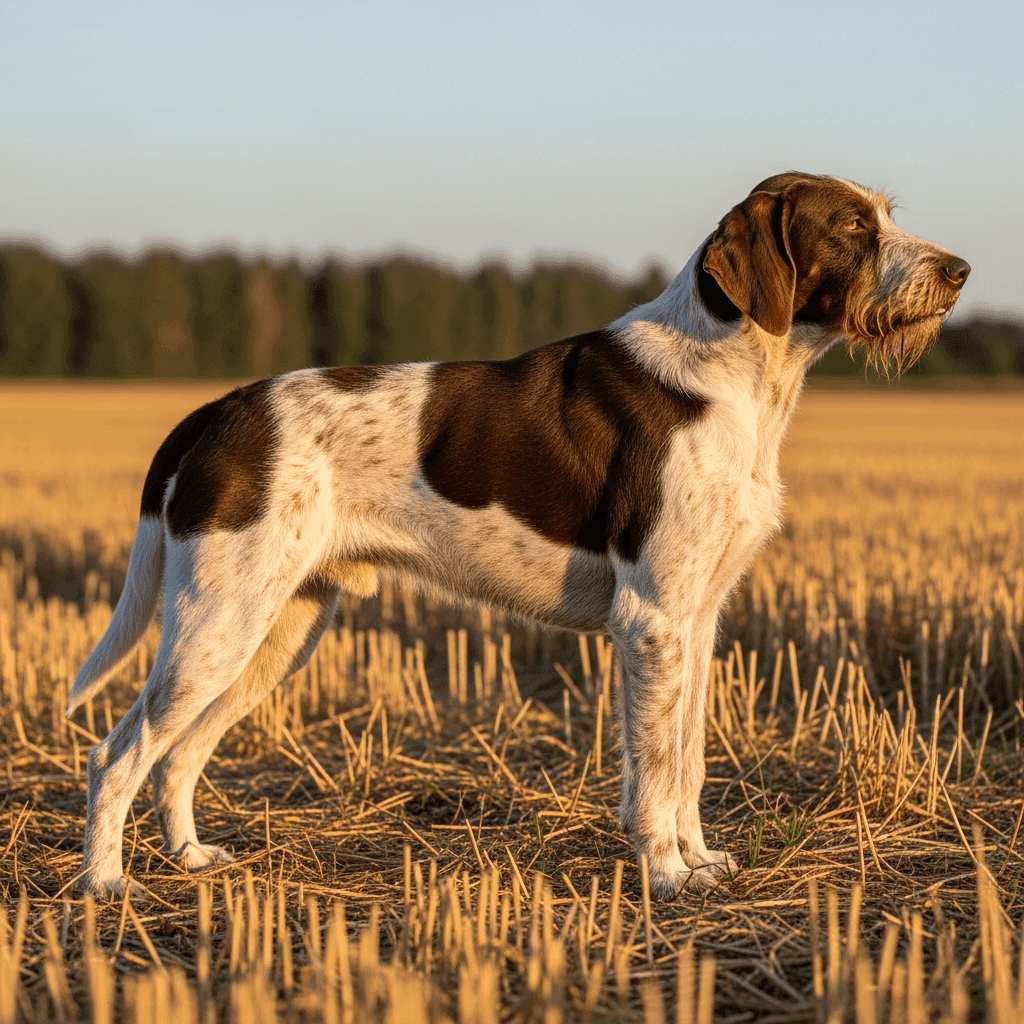
Italian Wirehaired Pointer
FCI Group
7• FCI 165
Size
Large
Origin Country
IT
Height
60-70 cm
Weight
28-37 kg
Lifespan
12-14 years
Temperament
Overview
The Italian Spinone, also known as Spinone Italiano, is one of the most fascinating hunting breeds with a rich history spanning several centuries. Originating from Italy, this resilient and strong dog excels both as a hunting partner in challenging terrain and as a loyal family companion. Its distinctive rough coat not only gives it a unique appearance but also provides excellent protection against water and adverse weather conditions, making it an ideal dog for those who enjoy spending time outdoors year-round.
An adult representative of the breed reaches a height of 60 to 70 cm at the withers, and its weight ranges from 28 to 37 kg. Such proportions make the Spinone a solid yet harmoniously built companion with excellent physical condition. What sets this breed apart from other pointers is its exceptionally – the Spinone gets along well with children, shows patience towards other pets, and forms strong bonds with the entire family. At the same time, it is a lively and energetic dog whose natural hunting instinct requires regular, intense physical activity and mental stimulation.
The Italian Spinone is a breed that requires conscious commitment from its owner – it needs not only daily physical activity but also consistent training and proper socialization from a young age. Its intelligence and willingness to cooperate usually make training go smoothly, although it may sometimes display a degree of independent thinking. Whether you are an experienced owner of hunting dogs or planning to adopt a dog with such an interesting character for the first time, the Spinone Italiano will surely win your heart with its extraordinary personality, reliability, and devotion. In the following sections of this guide, we will discuss all aspects of life with this exceptional breed – from appearance and health to grooming and nutrition, as well as training and history.
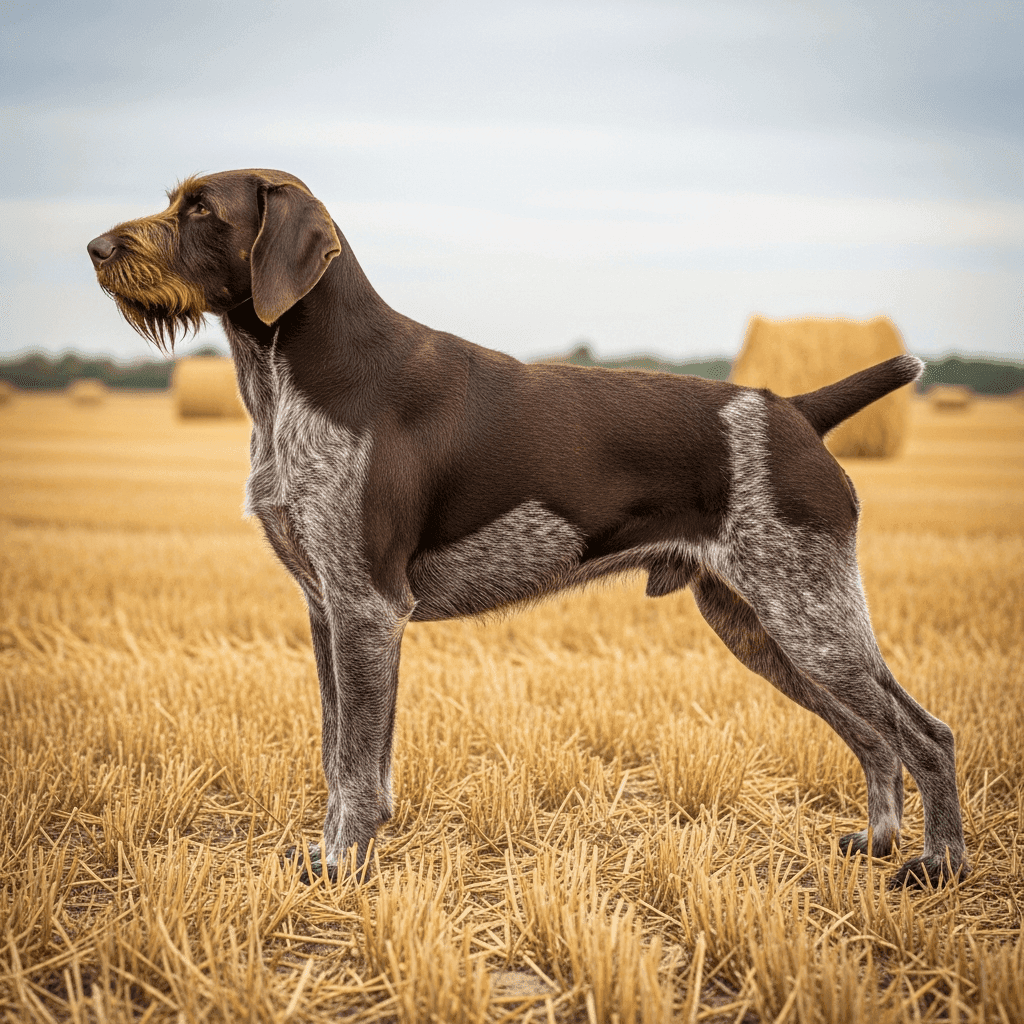
The Spinone Italiano is a dog with a solid, muscular build and a powerful bone structure, which expresses strength and endurance at first glance. Its height at the withers ranges from 60 to 70 cm, with males typically being slightly taller than females. The weight of an adult individual falls within the range of 28-37 kg, making this breed a large, yet agile and efficient working dog. A characteristic feature of the Spinone is its rough, dense coat, 4-6 cm long on the body, which is naturally water-resistant and provides excellent protection against cold, moisture, and thorny underbrush.
The coat color of the Italian pointer can come in several variations: pure white, white with orange or brown patches, brown roan, or orange roan. The hair on the head, ears, and front of the limbs is shorter and smoother than on the rest of the body. A distinctive element of its appearance is the thick, bushy eyebrows and long beard and whiskers, which give the Spinone the expression of a wise, gentle elder. The head is relatively long and wide, with a convex skull and a clear stop. The eyes are large, round, with a gentle, intelligent gaze, usually in an ochre color that matches the coat color.
The ears have a characteristic triangular shape with rounded tips and are set at the level of the zygomatic arch. They are relatively long, reaching the lower edge of the throat, and hang along the cheeks without folds. The body fits into a nearly square outline – the length of the body is approximately equal to the height at the withers, with a tolerance of 1-2 cm. The loins are short and very strong, and the chest is deep and well-developed, reaching to the elbows. The tail is set low, thicker at the base and tapering towards the end, traditionally docked to a length of 15-25 cm, although in countries where docking is prohibited, it is left at its natural length. The overall silhouette of the Spinone Italiano exudes harmony, strength, and functionality typical of an excellent hunting dog with versatile applications.
The Spinone Italiano is characterized by its exceptionally balanced and gentle temperament, making it an excellent family dog and companion for people of all ages. This breed is naturally sociable, patient, and calm, forming strong emotional bonds with the entire family and showing particular tenderness towards children. Spinone rarely exhibits aggression, and its friendly disposition makes it well-accepted by other pets, including other dogs and cats, especially when properly socialized from a young age.
A distinctive feature of this breed is its high intelligence combined with a degree of independence in thinking, which is typical for hunting dogs that work alone in the field. This independence can sometimes be misinterpreted as stubbornness; however, in reality, the Spinone is very willing to cooperate and learn, especially when training is based on positive reinforcement methods. Dogs of this breed are sensitive to the tone of voice and mood of their owner – they react poorly to shouting, harsh punishments, or rough treatment, which can cause them to become distrustful or apathetic.
The Spinone Italiano has a strongly developed hunting instinct, which manifests in a natural tendency to track, retrieve, and work in water. This is a dog that loves to explore its surroundings, sniff new scents, and follow trails, so walks should be stimulating for its senses. At the same time, this breed cannot tolerate prolonged solitude – when left alone for many hours, it may develop separation anxiety, destructive behaviors, or excessive barking. The Spinone is happiest when it can participate in the daily life of the family and regularly engage in physical and mental activities. Its gentle disposition, combined with natural patience and intelligence, makes it an ideal dog for families with children, active seniors, and those seeking a loyal, versatile companion.
The Italian Spinone generally enjoys good health and with proper care, a balanced diet, and regular physical activity, it can live 12-14 years. This breed is relatively resilient, but like all large dogs with a strong build, it has predispositions to certain genetic and acquired conditions that potential owners should be aware of.
The most common health issues in Spinone include hip and elbow dysplasia – degenerative conditions of the locomotor system that can lead to pain, lameness, and limited mobility. Responsible breeders perform X-ray examinations of the joints in breeding dogs and select pairs in a way that minimizes the risk of inheriting dysplasia. Another significant issue is hormonal diseases, particularly Addison's disease (adrenal insufficiency), which primarily affects young females and requires long-term, sometimes lifelong hormonal therapy.
Spinone also tends to gain weight, especially when it does not receive enough exercise or is overfed. Obesity in this breed is particularly dangerous as it additionally burdens the joints, heart, and respiratory system. Other conditions that may occur in Italian Spinones include gastric torsion (a risk in all large breeds with deep chests), atopic dermatitis, chronic ear infections (related to hanging ears and exposure to moisture), and ophthalmic problems such as entropion or ectropion.
Regular veterinary visits (at least once a year), vaccinations, deworming, and prevention against external parasites are essential for keeping the Spinone in good condition. Periodic check-ups are also recommended, especially for middle-aged and older dogs, to detect any potential conditions early and implement appropriate treatment. Proper health prevention, an active lifestyle, and responsible feeding will allow your Spinone to enjoy a long, healthy, and energetic life.
The care of Spinone Italiano is relatively simple and low-maintenance compared to many other breeds, but it requires regularity and consistency to keep the coat in good condition and ensure the dog's comfort. The characteristic rough, dense coat of this breed is naturally resistant to water and dirt, which means it does not require frequent bathing – a bath every 2-3 months or as needed when the dog gets particularly dirty is sufficient. Overbathing can strip the coat of its natural protective oils and weaken its structure.
A key element of grooming is regular brushing – at least once a week, and during heavy shedding periods (spring and autumn) even 2-3 times a week. Brushing removes dead hair, prevents matting, and stimulates the skin to produce natural oils. It is recommended to use brushes with stiff natural bristles or special combs for rough coats. Special attention should be paid to areas prone to tangling: ears, armpits, elbows, and groin.
One of the characteristic aspects of caring for a Spinone is maintaining facial cleanliness, especially the beard and whiskers. After each meal and drinking water, the beard should be rinsed or wiped with a damp cloth to prevent food residue from accumulating, which can cause unpleasant odors and skin irritation. Similarly, after walks in mud or tall grass, it's worth checking for any plant seeds, thorns, or other debris stuck in the coat.
Regular ear checks are extremely important for Spinone due to their hanging shape, which limits airflow in the ear canal and promotes the development of bacterial or fungal infections. At least once a week, ears should be checked for unpleasant odors, redness, or excess wax, and cleaned with special products recommended by a veterinarian if necessary. Similarly, oral hygiene should be a priority – regular tooth brushing (2-3 times a week) helps prevent tartar buildup and periodontal disease.
Also remember to regularly trim the nails (every 3-4 weeks) if they do not wear down naturally during walks on hard surfaces, and to check the paw pads for cracks or injuries. Some owners opt for professional trimming (pulling out dead hair) at a groomer 2-3 times a year, which helps maintain the proper coat structure and improves the dog's appearance, but it is not necessary for maintaining coat health. With systematic yet uncomplicated grooming, your Spinone will always look great and feel comfortable.
Spinone Italiano is a breed with high exercise needs, requiring daily, intense physical activity to maintain physical health and mental balance. This is a dog designed for work in the field, with a natural hunting instinct and great endurance, which is why a minimum of 60-90 minutes of activity daily is absolutely essential. Ideal forms of exercise for the Spinone include long walks in varied terrain, hikes through forests and meadows, runs in a controlled environment, and – particularly important for this breed – water-related activities.
The Italian wire-haired pointer loves swimming and is an excellent swimmer due to its body structure and innate love for working in water. Regular trips to the lake, river, or sea are not only a great form of exercise for him but also a source of immense joy and satisfaction. Swimming is also an excellent cardio workout that does not strain the joints, which is particularly important for large breeds predisposed to dysplasia.
In addition to standard walks and swimming, the Spinone excels in canine sports such as tracking, hunting tests for pointing dogs, agility (though due to its build, it does not achieve the highest results there), and rally-obedience. These activities not only engage the body but also stimulate the dog's mind, which is equally important for this intelligent breed. Scent games, hiding treats or toys for retrieval are excellent ways to engage the Spinone's natural instincts.
It is worth remembering that this is a breed that loves the owner's company during activities – the Spinone is much more motivated to move when it can share this moment with its beloved human. It is ideally suited as a companion for jogging, Nordic walking, or mountain trekking. At the same time, it is important to adjust the intensity of exercise to the dog's age and condition – young puppies should not be overexerted to avoid damaging developing joints, while older individuals may require calmer but regular forms of activity. Providing the Spinone with the right amount of exercise is key to its happiness, health, and balanced behavior at home.
Spinone Italiano is a smart and eager-to-learn dog, whose training can be a true pleasure, provided that appropriate positive training methods are used. This breed is characterized by a gentle temperament and a natural willingness to cooperate with humans, but at the same time, it exhibits a certain degree of independence of thought typical of hunting dogs, which need to make independent decisions in the field. This trait can sometimes be mistaken for stubbornness, but in reality, the Spinone simply needs to understand the meaning of the commands given and be motivated to follow them.
Early socialization is absolutely crucial for the development of a balanced, confident Spinone. Puppies should gradually be introduced to various stimuli from 8 to 12 weeks of age: people of different ages, other animals, different environments (city, park, forest), sounds (traffic, noise, gunshots), and surfaces (stairs, moving walkways, different terrains). A well-socialized Spinone grows into a confident, calm dog that does not react with fear or aggression to new situations.
Basic obedience training should start early and be based on positive reinforcement methods – rewards in the form of treats, toys, verbal praise, and play. Spinone responds excellently to this approach and quickly learns basic commands such as: Sit, Stay, Come, Down, Lie down, or walking on a loose leash. The key to success is consistency, patience, and short but regular training sessions (5-15 minutes several times a day), which keep the dog engaged and prevent boredom.
Due to the sensitivity of this breed, harsh training methods must be completely avoided – shouting, physical punishment, or pulling on the collar. Such an approach will not only be ineffective but can also destroy the bond with the dog and make it distrustful or fearful. Spinone learns best in an atmosphere of fun, trust, and mutual respect. If the dog shows reluctance to follow a command, it is worth considering whether it has been adequately motivated, whether it understands what is expected of it, and whether the training is not too monotonous.
For owners interested in hunting training, Spinone is an excellent choice – this breed has a natural retrieving instinct, works closely with the hunter, can track and point game, and handles work in water and difficult terrain with ease. Field training should be conducted by an experienced trainer or hunter who understands the specifics of pointing dogs. Whether you are training Spinone as a family dog or as a hunting partner, remember that the key to success lies in building a relationship based on trust, positive reinforcement, and mutual understanding.
Proper nutrition for the Spinone Italiano is the foundation of its health, energy, and longevity. As a large, active working dog, the Italian Spinone requires a balanced diet rich in high-quality animal protein, healthy fats, complex carbohydrates, as well as vitamins and minerals. The choice of the right food should be tailored to the age, activity level, health status, and individual needs of the specific dog.
For Spinone puppies (up to 12-18 months of age), large breed puppy food is recommended, which contains the appropriate proportions of calcium and phosphorus to support proper bone and joint development. Rapid growth in large breed puppies increases the risk of joint dysplasia, so young dogs should not be overfed or given calcium supplements without consulting a veterinarian. Feeding should occur 3-4 times a day at regular intervals, which supports proper digestion and prevents stomach problems.
For adult Spinone (from 12-18 months), high-quality food for active large breed dogs is recommended, which provides the right amount of energy without the risk of obesity. Daily portions should be divided into 2 meals, which reduces the risk of dangerous gastric torsion – a life-threatening condition to which large breeds with deep chests are predisposed. Intense exercise should be avoided immediately before and after meals (a minimum of 1-2 hours break).
There are various feeding options to choose from: dry food (convenient, economical, supports dental hygiene), wet food (more palatable, higher water content), BARF diet (raw meat, bones, vegetables – requires nutritional knowledge) or home-cooked diet (cooked meat, rice, vegetables – also requires consultation with a veterinarian or animal nutritionist). Regardless of the choice, it is crucial that the food is tailored to the individual needs of the dog and comes from reputable manufacturers.
Particular attention should be paid to weight control – Spinone tends to gain weight, especially when it does not receive enough exercise. Obesity is a serious health issue that can lead to joint diseases, heart problems, diabetes, and a shortened lifespan. Regularly monitor the dog's condition – ribs should be palpable under a thin layer of fat, and the dog should have a visible waist when viewed from above and the side.
Access to fresh water must be provided at all times, especially when the dog is eating dry food or is very active. Avoid feeding table scraps, sweets, chocolate, onions, garlic, grapes, and other products toxic to dogs. If you have any doubts about the diet, special nutritional needs (food allergies, sensitive stomach, diseases), it is always advisable to consult a veterinarian or animal nutritionist who can develop a personalized nutrition plan tailored to your Spinone's needs.
Characteristic Traits
Pros
- Gentle and friendly temperament
- Excellent family companion
- Exceptional resilience to harsh weather conditions
- Versatile hunting dog
- Relatively easy grooming.
Cons
- Requires a lot of daily physical activity
- Cannot stand prolonged solitude
- May show independence in training
- Tendency to gain weight.
Behavioral Ratings
Breed History
The Italian Spinone, known as Spinone Italiano, is one of the oldest hunting dog breeds with a documented history dating back several centuries. Although the exact origin of the breed remains a topic of discussion among cynologists, it is widely believed that the ancestors of the modern Spinone were present in northern Italy as early as the Middle Ages, and possibly even earlier. Bibliographic descriptions mention rough-haired dogs of Italian origin, which are considered the ancestors of today's breed.
One of the earliest documented mentions of dogs resembling the Spinone is the work of Sélincourtà from 1683 titled Le parfait chasseur (The Perfect Hunter), in which the author describes a griffon from Italy and Piedmont. Moreover, Renaissance masters of painting frequently immortalized these dogs in their works – the most famous example is the fresco by Andrea Mantegna in the Ducal Palace in Mantua from the 15th century, depicting dogs with characteristic rough coats and body structures very similar to the modern Spinone.
The name Spinone likely derives from the Italian word spinoso, meaning thorny or prickly, which refers to these dogs' ability to work in dense, thorny underbrush from which they would flush game. Another theory suggests that the name may come from the region of Spinone in the province of Bergamo in northern Italy. Regardless of the etymology, the breed has traditionally been bred in the Piedmont and Lombardy regions, where it served as a versatile hunting dog for waterfowl and forest game.
For centuries, the Spinone has been valued by Italian hunters for its extraordinary versatility – it was an excellent tracker, pointed game in a characteristic pose (the point), retrieved both on land and water, and its rough coat and endurance allowed it to work in the most challenging terrain and weather conditions. Unlike many fast, long-legged pointers, the Spinone worked at a calm, methodical pace, making it an ideal partner for foot hunters who preferred accuracy over speed.
The modern breed standard was formalized in the first half of the 20th century. In 1949, the Italian Spinone Club (Società Italiana Spinone) was established, which began systematic breeding efforts aimed at standardizing type and solidifying desired working traits and appearance. The International Canine Federation (FCI) officially recognized the breed and published its standard (No. 165, Group 7, Section 1.3 – continental pointing dogs).
After World War II, the Spinone population significantly decreased; however, thanks to the commitment of Italian breeders, the breed was rebuilt and gained international recognition. Today, the Italian Spinone is valued not only in Italy but also in many countries across Europe, North America, and Australia – both as a superb hunting dog and a loyal, gentle family companion. Although it remains less popular than some other pointer breeds, its extraordinary character, versatility, and rich historical heritage attract more and more enthusiasts worldwide.