Finnish Lapphund
FCI Group
5• FCI 189
Size
Medium
Origin Country
FI
Height
44-49 cm
Weight
18-20 kg
Lifespan
12-14 years
Temperament
Overview
The Finnish Lapphund, also known as suomenlapinkoira, is a dog breed that captivates with its versatility and charm. This breed, with roots in northern Scandinavia, is not only a herding dog but also a wonderful companion for families. Thanks to its thick double coat, which protects it from harsh weather conditions, the suomenlapinkoira is resilient to freezing winters, making it an ideal inhabitant of cooler climates.
The Finnish Lapphund is a medium-sized dog with a strong build that combines intelligence and a willingness to work. Its history as a dog used by the Sámi for herding reindeer shows the important role it played in the local community. For hundreds of years, dogs of this type have served as guardians and herders in the northern parts of Fennoscandia and Russia, creating an inseparable bond with the people living in these harsh terrains.
Characteristic of this breed is its gentleness and friendly expression, which makes the suomenlapinkoira an ideal companion for families with children. It is a dog that values the company of people and other animals. Its natural curiosity and desire to explore the world require proper socialization and regular physical activity, allowing it to fully develop both physically and mentally.
The suomenlapinkoira exhibits high intelligence, making it easy to train and eager to cooperate. Owners appreciate its ability to quickly learn new commands and its flexibility in various situations. However, it is important to remember that this breed does not tolerate prolonged loneliness and may develop separation anxiety if left alone for extended periods. It needs closeness and attention to feel happy and balanced.
The Finnish Lapphund is also known for its sensitivity to noise and new situations, so it requires patience and understanding from its caregivers, especially during the socialization period. Despite its moderate hunting instinct, it may show a tendency to chase smaller animals if not properly trained at a young age.
The popularity of the suomenlapinkoira is also growing outside Scandinavia, gaining recognition not only as a herding dog but also as a beloved household companion. In Finland, it is one of the most liked breeds, which is not surprising considering its friendly disposition, versatility, and beautiful appearance. This breed excels both as a working dog and as a family companion.
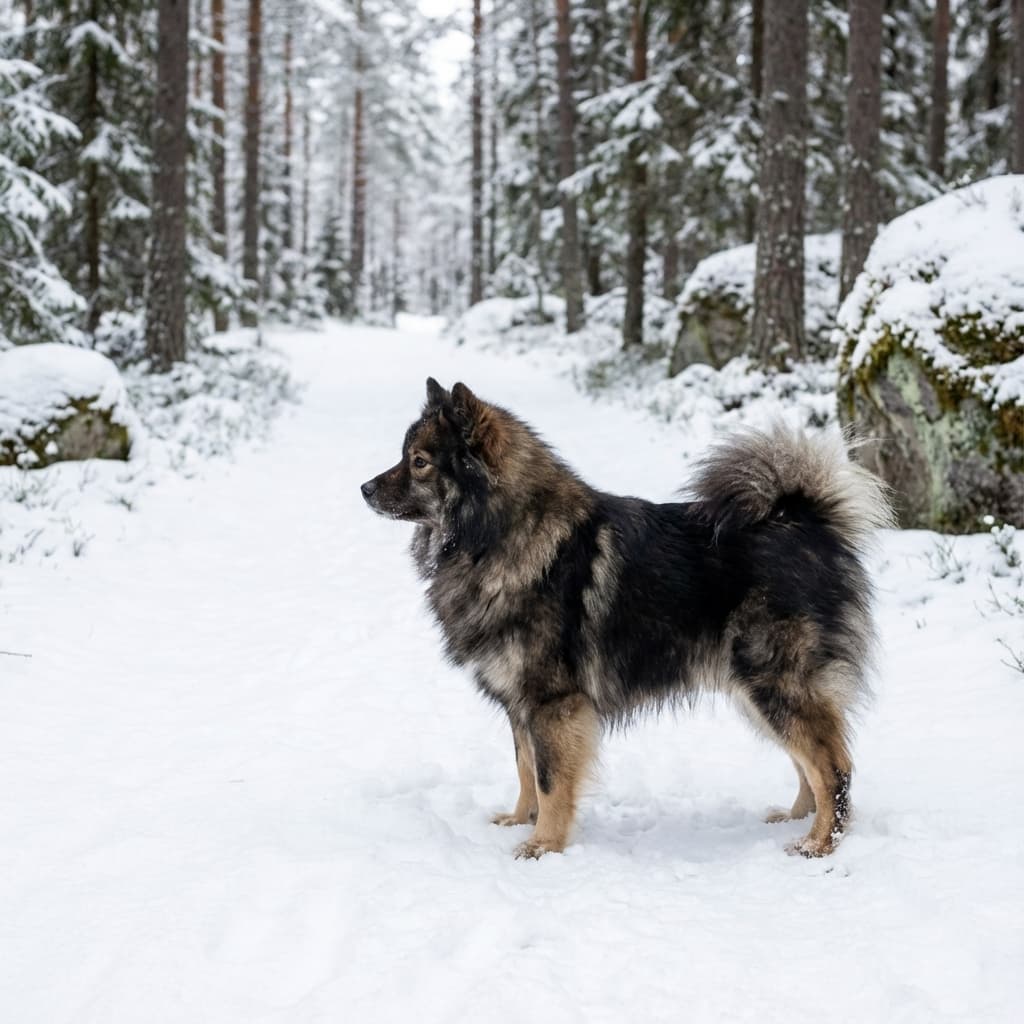
The Finnish Lapphund is a dog that is slightly smaller than average size, characterized by a strong build in relation to its size. The breed's silhouette is somewhat longer than its height at the withers, giving it a harmonious and balanced appearance. The height at the withers typically ranges from 44 to 49 cm, and the weight varies between 18 and 20 kg, with males generally being slightly larger and more robust than females.
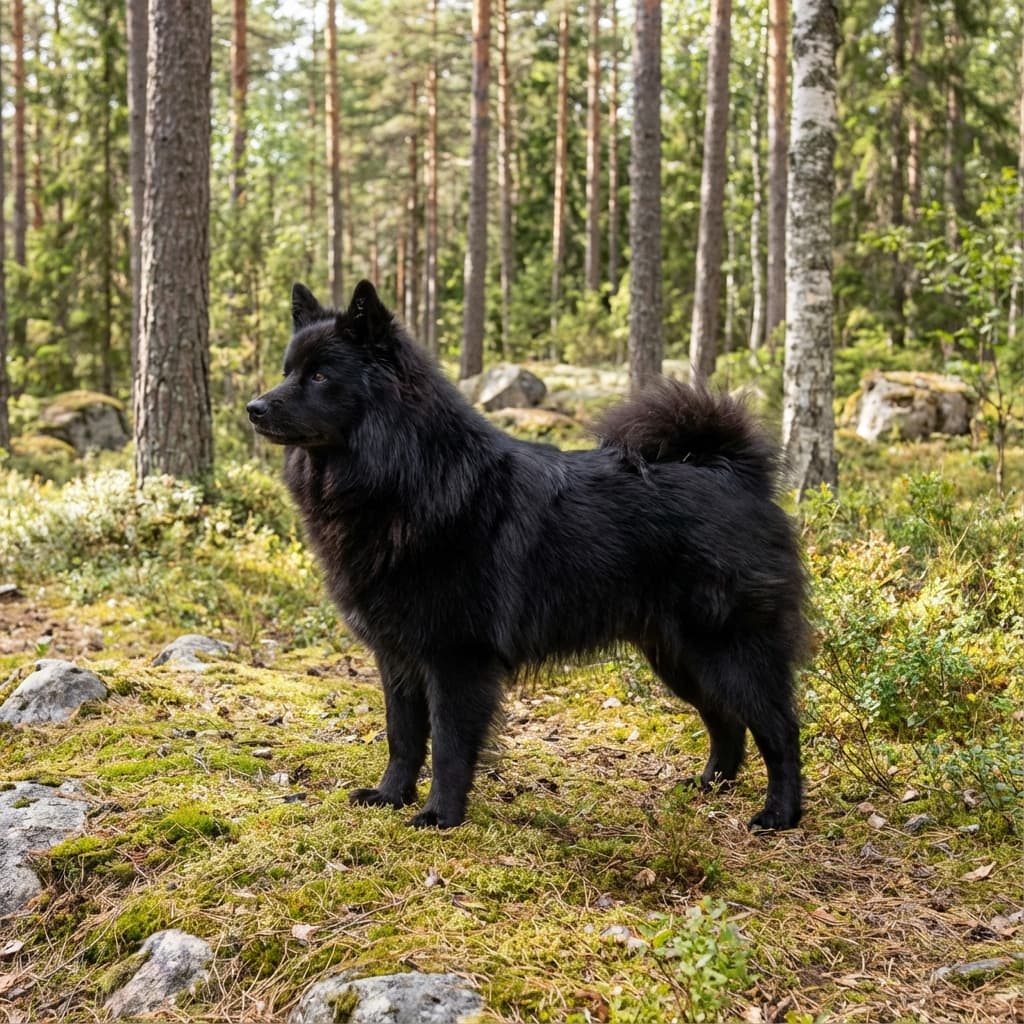
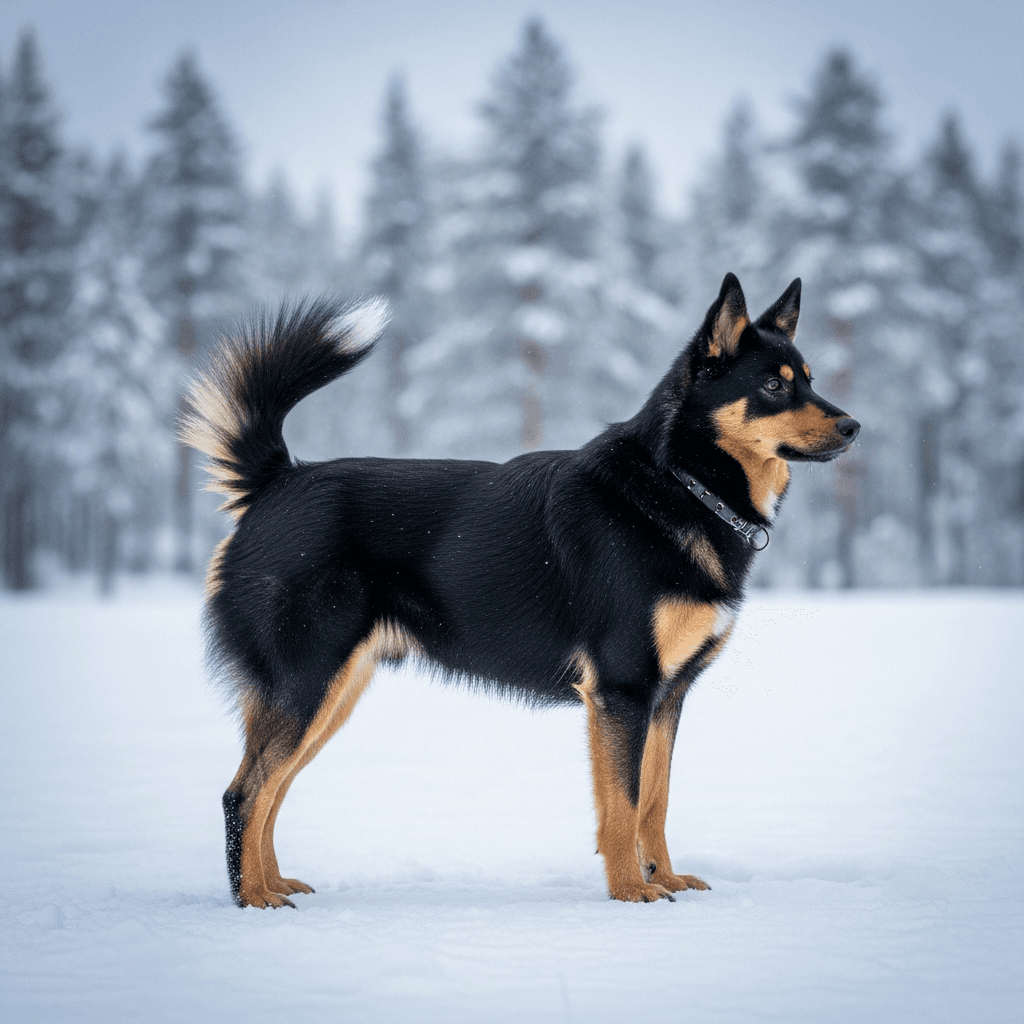
The most distinctive feature of this breed is its long, thick coat, which is double-layered and provides excellent protection against the cold. The outer coat is long, straight, and somewhat coarse to the touch, while the undercoat is soft, dense, and woolly, making the dog perfectly adapted to winter conditions and extremely low temperatures. Particularly abundant fur is found around the neck, forming a characteristic mane, as well as on the hind limbs and tail.
The head of the Finnish Lapphund is strong and wide, with a clearly defined stop between the skull and muzzle. The skull is slightly longer than it is wide, and its depth corresponds to its width. The muzzle is slightly shorter than the skull, well-formed, and gradually narrows towards the nose. The ears are medium-sized, set wide apart, and can be either erect or semi-erect, giving the dog a alert and attentive expression. The eyes are dark brown and oval-shaped, expressing friendliness and intelligence.
The tail is of medium length, densely covered with long hair, and is often carried over the back in a characteristic curl or hanging down when at rest. The limbs are strong, with well-developed musculature, allowing the dog to move efficiently in difficult terrain.
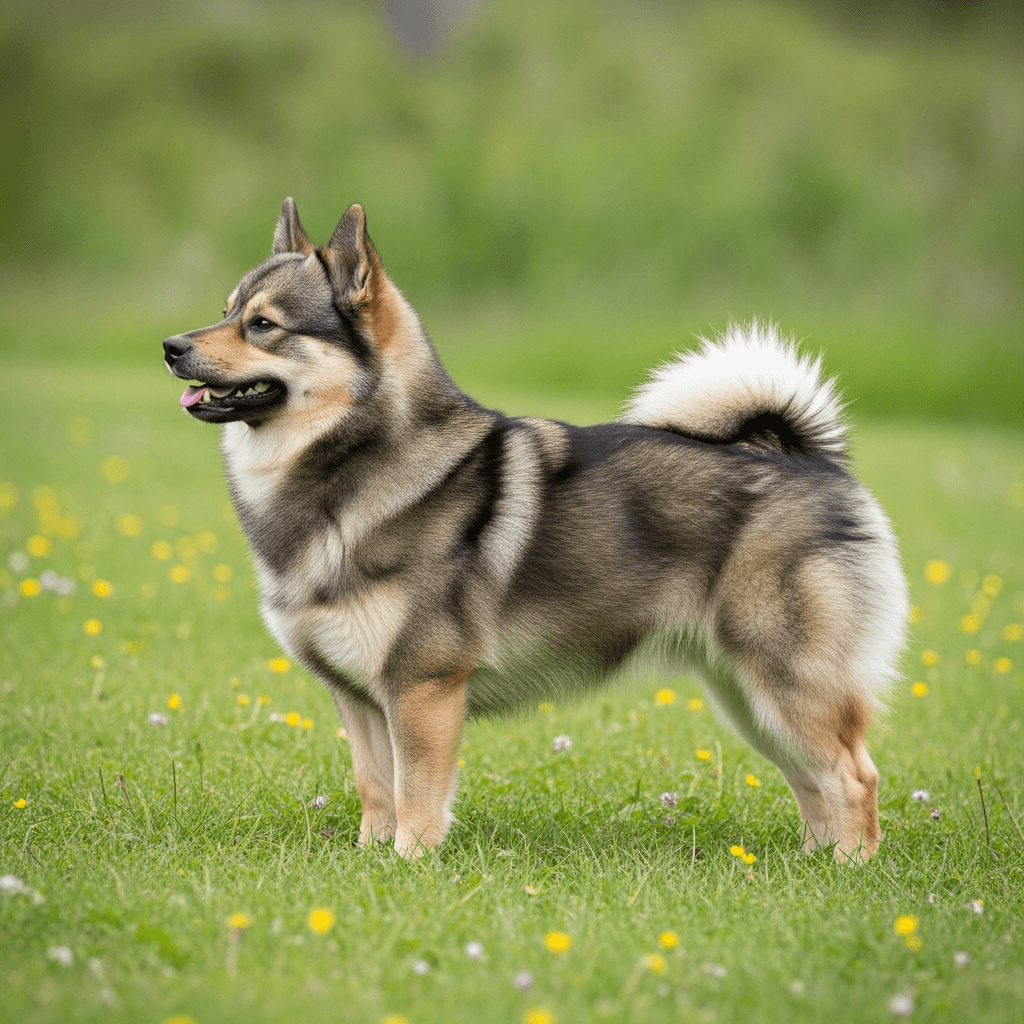
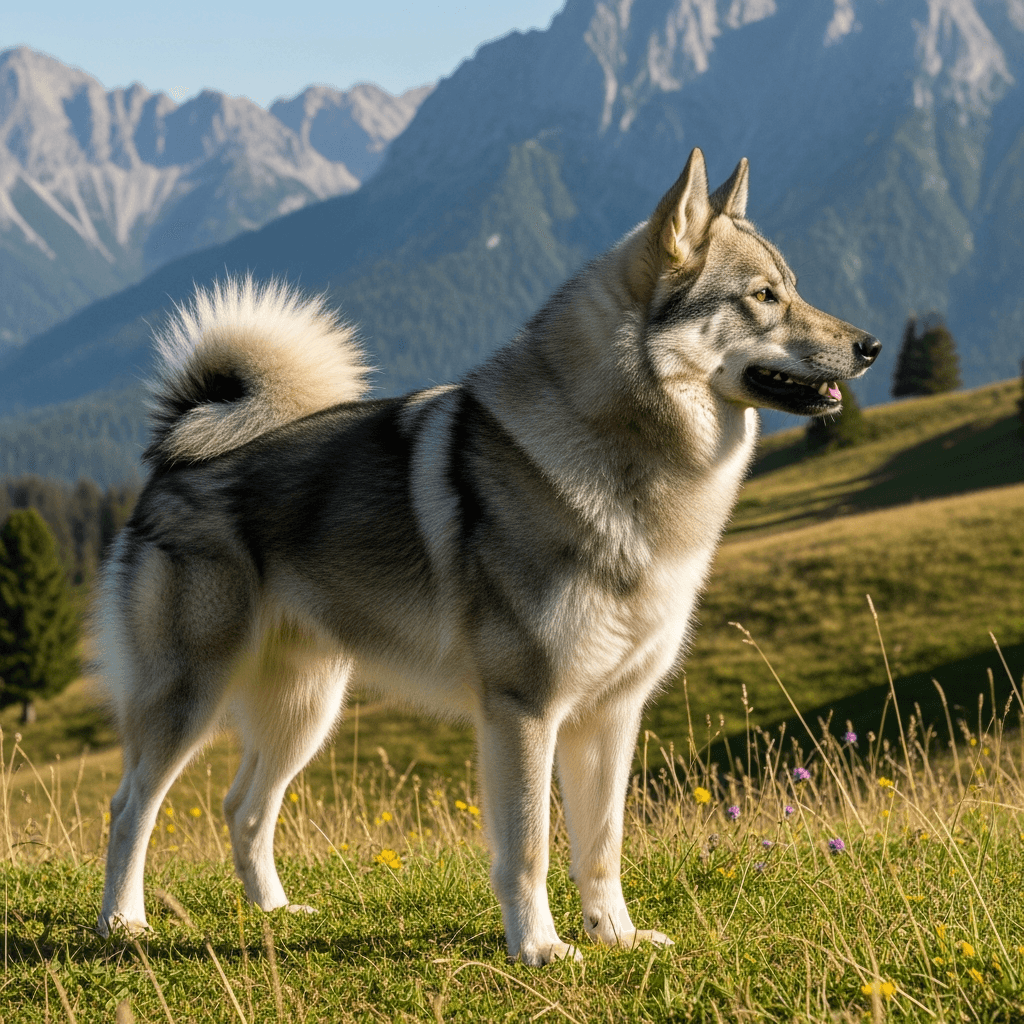
This breed can come in a variety of coat colors, including black, white, gray, sable, cream, red, and brown. The base color of the coat should dominate, while other colors may appear as markings on the head, neck, chest, and limbs. Some individuals may have distinct masks on their faces or white markings on their chests and paws.
The Finnish Lapphund is a dog that attracts attention with its beautiful, rich coat and friendly, open expression that reflects its gentle temperament.
The Finnish Lapphund is a dog with a very friendly and loyal disposition, forming strong bonds with its family. This breed is known for its intelligence and eagerness to learn, making it easy to train and very willing to cooperate with humans. The Finnish Lapphund is very sociable and loves spending time with people and other animals, making it an excellent family dog.
Its natural curiosity and desire to explore mean that this dog needs proper socialization from a young age to avoid tendencies towards excessive distrust of strangers or chasing small animals. With early socialization, it develops a balanced temperament and confidence in various situations.
These are dogs that do not tolerate prolonged solitude and may suffer from separation anxiety if left alone for long periods. They need the presence of their family and active participation in home life. The Finnish Lapphund is also known for its moderate sensitivity to noise and new situations, which may cause some individuals to be more cautious in unfamiliar conditions.
It is worth emphasizing that these dogs do exceptionally well in families with children, and their gentle nature makes them ideal playmates. The Finnish Lapphund shows great patience with younger family members and eagerly participates in activities with them.
The Finnish Lapphund is also a great guard dog, capable of being alert and responding to unknown situations with loud barking, making it a good watchdog. Its history as a herding dog has given it a natural tendency to watch over its territory and family. Combined with their innate intelligence and willingness to work, this makes them companions that are both friendly, devoted, and functional in various roles.
The Finnish Lapphund is a dog breed with relatively good health and a long expected lifespan, ranging from 12 to 14 years. With proper care, a balanced diet, and regular physical activity, some individuals can live up to 17 years, enjoying good condition for most of their lives.
This breed is not particularly prone to genetic diseases, but there are several conditions to be aware of when choosing a puppy and during regular veterinary check-ups. The most common health issues in Finnish Lapphunds are:
- Cataracts - may appear in later age and affect vision sharpness
- Progressive retinal atrophy (PRA) - a degenerative eye condition that can lead to vision loss
- Hip dysplasia - abnormal development of the hip joint, which can cause discomfort and mobility issues
Regular veterinary check-ups, including eye and joint examinations, as well as attention to proper diet and physical activity, can help in the early detection and treatment of these conditions. It is also advisable to choose puppies from responsible breeders who conduct genetic testing on their breeding dogs.
It is also important to remember that the Finnish Lapphund, due to its thick double coat, may have difficulties in extreme weather conditions. In summer, during heat waves, it may require special attention to avoid overheating - it should have access to shade, fresh water, and intense exercise should be avoided during the hottest hours of the day. In winter, however, it is well adapted to cold temperatures and feels comfortable even on frosty days.
A proper diet and regular physical activity can also help prevent weight gain, which is essential for maintaining overall health and reducing joint strain. Maintaining a healthy weight is particularly important for dogs predisposed to joint problems.
Grooming a Finnish Lapphund is extremely important to keep its thick, double coat in excellent condition and to ensure the dog's comfort. This breed requires regular brushing to prevent matting and tangling of the hair, which can lead to skin irritations.
It is recommended to brush daily, especially during shedding periods that occur in spring and autumn. During these times, the Finnish Lapphund loses a significant amount of undercoat, so regular and thorough brushing will help minimize the amount of hair in the home and prevent the formation of mats. It is advisable to use appropriate tools for grooming, such as:
- Slicker brush for detangling the undercoat
- Comb with long teeth for precise grooming of hard-to-reach areas
- Undercoat rake for removing dead undercoat during shedding
In addition to brushing, it is also important to regularly check the dog's ears, eyes, and teeth to ensure they are clean and healthy. Ears should be checked at least once a week and gently cleaned with a damp gauze to prevent dirt buildup and the development of infections. Teeth should be brushed several times a week using toothpaste designed for dogs to prevent tartar buildup and gum disease.
Bathing should be done only as needed, as too frequent washing can strip the natural oils from the coat that help maintain its health, elasticity, and water resistance. Usually, baths every 2-3 months or when the dog is particularly dirty are sufficient. During baths, it is advisable to use gentle shampoos designed for dogs with long hair.
Trimming the nails is also an essential part of grooming. They should be trimmed every 3-4 weeks or when they start to get too long and click on the floor while walking. Overly long nails can cause discomfort and affect the dog's movement.
This breed is not particularly prone to skin problems; however, if any changes, irritations, excessive itching, or unusual hair loss are noticed, it is recommended to consult a veterinarian who can rule out allergies or skin infections.
The Finnish Lapphund is a dog that requires regular and intense physical activity to remain healthy and happy. It is recommended to provide him with about 60 minutes of activity daily, which should be varied and engaging for both body and mind.
This breed has a lot of energy and loves outdoor play, including long walks, running, and interactive games such as fetch, frisbee, or hide and seek. Long walks in diverse terrain are particularly beneficial as they allow the dog to explore new scents and places, providing mental stimulation that is just as important as physical exercise.
The Finnish Lapphund is a very intelligent dog, so it is worth introducing various forms of activity that will engage his cognitive abilities. Consider agility training, obedience, rally obedience, or other dog sports that will allow him to expend energy and develop skills. The breed's history as a herding dog means it excels in sports that require cooperation with the handler.
It is important to remember that the Finnish Lapphund does not tolerate prolonged solitude, so regular walks and play are not only a form of physical activity but also a way to maintain a bond with the owner and provide the dog with the social contact it needs. Joint activities strengthen the relationship between the dog and its caregiver.
This breed is not suitable for living in small apartments without access to appropriate spaces for running and playing. An ideal environment is a house with a garden where the dog can move freely, although with the right amount of activity, it can also adapt to city living.
The Finnish Lapphund is a dog that loves to be active, so all forms of physical activity are welcome to ensure his health, good mental condition, and happiness. In winter, in line with his nature, he loves playing in the snow, which is an excellent form of exercise and joy for him.
Training a Finnish Lapphund is a pleasure because this breed is characterized by high intelligence and a willingness to learn. These dogs respond excellently to reward-based methods and positive reinforcement, which means that a positive approach is a key element of effective training.
It is worth starting training at an early age, right from the moment the puppy arrives in its new home, to provide the dog with a solid foundation and teach it basic commands such as Sit, Lie Down, Stay, Come, and No. Early socialization is equally important - the puppy should gradually be introduced to various people, animals, sounds, and situations to develop confidence and a balanced temperament.
The Finnish Lapphund is very sensitive to tone of voice, so it is important to be consistent but also gentle during training. Harsh methods or punishments can cause the dog to become insecure or unwilling to cooperate. Instead, the focus should be on rewarding desired behaviors with treats, praise, or play.
This breed responds well to various forms of mental activity, such as dog puzzles, hide-and-seek games with treats, trick training, or advanced obedience exercises. It is also worth introducing regular training sessions that will keep the dog in good mental condition and prevent boredom.
The Finnish Lapphund also tends to be somewhat independent and self-sufficient, which is a legacy of its herding past when it had to make decisions without constant human supervision. This means that sometimes it may not respond immediately to commands, especially if it is interested in something. It is important to be patient and not get discouraged when the dog does not respond as quickly as we would like. Consistency and positive reinforcement will yield the best results.
This breed also has a natural guarding instinct and may be alert to strangers or unusual situations, which can manifest as barking. Training in controlled barking can be considered, allowing the dog to communicate alerts while also responding to the command to be quiet.
Regular and varied training will help not only in keeping the dog in good physical and mental shape but also in building a strong bond between the dog and the owner, based on mutual trust and cooperation.
The diet of the Finnish Lapphund should be balanced and tailored to its age, activity level, and health condition. This breed does not have specific dietary requirements, but it is important to pay attention to the quality of the food, which should provide all the essential nutrients.
The food should be rich in high-quality protein (from meat, fish, or poultry), healthy fats (omega-3 and omega-6), and nutrients that support skin and coat health, which is particularly important for a breed with long, dense fur. It is advisable to choose foods that contain natural ingredients and do not have artificial additives, preservatives, or unnecessary fillers.
For active dogs like the Finnish Lapphund, it is worth considering foods designed for active breeds or working dogs, which will provide them with the appropriate amount of energy for daily activities. For puppies, one should choose foods dedicated to young dogs that support proper development of bones, muscles, and the immune system.
The Finnish Lapphund is a dog that is not particularly prone to obesity, but it is important to avoid overeating and control portions, especially if the dog is less active. Regular meals at set times (usually twice a day for adult dogs) will help maintain a healthy weight and good metabolism.
Water should be always available to ensure proper hydration, especially after intense physical exertion or on warm days. Fresh water is crucial for the proper functioning of the body.
It is also worth remembering to occasionally offer healthy treats, which can be used as rewards during training. They should make up no more than 10% of the daily calorie intake and be suitable for the dog's diet. Natural treats, such as dried meat, vegetables (carrots, broccoli), or special dental treats that additionally support oral hygiene, can be chosen.
If there are any doubts regarding the diet or if digestive issues, food allergies, or weight changes are noticed, it is advisable to consult a veterinarian who can help choose an appropriate feeding plan.
Characteristic Traits
Pros
- Family-friendly
- Easy to train
- Cold-resistant
- High intelligence
- Beautiful coat
Cons
- Does not tolerate loneliness
- Sensitive to noise
- May chase small animals
- Requires regular grooming.
Behavioral Ratings
Breed History
The Finnish Lapphund has a rich and fascinating history that dates back hundreds of years. This breed was developed by the Sámi (formerly known as Lapps), the indigenous people inhabiting northern Scandinavia and parts of Russia. The Sámi lived in harmony with nature in one of the harshest climates in the world, and dogs played a key role in their daily lives.
The Sámi used dogs of the Finnish Lapphund type as herding dogs that helped in herding and guarding reindeer herds - the foundation of the economy and survival of this community. These dogs were not only workers but also full-fledged family members, sharing daily life, the warmth of tents, and the hardships of a nomadic lifestyle.
With the advancement of civilization and industrialization, the traditional lifestyle of the Sámi began to change. As reindeer herding became more organized and mechanized, the Finnish Lapphund started to evolve into a companion dog, although its herding skills and instincts remained strong.
In 1945, the Finnish Kennel Club (Suomen Kennelliitto) developed the first official breed standard under the name Lapponian Herder. The standard was updated several times in the following years - in 1967, the name was changed to Lapponian Dog, and then in the 1970s, the type and characteristics of the breed stabilized.
In 1993, the breed name was finally changed to Finnish Lapphund (Suomenlapinkoira), reflecting its Finnish origin and history. This name change also helped distinguish the breed from Swedish and Norwegian herding dogs of similar origin.
Today, the Finnish Lapphund is one of the most popular dog breeds in Finland, serving both as a working dog in reindeer herding and as a beloved household companion. The breed is also gaining popularity outside Scandinavia, appreciated by dog lovers around the world for its friendly nature, beautiful coat, and versatility.
Thanks to its history and evolution, the Finnish Lapphund has retained unique traits that make it both an efficient working dog and a wonderful family pet - intelligence, resilience to harsh conditions, loyalty, and a deep bond with humans.