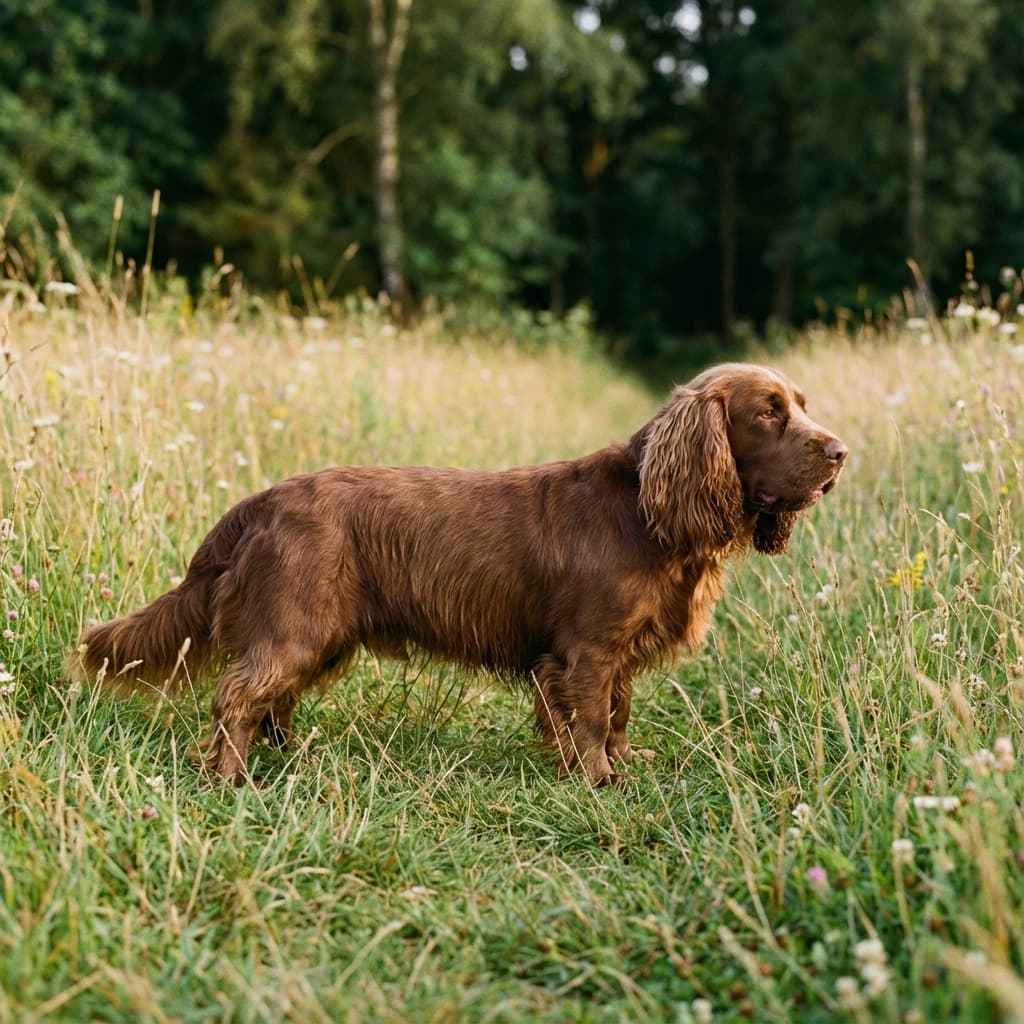
Sussex Spaniel
FCI Group
8• FCI 127
Size
Medium
Origin Country
GB
Height
38-41 cm
Weight
20-25 kg
Lifespan
10-14 years
Temperament
Overview
The Sussex Spaniel is a delightful breed of hunting dogs that originates from the picturesque county of Sussex in southeastern England. This massively built spaniel gained fame for its cheerful, gentle, and exceptionally friendly temperament. First bred in the 19th century by the famous breeder Mr. Fuller, the Sussex Spaniel was originally used for flushing game birds from dense underbrush, where its distinctive feature – loud barking during hunting – allowed the hunter to track the dog's progress in difficult terrain.
Today, despite its hunting roots, the Sussex Spaniel has gained equal popularity as a companion and family dog. Its calm demeanor, attachment to family members, and tolerance towards children make it an excellent choice for families leading an active lifestyle. The characteristic golden-liver coat color – ranging from rich gold to dark brown – and soft, wavy hair give this breed a unique, distinctive appearance that sets it apart from other spaniels.
The Sussex Spaniel is distinguished by its strong, massive body structure and a characteristic, swaying gait that is quite different from other spaniel breeds. With a broad chest, short, sturdy limbs, and energetic movements, this dog moves with a unique grace reminiscent of a boat's rocking. Its height at the withers ranges from 38 to 41 cm, and its weight from 20 to 25 kg, making it a medium-sized dog with a compact, sturdy build.
Despite its calm nature, the Sussex Spaniel requires regular physical activity – at least 60 minutes a day. Walks, outdoor play, retrieving, or even canine sports such as agility will provide it with the necessary physical and mental stimulation. Without regular exercise, the dog may exhibit boredom and related destructive behaviors. Its strong hunting instinct also necessitates proper training and socialization from a young age to ensure harmony with other pets and unfamiliar people.
The Sussex Spaniel is a very social dog that cannot tolerate prolonged solitude and forms exceptionally strong emotional bonds with its family. Owners should dedicate plenty of time and attention to it to avoid behavioral issues related to separation. Moreover, this breed is known for its high intelligence and willingness to cooperate, making it relatively easy to train. The best results are achieved by conducting training in a positive, patient, and consistent manner, using rewards and praise.
We invite you to explore the next sections of our guide, where we will discuss in detail health, grooming, exercise, training, nutrition, history, appearance, and behavior of the Sussex Spaniel. Discover all aspects of this unique, rare breed and learn how to best ensure a happy, healthy, and fulfilling life alongside your family.
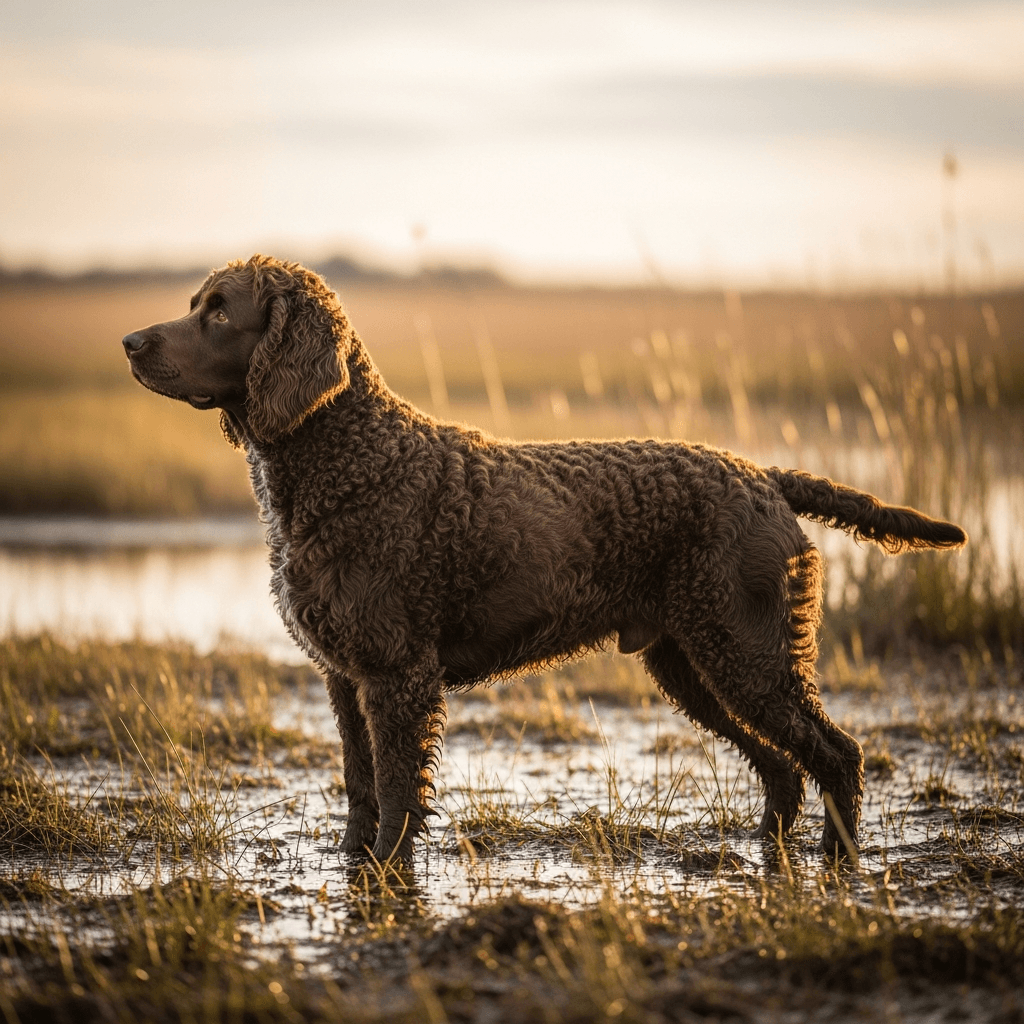
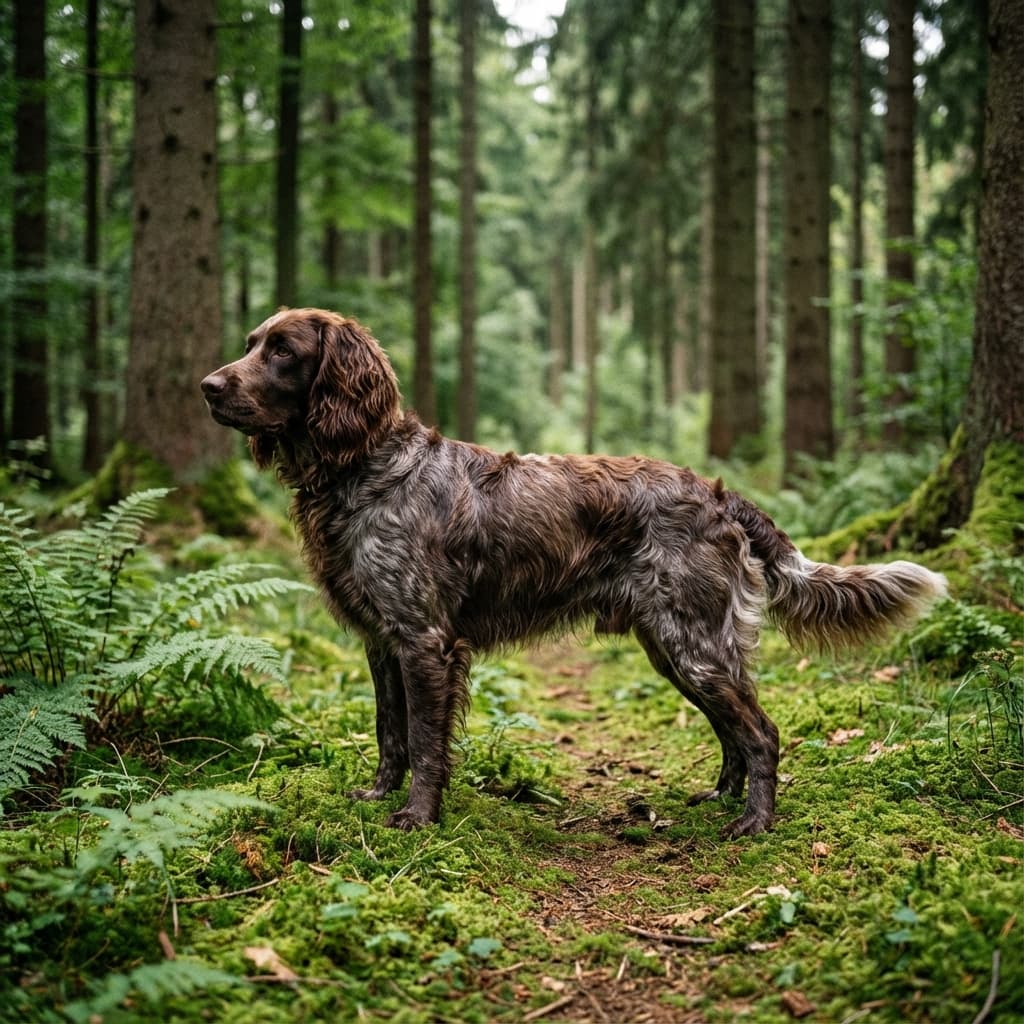
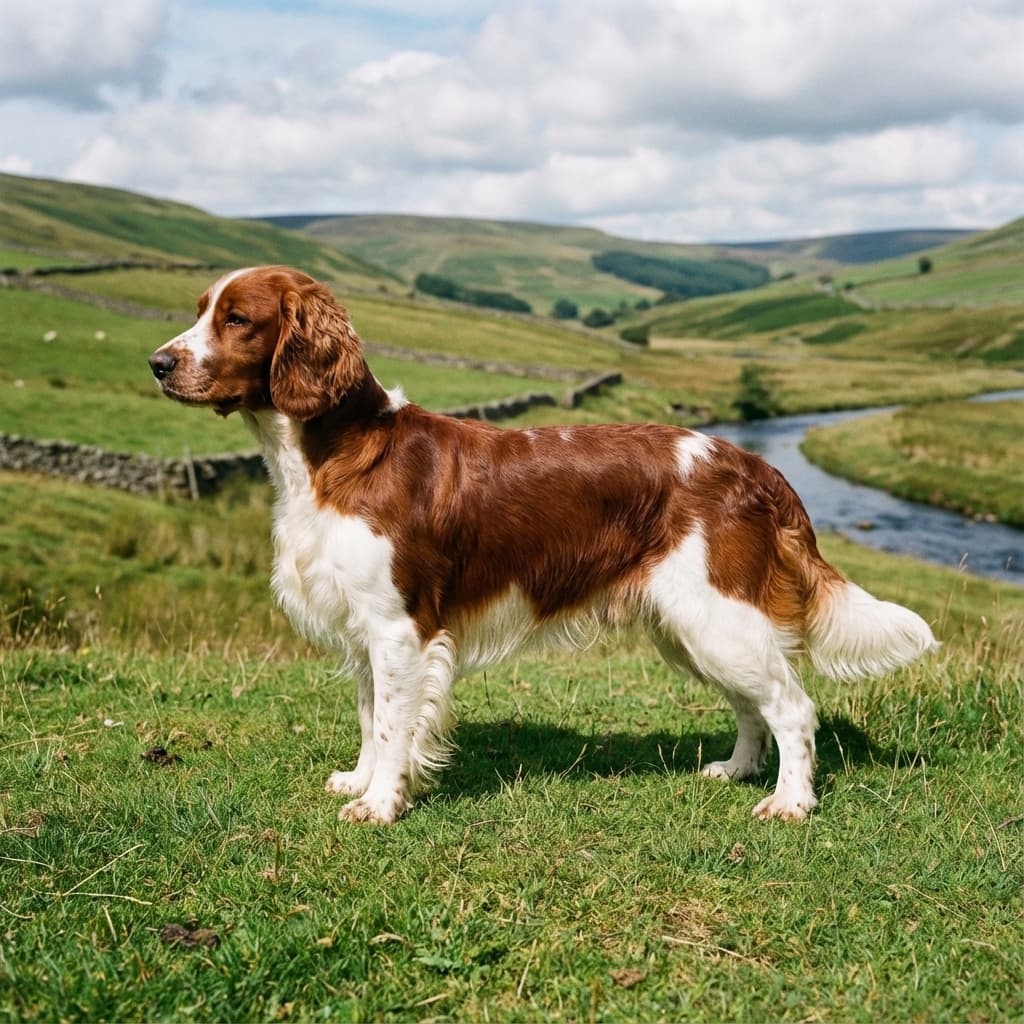
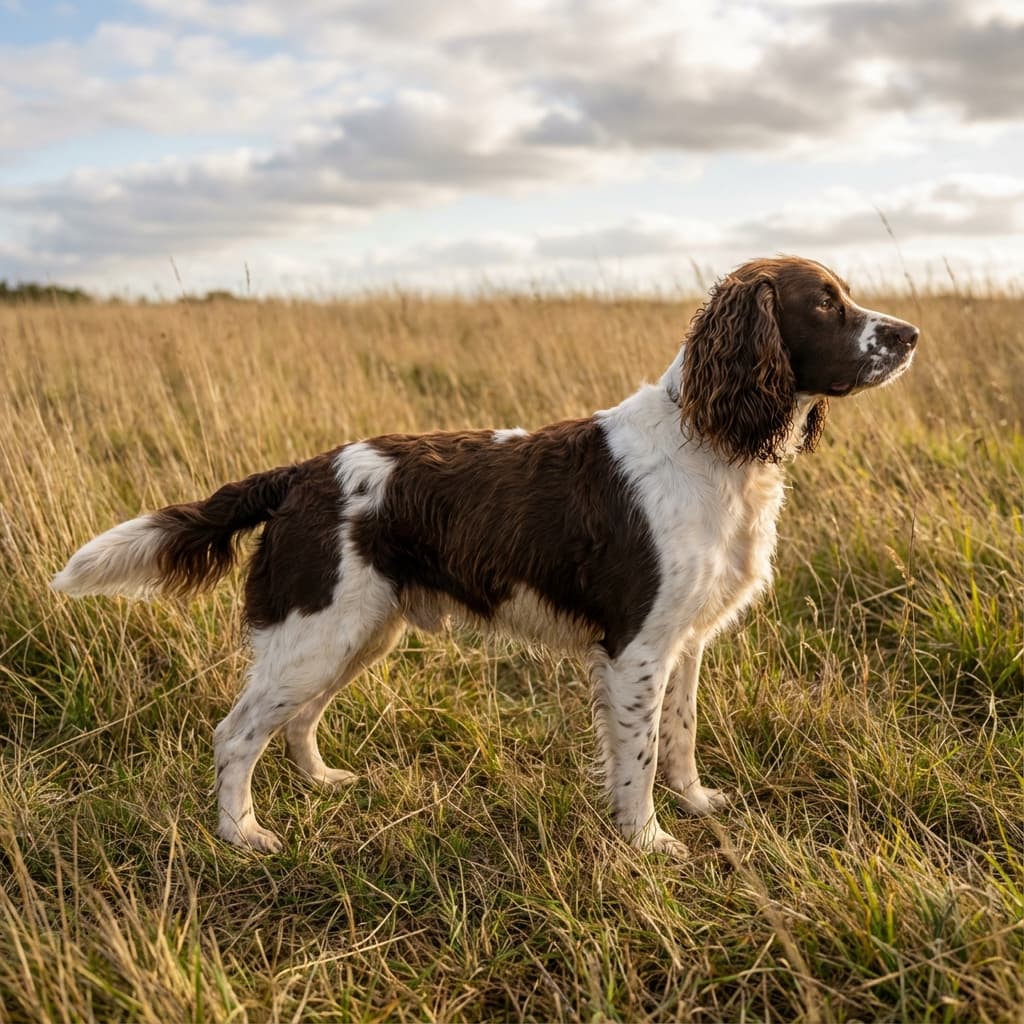
Sussex Spaniel is a dog with a massive, compact build that is unmistakable from other spaniel breeds. Its distinctive hallmark is a dense, wavy coat in golden-liver color – ranging from rich gold to deep mahogany brown. The height at the withers is between 38 to 41 cm, and the weight is between 20 to 25 kg, making it a medium-sized dog with a decidedly compact silhouette.
The head structure of the Sussex Spaniel is perfectly balanced, with a broad skull showing a moderate curve from ear to ear – neither flat nor bulging. The skull has a distinct indentation in the middle, and the eyebrows give the dog a characteristic wrinkled expression. The occiput is pronounced but not pointed. The stop (the transition from the muzzle to the forehead) is clearly defined.
The nose has well-developed nostrils in liver color. The jaws are strong, with an excellent, regular, and complete scissor bite – the upper teeth closely overlap the lower ones and are set perpendicular to the jaws. The eyes are hazel, relatively large but not bulging, with a gentle, soft expression and little to no exposure of the lower conjunctiva. The ears are thick, quite large, and pendulous, set moderately low – just above eye level – and lie closely against the skull.
The neck is long, strong, and slightly arched, holding the head not significantly above the level of the back. There is a slight throatiness, but a distinct frill on the neck. The body is strong and level, with no signs of concavity from the withers to the hips. The entire body is robust, both in width and depth.
The back is well-developed and muscular. The loins are wide and muscular. The chest is deep and well-developed, neither narrow nor excessively wide. The front limbs are short and strong, with well-muscled shoulders set at an angle. The hind limbs are short, strong, and muscular, with well-defined angles.
The paws are round, well-haired between the toes. The tail is set low, of medium length (formerly docked to 12-18 cm), densely covered with hair, carried below the line of the back. The movement of the Sussex Spaniel is distinctive – a decisive sway, completely different from the movement of any other spaniel. The front limbs perform free pendulum-like movements, while the hind limbs provide strong propulsion.
The coat is abundant and flat, with no tendency to curl, featuring a well-developed undercoat that provides protection against weather conditions. Moderate fringes on the ears, limbs, tail, and body. The color is a rich golden-liver hue, with golden shades of the coat being the most desirable. The golden hairs are lighter at the roots, darkening towards the tips.
Sussex Spaniel is a dog with a gentle, cheerful, and extremely friendly disposition, who loves the company of people and forms exceptionally strong emotional bonds with his family. This breed is known for being deeply devoted to its guardians, making it an excellent companion for both adults and children. Sussex Spaniels are usually cheerful, full of energy, and display a fun, lively temperament, often referred to by breed enthusiasts as typical of canine clowns.
One of the unique traits of the Sussex Spaniel is its innate instinct to vocalize while working in dense underbrush. Unlike most spaniels that work in silence, the Sussex Spaniel was deliberately bred to bark while hunting, informing the hunter of its location in difficult terrain. This trait makes dogs of this breed potentially more talkative than other spaniels, which owners should consider, especially when living in multi-family housing.
Despite its strong hunting instinct, the Sussex Spaniel is relatively calm and balanced at home, provided that its physical activity and mental stimulation needs are adequately met. Without regular exercise, it may show signs of boredom, anxiety, or frustration, which can lead to unwanted behaviors.
The Sussex Spaniel can be somewhat wary or reserved towards strangers, making early socialization from puppyhood extremely important. A properly socialized dog will learn to accept new faces, situations, and environments, preventing anxiety or excessive caution in the future. A well-raised Sussex Spaniel is a dog that is very loyal, balanced, and predictable in behavior.
This breed does not tolerate prolonged solitude, which can lead to serious behavioral issues such as separation anxiety, property destruction, or excessive barking. Owners should pay special attention to the emotional needs of the Sussex Spaniel and provide it with regular companionship, interaction, and mental stimulation. It is a dog for families who can dedicate a lot of time and attention to it, ensuring a happy, fulfilled life.
In relationships with other animals, the Sussex Spaniel is usually friendly and tolerant, especially if properly socialized from a young age. However, its strong hunting instinct may lead to a desire to chase smaller animals, so caution should be exercised around cats, rodents, or birds.
The Sussex Spaniel has an average lifespan of 12 to 15 years, with many individuals living longer when provided with proper living conditions, diet, and regular veterinary care. Compared to other medium-sized dog breeds, the Sussex Spaniel is relatively healthy and resilient, but like any breed, it may be prone to certain hereditary and acquired conditions.
Main health issues occurring in the breed include:
- Hip dysplasia – a relatively common problem among breeds of massive build. It manifests as pain, limping, and limited mobility. Responsible breeders conduct X-ray examinations before allowing dogs to breed.
- Phosphofructokinase (PFK) deficiency – a metabolic disorder leading to hemolytic anemia and exercise intolerance. Genetic tests are available to detect carriers.
- Congenital deafness – may occur in some breeding lines. It is advisable to conduct hearing tests on puppies before purchase.
- Multifocal retinal dysplasia (MRD) – an eye condition that can lead to deteriorating vision. Regular eye examinations are recommended.
- Skin allergies – Sussex Spaniels may show sensitivity to certain environmental or food allergens, manifesting as itching, skin redness, or hair loss.
- Ear problems – due to their long, floppy ears, the breed is prone to ear infections. Regular checks and cleaning of the ears are necessary.
- Obesity – Sussex Spaniels tend to gain weight, especially with insufficient physical activity. Obesity can lead to joint problems, heart issues, and diabetes.
Health prevention includes regular veterinary visits (at least once a year), vaccinations, deworming, protection against external parasites, and weight monitoring. Owners should pay attention to any changes in behavior, appetite, or physical condition of the dog and consult a veterinarian promptly.
The Sussex Spaniel prefers a moderate climate and tolerates cold better than heat due to its thick undercoat. In higher temperatures, the dog should have access to shade, fresh water, and avoid intense exertion during the hottest parts of the day. With proper care, a balanced diet, and regular physical activity, the Sussex Spaniel can enjoy a long, healthy, and happy life.
The Sussex Spaniel has a dense, wavy coat of medium length that requires regular and systematic grooming to maintain a healthy appearance and prevent matting. Due to its structure and length, especially around the ears, belly, limbs, and tail, the coat of this breed tends to form tangles and matting, so daily or at least several times a week brushing is necessary.
Brushing should cover all parts of the body, with particular attention to:
- Ears – the long, floppy ears covered with wavy fur require careful combing and regular checks for dirt, moisture, or signs of infection.
- Armpits and groin – areas particularly prone to matting and tangling of the fur.
- Limbs – the fringes on the front and back limbs should be combed to prevent the accumulation of dirt and debris.
- Tail – the densely furred tail requires regular brushing to maintain its aesthetic appearance.
Bathing the Sussex Spaniel should only occur when necessary – too frequent washing can strip the natural oils from the skin and coat, which protect the dog from weather conditions and provide shine. It is recommended to use gentle shampoos for dogs with long fur and to thoroughly rinse and dry the dog after bathing.
Regular ear cleaning is extremely important for the Sussex Spaniel. Due to their long, floppy ears that restrict airflow, dogs of this breed are prone to ear infections. Ears should be checked at least once a week for unpleasant odors, redness, discharge, or signs of discomfort, and cleaned with a gentle ear cleaning solution designed for dogs.
Nail care is also essential – nails should be regularly trimmed to prevent overgrowth, which can lead to discomfort, pain, or walking problems. If the nails click on the floor while walking, it means they are too long.
Oral hygiene includes regular tooth brushing (preferably several times a week) using dog toothpaste, which helps prevent tartar buildup, gum disease, and bad breath.
Visits to a groomer can be helpful, especially before breed shows or other occasions when the dog needs to look its best. A professional groomer can also assist with trimming the coat, shaping the fringes, and general grooming of the dog.
The Sussex Spaniel is a dog with a high level of energy and endurance, requiring regular, daily physical exercise to maintain both physical and mental health. Despite its massive, compact build, this breed was bred as a working dog, capable of working for hours in challenging terrain, which is why modern Sussex Spaniels also require an appropriate amount of activity.
The minimum exercise requirement is about 60-90 minutes a day, which should include various forms of activity:
- Walks – daily, moderate walks lasting 30-60 minutes, preferably twice a day, allow the dog to explore the environment, exercise its senses, and socialize.
- Running – Sussex Spaniels love to run, especially in open spaces where they can move freely and utilize their hunting instincts.
- Fetching – playing with balls, frisbees, or fetch toys engages the dog both physically and mentally.
- Swimming – many Sussex Spaniels love water, which is a natural trait of most spaniels. Swimming is an excellent form of low-impact exercise.
- Scenting and tracking – games and activities that engage the sense of smell (e.g., searching for hidden treats) perfectly utilize the natural potential of this breed.
Canine sports are another form of activity that Sussex Spaniels can enjoy:
- Agility – obstacle courses engage the dog physically and mentally, developing coordination and the bond with the handler.
- Obedience – obedience competitions develop intelligence and discipline.
- Spaniel working tests – for dogs with a strong hunting instinct, this is an excellent way to stimulate natural behaviors.
- Nosework – scent sports perfectly utilize the innate abilities of the Sussex Spaniel.
Lack of appropriate activity can lead to serious behavioral problems, such as:
- Destruction of property (chewing furniture, digging)
- Excessive barking or whining
- Hyperactivity and difficulty concentrating
- Weight problems and obesity
- Separation anxiety and frustration
It is important to adjust the intensity of exercise to the dog's age, condition, and health status. Puppies should not be overexerted with intense exercise to avoid damaging their developing joints. Older dogs may require gentler forms of activity, such as calm walks or swimming. Owners should observe their dog and tailor the exercise program to its individual needs, ensuring a healthy, active, and happy lifestyle.
Sussex Spaniel is a dog with high intelligence and a willingness to cooperate, which makes it relatively easy to train, provided that appropriate methods and approaches are used. However, this breed can also exhibit some independence and stubbornness, typical of hunting dogs, so training requires patience, consistency, and positive reinforcement.
Key training principles for Sussex Spaniels:
- Positive reinforcement – Sussex Spaniels are sensitive to harsh treatment and negative approaches, which can lead to fear, behavioral problems, or loss of trust. The best results are achieved by using rewards (treats, toys, praise) and avoiding physical punishment or yelling.
- Consistency – clear, consistent rules and guidelines help the dog understand what is expected of it. All family members should use the same commands and rules.
- Short, frequent sessions – Sussex Spaniels learn best during short (10-15 minutes), but regular training sessions that keep their attention and engagement.
- Early start – training should begin in puppyhood (8-10 weeks), when the dog is most receptive to learning and shaping behaviors.
- Patience – some Sussex Spaniels may need more time to master new skills, especially if they exhibit independent character traits.
Basic commands that a Sussex Spaniel should master:
- Sit – a basic command, easy to teach using treats
- Lie down – important for controlling and calming the dog
- Stay – crucial for safety in various situations
- Come / Recall – essential for safe off-leash walks
- Leave it – helps control hunting instincts and prevents picking up dangerous objects
- Heel – walking at heel without pulling on the leash
Socialization is just as important as training basic commands. A Sussex Spaniel should be exposed to a variety of:
- Situations (noise, crowds, traffic)
- People (children, adults, elderly, in different outfits)
- Animals (other dogs, cats, farm animals)
- Environments (parks, forests, city, pet stores)
Early socialization (8-16 weeks) helps prevent anxiety, aggression, and distrust of new situations in the future.
Group classes or puppy school is an excellent form of training that combines learning obedience with socialization. Dogs learn in the presence of other dogs, which develops interpersonal skills and improves the bond with the handler. Additionally, owners receive expert guidance from instructors.
Advanced training may include:
- Hunting training (for dogs with a strong instinct)
- Agility and canine sports
- Nosework and tracking
- Behavioral therapy (for issues such as separation anxiety)
Owners should remember that training is a continuous process that lasts throughout the dog's life. Regularly repeating commands, maintaining engagement, and reinforcing positive behaviors ensure that the Sussex Spaniel remains obedient, well-socialized, and happy.
The Sussex Spaniel's diet should be well-balanced, high-quality, and tailored to its age, weight, activity level, and individual health needs. Due to the breed's tendency to gain weight, it is particularly important to monitor food portions and prevent overfeeding, which can lead to obesity and related health problems.
Key components of the Sussex Spaniel's diet:
- Protein – high-quality animal protein (poultry, beef, fish, lamb) should form the basis of the diet. For adult dogs, food containing 20-25% protein is recommended, while for puppies, 25-30% is advised.
- Fats – healthy fats (omega-3 and omega-6) support skin, coat, brain, and cardiovascular health. The optimal fat content is 10-15% for adult dogs.
- Carbohydrates – healthy energy sources such as brown rice, sweet potatoes, or oats provide fiber and support digestion.
- Vitamins and minerals – essential for maintaining bone, teeth, immune system health, and overall vitality.
- Water – fresh, clean water should always be available to ensure proper hydration.
Types of food:
- Dry food – convenient, long-lasting, supports dental health through mechanical cleaning while chewing. Choose premium foods without unnecessary fillers, dyes, or preservatives.
- Wet food – contains more moisture, which can be beneficial for dogs with kidney issues or a low appetite. Usually more palatable but more expensive.
- BARF diet (Biologically Appropriate Raw Food) – a raw diet based on meat, bones, and vegetables. Requires careful planning and nutritional knowledge to avoid deficiencies.
- Homemade food – prepared by the owner, but only under the supervision of a veterinarian or pet nutrition specialist.
Feeding amounts and frequency:
- Puppies (2-6 months) – 3-4 meals a day, medium breed puppy food
- Young dogs (6-12 months) – 2-3 meals a day
- Adult dogs (from 12 months) – 2 meals a day, totaling 2-3 cups of dry food (depending on weight and activity)
- Senior dogs (over 7 years) – senior dog food, adjusted for reduced activity and metabolic changes
Weight management is crucial for the Sussex Spaniel. Owners should:
- Regularly weigh the dog and monitor its condition
- Adjust food portions according to activity level
- Avoid feeding table scraps and unhealthy snacks
- Use training treats in moderation (no more than 10% of daily caloric intake)
Harmful and forbidden products:
- Chocolate, cocoa, caffeine
- Raisins, grapes
- Onion, garlic, leek
- Avocado
- Alcohol
- Products containing xylitol (artificial sweetener)
- Cooked bones (can splinter and cause injuries)
Healthy treats:
- Carrots, apples (without seeds), blueberries
- Natural dental chews
- Dried meat (without seasoning)
- Low-calorie training treats
If there are any doubts regarding diet, food allergies, digestive issues, or choosing the right food, it is advisable to consult a veterinarian or veterinary nutritionist, who can help create an individual feeding plan tailored to the specific needs of the dog.
Characteristic Traits
Pros
- Joyful and gentle temperament
- Friendly towards children and family
- High intelligence and willingness to cooperate
- Unique
- distinctive appearance
- Good hunting and family dog
- Healthy and resilient breed.
Cons
- Requires a minimum of 60-90 minutes of activity daily
- Cannot tolerate prolonged loneliness
- Strong hunting instinct requires training
- Tendency to bark
- Regular grooming needed
- Rare breed
- hard to find
- Can be stubborn during training.
Behavioral Ratings
Breed History
The Sussex Spaniel is one of the oldest and most distinctive native dog breeds of Great Britain, with a history dating back to the late 18th and early 19th centuries. This breed originates from the picturesque county of Sussex in southeastern England, from which it takes its name. Its original purpose was to hunt game birds in dense underbrush and difficult terrain, characteristic of this region.
The greatest contribution to the development and establishment of the breed was made by Mr. Fuller from Rosehill Park in Sussex, who worked intensively on breeding this breed for about 50 years (from around 1795). Fuller aimed to breed a dog with specific traits: a massive build, low height, excellent sense of smell, and the ability to vocalize while working in dense underbrush. This last trait was crucial as it allowed the hunter to track the dog's progress in areas where visibility was limited.
In the 19th century, the Sussex Spaniel became a favorite hunting dog among the English aristocracy and landowners, valued for its skills in the field and calm, gentle nature. The breed was particularly popular in Sussex and the surrounding regions of southern England. In 1872, the Sussex Spaniel was officially recognized by The Kennel Club in the United Kingdom, becoming one of the first spaniel breeds with an official standard.
However, despite its initial popularity, the fate of the Sussex Spaniel drastically changed in the 20th century. The First and Second World Wars had a devastating impact on purebred dog breeding in Europe, and the Sussex Spaniel was one of the breeds that suffered the most. After the end of World War II, the population of this breed was on the brink of extinction – in the 1940s, only a few individuals remained, with just 7 dogs in known breeding. The breed found itself in a critical state, facing complete disappearance.
Thanks to the commitment and determination of a handful of breed enthusiasts, including Mrs. Joy Freer, the Sussex Spaniel was saved from extinction. In the 1950s and 60s, a slow process of population recovery began, although the number of dogs remained extremely low. The Sussex Spaniel still remains one of the rarest dog breeds in the world, listed by The Kennel Club as a vulnerable native breed.
In 2009, a Sussex Spaniel named Stump achieved spectacular success by winning the prestigious Westminster Kennel Club Dog Show in New York, becoming the oldest dog ever to win this title (he was 10 years old at the time). This victory attracted media attention and dog lovers worldwide, raising awareness about this rare and unique breed.
Today, the Sussex Spaniel has gained recognition not only as a hunting dog but also as a companion and family dog. Its personal charm, gentle disposition, loyalty, and intelligence make it a welcome presence in many homes, although it remains relatively rare. Breeders around the world continue to work on preserving the purity of the breed and increasing its population, while also ensuring the health, temperament, and unique characteristics of the Sussex Spaniel.
The Sussex Spaniel is a living history of British cynology – a breed that has survived thanks to the determination of a few individuals and whose unique traits are a testament to a breeding tradition that dates back over 200 years.