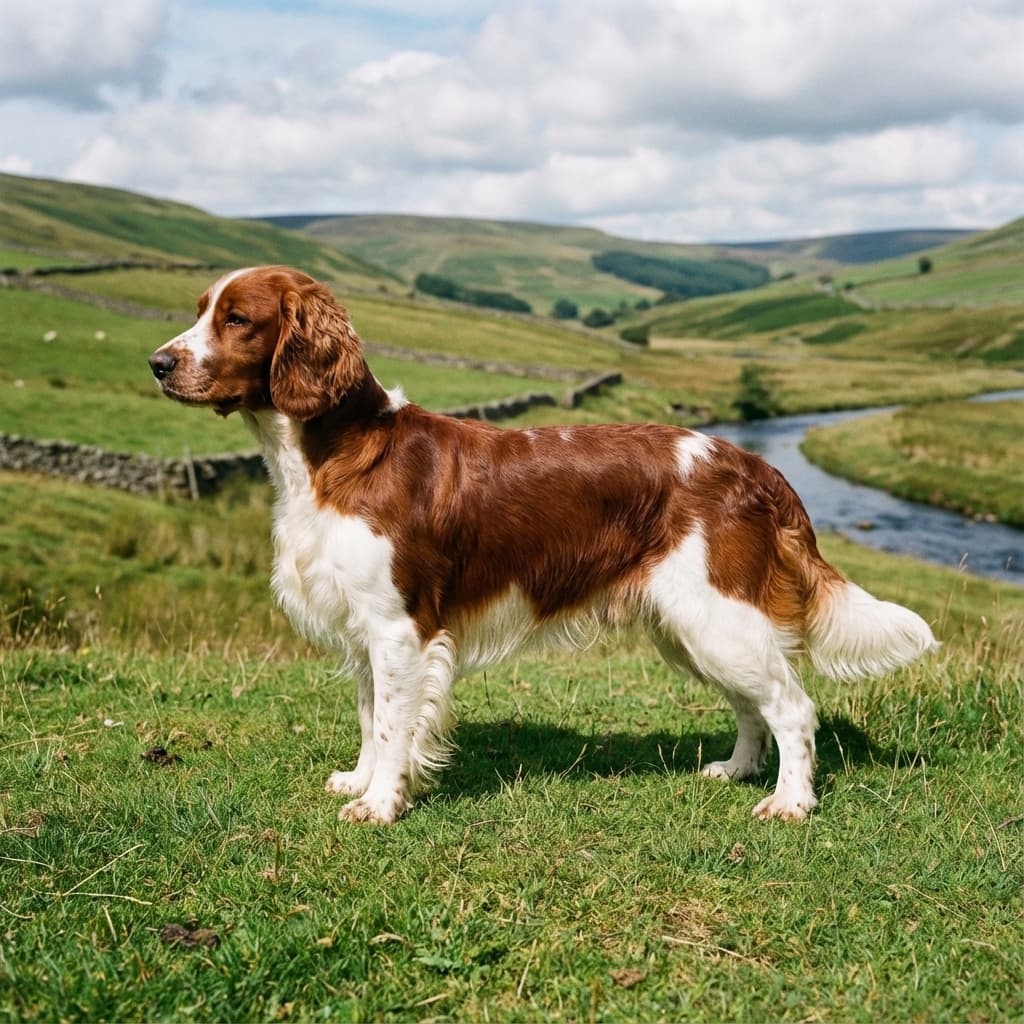
Welsh Springer Spaniel
FCI Group
8• FCI 126
Size
Medium
Origin Country
GB
Height
46-48 cm
Weight
16-20 kg
Lifespan
12-14 years
Temperament
Overview
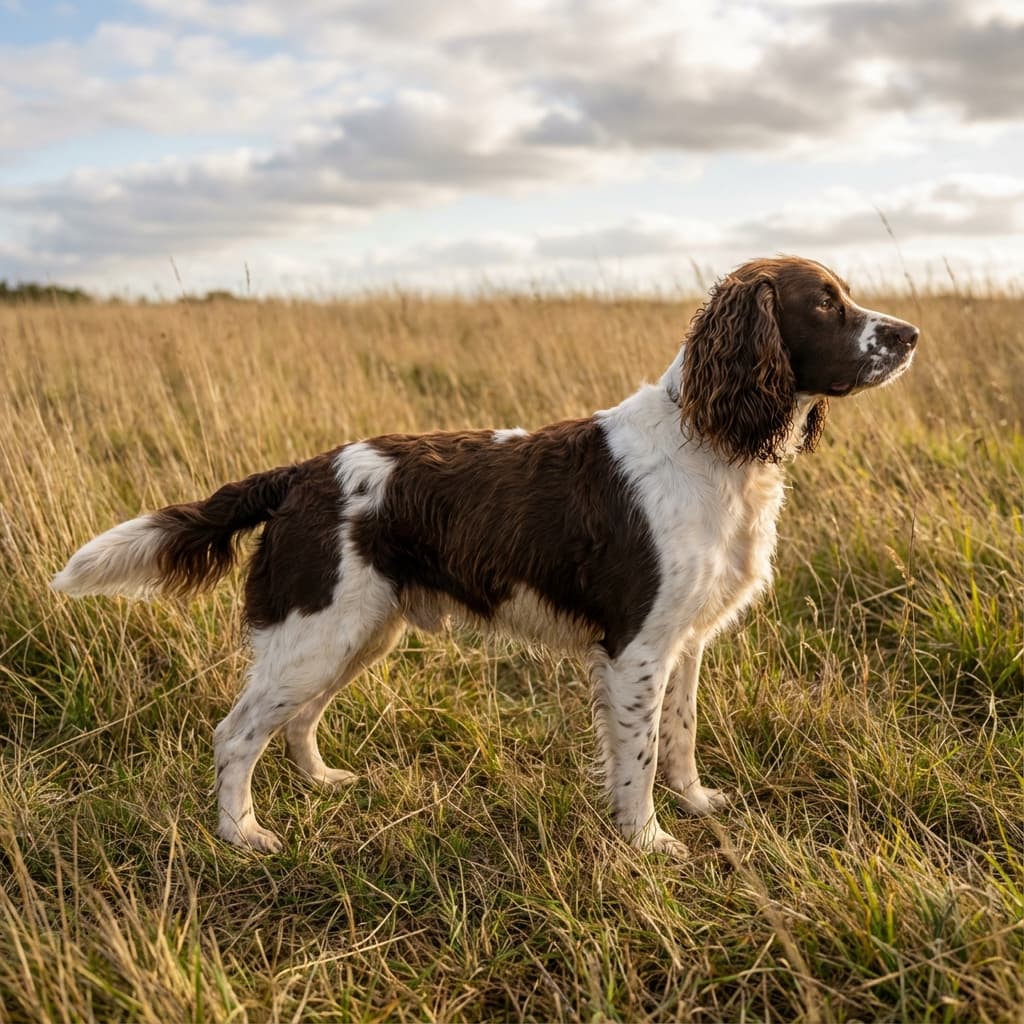
Welsh Springer Spaniel is an ancient and distinct breed with a pure lineage that attracts attention with its extremely attractive red and white coat and cheerful, energetic, and friendly character. Its history dates back to the 16th century, and paintings depicting dogs of similar build and coloration confirm the rich heritage of this Welsh breed. The red and white coat clearly distinguishes it from the English Springer Spaniel, giving it a unique, recognizable appearance.
It is a symmetrical, compact, not short-legged dog, clearly built for endurance and hard work. The height at the withers is about 46-48 cm, and the weight ranges between 16 and 20 kg. Its long, muscular neck, strong body, and well-developed limbs testify to its excellent physical condition and adaptation to working in challenging terrain. The coat is silky, dense, and straight, providing protection against bad weather during hunts and fieldwork.
Activity is its element. The Welsh Springer Spaniel requires at least two hours of intense exercise daily, making it an ideal companion for active families who enjoy spending time outdoors. It is not only an excellent retrieving and flushing dog but also a wonderful friend to children and other pets. Its strong hunting instinct necessitates proper socialization from a young age and consistent training based on positive methods.
Its high intelligence and willingness to cooperate make it eager to learn new commands and tricks, which makes it an excellent student in obedience training, agility, and dog sports. The lifespan of this breed ranges from 12 to 14 years, ensuring many years of shared adventures. Due to its gentle and sensitive disposition, it requires gentle training methods based on rewards and praise to avoid stress and anxiety.
The Welsh Springer Spaniel brings a lot of joy, positive energy, and enthusiasm to the lives of its owners, encouraging active time spent in nature. Its friendly, fearless temperament and lack of aggression and nervousness make it an excellent family dog. If you are looking for a dog that will bring joy to your life, be a loyal companion, and a partner for shared activities, this wonderful Welsh spaniel will be an excellent choice. We invite you to explore our detailed guide, where you will find comprehensive information about the health, grooming, exercise, training, nutrition, history, appearance, and behavior of this fascinating breed with an ancient pedigree.
Welsh Springer Spaniel is a medium-sized dog characterized by a harmonious, symmetrical silhouette and an elegant yet athletic appearance. The height at the withers ranges from 46 to 48 cm (approximately 18-19 inches), and the weight fluctuates between 16 and 20 kg (35-45 pounds). This is a fourth, not short-legged dog, clearly built for endurance and hard work in challenging terrain. Its build indicates strength, agility, and the ability to perform intense tasks for extended periods.
Coat is the most important distinguishing feature of this breed. The fur consists of white color with intense, rich red patches. It is silky, dense, and close-fitting to the body, of medium length. There is a characteristic feathering on the front legs, hindquarters, ears, and tail, which adds extra charm and elegance to the dog. The coat is straight, never curly, which is a significant breed characteristic.
The head of the Welsh Springer Spaniel is proportional to the body, of appropriate length, slightly arched. The muzzle is of medium length, straight, and quite square. The stop is clearly defined, giving the head a distinctive profile. The nose is colored from flesh to dark, with well-developed nostrils, which is typical for working dogs.
The eyes are hazel or dark, of medium size, neither bulging nor sunken, not showing the third eyelid. The expression is lively, intelligent, and friendly. The ears are set moderately low, hanging close to the cheeks, relatively small, and tapering gradually to the tip. They have a characteristic grape leaf shape, which is a unique feature of this breed.
The neck is long, well-muscled, without loose skin in the throat, elegantly set in sloping shoulders. The body is not long but strong and well-muscled. The length of the body should be proportional to the height of the dog. The back line is straight, the chest is deep, and the loins are strong and slightly arched.
The front limbs are straight, with a strong bone structure, featuring well-muscled shoulders set at an angle. The hind limbs are strong, well-muscled, with well-bent knee joints, providing the dog with powerful propulsion during running. The paws are round, compact, with strong pads, ideal for working in difficult terrain.
The tail is set low and carried level or slightly raised in motion, adding elegance to the dog's movement. Traditionally, the tail was docked, but nowadays it is increasingly left at its natural length. The movement of the Welsh Springer Spaniel is quick and active, showing plenty of drive and propulsion, with ease and freedom characteristic of a dog built for work. Overall, the Welsh Springer Spaniel is a dog with an attractive, harmonious appearance that draws attention with its beauty, grace, and athleticism.
Welsh Springer Spaniel is a dog with a unique temperament, combining joy for life, high intelligence, loyalty, and deep attachment to family. The breed standard emphasizes that it is a very ancient and distinct breed with pure lineage, characterized by a strong, cheerful, and very active disposition. It has a friendly, gentle temperament, showing no aggression or nervousness.
These are extremely sociable dogs that love spending time with people and are happy being the center of family attention. Their cheerful, energetic disposition makes them excellent companions for children, and their natural nurturing instinct and patience make them ideal family dogs. Their desire for play and interaction is nearly limitless, which means the Welsh Springer Spaniel will joyfully participate in all family activities.
Although they are energetic and can sometimes be a bit playful, their gentle, mild temperament means they rarely show any form of aggression. They are emotionally sensitive dogs that can perfectly sense their owners' moods and adapt their behavior to the situation. For this reason, they respond best to positive training methods based on rewards, while a harsh approach may scare them and make them distrustful.
Welsh Springer Spaniel has a strong hunting instinct, which means they may be inclined to chase small animals, birds, or even moving objects. This is why early and consistent socialization and recall training are crucial to ensure the dog's safety during walks. Their nose is constantly at work, and every new scent can spark their interest and desire to explore.
This dog may be somewhat unsure of strangers upon first contact, so early socialization is key to preventing anxiety and shyness. Puppies should be introduced to various situations, places, and interactions with different people to grow into confident, balanced adult dogs. If left alone for extended periods, the Welsh Springer Spaniel may exhibit separation anxiety and destructive behaviors, such as chewing furniture or excessive barking. Therefore, they feel best in a family where someone is often at home.
Welsh Springer Spaniel is a working dog that has retained its natural hunting instincts. They love retrieving, swimming, and working in the field, making them excellent companions for hunting, hiking, or sports training. Their high intelligence and desire to please their owner make them well-suited for various dog sports disciplines, such as agility, rally obedience, or tracking.
This is a breed that combines the traits of an ideal family companion and a versatile working dog, ready for tasks both in the hunting field and at home as a loyal, loving family member. Their natural cheerfulness, vitality, and positive outlook on life make them a dog that brings joy to any home and encourages an active, healthy lifestyle.
Welsh Springer Spaniel is a breed that generally enjoys relatively good health and vitality, but like any other breed, it can be prone to certain genetic and acquired conditions. The average lifespan of these dogs is between 12 to 14 years, which is typical for medium-sized breeds. With proper care, a balanced diet, and regular physical activity, many dogs of this breed live long and in good condition.
The main health issues that owners should be aware of include:
- Eye problems: The breed may be susceptible to various eye conditions such as glaucoma, progressive retinal atrophy (PRA), cataracts, and entropion. Regular eye examinations are recommended, especially for dogs used for breeding.
- Hip dysplasia: Like many medium and large breeds, the Welsh Springer Spaniel may be prone to hip dysplasia (HD), which leads to pain, limping, and limited mobility. Responsible breeders perform X-ray examinations of the parents before breeding.
- Elbow dysplasia: Also a joint condition that can affect the dog's comfort in movement.
- Epilepsy: Some lines of Welsh Springer Spaniels may be prone to seizures. This condition can be managed with appropriate medications.
- Ear diseases: Due to their long, drooping ears, dogs of this breed are prone to bacterial and fungal ear infections, especially in dogs that frequently spend time in water or damp areas. Regular checking and cleaning of the ears is crucial for prevention.
- Allergic skin diseases: Some individuals may suffer from food or environmental allergies, manifested by itching, skin redness, and hair loss.
- Thyroid disorders: Hypothyroidism may occur in some dogs of this breed.
Prevention and healthcare are extremely important for keeping the Welsh Springer Spaniel in good condition. Owners should:
- Provide a high-quality balanced diet tailored to the dog's age, weight, and activity level
- Ensure regular physical activity to maintain appropriate weight and muscle and joint condition
- Schedule regular veterinary check-ups at least once a year to quickly detect and treat potential health issues
- Administer vaccinations according to the vaccination schedule
- Implement regular deworming and protection against external parasites (ticks, fleas)
- Regularly check and clean the ears, especially after bathing and water play
- Maintain oral hygiene by regularly brushing the dog's teeth to prevent periodontal disease
- Monitor the dog for changes in behavior, appetite, or mobility that may signal health problems
A well-balanced diet, adequate exercise, regular veterinary visits, and proper grooming are key to maintaining the health and longevity of the Welsh Springer Spaniel. With proper care, this dog will be a healthy, happy companion for many years. It is also important to pay attention to choosing a responsible breeder who conducts health tests on the parents before breeding, which significantly reduces the risk of hereditary conditions.
Grooming a Welsh Springer Spaniel is relatively simple and does not require excessive effort, however, regular treatments are necessary to keep the coat in excellent condition and to ensure the dog's comfort and health. Their silky, dense, and straight coat of medium length requires systematic care to look beautiful and to prevent matting.
Brushing the coat:
- It is sufficient to brush 2-3 times a week using a soft-bristled brush or a comb with medium-spaced teeth
- During brushing, special attention should be paid to areas where the coat can easily tangle, such as around the ears, under the armpits, on the belly, and on the hind legs where longer feathering occurs
- During the shedding period (usually in spring and autumn), it is recommended to brush daily to remove dead hair and speed up the shedding process
- Regular brushing not only keeps the coat in good condition but also stimulates the skin, improves circulation, and strengthens the bond with the dog
Bathing:
- The Welsh Springer Spaniel does not require frequent bathing – once every 6-8 weeks or as needed (e.g., after a dirty outing)
- It is important to use gentle shampoos designed for dogs that do not irritate the skin and do not dry out the coat
- After bathing, it is crucial to thoroughly dry the coat, especially around the ears, to prevent infections
Ear care:
- Regular ear cleaning is extremely important, as the long, drooping ears of the Welsh Springer Spaniel can be prone to bacterial and fungal infections
- It is recommended to check the ears weekly for dirt, excessive wax, unpleasant odors, or redness
- Cleaning should be done using special ear cleaning solutions available at pet stores, avoiding inserting cotton swabs deep into the ear
- It is particularly important to thoroughly dry the ears after bathing, swimming, or playing in water, as moisture in the ears promotes the development of infections
Trimming the coat:
- The Welsh Springer Spaniel does not require frequent haircuts, however, periodic trimming may be necessary to maintain an aesthetic appearance
- You can trim the hair on the paws (between the pads and around them) to prevent the accumulation of mud and dirt
- The hair around the ears and neck can be gently trimmed with scissors to give the dog a neat appearance
- Some owners opt for professional grooming services every few months, especially before shows
Dental care:
- Regular tooth cleaning is crucial for preventing periodontal disease, tartar buildup, and bad breath
- It is recommended to brush the teeth 2-3 times a week using toothpaste designed for dogs
- You can also use dental chews and toys that help with mechanical cleaning of the teeth
Nail trimming:
- Nails should be trimmed regularly, usually once every 3-4 weeks, depending on how quickly they grow
- Overgrown nails can cause discomfort, walking problems, and even paw deformities
- If you can hear the nails clicking on the floor while walking, it means they are too long and need trimming
Paw inspection:
- After walks, especially in the field, it is worth checking the paws for wounds, scratches, ticks, or embedded foreign objects (thorns, pebbles)
- In winter, it is important to wash the paws after walks to remove road salt, which can irritate the skin
A well-groomed Welsh Springer Spaniel will be healthy and happy, and its coat will be shiny, soft, and in excellent condition. Regular grooming is also a great opportunity to examine the dog for any lumps, skin changes, or other concerning symptoms, allowing for early detection of health issues. Grooming should be a pleasant ritual that strengthens the bond between the dog and the owner.
Welsh Springer Spaniel is a dog with a high energy level that requires daily, intense physical activity to be happy, healthy, and balanced. It is a working breed, created for flushing game and retrieving for many hours in challenging terrain, which is why its exercise needs are significant. Insufficient exercise can lead to boredom, frustration, and destructive behaviors.
Minimum activity requirements:
- It is recommended to provide at least 2 hours of intense exercise daily, divided into several sessions
- Ideally, the dog should have the opportunity to run off-leash in a safe, fenced area where it can freely explore its surroundings
- A short walk around the block is not enough – the Welsh Springer Spaniel needs varied forms of activity that engage both body and mind
Best forms of activity for the Welsh Springer Spaniel:
- Long walks and hikes: The dog loves long walks, preferably through forests, meadows, or by the water, where it can utilize its excellent sense of smell and instinct for exploration
- Running: An excellent companion for those who jog or participate in trail running. Its endurance allows it to run for long periods
- Swimming: The Welsh Springer Spaniel loves water and is an excellent swimmer. Swimming is a great form of activity that engages all muscle groups and is gentle on the joints
- Retrieving: With its retrieving instinct, the dog loves to bring back balls, frisbees, or other toys. This is an excellent way to burn off energy in a short time
- Scent training: Scent games, tracking, searching for hidden treats – these activities stimulate the mind and are extremely satisfying for a working dog
- Agility: The Welsh Springer Spaniel excels in agility – a dog sport that requires agility, speed, and intelligence
- Rally obedience: A combination of obedience and navigating a course with various tasks
- Flyball: A dynamic team sport where dogs run through obstacle courses and retrieve a ball
- Hunting training: For dogs with a strong hunting instinct, hunting training or dummy work (retrieving a decoy) is an ideal form of activity
- Canicross: Running in the terrain with the dog attached to a belt – an excellent activity for active owners
The Welsh Springer Spaniel is best suited for families that:
- Are active and enjoy spending time outdoors
- Have access to areas where the dog can run off-leash (forests, parks, fields)
- Are interested in dog sports or outdoor activities
- Have a garden where the dog can move freely (although a garden does not replace walks!)
Important notes regarding activity:
- Do not leave the dog alone for long periods without the opportunity to expend energy – this can lead to boredom and destructive behaviors such as furniture destruction, excessive barking, or digging holes in the garden
- Due to its hunting instinct, the Welsh Springer Spaniel may chase small animals, birds, or even cyclists. Therefore, in public places, it is advisable to keep the dog on a leash or ensure it has a well-trained recall command
- Variety is key – introducing different forms of activity prevents boredom and keeps the dog in excellent physical and mental condition
- On hot days, it is important to avoid intense exercise in full sun and provide the dog with access to water and shade
- Puppies should not be overexerted with intense exercise, as their joints and bones are still developing. Walks should be shorter but more frequent
The proper amount of exercise and varied activities will help keep the Welsh Springer Spaniel in excellent physical and mental condition, ensuring it has a happy, healthy life. This dog is made for work and movement – with the right effort, it will become a calm, balanced companion at home and an energetic partner during outdoor adventures.
Welsh Springer Spaniel is a dog characterized by high intelligence, eagerness to learn, and a desire to please its owner, making it an excellent candidate for training. However, due to its sensitive, gentle nature, it responds best to positive training methods based on rewards, praise, and play. A harsh approach, punishment, or shouting can make the dog become distrustful, scared, and unwilling to cooperate.
Basic training principles:
- Start training as early as possible: Socialization and basic training should begin as early as 8-10 weeks of the puppy's age. Early experiences are crucial for developing a confident, balanced adult dog.
- Positive reinforcement: Reward with treats, praise, play, and petting for correct behaviors. The Welsh Springer Spaniel loves to please its owner and will work hard for positive reinforcement.
- Consistency: All family members should use the same rules and commands to avoid confusing the dog. Consistency in training is key to success.
- Patience: The Welsh Springer Spaniel can sometimes be a bit stubborn or distracted by scents, so owners must be patient and persistent in their approach.
- Short, regular sessions: Training sessions should be short (10-15 minutes), but regular, ideally several times a day, to maintain the dog's attention and avoid boredom.
Early socialization:
- Socialization is absolutely crucial for the Welsh Springer Spaniel, as the breed can be somewhat distrustful of strangers.
- The puppy should be exposed to a variety of situations: encounters with other dogs, people of different ages (children, adults, seniors), various places (city, park, forest, dog-friendly shops), and different sounds (traffic, noise, music).
- A well-socialized dog will be confident, friendly, and balanced in various situations.
- It is recommended to participate in puppy classes, where young dogs learn social interactions under the guidance of an experienced trainer.
Basic commands:
- Sit, stay, come, lie down, leave it – these are basic commands that every dog should know for safety and convenience in daily life.
- The recall command (come) is particularly important, as the Welsh Springer Spaniel has a strong hunting instinct and may be prone to chasing animals or exploring scents.
- Recall training should be practiced in various locations, gradually increasing distractions (scents, other dogs, animals).
Advanced training and dog sports:
- The Welsh Springer Spaniel excels in various fields:
- Obedience: The breed is intelligent and eager to learn complex commands and sequences.
- Agility: Their agility, speed, and intelligence make them excellent candidates for agility.
- Rally obedience: A combination of obedience and navigation.
- Tracking and scent work: With their excellent sense of smell, Welsh Springer Spaniels can participate in tracking or nosework training.
- Dummy work and training for hunting: For dogs with a strong hunting instinct, dummy retrieving training is an ideal form of stimulation.
- Flyball: A dynamic team sport.
Typical training challenges:
- Distraction by scents: The Welsh Springer Spaniel has an excellent sense of smell and can be easily distracted by interesting scents. Training in areas with varying levels of distraction will help improve focus.
- Stubbornness: Sometimes the dog may be a bit independent in thinking, especially if it senses something interesting. Consistency and appealing rewards will help overcome this issue.
- Sensitivity: Due to their gentle disposition, the dog may react poorly to harsh methods. Always use positive reinforcement.
- Excess energy: If the dog does not get enough exercise, it may be too hyper during training. Ensure it has an adequate amount of physical activity before training sessions.
House training (potty training):
- The Welsh Springer Spaniel is relatively easy to house train if approached consistently.
- Regularly taking the puppy out (every 2-3 hours, after eating, sleeping, and playing), rewarding for going in the right place, and promptly cleaning up accidents (without punishing the dog) are key.
Final notes:
- The Welsh Springer Spaniel loves spending time with its owner, so training should be enjoyable, not a chore.
- Introduce various training techniques to maintain its attention and engagement, avoiding monotony.
- If you encounter difficulties in training, it is worth consulting a professional dog trainer who uses positive methods.
- Remember that every dog is different – some Welsh Springer Spaniels learn faster, while others need more time. Adjust the training pace to your dog's individual needs.
With the right, positive approach to training, the Welsh Springer Spaniel will become an excellent companion, obedient family member, and versatile working dog, bringing joy to the whole family. Investing time in proper training and socialization pays off throughout the dog's life, creating a strong, trust-based bond between the dog and its owner.
The diet of a Welsh Springer Spaniel should be well-balanced, high-quality, and tailored to its age, weight, activity level, and individual health needs. Proper nutrition is the foundation of health, longevity, and well-being for the dog. Due to its active lifestyle, the Welsh Springer Spaniel requires a diet rich in nutrients that will provide energy and support for its muscles and joints.
Basic nutrition guidelines:
- Choose high-quality food: Dog food should contain a high content of animal protein (chicken, beef, fish, turkey) as the first ingredient, healthy fats (fish oils, flaxseed oil), low glycemic index carbohydrates (brown rice, sweet potatoes, vegetables), and an appropriate amount of vitamins and minerals.
- Avoid low-quality food: Food containing excessive fillers (low-quality grains, meat meals of unknown origin), artificial colors, preservatives, and flavorings can harm the dog's health.
- Adjust portions to activity level: The Welsh Springer Spaniel is a very active dog, so its caloric needs are higher than those of less active dogs. Working dogs, those participating in sports, or undergoing intense training require more calories.
- Monitor weight: Dogs of this breed can be prone to weight gain, especially after spaying/neutering or in older age. Regular weighing and monitoring of body condition are crucial.
Feeding frequency:
- Puppies (2-6 months): 3-4 meals a day – puppies need frequent, smaller meals for proper growth and development.
- Young dogs (6-12 months): 2-3 meals a day.
- Adult dogs (from 12 months): 2 meals a day – in the morning and evening, this is the optimal option for maintaining a steady energy level and preventing overeating.
- Older dogs (over 7-8 years): 2 meals a day, possibly switching to senior dog food, which is easier to digest and tailored to changing metabolic needs.
Amount of food:
- The amount of food depends on the weight, age, and activity level of the dog. Most food manufacturers provide recommended portions on the packaging.
- For an adult Welsh Springer Spaniel weighing 16-20 kg and with a high activity level, the typical daily portion is about 300-400 grams of dry food or correspondingly more wet food.
- It is best to regularly monitor the weight and condition of the dog, adjusting portions as needed.
Choice between dry and wet food:
- Dry food: Convenient, has a long shelf life, helps mechanically clean teeth, and is economical.
- Wet food: More appetizing for picky dogs, contains more water (which supports hydration), and is easier to digest.
- Mixed diet: Many people combine dry and wet food to take advantage of both types.
Natural diet (BARF, cooking):
- Some owners choose a natural diet based on raw meat, bones, vegetables, and supplements (BARF) or cooked ingredients.
- This diet requires careful planning to ensure all necessary nutrients, vitamins, and minerals are provided.
- It is recommended to consult with a veterinarian or animal nutritionist to avoid deficiencies.
Water:
- The dog must have constant access to fresh, clean water throughout the day.
- This is especially important after intense exercise, on hot days, and when feeding dry food.
- The Welsh Springer Spaniel loves water, so the water in the bowl should be changed regularly.
What to avoid:
- Table scraps: Many human foods contain ingredients harmful to dogs (onion, garlic, chocolate, avocado, grapes, raisins, xylitol, spices, fatty meats).
- Overfeeding: Excess calories lead to obesity, which burdens the joints, heart, and shortens the dog's life.
- Too many treats: Treats should make up at most 10% of the dog's daily caloric intake. Use healthy treats, such as pieces of vegetables (carrots, bell peppers) or dried meat.
- Sudden diet changes: Changing food should occur gradually over 7-10 days, mixing the new food with the old to avoid digestive issues.
Special dietary needs:
- Dogs with allergies: If the dog has a food allergy, it may need a elimination diet or hypoallergenic food (e.g., with lamb, fish, duck).
- Joint support: Due to an active lifestyle and the risk of dysplasia, it is worth considering joint support supplements (glucosamine, chondroitin, omega-3 fatty acids).
- Weight control after spaying/neutering: After the procedure, the dog's metabolism slows down, so it is advisable to switch to light food or reduce portions.
Monitoring health through diet:
- Regularly observing the appetite, weight, coat condition, energy, and stool of the dog will help detect any health issues.
- Sudden changes in appetite, excessive weight loss or gain, digestive problems – these are signals that it is worth consulting a veterinarian.
Consultation with a veterinarian:
- In case of any doubts regarding diet, health conditions, allergies, or weight issues, it is advisable to consult a veterinarian.
- A veterinarian or animal nutritionist will help select an optimal feeding plan tailored to the individual needs of the dog.
Good, balanced nutrition is key to the health, longevity, and quality of life of the Welsh Springer Spaniel. A proper diet, weight control, adequate water intake, and avoiding harmful foods will ensure the dog has energy, a healthy coat, strong joints, and a long, happy life alongside its family.
Characteristic Traits
Pros
- Cheerful
- friendly
- and energetic disposition
- High intelligence and ease in learning new commands
- An excellent companion for active families
- Great with children and other pets
- An ancient breed with pure lineage and rich heritage
- A versatile working and family dog
- Beautiful
- distinctive red and white coat
- Resilient and built to work in tough terrain
- Loves water and swimming
- Relatively easy to care for.
Cons
- Requires a lot of movement and physical activity
- Strong hunting instinct
- may chase small animals
- Needs gentle
- positive training methods
- Can be wary of strangers without proper socialization
- Prone to ear infections due to their structure
- May suffer from separation anxiety if left alone
- Not suitable for inactive owners
- Can be stubborn during training.
Behavioral Ratings
Breed History
Welsh Springer Spaniel is one of the oldest recognized spaniel breeds, with a history that dates back deep into the past, and its ancient origins make it a breed with a rich heritage. The FCI standard emphasizes that it is a very ancient and distinct breed with pure lineage, which reflects its long, uninterrupted history as a separate population of dogs.
Ancient roots:
- It is believed that the ancestors of the Welsh Springer Spaniel come from ancient hunting dogs, likely brought to the British Isles by the Romans or Celts around 2000 years ago
- Early texts and images from the medieval and renaissance periods (around the 16th century) depict dogs with a build and coat very similar to the modern Welsh Springer Spaniel
- Renaissance-era images, dated around 1500-1600, show red-and-white spaniels accompanying Welsh nobility during hunts
- The breed developed mainly in Wales, where it was valued by local aristocracy and hunters for its skills in flushing and retrieving game
Breed development in Wales:
- In the 18th century, many Welsh aristocratic families owned these red-and-white hunting spaniels, which were primarily used for hunting waterfowl and small game
- These dogs were known for their endurance, intelligence, and ability to work in the challenging terrain of the Welsh mountains and wetlands
- Initially, these dogs were called Welsh Cockers or Welsh Starters, reflecting their function of flushing (starting) game from cover
- In the 19th century, as interest in dog breeds began to grow, efforts were made to standardize the breed and distinguish it from other types of spaniels
Official breed recognition:
- The breed was officially recognized by the UK Kennel Club in 1902 under the name Welsh Springer Spaniel, distinguishing it from the English Springer Spaniel
- The main distinguishing feature of the Welsh Springer Spaniel is its characteristic red-and-white coat, while the English Springer Spaniel can be black-and-white or brown-and-white
- After official recognition, the breed began to gain popularity not only in the UK but also in other European countries
20th century and breed development:
- In the 1920s and 1930s, the Welsh Springer Spaniel became increasingly popular as a hunting dog and family companion
- During World War II, the breed's population significantly declined, like many other dog breeds in Europe. After the war, breeders made efforts to rebuild the population
- In the second half of the 20th century, the breed began to gain recognition in the United States, Canada, and Australia, where it is valued both as a hunting dog and a family companion
- In 1961, the breed was officially recognized by the American Kennel Club (AKC)
Functions and uses:
- Traditionally, the Welsh Springer Spaniel was used as a flushing and retrieving dog during bird hunts, particularly for partridges, pheasants, and wild ducks
- Its excellent sense of smell, endurance, and willingness to work in water made it an indispensable companion for hunters
- Due to its , the Welsh Springer Spaniel has also become a popular family dog and companion over time
- Today, the breed is used in hunting, dog sports (agility, flyball, rally obedience), as well as therapy and companion dogs
Differences between Welsh and English Springer Spaniel:
- Coat: The Welsh Springer Spaniel has exclusively red-and-white coat, while the English Springer Spaniel can be black-and-white or brown-and-white
- Size: The Welsh Springer Spaniel is slightly smaller and more compact than the English Springer Spaniel
- Build: Welsh has a more compact, stockier build, while English is slightly taller and more elegant
- Temperament: The Welsh Springer Spaniel can be somewhat more independent and may be wary of strangers, while the English is generally more open and sociable
Modern times:
- Today, the Welsh Springer Spaniel enjoys moderate popularity worldwide as a hunting, sporting, and family dog
- It is particularly valued by dog enthusiasts and active individuals who appreciate its energy, intelligence, and loyalty
- The breed is recognized by the FCI (Fédération Cynologique Internationale) in group 8, section 2 (flushing dogs), confirming its working function
- Breeders worldwide continue to uphold the traditions and heritage of this ancient Welsh breed, ensuring the preservation of its unique traits, character, and health
Welsh Springer Spaniel is a breed with a rich, ancient history that has survived through the centuries due to its versatility, intelligence, and friendly nature. From Welsh aristocrats of the 16th century to modern families around the world, this red-and-white spaniel remains a faithful companion, intelligent worker, and joyful family member. Its history is a testament to the breed's resilience and the deep bond between humans and working dogs over the centuries.