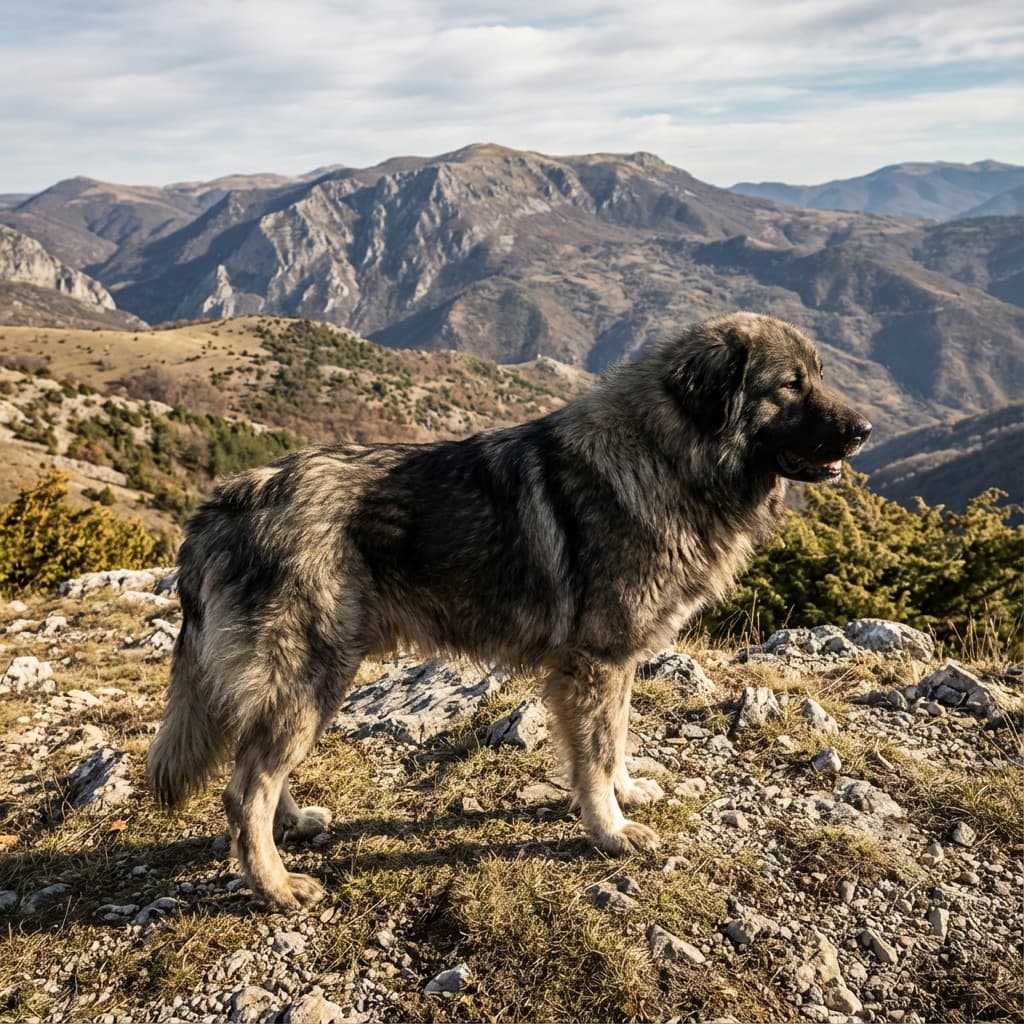
Yugoslav Shepherd Dog - Sarplaninac
FCI Group
2• FCI 41
Size
Large
Origin Country
XX
Height
56-62 cm
Weight
30-45 kg
Lifespan
10-12 years
Temperament
Overview
Yugoslav Shepherd Dog - Sarplaninac, also known simply as Sarplaninac or the Sarplanina dog, is one of the oldest and most fascinating herding dog breeds in Europe. It originates from the mountainous regions of former Yugoslavia, particularly from the areas of Macedonia and Serbia, where for centuries it has served as a tireless guardian of sheep and cattle herds.
Its name comes from the mountain range Šar Planina (Shar Mountains), located on the border of Kosovo, North Macedonia, and Albania. It is in these harsh, mountainous conditions that the character of this breed has developed – extremely resilient, brave, and independent. The Sarplaninac has been an invaluable helper to mountain shepherds for centuries, protecting flocks from predators such as wolves, bears, and lynxes.
The exceptional traits of the Sarplaninac include:
- Physical strength – its massive build allows it to confront even the largest predators
- Endurance – it can patrol and guard herds for long hours in any weather conditions
- Intelligence – the ability to make independent decisions in threatening situations
- Loyalty – a deep attachment to family and the territory entrusted to it
Although the Sarplaninac has an impressive, centuries-old history, its future also looks interesting. Balanced temperament and a strongly developed protective instinct make it an excellent companion for experienced owners who can appreciate its independent nature. Its ability to think for itself and make decisions is both its greatest asset and a potential challenge in training.
The Sarplaninac is unmatched in its loyalty to owners and family members. At the same time, its natural distrust of strangers and strongly developed territorial instinct make it an excellent guard dog. If you are looking for a dog that will provide your property with the highest level of security, the Sarplaninac is the perfect choice. Its thick, long, and coarse coat with a dense undercoat protects against the harshest weather conditions – from freezing winter nights in the mountains to scorching summer days. This natural thermal insulation makes it exceptionally resistant to extreme temperatures.
Living with the Yugoslav Shepherd Dog - Sarplaninac is a true adventure for owners who understand and respect its herding heritage. By providing it with the right amount of exercise, space to patrol, and mental stimulation, you will gain a balanced, confident, and devoted companion. However, remember that this breed is not suitable for novice owners – it requires consistent, firm leadership and a deep understanding of herding dog psychology.
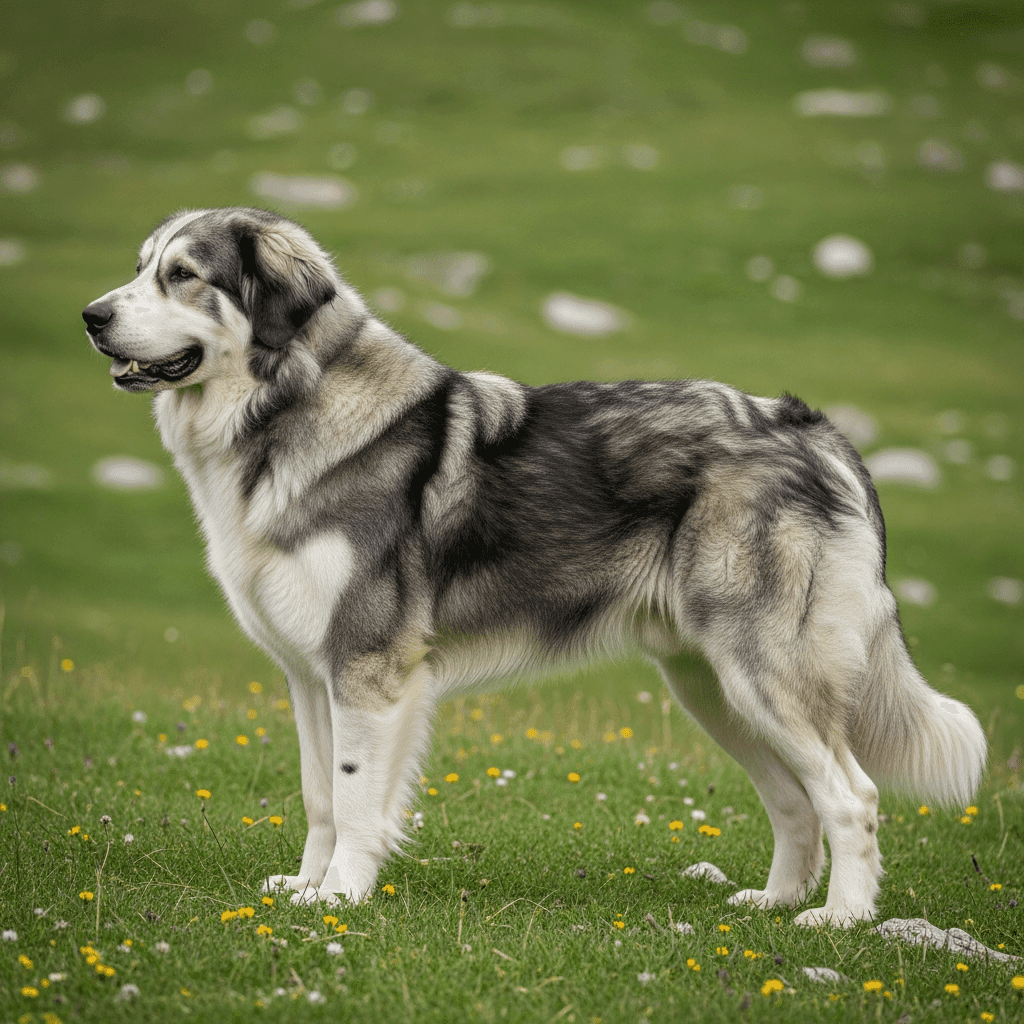
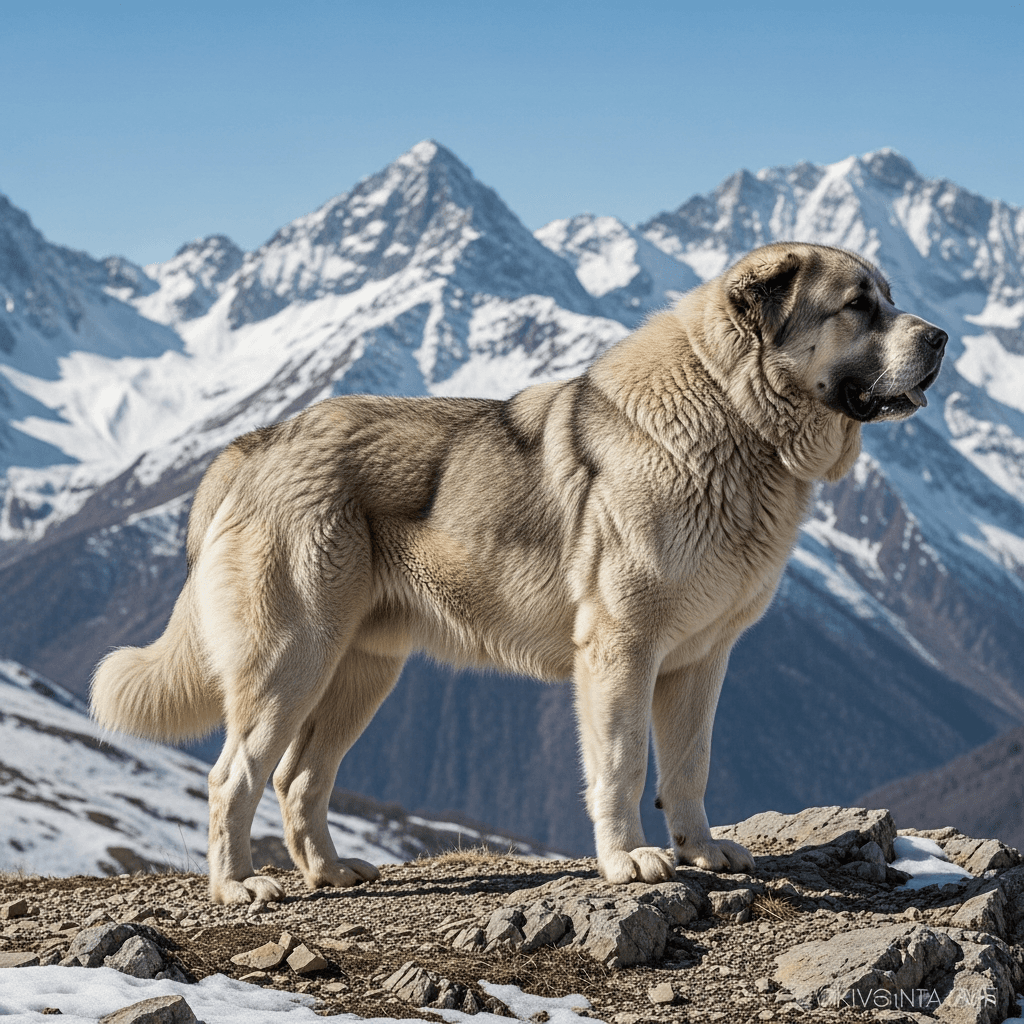
The Sarplaninac is a dog with an impressive, rugged appearance that immediately attracts attention with its strong build and dense, long coat. It is a large herding dog with a proportional, harmonious structure, adapted for long-lasting work in difficult, mountainous terrain.
Size and proportions:
- Height at the withers: males average 62 cm (from 56 cm upwards), females average 58 cm (from 54 cm upwards)
- Weight: from 30 to 45 kg, with males usually being heavier
- Proportions: the body length slightly exceeds the height at the withers, giving the dog a massive, rectangular outline
Head and expression:
The skull of the Sarplaninac is wide with a slightly convex profile, giving it a characteristic, serious appearance. The muzzle is proportionally shorter than the braincase, strong, and well-developed. The nose is large and always black, which is an important breed characteristic. The eyes are almond-shaped, dark, and express alertness and intelligence. The ears have a characteristic V shape, are of medium length, hanging, and close to the cheeks, which protects them from damage while working in dense underbrush.
Coat and coloration:
The coat is long, hard, and dense, with a thick, soft undercoat that provides excellent protection against the harsh mountain climate. A characteristic mane forms around the neck, particularly pronounced in males. The most common colors are:
- Grayish shades – from light to dark
- Dark gray to almost black
- Solid colors are the most desirable
- White spots are not allowed according to the breed standard
Body structure:
The Sarplaninac has strong, well-muscled limbs that allow it to move confidently in difficult, mountainous terrain and react quickly in threatening situations. The back is straight and strong, the loins are wide and muscular, and the chest is deep and well-developed. The tail is long, reaching at least to the hock, carried saber-like – lowered at rest, it can be raised above the line of the back in motion.
Overall, it creates the impression of a strong, courageous, and dignified dog, whose appearance perfectly reflects its function – a guardian and defender of the territory entrusted to it.
The Sarplaninac is a dog with a remarkably balanced and self-assured temperament, combining seemingly contradictory traits: on one hand, it is calm and patient, while on the other, it is ready for immediate action in the face of danger. Its character has been shaped by centuries of selection for work as an independent guardian of herds in harsh mountain conditions.
Relationship with the family:
The Sarplaninac is extremely devoted to its owners and family members. Its loyalty is deep and enduring, although it does not manifest it as demonstratively as some other breeds. This is a dog that observes, assesses, and protects its family with discreet but unwavering vigilance. In relation to children in the family, it is usually patient and gentle, although due to its size and strength, it always requires supervision during interactions with small children.
Protective and territorial instinct:
The Sarplaninac has a strongly developed territorial instinct and a natural distrust of strangers, making it an excellent guard dog. However, this is not aggression – it is rather vigilance and readiness to defend. A dog of this breed can independently assess a situation and make a decision on how to act. In its native herding role, the Sarplaninac must make immediate decisions without waiting for human commands – this trait is deeply rooted in its nature.
Relationships with other animals:
Despite its calm demeanor, the Sarplaninac may exhibit dominance over other dogs, especially of the same sex. Owners should ensure proper socialization from a young age so that it learns to accept the presence of other animals. In relation to livestock, which it considers its herd, it is usually very gentle and protective.
Intelligence and independence:
The Sarplaninac is a highly intelligent dog that learns quickly and has an excellent memory. However, its intelligence is associated with independent thinking – this is not a dog that mindlessly follows commands. It needs an owner who can be a consistent, confident leader, but at the same time respects its nature and does not try to break its spirit through coercive training methods.
Emotional needs:
- Tolerates solitude better than most breeds, due to its herding heritage
- However, it requires a strong emotional bond with the family and inclusion in family life
- Needs a lot of physical activity and opportunities to patrol its territory
- Requires mental stimulation – tasks that allow it to utilize its intelligence
Owners should be aware that lack of appropriate activity and stimulation can lead to behavioral problems, such as excessive vigilance, property destruction, or loud, prolonged barking. The Sarplaninac is not a dog for city dwellers or for owners leading a sedentary lifestyle – it needs space, tasks to perform, and an active lifestyle.
Sarplaninac is a breed that is generally very healthy and resilient, which is a result of a long history of natural selection in harsh mountain conditions. For centuries, only the strongest and most resilient individuals survived, resulting in an exceptionally hardy breed of dogs.
Life expectancy:
The average life expectancy of a Sarplaninac is from 11 to 13 years, which is a good result for such a large breed. With proper care, a balanced diet, and regular veterinary check-ups, many individuals live to be 13-14 years old in good condition.
Potential health issues:
- Hip dysplasia (HD) – as with most large breeds, it can occur in Sarplaninacs. Responsible breeders conduct X-ray examinations before allowing dogs to breed.
- Elbow dysplasia (ED) – less common than HD, but also possible in large dogs.
- Gastric torsion – a risk typical for deep-chested, large breeds. It requires immediate veterinary intervention.
- Obesity – can be a problem with an inappropriate diet and lack of exercise.
Weather resistance:
Sarplaninac has exceptional resistance to extreme weather conditions. Its double coat – a tough, long outer layer and a dense, soft undercoat – provides excellent thermal insulation. Dogs of this breed tolerate:
- Cold – can stay outside even in temperatures well below zero.
- Heat – although they prefer cooler temperatures, they can adapt to warmer climates.
- Humidity – their coat is partially water-resistant.
- Intense sunlight – the dark coat protects the skin from UV radiation.
Health prevention:
Owners should provide their Sarplaninacs with:
- Regular veterinary check-ups – at least once a year, more often for older dogs.
- Appropriate diet – high-quality food tailored to age and activity level.
- Weight control – avoiding obesity, which burdens the joints and heart.
- Regular physical activity – maintains muscles, joints, and overall condition.
- Protective vaccinations – according to the vaccination schedule.
- De-worming and parasite protection – particularly important for dogs that spend a lot of time outdoors.
This breed does not have any specific genetic health problems, making it relatively low-maintenance in terms of veterinary care. The key to a long and healthy life for a Sarplaninac is proper prevention, a balanced diet, and providing living conditions that meet its natural needs.
Grooming a Sarplaninac requires regular commitment to keep its dense, long coat in good condition and to ensure its comfort and health. Although this breed does not require complicated grooming procedures, its abundant coat needs systematic care.
Brushing the coat:
Dogs of this breed have thick, long fur with a dense undercoat, which requires regular brushing:
- Under normal conditions: brushing 2-3 times a week for 15-20 minutes
- During heavy shedding periods: (spring and autumn) daily brushing is essential, often for 30-45 minutes a day
- Tools: brush with steel pins, comb with long teeth, undercoat rake
- Technique: brushing in layers – first the undercoat, then the top coat, paying special attention to areas prone to mats (behind the ears, under the paws, around the tail)
Shedding:
The Sarplaninac sheds heavily twice a year – in spring and autumn. During this time, you can expect a very large amount of fur to fall out. Regular, daily brushing during shedding:
- Removes dead hair and minimizes the amount of fur in the house
- Prevents matting
- Stimulates the skin to produce new, healthy fur
- Allows for early detection of skin problems or parasites
Bathing:
The Sarplaninac does not require frequent baths – its coat has natural self-cleaning properties:
- Frequency: 3-4 times a year or as needed (when the dog gets dirty)
- Shampoo: mild, designed for dogs with long fur
- Drying: thorough drying with a towel and a blow dryer, paying attention to the undercoat (moisture can lead to skin problems)
Care of other areas:
In addition to the coat, owners should regularly care for:
- Ears: check once a week, gently clean with a special solution if excess wax is noticed. Droopy ears are prone to infections, so they need to be kept clean and dry
- Eyes: daily checks, removing discharge from the corners of the eyes with a soft, damp cloth
- Teeth: brushing 2-3 times a week with a toothbrush and dog toothpaste to prevent tartar and gum disease
- Nails: trimming every 3-4 weeks if they do not wear down naturally during activity. Too long nails can cause discomfort and walking problems
- Paw pads: checking for wounds, cracks, or embedded foreign bodies, especially after walks in rough terrain
Health monitoring during grooming:
Regular grooming is an excellent opportunity for monitoring the dog's health:
- Checking the skin for rashes, hair loss, parasites (ticks, fleas)
- Assessing the condition of the coat (shine, elasticity)
- Detecting lumps, swelling, or other abnormalities
- Monitoring weight and physical condition
If grooming is neglected, the coat can become dull, tangled, and unhealthy, leading to skin problems, discomfort for the dog, and difficulties in later brushing. Regular, systematic grooming is not only a matter of aesthetics but primarily the health and comfort of the Sarplaninac.
Sarplaninac is a breed that requires a significant amount of regular physical activity to maintain health, a balanced temperament, and well-being. These dogs are naturally very active and resilient – their herding heritage means they were bred for long-lasting, demanding work in difficult, mountainous terrain.
Minimum exercise needs:
Owners of a Sarplaninac should provide their dog with:
- At least 1.5-2 hours of intense physical activity daily
- The opportunity to move freely in a safe, fenced area
- Diverse forms of activity – not just walks, but also running, playing, and training
- Mental challenges – tasks that engage their intelligence and instincts
Optimal living environment:
Sarplaninac feels best in a spacious environment, where it can freely patrol and observe its territory:
- Ideal: a house with a large, fenced garden or a rural property
- Acceptable: a house with a yard in a quiet suburban area
- Inappropriate: an apartment in a block, a small flat without access to a garden, densely built city center
Types of activities:
Sarplaninac is a herding dog, so it enjoys having tasks and challenges that stimulate both its body and mind:
- Long walks: 2-3 times a day, 45-60 minutes each, preferably in varied terrain
- Running: an excellent activity for this resilient breed, can accompany the owner during jogging
- Hiking: a natural environment for Sarplaninac, where it can utilize its skills
- Garden play: fetching, searching for hidden objects
- Obedience training: mental stimulation is as important as physical
- Patrolling territory: allowing the dog to patrol a safe, fenced area satisfies its natural instincts
Specific breed needs:
Due to its endurance and strength, Sarplaninacs can work for long hours without signs of fatigue. This makes them ideal companions for people leading a very active lifestyle:
- Lovers of long mountain hikes
- Owners of farms or large properties
- Physically active individuals who engage in outdoor sports
Consequences of lack of exercise:
It is important to remember that lack of adequate physical activity can lead to serious behavioral problems:
- Destructive behaviors: property destruction, digging in the garden, tearing up cushions
- Excessive barking: prolonged, loud barking out of frustration
- Over-vigilance: excessive reactivity to external stimuli
- Obedience issues: difficulties concentrating, ignoring commands
- Health problems: obesity, joint issues, muscle weakness
- Frustration and sadness: apathy, lack of joy in life
Activity and age:
- Puppies (up to 12 months): moderate activity, avoiding overloading developing joints
- Young adults (1-7 years): maximum activity, 2+ hours daily
- Older (7+ years): gradually adjusting intensity to fitness, shorter but more frequent walks
Sarplaninac is not a dog for those who prefer a calm, low-activity lifestyle. It is a breed for people who are ready to dedicate a significant amount of their time to providing their dog with the right amount of exercise, stimulation, and work. In return, they will receive a healthy, balanced, and happy companion who joyfully shares an active lifestyle with them.
The training of the Sarplaninac is a challenge that requires experience, consistency, and a deep understanding of the psyche of herding dogs. This is not a breed for novice owners – it requires a confident, consistent leader who can build a relationship based on mutual respect, not on force or coercion.
The specificity of character and its impact on training:
The Sarplaninac has a strong, independent character shaped by centuries of working autonomously as a guardian of herds. In its traditional role, it had to make immediate decisions without human intervention – fighting predators, assessing threats, protecting the flock. This independence is deeply rooted in its nature and must be taken into account in the training process:
- Intelligence: The Sarplaninac is very intelligent and learns quickly – it can master a new command after a few repetitions
- Independent thinking: does not blindly follow commands – it first assesses their validity
- Stubbornness: if it considers a command to be pointless or contrary to its instincts, it may ignore it
- Prideness: does not accept harsh, coercive training methods
Recommended training methods:
The best approach to training a Sarplaninac is to use positive reinforcement methods that build cooperation based on mutual respect:
- Rewarding positive behaviors: treats, praise, play as a reward for following commands
- Consistency: clear, unchanging rules – the Sarplaninac respects a consistent leader
- Patience: avoiding frustration and anger, calmly repeating exercises
- Short, varied training sessions: 10-15 minutes, several times a day, to maintain the dog's interest
- Explaining the purpose of commands: the Sarplaninac responds better when it understands the goal of the exercise
What to avoid:
- ❌ Harsh methods: physical force, shouting, corporal punishment – will destroy the relationship and trust
- ❌ Coercion: forcing the dog to follow commands without understanding
- ❌ Monotony: tedious, repetitive exercises without variety
- ❌ Inconsistency: changing rules, different reactions to the same behaviors
- ❌ Starting too late: postponing socialization and training
Early socialization – KEY for the breed:
Socialization from puppy age is absolutely essential for the Sarplaninac to learn how to appropriately respond to various situations, people, and animals:
- Age 8-16 weeks: critical period of socialization
- Meeting different people (older adults, children, in various outfits)
- Safe contact with other dogs and animals
- Acclimatization to various sounds (cars, sirens, thunder)
- Positive experiences in different places (street, park, veterinarian)
- Continuation: socialization is a lifelong process, it does not end in puppyhood
Basic commands:
The Sarplaninac should master basic obedience commands:
- Sit – the foundation of control in various situations
- Stay – learning patience and self-control
- Come – THE MOST IMPORTANT for safety, requires intensive training
- Lie down – calming in stressful situations
- Leave it – impulse control for grabbing
- Quiet – control of barking
Managing protective instinct:
The Sarplaninac has a strongly developed territorial and protective instinct. The owner must learn to manage this behavior:
- Establishing boundaries of what the dog should protect
- Teaching recognition of normal situations (e.g., mailman, guests) vs real threats
- Teaching the command Quiet to control barking
- Gradually acclimatizing to guests (under the owner's supervision)
Managing dominance:
Proper training and socialization will help minimize tendencies toward dominance and aggression towards other animals and people:
- Establishing hierarchy – the owner as a calm but confident leader
- Consistently enforcing rules (e.g., no getting on furniture if that is the rule)
- Teaching acceptance of touch and handling (grooming, veterinary examination)
- Controlled meetings with other dogs
Owner's requirements:
The owner of a Sarplaninac should:
- ✅ Have experience with large, independent dog breeds
- ✅ Be a confident leader – calm but firm
- ✅ Dedicate time to daily training and socialization
- ✅ Be patient – training is a lifelong process
- ✅ Respect the dog's nature – not try to break its independent spirit
- ✅ Understand the psyche of herding dogs – their needs and motivations
A properly trained and socialized Sarplaninac is a wonderful, loyal, and trustworthy companion. However, achieving this requires time, consistency, and deep commitment from the owner. This is not a breed that will train itself – without proper training, it can become difficult to manage, overly alert, and unwilling to cooperate.
The diet of a Sarplaninac should be carefully balanced and tailored to its age, size, activity level, and individual health needs. As a large pastoral dog with a high level of activity, the Sarplaninac requires high-quality food that provides all the essential nutrients to maintain excellent condition.
Basic nutritional requirements:
Dogs of this breed need high-quality food that provides:
- Protein: 22-28% (adult dogs), 28-32% (puppies and young dogs)
- Sources: meat (chicken, beef, lamb, fish), eggs
- Supports muscle development and maintenance
- Fats: 12-18% (adult dogs), 15-20% (puppies)
- Sources: salmon oil, poultry fat, flaxseed oil
- Energy, healthy skin, and shiny coat
- Omega-3 and omega-6 fatty acids for joint and immune system health
- Carbohydrates: moderate amount from whole grains, vegetables, and fruits
- Sources: brown rice, oats, sweet potatoes, vegetables
- Long-lasting energy, fiber supporting digestion
- Vitamins and minerals: comprehensive set to support the immune system, bones, and joints
- Glucosamine and chondroitin for joint health (especially important for large breeds)
- Calcium and phosphorus for strong bones (in the appropriate ratio of 1.2:1)
Types of food:
- Dry food (kibble):
- Convenient, cheaper, helps clean teeth
- Choose premium or super-premium foods designed for large breeds
- Check if meat is the first ingredient on the list
- Wet food (canned):
- Higher moisture content, tastier
- Can be mixed with dry food
- More expensive, spoils faster after opening
- BARF diet (raw meat and bones):
- Natural, close to the diet of wild ancestors
- Requires careful balancing of ingredients
- Consultation with a veterinarian recommended
Feeding guidelines – how much to feed?
The amount of food depends on many factors:
- Adult dogs (active): 3-4 cups of dry food per day (about 450-600g), divided into 2 meals
- Adult dogs (moderately active): 2.5-3.5 cups per day
- Puppies (up to 6 months): 3-4 meals per day, large breed puppy food
- Young dogs (6-12 months): 2-3 meals per day
- Older dogs (7+ years): senior food, adjusted for lower activity level
Note: Exact dosing should follow the manufacturer's recommendations and be adjusted individually.
Feeding schedule:
- 2 meals per day for adult dogs (morning and evening)
- At least 8-10 hours between meals
- Avoid feeding directly before or after intense activity – risk of stomach torsion!
- Best to feed at regular times – dogs like routine
Fresh water – always available:
The Sarplaninac must have constant access to fresh, clean water throughout the day. Large dogs are prone to dehydration, especially with high physical activity. Change the water at least once a day, and clean the bowl regularly.
Weight and condition monitoring:
The Sarplaninac tends to gain weight if not properly active or if it receives too much food:
- Ideal weight: 30-45 kg (depending on gender and build)
- Condition check: you should feel the ribs under a thin layer of fat, see the outline of the waist from above
- Obesity: overloads joints and heart, shortens life – must be strictly avoided!
- Monitoring: weigh once a month, observe body shape
What to avoid in the diet:
- ❌ Low-quality food – with fillers, artificial colors, low meat content
- ❌ Overfeeding – leads to obesity and health problems
- ❌ Table scraps – often unhealthy for dogs, can lead to begging habits
- ❌ Toxic products: chocolate, onions, garlic, grapes, raisins, avocado, xylitol
- ❌ Cooked bones – can splinter and cause intestinal blockage or perforation
- ❌ Sudden changes in food – lead to digestive problems; introduce changes gradually over 7-10 days
Special dietary needs:
- Large breed puppies: specially formulated food to support controlled growth and healthy skeletal development
- Active/working dogs: increased calories and protein
- Older dogs: senior food with glucosamine for joints, lower calorie content
- Dogs with health problems: veterinary diet after consultation with a veterinarian (e.g., food for dogs with sensitive stomachs, joint issues)
Supplementation:
With high-quality food, additional supplementation is usually not necessary. However, in some cases, a veterinarian may recommend:
- Glucosamine and chondroitin – for joint health support (especially in older dogs)
- Omega-3 (salmon oil) – for healthy skin, coat, and immune system
- Probiotics – for digestive support
Always consult supplementation with a veterinarian!
Consultation with a veterinarian:
In case of doubts about the diet, sudden weight changes, digestive problems, or food allergies, it is always advisable to consult a veterinarian. Professional advice will help tailor the diet to your Sarplaninac's individual needs and ensure a long, healthy life.
Characteristic Traits
Pros
- Exceptionally loyal and devoted to family
- an excellent guard dog with a strong territorial instinct
- resilient to extreme weather conditions
- intelligent and independent in decision-making
- durable and physically strong
- a healthy breed with few genetic issues.
Cons
- Naturally distrustful of strangers
- Requires a large amount of exercise and space
- Difficult to train for novice owners
- Prone to dominance over other dogs
- Requires an experienced
- consistent leader
- Can be stubborn and independent
- Not suitable for apartment living.
Behavioral Ratings
Breed History
The history of the Sarplaninac breed dates back to hundreds, if not thousands of years ago, when these dogs were bred by shepherds in the mountainous regions of the Western Balkans, particularly in what is now North Macedonia, Serbia, Kosovo, and Albania. It is one of the oldest indigenous breeds of pastoral dogs in Europe, whose genetic and functional heritage has survived to this day almost unchanged.
Prehistoric roots:
The origin of the breed remains a topic of research and discussion among cynological historians. The most likely theory suggests that the ancestors of the Sarplaninac arrived in Europe from Asia during the great migrations of peoples in prehistoric times. These could have been ancient molosser breeds that accompanied nomadic pastoral tribes moving through the Balkans.
In the isolated, mountainous regions of Šar Planina (pronounced Shar Planina) – a mountain range stretching across the borders of Kosovo, North Macedonia, and Albania – these dogs developed over centuries in a relatively closed population. Harsh climatic conditions, difficult terrain, and the presence of predators such as wolves, brown bears, and lynxes required pastoral dogs to possess exceptional strength, courage, and independence.
Traditional role:
The original type of the breed has been preserved solely because in the mountainous regions of the Balkans, intensive cattle and sheep breeding has continued uninterrupted for centuries. The Sarplaninac has played – and continues to play – a key role as:
- Guardian of herds: Independently protects sheep and cattle from predator attacks, often working alone or in pairs without direct human supervision
- Defender of the homestead: Guards the shepherd's property against intruders and wild animals
- Companion of shepherds: Assists in driving herds in difficult, mountainous terrain
These dogs had to be strong and brave enough to face wolves and bears, intelligent enough to make decisions independently in threatening situations, and resilient enough to work for long hours in extreme weather conditions.
Official breed recognition:
The breed was officially registered by the Fédération Cynologique Internationale (FCI) in 1939 under number 41, initially named Illirski Ovcar (Illyrian Shepherd Dog), referring to the ancient Illyrians who inhabited the Balkans.
In 1957, during the FCI General Assembly, at the request of the Yugoslav Cynological Federation, the breed's name was officially changed to Jugoslovenski Ovcarski Pas - Sarplaninac (Yugoslav Shepherd Dog - Sarplaninac) to emphasize its connection to the Šar Planina mountain region.
Cultural heritage:
The Sarplaninac is a symbol of the culture and traditions of the region where it originated. In North Macedonia, this breed is considered a national cynological heritage and is particularly valued as part of the local cultural identity. These dogs appear in local legends, songs, and tales as brave defenders and loyal companions of mountain shepherds.
Modern times:
After the breakup of Yugoslavia in the 1990s, the breed continues to be bred in the countries that emerged from the former federation – particularly in North Macedonia, Serbia, and Kosovo – where traditional sheep and cattle farming in the mountains is still practiced.
The Sarplaninac has also gained international recognition and is now bred in other parts of Europe (Germany, the Netherlands, Italy) and around the world (United States, Canada). Outside its region of origin, these dogs are valued as:
- Guardians of properties: Excellent protective dogs for farms and large estates
- Companions for active families: For experienced owners who understand their needs
- Livestock protection workers: In some countries (e.g., USA) used to protect sheep from coyotes and other predators
Maintaining breed purity:
Responsible breeders worldwide are working to preserve the authentic type of Sarplaninac – its unique character, working abilities, and classic appearance. The breed is protected by breed clubs that enforce adherence to the FCI standard and promote healthy, responsible breeding.
The Sarplaninac is a living heritage of Balkan pastoral culture – a breed that has survived for thousands of years almost unchanged, retaining its unique traits and abilities. It is a dog that embodies strength, courage, independence, and loyalty – values deeply rooted in the tradition of the mountain shepherds of the Balkans.