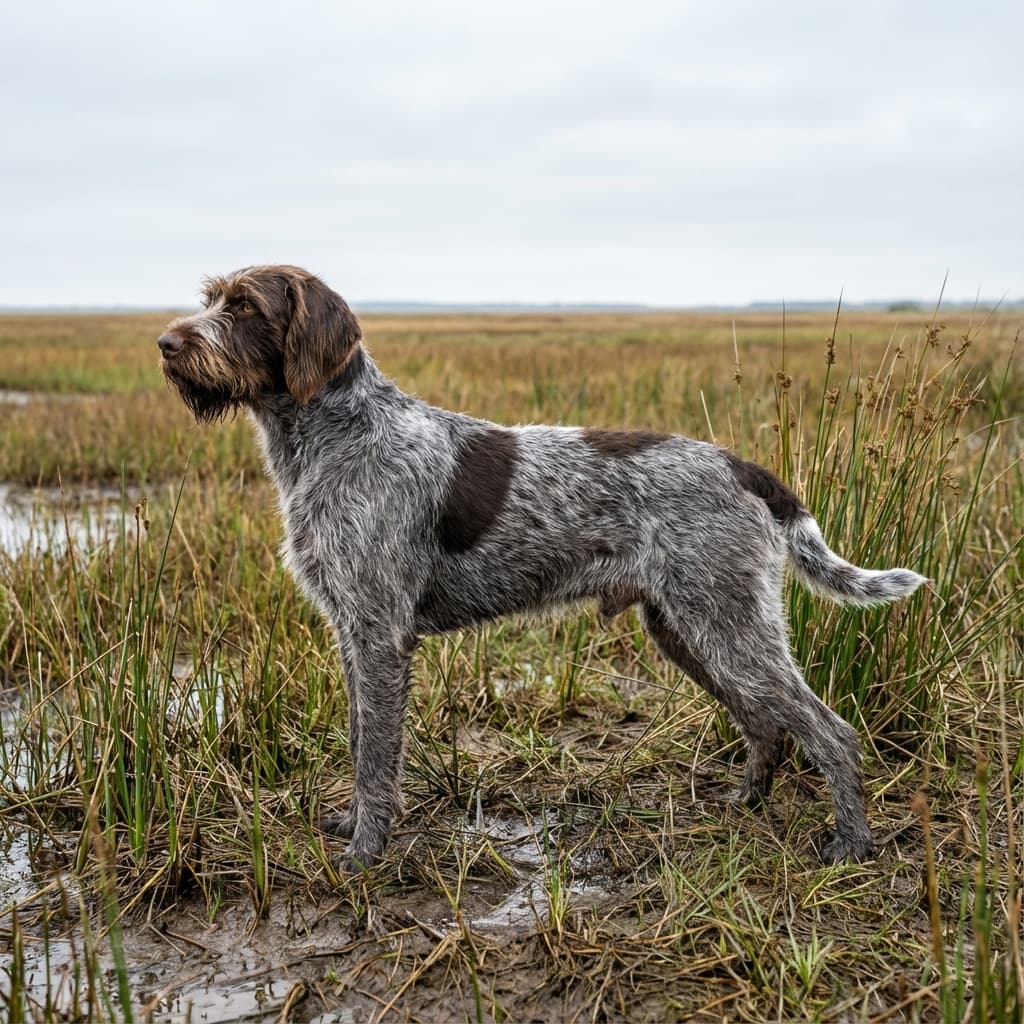
Korthals Griffon
FCI Group
7• FCI 107
Size
Medium
Origin Country
FR
Height
50-60 cm
Weight
20-30 kg
Lifespan
12-14 years
Temperament
Overview
Korthals Griffon, also known as Wire-Haired Pointing Griffon, is a unique hunting dog breed with a rich history and extraordinary working traits. It originates from France, where in the second half of the 19th century Edward Karel Korthals created this breed through thoughtful selection and crossbreeding of various types of hunting griffons.
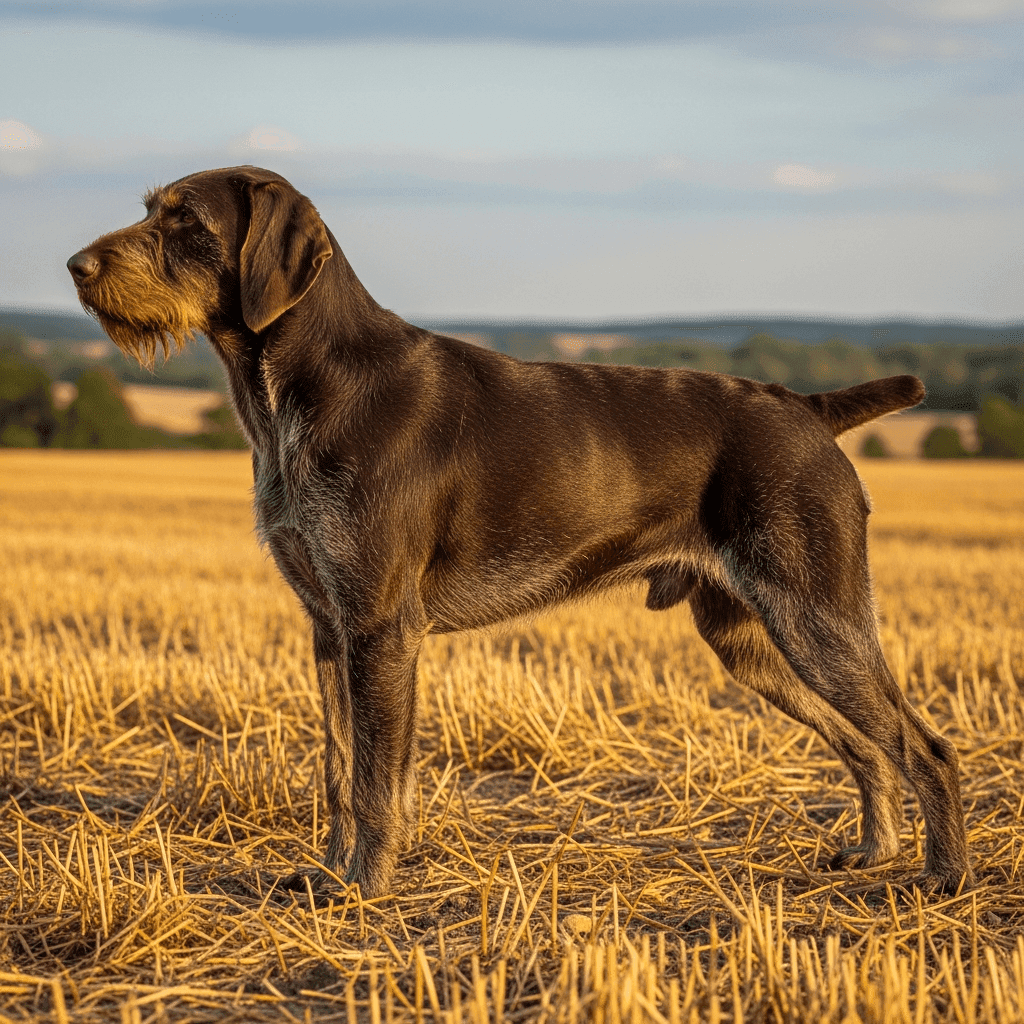
Its unique features combine intelligence, agility, and courage, making it an ideal hunting dog with versatile applications. It stands out with its characteristic rustic appearance - its rough, dense coat in steel-gray with brown spots, along with distinctive whiskers, beard, and bushy eyebrows, give it a unique, determined expression.
The Korthals Griffon is a medium-sized dog with a strong, harmonious build, which is slightly longer than it is tall. The height at the withers is 55-60 cm for males and 50-55 cm for females, with a weight ranging from 20-30 kg. This compact build, combined with a durable coat, makes it perfectly adapted to work in the toughest terrain and weather conditions.
Its long, square muzzle is strong and well-developed, facilitating the carrying of hunted game. The eyes are dark yellow or brown, covered by bushy eyebrows, which, along with the developed whiskers and beard, give it a characteristic, intelligent expression full of confidence and alertness.
The friendly and gentle nature of the Korthals Griffon makes it an ideal companion for active families and hunters. This breed is characterized by deep attachment to its owner and natural vigilance in protecting its territory. It is very gentle with children, making it an excellent family dog, provided it receives the appropriate amount of exercise and mental stimulation.
The Korthals Griffon is primarily a versatile pointing dog, used mainly for bird hunting but also for tracking wounded large game. Its strong hunting instinct, combined with exceptional intelligence and ease of training, makes it a great companion for hunting as well as in everyday life - during walks, running, or canine sports.
The history of this breed dates back to ancient times - even Xenophon mentioned similar dogs used for bird hunting. Over the centuries, various types of hunting griffons were common throughout Europe. The modern breed was renewed and improved by Korthals through inbreeding, selection, and training, without adding foreign blood, thereby preserving its unique traits.
In the following sections of this guide, you will discover detailed information about health, grooming, exercise requirements, training, nutrition, history, appearance, and behavior of this fascinating breed. The Korthals Griffon is not only an excellent hunting dog but also a wonderful family companion that will bring much joy and satisfaction to owners ready to provide it with an active lifestyle and appropriate challenges.
The Korthals Griffon is a dog with a distinctive, rustic appearance that immediately catches the eye with its unique expression and harmonious build. It is a breed of medium size with a strong body structure that combines strength, elegance, and endurance.
Basic physical parameters:
- Height at the withers (males): 55-60 cm
- Height at the withers (females): 50-55 cm
- Weight: 20-30 kg
- Proportions: The body length exceeds the height at the withers, giving the silhouette an elongated, harmonious appearance
The head is large and long, covered with coarse fur, but not excessively dense. Characteristic whiskers, beard, and bushy eyebrows give the dog a unique, determined expression full of intelligence and confidence. The skull is not too wide, and the upper lines of the skull and muzzle are parallel. The stop (frontal break) is slight, subtle.
The muzzle is long and square, with a nose always in brown color. The jaws are strong, with a correct scissor bite. The eyes are dark yellow or brown, oval, set at the height of the muzzle line, covered by bushy eyebrows that do not obstruct the view but add character. The gaze expresses intelligence, alertness, and friendliness.
The ears are medium-sized, lying flat, set at the height of the eye line, covered with short hair mixed with longer hair. The neck is of medium length, without a dewlap, muscular and strong.
The coat is one of the most characteristic features of the breed:
- Structure: Coarse, hard, dense, and close to the body
- Undercoat: Dense and soft, providing protection against water and cold
- Length: Not too long to hide the silhouette, but dense enough for protection
- Appearance: Gives the dog a rustic, natural character
The coloration of the Korthals Griffon can be diverse, but the most common are:
- Steel-gray with brown patches (most common)
- Uniformly brown with or without white markings
- Gray-brown brindle (a mix of gray and brown hairs)
- White with brown - permissible but rarer
The chest is deep and wide, providing adequate space for the lungs and heart - a key feature for a working dog with high endurance. The back is strong and straight, with well-muscled loins. The limbs are strong, straight, and parallel, ending in round, compact paws with hard pads.
The tail is well set, carried horizontally or slightly raised, traditionally docked to about 1/3-1/2 of its length (in countries where this is allowed), covered with dense, coarse hair without a plume. The movement of the Korthals Griffon is smooth, energetic, and efficient, indicating excellent physical condition and endurance.
The overall expression of the Korthals Griffon is a combination of rustic elegance with strength and endurance, perfectly reflecting its character as a versatile hunting dog and a devoted family companion.
The Korthals Griffon is a dog with a particularly friendly, gentle, and balanced character. It is known for its deep bond with its owner and natural alertness in protecting its home and territory. It combines the traits of an excellent hunting dog with the temperament of an ideal family companion.
Key character traits of the Korthals Griffon:
- Friendly and sociable - loves spending time with family
- Intelligent and easy to train - quickly learns new skills
- Confident and self-assured - but without aggression or dominance
- Very attached to its owner - loyal and devoted
- Alert and observant - an excellent guard dog warning about strangers
- Gentle with children - patient and caring
- Strong hunting instinct - an innate passion for working in the field
The Korthals Griffon is very attached to its family and enjoys being an active member of it. It is not a dog that will be satisfied with passively lying on the couch - it needs constant contact with its owner and involvement in daily family activities. Its high intelligence makes it easy to train and eager to cooperate with humans.
This breed is characterized by exceptional gentleness towards children, making it an ideal family dog. The Korthals Griffon is patient, caring, and can adjust its energy to the child's age. However, due to its size and liveliness, interactions with very young children should be supervised to avoid accidental knocking over or bumping during play.
As a hunting dog, the Korthals Griffon possesses a strong, innate hunting instinct, which manifests in:
- Tracking scents - constantly sniffing and following trails
- Pointing birds - a natural pointer stance
- Retrieving - an inherent desire to bring back objects
- Exploring the terrain - a continuous need to discover and investigate the surroundings
- Chasing small animals - may chase birds, rodents, or cats
For this reason, early socialization and proper training are absolutely crucial. Puppies should be accustomed to various situations, people, animals, and environments from a young age to learn to control their instincts and function harmoniously in a home environment.
The Korthals Griffon may be somewhat reserved towards strangers at first meeting, but after proper introduction, it becomes friendly and open. It is not an aggressive dog, but its natural alertness means it will warn of approaching strangers, making it a good guard dog. Its barking is moderate - usually, it raises its voice only when there is a reason to do so.
This breed requires a huge amount of exercise and mental stimulation. It is a high-energy dog that will not be happy in a sedentary, low-activity environment. The Korthals Griffon needs:
- At least 1-2 hours of activity daily
- Diverse forms of exercise - walks, running, swimming, hunting
- Mental tasks - obedience training, scent trails, dog puzzles
- Opportunities to work - ideally utilized in hunting or dog sports
Without the appropriate amount of activity, the Korthals Griffon may develop behavioral problems - excessive vocalization, destruction, digging, hyperactivity, or escaping. Owners must be aware that this breed requires significant time and energy commitment.
The Korthals Griffon is best suited for families of active hunters, athletes, or outdoor enthusiasts who can provide it with the right amount of exercise, challenges, and regular work. Despite its independence in the field, at home it is very sociable and attached, enjoying spending time with people during shared activities.
It is worth noting that the Korthals Griffon can coexist well with other dogs, provided there is proper socialization. However, its hunting instinct means it may not be suitable for homes with small pets such as rabbits, guinea pigs, or birds. Coexisting with cats is possible if the dog has been accustomed to them from puppyhood.
The Korthals Griffon is a breed that enjoys generally very good health and impressive vitality. The average lifespan is between 12 and 14 years, and with proper care, a balanced diet, and regular physical activity, many individuals reach the age of 15-16 years.
This longevity is a result of thoughtful breeding focused primarily on utility traits, vitality, and health, rather than just appearance. Korthals Griffons are strong and resilient, able to withstand both high and low temperatures thanks to their rough, dense coat with an undercoat, which protects them from adverse weather conditions.
However, like any breed, the Korthals Griffon may be prone to certain health issues. The most common health problems include:
- Hip Dysplasia (HD) - a congenital developmental defect of the hip joint leading to pain and lameness, may require surgical treatment in advanced cases
- Elbow Dysplasia (ED) - a similar condition affecting the elbow joints, leading to arthritis and pain
- Otitis Externa - common in breeds with drooping ears, requiring regular check-ups and cleaning
- Entropion (eyelid inversion) - improper eyelid positioning causing irritation of the cornea
- Ectropion (eyelid eversion) - the opposite situation, leading to excessive tearing and infections
- Hypothyroidism - underactive thyroid, leading to decreased energy, weight gain, and skin problems
- Overweight and Obesity - a problem in inactive dogs, leading to heart, joint, and diabetes issues
It is important to regularly monitor the dog's weight, as Korthals Griffons tend to gain weight, especially if they do not receive adequate exercise. Being overweight can lead to serious health problems, including:
- Cardiovascular issues
- Excessive strain on joints and spine
- Type 2 diabetes
- Shortened lifespan
Key preventive measures include:
- Regular veterinary visits - at least once every 6-12 months, more frequently for puppies and senior dogs
- Complete vaccination program - protection against infectious diseases (rabies, parvovirus, distemper, parainfluenza, leptospirosis)
- Regular deworming - every 3 months, especially for dogs working in the field
- Parasite prevention - protection against ticks, fleas, and other external parasites (drops, collars, tablets)
- Check-ups - blood tests, biochemical tests (especially after the age of 7)
- Ophthalmic examinations - monitoring eye health, especially for entropion/ectropion
- Ear checks - regular cleaning and monitoring for infections, especially after swimming or working in wet areas
- Dental checks - preventing tartar buildup and gum disease through brushing and dental chews
- Joint examinations - X-rays of hips and elbows for breeding dogs
Responsible breeding plays a key role in the health of the breed. Responsible breeders conduct genetic tests and health screenings of breeding dogs to minimize the risk of passing hereditary diseases to future generations. Before purchasing a puppy, it is advisable to:
- Check the health test results of the parents (HD, ED, ophthalmic tests)
- Learn about the health history of the breeding line
- Ensure that the breeder is a member of a breed club
- Request health documentation for the puppy
With proper veterinary care, a healthy and balanced diet, regular physical activity, and genetics from a responsible breeder, the Korthals Griffon can enjoy a long, healthy, and active life, while being a devoted companion to its family for many happy years.
The grooming of the Korthals Griffon is relatively simple and low-maintenance, but it requires regularity and consistency to keep the coat in optimal condition and ensure the dog's comfort and health.
The coat of the Korthals Griffon is its trademark - rough, hard, dense with a soft, insulating undercoat. This type of coat was specifically bred to protect the dog from harsh weather conditions - rain, snow, cold, and dense vegetation in the field.
Basic grooming procedures include:
- Brushing the coat - 2-3 times a week using a brush with stiff bristles or a metal comb with wide teeth
- More intensive brushing during shedding - in spring and autumn, daily or every other day
- Trimming (pulling out dead hair) - 2-4 times a year, crucial for maintaining the proper coat structure
- Cleaning the ears - once a week or more often after hunting, swimming, or walks in wet terrain
- Checking and cleaning teeth - 3-4 times a week, ideally daily, to prevent tartar buildup
- Trimming nails - every 3-4 weeks, if they do not wear down naturally during walks
- Checking paw pads - especially after working in the field, removing debris, checking for wounds and cracks
- Checking whiskers, beard, and eyebrows - removing food remnants, brushing, trimming overly long hairs
Regular brushing is absolutely crucial for maintaining a healthy coat. It helps:
- Remove dead hair and prevent matting
- Minimize the amount of hair in the house during shedding
- Distribute natural skin oils throughout the coat
- Check the skin condition for irritations, parasites, or wounds
- Strengthen the bond between the dog and the owner
For the rough-coated breed like the Korthals Griffon, trimming is a key procedure. It involves manually pulling out dead guard hairs, which:
- Maintains the proper coat structure (rough, hard)
- Preserves the natural protective properties of the coat
- Prevents excessive softening of the hair
- Minimizes shedding
- Gives the dog a neat, breed-typical appearance
Trimming can be done by a professional groomer specializing in rough-coated breeds or by the owner after appropriate training. Clipping with a machine is not recommended, as it alters the hair structure, causing it to soften and lose its protective properties.
The Korthals Griffon does not require frequent bathing - only when necessary due to heavy soiling of the coat after working in the field or unpleasant odors. The optimal frequency is 3-4 times a year, unless the dog is particularly dirty. Bathing too frequently can:
- Weaken the natural protective layer of the skin (sebum)
- Lead to dermatological issues (dryness, flaking, irritations)
- Reduce the natural waterproof properties of the coat
When bathing, gentle shampoos designed for rough-coated dogs should be used, which do not soften the hair structure. After bathing, the coat should be thoroughly dried with a towel, and then allowed to air dry or a cool air dryer can be used.
The ears of the Korthals Griffon, which are medium-sized drooping ears, are prone to infections, especially after swimming or working in wet terrain. It is important to regularly pay attention to:
- The condition of the ear canals - cleanliness, absence of excess wax
- Unpleasant odor - may indicate an infection
- Redness or swelling - a signal of inflammation
- Frequent scratching or shaking of the head - discomfort
Ear cleaning should be done using special ear cleaning solutions for dogs, on a cotton ball or gauze - never insert cotton swabs deeply into the ear canal.
Checking for ticks and fleas after every walk in the field is absolutely crucial, as hunting dogs are particularly susceptible to parasite bites. It is important to thoroughly check:
- The area around the head, ears, and neck
- The armpits and groin
- The spaces between the toes
- The belly and groin
Proper, systematic grooming not only improves the dog's appearance but also contributes to its comfort, health, and well-being. Regular procedures allow for early detection of potential health problems and are an excellent opportunity to strengthen the bond with your pet through positive, calm time spent together.
The Korthals Griffon is a breed with very high requirements for physical activity and mental stimulation. It is a dog designed for intense work in the field, with incredible endurance and energy, which requires significant time commitment from its owners.
The minimum exercise requirements are at least 1-2 hours of intense movement daily, but active working dogs may require even 3-4 hours of activity. This is a breed that will not be happy in a sedentary environment - owners must be prepared for significant involvement in their dog's daily activity.
Ideal forms of activity for the Korthals Griffon:
- Long walks - at least 2 times a day for 45-60 minutes, preferably in varied terrain
- Running and jogging - excellent activity for active owners, the dog can accompany long-distance runs
- Hunting - the highest form of fulfillment for this breed, utilizing natural instincts
- Swimming - the Korthals Griffon loves water and is an excellent swimmer, great for fitness
- Fetching - satisfies the hunting instinct, excellent training fun
- Tracking and scent work - stimulates smell and intelligence, nosework
- Running in the woods or park - if possible, safely off-leash in enclosed areas
- Hiking and trekking - the dog is perfect for long mountain or forest hikes
The Korthals Griffon excels in various canine sports, which not only provide physical activity but also mental stimulation and strengthen the bond with the owner:
- Agility - develops coordination, agility, and cooperation with the owner
- Obedience - enhances obedience, concentration, and precision in command execution
- Tracking - utilizes natural scenting abilities and hunting instinct
- Rally obedience - combines obedience with navigating an obstacle course
- Field trials - specialized competitions for pointing dogs
- Canicross - running with a dog in harness, excellent fitness activity
- Dock diving - jumping into water from a dock, great fun for water-loving dogs
- Flyball - dynamic relay race with fetching a ball
These activities not only allow for burning off excess energy, but also provide essential mental stimulation, which is just as important as physical movement. The Korthals Griffon is an intelligent dog that needs mental challenges to avoid boredom and behavioral issues.
During hunts, the Korthals Griffon is characterized by incredible agility, endurance, and passion for work. It can:
- Work for many hours in difficult terrain (forests, swamps, thickets)
- Point game in a characteristic pointing dog stance
- Retrieve shot game from water and land
- Track wounded large game
- Flush birds from dense underbrush
If the Korthals Griffon is not used for hunting, owners must provide alternative forms of activity that satisfy its natural needs:
- Regular obedience and trick training
- Games of searching for hidden treats or toys
- Puzzles and interactive toys for dogs
- Hunting simulations - throwing fetch toys into tall grass
- Scent training courses (nosework)
It is important to remember that the Korthals Griffon has a very strong hunting instinct, which means it may be highly inclined to chase small animals - cats, squirrels, rabbits, birds. Therefore, it is crucial to:
- Keep the dog on a strong leash in areas where it may encounter wildlife
- Train the Come command in various situations and with increasing distractions
- Use a long training line (5-10 meters) during recall training
- Let it off-leash only in safe, enclosed areas
- Exercise caution in urban parks with freely roaming cats or squirrels
Lack of adequate exercise leads to serious problems in the Korthals Griffon:
- Excessive vocalization and barking
- Destructive behaviors - destroying furniture, chewing shoes, digging holes
- Hyperactivity and disobedience
- Escaping and attempts to seek adventures on their own
- Frustration, stress, and depression
- Overweight and health issues
- Frustration-induced aggression
Regularly engaging the Korthals Griffon in varied, demanding activities is absolutely key to its happiness, mental and physical health, and harmonious coexistence with the family. A dog that receives the right amount of exercise and stimulation is calm, obedient, and happy at home, ready to relax and enjoy quiet moments with the family after an intense day full of adventures.
The training of the Korthals Griffon is usually a pleasure due to the high intelligence of this breed, the willingness to cooperate with humans, and the natural predisposition to learn. However, it requires a consistent, patient, and positive approach to fully harness the potential of this versatile breed.
Key training principles for the Korthals Griffon:
- Early start - training should begin at 8-10 weeks of the puppy's age
- Positive reinforcement - rewards, treats, praise, play
- Consistency - rules must be clear and unchanging for all family members
- Short, frequent sessions - 10-15 minutes, 2-3 times a day to maintain focus
- Patience and calmness - no shouting, aggression, or physical punishment
- Diversity - varied exercises to prevent boredom
- Early socialization - exposure to different situations, people, animals, sounds
The Korthals Griffon is intelligent and quickly acquires new skills, making it one of the easier breeds to train. Its natural desire to cooperate with humans and high food motivation can be used to teach it practically anything. However, it can be somewhat stubborn and independent, especially if it finds the exercise boring or repetitive.
Basic commands to teach (in order of importance):
- Name - the most important - the dog must respond to its name
- Come - absolutely crucial command for the safety of a dog with a strong hunting instinct
- Stay - control over the dog in various situations
- Sit - basic obedience command
- Lie down - calming and control
- Leave it - preventing picking up dangerous objects or carrion
- Place - teaching rest in a designated spot
- No pulling - walking on a loose leash
- Quiet - control over barking
Early socialization is absolutely crucial for the Korthals Griffon. Puppies aged 8-16 weeks go through a critical socialization period during which they should be exposed to:
- Different people - men, women, children, elderly individuals, in various outfits
- Other dogs - different breeds, sizes, temperaments
- Different animals - cats, horses, birds (if the dog is to live with them)
- Different environments - city, forest, beach, shopping mall, parking lot
- Different sounds - traffic, firecrackers, loud music, vacuum cleaner
- Different surfaces - grass, asphalt, sand, metal grates, stairs
- Veterinary and grooming care - touching paws, ears, muzzle
Proper socialization prevents the development of fears, phobias, and aggression in adult life and ensures that the dog is confident and balanced in various situations.
The Korthals Griffon, as a hunting dog, can be trained in specialized hunting work, allowing it to fully utilize its natural instincts and innate skills:
- Pointing - learning the natural pointing stance
- Tracking and searching - following the scent of game
- Retrieving from water and land - bringing back hunted game
- Tracking blood trails - learning to track wounded large game
- Flushing birds - flushing game from dense underbrush
- Water work - specialized retrieving techniques from bodies of water
- Cooperation with the hunter - learning communication through gestures and whistles
Hunting work is for the Korthals Griffon the highest form of fulfillment and joy. If the owner is not a hunter, it is worth considering participation in field trials or training that simulates hunting, which will allow the dog to fulfill its natural needs.
The Korthals Griffon also excels in canine sports:
- Obedience - precise execution of commands, development of concentration
- Rally obedience - dynamic form of obedience with navigation elements
- Agility - obstacle course, development of coordination and agility
- Nosework - searching for scents, stimulating natural olfactory abilities
- Tracking - professional tracking, development of tracking skills
It is important to provide the dog with varied and interesting activities that will stimulate its mind. The Korthals Griffon is an intelligent dog that quickly gets bored with monotony. Boredom can lead to:
- Ignoring commands
- Seeking entertainment on its own (often destructive)
- Escaping
- Excessive barking
Therefore, training should be regular, varied, and tailored to the dog's skill level. The difficulty of tasks should be gradually increased, new commands and tricks introduced, and training conducted in different environments with increasing distractions.
Positive experiences from training significantly contribute to building a strong, lasting bond between the dog and its owner, based on mutual respect, trust, and communication. A properly trained Korthals Griffon becomes a reliable partner both in work and daily life, ready to cooperate and loyal until the end of its days.
A proper, balanced diet is absolutely crucial for the health, physical condition, endurance, and well-being of the Korthals Griffon. Dogs of this breed, due to their very high level of activity and intense work, require foods with high energy value and the appropriate proportion of nutrients.
It is advisable to choose high-quality premium or super-premium dog food dedicated to active medium-sized dogs, which contains:
- High protein content - at least 25-30% for adult active dogs, 28-32% for puppies
- Protein sources - meat (chicken, beef, turkey, lamb), fish (salmon, cod)
- Healthy fats - 12-18% (omega-3 and omega-6 fatty acids for healthy skin and coat)
- Complex carbohydrates - rice, oats, sweet potatoes, potatoes (for long-lasting energy)
- Vitamins and minerals - a comprehensive composition tailored for active dogs
- Glucosamine and chondroitin - support for joints and cartilage
- Fiber - for proper digestion
Typically, an adult Korthals Griffon weighing around 23-27 kg should receive about 300-450 grams of dry food per day, depending on the level of activity. The portion should be divided into two meals (morning and evening) to:
- Avoid digestive problems
- Reduce the risk of gastric torsion (especially dangerous in deep-chested dogs)
- Maintain a stable energy level throughout the day
Due to their very active lifestyle, it may be necessary to adjust the amount of food depending on the dog's activity level:
- Intensively working dogs (hunting, competitions) - increase portions by 25-40%
- Dogs in the reproductive period - adjust to increased needs (pregnant or nursing females)
- Older, less active dogs - reduce portions by 15-25%, senior food with lower calories
- Overweight dogs - light or weight management diets
- Puppies and young dogs - puppy/junior food with higher protein and calorie content
It is important to avoid overeating, as Korthals Griffons tend to gain weight, especially if they do not receive adequate exercise. Obesity can lead to serious health problems:
- Cardiovascular diseases
- Type 2 diabetes
- Joint problems, dysplasia, arthritis
- Breathing problems
- Shortened lifespan
Regular monitoring of the dog's weight (every 2-4 weeks) and adjusting its diet as needed is absolutely crucial. Ideally, the dog should have a visible waist (indentation behind the ribs) and palpable ribs under a thin layer of fat.
In addition to commercial food, it is worth introducing natural ingredients into the diet to enrich meals and provide additional nutritional value:
- Fresh meat - chicken, beef, turkey, lamb (cooked, without bones and spices)
- Fish - salmon, cod, mackerel (cooked, without bones, rich in omega-3)
- Vegetables - carrots, broccoli, pumpkin, spinach, zucchini (cooked or raw, chopped)
- Fruits - apples (without seeds), pears, berries, bananas (in small amounts as treats)
- Natural treats - dried meat, pig ears, chewing bones, dried kidney beans
- Eggs - cooked (an excellent source of protein)
- Natural yogurt - probiotics for gut health (without sugar and additives)
Products absolutely forbidden for dogs (TOXIC!):
- Chocolate and cocoa - contain toxic theobromine
- Onions and garlic - destroy red blood cells, leading to anemia
- Grapes and raisins - damage kidneys, can be fatal
- Avocado - contains toxic persin
- Xylitol (sweetener) - causes a rapid drop in blood sugar, damages the liver
- Alcohol - toxic to dogs, damages the liver and brain
- Chicken and fish bones - risk of choking and intestinal perforation
- Macadamia nuts - toxic, cause weakness and paralysis
- Yeast dough - expands in the stomach, can lead to torsion
Remember to always provide your dog with access to fresh, clean water, especially:
- After intense physical exertion
- On hot days
- After eating dry food
- Throughout the day (water bowl available at all times)
Proper hydration is essential for the proper functioning of the body, especially for active dogs who lose a lot of fluids during work. The water bowl should be regularly replaced (at least once a day) and cleaned to prevent the growth of bacteria.
When choosing a diet, it is advisable to consult with a veterinarian or animal nutritionist, who will select the optimal feeding plan considering:
- The dog's age (puppy, adult, senior)
- Weight and body condition
- Activity level (house dog, working dog, sports dog)
- Individual health needs (allergies, intolerances, conditions)
- Reproductive status (pregnancy, lactation, neutering)
A well-balanced diet tailored to individual needs is the foundation of health, vitality, and longevity for the Korthals Griffon, allowing it to enjoy an active life for many happy years.
Characteristic Traits
Pros
- High intelligence and ease of training
- Friendly and gentle nature ideal for families
- Durable coat protecting against harsh conditions
- Versatile hunting dog with excellent abilities
- Very attached and loyal to the owner
- Gentle and patient with children
- Good watchdog alerting to strangers.
Cons
- Requires a very large amount of exercise and activity (1-2 hours a day)
- Strong hunting instinct can be a challenge in the city
- Needs proper socialization from a young age
- Not suitable for less active individuals
- May chase small animals (cats
- rodents)
- Requires regular coat grooming (trimming)
- Can be stubborn if training is boring or repetitive.
Behavioral Ratings
Breed History
The history of the Korthals Griffon is a fascinating tale of passion, determination, and thoughtful breeding that led to the creation of one of the most versatile hunting dog breeds in the world.
The origins of this breed date back to ancient times. Even Xenophon, a Greek historian and military commander living in the 4th century BC, mentioned in his writings dogs similar to griffons, used for bird hunting. For centuries, various types of rough-haired hunting dogs, known as oysel dogs, were common throughout Europe under different names.
These primitive hunting griffons existed in various regions of Europe:
- France - French griffons
- Germany - German griffons (Stichelhaar, Drahthaar)
- Netherlands - Dutch griffons
- Italy - Spinone Italiano
However, the modern, standardized breed was created only in the second half of the 19th century by Edward Karel Korthals (1851-1896), a Dutch cynologist and hunter with immense passion and vision.
Edward Korthals began his breeding work in 1873, at just 22 years old. His goal was to create an ideal, versatile hunting dog that would combine:
- Excellent hunting abilities (pointing, tracking, retrieving)
- Durable coat protecting against harsh conditions
- Strong constitution and vitality
- Intelligence and ease of training
- Friendliness towards humans and family
Korthals started breeding with seven foundational dogs, which became the patriarchs of the breed:
- Moustache I (born 1867) - a gray-brown dog, purchased from a French breeder
- Lina - a white-brown female
- Janus - a gray-brown dog
- Satan - a brown dog
- Hector - a gray-brown dog
- Banco - a brown dog
- Querida - a gray-brown female
Korthals worked in Germany (Hesse) as the kennel manager for Prince Albrecht zu Solms-Braunfels, which allowed him access to the best breeding lines and funding for his ambitious project. He later moved to France, where he continued his work.
A key aspect of Korthals' method was inbreeding combined with rigorous selection and intensive training, without adding foreign blood from other breeds. This strategy allowed for:
- Consolidation of desired traits
- Maintenance of a uniform breed type
- Preservation of unique character and abilities
- Elimination of undesirable traits
Korthals tested his dogs in real hunting conditions, assessing their skills in:
- Pointing game birds
- Tracking wounded game
- Retrieving from water and land
- Working in difficult terrain (brush, marshes)
- Cooperation with the hunter
Only dogs that met the highest utility standards were allowed to breed. This rigorous selection was the foundation of the breeding program's success.
In 1887, Korthals published the first breed standard, defining the requirements for the dog's appearance, structure, and character. This standard became the basis for all subsequent breed descriptions.
The Korthals Griffon quickly gained immense popularity in Europe, especially among hunters who appreciated its versatility, endurance, and friendliness. The breed spread from France to:
- Germany
- Netherlands
- Belgium
- United Kingdom
- United States (since 1887)
After Korthals' death in 1896, his successors continued his work, remaining faithful to his breeding principles. National breed clubs were established, which still today care for the preservation of the breed's unique traits and standards:
- Club du Griffon d'Arrêt à Poil Dur Korthals (France) - founded in 1888
- Verein Deutsch-Drahthaar (Germany)
- American Wirehaired Pointing Griffon Association (USA)
The breed was officially recognized by the Fédération Cynologique Internationale (FCI) and classified into Group 7 (Pointing Dogs), Section 1.3 (Continental Type Griffon), with FCI standard number 107.
Interestingly, despite Korthals being Dutch and starting his breeding in Germany, France is recognized as the country of origin of the breed, as it was there that Korthals continued and finalized his work, and the first breed club was established.
Today, the Korthals Griffon is valued not only for its outstanding hunting skills but also for its exceptional character, which combines:
- Courage and determination
- Intelligence and ease of training
- Friendliness and attachment to family
- Versatility in work
- Rustic elegance
The breed has gained recognition worldwide and is used in various fields:
- Hunting - pointing, tracking, retrieving birds and large game
- Field trials and competitions - field trials, working tests
- Rescue - searching for missing persons
- Canine sports - agility, obedience, tracking, nosework
- Companion dog - for active families and outdoor enthusiasts
The history of the Korthals Griffon is a perfect example of how thoughtful, consistent breeding focused on utility and character can create a breed with unparalleled practical and temperamental qualities. Edward Korthals' legacy lives on today in every representative of this magnificent breed, which embodies elegance, strength, intelligence, and boundless loyalty.