Gascon Hound
FCI Group
7• FCI 133
Size
Large
Origin Country
FR
Height
56-69 cm
Weight
17-25 kg
Lifespan
12-14 years
Temperament
Overview
Gascon Hound (Braque Français type Gascogne) is a majestic breed of hunting dogs originating from the southwest of France and the Central Pyrenees region, where it has been valued for centuries as one of the finest retrieving dogs for bird hunting. It is the larger of the two types of French hounds – alongside the smaller Pyrenean hound. Its noble appearance, powerful yet harmonious build, and exceptional hunting skills make it a unique breed for both experienced hunters and families looking for an active, intelligent companion.
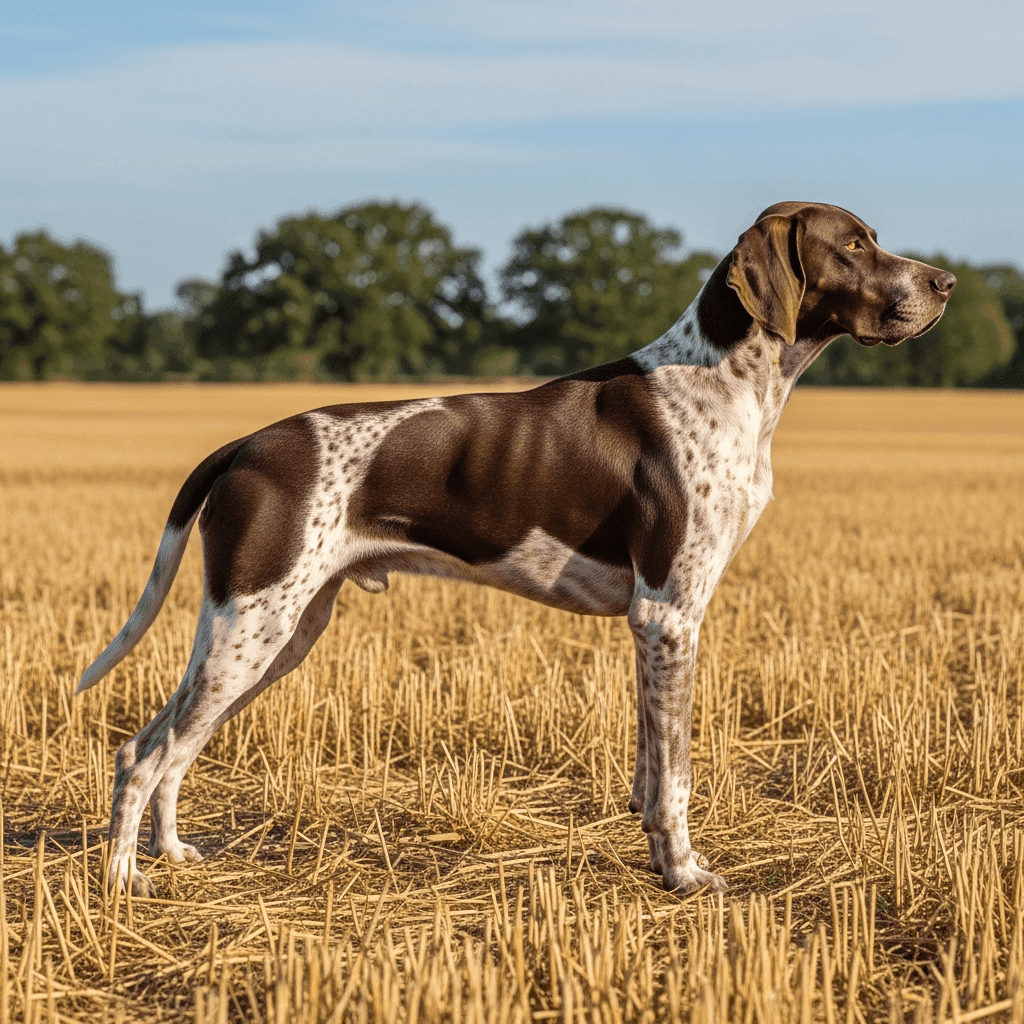
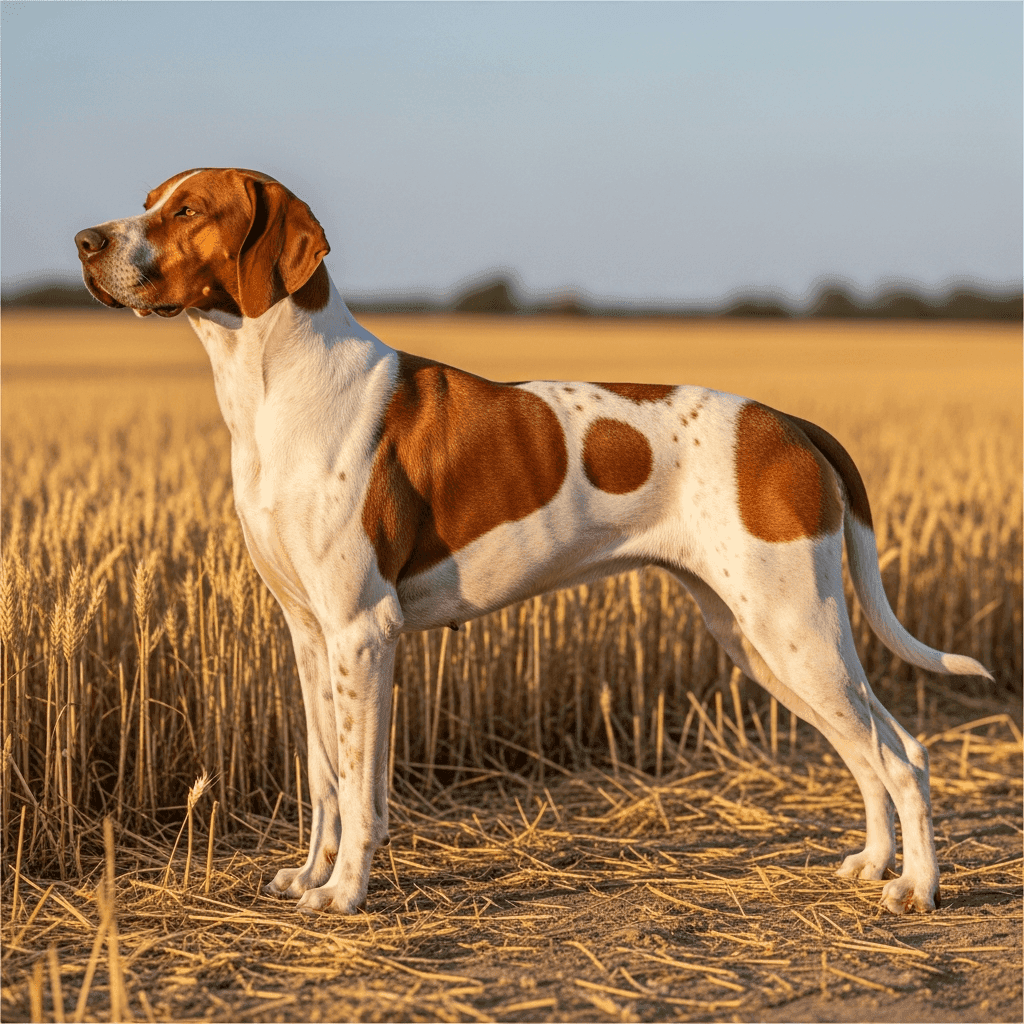
This large, imposing dog reaches a height of 58 to 69 cm for males and 56 to 68 cm for females, weighing between 17 to 25 kg. Its strong, sleek body structure, flexible and somewhat loose skin, and strong, proportional limbs with a robust skeletal system allow it to work tirelessly in challenging terrain – from dense forests to open fields and mountains. The characteristic coat in shades of chestnut-brown with white spots or speckles, along with an elegant, aristocratic expression, adds to its unique charm.
However, the Gascon Hound is much more than just an exceptional exterior. It is extremely intelligent, loyal, balanced, and deeply attached to its family, making it an ideal companion for both hunters and families with children. Its short, smooth, dense coat makes grooming easy and does not require complicated grooming procedures, which is a significant advantage for owners who prefer less demanding dogs.
The Gascon Hound integrates well into family life, easily and willingly forming deep emotional bonds not only with children but also with other pets. Although its hunting instinct is strong and deeply rooted, its temperament is balanced, gentle, and friendly – it can be both energetic and enthusiastic while working in the field, as well as calm, patient, and affectionate at home.
It is important to remember that the Gascon Hound requires regular, intense physical activity and mental stimulation to maintain its excellent physical and mental condition. This is a dog that deeply values time spent with its owner, participation in daily activities, and shared outdoor adventures. It definitely does not tolerate prolonged solitude – leaving it alone for many hours can lead to serious behavioral issues, including separation anxiety, destructive behaviors, and excessive barking.
Its ideal environment is one where it has constant companionship from the family and ample opportunities for active engagement – hunting, long walks, running, hiking, or canine sports. In the following sections of this detailed guide, you will learn more about health, grooming specifics, nutritional needs, training methods, and the fascinating history of this exceptional French breed dating back to the 15th century. You will understand why the Gascon Hound has won the hearts of thousands of hunters and families around the world and how you can make it a happy, fulfilled member of your family.
General body structure: The Gascon Hound is a dog with an elegant, noble, and harmonious silhouette that combines strength, endurance, and agility. Its build is strong and well-developed, but without excessive heaviness or massiveness, which allows the dog to move with natural grace, lightly and freely. It is a classic braque type dog – a hound of medium proportions, noble appearance, powerful yet not overly heavy, characterized by a solid skeletal structure. Females are slightly slimmer and more delicate than males.
Head and expression: The head is quite large and expressive, but not too heavy or massive. In profile, the lines of the skull and muzzle are slightly divergent. The skull is almost flat or very slightly rounded, with a moderately defined central furrow only lightly marked. The occipital protuberance is barely visible. The stop (the transition from forehead to muzzle) is neither shallow nor distinctly emphasized – it is moderate.
Muzzle, nose, and lips: The muzzle is wide, rectangular, sometimes slightly convex. The length of the muzzle is somewhat shorter than the length of the skull. The nose is wide, brown, with well-opened nostrils, which ensures an excellent sense of smell. The lips are drooping and quite wrinkled at the corners – the corners of the lips are distinctly marked. The dentition should be complete, although a scissor bite is tolerated.
Eyes: The eyes are wide open, well-set in the eye sockets, and are chestnut-brown or dark yellow in color. The expression of the eyes is sincere, open, intelligent, and friendly, giving the dog a sympathetic, trustworthy appearance.
Ears: The ears are of medium length, set at medium height, slightly wrinkled, and drooping along the head, which adds a characteristic, gentle expression to the dog. Long, hanging ears are typical of hound dogs and help direct scents toward the nose while tracking.
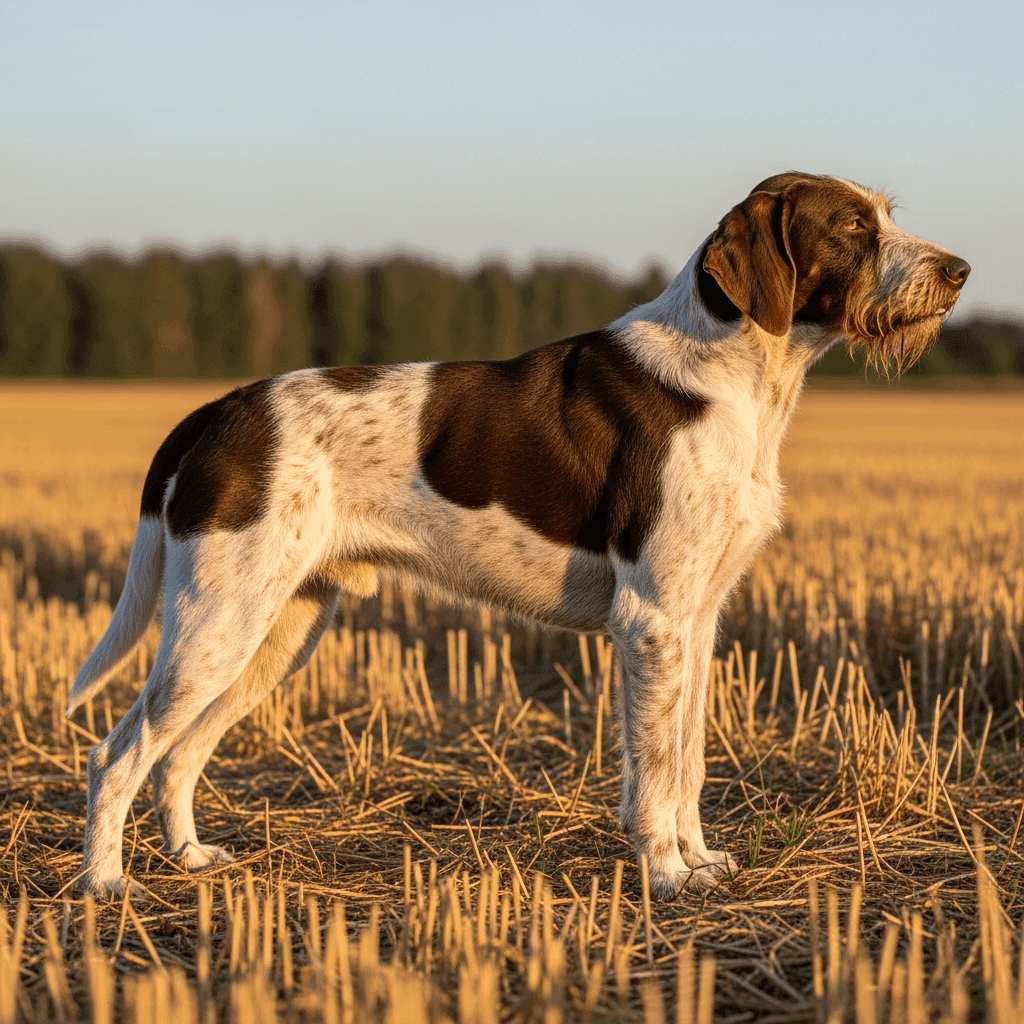
Coat and coloration: The coat is short, smooth, closely adhering to the body, and quite dense, providing protection against adverse weather conditions while working in the field. It is characterized by various shades of chestnut-brown with white spots, flecks, or speckling (marbling). Color patterns with larger brown patches on a white background are also possible. The coloration is very distinctive and gives each individual a unique, one-of-a-kind appearance.
Sizes: The height at the withers is:
- Males: from 58 to 69 cm
- Females: from 56 to 68 cm
The body weight ranges from 17-25 kg, depending on the sex, build, and condition of the individual.
Limbs and movement: The Gascon Hound has strong, straight, well-proportioned limbs with a robust skeletal structure, providing it with great agility, endurance, and confidence in moving through difficult terrain – on uneven ground, in the forest, and in wetlands. The paws are compact, with well-knit toes. The neck is long enough, muscular, and well-set, allowing for free lowering of the head while tracking. The body is strong, well-built, with a solid chest and strong back, making it an ideal dog for prolonged hunting in challenging terrain and weather conditions.
Skin: The skin is elastic, quite loose, which is typical for braque-type dogs and provides additional protection while working in dense underbrush and difficult terrain.
General character: The Gascon Hound is a dog with a balanced, gentle, friendly, and loyal temperament, combining the traits of an excellent working dog and a devoted family companion. It is extremely intelligent, quick to learn, eager to cooperate, and deeply attached to its family. Its character is calm, patient, and full of nobility.
Relationship with family: It is very sociable, warm, and loves spending time with people, making it an ideal companion for families. The Gascon Hound forms a deep emotional bond with its owners and is ready to accompany them in all activities – from daily walks to shared trips and adventures. This is a dog that cannot tolerate prolonged solitude and needs constant contact with its family.
Relationship with children: This breed gets along well with children – it is gentle, patient, and understanding. The Gascon Hound enjoys playing together and is tolerant of children's antics; however, due to its size and energy, it should be supervised around small children to avoid accidentally knocking them over during play.
Relationship with other animals: The Gascon Hound generally tolerates other pets well, especially if it has been properly socialized from a young age. However, it may exhibit a strong hunting instinct towards birds and small animals, which stems from its purpose as a retrieving dog for bird hunting.
Relationship with strangers: The Gascon Hound is moderately sensitive to strangers – although it is not a natural guard dog nor aggressive towards unknown people, it maintains a certain reserve and caution. After a brief introduction, however, it is open and friendly towards new people, especially if it senses that its owner trusts them.
Hunting instinct and focus: This breed is known for its highly developed, deeply rooted hunting instinct, which makes it exceptionally focused, patient, and persistent during hunting. In the field, it demonstrates an excellent sense of smell, confidence in pointing birds, and a willingness to retrieve. However, at home, it is gentle, patient, and calm, able to switch off work mode and relax with the family.
Activity and stimulation needs: The Gascon Hound is a high-energy breed that requires regular, intense physical activity and mental stimulation. It values activity, challenges, and the opportunity to utilize its natural instincts. Owners should provide it with an appropriate amount of exercise, play, and mental tasks to avoid boredom, frustration, and destructive behaviors.
Behavioral problems due to lack of activity: Without adequate exercise, stimulation, and companionship, the Gascon Hound may develop behavioral problems such as:
- Separation anxiety and stress when alone
- Excessive, persistent barking
- Destruction of furniture and household items
- Digging holes in the garden
- Restless behavior and difficulty relaxing
Therefore, it is crucial for prospective owners to be aware of its needs and be ready to dedicate time to daily, long outdoor activities.
General health status: The Gascon Hound is considered a healthy, resilient, and long-lived breed of dog, with an average lifespan of 12 to 14 years. With proper care, a balanced diet, regular physical activity, and veterinary preventive measures, many individuals live even longer in excellent condition.
Resistance and adaptation: This breed is not known for many specific health problems and shows great resistance to various weather conditions – both heat and cold – making it a versatile, hardy hunting dog capable of working in diverse climatic and terrain conditions.
Typical orthopedic conditions: Like many medium and large-sized hunting dogs, the Gascon Hound may be prone to certain orthopedic conditions:
- Hip dysplasia (HD): A developmental defect of the hip joint that can lead to pain, lameness, and arthritis. Responsible breeders conduct X-ray examinations of the parents before breeding to minimize risk.
- Elbow dysplasia (ED): A developmental defect of the elbow joint, occurring less frequently than hip dysplasia but also requiring monitoring.
Ophthalmic problems: The breed may experience certain vision issues:
- Cataract: Clouding of the eye lens that can lead to vision loss, especially in older age.
- Entropion: Inward rolling of the eyelids, causing irritation of the cornea and requiring surgical correction.
Risk of overweight: In older, less active dogs or neutered/spayed individuals, there is an increased risk of overweight and obesity. Therefore, it is important to provide them with a proper diet tailored to their activity level and regular physical activity to maintain a healthy weight and condition.
Ear problems: Due to their long, drooping ears, the Gascon Hound may be prone to ear infections, especially after swimming, hunting in wet conditions, or being in a humid environment. Regular checking and cleaning of the ears is crucial to prevent infections.
Health prevention: Owners should ensure:
- Regular veterinary visits (at least once a year, twice in older age)
- Current vaccinations according to the vaccination schedule
- Parasite prevention (deworming, protection against ticks, fleas, mosquitoes)
- Monitoring weight and body condition
- Screening for dysplasia and ophthalmic problems
- Care for ear, teeth, and nail hygiene
With proper prevention and conscious care, the Gascon Hound can enjoy a long, healthy, and active life alongside its family.
Overall ease of grooming: Grooming the Gascon Hound is relatively simple and does not require complicated procedures or frequent visits to a professional groomer, thanks to its short, smooth, and closely fitting coat. This is a significant advantage for owners who prefer breeds with low grooming requirements.
Coat brushing: The Gascon Hound requires regular brushing to remove dead hair, minimize shedding (which is at a medium level), and keep the coat in good condition with a healthy, shiny appearance. Typically, brushing once a week is sufficient using a natural bristle brush or a rubber grooming glove. During periods of heavier shedding (spring and autumn), it is advisable to increase the brushing frequency to 2-3 times a week.
Bathing: Baths should be given only when absolutely necessary – for example, after intense hunting, getting muddy, or having an unpleasant odor. Too frequent bathing can disrupt the natural protective oily layer of the skin and lead to irritation, dryness, and dermatological issues. A bath every 2-3 months or as needed is sufficient, using gentle shampoos specifically designed for dogs.
Ear cleaning: It is important to pay special attention to the ears, which are long and drooping – this structure promotes the accumulation of moisture, dirt, wax, and can lead to bacterial or fungal infections. It is recommended to clean the ears regularly at least once a week (or more often after swimming or hunting in wet conditions). Use special ear cleaning solutions for dogs and soft gauze or cotton pads. Never insert cotton swabs deeply into the ear canal. Monitoring the condition of the inner ears helps to detect any inflammation, redness, or unpleasant odor early.
Oral hygiene: It is recommended to brush the teeth daily using toothpaste specifically designed for dogs and a soft toothbrush. Regular oral hygiene will help maintain good gum health, prevent tartar buildup, cavities, and periodontal disease. Additionally, dental chews can be used to support natural tooth hygiene.
Nail trimming: Nails should be regularly trimmed every 3-4 weeks, depending on the rate of wear during walks and activities. Overgrown nails can cause discomfort while walking, negatively affect the dog's posture, and lead to joint problems. If you can hear the nails clicking on the floor while walking, it means they are already too long and need to be trimmed.
Skin condition monitoring: During brushing, it is worth regularly checking the condition of the skin – looking for irritations, rashes, ticks, wounds, or other changes. After every outdoor walk, especially in the woods or tall grass, the dog should be thoroughly checked for ticks and other parasites.
With these simple, regular grooming practices, the Gascon Hound will remain healthy, clean, fragrant, and happy, with a shiny coat in excellent condition.
High exercise needs: The Gascon Hound is a breed of dogs with high energy and intense exercise needs, requiring regular, prolonged physical activity and mental stimulation. This breed was developed for long-lasting, durable hunting in challenging terrain, which is why it has enormous reserves of energy, endurance, and a strong work ethic that must be regularly utilized and released.
Recommended amount of activity: Daily walks, running, outdoor play, and mentally engaging tasks are absolutely essential to keep the dog in good physical, mental, and emotional condition. The Gascon Hound needs at least 1.5 to 2 hours of intense activity daily, and even more if possible.
Ideal types of activities: The Gascon Hound loves various forms of movement and activities that engage both the body and the senses:
- Long walks and hikes: Long, vigorous walks in diverse terrains – forests, meadows, fields, mountain paths – are ideal. The Gascon Hound loves to explore new places and track interesting scents.
- Running: An excellent companion for joggers – it eagerly accompanies its owner on long runs and covering long distances.
- Cycling: It can run alongside its owner's bike (using a special attachment), which is a great form of intense physical exercise.
- Hunting and fieldwork: For dogs intended for hunting work – participating in bird hunts (partridges, pheasants, ducks) is the best form of activity that allows for full utilization of natural instincts and skills.
- Swimming and water play: Many individuals love swimming and playing by the water, which is an excellent, low-impact form of physical activity, especially on hot days.
- Scent games and tracking: Exercises that engage the sense of smell – mantrailing, nosework, searching for hidden objects or toys – greatly stimulate the dog's mind and satisfy its natural tracking instincts.
- Canine sports: The Gascon Hound can successfully participate in various dog sports, such as agility, rally obedience, canicross (running with a dog), bikejoring (cycling with a dog), or dog trekking.
The importance of variety: The Gascon Hound particularly values variety of activities and exploration of the natural environment. Long walks in the forest or meadows, where it can freely sniff, track, and discover new scents, are a true pleasure and deeply satisfy its natural needs. This breed loves to spend time outdoors in all weather conditions.
Environmental requirements: It is ideally suited to live in a house with a large garden in the countryside or suburbs, where it will have space to move freely. It can live in the city, but only if provided with a very large amount of physical activity and access to areas where it can run and explore.
Consequences of lack of activity: In the absence of adequate physical activity and mental stimulation, the Gascon Hound can become deeply unhappy, frustrated, and develop serious behavioral problems, such as:
- Destructive behaviors – destroying furniture, shoes, household items
- Excessive, persistent barking and howling
- Digging holes in the garden
- Restless behavior, running in circles, difficulty relaxing
- Separation anxiety and stress
- Attempts to escape the property in search of adventures
- Hyperactivity and difficulty focusing
Therefore, it is crucial for potential owners of the Gascon Hound to be aware of its very high exercise needs and be ready to dedicate time, energy, and commitment to daily, long, intense outdoor activities. This is not a breed for individuals leading a sedentary lifestyle or preferring quiet evenings on the couch.
General characteristics of training: Training the Gascon Saintongeois is relatively easy, satisfying, and enjoyable, as this breed is very intelligent, alert, eager to learn, and deeply engaged in working with its owner. The Gascon Saintongeois loves to work with people, is loyal, and has a natural desire to please its handler, making it an excellent companion for those who wish to spend active time with their dog and engage in its training.
Training methods: Owners should use positive, reward-based training methods, which involve rewarding the dog for good behavior – with treats, toys, verbal praise, or petting. The Gascon Saintongeois responds well to positive reinforcement and quickly learns desired behaviors. It is important that training is regular, systematic, consistent, yet gentle and patient, as the Gascon Saintongeois can be sensitive to overly harsh, punitive methods, yelling, or physical punishments. Such an approach can discourage the dog, weaken its confidence, and damage the bond with the owner.
Basic obedience: It is advisable to start training with basic obedience commands, which are the foundation of good dog behavior:
- Sit – the basic command for the sitting position
- Lie down – the lying position, useful in situations requiring calmness
- Stay – the command to maintain position, particularly important for safety
- Come – recall, absolutely crucial due to the hunting instinct
- Leave it – a command to refrain from unwanted objects, food, or scents
- Heel – walking beside the owner on a loose leash
Advanced training: After mastering the basics, one can move on to more advanced commands and tasks. Due to the natural hunting instincts of the Gascon Saintongeois, elements of hunting training can also be introduced:
- Retrieving: Bringing back items, decoys for birds – the Gascon Saintongeois has a natural inclination to retrieve
- Pointing: Learning the characteristic pointing position when the dog scents birds
- Fieldwork: Searching for birds in varied terrain, cooperating with the handler at a distance
- Water work: Retrieving from water, swimming after waterfowl
Socialization: Early, broad, and positive socialization is absolutely crucial for the Gascon Saintongeois. The dog should gradually and positively be exposed to various stimuli from 8-12 weeks of age:
- Different people (men, women, children, elderly individuals)
- Other dogs and animals
- Various environments (city, countryside, forest, beach, stores)
- Different sounds (cars, trains, fireworks, storms)
- Different surfaces (concrete, grass, sand, bridges, stairs)
Group training: The Gascon Saintongeois responds well to group training, so it is worth considering participation in dog training classes (puppy school, obedience courses), which will allow it to:
- Socialize with other dogs in a controlled environment
- Learn to focus on the owner despite distractions
- Develop confidence and social skills
- Receive support from a professional trainer
Canine sports: The Gascon Saintongeois excels in various forms of advanced training and canine sports:
- Practical hunting and hunting competitions
- Mantrailing and nosework (scent detection)
- Rally obedience (a combination of obedience and agility)
- Agility (obstacle courses)
- Tracking
With high intelligence, a willingness to cooperate, a gentle temperament, and natural abilities, with the right, positive, and consistent approach, the Gascon Saintongeois can achieve high levels of obedience and be an excellent, well-trained companion – both in the field and at home.
Basics of a Balanced Diet: Proper nutrition for the Gascon Hound is absolutely crucial for its health, physical condition, energy, and longevity. As an active, highly energetic breed that requires intense physical effort, this hound needs a diet rich in high-quality protein and nutrients that support its energy, endurance, muscle health, joint health, and recovery after exertion.
Choosing Food: Owners should choose high-quality dog foods that are specifically tailored to the dog's age, weight, activity level, and any health needs. The best options include:
- Food for medium and large breeds: Tailored to the size of the dog and its caloric needs
- Food for active/sporting dogs: Contains higher amounts of protein and fats, which support energy and recovery
- Food for working/hunting dogs: Specialized food for hunting dogs, rich in ingredients that support endurance
Nutrients: A balanced diet for the Gascon Hound should include:
- High-quality animal protein: Poultry, beef, lamb, fish – as the main source of protein (about 25-30% of the food composition). Protein is crucial for muscle health, tissue recovery, and maintaining good physical condition.
- Healthy fats: Animal and plant fats provide energy and support skin and coat health. The fat content should be around 15-20% in food for active dogs.
- Carbohydrates: Rice, oats, sweet potatoes – as a source of long-term energy
- Vitamins and minerals: Essential for the proper functioning of the body, strengthening the immune system, and maintaining bone and joint health (calcium, phosphorus, vitamin D, B vitamins)
- Omega-3 and Omega-6 fatty acids: Support skin and coat health, brain functions, and have anti-inflammatory effects (particularly important for joint health)
- Glucosamine and chondroitin: Support joint and cartilage health, especially important for active and older dogs
Food Quantity and Risk of Overweight: Due to the high physical activity and fast metabolism of the Gascon Hound, it is important to provide an appropriate amount of calories tailored to the activity level. However, the Gascon Hound can be prone to overweight, especially if:
- The activity level decreases (e.g., in winter, after the hunting season, in older age)
- The dog has been neutered/spayed (metabolism decreases)
- Receives too many treats and dietary supplements
Therefore, it is crucial to:
- Control the amount of food given according to the manufacturer's recommendations and the dog's current activity
- Avoid overfeeding and excessive treats
- Regularly monitor the dog's weight and body condition (ribs should be palpable under the skin but not visible)
- Adjust portions according to age, weight, activity level, and conditions (e.g., reducing portions outside the hunting season)
Feeding at Different Life Stages:
- Puppies (up to 12-15 months): Require puppy food for medium/large breeds, rich in protein, calcium, and phosphorus, supporting proper growth and development of bones and muscles. Feeding 3-4 times a day.
- Adult dogs (1-7 years): Food for adult, active, or working dogs, tailored to a high level of activity. Feeding 2 times a day.
- Senior dogs (over 7-8 years): Food for senior dogs, with lower caloric content, supporting joint health, digestive system, and cognitive functions. Feeding 2 times a day.
Water: Fresh, clean water should be always available, especially:
- After intense physical activity or hunting
- On hot days
- When feeding dry food
Proper hydration is crucial for kidney health, proper body function, and temperature regulation.
Treats and Rewards: Healthy treats can be used as rewards during training and play, but should only make up a maximum of 10% of the daily caloric requirement. Good options include:
- Dried meat (poultry, beef, fish)
- Natural dental chews
- Fresh vegetables (carrots, cucumber, bell pepper, broccoli)
- Apple pieces (without seeds)
- Low-calorie natural training bites
Consultation with a Veterinarian: It is advisable to regularly consult with a veterinarian to determine the best, individually tailored diet for your Gascon Hound, especially in cases of:
- Health issues (food allergies, joint diseases, digestive problems)
- Changes in weight or condition
- Transitions between life stages (puppy → adult → senior)
- Increased or decreased activity levels
A proper, balanced diet tailored to the individual needs of the Gascon Hound is the foundation of its health, energy, vitality, and long, happy life.
Characteristic Traits
Pros
- Intelligent and quick to learn
- Deeply loyal to the family
- Balanced and gentle temperament
- Excellent sense of smell and hunting instinct
- Versatile hunting and family dog
- Easy to groom due to short coat
- Friendly towards children and other animals.
Cons
- Requires a lot of physical activity
- Does not tolerate prolonged loneliness
- May exhibit behavioral problems when bored
- Strong hunting instinct requires supervision
- Needs an experienced
- active owner
- Not suitable for apartment living without access to outdoor space.
Behavioral Ratings
Breed History
Ancient roots: The Gascon Hound has a rich, fascinating, and long history that dates back at least to the 15th century, when it first appeared in southwestern France, in the region of Gascony and the Central Pyrenees. It is one of the oldest French hunting dog breeds of the braque type (hound), whose ancestors were known as early as the Middle Ages.
Origin of the name and types: This breed was named after the region of Gascony (Gascogne), an area in southwestern France where it was particularly popular among local hunters and nobility. There are two different types of French hounds:
- Gascon type (larger): Gascon Hound – larger, more powerful, intended for hunting in difficult mountainous terrain
- Pyrenean type (smaller): Pyrenean Hound – smaller, more agile, more nimble
Both types originate from southwestern France and the Central Pyrenees region, where they have been bred in purity for centuries, preserving their unique traits and character.
Historical role and purpose: The Gascon Hound was bred as a retrieving dog for bird hunting (pointing dog) – its main tasks were to search for, point (pointing), and retrieve birds such as partridges, pheasants, quails, or ducks. Its excellent sense of smell, endurance, confidence in the field, and characteristic pointing posture (freezing in place with a raised paw and nose directed towards the birds) made it an indispensable companion for hunters.
Popularity among nobility and hunters: Over time, from the 15th to the 19th century, the Gascon Hound gained immense popularity among hunters, nobility, and aristocracy in France and other European countries. Its tracking, pointing, and retrieving skills were highly valued, and the breed was exported to various countries, influencing the development of other hound breeds.
Decline in popularity in the 20th century: In the 20th century, with the development of modern hunting methods, social changes, urbanization, and the emergence of new fashionable hunting dog breeds (particularly English and German hounds), the Gascon Hound became less popular and its numbers significantly declined. The breed nearly became extinct and was endangered.
Renaissance and revival: However, in recent decades, thanks to the efforts of enthusiasts, breeders, and canine organizations, the Gascon Hound is regaining significance and popularity, primarily among:
- Lovers of traditional, authentic French breeds
- Hunters looking for a versatile, durable retrieving dog
- Families seeking an active, intelligent, loyal companion
Modern times: Today, the Gascon Hound is valued not only as a superb, versatile hunting dog but also as a devoted, gentle family companion for active families that can provide it with adequate exercise, activity, and companionship. Although it remains a relatively rare breed outside of France, it is gaining increasing recognition in other European countries and in North America among hound enthusiasts, hunters, and lovers of authentic, traditional breeds.
International recognition: The breed is officially recognized by the Fédération Cynologique Internationale (FCI) as a breed in Group 7 (Hounds), Section 1.1 (Continental hounds, braque type), with standard number 133. The latest FCI standard was approved in August 2023.
Cultural heritage: The Gascon Hound is a living testament to the rich hunting tradition of France, its commitment to preserving native, authentic dog breeds, and the deep bond between hunters and their four-legged companions. It is a breed that combines history, tradition, functionality, and beauty, remaining true to its roots for over five centuries.