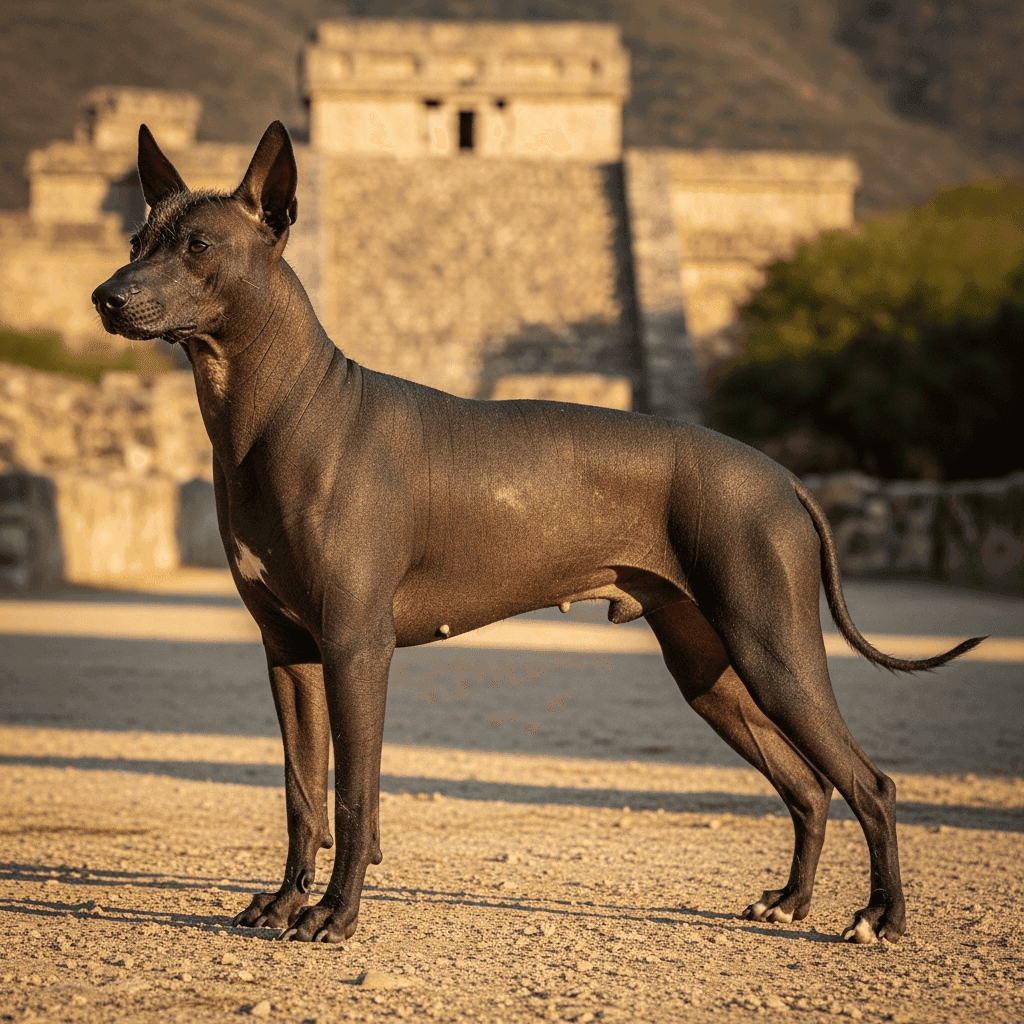
Mexican hairless dog
FCI Group
5• FCI 234
Size
Medium
Origin Country
MX
Height
25-60 cm
Weight
2-25 kg
Lifespan
14-16 years
Temperament
Overview
The Mexican Hairless Dog, also known as Xoloitzcuintli (pronounced kso-lo-its-kwin-tli), is one of the oldest and most fascinating dog breeds in the world, with a history that dates back over 3500 years. This extraordinary breed is deeply rooted in the culture of ancient Mexico, where it played a key role not only as a faithful companion to humans but also as a holy being in religious beliefs.
In Aztec mythology, it was believed that the Xoloitzcuintli was the guide of the souls of the deceased on their journey to the afterlife of Mictlan. According to legend, this dog helped souls cross the nine levels of the underworld, ferrying them across the river of death. This deep spiritual significance made the Xolo not just a pet, but a holy companion in life and after death. These dogs were often sacrificed and buried with their owners so they could continue to fulfill their guiding role even after death.
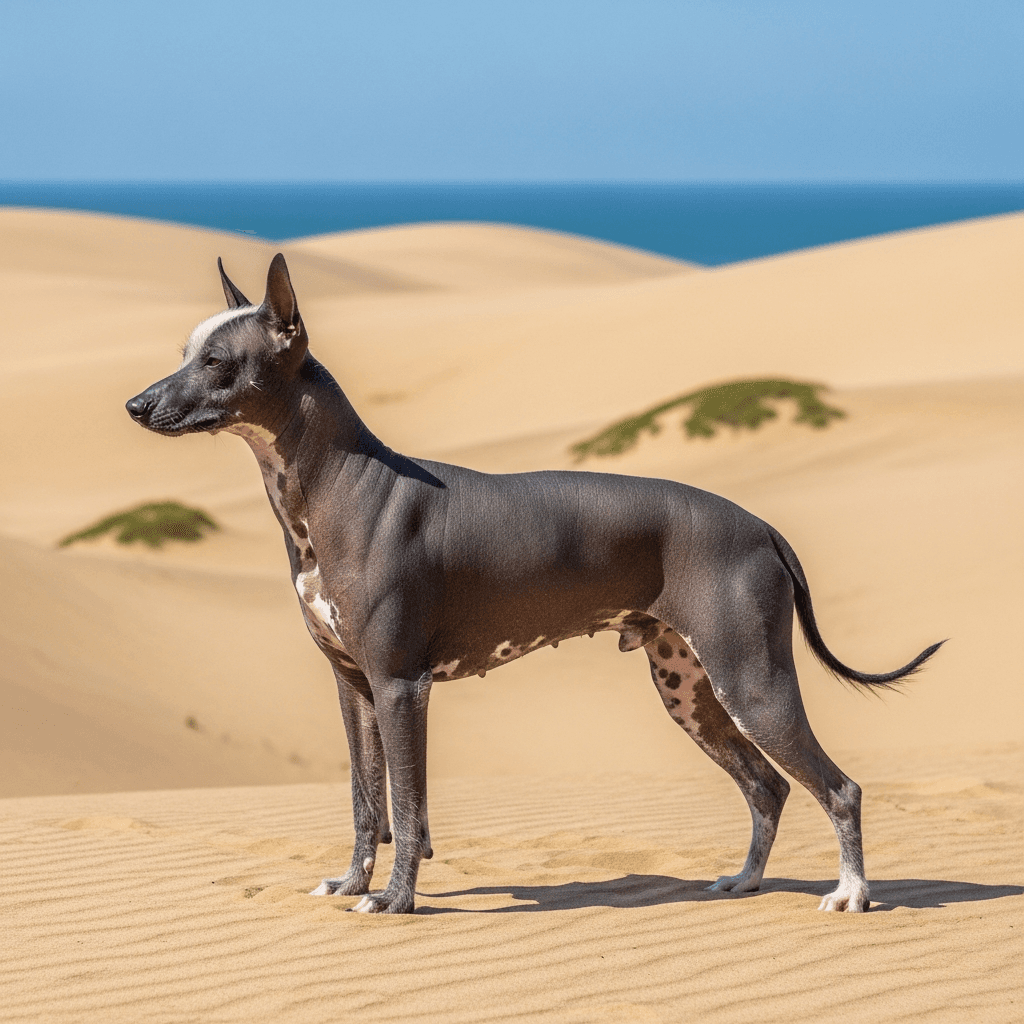
The characteristic appearance with a lack of fur makes the Xoloitzcuintli unique and distinctive. The breed comes in two varieties: hairless and coated, with the hairless variety being more recognizable and popular. The dog's body is harmoniously built, proportional, with a well-developed chest, slender limbs, and an elegant tail. Smooth, soft skin in various colors from black, gray, red, liver to brown requires special attention and care. Sensitivity to intense sun and cold are traits that owners must consider when planning outdoor activities. The Xoloitzcuintli comes in three sizes: miniature (25-35 cm), medium (36-45 cm), and standard (46-60 cm), allowing the breed to fit different living conditions and lifestyles.
The temperament of the Xolo is extremely balanced, combining calmness with a zest for life and alertness. This is a remarkably loyal breed that forms deep emotional bonds with its family, often becoming particularly attached to one person. These dogs highly value human presence and can experience intense separation anxiety if left alone for extended periods. Therefore, they thrive best in lively homes where they can be actively involved in the family's daily activities. Their remarkable intelligence is a huge asset in training, although they require patience, consistency, and a positive approach. Early socialization and systematic training are absolutely crucial to fully harness the potential of this breed.
The Xoloitzcuintli also possesses natural guarding abilities, making it an excellent alarm dog without excessive aggression. It can be reserved and suspicious towards strangers, but with proper socialization, it becomes more open. Its extraordinary, prehistoric appearance and warm, affectionate nature attract the attention and hearts of dog lovers around the world. If you are looking for a dog with a rich history, unique appearance, and deep emotional connection with the family, the Xoloitzcuintli may be the perfect choice. In the following chapters, we will discuss in detail the aspects of health, grooming, training, and nutrition of this extraordinary ancient breed.
The Mexican Hairless Dog, known as Xoloitzcuintli, presents a unique and distinctive appearance that sets it apart from all other dog breeds in the world. The breed comes in two varieties: hairless and coated, both of which feature a harmonious body structure that is proportional, well-muscled, and athletic.
The hairless variety is the most recognizable and characteristic of this breed. It is distinguished by its smooth, velvety skin, which can come in various colors: black, graphite, slate, red, liver, brown, and all shades in between. Although most of the body is completely hairless, there may be small tufts of hair on the head (topknot), neck, tips of the limbs, and tail. These natural tufts of hair are usually in a color that harmonizes with the skin and are accepted by the breed standard.
The coated variety has a dense, smooth, short coat covering the entire body. The fur is straight, close-fitting to the body, and can come in the same colors as the hairless variety, sometimes with various patterns and shades. This variety is equally valuable in terms of breed and plays an important role in breeding, providing genetic diversity.
The sizes of the breed are divided into three categories:
- Miniature: 25-35 cm at the withers, weight 2-7 kg
- Medium: 36-45 cm at the withers, weight 7-14 kg
- Standard: 46-60 cm at the withers, weight 14-25 kg
The head structure is distinctive and expressive. The skull is wide, strong, wedge-shaped, tapering towards the nose. The nose is prominent, well-developed, with a broad base and can be black, brown, or pink depending on the skin color. The eyes are medium-sized, almond-shaped, very expressive, conveying intelligence and alertness. The iris color ranges from black through all shades of brown to amber, harmonizing with the skin color. The ears are particularly characteristic – long, large, elegant, like those of a bat, always standing upright in a position of alertness, giving the dog an expression of extraordinary attention and intelligence.
The body silhouette is slim yet strong. The neck is long, elegant, slightly arched, without a dewlap. The back line is straight, strong, with a well-muscled loin. The chest is well-developed, deep, reaching to the elbows, with well-arched ribs. The abdomen is slightly tucked up, creating an elegant line. The tail is long, thin, tapering towards the end, carried naturally – lowered at rest, raised in a gentle arc when in motion, never curled over the back. There may be a tuft of hair at the end of the tail.
The limbs are long, slender, yet well-muscled, completely straight both in front and behind, providing light, flexible, elegant movement. The paws are of the hare type, with long toes and strong claws in a color that harmonizes with the skin. The overall silhouette of the Xoloitzcuintli emanates elegance, nobility, and a primitive, prehistoric beauty that immediately catches the eye and remains in memory.
Xoloitzcuintli is a breed with a remarkably complex and fascinating temperament, harmoniously combining traits of loyalty, intelligence, alertness, and a deep emotional bond with family. Dogs of this breed are known for forming extraordinarily strong, almost spiritual connections with their guardians, often choosing one person as the primary object of their affection, while remaining friendly and devoted to the entire family.
Loyalty and attachment are the most characteristic traits of the Xolo. These dogs deeply value the company of their people and do not cope well with prolonged solitude. Left alone for many hours, they may experience intense separation anxiety, which can lead to destructive behavior, excessive barking, or depressive behaviors. For this reason, Xoloitzcuintli thrives best in homes where at least one person spends a significant part of the day at home, or where the dog can accompany the owners in daily activities.
Natural alertness and guarding instinct make the Xolo an excellent watchdog. It reacts to unusual sounds and the presence of strangers, notifying with loud, characteristic barking. However, this breed is not aggressive by nature. Towards strangers, it displays a rather reserved, suspicious, and observant attitude, which is completely typical for primitive dog breeds. Proper socialization from a puppy age is absolutely crucial for the dog to learn to differentiate normal situations from real threats and to avoid developing excessive distrust or fearfulness.
The intelligence of the Xoloitzcuintli is outstanding, making the breed relatively easy to train for experienced owners. These dogs quickly learn new commands and understand household routines perfectly. However, their intelligence is paired with independence and emotional sensitivity. Xolo needs motivation based on positive reinforcement, rewards, and play. It reacts poorly to criticism, shouting, or punishment, which can lead to anxiety, stubbornness, or avoidance behaviors. Training must be based on patience, consistency, and building trust.
The energy and activity level of the Xoloitzcuintli is moderate. This is not a hyperactive breed requiring hours of intense running, but it is also not a couch potato. Xolo loves playing with the family, going for walks, exploring the surroundings, and engaging in mentally stimulating tasks. Lack of proper physical and mental stimulation can lead to frustration, boredom, and behavioral problems. Regular daily activities are key to the mental balance of this breed.
In families with children, the Xoloitzcuintli can be a wonderful companion, provided that the children are calm, respect the animal, and have been taught how to properly interact with the dog. Xolo is patient and gentle, but its sensitive skin can be easily damaged during overly vigorous play. This breed is better suited for older children who can maintain gentleness.
Relationships with other animals depend on individual socialization. Xolos that have had contact with other dogs and pets from a young age usually accept their presence and can form friendships. However, some individuals may exhibit dominance over other same-sex dogs or a hunting instinct towards small animals. Early and consistent socialization is key to harmonious interspecies relationships.
In summary, the Xoloitzcuintli is a breed for experienced, patient owners who can appreciate its unique character, provide proper socialization, consistent training, and above all, spend a lot of time with it, creating a deep emotional bond. In the right environment, the Xolo becomes an incredibly devoted, affectionate, and intelligent companion for life.
The Xoloitzcuintli is considered a relatively healthy and long-lived breed, especially compared to many modern breeds. The average lifespan of the Mexican hairless dog is between 12 and 16 years, although many individuals, with proper care, genetics, and luck, can live up to 18-20 years, which is an impressive achievement for a dog of this size.
Thanks to its ancient, natural selection, the Xolo has avoided many health problems typical of breeds bred for extremes of appearance. However, like any breed, it has certain specific predispositions and health requirements that responsible owners should pay special attention to.
Skin sensitivity is the main health challenge for the hairless variety. Due to the lack of natural protection in the form of fur, the skin of the Xolo is exposed to sunburn, especially in areas with thin skin (ears, nose, back). Owners must apply dog-safe UV sunscreen before going out in the sun, especially in the summer and during peak sunlight hours. At the same time, the dog should have access to shade and fresh water while outdoors.
Skin problems may include:
- Juvenile acne in puppies, which usually resolves with age
- Skin bacterial or fungal infections due to improper grooming
- Dry skin requiring regular moisturizing with hypoallergenic creams
- Irritations and allergic skin reactions to cosmetics, detergents, or plants
Cold and changing weather conditions also pose a challenge. The hairless Xolo lacks natural thermal insulation, so on cool days, it needs protection in the form of dog clothing. Owners must adjust the length of walks and outdoor activities to the weather conditions to avoid hypothermia.
Dental issues and missing teeth are genetically linked to hairlessness. The genes responsible for hairlessness also affect dental development. Many hairless Xolos have an incomplete set of teeth – premolars may be missing, and sometimes canines or incisors as well. This phenomenon is normal for the breed and is not considered a breeding defect in the hairless variety. However, owners should regularly check the oral health, brush the dog's teeth, and provide appropriate dental toys to minimize the risk of periodontal disease.
Tendency to obesity is another issue that needs attention. Xolos enjoy eating, and without adequate physical activity, they can quickly gain weight, leading to additional strain on joints, heart, and a shortened lifespan. Owners must monitor food portions, avoid overfeeding, and ensure regular physical activity.
Other occasional health problems observed in the breed may include:
- Hip dysplasia (less common than in large breeds, but occurs occasionally)
- Cataracts and other eye problems in older age
- Food or environmental allergies
- Thyroid issues (hypothyroidism)
Health prevention should include regular veterinary visits (at least once a year, twice for older dogs), up-to-date vaccinations, deworming, and protection against external parasites. Blood tests and hormonal system checks are recommended for dogs over 7 years old.
In summary, with proper skin care, a balanced diet, regular activity, and veterinary prevention, the Xoloitzcuintli can enjoy a long, healthy, and active life as a beloved family member. The key is awareness of the breed's specific requirements and the owner's commitment to daily care.
Grooming the Xoloitzcuintli, despite its apparent lack of fur, requires regular attention and a specific approach, especially in the hairless variety. The skin of the hairless Xolo is more sensitive to external factors than the skin of fur-covered dogs, so owners must dedicate time to proper care and protection.
Daily skin care for the hairless variety:
Regular skin checks should become a daily ritual. Owners should inspect the skin for irritations, rashes, scratches, sunburns, dryness, or signs of bacterial or fungal infections. Early detection of problems significantly facilitates treatment and prevents complications.
Moisturizing the skin is absolutely crucial. Application of hypoallergenic, dog-specific moisturizing balms or oils should occur 2-3 times a week, and even daily in dry climates. It is best to use natural products without artificial fragrances, dyes, and parabens to minimize the risk of allergies. Coconut oil, shea butter, or specialized creams for hairless dog breeds work excellently.
Baths should be moderate – once a month or every 3-4 weeks is sufficient. Too frequent washing can dry out the skin, leading to increased sebum production and acne-like issues. Gentle, hypoallergenic shampoos for sensitive skin should be used, and after bathing, the dog should be thoroughly dried and a moisturizing balm applied. For dirt, dog wet wipes can be used for localized cleaning.
Sun protection is essential during outdoor activities, especially in spring and summer. Safe dog sunscreen (SPF 30 or higher) should be applied to the most exposed areas: ears, nose, back, and belly. Products should be specifically designed for animals, as dogs may lick the creams, and many ingredients safe for humans are toxic to dogs.
Protection from the cold is equally important. On cool days, especially in autumn and winter, the hairless Xolo needs clothing to protect against heat loss. Sweaters, jackets, or overalls should be made from natural, breathable materials and properly fitted to avoid restricting movement.
Grooming the coated variety:
The coated variety has short, smooth fur that requires significantly less intensive grooming. Regular brushing 1-2 times a week with a soft brush or glove to remove dead hair and distribute natural skin oils is sufficient. Baths can be less frequent, every 6-8 weeks or as needed.
Shared grooming for both varieties:
- Nails: Trimming every 2-4 weeks, depending on natural wear during walks. Overgrown nails can lead to mobility issues and joint pain.
- Ears: Regular inspection and cleaning once a week with special ear cleaning solutions for dogs. The large, erect ears of the Xolo can accumulate dust and debris.
- Teeth: Brushing teeth 2-3 times a week with dog toothpaste to prevent tartar buildup and periodontal disease. Particularly important for individuals with incomplete dentition.
- Eyes: Regularly wiping the corners of the eyes with a damp cloth to remove accumulated discharge.
Recommended and not recommended products:
✅ Recommended: Natural oils (coconut, jojoba), hypoallergenic shampoos for sensitive skin, UV sunscreen for dogs, clothing made from cotton or bamboo.
❌ Not recommended: Cosmetics with alcohol, artificial fragrances, parabens, aggressive detergents, creams with retinoids or AHA/BHA acids, human sunscreens containing zinc oxide.
In summary, grooming the Xoloitzcuintli requires consistency, appropriate products, and awareness of the specific needs of this unique breed. Proper grooming not only ensures healthy skin and comfort for the dog but also highlights the beauty and elegance of this ancient, one-of-a-kind breed.
The Xoloitzcuintli has moderate physical activity needs, placing it somewhere in the middle of the energy spectrum of dog breeds. It is not a breed that requires intense, hours-long exertion like the Border Collie or Jack Russell Terrier, but it is also not a couch potato content with a short walk around the block. The right amount and quality of exercise is crucial for the physical health, mental balance, and happiness of the Xolo.
The minimum amount of exercise for an adult Xoloitzcuintli is about 45-60 minutes of activity per day, divided into 2-3 sessions. This can include:
- Leisurely walks around the neighborhood (15-20 minutes in the morning and evening)
- Playtime in the garden or park (fetching a ball, searching for hidden treats)
- Obedience and trick training (10-15 minutes)
- Free play with other dogs at the dog park
- Indoor games at home on bad weather days (interactive toys, treat searching)
Size adaptation is important. A standard Xolo (46-60 cm) will require a bit more activity than a miniature one (25-35 cm), which can be satisfied with shorter walks and indoor play.
Mental stimulation is just as important as physical. The Xoloitzcuintli is an intelligent breed that needs mental challenges to avoid boredom and frustration. They excel at:
- Scent games (searching for hidden treats, scent mats, scent trails)
- Puzzles and interactive toys like a Kong filled with paste
- Learning new commands and tricks
- Sports activities like basic agility, rally obedience
- Hide and seek games
Exercise intensity should be moderate. The Xolo is not a breed made for marathons or long mountain hikes. Too intense activity can lead to exhaustion, joint problems, or skin burns (from prolonged sun exposure). Owners should watch for signs of fatigue: heavy breathing, slowing down, reluctance to continue moving – and adjust the activity according to the dog's capabilities.
Specific requirements due to sensitive skin:
On hot, sunny days:
- Plan walks early in the morning or late in the evening when the sun is less intense
- Apply UV sunscreen before going out
- Provide access to shade and water during outdoor play
- Avoid hot surfaces like asphalt, which can burn paws and skin
- Limit sun exposure to 20-30 minutes
On cold, rainy days:
- Dress the dog in appropriate clothing to protect against cold and moisture
- Shorten walk times on freezing days
- Thoroughly dry the dog upon returning home to avoid chilling
- Replace some outdoor activities with indoor activities
Recommended activities for Xolo:
- Leashed walks in various locations (scent and mental stimulation)
- Fetch games with soft toys
- Swimming under supervision (some Xolos love water but require skin protection)
- Agility or rally obedience at a recreational level
- Scent work and tracking training
Activities not recommended:
- Intense long-distance running
- Jumping from high places that strain the joints
- Long exposures to intense sun without protection
- Activities on rough, sharp surfaces that may damage sensitive skin
Consequences of insufficient activity can include overweight, behavioral problems (destruction, excessive barking), frustration, depression, and weakened bonds with the owner. On the other hand, excessive intense exertion can lead to exhaustion, injuries, and health problems.
In summary, the Xoloitzcuintli needs regular, moderate physical activity combined with rich mental stimulation, tailored to weather conditions and specific needs arising from sensitive skin. With the right approach, the Xolo will become a joyful, balanced companion for daily activities, enjoying the time spent together outdoors and at home.
The Xoloitzcuintli is a breed with exceptional intelligence and excellent memory, which theoretically should make training easy and enjoyable. However, in practice, success in training a Xolo depends on a deep understanding of the character of this ancient breed and the application of appropriate methods based on positive reinforcement and building trust.
Key traits influencing training:
Intelligence and independence – The Xolo quickly understands what is expected of it, but at the same time, it can be independent and self-thinking. This is not a breed like the golden retriever, which wants to please its owner unconditionally. The Xoloitzcuintli needs clear motivation to follow commands – it must see the purpose in the action or expect a reward.
Emotional sensitivity – The Xolo is an extremely sensitive breed to the tone of voice, body language, and emotions of its owner. It reacts poorly to shouting, harsh punishments, or aggressive training methods. Such an approach leads to fear, stubbornness, avoidance, or complete breakdown of cooperation. Training must be based on patience, calmness, and positive reinforcement.
Strong bond with the owner – Once the Xolo builds trust with its caregiver, it becomes incredibly cooperative and eager to learn. The key is time and consistently building a relationship based on respect and positive experiences.
Recommended training methods:
Positive reinforcement is the foundation of effective training for the Xolo. Rewarding desired behaviors with treats, toys, verbal praise, and petting creates a positive association and motivates the dog to repeat behaviors. It is crucial to reward immediately after the command is executed so that the dog clearly associates the reward with the action.
Short, frequent training sessions (5-10 minutes, 2-3 times a day) are much more effective than long, monotonous lessons. The Xolo quickly gets bored and loses focus, so it’s better to end the session at a moment of success, leaving the dog with a positive experience and a desire for more.
Consistency and clear rules – All family members must use the same commands, gestures, and rules. Inconsistency confuses the dog and slows down learning. If the dog is not allowed on the couch, the rule must apply at all times, without exceptions.
Early socialization (from 8 weeks of age) is absolutely crucial for the Xolo. Puppies should be systematically and positively exposed to a variety of stimuli:
- Different types of people (children, elderly, people in hats, glasses)
- Other dogs and pets
- Different environments (city, park, dog-friendly stores, bus)
- Different sounds (traffic, thunder, vacuum cleaner, doorbell)
- Different surfaces (grass, asphalt, metal, wood)
Proper socialization prevents the development of anxiety, aggression, or excessive distrust of strangers.
Basic commands to teach first:
- Sit – the foundation of obedience, helps in controlling the dog
- Lie down – calming, control in stressful situations
- Stay – safety, prevents running away
- Come – the most important command for the dog's safety
- No or Leave it – interrupting unwanted behavior
- Calm down – controlling excitement, barking
Leash training is essential from the very first walks. The Xolo may have a tendency to pull or veer off when encountering strangers. Teaching loose leash walking using the method of stopping and changing direction when the leash is taut, along with rewarding walking beside you, yields excellent results.
Typical challenges in training the Xolo:
Separation anxiety – Due to their strong attachment, Xolos may have trouble being left alone. Training should include gradually acclimating the dog to short periods of solitude, creating positive associations with being alone (Kong toys with food), and avoiding dramatic goodbyes or returns.
Barking at strangers – The natural guarding instinct can lead to excessive barking. Training should include teaching the quiet command, rewarding calm behavior around guests, and desensitizing to the appearance of strangers.
Distrust of strangers – Early and regular socialization is key. Asking guests to offer the dog treats helps build positive associations.
Stubbornness – In situations where the Xolo does not see motivation, it may ignore commands. The solution is to increase the value of rewards, shorten training sessions, and introduce greater variety into exercises.
Advanced training and activities:
The Xoloitzcuintli can successfully participate in:
- Advanced obedience training (rally obedience)
- Recreational agility (adapted to its build and skin sensitivity)
- Scent work and tracking games (nosework)
- Tricks and activities that develop intelligence
- Animal-assisted therapy (for calm, well-socialized individuals)
What to avoid in Xolo training:
- ❌ Shouting, physical punishment, aggressive corrections with the leash
- ❌ Long, monotonous training sessions
- ❌ Inconsistency in rules and commands
- ❌ Forcing contact with dogs or people that induce fear
- ❌ Training in extreme weather conditions (heat, cold) without appropriate protection
In summary, training the Xoloitzcuintli requires patience, consistency, a positive approach, and a deep understanding of the specific character of this ancient breed. With the right approach, the Xolo becomes a well-mannered, obedient, and intelligent companion, with whom we build a deep, trust-based bond that lasts a lifetime.
Xoloitzcuintli, despite its unique appearance, has typical nutritional needs similar to other dog breeds of comparable size, but with some specific requirements due to its sensitive skin and tendency towards dental issues. A properly balanced diet is crucial for maintaining healthy skin, appropriate body weight, a shiny coat (in the case of the coated variety), and overall condition and longevity.
Basic nutrition guidelines:
High-quality animal protein should form the basis of the Xolo's diet. Protein sources such as chicken, turkey, beef, lamb, and fish (salmon, mackerel) provide essential amino acids for muscle building, supporting skin regeneration, and maintaining a healthy immune system. The protein content in the food should be at least 22-28% for adult dogs and 28-32% for puppies.
Healthy fats are essential for skin and coat health. Omega-3 and omega-6 fatty acids support skin elasticity, reduce inflammation, and help maintain a shiny coat in the coated variety. Excellent sources include salmon oil, flaxseed oil, and chicken fat. The fat content should be 12-18% for adult dogs and 15-20% for puppies.
Low glycemic index carbohydrates provide energy without causing rapid spikes in blood sugar. Sweet potatoes, brown rice, oats, and quinoa are better choices than regular wheat or corn, which can trigger food allergies.
Fruits and vegetables provide fiber, vitamins, minerals, and antioxidants that support the immune system. Carrots, broccoli, spinach, berries, and apples are excellent additions to the diet.
Supplementation to support skin health:
- Omega-3 and omega-6 (salmon oil) – support healthy, moisturized skin
- Vitamin E – an antioxidant that protects the skin
- Biotin – supports skin regeneration and coat quality
- Zinc – supports wound healing and skin regeneration
- Probiotics – support gut health and the immune system, indirectly affecting skin health
Adjusting portions to size and activity:
Portion size depends on size, age, activity level, and individual metabolism:
- Miniature Xolo (25-35 cm, 2-7 kg): 150-400 kcal/day, about 40-100g of dry food/day
- Medium Xolo (36-45 cm, 7-14 kg): 400-800 kcal/day, about 100-200g of dry food/day
- Standard Xolo (46-60 cm, 14-25 kg): 800-1400 kcal/day, about 200-350g of dry food/day
Active, young, or working dogs need more calories, while older, less active dogs or those prone to weight gain require smaller portions.
Feeding frequency:
- Puppies (2-6 months): 3-4 meals per day
- Young dogs (6-12 months): 2-3 meals per day
- Adult dogs (over 12 months): 2 meals per day
- Senior dogs (over 7 years): 2 meals per day, possibly divided into 3 smaller meals if there are digestive issues
Regular feeding times help maintain stable digestive function and facilitate weight control.
Body weight control and obesity prevention:
Xoloitzcuintli has a tendency to gain weight, especially with insufficient activity and overfeeding. Overweight can lead to joint, cardiovascular, and diabetes issues and shorten lifespan. Owners should:
- Regularly weigh the dog and monitor body condition
- Use measured portions, avoiding table scraps
- Limit treats to a maximum of 10% of daily calorie intake
- Ensure regular physical activity
- If overweight, consult a veterinarian regarding a weight reduction diet
Specific dental needs:
Due to incomplete dentition in the hairless variety, owners should adjust the consistency of the food:
- Dry food with smaller kibble size or slightly moistened with water
- Canned food as a supplement or base diet for dogs with significant tooth loss
- Soft or dissolvable dental treats
- Avoid very hard chews that may damage sensitive gums
Access to fresh water:
Fresh, clean water must be available at all times, especially for the hairless variety, which may be more prone to dehydration due to sensitive skin. Special attention should be paid to hydration on hot days.
Prohibited and dangerous products for dogs:
- ❌ Chocolate, cocoa – toxic to dogs
- ❌ Onion, garlic – destroy red blood cells
- ❌ Grapes, raisins – damage kidneys
- ❌ Xylitol (sweetener) – causes hypoglycemia
- ❌ Avocado – contains toxic persin
- ❌ Cooked bones – can splinter and cause perforations
- ❌ Alcohol, coffee, caffeinated drinks – toxic
Choosing ready-made food or homemade diet:
Premium or super-premium dry food specifically formulated for sensitive skin or small/medium breeds is an excellent choice providing balanced nutrients.
High-quality wet food can be used as a supplement or base diet, especially for dogs with dental issues.
Homemade diet (BARF, cooked) can be used but requires consultation with a veterinarian or animal nutritionist to ensure complete nutritional balance and avoid deficiencies.
In summary, proper nutrition for Xoloitzcuintli is based on high-quality animal protein, healthy fats supporting the skin, balanced carbohydrates, and portion control to prevent obesity. A proper diet tailored to the individual needs of the dog is the foundation of a long, healthy, and active life.
Characteristic Traits
Pros
- Exceptional loyalty and deep attachment to family
- Unique prehistoric appearance that attracts attention
- High intelligence facilitating training
- Excellent guard dog without excessive aggression
- Longevity and relatively good health with proper care
- Hypoallergenic nature of the hairless variety for allergy sufferers
- No shedding of fur in the hairless variety.
Cons
- Requires special care for sensitive skin
- Prone to sunburn and chill
- May suffer from intense separation anxiety
- Emotional sensitivity requiring a gentle approach
- Reserved towards strangers requiring socialization
- Incomplete dentition in the hairless variety
- Relatively rare breed difficult to find.
Behavioral Ratings
Breed History
The Mexican Hairless Dog, known as Xoloitzcuintli or simply Xolo, is one of the oldest and most fascinating dog breeds in the world, with a history that dates back over 3500 years to pre-Columbian Mesoamerica. The breed's name comes from the Nahuatl language used by the Aztecs and consists of two words: Xolotl – the name of the Aztec god of fire, lightning, and death, and itzcuintli – meaning dog.
Ancient roots and spiritual significance:
Archaeological discoveries confirm that Xoloitzcuintli accompanied the people inhabiting present-day Mexico as early as 1500 B.C. Clay figurines depicting hairless dogs have been found in the graves of the Colima culture (300 B.C. – 300 A.D.) in western-central Mexico, indicating the deep significance of these dogs in the spiritual life of ancient cultures.
In Aztec beliefs, Xoloitzcuintli played a crucial role as a spiritual guide. It was believed that the god Xolotl took the form of a dog and created Xoloitzcuintli to accompany the souls of the deceased on their perilous journey through Mictlan – the underworld of the dead consisting of nine levels. According to mythology, souls had to overcome many obstacles, including crossing the wide river Apanohuaia. Xolo was said to carry souls across this river on its back, which is why these dogs were often sacrificed and buried with their deceased owners.
This sacred role meant that Xoloitzcuintli was treated with the utmost respect. These dogs were bred near temples, receiving special food and care. At the same time, it was believed that Xolo had healing properties – the warmth of their bodies was thought to alleviate arthritic, rheumatic, and other ailments, leading to the practice of sleeping with these dogs for therapeutic purposes.
Culinary aspect and ceremonial significance:
Paradoxically, despite their spiritual significance, Xoloitzcuintli was also bred as a source of food. In the cultures of the Aztecs, Mayans, and Zapotecs, Xolo meat was considered a ceremonial delicacy, consumed during special religious and ritual ceremonies. These dogs were castrated and fattened on a special diet to achieve the desired meat quality. Consuming Xolo also had spiritual significance – it was believed that eating this sacred animal connected people with the deities.
The colonial period and near extinction:
The arrival of Spanish conquistadors in the 16th century brought dramatic changes for Xoloitzcuintli. The Spaniards, viewing Aztec beliefs as pagan, fought against all associated symbols, including the sacred dogs. At the same time, they introduced European dog breeds that began to displace local varieties. The consumption of dog meat was banned by the colonizers, leading to a drastic decline in the population of Xolo bred for this purpose.
For the following centuries, Xoloitzcuintli survived only in isolated rural communities of indigenous Mexicans, mainly in the states of Oaxaca and Guerrero, where traditional beliefs were stronger. The breed was virtually unknown outside of Mexico and was on the brink of extinction.
Revival in the 20th century:
In the 1940s and 50s, Mexican dog breeders and enthusiasts of national breeds began organizing rescue expeditions to remote regions of Mexico, searching for the last pure representatives of Xoloitzcuintli. Norman Pelham Wright, a British dog breeder living in Mexico, played a key role in this process. In 1954, during an expedition to Guerrero and Oaxaca, several pure Xolos were found, which became the foundation for the breed restoration program.
In 1956, the Mexican Kennel Club (Federación Canófila Mexicana) officially recognized Xoloitzcuintli as a national breed and began systematic breeding based on breed standards. A breeding program was developed to increase the population while maintaining genetic purity and typical breed characteristics.
International recognition:
The International Canine Federation (FCI) officially recognized Xoloitzcuintli in 1961, classifying the breed in Group 5 (Spitz and Primitive Types), Section 6 (Primitive Type). The FCI standard No. 234 describes both the hairless and coated varieties in three sizes: miniature, medium, and standard.
The American Kennel Club (AKC) recognized the breed much later, in 2011, placing Xolo in the Non-Sporting group. This delay was due to the small population outside of Mexico and limited interest in the breed in the United States.
Contemporary status and symbolic significance:
Today, Xoloitzcuintli is a national treasure of Mexico and one of the symbols of Mexican cultural identity. In 2016, the breed was officially declared a symbol and cultural heritage of Mexico City. The image of Xolo appears in the works of famous Mexican artists such as Diego Rivera and Frida Kahlo, who raised these dogs and immortalized them in her paintings.
The population of Xolo is gradually increasing worldwide, although the breed remains relatively rare. The largest populations are found in Mexico, the United States, some European countries, and increasingly in Asia. It is estimated that there are currently several thousand registered Xolos worldwide, making the breed still endangered, though stable.
Genetics and the evolution of hairlessness:
The hairlessness of Xoloitzcuintli is the result of a natural genetic mutation that occurred thousands of years ago. The gene responsible for hairlessness (FOXI3) is dominant but lethal in a homozygous state – puppies inheriting two hairless genes (from both parents) die in the womb. Therefore, each litter from hairless parents naturally contains about 25% coated puppies, which are essential for maintaining the genetic diversity of the breed. The coated variety is fully accepted by breed standards and plays a crucial role in healthy breeding.
In summary, the history of Xoloitzcuintli is a fascinating journey from a sacred companion of the ancient Aztecs, through near extinction, to contemporary revival as a national symbol of Mexico. This ancient breed embodies a rich spiritual, cultural, and genetic heritage, making it one of the most unique and valuable dog breeds in the world.