Weimaraner
FCI Group
7• FCI 99
Size
Medium
Origin Country
DE
Height
57-70 cm
Weight
25-40 kg
Lifespan
10-12 years
Temperament
Overview
The Weimaraner, also known as the gray ghost, is a breed of dog that attracts attention with its extraordinary elegance and characteristic silver-gray coat. Its roots trace back to 19th century Germany, where careful breeding of this exceptional breed was conducted at the ducal court in Weimar. The Weimaraner was created with the idea of versatile hunting work – it is a dog equally adept in the field, in the forest, or while working near water.
Exceptional scent, agility, and perseverance make the Weimaraner an excellent partner for hunters. However, it is not just a working dog – it is also an incredibly loyal companion for active owners who value their dog's intelligence and devotion.
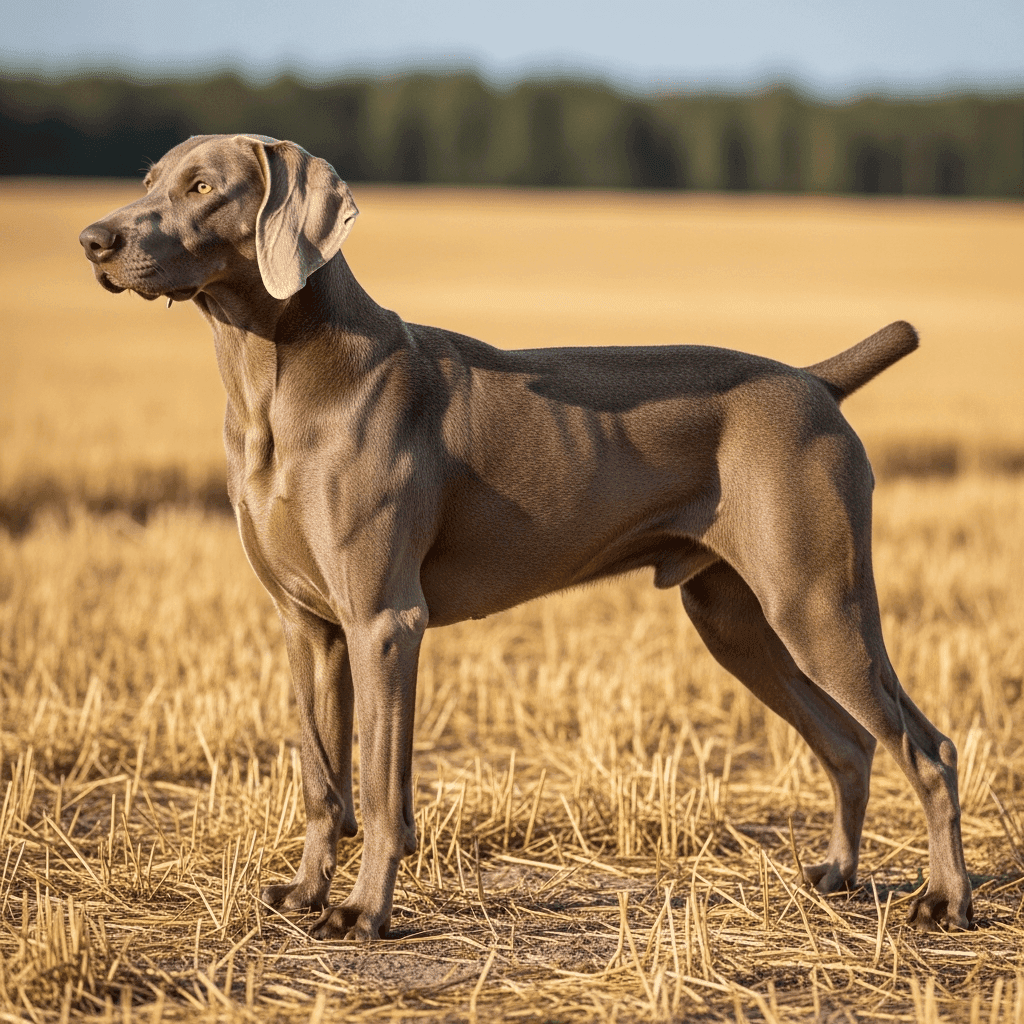
The Weimaraner is a dog with a strong, athletic build, medium to large in size, with a well-muscled physique. Its noble head with amber or blue eyes (in puppies) and long, velvety ears gives it a unique, almost aristocratic appearance. Long, strong limbs allow it to move quickly and nimbly in the field – an invaluable trait during hunting. Its short, dense coat in shades of silver-gray or mouse makes it resistant to changing weather conditions.
Moreover, the Weimaraner is extremely loyal and often forms a deep emotional bond with its family. These are dogs full of energy and temperament that require regular physical activity and mental stimulation. Their friendly nature and high intelligence make them get along well with children and other pets – provided they are properly socialized from puppyhood. However, it is important to remember that without sufficient exercise and activities, they can become restless and even destructive.
Potential owners should be aware that the Weimaraner can be stubborn and independent, which requires patience, consistency, and positive training methods. With proper care and commitment, this dog will become a devoted, intelligent companion that will bring immense joy to the entire family's life. Remember – the Weimaraner is not just a hunting dog, but above all, a wonderful friend for years. Explore the next sections of our guide to learn more about health, grooming, training, and many other aspects of this fascinating breed.
The Weimaraner is a dog of medium to large size, characterized by a strong, athletic build and harmonious proportions. Its height at the withers ranges from 59 to 70 cm for males and 57 to 65 cm for females, while its weight fluctuates between 30 and 40 kg for males and 25 and 35 kg for females.
Coat and color:
- Short, dense, and smooth coat in shades of silver-gray, mouse gray, or light fawn
- Characteristic metallic sheen giving the breed the nickname gray ghost
- Small white markings on the chest and paws are permissible
- There is also a long-haired variety (rarer)
Head structure and expression: The head of the Weimaraner is proportional to the rest of the body, with a moderately wide skull and a distinct but not steep stop. The eyes are round or almond-shaped, in color ranging from light amber to dark amber in adult dogs (blue or bluish-gray in puppies). The ears are long, wide, and rounded at the tips, set high – when the dog is focused, they reach the corner of the mouth.
Limbs and movement: The limbs are strong, well-muscled, and straight, with strong joints. The paws are compact, with well-arched toes. The Weimaraner moves smoothly, with a wide stride – its movement is full of elegance and power.
Tail: Strong, well-furred, carried low at rest, and during work or excitement raised slightly above the line of the back (never vertically). In some countries, the tail is docked, while in others it is left at its natural length.
The Weimaraner is a dog that attracts attention with its majestic, aristocratic appearance and noble posture – making it one of the most recognizable and sought-after hunting dog breeds in the world.
The Weimaraner is a dog with a balanced yet full of temperament character. It combines energy, courage, and hunting instinct with gentleness, intelligence, and a deep attachment to family. This breed excels as a family dog, provided it receives adequate activity and mental stimulation.
Relationships with family:
- Extremely loyal and attached to its owners – often referred to as a shadow dog because it follows its people everywhere
- Gentle and patient with children, especially if raised with them from puppyhood
- Requires close contact with the family – does poorly with prolonged solitude, which can lead to separation anxiety and destructive behaviors
- Emotionally sensitive – reacts to the moods of household members and needs positive reinforcement
Relationships with strangers and other animals: Towards strangers, the Weimaraner may be reserved and observant, though it should never show aggression or excessive distrust. Proper socialization from puppyhood helps in developing confidence and balance. In contact with other dogs, it can be dominant, especially with same-sex dogs. Strong hunting instinct means that smaller animals (cats, rabbits, birds) may be perceived as potential prey – this requires early socialization and supervision.
Temperament and needs: Weimaraners are full of energy, intelligent, and eager to work. Their natural hunting instinct makes them active, resilient, and in need of regular, intense exercise and mentally engaging tasks. Without adequate stimulation, they can become bored, leading to undesirable behaviors – barking, destroying furniture, or escaping. They are also very intelligent dogs that learn quickly and respond well to positive reward-based training methods.
Personality: The Weimaraner is a dog that is confident, brave, and persistent, yet gentle and affectionate towards its loved ones. Owners should be consistent in training and establishing rules to develop positive behaviors and build a healthy relationship based on mutual respect. With proper socialization, training, and engagement, the Weimaraner will become a great family dog that will accompany its owners in many activities – from hiking in the woods to outings by the lake or sports training.
The Weimaraner is a generally healthy and resilient dog breed, but like most purebred dogs, it can be prone to certain hereditary and acquired conditions. Their average lifespan is from 10 to 13 years, which is typical for dogs of this size.
Most common health issues:
- Hip dysplasia (HD) – a developmental defect of the hip joint leading to pain, lameness, and arthritis. Responsible breeders conduct X-ray examinations of the parents before breeding.
- Gastric torsion (GDV) – a life-threatening condition, common in dogs with deep chests. Symptoms include abdominal bloating, ineffective vomiting, and weakness. It requires immediate veterinary intervention.
- Eye diseases – entropion (inward rolling of the eyelids), corneal dystrophy, cataracts. Regular eye examinations are recommended.
- Hypothyroidism – an underactive thyroid leading to obesity, lethargy, skin problems, and hair loss.
- Hemophilia A – a rare blood clotting disorder inherited recessively.
- Skin problems – allergic dermatitis, skin infections, allergic reactions to food or the environment.
Prevention and healthcare:
- Regular veterinary visits – at least once a year for general check-ups, vaccinations, and deworming
- Healthy diet tailored to age, weight, and activity level – avoiding obesity, which puts strain on joints and the heart
- Appropriate exercise program – ensuring activity without overloading the joints, especially in growing puppies
- Prevention of gastric torsion – feeding small portions 2-3 times a day, avoiding intense exercise immediately before and after meals
- Monitoring health status – observing appetite, behavior, coat quality, and any changes in movement
Owners should collaborate with responsible breeders who perform genetic testing on the parents and provide proper veterinary care for the puppies from birth. A conscious approach to health and prevention will allow the Weimaraner to enjoy a long, active, and happy life alongside its family.
The care of the Weimaraner is relatively simple and low-maintenance, making this breed attractive for people who do not want to spend too much time on complicated grooming procedures. The short coat of this dog is dense, smooth, and easy to maintain, but it requires regular, systematic care.
Brushing the coat:
- Regular brushing once a week with a soft brush or rubber glove removes dead hair, dirt, and stimulates blood circulation in the skin
- During shedding periods (spring and autumn), it is recommended to brush more frequently – 2-3 times a week to reduce the amount of loose hair in the home
- The short coat of the Weimaraner does not require clipping or professional trimming
Bathing: Weimaraners do not require frequent baths – once every 2-3 months or as needed (e.g., after playing in the mud). Too frequent washing can strip the coat of its natural protective oils. Use gentle shampoos designed for dogs with sensitive skin.
Ear hygiene: The long, drooping ears of the Weimaraner are prone to bacterial and fungal infections. It is important to regularly – once a week – check the ears for redness, unpleasant odors, or discharge. Clean them gently using special dog ear cleaning solutions (available from a veterinarian).
Eye hygiene: Check the eyes daily for excessive tearing, redness, or discharge. If necessary, gently wipe the area around the eyes with a damp, clean gauze.
Nail care: Nails should be trimmed every 3-4 weeks to prevent excessive growth, cracking, and walking problems. If you hear the nails clicking on the floor, it is a sign that they are too long. Use professional dog nail clippers or seek help from a veterinarian/groomer.
Oral hygiene: Regular tooth brushing 2-3 times a week prevents the buildup of tartar, gum disease, and bad breath. Use toothpaste designed for dogs.
Taking care of the Weimaraner's hygiene is not only a matter of aesthetics but primarily health prevention. Regular grooming allows for the early detection of skin problems, infections, or wounds, enabling quick intervention and ensuring the dog’s comfort and health for years to come.
The Weimaraner is a dog breed with very high exercise and physical activity needs. Owners must be prepared for their dog to require daily, intense exercise as well as opportunities for running, exploring, and playing. This is not a breed for people leading a sedentary lifestyle – the Weimaraner needs an active, engaged owner.
Minimum activity requirements:
- At least 1.5-2 hours of intense activity daily – walks, running, training, play
- Diversity of activity forms – monotonous walks may not be enough; the Weimaraner needs mental and physical stimulation
- The ability to run freely in a safe, fenced area (not near busy roads!)
Ideal forms of activity for the Weimaraner:
- Running – Weimaraners love to accompany their owners during jogging or biking
- Fetching – a natural need to bring back items (balls, frisbees, training dummies)
- Swimming – an excellent activity that relieves joints, great on hot days
- Agility, flyball, nose work – dog sports that engage both body and mind
- Hunting or tracking training – utilizing the breed's natural instincts
- Hiking in forests or mountains – exploring new terrains, scent trails
Mental stimulation: In addition to physical exercise, the Weimaraner also needs intellectual challenges. Intelligent interactive toys (dog puzzles, scent mats, Kongs with hidden treats) and regular obedience and trick training help prevent boredom and destructive behaviors.
What happens if the Weimaraner doesn't get enough exercise?
- Excess energy leads to undesirable behaviors: barking, jumping, destroying furniture, chewing shoes
- Frustration and boredom can trigger separation anxiety and emotional problems
- Increased risk of obesity, which burdens joints and the cardiovascular system
- The dog becomes restless, hyperactive, and difficult to handle
Summary: Active individuals who enjoy spending time outdoors, engaging in sports or hiking will be ideal owners for a Weimaraner. This dog will be an excellent companion for any form of activity – from morning jogs, through biking trips, to weekend mountain hikes. Remember: a happy Weimaraner is a tired Weimaraner!
Training a Weimaraner can be both a challenge and a great satisfaction for owners. These dogs are extremely intelligent, learn quickly, and are eager to cooperate with humans, but they can also show some independence and stubbornness – which requires owners to have patience, consistency, and the ability to read canine body language.
Basic training principles for Weimaraners:
- Start training as early as possible – the ideal socialization window is from the 3rd to the 14th week of the puppy's life. Early training helps prevent the development of bad habits.
- Use positive reinforcement methods – rewards (treats, praise, play) for good behavior are much more effective than punishment or coercion. Weimaraners are sensitive and may react poorly to harsh treatment.
- Be consistent – rules must be clear and followed by all family members. Inconsistency leads to confusion and behavioral problems.
- Diversity and creativity – training should be varied and engaging to maintain the attention of an intelligent dog. Monotony leads to boredom and reluctance to cooperate.
- Short but frequent training sessions – 10-15 minutes several times a day is better than one long, exhausting session.
Basic commands to learn:
- Sit, Stay, Come, Lie down, Leave it – the foundation of obedience
- Loose leash walking – without pulling or tugging
- Recall – an absolutely crucial command due to the breed's strong hunting instinct
Socialization: Weimaraners are very social, but they need proper socialization with other dogs, people, sounds, and environments from a young age. Exposure to various stimuli (children, bicycles, cars, other animals) helps them become confident and balanced adult dogs. Regular visits to puppy classes, group walks, or dog parks are very beneficial.
Training challenges:
- Selective obedience – Weimaraners may ignore commands if a strong stimulus captures their attention (scent, game, another dog)
- Strong hunting instinct – they may chase bicycles, birds, cats – this requires training in recall and self-control
- Separation anxiety – Weimaraners do not cope well with loneliness; they should be gradually taught to stay alone at home
Advanced training: For dogs that have mastered the basics, it is worth considering advanced obedience courses, dog sports (agility, flyball, nose work), or hunting and tracking training, which will allow them to fully utilize the breed's natural talents.
Summary: A Weimaraner requires a dedicated, consistent, and patient owner who approaches training with a positive attitude. A properly trained Weimaraner will become a obedient, intelligent, and reliable companion, who will be a source of pride and joy. Remember – the time invested in training a puppy will pay off many times over in the form of a well-behaved, happy adult dog.
A healthy, balanced diet is crucial for maintaining the good health, physical condition, and longevity of the Weimaraner. Due to its high level of physical activity and body structure, the Weimaraner requires a properly selected food that provides energy, nutrients, and support for joints and the digestive system.
Basic feeding principles for the Weimaraner:
- High-quality food – choose premium or super-premium foods tailored to the dog's size (medium/large breed) and activity level (active, sport)
- High protein content – a minimum of 25-30% animal protein (chicken, beef, fish, turkey) supports muscle development and regeneration
- Healthy fats – Omega-3 and Omega-6 fatty acids (from fish, flaxseed oil) support skin, coat, and nervous system health
- Low glycemic index carbohydrates – brown rice, oats, sweet potatoes provide energy without sudden spikes in sugar
- Vitamins and minerals – calcium, phosphorus, glucosamine, and chondroitin support joint health, especially in active dogs
Feeding frequency:
- Puppies (2-6 months) – 3-4 meals a day at regular intervals
- Young dogs (6-12 months) – 2-3 meals a day
- Adult dogs (over 12 months) – 2 meals a day (recommended to reduce the risk of gastric torsion)
CRITICAL NOTE – Prevention of gastric torsion (GDV):
- Weimaraners are among the breeds at high risk of gastric torsion (a life-threatening condition)
- Feed small portions 2-3 times a day, instead of one large meal
- Avoid intense physical exertion one hour before and after eating
- Do not allow the dog to rapidly consume large amounts of food – consider slow feeder bowls
- Ensure access to fresh water, but do not allow drinking large amounts of water immediately after meals
Weight control: Weimaraners tend to gain weight, especially when they do not get enough exercise. Obesity puts stress on joints, the heart, and leads to health problems. Regularly monitor the dog's weight and adjust the amount of food according to its activity. A properly nourished Weimaraner should have a visible waistline, and the ribs should be felt under a slight layer of fat.
Healthy snacks and training rewards:
- Vegetables – carrots, broccoli, cucumber (low-calorie, high in fiber)
- Fruits – apple (without seeds), pear, blueberries (in moderation)
- Dried meat, pig ears, chew bones (natural, without chemical additives)
- AVOID: chocolate, grapes, raisins, onions, garlic, salty snacks, poultry bones (choking hazard)
Supplementation: In consultation with a veterinarian, consider supplementation with glucosamine and chondroitin (joint health), probiotics (gut health), and Omega-3 fatty acids (skin and coat health).
Summary: Proper nutrition is the foundation of health and a long life for the Weimaraner. Choose high-quality food tailored to the dog's age, weight, and activity level, feed regularly in small portions, and monitor weight. Remember to prevent gastric torsion and ensure constant access to fresh water. A well-nourished Weimaraner will be full of energy, joy, and ready for shared adventures!
Characteristic Traits
Pros
- Exceptional loyalty and deep attachment to family
- Excellent hunting and sporting dog
- High intelligence and ease of learning
- Friendly and gentle with children
- Minimal coat maintenance
- Elegant and aristocratic appearance.
Cons
- Very high exercise and activity needs
- Struggles with loneliness
- tendency towards separation anxiety
- Strong hunting instinct
- may chase small animals
- Can be stubborn and independent in training
- Risk of gastric torsion
- requires dietary prevention
- Requires a consistent
- engaged owner.
Behavioral Ratings
Breed History
The Weimaraner has a long and fascinating history that dates back to the early 19th century in Germany. This breed was developed through carefully planned breeding at the ducal court in Weimar – hence its name. The goal was to create a versatile hunting dog that could excel in hunting large game (wild boar, deer, bears) as well as waterfowl and upland game.
The beginnings of the breed (19th century): In the early 19th century, the princes of Weimar began breeding a dog that would combine the traits of tracking dogs (Leithunde – ancient German hounds) with the characteristics of continental pointers (Hühnerhunde). The breed was initially available only to the aristocracy and members of the ducal court, which meant it remained largely unknown outside the region for many years.
Development of the breed (late 19th – early 20th century): Over time, breeders began striving to create a dog with even better hunting traits – speed, endurance, intelligence, and versatility. They crossed the Weimaraners with various breeds, including bloodhounds (to enhance scenting ability), English pointers (for speed and style of work), and short-haired German pointers. Around 1890, the first breeding records were established, allowing for the control of breed purity and systematic selection of the best individuals.
Name and nickname: The breed owes its name to the city of Weimar, where it was bred by the aristocracy. Its characteristic silver-gray coat and almost ghostly silence while hunting earned it the nickname Gray Ghost.
Development of the long-haired variety: Although only short-haired Weimaraners were originally bred, a long-haired variety (Langhaar Weimaraner) began to emerge around the turn of the 19th and 20th centuries. The long coat was the result of spontaneous mutations and crossings with long-haired pointers. Today, both varieties are recognized by the FCI (Fédération Cynologique Internationale), although the long-haired variety is much rarer.
Spread beyond Germany: For many years, Weimaraners were bred almost exclusively in Germany, and access to this breed was strictly controlled. It was not until the 1920s-1930s that these dogs began to be exported to other European countries and to the United States. In the USA, the breed gained immense popularity after World War II, especially among hunters and athletes, as well as family dogs.
Modern times: Today, the Weimaraner is one of the most recognizable and valued hunting dog breeds in the world. Its versatility, intelligence, beautiful appearance, and loyalty make it a sought-after companion not only for hunters but also for active families, athletes, and dog enthusiasts. Weimaraners excel in dog sports (agility, flyball, nose work), conformation shows, and as therapy and search-and-rescue dogs.
Summary: The history of the Weimaraner is a tale of meticulous selection, aristocratic heritage, and a relentless pursuit of excellence. It is a breed that has evolved from an exclusive companion of noble hunters to a versatile, intelligent family dog, valued worldwide. Its fascinating past and remarkable traits ensure that the Weimaraner will remain a unique and desired breed for generations of dog lovers to come.