Afghan chart
FCI Group
10• FCI 228
Size
Large
Origin Country
XX
Height
63-74 cm
Weight
25-30 kg
Lifespan
12-14 years
Temperament
Overview
Afghan Hound, also known as Afghan Hound, is a fascinating breed with a long history and extraordinary appearance that has captivated dog lovers around the world for centuries. Originating from the harsh, mountainous terrains of Afghanistan, this proud dog is a living symbol of elegance, grace, and independence. Its long, silky coat cascading like a waterfall along its slender body attracts attention and requires regular, careful grooming, making it an ideal choice for those who appreciate beauty, aesthetics, and are willing to dedicate time to caring for their pet.
However, the Afghan Hound is much more than just a spectacular appearance – it is also a dog full of energy, a passion for movement, and natural hunting instincts. Afghan Hound needs significant living space and regular opportunities to run freely to fully utilize its innate abilities for quick starts, long-distance running, and graceful jumps. Its independent, almost cat-like character means it is not a typical companion dog that will constantly curl up at your feet – however, it can form deep and strong bonds with family members if treated with respect, patience, and an understanding of its unique nature.
Although the temperament of Afghan Hounds is typical of hunting dogs, which means a strong, sometimes irresistible hunting instinct, they can also be unpredictable in their reactions. Owners must be prepared for various challenges related to their upbringing and training, which require consistency, patience, and flexibility in approach. The Afghan Hound is confident, sometimes impulsive, and has its own opinions on most matters, so a proper, positive approach to its training is absolutely crucial for success. If you are an active owner who loves long walks, jogging, or hiking off the beaten path, this dog may prove to be the perfect adventure companion.
This comprehensive guide will help you better understand how to care for your Afghan Hound's health, how to compose a balanced diet, and how to organize a daily routine of activity and rest. You will learn about the most effective and safest grooming methods for its magnificent coat, how to provide it with the right amount of exercise and mental stimulation, and how to avoid common mistakes made by inexperienced owners of this breed. You will also discover the fascinating, centuries-old history of the breed and its unique character traits and structure that make it one of the most intriguing, recognizable, and admired hunting dog breeds in the world.
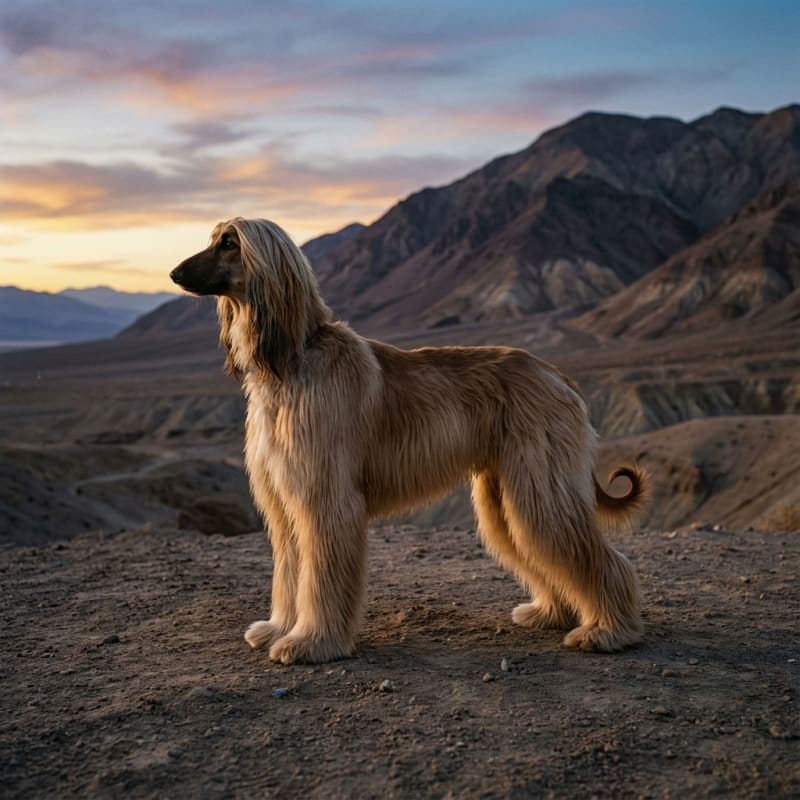
Afghan hounds are large, noble dogs with an extraordinarily elegant, slender, and harmonious silhouette that exudes strength, grace, and pride. Their height at the withers ranges from 63 to 74 cm (males are usually taller than females), and their weight hovers around 25-30 kg, although proportions and condition are more important than the actual body mass. The most important and characteristic attribute of this breed is the long, silky coat that covers the entire body except for the back (saddle), where the hair is shorter and smoother, creating a distinctive pattern typical of the breed.
The coat can come in an incredibly rich palette of colors – from cream, gold, and sand, through various shades of red and brown, to silver, blue, black, as well as brindle and spotted patterns. Practically all colors are accepted by the breed standard. Afghan hounds are characterized by a long, slender body with a deep chest, a strong and gracefully arched neck, and a distinctive, narrow head with an elongated muzzle. Their eyes have an almost triangular shape, are dark or golden (sometimes hazel), full of expression, and give the dog a typical oriental, penetrating gaze, as if looking through a person rather than at them.
The ears are long, low-set, and drooping along the head, densely covered with long, silky hair forming characteristic fringes. Afghan hounds also have long, strong, and muscular legs with well-developed tendons, allowing them to achieve impressive speeds while running and perform spectacular, long jumps. Additionally, their tail is of medium length, low-set with a characteristic ring at the end, raised above the line of the back in motion, which adds even more regal grace and elegance. The overall silhouette of the Afghan hound gives an impression of harmony, strength, and distinguished beauty, which is why they are so often seen and awarded at prestigious dog shows around the world.
Afghan hounds have a particularly distinctive temperament that can be difficult for some owners to understand and accept, especially those accustomed to more obedient and human-dependent breeds. They are independent, self-confident, and proud, which can make them somewhat impulsive, stubborn, and challenging to train using methods applied to typical working breeds. Their strong hunting instinct is deeply rooted in their genes and can lead to unpredictable behaviors, especially in the presence of smaller animals, cats, rodents, or birds that may be perceived as potential prey.
Afghan hounds are not known for being overly attached or affectionate towards their owners in the way typical companion breeds are, but they can form deep, strong, and loyal bonds with their family if treated with patience, respect, love, and consistency. They are generally somewhat distrustful, distant, and reserved towards strangers, which makes them sensitive to sudden changes in their environment, new people in the home, or unusual situations. Owners should be aware that these wonderful dogs need significant space to run freely, explore, and play, and a chronic lack of appropriate physical and mental activity can lead to serious behavioral issues such as destructive behaviors, excessive barking, or attempts to escape.
Although they are generally friendly and calm at home, their independent and affectionate nature may cause them to be less inclined to engage in intense play with small children, especially if they feel threatened, uncomfortable, stressed, or disrespected in their personal space. Therefore, this breed is best suited for homes with older children who understand the need to respect the dog's boundaries and can maintain calmness and gentleness in their interactions with the four-legged friend. The Afghan hound is a dog for experienced owners who can appreciate its unique personality and accept its natural need for a certain level of independence.
Afgansky hounds have an average lifespan of 12 to 14 years, although with proper care, a balanced diet, and regular physical activity, some individuals can live up to 15-16 years. This breed is generally healthy and resilient, but like many other purebred breeds, it is prone to certain hereditary and acquired conditions that every potential owner should be aware of. Among the most common health issues are food and environmental allergies, which can cause persistent itching, skin irritations, redness, hair loss, and secondary bacterial or fungal infections.
Another serious threat is gastric torsion (bloat, GDV), which is a life-threatening condition requiring immediate veterinary intervention within a few hours of symptom onset. Afghan hounds, like many large breeds with deep chests, are particularly susceptible to this condition. Owners should familiarize themselves with the symptoms of gastric torsion (abdominal distension, restlessness, attempts to vomit without success, drooling, pale gums) and know where the nearest 24-hour veterinary clinic is located.
This breed can also suffer from various types of cancer (especially in older age), cataracts and other eye diseases, dilated cardiomyopathy (DCM), and thyroid diseases (hypothyroidism). It is extremely important for owners to monitor the health of their Afghan hounds through regular check-ups with a veterinarian (at least once a year, twice a year in older age), blood tests, echocardiograms, and consultations with a veterinary ophthalmologist. Due to their long, dense coat, these dogs are also prone to ear infections (otitis externa and media), so regular cleaning and inspection of the ears is crucial for prevention.
It is also important to remember their relatively high sensitivity to extreme temperatures – both heat (risk of overheating and heatstroke) and severe cold (risk of hypothermia, despite their thick coat). This requires providing appropriate living conditions, access to shade and water in the summer, and limiting outdoor activity during extreme weather conditions. Regular vaccinations, deworming, monitoring for external parasites (ticks, fleas), and prevention of infectious diseases are essential for keeping an Afghan hound healthy for many years.
The care of Afghan hounds is one of the most demanding and time-consuming aspects of caring for this breed, which absolutely cannot be overlooked. Their long, silky coat requires daily, careful brushing with special brushes and combs to effectively prevent the formation of tangles, knots, and matting, which not only ruin the dog's appearance but can also cause discomfort, pain, and skin problems. Owners should invest in high-quality grooming tools – natural bristle brushes, metal combs with varying tooth widths, detangling products, and professional scissors for trimming the coat.
Regular baths are also essential – it is recommended to bathe the Afghan hound every 1-2 weeks, using gentle, high-quality shampoos and conditioners designed for long-haired dogs to effectively remove dirt, excess sebum, and keep the coat in excellent condition – shiny, soft, and healthy. During bathing, special care should be taken to thoroughly rinse out all remnants of cosmetics, as they can cause skin irritation. After bathing, the coat should be gently dried with a towel and then dried with a hairdryer on a low setting while brushing to avoid tangling.
Throughout the year, it is also advisable to regularly use the services of a professional groomer specializing in long-haired breeds, who will help maintain the appropriate length and shape of the coat according to breed standards, take care of the proper finishing of the silhouette, trim the hair between the paw pads, around the ears, and in the hygiene area. The groomer can also assist in removing dead undercoat during shedding and advise on professional grooming products.
It is also important to regularly (at least once a week, preferably every 2-3 days) check and clean the ears, as the long, drooping ears of Afghan hounds with abundant hair promote the accumulation of dirt, wax, moisture, and bacteria, which in turn leads to frequent infections and ear inflammations. For cleaning, special dog ear hygiene solutions should be used, and cotton swabs should never be inserted deeply into the ear canal. Additionally, nails should be regularly trimmed (if they do not wear down naturally during walks), the condition of teeth and gums should be monitored, and oral hygiene should be maintained by brushing teeth with special dog toothpaste.
Proper, systematic grooming is not only important for maintaining the spectacular show aesthetics of the Afghan hound but, above all, for its health, comfort, and psychophysical well-being, as neglecting the coat can lead to serious skin problems, infections, painful mats pulling on the skin, and an overall decrease in the dog's quality of life. Owners must be aware that caring for an Afghan hound is a lifelong commitment and requires regular time investment (even 30-60 minutes a day for brushing) and financial resources.
Afghan hounds are naturally very active dogs that require a significant amount of daily exercise and physical stimulation to remain in excellent physical and mental condition. They should be provided with at least 60-90 minutes of intense physical activity every day, which can include brisk walks, jogging with the owner, free running in large, safe, and fenced areas, playing with other dogs, and various sports activities tailored to the dog's individual preferences, such as lure coursing, agility, or simply playing fetch.
Due to their strong, innate hunting instinct, it is extremely important that Afghan hounds are always on a leash or in a safe harness when walking in unfenced areas or near roads to effectively avoid dangerous situations such as chasing after prey (cats, rabbits, birds), running onto the road, or going missing. Afghan hounds are known to have a stronger instinct than obedience when they see potential prey, and the dog may become deaf to any calls from the owner.
Afghan hounds love to run at full speed and perform long, impressive jumps, which is why they feel best in large, fenced spaces, such as private fenced properties, dog parks, specialized training areas, or safe meadows and clearings with good, high fencing (at least 1.5-1.8 meters, as hounds can jump over low obstacles). Owners living in cities or small apartments should be particularly engaged in providing their dog with regular opportunities to expend energy outside the home.
It is also worth noting that Afghan hounds, despite their outdoor activity, often behave calmly and with dignity at home, enjoying long naps on a comfortable bed. Owners should be prepared for an active, healthy lifestyle, regular outings in the fresh air, and long daily walks, as chronic lack of adequate exercise can lead to a range of behavioral problems (destructiveness, excessive barking, anxiety, depression) and health issues (obesity, musculoskeletal problems, metabolic diseases). The Afghan hound is a dog for active people who consider walks and physical activity an integral part of their lives.
Training Afghan hounds can be a real challenge and requires a great deal of patience, consistency, flexibility, and an understanding of the specific character traits of this breed from the owner. Afghan hounds are not known for their ease of learning in the traditional sense of obedience, which is typical for herding or guarding breeds. Their independent, proud temperament means they are not particularly motivated to follow commands simply because a human expects it – they often need clear motivation in the form of rewards that they value.
Owners should strictly use positive training methods based on rewards (treats, verbal praise, play), encouragement, and motivation to effectively encourage dogs to cooperate and learn. Harsh, dominance-based, or punishment methods are completely inappropriate for this breed and can lead to serious behavioral problems such as anxiety, defensive aggression, total withdrawal, and a permanent breakdown of the trust bond between the dog and the owner. The Afghan hound is a sensitive dog that is highly attuned to human emotions and reacts to them very intensely.
It is also extremely important to conduct the socialization process early and intensively for the Afghan hound puppy from the earliest weeks of life (ideally from 8-16 weeks) to help it safely and positively adapt to various life situations, different people (children, adults, seniors), other dogs and animals, different environments (city, countryside, store, veterinary clinic), sounds (traffic, fireworks, storms), and visual stimuli. A well-socialized Afghan hound is much more confident, emotionally balanced, and easier to live with on a daily basis.
With regular, daily training conducted in short but frequent sessions (5-10 minutes several times a day), a positive approach, high-quality rewards, and a great deal of patience and acceptance for the natural independence of this breed, very satisfying results can be achieved in basic obedience (come, sit, stay, lie down) and the overall good manners of the dog. However, it is always important to remember that every animal is different, some individuals may require significantly more time, repetitions, and creative teaching methods than others, and expecting an Afghan hound to have the level of obedience typical of a German shepherd or golden retriever is unrealistic and leads only to frustration for both parties. The key is to accept and respect the unique nature of this noble breed.
The diet of Afghan hounds should be carefully balanced, high-quality, and precisely tailored to their active lifestyle, age, level of physical activity, health status, and individual needs. They should be provided with high-quality food (dry, wet, or a BARF diet after consulting with a veterinary nutritionist) that delivers all the essential nutrients in appropriate proportions – complete animal protein (at least 22-28% depending on the level of activity), healthy fats (omega-3 and omega-6 for skin and coat condition), low glycemic index carbohydrates, fiber, vitamins (A, D, E, K, B group), and minerals (calcium, phosphorus, zinc, copper, selenium).
Owners should absolutely avoid giving their dog table scraps (which often contain salt, sugar, spices, and fats that are dangerous for dogs), low-quality processed foods, cheap kibble filled with grains and low-quality meat, as this can lead to a range of serious health problems such as obesity, gastrointestinal diseases, food allergies, heart diseases, diabetes, and a shortened lifespan. Afghan hounds often have a sensitive digestive system, so the choice of food should be thoughtful, and any changes should be introduced very gradually over a period of 7-10 days to avoid digestive issues (diarrhea, vomiting, gas).
It is extremely important to provide the Afghan hound with the appropriate amount of complete animal protein (chicken, turkey, beef, fish, lamb), healthy fats (salmon oil, flaxseed oil for coat and skin condition), and vitamins and minerals that support joint, bone, muscle health, and overall body condition. For active sporting dogs, the doses may require modification towards higher caloric content and protein levels.
Owners should also systematically monitor their dog's weight through regular weigh-ins (at least once a month) and observe body condition (a visible waist and ribs that can be felt under a thin layer of fat) to effectively avoid overweight and obesity, which can lead to many other health problems such as joint diseases (dysplasia, arthritis), heart diseases, diabetes, respiratory issues, and a significant reduction in lifespan. On the other hand, an overly thin physique is also concerning and may indicate malnutrition or illness.
Due to the risk of gastric torsion (particularly high in breeds with deep chests), it is recommended to feed meals in two or three smaller portions throughout the day instead of one large meal, avoid intense physical exertion immediately before and after feeding (at least an hour break), feed from elevated bowls (though opinions on this are divided), and ensure calm, slow eating without stress. It is also essential to provide the dog with constant access to fresh, clean drinking water. Regular consultations with a veterinarian regarding diet, especially for older, sick, or allergic dogs, are crucial for maintaining the health and longevity of the Afghan hound.
Characteristic Traits
Pros
- Spectacular appearance and silky coat
- High energy and athletic abilities
- Strong family bonds with proper treatment
- Excellent companion for active owners
- Elegance and regal posture
- Long lifespan with good care.
Cons
- Requires very regular and time-consuming coat care
- Independent and sometimes unpredictable nature
- Needs a lot of space and intense exercise daily
- Difficult to train for beginners
- Strong hunting instinct
- Prone to gastric torsion.
Behavioral Ratings
Breed History
The history of Afghan hounds dates back thousands of years and is closely linked to the harsh, mountainous landscape and hunting traditions of ancient Afghanistan and neighboring regions of Central Asia. Even in pre-Christian times, dogs resembling today's Afghan hounds were used by nomadic tribes and aristocrats as invaluable tools for hunting large and fast game, such as gazelles, antelopes, wolves, jackals, and even leopards and snow leopards in the high mountain areas. Their extraordinary speed, endurance, resistance to extreme climatic conditions, and excellent eyesight made them ideal hunters in difficult mountainous and desert terrain.
This breed was known in the region by various local names, such as Tazi, Tazhi Spay, Baluchi Hound, Ogar Afghan, or Kabuli Hound, depending on the region of origin and local dialects. These dogs were highly valued and held in great respect by their owners, often treated almost like family members and inherited from generation to generation as a valuable family asset. In Afghan culture, the hound was a symbol of prestige, wealth, and nobility.
The first documented presence of Afghan hounds in Western Europe occurred in the early 19th century when individual specimens were brought by British army officers stationed in India and Afghanistan during the Anglo-Afghan wars and the colonial expansion of the British Empire. However, a true breakthrough occurred between 1900 and 1920 when a larger number of Afghan hounds were brought to Britain by officers returning from colonial expeditions and diplomats. One of the most famous early representatives of the breed, a dog named Zardin, achieved spectacular success at the prestigious dog show at Crystal Palace in London in 1907, which drew enormous attention from the British aristocracy and dog lovers to this exotic and incredibly elegant breed.
Shortly after this success, Afghan hounds began to gain increasing popularity at dog shows, in breeding, and as companion dogs in affluent households. Their spectacular, elegant appearance and proud, almost regal temperament attracted the attention of many dog lovers, artists, photographers, and fashion designers. This breed quickly spread throughout Western Europe and North America, becoming a symbol of luxury, elegance, exclusivity, and refined taste. The first official breed standard was developed in Britain in 1925, and the FCI (Fédération Cynologique Internationale) officially recognized the breed, granting Britain patronage over the standard.
Today, Afghan hounds are primarily bred and maintained as show dogs and companion dogs, although their ancient hunting heritage is still deeply present in their behavior, instincts, and physical structure. In some countries, they are still used for hunting or in canine sports such as lure coursing or racing. The breed enjoys stable popularity worldwide, particularly in the United States, the United Kingdom, Australia, and European countries, where they are valued for their extraordinary aesthetic qualities as well as their fascinating, centuries-old history and unique character traits that make them one of the most recognizable, admired, and intriguing hunting dog breeds in the world.