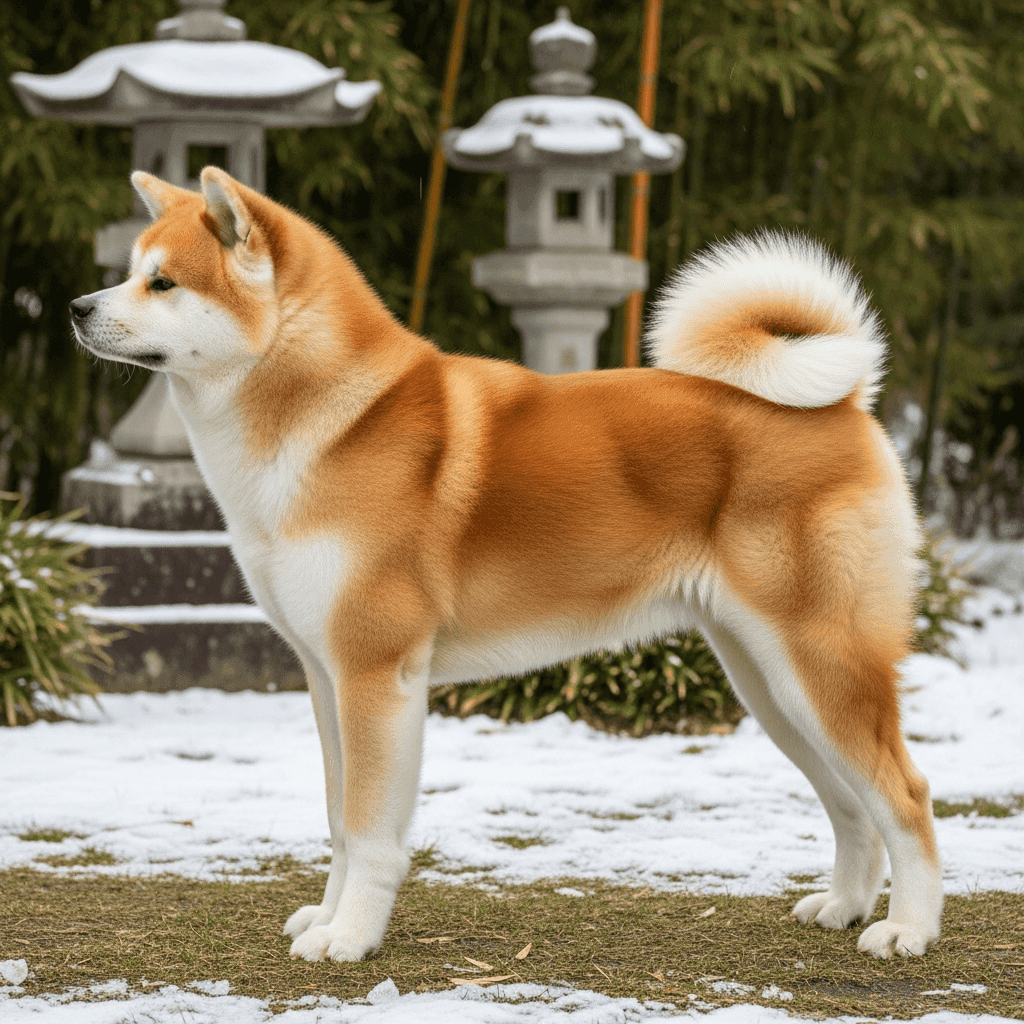
Akita
FCI Group
5• FCI 255
Size
Large
Origin Country
JP
Height
56-67 cm
Weight
32-59 kg
Lifespan
10-15 years
Temperament
Overview
The Akita is one of the most recognizable and respected dog breeds in the world, originating from the picturesque Akita region in northern Japan. These majestic dogs, known for their strength, dignity, and unwavering character, have a rich history that spans hundreds of years. The Akita is a large dog with a strong, harmonious build, making it an ideal companion both at home and outdoors.
The history of this breed begins in the 17th century when Akitas were used for hunting game - bears, boars, and deer. At that time, only members of the aristocracy could own these magnificent dogs. Later, from 1603, Akita Matagi dogs (medium-sized dogs used for bear hunting) were also used in dog fights. From 1868, Akitas were crossed with Tosa and Mastiff breeds, which increased their size but led to the loss of characteristics typical of the spitz type. In 1908, dog fighting was banned, and the breed began to be systematically improved and preserved as a great Japanese national breed. In 1931, nine outstanding representatives of the breed were recognized as natural monuments, which was of great importance for the protection and development of the breed.
The period of World War II (1939-1945) was dramatic for the Akita breed. Dogs were used as a source of fur for military uniforms, and the police ordered the confiscation of all dogs except German Shepherds used for military purposes. Some breeders tried to circumvent this ban by crossing their Akitas with German Shepherds. When the war ended, the number of Akitas drastically decreased, and the breed existed in three different types: 1) Matagi Akita, 2) fighting Akita, and 3) herding Akita. This situation created great confusion within the breed. Thanks to the perseverance of breeders and purebred recovery programs, Akitas returned to their original form and gained a modern, stable breed type.
The Akita is a dog characterized by a deep bond with its family. It is not only strong but also extremely intelligent, making it an excellent companion for active and responsible individuals. Their personality manifests itself in calmness, loyalty, dignity, and determination. Akitas are known for being affectionate and devoted to their loved ones, but they can be reserved and distrustful of strangers, making them excellent guard dogs. With their strong territorial instinct and natural tendency to protect, Akitas can be wonderful defenders of their families. Proper upbringing and socialization from puppyhood are absolutely crucial to ensure that an Akita will be well integrated with other dogs and people.
The Akita's natural tendency towards dominance means they need firm, consistent, yet fair and respectful leadership. Akitas also exhibit a strong hunting instinct, which can lead to unpredictable situations in the presence of smaller pets. They are dogs that require regular physical activity (a minimum of 1-2 hours daily) and mental stimulation to remain healthy, happy, and balanced.
Their coat consists of a hard outer layer and a dense, soft undercoat, providing excellent protection against harsh weather conditions. This double layer requires regular brushing, especially during the intense shedding periods that occur twice a year. Although Akitas are resistant to cold due to their thick fur, proper grooming is essential to keep their coat in excellent condition.
It is also worth noting that Akitas can be prone to certain genetic health issues, such as hip dysplasia, eye problems (cataracts), and autoimmune diseases, including thyroid disorders. Proper nutrition, regular veterinary visits, and appropriate physical activity are crucial for ensuring a long and healthy life. With proper care, Akitas can live 10-15 years.
The Akita is a dog that will undoubtedly attract attention with its impressive presence, unwavering loyalty, and unique beauty. Their strong personality and exceptional, majestic appearance make them unique life companions for experienced owners who can appreciate their independent character and provide them with the right conditions for development. We encourage you to continue exploring this fascinating breed through our detailed guide, which covers the health, grooming, activity, training, nutrition, history, appearance, and behavior of Akitas.
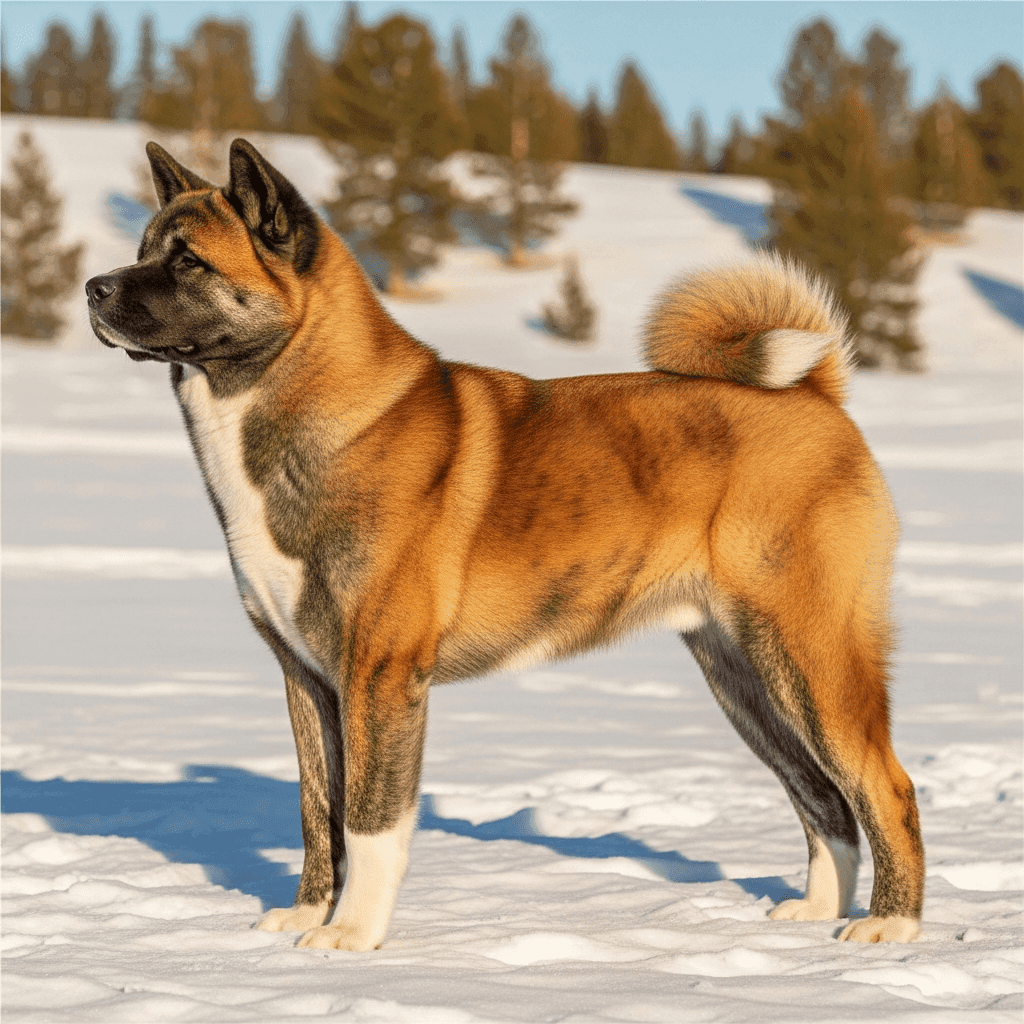
The Akita is a large and strong dog with a harmonious, well-balanced body structure that exudes dignity and noble majesty. Dogs of this breed have distinct sexual characteristics - males are significantly larger, more powerful, and more massive than females, which is noticeable at first glance.
Breed dimensions: The height at the withers for males is about 67 cm (±3 cm), while for females it is about 61 cm (±3 cm). The body weight corresponds proportionally to height - males usually weigh 45-59 kg, and females 32-45 kg. Body proportions: the ratio of height at the withers to body length is 10:11 for males and slightly more for females, giving them a compact, strong silhouette.
Head: The head of the Akita is proportional to the size of the body, with a broad forehead, a distinct frontal furrow, and a slight stop. The muzzle is moderately long and strong, with a straight nose bridge. The nose is large and black (a slightly depigmented nose is acceptable in white dogs). The lips are tight and black. The jaws are strong with an excellent, regular, and complete scissor bite.
Eyes: The eyes of the Akita are relatively small, almost triangular in shape, set obliquely, and dark brown in color - the darker, the better. This characteristic eye shape gives the Akita an expression full of dignity, intelligence, and alertness.
Ears: The ears are relatively small in proportion to the head, thick, triangular, slightly rounded at the tips, standing erect and slightly inclined forward in line with the neck's back. This is one of the most distinctive features of the breed, giving the Akita a typical spitz-like appearance.
Neck and body: The neck is thick, muscular, relatively short, gradually widening towards the shoulders. The back is straight and strong, with wide and muscular loins. The chest is deep and well-developed, with well-arched ribs. The belly is well tucked up, emphasizing the dog's athletic build.
Tail: The tail is set high, thick, carried energetically curled over the back or falling to the side. In a straightened position, it reaches almost to the hock joint. The tail is covered with abundant, long fur.
Limbs: The front limbs are straight, with a strong bone structure and well-developed muscles. The hind limbs are well-developed, strong, and muscular, with moderately angled knee and hock joints. The paws are thick, round, compact, with well-arched toes - typical cat-like paws.
Coat and coloration: The Akita's coat is double - consisting of a hard, straight outer coat and a soft, dense undercoat, which provides excellent protection against harsh weather conditions. The outer coat is longer on the tail than on the rest of the body. The undercoat is soft and dense.
Akitas come in several beautiful colorations:
- Red fawn - from light to intense red
- Sesame - red-fawn hairs with black tips
- Brindle - dark stripes on a lighter background
- White - pure white without any markings
All colorations except for white should have urajiro - whitish hairs on the sides of the muzzle, on the cheeks, under the jaw, on the neck, chest, body, tail, and on the inner side of the limbs. This characteristic feature is highly desirable and emphasizes the elegance of the breed.
The overall appearance of the Akita is majestic, dignified, and full of nobility, making this breed one of the most recognizable and admired in the world. Their harmonious silhouette, proud stance, and characteristic spitz-like head make the Akita a true symbol of Japanese culture and breeding tradition.
Akitas are dogs with a remarkably strong, independent character and a clear territorial instinct. Their temperament can be described as calm, dignified, loyal, and obedient to their family, making them excellent companions for experienced owners who can provide them with proper guidance.
Relationship with family: Akitas are extremely attached to their owners and family members. They can create a deep, emotional bond that lasts a lifetime. They are known for their absolute loyalty and devotion - the legendary story of Hachiko, an Akita who waited every day for 9 years for his deceased owner at the train station, perfectly illustrates this breed's characteristic. At home, Akitas are calm, patient, and affectionate towards their loved ones. They can be wonderful companions for children, provided they have been properly socialized from puppyhood and that the children are taught to respect the dog.
Attitude towards strangers: Akitas are naturally reserved, cautious, and distrustful of strangers, which is part of their guarding instinct. They are not dogs that immediately greet every newcomer with enthusiasm - on the contrary, they maintain distance and observe the situation with dignity and vigilance. This trait makes them excellent guard dogs, capable of effectively protecting the home and family. Akitas typically do not bark without reason, but when they notice something concerning, they will express their worries.
Dominance and need for leadership: Akitas' natural tendency towards dominance means they require a firm, consistent, but fair leader. They are not dogs for novice owners - they require an experienced hand that can establish clear boundaries and rules without resorting to aggression or violence. Akitas respect strong, confident leadership but react poorly to unfair treatment or harsh training methods. An Akita owner must be patient, consistent, and respectful of the dog's independent nature.
Relations with other dogs: Akitas can be dominant and territorial towards other dogs, especially of the same sex. Males often do not tolerate the presence of other males, and females can be equally assertive towards other females. For this reason, early and intensive socialization is absolutely crucial. Akitas that have had positive interactions with other dogs from puppyhood are more likely to accept the company of other canines. However, many Akita owners choose to keep only one dog of this breed to avoid potential conflicts.
Hunting instinct: Akitas possess a strong hunting instinct, which has been developed over centuries when these dogs were used for hunting wild game. This means they may have a tendency to chase smaller animals - cats, rodents, rabbits, and even smaller dogs. For this reason, Akitas should be kept on a leash during walks in areas where other animals may appear, unless the owner is confident that the dog has excellent obedience and recall.
Intelligence and independence: Akitas are extremely intelligent, but at the same time independent and sometimes stubborn. They can make decisions on their own and will not always blindly follow commands if they deem them pointless. This trait requires creativity from the owner in training - the Akita must see the purpose in what they are doing and be appropriately motivated (preferably with positive reinforcements such as treats, praise, or play).
Behavioral needs: Akitas need:
- Daily, moderate to intense physical activity (1-2 hours)
- Mental stimulation (developmental games, training, tasks)
- Clear rules and boundaries at home
- Consistent, positive training
- Early and ongoing socialization
- Time with family and a sense of belonging
Potential behavioral problems: Without proper guidance, socialization, and activity, Akitas can develop behavioral issues such as excessive aggression towards other dogs, destruction of household items due to boredom, excessive barking, or difficulty in control. Therefore, it is crucial for prospective Akita owners to be aware of the breed's requirements and be willing to invest time and effort into proper upbringing.
In summary, Akitas are dogs with a wonderful, dignified character that, with proper care, training, and socialization, can become reliable, loyal companions for life. However, they are not dogs for everyone - they require an experienced, responsible owner who understands and accepts their independent nature and provides them with the right conditions for a happy life.
Akitаs are generally a healthy and resilient breed, which can live 10-15 years with proper care. However, like all purebred dogs, they can be prone to certain genetic disorders and breed-specific diseases that prospective owners should be aware of.
The most common health issues in Akitas:
1. Hip Dysplasia (HD - Hip Dysplasia): This is a genetic condition where the hip joint does not develop properly, leading to instability, pain, and ultimately degenerative changes in the joint. Symptoms may include limping, stiffness after rest, reluctance to move, or difficulty getting up. Responsible breeders perform X-ray examinations of the hip joints of breeding dogs and allow only those with HD-A or HD-B results (the best categories) to breed.
2. Elbow Dysplasia (ED - Elbow Dysplasia): Similar to hip dysplasia, this is a developmental disease affecting the elbow joint. It can cause pain, limping, and degenerative changes. As with this disease, breeding selection based on X-ray studies is crucial.
3. Eye Problems:
- Cataract: Clouding of the eye lens, which can lead to vision loss. It can be congenital or develop with age.
- Progressive Retinal Atrophy (PRA): A hereditary disease leading to gradual vision loss and ultimately blindness.
- Entropion: Inward rolling of the eyelid, causing irritation of the cornea by the eyelashes.
Responsible breeders conduct ophthalmic examinations (e.g., ECVO certificate) on breeding dogs to minimize the risk of these conditions.
4. Autoimmune Diseases: Akitas are one of the breeds more predisposed to autoimmune diseases, where the immune system attacks the body's own tissues. The most common include:
- Autoimmune Thyroiditis: Leads to hypothyroidism, with symptoms including lethargy, weight gain, skin problems, and hair loss.
- Pemphigus Foliaceus: An autoimmune skin disease characterized by the formation of crusts and skin peeling.
- VKH (Vogt-Koyanagi-Harada syndrome): Inflammation of the eye's uveal tract along with depigmentation of the skin on the nose and lips.
5. Skin Allergies: Akitas can suffer from food or environmental allergies (pollen, dust mites, mold), which manifest as itching, redness of the skin, rashes, excessive licking of paws, or ear infections. Proper identification of the allergen and dietary adjustments or symptomatic treatment can significantly improve the dog's quality of life.
6. Gastric Dilatation-Volvulus (GDV): This is a sudden, life-threatening condition in which the stomach fills with gas and twists on itself, cutting off blood circulation. Symptoms include restless behavior, unsuccessful attempts to vomit, a bloated abdomen, and difficulty breathing. It requires immediate veterinary intervention. To reduce the risk of GDV, it is recommended to:
- Feed smaller portions 2-3 times a day instead of one large meal
- Avoid intense exercise immediately before and after eating
- Use slow-feeding bowls
- Avoid feeding immediately after stressful situations
7. Sebaceous Adenitis: A rare inflammatory disease that destroys the sebaceous glands in the skin, leading to dry skin, hair loss, and flaking.
Health Prevention:
- Regular veterinary visits: Annual check-ups allow for early detection of health problems.
- Vaccinations: Following the vaccination schedule protects against dangerous infectious diseases.
- Worming and parasite protection: Regular deworming and use of tick and flea prevention products.
- Pre-breeding examinations: If you plan to breed, perform all recommended tests (HD, ED, ophthalmic examinations, thyroid testing).
- Proper nutrition: High-quality food tailored to the dog's age, weight, and activity level.
- Weight control: Obesity increases the risk of many diseases, including joint dysplasia and heart problems.
- Appropriate activity: Regular exercise supports joint health and overall condition.
- Oral hygiene: Regular tooth brushing prevents periodontal disease.
Symptoms requiring immediate veterinary consultation:
- Sudden loss of appetite or dehydration
- Persistent vomiting or diarrhea
- Difficulty breathing
- Limping or stiffness lasting more than a day
- Changes in behavior (lethargy, aggression, disorientation)
- Bloated, hard abdomen
- Excessive scratching or licking
- Skin changes (lumps, wounds, rashes)
- Eye problems (redness, tearing, cloudiness)
In summary, Akitas with proper veterinary care, appropriate nutrition, and regular activity can lead long, healthy, and happy lives. The key is choosing a responsible breeder who cares for the health of their breeding dogs and a proactive approach to the health of your dog throughout its life.
Grooming an Akita is an essential part of taking care of their health, well-being, and beautiful appearance. Although Akitas do not require as much grooming as some long-haired breeds, their double coat needs regular attention, especially during periods of heavy shedding.
Brushing the coat:
The Akita's coat consists of two layers: hard, straight guard hairs and soft, dense undercoat. This double layer provides excellent thermal insulation - protecting against the cold in winter and overheating in summer - but requires systematic grooming.
For most of the year: It is recommended to brush the Akita 1-2 times a week using a brush with metal pins or a comb with wide teeth. This helps remove loose hairs, prevent mats, and distribute natural skin oils that give the coat a healthy shine.
During shedding periods: Akitas shed heavily twice a year (in spring and fall) when they change their undercoat. During this time, they lose huge amounts of fur - this process is called blow coat. During shedding, daily brushing is necessary, preferably with special tools for removing undercoat, such as:
- Furminator or similar undercoat removal tools
- Undercoat rake
- Brush with metal pins
- Comb with dense teeth for finishing
Regular brushing during this period significantly reduces the amount of fur in the home and prevents matting.
Bathing:
Akitas have a natural ability to clean themselves - their coat repels dirt and water similar to Nordic dogs. For this reason, they do not require frequent baths. Recommendations:
- Bathe 3-4 times a year or as needed (when the dog is very dirty or smells)
- Use mild dog shampoos, preferably designed for double-coated breeds
- Thoroughly rinse out the shampoo to avoid irritating skin residues
- Thoroughly dry - first with a towel, then with a hairdryer on low heat (if the dog tolerates it) while brushing
NOTE: Excessive bathing frequency can lead to the removal of natural protective oils from the coat and skin, causing dryness, itching, and dermatological issues.
Dental care:
Oral hygiene is often neglected, yet it is crucial for the dog's health. Tartar buildup and periodontal diseases can lead to pain, tooth loss, and even serious bacterial infections affecting the heart, liver, and kidneys.
Recommendations:
- Brush teeth 2-3 times a week (ideally daily) using dog toothpaste (never use human toothpaste!)
- Special dental treats that help clean teeth
- Chewing toys (e.g., rawhide bones under supervision)
- Regular dental check-ups with the veterinarian
- Professional dental cleaning by a veterinarian under general anesthesia (if needed)
Ear care:
Akitas have standing ears, which are better ventilated than drooping ears, reducing the risk of infections. However, they still require regular checking and cleaning:
- Check ears once a week for dirt, excess wax, redness, or unpleasant odor
- Clean with a special ear cleaning solution for dogs (available from the veterinarian) - apply a few drops, gently massage at the base of the ear, allow the dog to shake its head, then wipe the outer part of the ear with a cotton ball
- Never insert cotton swabs deep into the ear!
- If you notice excessive scratching at the ears, head shaking, unpleasant odor, or discharge - consult a veterinarian (it may be a bacterial or fungal infection)
Nail trimming:
Overgrown nails can cause discomfort, walking problems, and even paw deformities. Recommendations:
- Trim nails every 3-4 weeks or when you hear the nails clicking on the floor while walking
- Use special nail clippers or grinders for dogs
- Trim carefully to avoid cutting the living part of the nail (quick), which contains blood vessels and nerves - in light nails, the quick is visible as a pink area, in dark nails, trim small pieces at a time
- If you do not feel confident, ask a veterinarian or groomer to show you the proper technique or for regular trimming
- Get the puppy used to having its paws handled from an early age
Skin check:
While brushing, regularly check the skin for:
- Lumps, new growths, or skin changes
- Redness, rashes, or flaking
- Parasites (ticks, fleas) or their droppings
- Wounds, scratches, or infections
Early detection of changes allows for quicker intervention and better prognosis in case of health issues.
Summary - Akita grooming schedule:
- Daily (during shedding): brushing the coat
- 1-2 times a week: brushing the coat (outside of shedding periods), checking ears, brushing teeth
- Every 3-4 weeks: nail trimming
- 3-4 times a year: bathing (or as needed)
- Regularly: skin, eye, and general health checks
Proper grooming of an Akita not only improves their appearance but also positively impacts their health, well-being, and extends the dog's life. Additionally, regular grooming sessions are an excellent opportunity to strengthen the bond with your dog and to detect any potential health issues early.
Akitas are dogs that, despite their calm and dignified behavior at home, require regular, moderate to intense physical activity to remain healthy, happy, and mentally balanced. Their natural energy, strength, and athletic build mean they need daily effort and stimulation.
Basic activity needs:
Akitas require a minimum of 1-2 hours of daily activity, which should be spread over several sessions throughout the day. They are not dogs to be kept solely indoors without regular access to exercise - lack of activity can lead to behavioral problems such as:
- Destructive behaviors (destroying furniture, chewing things)
- Excessive barking
- Restlessness or hyperactivity
- Frustration-induced aggression
- Obesity and health issues
- Depression and apathy
Types of physical activity for Akitas:
1. Long walks: Akitas love long, leisurely walks where they can explore their surroundings. Walks are recommended 2-3 times a day, each lasting 30-60 minutes. Walks allow the Akita not only to tire themselves physically but also provide mental stimulation through sniffing and discovering new scents and places.
2. Running: Akitas can be excellent jogging companions, especially in cooler weather. Their endurance and strength allow them to run longer distances. NOTE: Avoid intense running on hot days - Akitas have thick fur and are more prone to overheating. Always run in the early morning or evening during the summer.
3. Play in the garden: If you have a fenced garden, an Akita will enjoy the opportunity to run freely and explore. IMPORTANT: The fence must be high (at least 1.5-2 meters) and sturdy, as Akitas may try to jump over or dig under it, especially when they have strong motivation (e.g., chasing small animals).
4. Swimming: Some Akitas enjoy swimming, which is an excellent low-impact exercise for their joints. This is particularly good for older dogs or dogs with joint issues. However, not all Akitas are natural swimmers - introduce swimming gradually and always supervise the dog in the water.
5. Hiking: Akitas are great companions for hiking. Their endurance, strength, and love for cooler climates make them well-suited for trails. Remember to bring water, a bowl, and possibly a dog backpack for the Akita to carry some of the gear.
6. Pulling: Historically, Akitas were used for various strength-related tasks. They may enjoy activities such as pulling a tire, sledding in winter, or pulling a cart. However, consult with a veterinarian before starting such training and ensure the dog is in appropriate physical condition.
Mental activity:
In addition to physical activity, Akitas also need mental stimulation to be happy and balanced. Their intelligence and independence mean they require intellectual challenges:
- Search games: Hide treats or toys in the house or garden and let the Akita find them. This greatly engages their sense of smell.
- Interactive toys: Dog puzzles, Kong toys filled with treats, food-dispensing toys - all of these force the dog to think and solve problems.
- Obedience training: Regular training sessions (5-10 minutes several times a day) help keep the Akita's mind sharp and strengthen the bond with the owner.
- Learning new tricks: Akitas are intelligent and can learn many tricks - from basic ones (shake a paw, spin) to advanced ones (close the door, fetch a specific item).
- Dog sports: Some Akitas may enjoy sports such as rally obedience, nosework, or track and field.
Important notes regarding Akita activity:
- Temperature: Akitas are sensitive to high temperatures due to their thick double coat. Avoid intense exertion on hot days. Signs of overheating include: heavy panting, drooling, lethargy, disorientation. On hot days, limit activity to early morning or evening.
- Leash: Due to their strong hunting instinct and territoriality, Akitas should be kept on a leash in public places and where other animals may appear. Even well-trained Akitas may react to small animals or other dogs.
- Socialization during walks: Walks are an excellent opportunity to continue socialization - meeting other dogs (under control), people, various sounds, and situations. However, be cautious and observe your Akita's body language - do not force interaction if the dog is uncomfortable.
- Puppy activity: Akita puppies should not be overexerted - their bones and joints are still developing. General rule: 5 minutes of walking for each month of age, twice a day (e.g., a 3-month-old puppy: 15 minutes x 2 = 30 minutes a day). Avoid jumping from heights, running on hard surfaces, and excessive exertion in puppies.
- Senior activity: Older Akitas (7+ years) may need less intense activity, but still require regular movement. Adjust the pace and intensity to the dog's condition. Low-impact activities such as swimming or leisurely walks are ideal for seniors.
Signs that an Akita needs more activity:
- Destructive behaviors at home
- Excessive energy, hyperactivity
- Restless behavior, pacing back and forth
- Excessive barking or howling
- Difficulty calming down
- Weight gain
In summary, Akitas are active dogs that need regular, daily physical and mental exertion. The right amount of activity not only keeps them in good physical condition but also ensures mental health, prevents behavioral problems, and strengthens the bond between dog and owner. Akita owners should be prepared to dedicate time daily for walks, play, and interaction with their dog - in return, they will receive a loyal, happy, and balanced life companion.
Akitas are extremely intelligent dogs that quickly learn new commands and tricks. However, their strong, independent character and natural tendency to dominate mean that training requires patience, consistency, experience, and a fully respectful approach. Akita is not a breed for novice owners - they require a steady hand and an experienced guide.
Basic training principles for Akitas:
1. Start as early as possible: Training an Akita should begin as early as puppyhood, preferably from the moment the puppy arrives home (around 8-10 weeks of age). Early training establishes the foundations of obedience, household rules, and builds the proper owner-dog relationship. Young puppies are more open to learning and more easily accept new experiences.
2. Positive reinforcement: Akitas respond best to positive training methods based on rewards - treats, verbal praise, play. Avoid physical punishment, yelling, or brutality - such methods are not only ineffective but can destroy the relationship with the dog, instill fear, or provoke defensive aggression. An Akita respects a fair, consistent, but kind leader.
3. Consistency: Akitas need clear, consistent rules. If you allow the dog to do something once (e.g., jumping on the couch) and then forbid it the next time, the dog will be confused and will test the boundaries. All family members must apply the same rules and commands.
4. Short, engaging sessions: Due to their independent nature, Akitas can quickly become bored with repetitive exercises. The best are short training sessions (5-10 minutes) several times a day, full of variety and fun. End each session positively when the dog has performed well to leave a good impression.
5. Patience and respect: Akitas can be stubborn and independent. They are not dogs that will blindly follow every command without thinking. Sometimes they may refuse to obey a command if they deem it pointless. This requires the owner to have patience, creativity, and an understanding of the breed's character. Motivate the dog, find what interests them (favorite treats, toys), and use that in training.
Basic commands for Akitas:
Every Akita should master basic obedience commands:
- Sit: A basic command, easy to learn, useful in many situations.
- Down: A more advanced command requiring the dog to submit (the lying position is a subordinate position).
- Stay/Wait: Teaches self-control and is crucial for the dog's safety.
- Come/Recall: The most important command! It can save the dog's life. Train it regularly in different places and situations, always reward generously for a recall.
- Heel: Walking by your side without pulling on the leash - key for comfortable walks.
- Leave it: Teaches the dog to ignore dangerous or unwanted objects/food.
- No: A universal command prohibiting actions.
Socialization - a key element in raising an Akita:
Socialization is absolutely critical for an Akita and should start as early as possible - during the sensitive puppy period (3-14 weeks of age). Proper socialization helps the Akita:
- Accept the presence of other dogs and people
- Not react aggressively to new situations
- Feel confident in various environments
- Differentiate threats from normal situations
What socialization includes:
- Meetings with various people (children, adults, seniors, people in hats, glasses, with canes)
- Contact with other dogs (different breeds, sizes, temperaments) - under control
- Exposure to various sounds (traffic, trains, vacuum cleaners, thunder)
- Different surfaces (grass, asphalt, stairs, bridges, grids)
- Different places (park, city, forest, pet store, veterinary clinic)
- Visit to the vet (positive experiences!)
- Car travel
IMPORTANT: Socialization is not just exposure but positive experiences. Every new situation should be associated with something pleasant for the dog (treats, play, praise). If the dog is scared, do not force it - back off and try again at a slower pace.
Group classes:
It is worth participating in puppy classes, and later in obedience training. Benefits include:
- Socialization with other dogs in a controlled environment
- Learning to focus on the owner despite distractions
- Professional help from a trainer in solving problems
- Regular, systematic training
- Building confidence in both the dog and the owner
NOTE: Choose a trainer who uses positive training methods and has experience with Spitz-type or dominant breeds. Avoid trainers who use physical punishment or electric collars.
Challenges in training an Akita:
- Dominance: Akitas may test boundaries and try to take control. Be firm (not aggressive), consistent, and confident.
- Stubbornness: If an Akita deems a command pointless, it may ignore it. Be patient, change your approach, find motivation.
- Aggression towards other dogs: Intensive socialization from puppyhood is crucial. If the problem develops, consult a behaviorist.
- Strong hunting instinct: Train solid recall and be cautious around small animals.
Advanced training and sports for Akitas:
Akitas can participate in various activities and dog sports:
- Rally obedience
- Nosework (scent work)
- Tracking
- Therapy dogs (as therapy dogs after appropriate training)
- Protection training (only under the supervision of a professional!)
When to seek professional help:
- Aggression towards people or dogs
- Severe fear or phobia
- Separation issues
- Destructive behaviors despite adequate activity
- Difficulty mastering basic commands
Do not wait for the problem to escalate - early intervention from a behaviorist or experienced trainer can prevent serious issues in the future.
Summary:
Proper training of an Akita based on positive reinforcement, consistency, early socialization, and respect will help not only create a well-behaved, obedient dog but also build a strong, lasting bond between the dog and its owner. An Akita that receives proper guidance can become a wonderful, loyal life companion - dignified, intelligent, and reliable. Remember: investing time in training a puppy will pay off throughout the dog's life!
The diet of an Akita should be carefully balanced and of high quality to ensure an adequate amount of nutrients necessary for maintaining health, energy, and good physical condition. As large dogs with specific metabolic needs, Akitas require a thoughtful approach to nutrition.
Basic feeding guidelines for Akitas:
1. High-quality food: Akita owners should choose premium or super-premium dog foods that are tailored to the breed size (large breed), age (puppy, adult, senior), and activity level. High-quality foods contain:
- High-quality animal protein as the first ingredient (meat, poultry, fish)
- Healthy fats (omega-3 and omega-6 for healthy skin and coat)
- Low glycemic index carbohydrates (brown rice, sweet potatoes)
- Vitamins and minerals
- Glucosamine and chondroitin for joint health (especially important for large breeds)
- No unnecessary fillers, artificial colors, or preservatives
2. Portion control: Akitas, as large dogs with a relatively calm temperament, can be prone to obesity if overfed or not receiving enough exercise. Obesity increases the risk of:
- Hip and elbow dysplasia
- Heart problems
- Diabetes
- Shortened lifespan
Follow the manufacturer's recommendations for portion sizes, but adjust them to the individual needs of the dog - its age, weight, activity level, and metabolism. Regularly monitor the dog's weight and body condition (you should be able to feel the ribs under a layer of muscle, but they should not protrude; the dog should have a visible waist).
3. Regular meals: It is recommended to feed Akitas twice a day (morning and evening) instead of one large meal. This has several benefits:
- Reduces the risk of gastric dilation and volvulus (GDV) - a life-threatening condition
- Maintains stable energy levels throughout the day
- Prevents excessive hunger and begging for food
- Facilitates digestion
IMPORTANT - Preventing GDV: To minimize the risk of gastric dilation and volvulus:
- Feed small portions 2-3 times a day
- Avoid intense exercise 1 hour before and 2 hours after meals
- Use a slow feeder bowl if the dog eats too quickly
- Avoid feeding immediately after stressful situations
- Ensure constant access to fresh water, but do not allow drinking large amounts at once immediately after eating
Types of diets for Akitas:
1. Dry food (kibble): The most popular choice, convenient, economical, helps clean teeth. Choose foods dedicated to large breeds.
2. Wet food (canned): More palatable, contains more moisture, good for dogs with dental issues. Can be mixed with dry food.
3. BARF diet (raw meat and bones): Some owners choose a diet based on raw meat, bones, and vegetables. NOTE: Requires precise nutritional knowledge to ensure a balanced diet. Consult a veterinarian or canine nutrition specialist before introducing a BARF diet.
4. Home-cooked diet: Possible, but requires nutritional knowledge and supplementation with vitamins and minerals. Consultation with a specialist is also recommended.
Special nutritional needs at different life stages:
Puppies (up to 12-18 months):
- Food for large breed puppies
- Higher protein and calorie levels for growth
- Controlled levels of calcium and phosphorus (to prevent too rapid growth, which can lead to joint problems)
- Feeding 3-4 times a day until 6 months, then 2-3 times a day
- IMPORTANT: Do not overfeed puppies! Too rapid growth increases the risk of joint dysplasia
Adult Akitas (1-7 years):
- Food for adult large breed dogs
- Moderate protein (22-26%) and fat (12-16%) levels
- Feeding twice a day
- Adjusting portions to activity level
Seniors (7+ years):
- Food for senior dogs with lower calorie content
- Additional joint support (glucosamine, chondroitin, MSM)
- Easy-to-digest ingredients
- Omega-3 for cognitive function and joint health support
- Weight control (older dogs are less active)
Food allergies and intolerances:
Akitas can be sensitive to certain food ingredients, which can lead to allergies or intolerances manifested by:
- Skin itching, rashes, redness
- Excessive licking of paws
- Ear infections
- Digestive issues (diarrhea, vomiting)
- Hair loss
The most common allergens are:
- Beef
- Chicken
- Dairy products
- Wheat, corn, soy
- Eggs
If you suspect a food allergy, consult a veterinarian. An elimination diet (excluding potential allergens) or switching to food with new protein sources (lamb, duck, fish, venison) or hypoallergenic food with hydrolyzed protein may be necessary.
Supplementation:
If you are feeding your Akita high-quality commercial food, additional supplementation is usually not necessary. However, in some cases, a veterinarian may recommend:
- Glucosamine and chondroitin: For joint health, especially in older dogs or dogs with dysplasia
- Omega-3 (fish oil): For healthy skin, coat, joint support, and cognitive function
- Probiotics: For gut health and digestion support
- Vitamins and minerals: Only if home-cooked food is not sufficiently balanced
NOTE: Always consult supplementation with a veterinarian - excess of certain vitamins and minerals can be harmful!
Water:
Ensure your Akita has constant access to fresh, clean water. Dogs should drink about 50-100 ml of water per kilogram of body weight per day (e.g., a 35-kilogram Akita should drink 1.75-3.5 liters daily, depending on activity, temperature, and diet). Regularly change the water and clean the bowl.
What to avoid:
- Overfeeding: Leads to obesity and health problems
- Feeding from the table: Many human foods are unhealthy or toxic to dogs (chocolate, onions, garlic, grapes, raisins, xylitol, avocado, alcohol, caffeine)
- Changing food too frequently: Can cause digestive issues. If you need to change food, do so gradually over 7-10 days, mixing the new food with the old in increasing proportions
- Cheap low-quality foods: Fillers, low-quality protein, artificial additives
Monitoring weight and condition:
Regularly weigh and assess your Akita's body condition:
- You should be able to feel the ribs under a layer of muscle (but they should not protrude)
- The dog should have a visible waist when viewed from above
- The belly should be slightly tucked when viewed from the side
If the dog starts to gain weight, reduce portions or increase activity. If it loses weight for no reason, consult a veterinarian.
Summary:
Proper nutrition for Akitas is the key to a long, healthy, and happy life. Investing in high-quality food, portion control, regular meals, and adjusting the diet to the age and needs of the dog will result in excellent condition, a beautiful coat, and vitality for many years. If you have any doubts about your Akita's diet, always consult a veterinarian or canine nutrition specialist to tailor the diet to the individual needs of your dog.
Characteristic Traits
Pros
- Absolute loyalty to the family
- Impressive and majestic appearance
- Excellent guard dog
- High intelligence
- Resilience to harsh weather conditions.
Cons
- Requires an experienced owner
- May be dominant towards other dogs
- Needs intensive socialization from puppyhood
- Requires regular physical and mental activity
- Strong hunting instinct.
Behavioral Ratings
Breed History
The Akita breed has a rich and fascinating history that spans hundreds of years and is inextricably linked to the culture, tradition, and history of Japan. It is one of the oldest and most respected Japanese breeds, considered a national treasure and a symbol of loyalty, dignity, and nobility.
Early beginnings:
Originally, Japanese dogs were small to medium-sized - there were no large native breeds. Since 1603, in the Akita region of northern Japan (Akita Prefecture), medium-sized dogs known as Akita Matagi were used for hunting game - bears, boars, and deer. The name matagi refers to a community of hunters living in the mountainous regions of northern Japan. These dogs were valued for their courage, strength, endurance, and loyalty.
During the feudal period of Japan (1603-1868), Akitas became dogs of the aristocracy - only members of the upper classes could own these magnificent animals. These dogs were treated with special care, had special collars indicating their owner's status, and a special language was used to address them and speak of them. Owning an Akita was a sign of prestige and power.
The period of dog fighting (1868-1908):
From 1868, during the modernization of Japan (Meiji era), Akita Matagi began to be used in dog fights, which became a popular entertainment. To increase size and fighting strength, Akitas were crossed with other breeds:
- Tosa - a Japanese fighting breed
- Mastiff - British mastiff
- Other large Western breeds
These crossbreeds increased the size of the Akita, but at the same time threatened the purity of the breed and the loss of characteristic spitz features (standing ears, curled tail, double coat). Akitas began to acquire molosser traits, losing their original type.
Breed protection (1908-1931):
In 1908, dog fighting was banned in Japan, which was a turning point for the breed. Breeders and Akita enthusiasts began to work towards restoring the purity of the breed and rebuilding the original type of Akita Matagi. The goal was to preserve the traditional characteristics of Japanese spitz dogs while maintaining large sizes.
In 1927, the Akita Inu Hozonkai (AKIHO) was established - an association for the protection of Akitas, aimed at preserving the purity of the breed and promoting its cultural values. This association continues to operate today and organizes the largest Akita exhibition in Japan annually.
In 1931, nine outstanding representatives of the breed were officially recognized as natural monuments by the Japanese government. This extremely honorable recognition was of great importance for the protection and development of the breed, and the Akita became a symbol of Japan's national heritage.
World War II (1939-1945) - the darkest period:
The period of World War II was dramatic and nearly disastrous for the Akita breed. During the war:
- Dogs were used as a source of fur for producing warm military uniforms for soldiers
- The police ordered the confiscation and killing of all dogs except for German Shepherds used for military purposes
- Food was so scarce that keeping large dogs was practically impossible
Some devoted breeders tried to evade the confiscation order by hiding their Akitas in remote mountain villages or crossing them with German Shepherds to resemble military dogs and avoid being killed.
When the war ended in 1945, the number of Akitas drastically decreased and the breed existed in three different, mixed types:
- Matagi Akita - original hunting Akitas
- Fighting Akita - hybrids with Tosa and Mastiffs
- Shepherd Akita - hybrids with German Shepherds
This situation created great confusion in the breed and threatened its survival as a distinct, pure Japanese breed.
Post-war breed recovery (1945-1960):
After the war, breeders undertook intensive efforts to restore the pure Akita breed. This process was long and difficult:
- Carefully selecting dogs for breeding to restore the original features of Matagi Akita
- Eliminating influences from Western breeds
- Promoting the spitz type with standing ears, curled tail, and double coat
During this period, two breeding lines played a key role:
- Dewa Line: Represented by the famous dog Kongo-go, had influences from mastiff crossbreeding, characterized by larger size and somewhat heavier build
- Ichinoseki Line: More closely resembling the original Matagi Akita type, with distinct spitz features
Ultimately, the Ichinoseki line was recognized as the standard for the Japanese Akita, and it forms the basis of the modern breed Akita Inu (Japanese Akita).
Development of the American Akita:
After World War II, American soldiers stationed in Japan fell in love with Akitas and brought several specimens to the United States. The Akitas that arrived in the USA often came from the Dewa line (with mastiff influences), as they were more spectacular in size.
In the USA, Akitas developed independently from Japanese breeding. Americans preferred larger, bulkier dogs, while the Japanese aimed to preserve the traditional spitz type. Over time, the differences between the two lines became so significant that two distinct breeds emerged:
- Akita Inu (Japanese Akita) - smaller, lighter, more spitz-like, with only certain acceptable colors (red, sesame, brindle, white - all with urajiro)
- American Akita - larger, bulkier, heavier in build, with all colors allowed including pinto and masks
FCI (Fédération Cynologique Internationale) officially separated these two varieties in 1999, and in 2000 recognized them as two distinct breeds.
Symbol of loyalty - the legend of Hachiko:
One of the most famous stories associated with the Akita breed is the tale of Hachiko - an Akita that became a symbol of loyalty worldwide. Hachiko would accompany his owner, Professor Hidesaburo Ueno, to the train station in Tokyo every day and wait for his return. When the professor suddenly died at work in 1925, Hachiko for the next 9 years, until his death in 1934, would come to the station at the same time every day, waiting for the return of his owner, who never came back.
The story of Hachiko touched the hearts of the Japanese and people around the world. After his death, a statue was erected at Shibuya Station in Tokyo, which remains a popular meeting place to this day. The tale of Hachiko solidified the image of the Akita as a dog of absolute loyalty and devotion.
Modern Akita:
Today, the Akita is respected and valued worldwide as a breed with a unique character, beauty, and history. In Japan, Akitas are still regarded as a national treasure - Akita figurines are given as gifts symbolizing health, happiness, and long life. When a child is born or someone is ill, a miniature Akita is traditionally given as a talisman.
The Akita breed has spread around the world, winning the hearts of dog lovers with its dignity, intelligence, loyalty, and majestic appearance. The Akita remains a living symbol of Japanese culture, tradition, and values - loyalty, courage, respect, and resilience.
The history of the Akita is a story of survival, the determination of breeders, and the deep bond between humans and dogs - a bond that has endured for centuries and remains strong to this day.