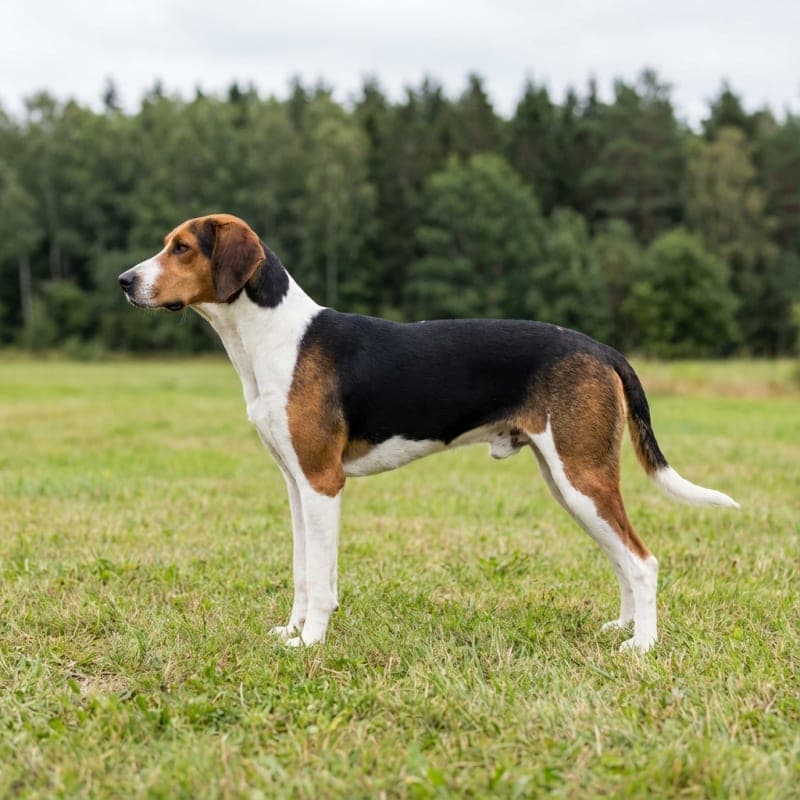
American Foxhound
FCI Group
6• FCI 303
Size
Large
Origin Country
XX
Height
53-63.5 cm
Weight
20-34 kg
Lifespan
11-13 years
Temperament
Overview
American Foxhound is one of the most classic and recognizable breeds of hounds, originating from the United States. Its beginnings date back to colonial times when the first settlers arrived in America, bringing with them English hounds. From these original lines, through careful breeding with other hunting breeds, emerged a dog perfectly adapted for hunting in the unique conditions of American terrain.
This elegant dog is characterized by long, slender limbs, which make it incredibly agile and fast during tracking. The American Foxhound combines elegance of form with hunting functionality. Its unique temperament is an interesting mix — on one hand, it is a sociable and friendly dog towards people, while on the other, it retains strong hunting instincts and independence characteristic of working breeds. This duality of nature means it requires an experienced owner who understands the needs of a hound.
The American Foxhound demonstrates moderate intelligence in terms of obedience, which means training requires patience and consistency. It is not a dog that naturally seeks to please its owner — its independent character means that motivation must come from appropriate positive reinforcement. It requires intense physical activity for at least two hours a day. Long walks, runs in the field, and the opportunity to track are the minimum needed to satisfy its natural need for movement. Without the proper amount of exercise, it can become destructive and difficult to manage.
This breed may exhibit some skepticism towards strangers, making it a good watchdog, although this is not its primary function. The Foxhound also possesses a very strong hunting instinct, which means it may be prone to escapes in pursuit of an interesting scent. For this reason, it needs a lot of space — it is not suitable for living in small urban apartments. The ideal environment is a home with a large, fenced yard where it can safely explore and move around.
Despite its working nature, grooming the American Foxhound is relatively uncomplicated. Its coat is tough, short to medium in length, and close-fitting to the body, which significantly eases maintenance. Regular brushing once a week is sufficient in most cases. In terms of health, this breed generally enjoys good condition, although it is worth being aware of the risk of hip dysplasia and ear infections — the latter are favored by long, drooping ear flaps.
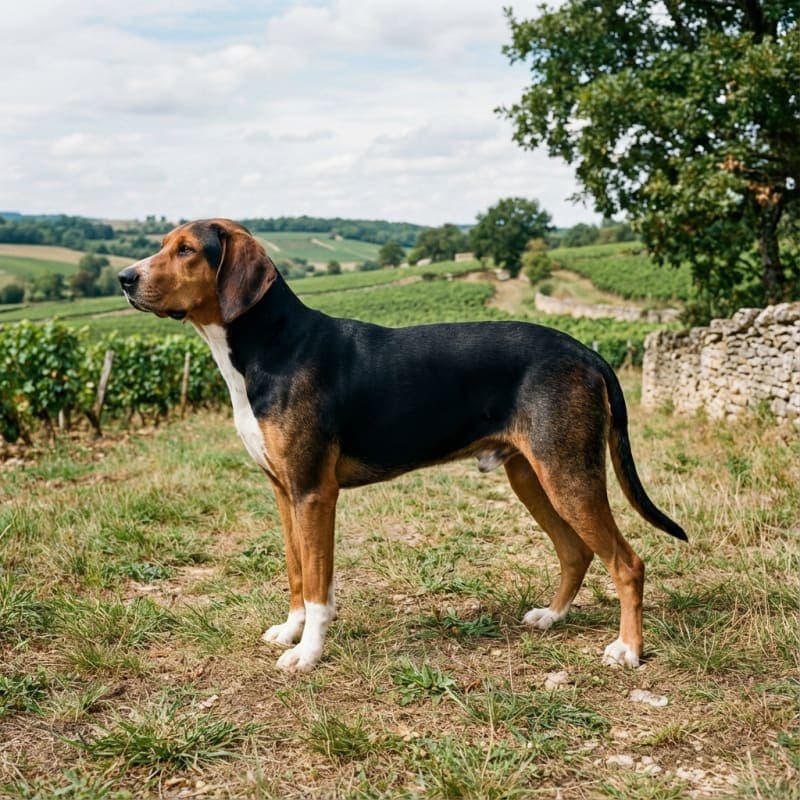
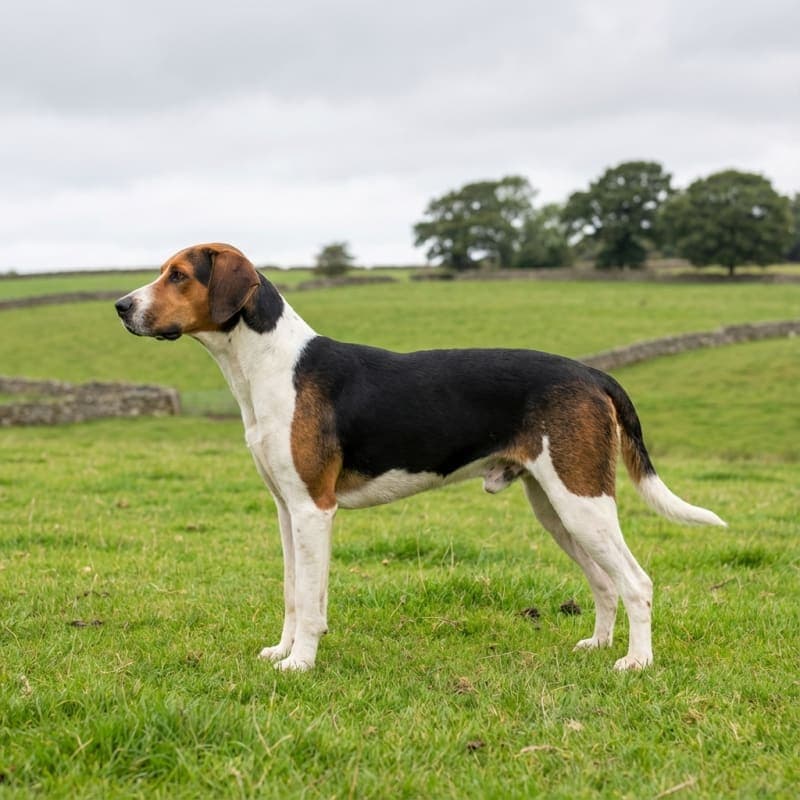
American Foxhound presents a classic, elegant silhouette of a hound — athletic, balanced, and built for long-lasting effort. Its long, strong limbs and well-muscled body indicate endurance and the ability to work in difficult terrain for many hours.
The head is quite long, slightly convex at the occiput, with a moderately wide skull. The stop (transition from forehead to muzzle) is clearly defined but not excessively deep. The muzzle is long, straight, and square
The eyes are large, widely spaced, with a gentle, pleading expression that gives the dog a friendly appearance. Their color is usually brown or hazel. The ears are a distinctive feature of the breed — they are long, set moderately low, thin in structure, and slightly rounded at the tips. When extended, they should almost reach the tip of the nose. The ears hang close to the head, with the front edge slightly directed towards the cheek.
The neck is of medium length, strong but not overloaded with muscles, rising freely from the shoulders. The throat should be clean, without folds of skin, although a slight wrinkle below the jaw angle is acceptable.
The body is moderately long, with a strong, muscular back. The loins are wide and slightly arched. The chest should be deep, providing adequate space for the lungs — for a dog standing 58 cm at the withers, the chest circumference should be about 71 cm. The ribs are well-arched, and the hind ribs extend far back. The belly is slightly tucked up, with deep flanks measuring about 7.6 cm.
The tail is set moderately high, carried cheerfully (upward), but not curled over the back. It is slightly curved but should not be held stiffly upright.
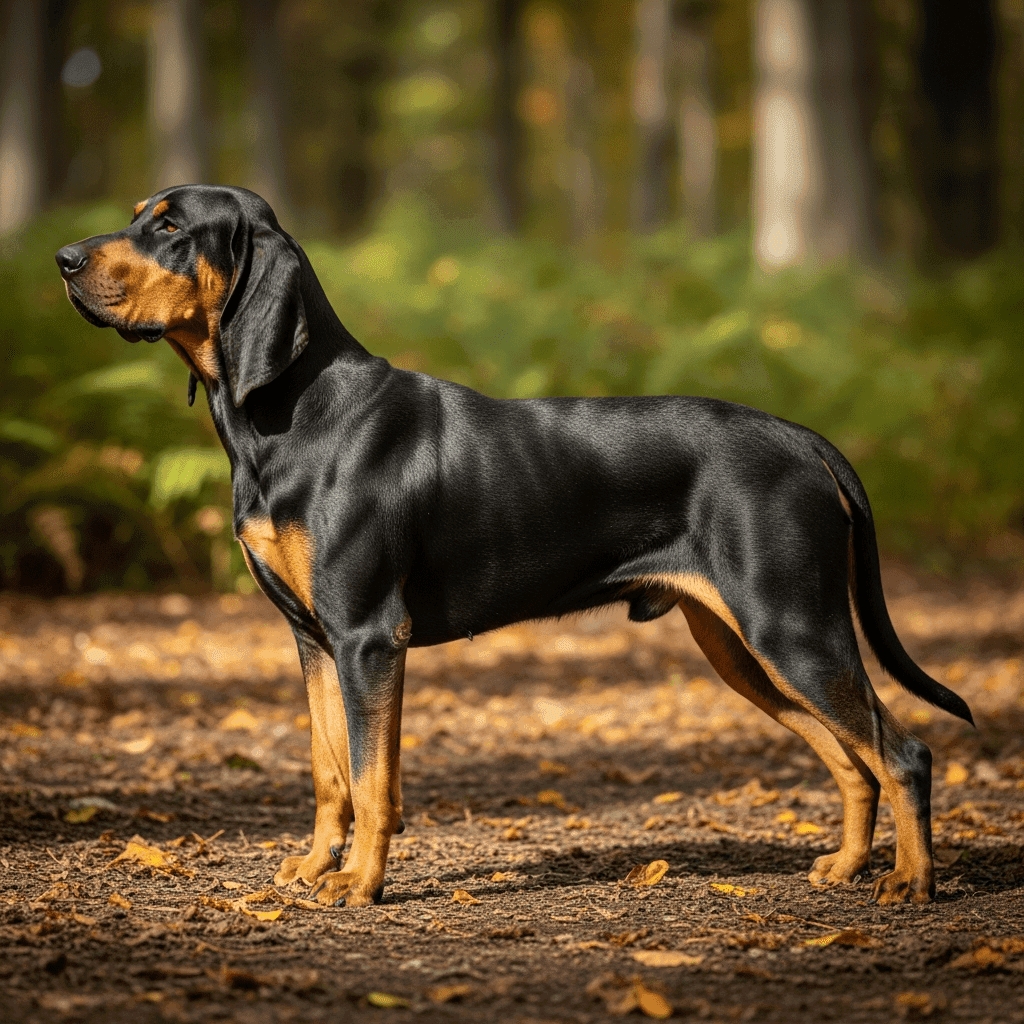
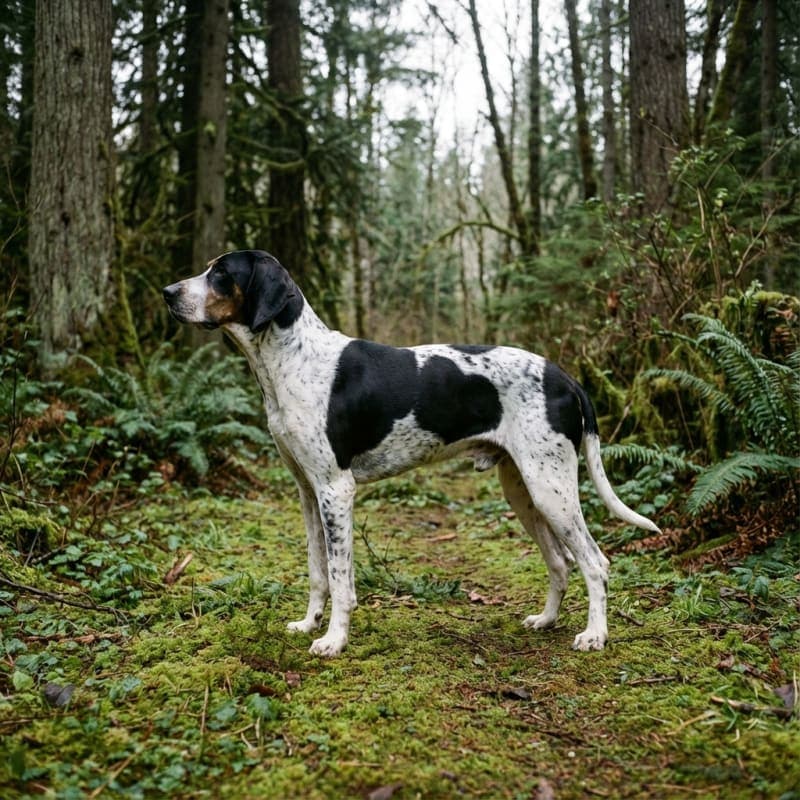
The coat is short to medium in length, hard to the touch, dense, and closely adhering to the body. It can occur in any color combination typical of hounds — the most commonly seen are combinations of black, white, and tan (fawn/brown), but other colors are also acceptable: blue, red, cream, or sandy.
Dimensions: according to the FCI standard, the height at the withers for females is 53-61 cm, for males 56-63.5 cm. Males are usually slightly more massive but retain the same elegant, functional build.
American Foxhound is a dog with a complex and fascinating character that reflects its heritage as a working dog bred for intense pack hunting. Its temperament combines sociable traits with a strong hunting instinct, which requires the owner to have a deep understanding of hound breeds.
In relation to the family, the Foxhound is loyal, gentle, and can be very affectionate, although its independence means it is not a dog that will constantly seek attention or try to please its owner. Its love for the family is genuine, but it expresses it in a more subtle way than companion breeds. Towards strangers, it can be wary or distant, though not aggressive — this trait makes it a good watchdog that will signal the presence of unknown individuals.
The Foxhound has a strong pack instinct, which means it usually gets along well with other dogs and often feels best in the company of another dog. It was bred to work in packs (hunting groups), so this social nature remains part of its character. However, towards other pets, especially small ones like cats, rabbits, or rodents, its hunting instinct may emerge, which can lead to chasing. Early and consistent socialization is crucial.
This breed is very active and energetic, requiring intense physical exercise and mental stimulation. A Foxhound that lacks activity may become destructive, hyperactive, or difficult to manage. A bored Foxhound will find something to do — often something the owner would not approve of, such as digging, chewing furniture, or attempting to escape.
One of its most distinctive features is its loud, melodic baying that Foxhounds use while tracking. This specific, resonant sound can be problematic in urban environments or densely populated areas, where neighbors may complain. The dog may also howl, especially when left alone for long periods or when it hears other dogs.
The American Foxhound exhibits great independence in thinking, which is a legacy of its role as a tracking dog that had to make decisions on its own in the field. This trait makes training require patience and consistency. It is not a dog that naturally strives for obedience — its motivation comes more from tracking and chasing than from a desire to please its owner.
Due to its activity and space requirements, the American Foxhound is not suitable for everyone. It is not appropriate for older individuals who cannot provide it with intense exercise, nor for residents of small apartments without access to large, fenced spaces. It requires an experienced owner who understands the needs of working breeds and is willing to dedicate a significant amount of time to physical activity and consistent training.
American Foxhound is generally a breed with good health and longevity. The average lifespan is 11-13 years, which is typical for medium-sized dogs. As a working breed, developed primarily for hunting functionality, the Foxhound has avoided many health issues common in breeds bred mainly for aesthetic reasons.
However, there are certain conditions that this breed may be prone to:
Hip Dysplasia (HD) — a disease characterized by improper development of the hip joint, leading to instability, pain, and ultimately degenerative changes. Symptoms may include limping, stiffness after rest, reluctance to run or climb stairs. Dysplasia has both genetic and environmental causes. Responsible breeders perform X-ray examinations and do not allow breeding of dogs with severe dysplasia.
Thrombocytopathy (blood clotting disorders) — a condition affecting platelet function, which can lead to prolonged bleeding. Symptoms may include bruising, nosebleeds, bloody stools, or prolonged bleeding after injuries. There are genetic tests available to identify carriers of this trait before breeding.
Ear Infections (otitis externa) — the long, drooping ears of the Foxhound restrict air circulation in the ear canal, promoting moisture buildup and the development of bacteria and yeast. Regular check-ups and ear cleaning are crucial for prevention. Symptoms include ear scratching, head shaking, unpleasant odor from the ears, and redness.
Gastric Dilatation Volvulus (GDV) — although less common in Foxhounds than in breeds with deep chests, GDV remains a serious life-threatening condition. It occurs when the stomach fills with gas and twists on itself, cutting off blood supply. This is a medical emergency requiring immediate veterinary intervention. Prevention includes feeding several smaller meals a day instead of one large meal and avoiding intense exercise immediately after eating.
Obesity — Foxhounds tend to gain weight, especially if they do not receive enough exercise. Being overweight leads to a range of health problems, including increased joint stress, heart disease, and diabetes. Monitoring body condition and providing an appropriate diet are crucial.
The American Foxhound tolerates various weather conditions well due to its short, dense coat, although in extreme temperatures (both heat and cold), it is important to adjust activity levels and provide adequate protection.
Health prevention should include regular veterinary visits, vaccinations, deworming, and monitoring for external parasites (ticks, fleas). Due to their active lifestyle, it is important to regularly check their paws for wounds, thorns, or other injuries.
Grooming the American Foxhound is relatively simple and does not require intensive care, making it a breed that is easy to maintain in this regard. Its short to medium-length, coarse coat is designed to handle various terrain and weather conditions, which means it does not require complicated grooming procedures.
Brushing: Regular brushing once a week with a natural bristle brush or grooming glove is sufficient. This removes dead hair, stimulates the skin, and distributes natural oils, giving the coat a healthy shine. During heavy shedding periods — especially in spring and fall — it is advisable to increase the brushing frequency to 2-3 times a week to control the amount of hair falling in the house.
Bathing: The Foxhound does not require frequent baths. Typically, a bath every 2-3 months or as needed when the dog gets dirty or starts to smell is sufficient. Overbathing can strip the coat of its natural protective oils, leading to dry skin. A mild dog shampoo should be used, avoiding human products that may disrupt the dog's skin pH.
Ears: This area requires special attention. The long, drooping ears of the Foxhound restrict airflow, which promotes moisture accumulation and the development of infections. You should regularly check the ears (at least once a week) and clean them with an appropriate dog ear cleaner. The inner ear should be pink and free of unpleasant odors. If you notice redness, discharge, or a strong odor, consult a veterinarian.
Nails: They should be trimmed every 3-4 weeks or as needed — if you hear the nails clicking on the floor while walking, it means they are too long. Active dogs that run a lot on hard surfaces may naturally wear down their nails, but most house dogs require regular trimming. Appropriate dog nail clippers should be used, and care should be taken not to cut the nerve and blood vessels inside the nail.
Teeth: Oral hygiene is often neglected, but it is crucial for the overall health of the dog. It is recommended to brush the teeth 2-3 times a week (ideally daily) using a dog toothbrush and toothpaste. Additionally, dental treats and chew toys can be given to help mechanically remove plaque.
Skin and body check: While brushing, it is worth conducting a general body check of the dog — checking for lumps, wounds, skin changes, parasites (ticks, fleas), or other abnormalities. Active hunting dogs can easily injure themselves in the field, so regularly checking the paws, belly, and other exposed areas is important.
American Foxhound is a breed with a very high demand for physical activity — it is one of the most energetic and enduring dog breeds. It was created for intense, long-lasting hunts, during which it tracked game for many hours in challenging terrain. This inherent need for movement must be satisfied daily for the dog to be healthy, happy, and balanced.
Minimum requirements: The Foxhound requires at least 2 hours of intense activity daily. This cannot just be a leisurely walk in the park — the dog needs opportunities to run, track, and explore. Ideal forms of activity include:
Trail running: The Foxhound loves to run in open spaces where it can utilize its natural speed and endurance. Running in the woods, fields, or other natural terrains also allows it to use its sense of smell to track various scents, providing mental stimulation.
Jogging with the owner: The Foxhound is an excellent running companion for active people. It can easily accompany its owner on long runs, satisfying its movement needs while strengthening the bond.
Recall games: Playing fetch, frisbee, or ball can be a good form of activity, although the Foxhound may not be as interested in retrieving as retriever breeds. It is important to tailor the games to its natural instincts.
Cynological sports: The Foxhound can participate in sports such as agility, although its independent nature may pose a challenge. Scent-based sports, such as mantrailing or nose work, are more natural for this breed and provide both physical and mental activity.
Safety during activities: Due to its strong hunting instinct and tendency to track, the Foxhound should always be on a leash or in a secure, fenced area. If it catches an interesting scent, it may ignore any commands and run after the smell, risking getting lost or having an accident. A high, sturdy fence (at least 1.8 m) is essential if the dog is to have access to a yard.
Consequences of lack of activity: A Foxhound that does not receive enough exercise may develop a range of behavioral problems. These include: destructive behaviors (destroying furniture, digging), excessive barking or howling, escape attempts, hyperactivity, and frustration. It may also develop health issues related to obesity if its energy is not properly expended.
Environmental notes: The American Foxhound is not suitable for living in a small apartment in the city. It requires access to large, open spaces — ideally a home with a large, securely fenced yard in the countryside or suburbs. This is a dog for very active people who can provide it with the appropriate level of exercise every day, regardless of the weather.
Training the American Foxhound can be quite a challenge even for experienced dog owners. This breed is not among the most obedient — its independent nature and strong hunting instinct make training require patience, consistency, and a deep understanding of hound psychology.
Learning characteristics: The Foxhound exhibits moderate intelligence in terms of obedience, which does not mean it is not intelligent — it is simply programmed to think independently and make decisions while tracking, which was essential in its original hunting role. This means it does not naturally seek to please its owner in the same way that companion or herding breeds do.
Starting training early: It is crucial to begin training from a puppy age (8-12 weeks old). Young puppies are more receptive to learning and more easily grasp basic rules. Start with basic commands such as: Sit, Stay, Lie down, Come, and Leave it. The recall command (Come) is particularly important, as it can save the dog's life if it tends to run off after a scent.
Positive reinforcement: The Foxhound responds best to reward-based training — treats, praise, and play. Punishments and dominance-based methods are ineffective and can destroy the dog's motivation and harm the relationship with the owner. Rewards should be particularly appealing (e.g., pieces of meat, cheese, special treats) to cut through natural distractions and hunting instincts.
Short training sessions: Due to their tendency to get easily distracted, the most effective are short, dynamic sessions of 5-10 minutes, repeated several times a day. Long, monotonous training sessions will lead to boredom and frustration for both the dog and the owner.
Socialization: Early and extensive socialization is absolutely crucial. The puppy should be regularly exposed to various stimuli — people (of different ages and appearances), other dogs, animals, environments (city, forest, park), sounds, surfaces. A well-socialized Foxhound will be more confident, less suspicious of strangers, and better able to handle various situations.
Breed-specific challenges:
Tracking instinct: When the Foxhound picks up an interesting scent, it may completely ignore commands. Therefore, recall training must be exceptionally solid, repeated regularly and rewarded generously. Training should be conducted in environments with controlled distractions, gradually increasing the difficulty.
Loud barking: Foxhounds tend to have loud, melodic barking (baying). Teaching the command Quiet can be challenging, but it is possible with consistency and rewards for calm behavior.
Tendency to escape: The dog must learn that the boundaries of the property are inviolable. Reinforcing the return home with rewards and avoiding punishment for escaping (even if we are frustrated) is key.
Owner requirements: The American Foxhound requires an experienced, firm, but fair owner who understands the needs of working dogs. This is not a good breed for novice dog owners or for those expecting absolute obedience. The owner must be patient, consistent, and ready for a long training process.
A proper diet is crucial for the health, condition, and longevity of the American Foxhound. As an active dog with high energy needs, it requires a well-balanced, high-quality food that supports its lifestyle and maintains optimal body condition.
Type of food: Choose high-quality dry or mixed (dry + wet) food designed for active, medium-sized dogs. The food should contain:
A high protein content (minimum 22-28% for adult dogs, 25-30% for puppies) — animal-based protein (chicken, beef, fish, lamb) should be the first ingredient on the list. Protein is essential for maintaining muscle mass, which is crucial for an active dog.
A moderate fat content (12-18%) — healthy fats (fish oil, chicken fat) provide energy, support skin and coat health, and cognitive functions. Omega-3 and Omega-6 are particularly important.
Carbohydrates (potatoes, sweet potatoes, brown rice, oats) — as a source of long-lasting energy. Avoid foods with excessive fillers (corn, wheat) that can cause allergies.
Vitamins and minerals — calcium and phosphorus for bone health, vitamins A and E for immune function, glucosamine and chondroitin for joint health (especially important due to the risk of dysplasia).
Feeding frequency: For adult Foxhounds, it is recommended to divide the daily portion into 2-3 smaller meals. This helps maintain stable energy levels and reduces the risk of gastric torsion (GDV) — a serious condition that can occur when a dog eats a large amount of food at once and then exercises vigorously.
Amount of food: Depends on the age, weight, activity level, and individual metabolism of the dog. As a general guideline, an adult Foxhound (20-30 kg) may need 2-3 cups (400-600g) of high-quality dry food per day, divided into 2-3 meals. Very active dogs (working, hunting) may require more, while less active ones may need less.
Weight control: The Foxhound has a tendency to gain weight, especially if it does not get enough exercise. Obesity leads to a range of health problems: joint strain, heart disease, diabetes, and a shortened lifespan. Regularly monitor body condition — a waist indentation should be visible, and ribs should be palpable under a thin layer of fat, but not protruding.
Treats: Can make up a maximum of 10% of daily calories. It's worth using healthy treats: dried meat, vegetable pieces (carrots, broccoli), fruits (apples, bananas in small amounts). Avoid processed, sweet, or salty treats.
Water: Fresh, clean water should always be available. Active dogs can easily become dehydrated, especially on warm days or after intense exercise.
Special needs: Puppies, seniors, pregnant or nursing females, and dogs with health issues may require special diets. Regular consultations with a veterinarian regarding diet are recommended to ensure that the dog receives all necessary nutrients in appropriate proportions.
Characteristic Traits
Pros
- Excellent sense of smell and tracking skills
- Durable and energetic companion for activities
- Elegant and athletic body structure
- Easy care for short coat
- Friendly and sociable towards people
- Gets along well with other dogs.
Cons
- Requires a lot of space and intense activity
- Strong hunting instinct and tendency to escape in pursuit
- Independent nature making training difficult
- Loud barking and howling unsuitable for the city
- Distrustful of strangers
- Requires an experienced owner.
Behavioral Ratings
Breed History
American Foxhound has a fascinating and rich history that is inextricably linked to the beginnings of the United States as a nation. This breed is one of the oldest purely American dog breeds, with roots dating back to the colonial times of the 17th and 18th centuries.
When the first European settlers — primarily the English — arrived in the New World, they brought with them English foxhounds, which they used for hunting foxes. Fox hunting was not only a way to obtain food and control pest populations, but also an important social event and tradition cultivated by the aristocracy and wealthier settlers.
However, the conditions in North America were significantly different from those in England. The terrain was more varied and rugged — from dense forests to open prairies, from flat lands to mountains. English Foxhounds, while excellent in European conditions, were not ideally suited to these challenges. A faster, more agile dog with greater endurance and a better sense of smell was needed, capable of working in tougher conditions.
In response to these needs, American breeders began to cross English Foxhounds with other breeds of hounds brought from Europe, including French and Irish hounds. These crosses aimed to create a dog better adapted to American hunting conditions — faster, lighter, more independent, and with a better sense of smell.
One of the most important figures in the history of the breed was George Washington — the first president of the United States and an avid hunter and dog breeder. Washington maintained a pack of Foxhounds at his Mount Vernon estate and actively worked on improving the breed. In 1770, he received French hounds as a gift from the Marquis de Lafayette, which he introduced into his breeding line. These French dogs brought additional speed, elegance, and scenting ability to the developing American breed.
Throughout the 19th century, the breed was further developed and refined by various families and regions of the United States, leading to the emergence of several different lines of American Foxhound, each with slightly different characteristics. Some lines were bred for speed, others for voice (barking), and still others for endurance.
In 1886, the American Foxhound was officially recognized by the American Kennel Club (AKC), confirming its status as a distinct breed. Nevertheless, the breed remained primarily a working dog — used for hunting rather than being showcased in dog beauty contests.
Today, the American Foxhound is the official dog of the state of Virginia (since 1966), highlighting its significance in American culture and history. Although the breed is known worldwide, it remains relatively rare outside the United States, where it still serves as a hunting dog, but also accompanies active families as a loyal, energetic companion.