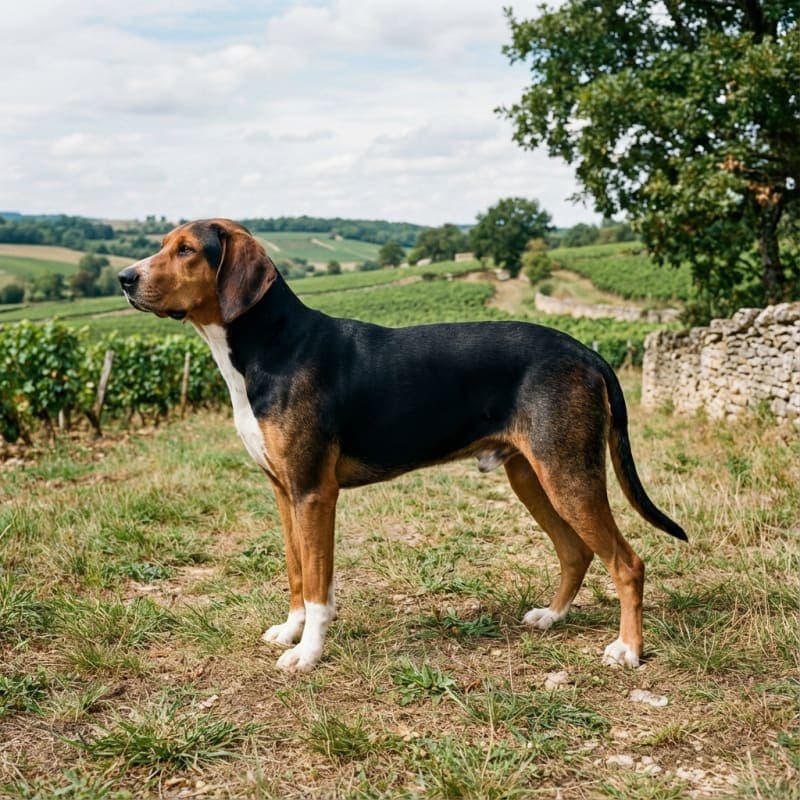
French Tricolor Hound
FCI Group
6• FCI 219
Size
Large
Origin Country
FR
Height
60-72 cm
Weight
25-30 kg
Lifespan
10-12 years
Temperament
Overview
French Tricolore Hound, also known as Français Tricolore, is a unique breed of hunting dog with aristocratic roots, dating back to the 19th century in France. This elegant, strong, and harmoniously built dog stands out not only for its remarkable beauty and noble appearance but also for its exceptional intelligence, extraordinary hunting instinct, and remarkable endurance during long hunts. It is an ideal companion for experienced hunters who value agility, speed, perseverance, and reliability when hunting large game in challenging terrain.
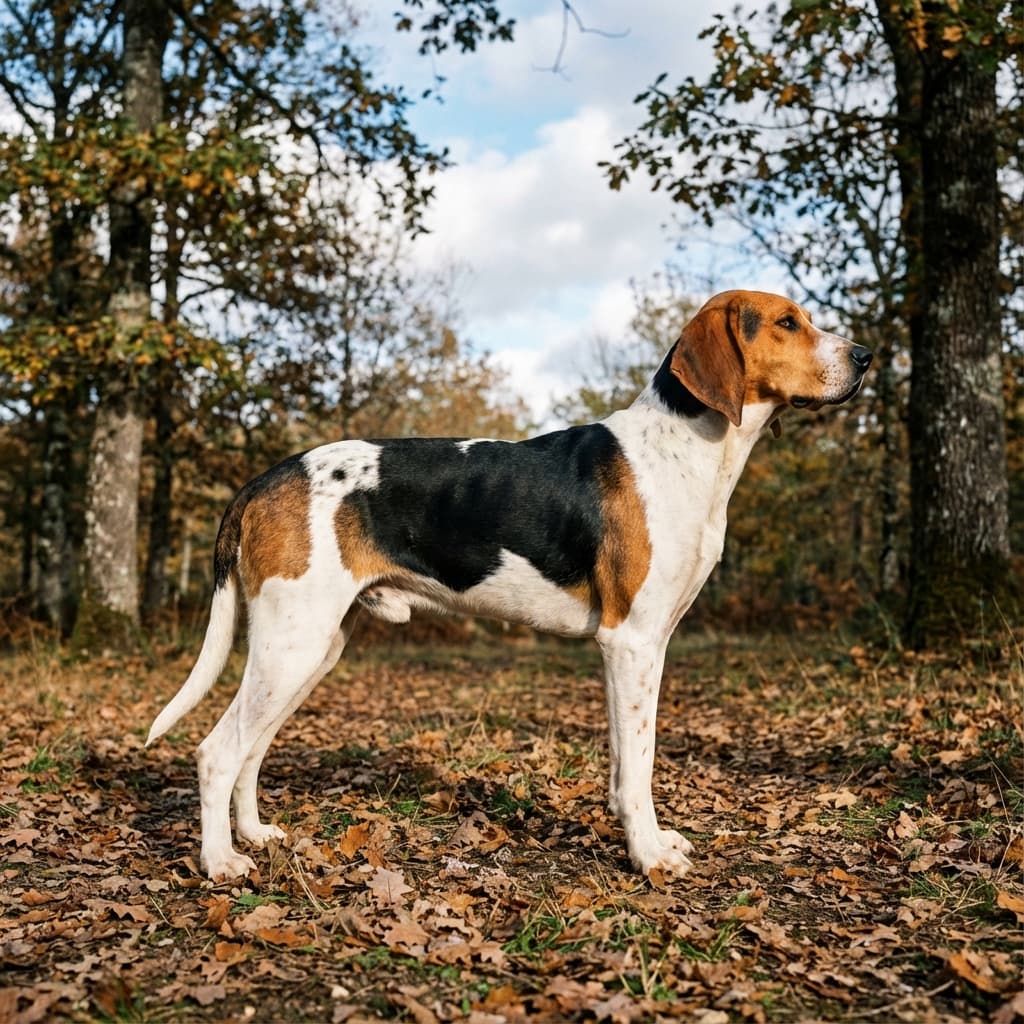
French Tricolore Hound is characterized by its s spectacular tricolor coat - a white background with distinct black patches and brick or copper-colored markings that give it a unique, recognizable appearance. Its large, well-proportioned body structure, with long, strong limbs, a deep chest, and powerful shoulders and muscular hindquarters, emphasizes its athletic, functional silhouette, which is perfectly suited for intensive work in mountainous, forested, and hard-to-reach areas. The dog's head is elongated and noble, with a well-defined occipital bump, large, dark, intelligent eyes, and a distinct stop. Slightly curled, wide ears set at eye level add to its charm and highlight its alertness.
However, this breed is not suitable for every owner or lifestyle. The French Tricolore Hound requires huge amounts of exercise, physical activity, and mental stimulation, making life in the city, a small apartment without access to outdoor space, or a sedentary lifestyle absolutely inappropriate for it and may lead to serious behavioral problems. Its balanced yet independent and self-sufficient temperament demands strong, consistent leadership from the owner, experience in working with hunting breeds, and ongoing commitment to training and socialization.
Despite its outstanding intelligence and willingness to cooperate, the strong, deeply rooted hunting instinct can make it difficult to focus fully on commands, especially in open terrain, where any interesting scent may attract the dog's attention and prompt it to chase independently. Therefore, prospective owners should be fully aware of the demands of this breed and be prepared for intensive, regular training and the challenges associated with raising a hunting dog with a strong character. The French Tricolore Hound is not a dog for novice owners or for those seeking a calm, easy-to-maintain companion.
In summary, the French Tricolore Hound is a dog that will thrive in extremely active families who love outdoor life, long hikes, running, and canine sports. Its athletic, harmonious silhouette, natural agility, endurance, and passion for work make it an ideal companion for hunting, long outdoor excursions, and all outdoor activities. In the following sections of our detailed guide, you will learn much more about the health, care, training requirements, diet, and fascinating history of this wonderful, albeit rare and demanding breed. We encourage you to read carefully to fully understand what the French Tricolore Hound can offer as a unique, loyal member of the hunting family.
The French tricolor hound is a large hunting dog with an elegant, harmonious, strong, and functional body structure, perfectly adapted for intensive hunting work in difficult terrain. Its height at the withers ranges from 60 to 72 cm, classifying it as a large breed, and its weight varies from 25 to 30 kg, although active, working individuals may be slightly heavier due to developed musculature. The body proportions are perfectly balanced - the body length slightly exceeds the height at the withers, which ensures stability, endurance, and efficiency in movement during prolonged tracking across diverse terrain.
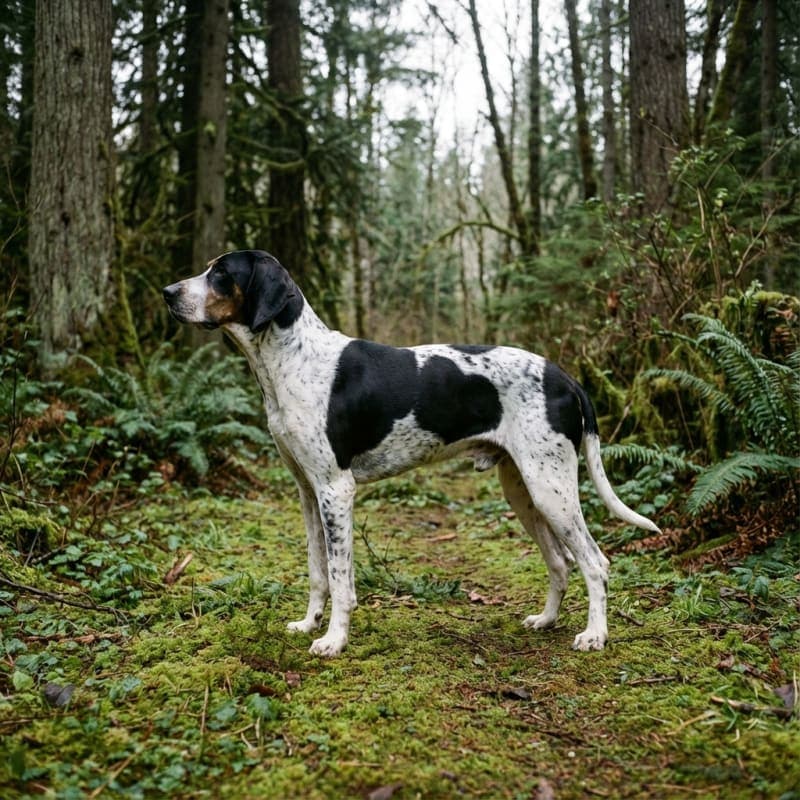
The coat is short, dense, close-fitting to the body, and soft to the touch, providing excellent protection against weather conditions and facilitating movement through dense underbrush and difficult forest terrain. The coloration is spectacularly tricolor and consists of a dominant white background with distinct, well-defined black patches (usually on the back, sides, and head) and brick or copper tan markings on the head, above the eyes, on the limbs, and under the tail. This classic, elegant coloration gives the breed a unique, aristocratic appearance and is one of its most recognizable features.
The head is elongated, noble, not too massive, but well-developed, with a distinctly marked occipital protuberance. The skull is very slightly convex, and the stop (the transition) is more pronounced than in the Poitevin, giving the head a characteristic profile. The muzzle is straight, quite long, sometimes slightly arched, with a black nose and wide-open nostrils. The lips are slightly more developed than in the Poitevin, meaning they are very slightly square, which gives the muzzle a solid, functional appearance.
The eyes are large, brown, often surrounded by black pigment (dark rim), with an intelligent, lively, and alert expression that immediately attracts attention and reflects the dog's keen mind. The ears are wide, set at eye level, slightly curled (not too soft), preferably reaching to the base of the nose or two fingers away from it. The ears are one of the breed's most distinctive features and give the dog a vigilant, hunting appearance.
The neck is long, strong, muscular, sometimes with a slight trace of a throat, and its length is proportional to the body structure, emphasizing the harmonious, elegant silhouette. The back is strong, straight, and stable, while the chest is deep, well-developed, and descends at least to the level of the elbows, providing adequate lung capacity and endurance during prolonged exertion. The ribs are long, not too flat, which gives the chest appropriate capacity. The belly line and underbelly are very slightly tucked up, which gives the dog agility and lightness in movement.
The tail is quite long, carried high and elegantly, usually slightly curved in the shape of a saber or gentle arc. It is an important element of the dog's communication and balance during fast running. The front limbs are well set, wide, straight, and strong, with long shoulder blades fitting closely to the chest. The front paws are slim, compact, and strong. The hind limbs have well-placed hips, harmoniously working with the front limbs, long and sufficiently muscular thighs, and stable hock joints. The overall structure of the limbs provides excellent stability, strength, and agility in any terrain.
The movement of the French tricolor hound is light, free, elegant, flexible, and full of energy, making it an exceptionally agile and efficient hunting dog. Its excellent anatomical structure and body proportions allow it to cover long distances without fatigue, maintaining a steady pace and strength. Combined with its natural elegance and noble appearance, the French tricolor hound is not only functional as a working dog but also visually extremely attractive and impressive in motion at shows and exhibitions.
The tricolor French Hound is a dog with a distinct, strong hunting temperament, which can be both independent and self-sufficient in work, as well as sociable and loyal to its human family and pack of dogs. Their strong, deeply rooted hunting instinct makes them extremely alert, active, full of energy, and focused on tracking scents, which makes them less suitable for living in small, cramped urban apartments where their natural needs cannot be adequately met.
They are usually moderately friendly, gentle, and kind towards people, especially towards family members and familiar individuals, but they can be somewhat cautious, reserved, or distrustful of strangers, which is a typical trait of many hunting breeds. They require strong, consistent leadership and systematic, positive training to become obedient, balanced companions. Their natural independence and tendency to make decisions on their own while tracking mean that they are not dogs that blindly follow every command - they prefer to think independently and assess the situation, which can be a challenge for inexperienced owners.
The tricolor French Hound is a dog that does not tolerate long periods of solitude and social isolation, which can lead to serious behavioral problems such as:
- Excessive vocalization (howling, barking)
- Destruction of household items out of frustration or boredom
- Separation anxiety
- Compulsive behaviors
- Escapes and attempts to find companionship on their own
Interaction with other dogs is extremely important and natural for them, as they are social animals that traditionally worked in packs during hunts and feel best in the company of other four-legged friends. Well-socialized tricolor French Hounds usually get along excellently with other dogs and love playing, running, and exploring the area together. However, due to their strong hunting instinct, they may show a tendency to chase smaller pets, such as cats, rabbits, or rodents, so early socialization and training are crucial.
The tricolor French Hound also needs appropriate, careful socialization from a puppy age to learn how to cope in various unfamiliar situations and respond positively to diverse stimuli, other animals, people of different ages and appearances, and new environments. Without proper socialization, these dogs can become overly distrustful, anxious, or reactive, which will hinder their functioning in everyday life.
Owners of tricolor French Hounds should be fully aware that these are dogs that require a lot of attention, commitment, time, and activity to fully meet their natural hunting, physical, social, and mental needs. In return, they will receive an incredibly loyal, intelligent, full-of-life companion who will be a devoted partner in every outdoor adventure and an indispensable working dog during hunts.
The French tricolor hound is typically a healthy, resilient, and durable breed, characterized by good physical condition, natural vitality, and a long life with proper care. The average lifespan of this breed ranges from 10 to 12 years, and many individuals, with the right diet, regular veterinary check-ups, and an active lifestyle, can enjoy health and vitality even longer. These are dogs that require appropriate, regular care and health prevention to avoid the most common health problems characteristic of large hound breeds.
Among the conditions that French tricolor hounds may be prone to are:
- Hip Dysplasia (HD) - a congenital defect of the hip joint leading to pain, lameness, and arthritis
- Elbow Dysplasia (ED) - problems with the elbow joints, particularly in active dogs
- Skin issues - demodicosis (mite infection), skin allergies, tick fever
- Ear infections - due to long, drooping ears that can retain moisture
- Joint and ligament problems - injuries during intense activity
- Obesity - if the dog does not receive enough exercise
Weak joints and orthopedic problems can result from an improper diet (too rapid growth, unbalanced nutrients), lack of regular physical activity suitable for age, or overloading young dogs during growth. Therefore, it is extremely important to provide French tricolor hounds with regular, appropriately balanced exercise that builds strength and endurance without overloading the joints, as well as a healthy, high-quality diet rich in calcium, phosphorus, glucosamine, and chondroitin, which support joint and bone health.
The French tricolor hound is a canine athlete and sportsman, so its diet should be closely tailored to its high level of activity, age, weight, and individual metabolic needs. Working dogs, participating in hunting or canine sports, may require significantly more calories, protein, and healthy fats than dogs leading a less active lifestyle.
Particular attention should also be paid to sensitivity to extreme temperatures. French tricolor hounds feel best in a moderate, mild climate; however, they should not be overexerted with intense effort on hot, warm days due to the risk of heatstroke and overheating. In winter, they require solid, warm shelter and appropriate protection from cold winds, frost, and moisture to protect them from hypothermia and frostbite.
Regular veterinary check-ups (at least once a year, and for older dogs every 6 months), vaccinations, deworming, and flea and tick prevention are absolutely essential for maintaining the health of the French tricolor hound. Additionally, regular orthopedic checks, joint examinations, and blood tests are recommended to detect any concerning changes early and apply appropriate treatment. Caring for ear health through regular cleaning and monitoring the condition of the skin will help prevent infections and dermatological issues.
The care of the French tricolor hound is relatively simple, not very time-consuming, and does not require specialized skills, making this breed ideal for owners who value simplicity in daily care. Their coat is short, dense, and close to the body, which means they do not require complicated, professional grooming or regular trimming, as is the case with long-haired or rough-haired breeds.
Regular, systematic brushing with a short brush made of natural bristles or a grooming glove 1-2 times a week will effectively remove dead hair, dirt, pollen, and plant debris, as well as stimulate the natural oils in the skin, ensuring the coat has a healthy, shiny appearance and protecting the skin from irritation. During seasonal shedding (in spring and autumn), when the dog sheds its undercoat more intensively, it is advisable to increase the frequency of brushing to 3-4 times a week or even daily, to effectively reduce the amount of hair falling out in the house and prevent matting.
It is also important to regularly trim the nails (usually once every 3-4 weeks) if the dog does not wear them down naturally during intense activity on hard, rocky surfaces. Too long nails can cause serious discomfort, walking problems, improper paw positioning, and even joint damage and pain. If you hear clicking sounds from the nails on the floor, it means they are already too long and need trimming.
Additionally, the ears of the French tricolor hound should be regularly and carefully checked and cleaned (at least once a week) to prevent bacterial and fungal infections, which can easily occur due to accumulated dirt, moisture, wax, or plant debris. Due to their long, wide, drooping ears that restrict airflow, this breed is somewhat more prone to ear problems. Special veterinary ear cleaning solutions and gentle wipes should be used, avoiding inserting cotton swabs deep into the ear canal. If you notice an unpleasant smell, discharge, redness, or if the dog frequently shakes its head and scratches its ears, consult a veterinarian immediately.
After each walk, especially in wooded, field, or bushy areas, it is advisable to thoroughly check for contaminants in the dog's coat, such as leaves, twigs, thorns, grass seeds (burrs can penetrate the skin and cause infections), as well as ticks, which are particularly dangerous and can transmit diseases such as Lyme disease or babesiosis. They should be removed with a special tick removal tool (called a tick lever) and the bite site should be monitored.
It is also worth taking care of the dog's oral health by regularly brushing its teeth with a special toothbrush and dog toothpaste (ideally 2-3 times a week or daily) or using special dental treats, natural chews (e.g., dried beef ears, skins), and chew toys that help maintain hygiene, prevent tartar buildup, gum disease, and tooth loss in older age.
Baths should only be given when absolutely necessary, e.g., when the dog is very dirty after a muddy walk, smells, or has come into contact with toxic substances. Too frequent bathing can disrupt the natural protective barrier of the skin, dry it out, and lead to irritation, itching, or dermatological problems. In most cases, bathing once every 2-3 months or only as needed is completely sufficient. Gentle, high-quality shampoos specifically designed for dogs should be used, which have the appropriate pH (around 7.0-7.5) and do not irritate the skin.
Proper, systematic care of the French tricolor hound not only ensures its health, hygiene, and comfort but also helps maintain the beautiful, natural appearance of its spectacular tricolor coat and strengthens the bond between the dog and the owner through positive, regular interactions and grooming physical contact.
The tricolor French Hound is a dog that requires a huge, even extreme amount of exercise, physical activity, and mental stimulation to maintain excellent physical condition, mental health, balanced behavior, and overall well-being. Their natural, deeply ingrained hunting instincts and history as working dogs in packs during long hunts for large game mean that they absolutely require space for intense running, exploration, and tracking.
Every day, tricolor French Hounds should be provided with a minimum of 90-120 minutes of intense physical activity, and ideally even more if the dog is young, energetic, and in excellent condition. This can include various forms of activity, such as:
- Long walks - at least 2-3 times a day, for 45-60 minutes each, in varied terrain
- Running - alongside a bicycle, during the owner's jogging, or freely in a safe, fenced area
- Mountain, forest, or field hikes - ideal for this breed, allowing for natural tracking, exploration, and scent work
- Canicross - running in the terrain with the dog in a special harness
- Cycling - with the dog running alongside (after proper training)
- Swimming - an excellent, low-impact form of exercise for the joints
- Fetch games - playing with a ball, frisbee, or other toys
- Scent games - hiding treats, scent trails, nose work, mantrailing
Tricolor French Hounds are perfectly suited for outdoor activities that engage both their body and mind. However, owners should be extremely aware that letting a tricolor French Hound off-leash in unsecured areas can lead to serious recall problems, as this dog can easily get carried away by its strong hunting instinct and may run after an interesting scent, completely ignoring the owner's call. Therefore, for the safety of the dog and the peace of mind of the owner, it is recommended to use a strong leash, a long training line (10-20 meters), or to let the dog off-leash only in a safe, fully fenced area, to maintain full control over the dog during walks near roads, neighborhoods, or wilderness.
Lack of sufficient physical and mental activity can lead to very serious behavioral and health problems, such as:
- Destructive behavior (destroying furniture, chewing, digging)
- Excessive vocalization (howling, barking out of frustration)
- Separation anxiety and depression
- Frustration or energy-induced aggression
- Compulsive behaviors (e.g., chasing its own tail)
- Escapes and attempts at solo wandering
- Obesity and related health issues
Owners should provide tricolor French Hounds with not only daily walks but also various forms of play, obedience training, canine sports, and mental challenges to meet their physical, mental, and social needs. The tricolor French Hound loves to have tasks that engage its natural tracking instinct - scent games, searching for hidden treats, mantrailing, or nose work are excellent ways to exhaust the dog mentally and physically at the same time.
This breed is absolutely unsuitable for owners leading a sedentary lifestyle, living in small apartments without access to outdoor space, or for those who do not have the time, energy, and passion to provide the dog with intense, daily activity. The tricolor French Hound is a dog made for work, movement, and adventure - its happiness and health depend on the ability to fulfill these natural needs.
Training a French Tricolor Hound can be both a rewarding experience and a significant challenge, especially for inexperienced hunting dog owners. Dogs of this breed are intelligent, alert, eager to learn and cooperate; however, their independent, self-reliant nature and extremely strong, deeply ingrained hunting instinct can significantly complicate the training process and require the owner to have immense patience, consistency, experience with hound breeds, and creative, positive training methods.
The French Tricolor Hound has been bred over the centuries to make independent decisions while tracking game in the field, which is why it is not a breed that blindly and unconditionally follows every command without thinking. These dogs prefer to think for themselves, assess the situation, and make decisions based on their instincts and experiences, which can be both an advantage (independence in work) and a disadvantage (difficulties with full obedience). Their tendency to get distracted, especially in an area full of interesting scents, can significantly hinder the training process and require special attention, motivation, and creativity from the owner.
Key to success is the use of only positive training methods based on reinforcement, rewards, motivation, and play, such as clicker training, rewarding with high-value treats (e.g., pieces of meat, cheese, liver), toys, verbal praise, petting, and play for desired behaviors. The French Tricolor Hound reacts very poorly to harsh methods, physical punishment, yelling, coercion, or dominance, which can destroy the dog's trust in the owner, cause fear, anxiety, aggression, and lead to serious behavioral problems and a complete breakdown of the bond.
Training sessions should be short (10-15 minutes maximum), dynamic, varied, fun, and engaging to maintain the attention and motivation of the French Tricolor Hound. Too long, monotonous, boring sessions can lead to boredom, frustration, loss of interest, and complete discouragement from cooperating. It is worth incorporating elements of play, tracking, and scent work into training, which allows for learning through natural play and utilizing the dog's instincts. The French Tricolor Hound responds excellently to various activities such as fetching, searching for hidden treats, scent trails, and hide-and-seek games, making training more interactive, natural, enjoyable, and effective.
The basic commands to absolutely focus on are:
- Sit - basic control command
- Lie down - calming and full control
- Stay / Wait - self-control and safety
- Come / Here - recall (ABSOLUTELY PRIORITY for safety!)
- Leave it / No - preventing undesirable behaviors
- Heel - walking at heel on a loose leash
- Calm - calming and stopping undesirable behaviors
Working in a group of dogs, various obedience exercises, canine sports (mantrailing, nosework, obedience), and games can be extremely effective methods for maintaining the attention, motivation, and engagement of the French Tricolor Hound. Training should also necessarily include intensive, broad socialization so that the dog learns to cope positively in various, unfamiliar situations and with other animals, people of different ages and appearances, and new environments. Early socialization (from 3-14 weeks) is absolutely crucial for developing a confident, balanced adult dog.
It is important to never use harsh, fear-based methods, as they can lead to serious behavioral problems such as aggression, anxiety, avoidance of contact, or a complete breakdown of the bond with the owner. Regular, positive training sessions help build a strong, trust-based bond between the dog and the owner, which is absolutely essential for their future obedience, safety, and happiness.
Owners of French Tricolor Hounds should be fully aware that these are dogs that require strong, consistent leadership and ongoing, long-term commitment to training to become obedient, balanced companions. They are dogs for experienced owners who understand the specifics of hunting breeds and are willing to invest time, energy, and passion into proper upbringing and training.
The diet of the French tricolor hound should be extremely carefully balanced, high quality, and closely tailored to the individual needs of the dog to fully meet their high energy requirements, support muscle development, maintain joint health, and ensure a long, healthy life. Due to their exceptionally high physical activity, intense lifestyle, and the natural metabolism of a working dog, they should receive high-quality food - both dry (kibble) and wet (cans, pouches) - that contains an appropriate, high amount of animal protein, healthy fats, and the right proportion of carbohydrates.
Key nutrients for the French tricolor hound include:
- High-quality animal protein (26-32%) - chicken, beef, lamb, fish, turkey - essential for muscle building and regeneration as well as proper immune system function
- Healthy fats (14-20%) - the main source of energy for active dogs, support healthy skin and a shiny coat, omega-3 and omega-6 fatty acids have anti-inflammatory effects
- Carbohydrates - source of energy, fiber supporting proper digestion (rice, oats, sweet potatoes)
- Vitamins (A, D, E, K, B group) - support metabolic processes, vision, immune system
- Minerals (calcium, phosphorus, zinc, iron, magnesium) - healthy bones, joints, teeth, proper body function
- Glucosamine and chondroitin - support for joints, cartilage, prevention of degenerative diseases (especially important for active dogs)
- Probiotics and prebiotics - healthy gut flora, proper digestion
- Antioxidants - protection against oxidative stress, strengthening the immune system
It is also worthwhile to introduce natural, fresh additions to the diet of the French tricolor hound that will provide additional vitamins, minerals, and fiber:
- Vegetables (carrots, broccoli, zucchini, pumpkin, spinach, green beans) - vitamins, minerals, fiber
- Fruits (seedless apples, berries, blueberries, watermelon, pears) - antioxidants, vitamins
- Natural cooked or raw meat (BARF diet) (chicken, turkey, beef, lamb) - high-quality protein
- Fish (salmon, sardines, mackerel) - omega-3 fatty acids, DHA, EPA
- Eggs (cooked or raw) - protein, biotin, vitamins
- Flaxseed oil, salmon oil, or coconut oil - healthy skin and shiny coat
- Natural chewing bones (raw beef bones) - teeth cleaning, stimulation
However, it is absolutely essential to avoid harmful, toxic products for dogs, such as: chocolate, onions, garlic, grapes, raisins, avocados, xylitol (sweetener), alcohol, caffeine, macadamia nuts, salty snacks, fatty foods, raw dough, and chicken bones (choking hazard).
It is important to ensure that the dog has constant, unlimited access to fresh, clean drinking water at all times, especially after intense physical exertion, long walks, on hot days, or after consuming dry food. Proper hydration is absolutely crucial for the proper functioning of the body, regulation of body temperature, elimination of toxins, and kidney function.
Regular meals at set, fixed times of the day (preferably twice a day for adult dogs, 3-4 times for puppies, 1-2 times for seniors) help maintain proper weight, stable energy levels, proper metabolism, and prevent health issues related to obesity, malnutrition, or digestive problems. It is important to adjust portion sizes to the individual needs of the dog and regularly monitor their weight, body condition (BCS - Body Condition Score), and energy level.
Obesity is a very serious health issue that can lead to diabetes, heart disease, hypertension, joint problems (dysplasia, arthritis), breathing problems, and significantly shortened lifespan. Therefore, weight control and a proper, balanced diet are absolutely crucial.
If the dog has special health requirements (food allergies, intolerances, digestive issues, kidney disease, diabetes, joint problems), it is essential to consult a veterinarian or veterinary nutritionist and implement an appropriate, specialized therapeutic diet tailored to the specific condition. A proper, individually tailored diet is not only the foundation of physical health but also affects well-being, energy levels, coat condition, cognitive functions, immune system, and the lifespan of the French tricolor hound.
Characteristic Traits
Pros
- Intelligent and sharp
- a great companion for active hunters
- exceptionally agile and resilient
- spectacular tricolor coat
- strong social instincts
- low grooming requirements.
Cons
- Requires a huge amount of exercise and activity
- Very strong hunting instinct makes recall difficult
- Independent temperament requires experience and consistent training
- Does not tolerate loneliness
- Unsuitable for life in the city or a small apartment.
Behavioral Ratings
Breed History
The French tricolor hound has its deep, rich roots in the 19th century, when in France, a country with a long and esteemed hunting tradition, various top breeds of hounds were systematically combined to breed the ideal, versatile hunting companion with outstanding tracking abilities, endurance, speed, and a harmonious, carrying voice. This breed is part of a wide, prestigious group of French hunting dogs that have been carefully bred, selected, and perfected over the centuries for hunting diverse game - from small hares to large game such as deer, wild boars, or wolves.
Breeders often deliberately utilized the outstanding traits of English dogs, especially foxhounds and staghounds, to significantly improve the hunting skills, speed, endurance, and scenting ability of French hounds. This crossing of traditional French hound lines with English blood resulted in the creation of a dog with exceptional hunting abilities, harmonious body structure, and a spectacular, recognizable tricolor coat. The Français Tricolore quickly gained recognition among French hunters, aristocrats, and breeders as a reliable, versatile working dog perfectly suited for pack work during long, intensive hunts in diverse terrain.
Although the French tricolor hound possesses exceptional, valued hunting abilities, its popularity outside of France remains relatively limited, and the number of dogs of this breed worldwide is still small. This breed remains primarily popular in France, Belgium, and some other Western European countries, where the traditions of hunting in packs are still alive and appreciated. Unlike more well-known hound breeds, such as beagles or basset hounds, the French tricolor hound remains a niche, specialized breed known mainly among experienced hunters and breeders.
This breed has traditionally been used for hunting in large packs, which required the dogs not only to have outstanding tracking skills and endurance but also strong social instincts, the ability to cooperate with other dogs, and loyalty to the hunters. This deeply rooted experience of working in groups has contributed to the development of their strong social needs, sociable character, and natural ability to cooperate with other dogs. Over the years, the French tricolor hound has gained recognition among hunters and has become a valued, irreplaceable companion in hunting hares, foxes, deer, and other animals.
In 1957, the breed was officially recognized by the FCI (Fédération Cynologique Internationale) under standard number 219, in group 6 (Hounds and related breeds), section 1.1 (Large hounds). The last update of the standard took place in 2023, which reflects the ongoing evolution and improvement of the breed and the care taken to preserve its original, valuable working traits.
Although today many people choose to keep purebred dogs as household pets and family companions, the French tricolor hound still remains primarily a hunting dog, which feels best in the company of active people who love nature and other dogs. Its history is closely and inseparably linked to the rich hunting traditions of France, and its outstanding skills, strong character, and spectacular appearance make it a valued companion for hunting enthusiasts who can appreciate and meet its natural needs. For those seeking an authentic, historical working dog with a deep tradition, the French tricolor hound is an exceptional choice.