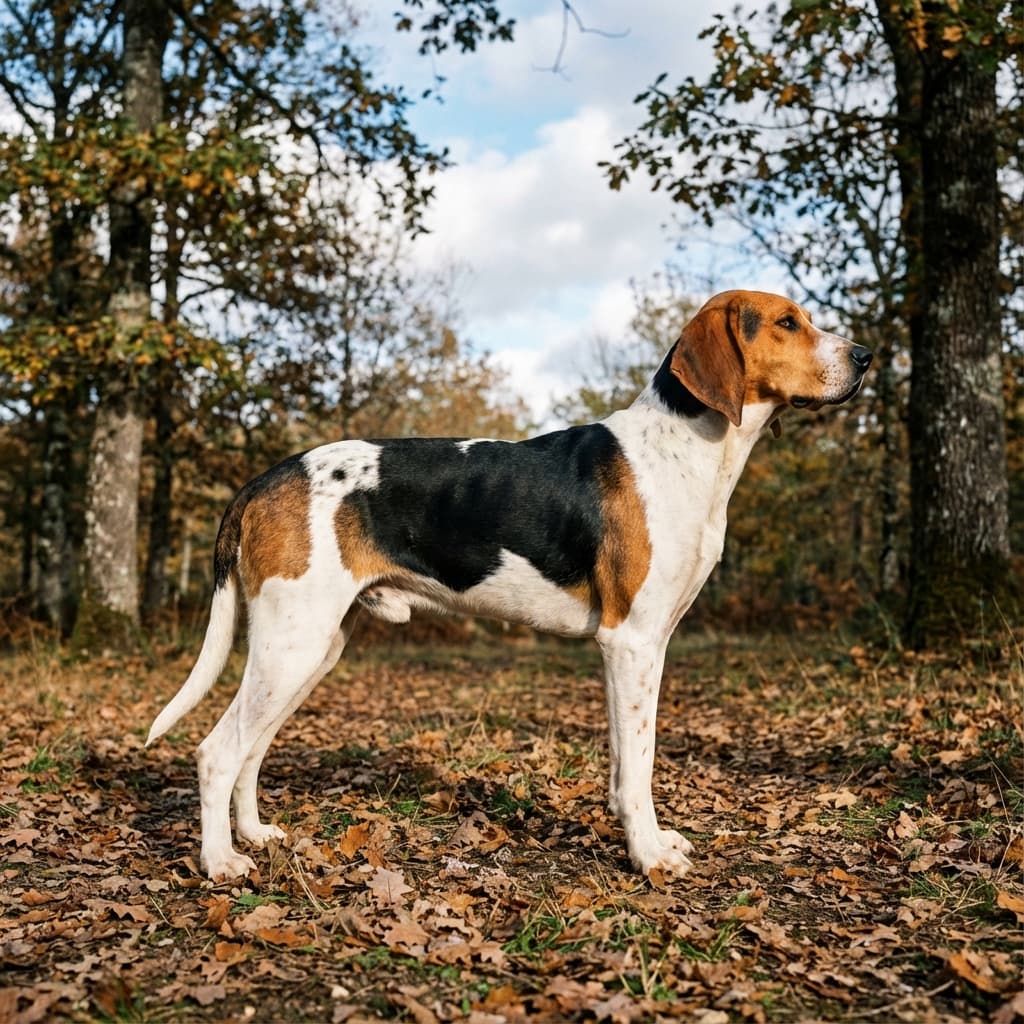
Poitevin
FCI Group
6• FCI 24
Size
Large
Origin Country
FR
Height
62-72 cm
Weight
30-35 kg
Lifespan
12-14 years
Temperament
Overview
Poitevin is a fascinating breed of hound that originates from the picturesque region of Poitou in France. This noble breed, with a history dating back to the 17th century, was created for demanding hunts, particularly for foxes and game. However, not only hunters will appreciate its unique qualities.
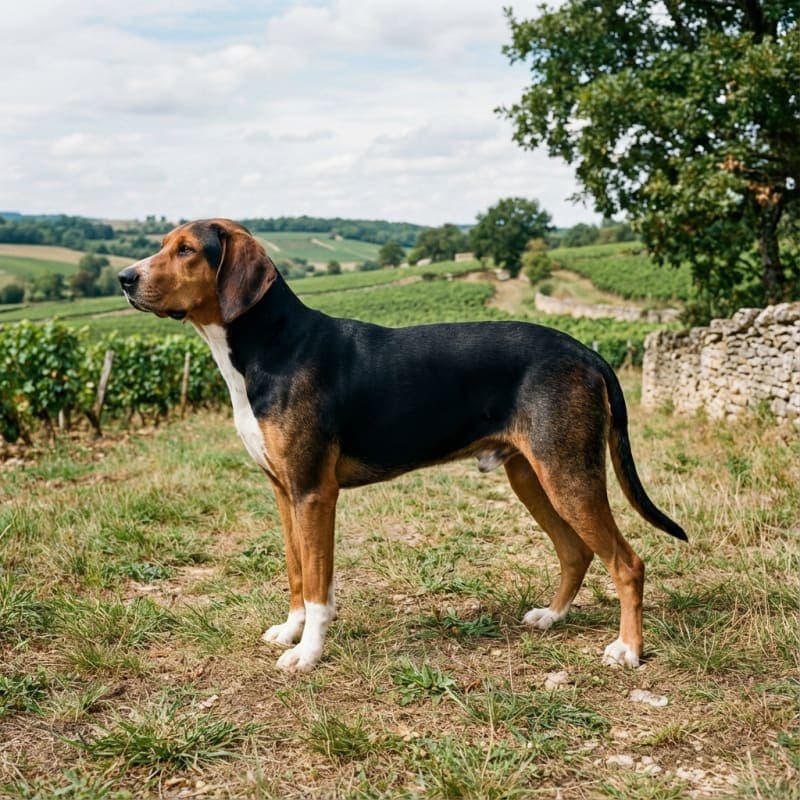
Poitevin is the embodiment of strength, elegance, and agility – it represents a harmonious blend of power with lightness of movement. Its distinguished silhouette, crowned with a captivating tricolor coat, attracts the gaze of even the most discerning connoisseurs of hound breeds. They can cover up to 60 kilometers a day, making them an ideal companion for exceptionally active individuals leading a sporty lifestyle.
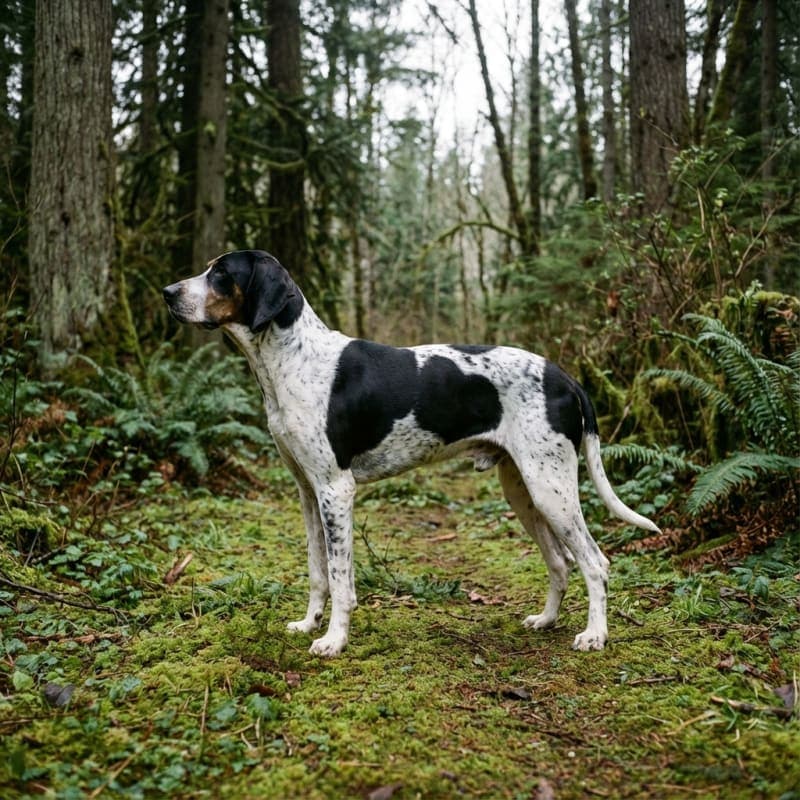
Adult dogs reach a height of 62 to 72 cm, while females range from 60 to 70 cm. They have a short, shiny coat with a characteristic tricolor pattern featuring a black saddle or large patches, as well as white with orange accents. A distinctive feature of the Poitevin is its unyielding hunting instinct – it requires a significant amount of exercise and mental stimulation to remain happy and healthy.
Although the Poitevin is rarely seen outside of France and is considered an endangered breed, it certainly deserves the attention of lovers of authentic hound dogs. Its independent nature and strong territorial instinct make it absolutely unsuitable for life in small urban apartments. It needs space and the company of other dogs, as it is a typical pack dog. It cannot stand loneliness, which is a key aspect to consider before deciding to choose this breed.
In addition, the Poitevin is a dog of moderate intelligence combined with a strong hunting instinct. This means it requires consistent training and regular mental stimulation. Without proper engagement, it may become bored and exhibit destructive behaviors. In our comprehensive guide, you will find detailed information about the health, grooming, physical activity, training, nutrition, history, appearance, and temperament of the Poitevin. This will provide you with a fuller and more objective picture of this unique, though demanding dog.
The Poitevin is a large dog with an exceptionally elegant silhouette, perfectly combining physical strength with lightness and grace of movement. Adult dogs reach a height at the withers of 62 to 72 cm, while females measure from 60 to 70 cm. Their body weight typically ranges from 30 to 35 kg, making them medium-sized dogs with an athletic build.
Head structure and anatomical details:
- Head – elongated, but not excessively so, not too wide with clearly defined bone structure and a small occipital bump
- Skull – rather flat, gently sloping towards the muzzle
- Nose – strong, wide, and well-developed
- Muzzle – slightly convex (dished), long but not excessively so
- Lips – the upper lip covers the lower, the muzzle gradually narrows
- Eyes – large, round, surrounded by a black rim, with a charming expression
- Ears – of medium width, thin skin, set a bit low, of medium length, and slightly turned inward
Body structure:
- Neck – long, slender, without a dewlap
- Back – well-muscled and very well compacted
- Loin – muscular and strong
- Chest – very deep, proportionally deeper than wide
- Ribs – long, providing adequate capacity
- Tail – of medium length, thin, smooth, elegantly carried with a slight curve
Coat and coloration:
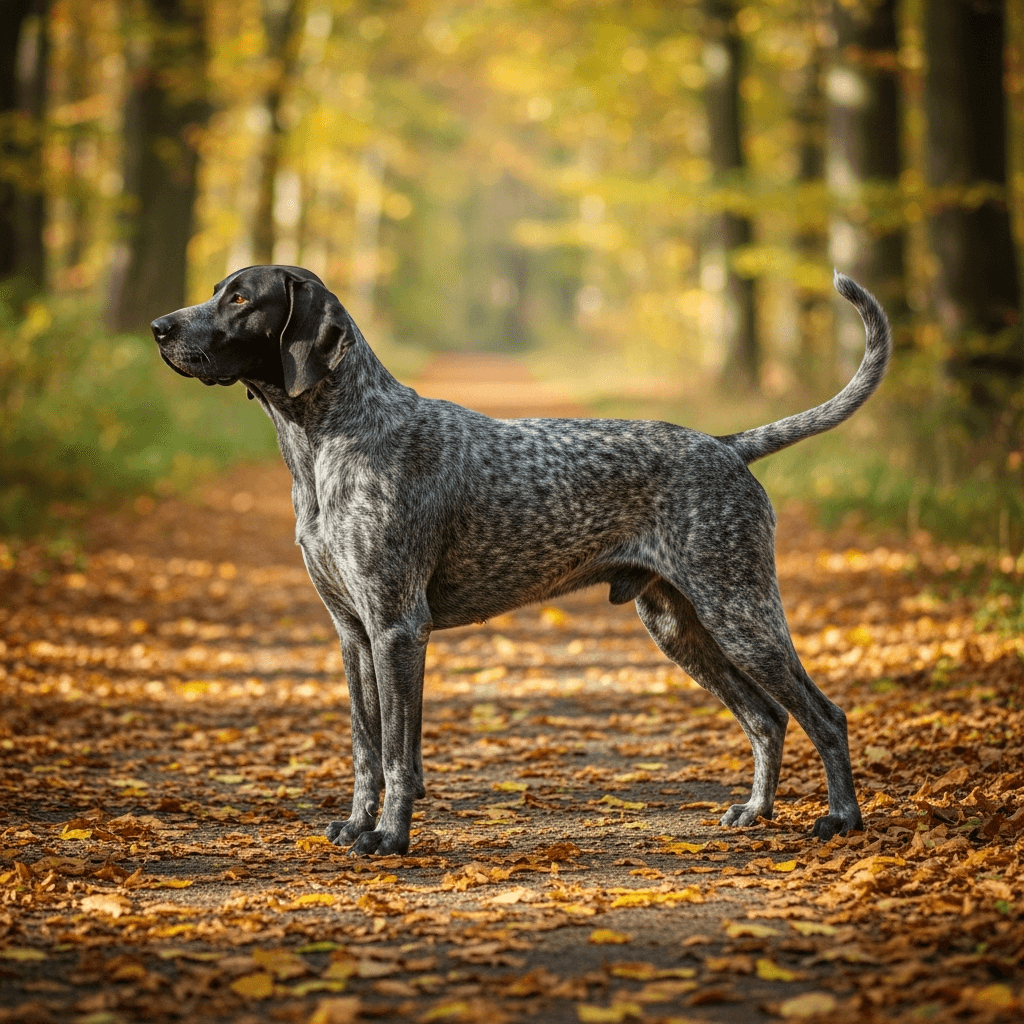
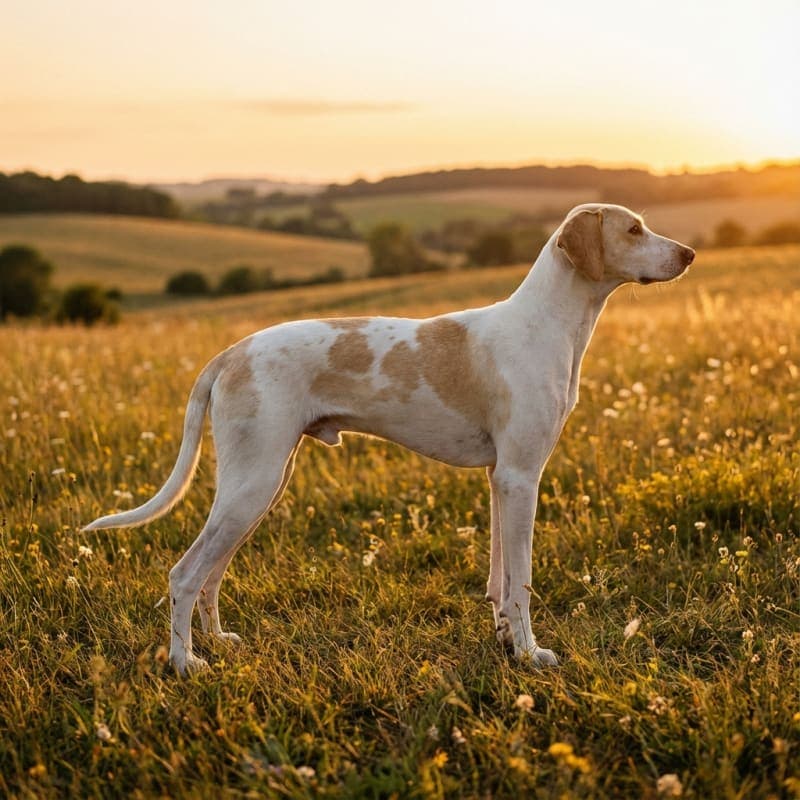
The coat is short and shiny, easy to maintain. The coloration most often occurs in the tricolor with a black saddle or large patches, as well as white-orange. This combination of colors gives the Poitevin a distinctive and extremely elegant appearance.
The Poitevin is a dog that stands out for its noble posture, endurance, and harmonious build, making it an ideal companion for active individuals who value authentic working breeds.
Poitevin is a dog with a complex and demanding temperament that combines loyalty to its family with a clear independence characteristic of hounds. This breed has an extremely strong hunting instinct, which can lead to relentless chasing of smaller animals such as cats, rabbits, or small rodents.
Character traits and social behavior:
- Family loyalty – strongly attached to its owner and family
- Independence – typical of hounds, can make training difficult
- Pack instinct – prefers the company of other dogs over solitude
- Moderate sociability towards people – not a typical family dog
- Territoriality – can loudly signal the presence of strangers
- Cheerful character – especially during physical activities and tracking
Although it is a pack dog, the Poitevin is not very sociable towards unfamiliar people, preferring the company of other dogs for play and exploration. It can be moderately playful and cheerful, especially during intense physical activity or while working on a scent.
At home, when properly exhausted physically and mentally, the Poitevin is gentle and relatively calm; however, its independent nature makes it potentially difficult to train for inexperienced owners. This breed tends to bark and howl loudly, which can be bothersome to neighbors, so it is advisable to work on this aspect from a young age.
Relationships with other animals:
- Gets along well with children (provided proper socialization)
- Works great with other dogs (prefers living in a group)
- Strong hunting instinct means that keeping it with smaller pets is not recommended
Overall, the Poitevin is a dog that needs a experienced owner who can meet its high exercise needs, provide appropriate mental stimulation, and consistently set boundaries. This breed is not suitable for beginners or those leading a low-active lifestyle.
The Poitevin is a breed of dog that can enjoy an average lifespan of 12 to 14 years. This breed is generally healthy and resilient, especially compared to many other purebred dogs; however, like any dog, it can be prone to certain conditions typical of hounds.
The most common health issues in Poitevins:
- Ear infections – due to their long, drooping ears that require regular checking
- Vision problems – cataracts and other eye diseases may occur in older individuals
- Hip dysplasia – occasionally seen in large active breeds
- Gastric torsion – risk in dogs with deep chests
Due to their high physical activity, Poitevins are not particularly prone to weight gain, which is a positive aspect since obesity can lead to many serious health problems, including heart and joint diseases.
Environmental conditions and climate tolerance:
- Heat – the breed tolerates moderate temperatures but requires constant access to fresh water and shade on hot days
- Cold – they cope well with cool conditions, but should not be kept outside in extreme weather
- Humidity – they do well in humid climates typical of their native France
Health prevention:
Key to maintaining the health of a Poitevin are:
- Regular veterinary visits (at least once a year)
- A properly balanced diet tailored to their activity level
- Intensive physical activity (minimum of 2 hours daily)
- Regular ear cleaning (to prevent infections)
- Vision checks in older individuals
- Vaccinations and deworming according to the veterinary calendar
With proper care, a balanced diet, and regular physical activity, a Poitevin can enjoy a long and healthy life as a loyal companion and hardworking working dog.
Grooming a Poitevin is relatively easy and not very time-consuming, thanks to its short and shiny coat. Unlike many other breeds that require regular trimming or daily brushing, the Poitevin is a low-maintenance dog.
Coat care:
- Brushing – once a week is enough to remove dead hair and dirt
- Bathing – only as needed (2-3 times a year), excessive washing would strip the coat of its natural oils
- De-shedding – with a natural bristle brush or rubber glove
- Shedding – moderate, seasonal (spring and autumn)
Ear care (CRITICAL):
Due to their long, floppy ears, regular inspection and cleaning of the ears is absolutely crucial to prevent bacterial and fungal infections. It is necessary to:
- Check the ears at least once a week
- Clean with specialized ear care solutions
- Watch for signs of inflammation (redness, unpleasant odor, excessive scratching)
- Gently dry the ears after bathing or swimming
Tooth care:
- Regular tooth brushing (at least 2-3 times a week)
- Use of dental chews
- Annual dental check-ups with the veterinarian
Paw and nail care:
- Check the paw pads after intense activity
- Trim nails every 3-4 weeks (if they do not wear down naturally)
- Check the spaces between the toes for ticks and wounds
Parasite control:
If the Poitevin spends a lot of time outdoors during hunting or long hikes, regular checks for ticks, fleas, and other external parasites are essential. It is recommended to use anti-parasitic products as advised by a veterinarian.
Regular and consistent grooming not only keeps the Poitevin in excellent aesthetic condition but, most importantly, prevents many health issues that may arise from neglecting basic hygiene.
Poitevin is a dog with a very high energy level and intense exercise needs. As a true hunting dog, bred for long hours of hunting, it requires at least two hours of intense physical activity daily to be happy, healthy, and mentally balanced.
Minimum activity requirements:
- Duration – at least 2 hours of intense movement daily
- Type of activity – long walks, running, tracking, agility
- Space – requires access to a large, safe area for running
- Puppy age – gradually increasing activity (5 minutes × age in months, 2 times a day)
Recommended forms of physical activity:
- Long walks – at least 1-2 hours daily in varied terrain
- Running – ideal as a companion for long-distance runners (10-20 km)
- Tracking and scenting – utilizing natural hunting instincts
- Fetching – excellent for mental and physical stimulation
- Agility and dog tracking – sports competitions for hunting dogs
- Hiking together – mountain trips, forest trails
- Playing with other dogs – free play in a safe dog park
Consequences of lack of exercise:
Insufficient physical activity can lead to serious behavioral problems, such as:
- Destruction of furniture and household items
- Excessive barking and howling
- Attempts to escape and wander
- Frustration aggression
- Compulsive behaviors (e.g., chasing its own tail)
- Depression and apathy
Precautions:
- Poitevin has a strong tendency to escape, especially when it catches an interesting scent
- It should always be kept on a long leash or in a safe, fenced yard (minimum 1.5-2 m high fence)
- It should not be let loose near roads or areas where wild animals may be present
- Considering a GPS tracker on the collar for additional safety is advisable
Ideal owner for a Poitevin:
This breed is perfect for families or individuals who:
- Lead a very active, sporty lifestyle
- Can dedicate 2-3 hours daily to physical activity
- Have a large, safe area for the dog to run freely
- Are interested in canine sports or hunting
- Live near forests, rural areas, or mountain trails
Poitevin is definitely not a dog for people leading a sedentary lifestyle or living in small urban apartments. It requires a true passion for physical activity and commitment to daily training.
The Poitevin training can pose a serious challenge even for experienced dog owners due to its independent nature, strong hunting instinct, and typical stubbornness of hounds. This breed is not the easiest to train, which is why it is best suited for an owner with experience working with hound breeds.
Training difficulty level:
- Intelligence – moderate, typical for hounds (independent work, not blind obedience)
- Stubbornness – high, requires consistency and patience
- Concentration – easily distracted, especially in the presence of scents
- Motivation – hunting instinct outweighs the desire to cooperate with humans
Key principles of effective training:
- Early socialization – starting from 8-10 weeks of age is absolutely critical
- Positive reinforcement – high-value treats, praise, play
- Short sessions – 5-10 minutes, multiple times a day (prevents boredom)
- Variety – changing exercises and locations keeps engagement
- Consistency – clear boundaries and rules from day one
- Patience – progress may be slower than with obedient breeds
Basic commands to master:
- Sit – basic control command
- Stay – critical for safety
- Come – absolutely essential due to the tendency to escape
- Lie down – calming in stressful situations
- Leave it – protection against eating dangerous items
- Quiet – reduction of excessive barking
Challenges specific to the Poitevin:
- Loud vocalizations – barking and howling typical of hounds require additional control work
- Selective deafness – ignoring commands when following a scent
- Recall difficulties – strong hunting instinct outweighs obedience
- Independence – prefers to make decisions on its own
Recommended training methods:
- Clicker training – precise marking of desired behaviors
- Scent exercises – utilizing natural abilities and instincts
- Agility for hounds – combining movement with obedience
- Mantrailing – tracking people as a constructive way to utilize instinct
- Socialization with other dogs – learning proper behavior in a group
What to avoid in training:
- ❌ Physical punishment – leads to loss of trust and may increase stubbornness
- ❌ Yelling and aggression – ineffective against independent nature
- ❌ Long, monotonous sessions – cause boredom and frustration
- ❌ Letting loose in dangerous areas – risk of escaping in pursuit of a scent
Ideal training situation:
Since the Poitevin is a pack dog, it responds well to socialization and joint training with other dogs, which can significantly ease the education process. Learning by observing other well-trained dogs can accelerate progress.
It is crucial to start training from a young age (8-10 weeks) and gradually introduce new commands and exercises. Training a Poitevin is a marathon, not a sprint – it requires patience, consistency, and realistic expectations. It will never be a dog with the obedience of a German Shepherd, but with the right approach, it can become a well-mannered companion.
Poitevin is a large, active hunting dog that requires a proper, high-quality diet to maintain health, physical condition, and a high energy level necessary for daily activities. Feeding this dog requires a conscious approach and adjustment to individual needs.
Basic nutrition principles:
- High-quality food – premium or super-premium, tailored to age, weight, and activity level
- Rich in protein – a minimum of 25-30% animal protein (chicken, beef, fish)
- Moderate fat content – 12-18% to maintain energy and healthy coat
- Fiber – supports digestion and regulates bowel function
- Vitamins and minerals – support for joints, bones, and the immune system
Daily portion and meal frequency:
- Adult dogs – 2 meals a day (morning and evening)
- Amount – about 350-450g of dry food daily (depending on activity)
- Puppies (2-6 months) – 3-4 meals a day
- Young dogs (6-12 months) – 2-3 meals a day
- Older dogs (7+ years) – senior food with added glucosamine for joints
Weight control:
Despite a high level of physical activity, Poitevin may have a tendency to gain weight if its diet is not properly controlled. It is advisable to regularly monitor the dog's weight and condition:
- Ribs should be palpable but not visible
- Defined waist when viewed from above
- Slightly tucked belly when viewed from the side
Additional dietary recommendations:
- Fresh water – constant access to clean, fresh water, especially after exercise
- Snacks – a maximum of 10% of daily caloric intake
- Natural treats – dried meat, vegetables (carrots, broccoli), fruits (seedless apples)
- Avoid – chocolate, grapes, raisins, onions, garlic, poultry bones
Diet and physical activity:
- Before exercise – light meal at least 1-2 hours before intense activity
- After exercise – main meal after 30-60 minutes of rest (prevents stomach torsion)
- Hunting days – increased portion by 20-30% on days of exceptionally intense activity
Preventing stomach torsion (GDV):
Due to its deep chest, Poitevin is prone to stomach torsion – a life-threatening condition. To minimize the risk:
- Feed 2 smaller meals instead of one large one
- Avoid intense movement immediately before and after eating (minimum 1 hour break)
- Use elevated bowls (at chest height)
- Do not allow rapid food consumption (anti-gulping bowls)
Supplementation (after consulting a veterinarian):
- Glucosamine and chondroitin – support for joints in older dogs
- Omega-3 – healthy coat and support for the cardiovascular system
- Probiotics – digestive health
- Vitamins A, C, E – support for the immune system
A well-balanced diet, provided in appropriate amounts and at the right times, combined with regular physical activity and preventive veterinary care, will contribute to a long, healthy, and active life for the Poitevin.
Characteristic Traits
Pros
- Exceptional endurance for long distances
- Strong hunting instinct and excellent sense of smell
- Elegant and harmonious appearance
- Ideal companion for active hunters
- Healthy and resilient breed.
Cons
- Not suitable for living in small urban apartments
- Requires the company of dogs and cannot stand loneliness
- May exhibit destructive behaviors in the absence of stimulation
- Difficult to train due to independence
- Loud and vocal (barking
- howling)
Behavioral Ratings
Breed History
The Poitevin breed has deep roots in the picturesque region of Poitou in western France, where it was developed in the 17th century for demanding hunts for foxes, deer, and other game. This noble breed of hounds has a rich and fascinating history, closely tied to French hunting traditions.
Origins of the breed (17th century):
The Poitevin is a descendant of two legendary lines of hounds known for their exceptional ability to relentlessly chase game over long distances. The breed was created by crossing local hounds with English Foxhounds, resulting in a dog with remarkable endurance, scenting ability, and elegance.
Golden Age (18th-19th century):
- The breed gained immense popularity among the French aristocracy
- Valued by hunters for its unmatched endurance and tracking skills
- The Poitevin could work in a pack for many hours without fatigue
- Regarded as one of the fastest and most elegant hounds in Europe
Tragedy and near extinction (19th century):
In the 19th century, the Poitevin faced catastrophic challenges that nearly led to the breed's complete extinction. An epidemic of rabies from 1842 to 1845 decimated the dog population in the Poitou region, destroying the legacy of generations of breeders. From hundreds of dogs, only a few survived.
Rebuilding the breed:
- Thanks to the determination of French breeders, the breed was able to recover
- Surviving individuals and crossbreeding with related breeds were utilized
- The rebuilding process took several decades
- The breed regained some of its former glory, but never reached its previous numbers
Modern times (20th-21st century):
Today, the Poitevin is considered a breed at risk of extinction, with its population primarily limited to France. It is estimated that there are only a few hundred individuals of this noble breed worldwide. It is one of the rarest breeds of hounds in the world.
Classification and recognition:
- FCI (Fédération Cynologique Internationale) – Standard No. 24
- Group 6 – Hounds, bloodhounds, and related breeds
- Section 1.1 – Large hounds
- Working trials – Required for full evaluation
Contemporary role:
Today, the Poitevin is significantly less popular as a companion dog, with its main purpose remaining the traditional role of a hunting dog in hunting packs in France. A small number of enthusiasts in other European countries are trying to promote this breed, but it remains niche and virtually unknown outside its native country.
Maintaining the purity of the Poitevin breed is currently a priority for French canine organizations that support conservation and development programs for this historical yet endangered breed of hounds.