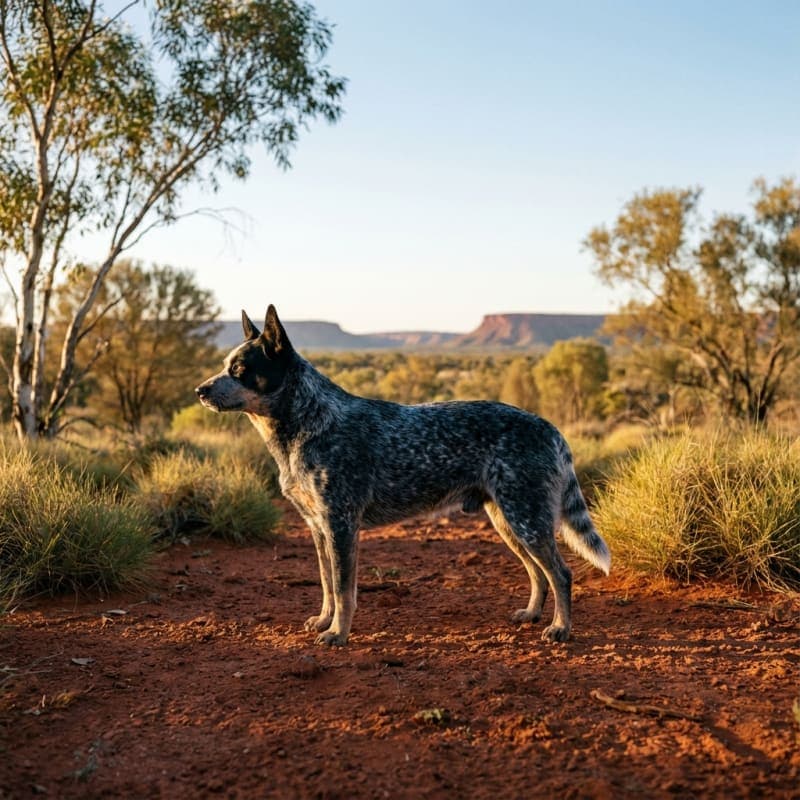
Australian Cattle Dog
FCI Group
1• FCI 287
Size
Medium
Origin Country
AU
Height
43-51 cm
Weight
15-22 kg
Lifespan
13-15 years
Temperament
Overview
The Australian Cattle Dog, commonly known as ACD or Blue Heeler, is a unique breed of herding dogs with Australian roots. It was specifically bred to supervise and guide cattle herds across the vast, unarmed terrains of the Australian bush. This breed is characterized by exceptional intelligence, unwavering determination, and tireless endurance, making it an ideal partner for active owners, farmers, and those working with cattle.
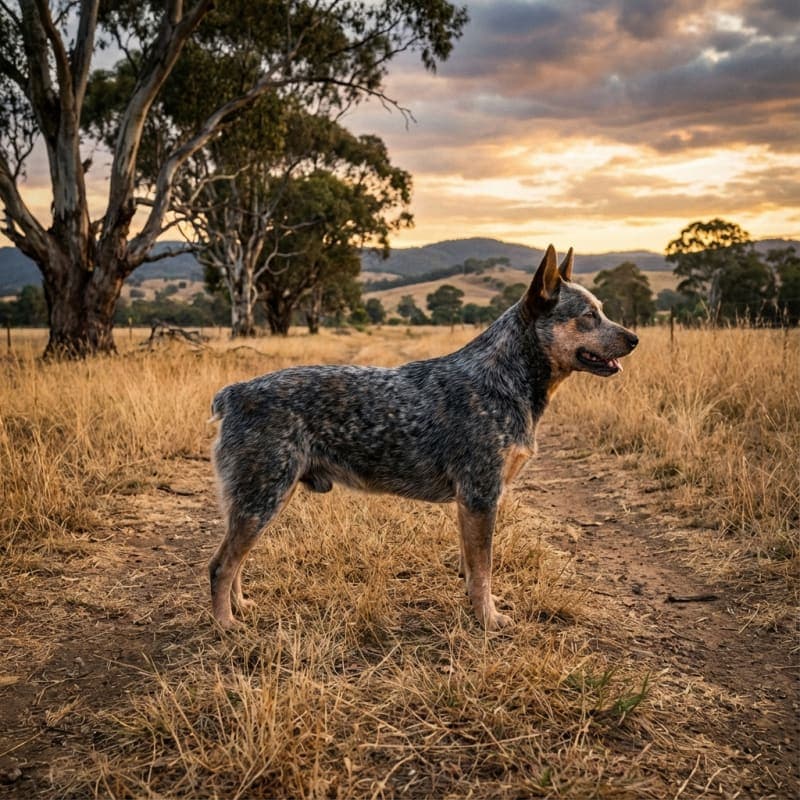
Australian Cattle Dog is a medium-sized dog with a compact, athletic build. Males reach a height at the withers of 46 to 51 cm, while females measure from 43 to 48 cm. The weight of representatives of this breed ranges from 15 to 22 kg, with males typically being lighter. The distinctive double coat, consisting of a dense undercoat and a short, tough outer coat, perfectly protects the dog from extreme weather conditions - from scorching sun to freezing rain.
The breed comes in two basic color variations: blue and red speckle. Blue dogs may have black, blue, or tan markings on their heads, while red varieties display evenly distributed red spots on a white background, often with darker markings on the head.
Originating from harsh Australian conditions has shaped the ACD as a breed that requires intense physical activity and constant mental stimulation. Without proper engagement, the dog can become restless, destructive, and develop behavioral problems. Its strong herding instinct, combined with natural alertness and courage, makes it an excellent working dog, guardian, and loyal family companion for well-prepared owners.
The temperament of the ACD is a mix of untamed energy, deep attachment to the owner, and natural independence. This breed forms incredibly strong bonds with the family but may exhibit tendencies toward dominance and excessive territorial protection. For this reason, consistent, firm training based on positive reinforcement and early socialization with other dogs, animals, and people is crucial. A well-raised and socialized Australian Cattle Dog becomes an indispensable, intelligent, and loyal life companion, ready for any challenge.
The Australian Cattle Dog presents a compact, athletic build with excellent proportions, reflecting its purpose as an unflagging working dog. The body structure is harmoniously synchronized, combining strength with endurance and agility - essential traits for long hours of working with cattle in challenging terrain conditions.
Dimensions and proportions:
- Males' height at the withers: 46-51 cm
- Females' height at the withers: 43-48 cm
- Weight: 15-22 kg (females lighter)
- Body length exceeds height in a ratio of 10:9
Head and expression: The head is strong and proportional to the body, with a broad skull slightly rounded between the ears. The stop (the transition from forehead to muzzle) is clearly defined but not excessively deep. The muzzle is of medium length, well-filled under the eyes, with strong jaws capable of a firm grip - an essential feature of a herding dog. The eyes are medium-sized, oval, dark brown, exuding alertness and remarkable intelligence. The expression in the eyes is penetrating, indicating readiness to act at any moment.
Ears: Small to medium, erect and slightly rounded at the tips, set wide on the skull. The ears are thick at the base and directed slightly outward, giving the dog a distinctive, alert appearance. While working, the ears rotate to catch the faintest sounds.
Coat and coloration: The coat is double - short, dense, and close-lying outer coat protects against rain, while the soft, dense undercoat insulates against extreme temperatures. The hair length is about 2.5-4 cm. There are two color varieties:
- Blue: blue, blue speckled, or blue marbled, with or without black, blue, or tan markings on the head. Tan markings on the front of the limbs, chest, throat, and jaws are permissible.
- Red Speckle: even red speckling over the entire body, including the undercoat. Darker red markings on the head are desirable. Even markings on the head are preferred.
Body: The neck is extremely strong, of medium length, widening towards the shoulders and lacking a throat. The back line is horizontal, strong, and muscular. The loins are wide, strong, and muscular. The chest is deep, muscular, and of moderate width, providing sufficient space for the heart and lungs during intense exertion.
Limbs: The front limbs are strong, straight, and parallel, with strong, round bones. The shoulders are strong, sloping, and well-muscled. The hind limbs are wide, strong, and muscular, with well-developed thighs. The hocks are strong and set low. The feet are round, with short toes, strong pads, and short claws.
Tail: Moderately long, reaching approximately to the hock joint. At rest, it hangs down with a slight curve; when in motion, it may be raised but never carried over the back. The tail is well-furred, with slightly denser hair on the underside (feathered).
The behavior and temperament of the Australian Cattle Dog are the result of selective breeding aimed at creating an ideal working dog - intelligent, brave, independent in decision-making, yet completely devoted to its owner. This unique combination of traits makes the ACD a breed that requires an experienced owner who understands the needs of herding dogs.
Family bond and loyalty: The Australian Cattle Dog forms extremely deep emotional bonds with its owners, often becoming more attached to one person in the family. This loyalty is absolute - the ACD will accompany its owner everywhere, closely observing every move. It is a shadow dog that craves constant contact with the family. Separation from the owner, even for a short time, can lead to separation anxiety and destructive behaviors.
Herding and working instinct: The deeply ingrained herding instinct is evident not only when working with cattle but also in everyday life. The ACD may try to nip at the heels of children, other pets, or even adults during play or when they are trying to teach it something - this natural herding behavior needs to be controlled through training and redirected to appropriate activities. This breed needs work to do - without it, they become restless and may develop behavioral problems.
Intelligence and independence: Regarded as one of the most intelligent dog breeds, the ACD learns quickly and has an excellent memory. It can independently solve problems and make decisions - a trait valued when working on remote pastures, where the dog must operate without direct supervision. However, this independence can lead to stubbornness and boundary testing if the owner does not provide consistent leadership.
Alertness and territorial protection: Naturally alert and suspicious of strangers, the ACD is an excellent guard dog. It will warn of any approaching unknown person with loud barking. It may exhibit protective behaviors towards family and territory, which requires early socialization to prevent excessive aggression or fearfulness. A properly socialized ACD remains alert but not aggressive towards strangers.
Interactions with other animals: The attitude towards other dogs can be complex - the ACD can be dominant and competitive, especially with same-sex dogs. Early and consistent socialization is crucial for developing proper relationships with other animals. On a farm, it can work alongside other working dogs but requires a clearly defined hierarchy. It may have difficulties with cats and other small animals due to its strong herding and hunting instincts - early acclimatization can help, but it does not always guarantee success.
Energy and activity level: The energy level of the ACD is exceptionally high - it is a dog capable of working for hours without signs of fatigue. It requires a minimum of 2 hours of intense physical activity daily and constant mental stimulation. Without appropriate engagement, it quickly becomes bored, leading to destructive behaviors: destroying furniture, digging holes in the garden, excessive barking, or escaping. This is not a breed for people with a quiet lifestyle or those living in small apartments without access to a garden.
Vocalization: The ACD is a fairly vocal breed - it barks to alert about intruders, express frustration, or get the owner's attention. Controlling excessive barking requires training and providing sufficient activity. Some individuals may also howl, especially when left alone.
Who is this breed for: The Australian Cattle Dog is a dog for experienced owners who lead an active lifestyle, have time for daily intense training, and are ready to provide the dog with work to do. Ideal for farmers, those involved in dog sports (agility, frisbee, herding), runners, and cyclists. Absolutely unsuitable for beginners, seniors, or those leading a sedentary lifestyle.
The Australian Cattle Dog is a breed characterized by generally good health and longevity, which is a result of natural selection in harsh Australian conditions and responsible breeding. The average lifespan is 12-15 years, with many individuals living to 16-18 years with proper care. The longevity record belongs to a dog named Bluey, who lived to be 29 years and 5 months old, which is the longest documented life of a dog in the world.
Most common health issues:
1. Progressive Retinal Atrophy (PRA): A hereditary eye condition leading to gradual vision loss and ultimately blindness. Initial symptoms usually appear between the ages of 3 and 9, initially as difficulty seeing in the dark (night blindness). Genetic tests are available to detect carriers of the gene before breeding.
2. Congenital Deafness: Associated with the gene responsible for white coat color, deafness can affect one or both ears. It is estimated that about 2-4% of ACD puppies are born deaf. Responsible breeders conduct BAER (Brainstem Auditory Evoked Response) tests on puppies before sale. Completely deaf dogs may require specialized training, but often lead normal, happy lives.
3. Hip Dysplasia (HD): Abnormal development of the hip joint leading to arthritis and pain. Although ACD is less prone to HD than larger breeds, this issue still occurs. Symptoms include limping, difficulty getting up, and reluctance to exercise. Breeders should conduct hip joint X-rays and obtain certifications before allowing breeding.
4. Elbow Dysplasia (ED): A group of conditions affecting the elbow joint, causing lameness and pain. It requires veterinary diagnosis and may require surgical treatment in severe cases.
5. Strains and Sports Injuries: Due to high activity levels and an intense work style, ACD is prone to injuries of tendons, ligaments, and muscles. Anterior cruciate ligament (ACL) tears are a common injury in active dogs of this breed. Regular warm-ups before intense exercise can reduce the risk.
6. Dental Diseases: Tartar and gum diseases can develop without regular oral hygiene. Daily tooth brushing and regular dental check-ups with a veterinarian are recommended.
Rarer conditions:
- Vocal Cord Atrophy and Polyneuropathy (PLNP): A rare hereditary neurological condition causing difficulty swallowing and breathing.
- Hemorrhagic Gastroenteritis: ACD may be prone to hemorrhagic gastroenteritis (HGE), requiring immediate veterinary intervention.
- Unusual Zinc-responsive Dermatosis: A rare skin condition requiring zinc supplementation.
Health prevention:
- Regular veterinary visits (at least once a year, twice a year for older dogs)
- Up-to-date vaccination and deworming program
- Weight control - obesity increases the risk of joint problems
- Screening: X-rays of hip and elbow joints, eye examinations, BAER tests in puppies
- Genetic testing before breeding (PRA, deafness)
- Regular oral hygiene
- Appropriate warm-ups before intense exercise
Recommendations for potential owners: When choosing a puppy, require health documentation from the breeder, including hip joint certificates, eye examinations, and hearing tests. Avoid breeders who do not conduct basic health tests or who breed dogs with serious genetic defects.
The care of the Australian Cattle Dog is relatively simple and low-maintenance, making this breed easy to maintain in terms of coat care. The short, double coat of the ACD was designed to protect the dog while working in harsh conditions, and its natural structure is self-cleaning - dirt and mud easily fall off once dry.
Brushing: Under normal conditions, brushing once a week with a stiff-bristled brush or a rubber grooming glove is sufficient to remove dead hair and distribute natural skin oils. Regular brushing helps keep the coat in good condition and reduces the amount of hair shed in the home. During shedding periods, which occur twice a year (in spring and fall), brushing should be significantly more intensive - daily or every other day. At this time, the ACD sheds huge amounts of undercoat, creating real clumps of hair. Using an undercoat rake or a furminator brush makes removing dead hair significantly easier.
Bathing: ACD does not require frequent baths - once every 2-3 months or only when the dog is particularly dirty or smells unpleasant. Bathing too often can strip the natural protective oils from the skin and coat, leading to dryness and irritation. During baths, a mild dog shampoo should be used, the lather should be thoroughly rinsed out, and the coat should be completely dried to prevent skin problems. Dogs working in mud or water may require more frequent baths, but the natural coat structure often means that rinsing with clean water is sufficient.
Ear care: The erect ears of the ACD are relatively well-ventilated, which reduces the risk of infection, but they still require regular checks. Once a week, the ears should be checked for redness, unpleasant odor, excess wax, or other signs of infection. Ear cleaning should be done as needed, using a special dog ear cleaning solution and cotton balls. Never use cotton swabs to clean the ear canal.
Nail trimming: Active dogs often naturally wear down their nails while running on hard surfaces, but most ACDs require regular nail trimming every 3-4 weeks. Overly long nails can cause discomfort, walking problems, and ultimately joint damage. If you can hear the characteristic clicking of nails on the floor when the dog walks, it means they are too long. Trimming should be done carefully to avoid cutting the blood vessel inside the nail. If unsure, you can ask a veterinarian or professional groomer to demonstrate the correct technique.
Oral hygiene: Regular tooth brushing is key to preventing tartar and gum disease. Daily brushing with dog toothpaste (never use human toothpaste!) is ideal. If daily brushing is not possible, it should be done at least 2-3 times a week. Additionally, dental chews, tooth-cleaning toys, or special food that supports oral health can be used.
Skin checks: During brushing, the skin should be regularly checked for ticks, fleas, wounds, lumps, dryness, or other abnormalities. ACDs working in the field are particularly susceptible to tick bites, which can transmit serious diseases.
Special notes:
- Never shave an ACD down to the skin - the double coat provides natural thermoregulation, protecting against heat and cold. Shaving can permanently damage the coat structure.
- After working in the field or water, check the paws for splinters, wounds, or foreign bodies between the pads.
- In winter, check the paws for cracks from road salt and frost - protective balms for the pads can be used.
Summary: The Australian Cattle Dog is a breed that requires minimal grooming compared to many other breeds. Regular, basic hygiene care is sufficient to keep the dog in excellent condition. It is an ideal breed for those who do not want to spend too much time on advanced grooming but are prepared for intense shedding twice a year.
The Australian Cattle Dog is a breed with exceptionally high exercise requirements - it belongs to the group of the most energetic and enduring dogs in the world. It was bred for work that requires constant running, agility, and endurance for many hours a day, often in extreme weather conditions. These working traits translate into enormous physical and mental needs that must be met for the dog to be healthy and happy.
Minimum exercise requirements: The ACD requires a minimum of 2 hours of intense physical activity per day, with many individuals needing significantly more - 3-4 hours for young, healthy working dogs. This is not a breed that will be satisfied with a short walk around the block. The activity must be intense, engaging both body and mind. A basic leash walk is just a warm-up for the ACD - it needs real effort.
Ideal forms of activity:
- Running: The ACD is an excellent partner for long-distance runs - it can accompany its owner on runs of 10-15 km without showing signs of fatigue. However, young dogs (under 18 months) should not be forced to extreme distances due to developing joints.
- Cycling: Under supervision and after prior training, the ACD can run alongside a bicycle, providing itself with intense cardio effort. Heat should be avoided, and regular water breaks should be provided.
- Fetching and frisbee: Games involving fetching balls, frisbees, or other toys engage both body and mind. The ACD loves these activities and can play for hours without getting bored.
- Agility: A sport perfectly suited to the ACD's abilities - it requires speed, agility, obedience, and cooperation with the owner. Many ACDs succeed in advanced agility competitions.
- Herding: The most natural and satisfying activity for the ACD. Working with cattle, sheep, or ducks on specialized training farms satisfies breed instincts and provides the highest level of stimulation.
- Flyball: A team dog sport that combines running, jumping, and fetching - a great option for sociable ACDs.
- Mountain trekking: Long hikes in challenging terrain are an excellent form of activity for the ACD, which loves physical challenges.
- Swimming: Most ACDs enjoy water, and swimming provides excellent, low-impact full-body exercise, ideal for dogs with joint problems.
Mental stimulation - just as important as physical: In addition to intense physical effort, the ACD requires daily mental stimulation. Mental boredom leads to behavioral problems just as quickly as lack of exercise. Forms of mental stimulation include:
- Scent games: Hiding treats in the house or garden, search games
- Dog puzzles: Interactive toys requiring problem-solving to earn a reward
- Learning new tricks: Regular training sessions teaching new commands and tricks
- Obedience training: Advanced obedience exercises that engage focus and self-control
- Diversity of walking routes: Exploring new places, scents, and environments
Consequences of insufficient activity: If the ACD does not receive enough exercise and stimulation, it quickly develops behavioral problems:
- Destruction of furniture, shoes, cushions, and other items
- Digging holes in the garden (hunting instinct)
- Excessive barking and howling
- Hyperactivity and inability to rest
- Frustration aggression towards people or other animals
- Escaping and wandering
- Compulsive behaviors (chasing tails, licking paws)
- Depression and apathy in extreme cases of prolonged neglect
Recommendations for owners:
- Plan a minimum of 2 hours of activity daily, divided into 2-3 sessions
- Combine different forms of activity for variety
- Enroll the dog in sports classes (agility, flyball, herding)
- Use mental training as a supplement to physical activity
- On hot days, move intense exercises to cooler times (morning/evening)
- Provide access to clean water during and after exercise
- For young dogs (up to 18 months), avoid extreme long-distance efforts due to developing joints
- For older dogs, adjust intensity to their capabilities while maintaining regular activity
FOR WHOM THIS BREED IS NOT SUITABLE: The Australian Cattle Dog is absolutely not suitable for people with a sedentary lifestyle, living in small apartments without access to a garden, working long hours away from home, or unwilling to dedicate 2-4 hours a day to activity with the dog. Neglecting the exercise needs of the ACD is a recipe for disaster - both for the dog and the owner.
Training an Australian Cattle Dog is a fascinating challenge that requires experience, consistency, and a deep understanding of herding dog psychology. The ACD is considered one of the most intelligent dog breeds in the world - ranking 10th in Stanley Coren's list - which means it learns new commands quickly, often after just 5-15 repetitions. However, this intelligence is a double-edged sword - the dog will just as quickly learn bad habits if training is not conducted properly.
Key training principles for ACD:
1. Early start - critical socialization period (8-16 weeks): The socialization period is absolutely critical for developing a balanced character. During this time, the puppy must be exposed to a maximum variety of people, dogs, animals, sounds, places, and situations. Neglecting socialization leads to anxiety, excessive suspicion, and potential aggression in adult life. The puppy should be introduced to:
- Different types of people: children, elderly individuals, people in uniforms, those in wheelchairs
- Other dogs of various breeds, sizes, and temperaments (in controlled, safe conditions)
- Different animals: cats, rabbits, birds, if possible
- Various environments: city, park, dog-friendly stores, different types of surfaces
- Sounds: traffic, firecrackers (recordings), trains, children playing
- Situations: visits to the vet, car rides, being left alone at home for short periods
2. Positive reinforcement as a foundation: ACD responds excellently to training based on positive reinforcement - rewarding desired behaviors with treats, praise, toys, or play. Physical punishment is absolutely unacceptable and can lead to defensive aggression or break the trust bond. The ACD is emotionally sensitive and reacts poorly to harsh treatment. At the same time, it requires clear boundaries and consistent rules - positive reinforcement does not mean permissiveness.
3. Consistency and firmness: ACD quickly tests boundaries and tries to take control if it notices inconsistency in training. All family members must apply the same rules and commands. If the dog receives conflicting signals, it will become confused or choose which commands to obey. Firmness does not mean aggression - it means clearly communicating expectations and consistently enforcing rules.
4. Short, intense training sessions: Due to its high intelligence, ACD quickly gets bored with long, repetitive sessions. Optimal sessions last 10-15 minutes, 2-3 times a day. Training should be dynamic, varied, and engaging. End the session before the dog loses interest, always on a positive note.
5. Mental stimulation as important as physical: Obedience training, learning new tricks, dog puzzles, scent games - all of these satisfy the ACD's need for work. A dog that works mentally is more relaxed and content.
Basic commands to master:
- Sit, Lie down, Stay, Come - fundamental obedience commands
- Leave it / No - crucial for safety (preventing the ingestion of dangerous objects)
- Calm / Quiet - controlling barking
- Place / Kennel - command sending the dog to a designated spot
- Control nipping at heels - redirecting herding instinct to toys
Advanced training and sports: ACD excels in advanced forms of training:
- Agility: A sport requiring speed, precision, and cooperation - ideal for ACD
- Herding trials: The most natural form of work, allowing expression of breed instincts
- Obedience: Advanced obedience exercises in competitions
- Flyball: A team racing sport
- Trekking / Tracking: Nose work, following trails
- Trickdog: Learning advanced tricks and choreography
Typical challenges in training ACD:
Stubbornness and independence: ACD was bred to make decisions independently while working with cattle. This independence can manifest as stubbornness or selective listening. Solution: consistently reinforce obedience, reward immediate response to commands, avoid long series of repetitions of the same command (if the dog does not respond the first time, stop and rethink the strategy).
Nipping at heels: The herding instinct manifests as nipping at people's ankles, heels, or hands, especially in puppies and young dogs. Solution: immediately interrupt the behavior, redirect to toys, reward alternative behaviors. Never physically punish - this can reinforce defensive behavior.
Excessive barking: The warning instinct leads to barking at stimuli. Solution: train the Quiet command, reward calmness, ensure sufficient stimulation (a bored ACD barks more).
Dominance over other dogs: Especially males can be competitive and dominant. Solution: early socialization, controlled interactions, rewarding calm behavior towards other dogs.
Separation anxiety: Strong attachment to the owner can lead to anxiety. Solution: gradually acclimate to being alone, starting from very short periods, providing mental toys (Kong filled with food).
FOR WHOM THIS BREED IS NOT SUITABLE: ACD is absolutely not suitable for novice dog owners, those unwilling to invest time in training, or those who prefer dogs that are unconditionally obedient without independent thinking. It requires an experienced, patient, consistent owner who understands the psychology of working dogs and is ready for a long-term commitment to training.
A proper diet is the foundation of health, vitality, and longevity for the Australian Cattle Dog. Due to their exceptionally high level of physical activity and intense metabolism, ACDs have specific nutritional needs that differ significantly from those of less active breeds. Inadequate or improperly balanced nutrition can lead to muscle loss, decreased performance, health problems, and a shortened lifespan.
Caloric requirements: An adult, active ACD weighs on average 15-22 kg and requires about 1000-1600 calories per day, depending on the level of activity. Working dogs on farms or those intensely engaged in sports may need even 2000-2500 calories a day. Puppies, pregnant and nursing females have increased caloric needs. Older, less active dogs require fewer calories to avoid overweight.
Nutrients - key proportions:
1. Protein (28-35% in dry food): High-quality animal protein is absolutely essential for maintaining muscle mass, tissue repair, and supporting the immune system in an intensely active dog. The best sources include meat (chicken, beef, lamb, fish), eggs, and dairy products. Avoid foods with excessive amounts of plant protein (soy, corn) as the main protein source - animal protein has a higher biological value.
2. Fats (12-20%): Fats provide a concentrated source of energy, essential for endurance and prolonged effort. They are also carriers of fat-soluble vitamins (A, D, E, K) and a source of essential omega-3 and omega-6 fatty acids, which support skin, coat, joint health, and cognitive functions. Sources include salmon oil, flaxseed oil, poultry fat, and chicken oil. Avoid excess omega-6 without balance with omega-3 (can lead to inflammatory conditions).
3. Carbohydrates (30-50%): Carbohydrates provide readily available energy, particularly important during intense exertion. The best sources are complex carbohydrates with a low glycemic index: sweet potatoes, oats, brown rice, quinoa, which provide stable energy levels. Avoid foods with excessive simple carbohydrates (white rice, corn), which can cause rapid spikes in blood sugar.
4. Fiber (3-5%): Supports digestive health, regulates intestinal peristalsis. Sources include vegetables (carrots, broccoli, spinach), fruits (apples, berries), and psyllium.
5. Vitamins and minerals: High-quality food should contain a full profile of vitamins (A, B, C, D, E, K) and minerals (calcium, phosphorus, zinc, selenium, iron). Particularly important:
- Calcium and phosphorus: in a ratio of 1.2:1 to 1.8:1 - crucial for bone and joint health
- Glucosamine and chondroitin: support joint health, particularly important for active dogs prone to injuries
- Antioxidants (vitamin E, C, selenium): protect cells from oxidative damage, support the immune system
- DHA (docosahexaenoic acid): supports brain development in puppies, cognitive functions in adults
Types of feeding - options:
1. Dry food (kibble) - the most common choice: Convenient, stores well, helps with mechanical teeth cleaning. Choose premium or super-premium foods with meat as the first ingredient, without unnecessary fillers, artificial colors, and preservatives. Recommended brands: Orijen, Acana, Taste of the Wild, Blue Buffalo, Wellness Core. Avoid low-quality market foods with excessive corn, wheat, and by-products.
2. Wet food (canned): High moisture content (70-80%), more palatable, easier to digest. Can be used as a supplement to dry food or as a base diet. Requires refrigeration after opening. More expensive than dry food.
3. BARF diet (Biologically Appropriate Raw Food): Raw meat, meaty bones, organ meats, vegetables. Requires precise nutritional knowledge to ensure a full balance of nutrients. Risk of bacterial infections (Salmonella, E. coli) if meat is not properly stored. Benefits: natural diet, excellent coat quality, dental health. Requires time for preparation.
4. Home-cooked diet: Full control over ingredients, but requires consultation with a veterinary nutritionist to ensure full balance. Must include meat, carbohydrates (rice, potatoes), vegetables, a source of calcium (ground bones, supplements), and oils.
Feeding schedule:
- Puppies (2-6 months): 3-4 meals a day, puppy food for medium breeds
- Young dogs (6-12 months): 2-3 meals a day
- Adult dogs (1-7 years): 2 meals a day (morning and evening) - reduces the risk of bloat
- Older dogs (7+ years): 2 meals a day, senior food with lower calories, added glucosamine
Water - crucial: Constant, unlimited access to fresh, clean water is absolutely essential, especially for an active ACD. Intense exertion leads to significant fluid loss through breathing and evaporation. Dehydration can lead to serious health problems, including heatstroke. During long training sessions or work, provide regular water breaks.
Special notes:
- Avoid feeding directly before or after intense exertion - increases the risk of bloat (gastric torsion), a potentially fatal condition. Minimum interval of 1-2 hours before and after exercise.
- Monitor weight: Regularly check body condition - ribs should be felt under a thin layer of fat, visible waist from above. Obesity increases the risk of joint dysplasia, diabetes, heart disease.
- Adjust feeding to activity level: Working, sporting dogs require significantly more calories than less active household dogs.
- Transitions between foods: Always gradually (7-10 days), mixing new food with old in increasing proportions to avoid digestive issues.
Harmful products - NEVER feed: Chocolate, xylitol, grapes/raisins, onions, garlic, avocado, alcohol, caffeine, cooked bones (can splinter and cause intestinal perforation), excessive salty snacks, fatty table scraps.
Characteristic Traits
Pros
- Exceptionally intelligent and quick to learn
- Extreme endurance and energy
- Deeply loyal and devoted to the owner
- Excellent watchdog and alert
- Minimally demanding in terms of grooming
- Long-lived and generally healthy.
Cons
- Requires at least 2 hours of intense activity daily
- Can be dominant and stubborn
- Strong herding instinct
- Requires an experienced owner
- Suspicious of strangers without socialization
- Noisy - frequent barking.
Behavioral Ratings
Breed History
The history of the Australian Cattle Dog is a fascinating tale of a scientific approach to dog breeding, shaped by the harsh demands of the Australian bush and the determination of early settlers to create the ideal working dog. This breed emerged in the 19th century in response to a specific challenge: the need for a durable, intelligent dog capable of supervising and directing wild cattle across vast, unarmed areas of the Australian interior, in extreme weather conditions.
Roots - a problem to solve: Early Australian settlers who arrived in the 18th and 19th centuries brought with them European herding breeds - primarily short-haired collies and smithfields. However, it quickly became apparent that these dogs, which thrived in the mild climate of Great Britain with domesticated cattle, were completely unsuitable for Australian conditions. Wild, aggressive cattle, blazing sun, vast distances, and lack of infrastructure required dogs with entirely different traits: extreme endurance, heat resistance, courage to approach aggressive cattle, and the ability to make independent decisions.
Crossbreeding with Dingo - a breakthrough (1830s): Around 1830-1840, breeders began experimenting with crossbreeding imported herding dogs with dingo - the wild Australian dog. Dingo contributed key traits to the genotype: heat endurance, silent work (dingo does not bark while hunting), incredible stamina, and agility. However, the first crosses were too wild and difficult to control. Further selection was needed.
Thomas Hall and Hall's Heelers (1840-1870): A pivotal figure was Thomas Simpson Hall, owner of vast farms in New South Wales. In the 1840s, Hall created a line of dogs known as Hall's Heelers (heeler = nipper at the heels), by crossing blue merle collies with dingo. These dogs were excellent for cattle work - quiet, agile, durable, capable of nipping at cattle's heels to guide the herd. Hall kept his dogs a secret and did not sell them, using them exclusively on his own farms, which gave him a significant economic advantage in the cattle industry.
Public release after Hall's death (1870): When Thomas Hall died in 1870, his dogs were sold and dispersed throughout Australia. Breeders began to further refine the breed by crossbreeding Hall's Heelers with other breeds:
- Dalmatians: Added around 1873 to introduce genes that foster attachment to horses and humans, as well as the characteristic spots in the coat. Dalmatians were traditionally used as carriage dogs, forming strong bonds with horses - a desirable trait in dogs working alongside mounted shepherds.
- Black-and-tan Kelpies: Added in the 1880s to enhance herding instinct and improve coat structure. Kelpies were already an established herding breed in Australia.
- Bull Terriers: There were experiments with adding bull terrier blood to increase courage and determination, but ultimately these crosses were rejected as too aggressive.
Breed stabilization (late 19th century): By the end of the 19th century, the breed stabilized, combining traits from all its ancestors: the intelligence of collies, the endurance of dingoes, the loyalty of Dalmatians, and the herding instinct of Kelpies. These dogs were commonly known as Blue Heelers (blue varieties) or Queensland Heelers (from the state of Queensland), before the name Australian Cattle Dog was finally adopted.
Breed recognition:
- 1903: Robert Kaleski, a well-known Australian breeder, developed the first written breed standard, based on the dingo standard, emphasizing natural, functional traits.
- 1980: The American Kennel Club (AKC) officially recognized the Australian Cattle Dog.
- 1985: The breed was recognized by the Kennel Club (UK).
- FCI: The breed is classified in Group 1, Section 2 (herding dogs), Standard No. 287.
Global spread: Although the ACD remains primarily a working dog in Australia, it began to gain popularity in other countries in the second half of the 20th century - first in the United States, where its abilities in dog sports (agility, frisbee, flyball) were appreciated, and then in Europe. Today, the ACD is known worldwide both as a working dog and as a companion for active owners.
Interesting facts:
- The oldest dog in the world: Bluey, an Australian Cattle Dog, lived to be 29 years and 5 months old (1910-1939), which is the longest documented life of a dog in history. Bluey worked for over 20 years with cattle and sheep.
- Natural inheritance of dingo traits: ACD puppies are born white (except for possible dark spots on the head), and the characteristic speckling develops gradually in the first weeks and months of life - a trait inherited from the dingo.
- Mad Max: In the iconic film Mad Max 2 (1981), the companion dog of the main character is an Australian Cattle Dog - evidence of the cultural significance of the breed in Australia.
Modern times: Today, the Australian Cattle Dog remains an invaluable working dog in Australia, but also excels in dog sports, search and rescue work, and as a companion dog for experienced, active owners. It is a living testament to how purposeful, functional breeding can create a breed perfectly adapted to the extreme demands of the environment and work.