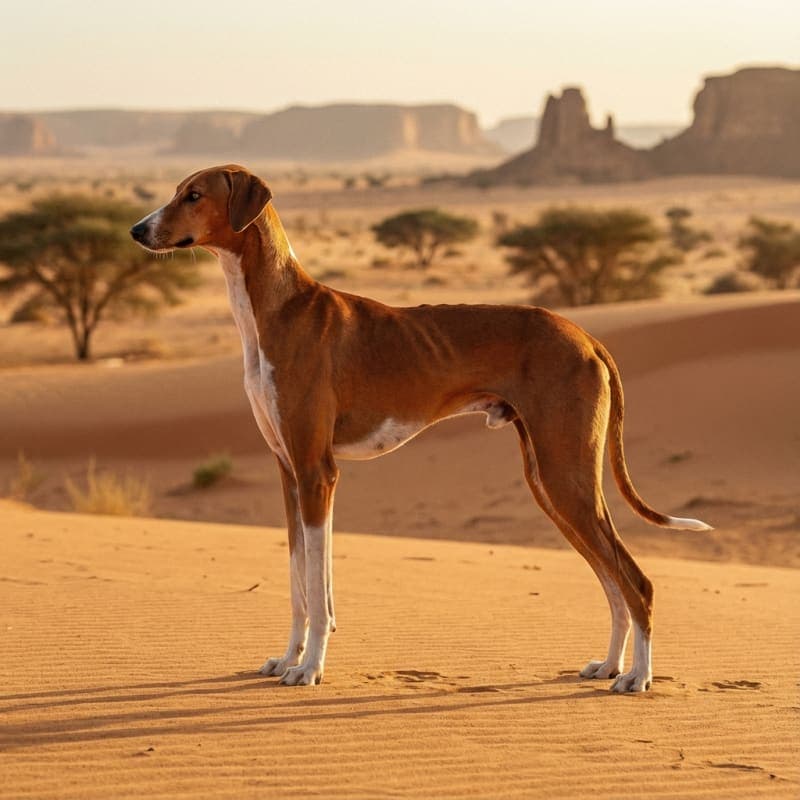
African Chart - Azawakh
FCI Group
10• FCI 307
Size
Medium
Origin Country
XX
Height
60-74 cm
Weight
15-25 kg
Lifespan
10-12 years
Temperament
Overview
The African Greyhound, known as Azawakh, is a breed that attracts attention with its elegance and refined silhouette. Originating from West Africa, particularly from the Azawakh valley on the border of Mali and Niger, the Azawakh has gained recognition not only as a hunting dog but also as a loyal companion of nomads – the Tuaregs, Fulanis, and Dahoussahaq.
This dog has perfectly adapted to the extreme climatic conditions of the Sahel. Its slender body structure with long limbs allows it to achieve extraordinary speed, crucial during hunts for gazelles, hares, and even in fights with hyenas or jackals. In the Tuareg language, it is known as Oska, which emphasizes its deep roots in the culture of these peoples.
In the culture of nomads, the Azawakh served not only as a hunter but also as a guardian, protecting livestock and people from threats. Since 1968, the breed has begun to gain popularity in Europe, where breeders have enthusiastically discovered its unique character and appearance. Thanks to collaboration with native breeders, the authenticity of the breed has been preserved.
The Azawakh is a dog with an extremely distinctive temperament, capable of being both energetic and incredibly affectionate towards its family. Its natural distrust of strangers requires the owner to have patience, empathy, and experience in working with dogs of strong personality.
Azawakh owners must remember that these dogs need space to run and regular physical activity to maintain their health and good mental condition. Their short, delicate coat requires regular but uncomplicated brushing. Despite their natural independence, the African Greyhound can form strong emotional bonds with family members, making it an ideal companion for those who value closeness and an active lifestyle.
In summary, the Azawakh is not just a dog but a true life partner that requires proper care, understanding, and affection to fully thrive. Its unique traits – both physical and mental – along with its rich history make it one of the most fascinating breeds in the world, perfect for those seeking a dog with a remarkable personality and a deep cultural history.
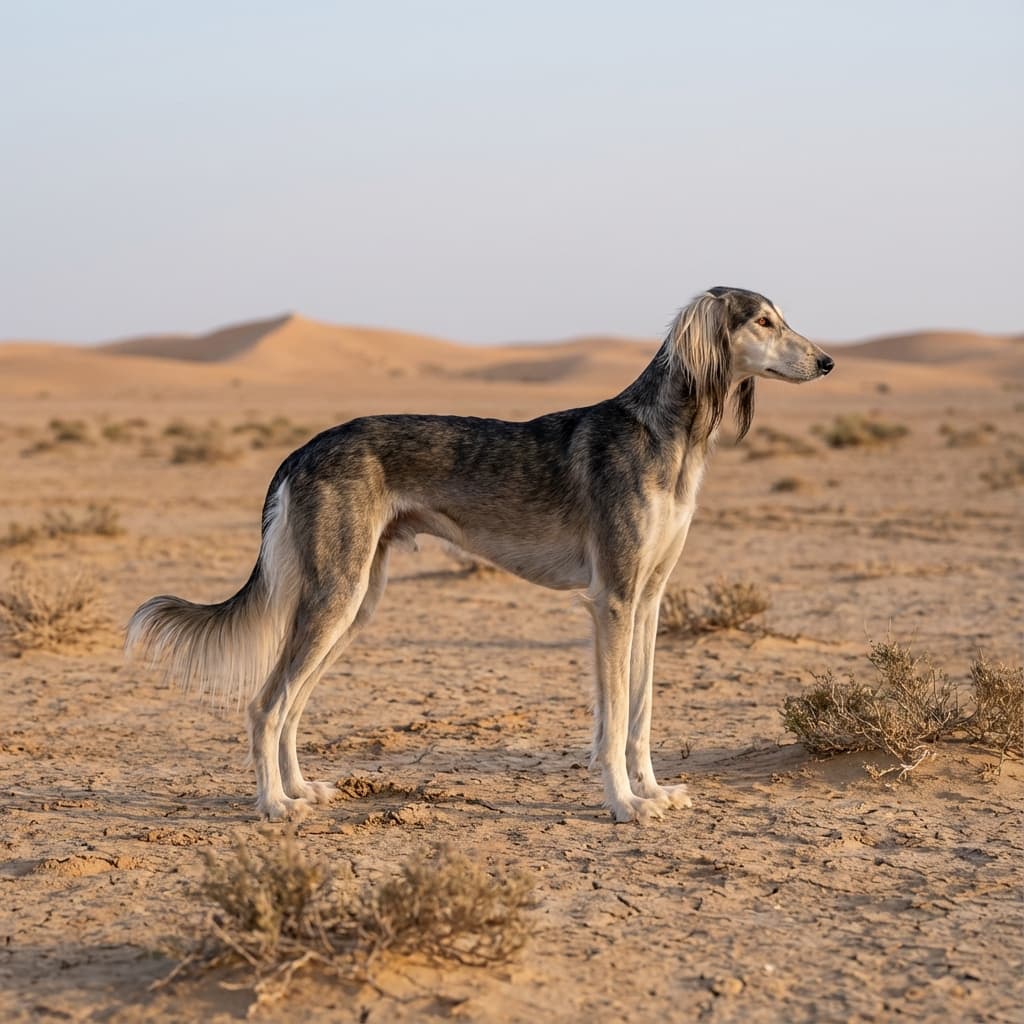
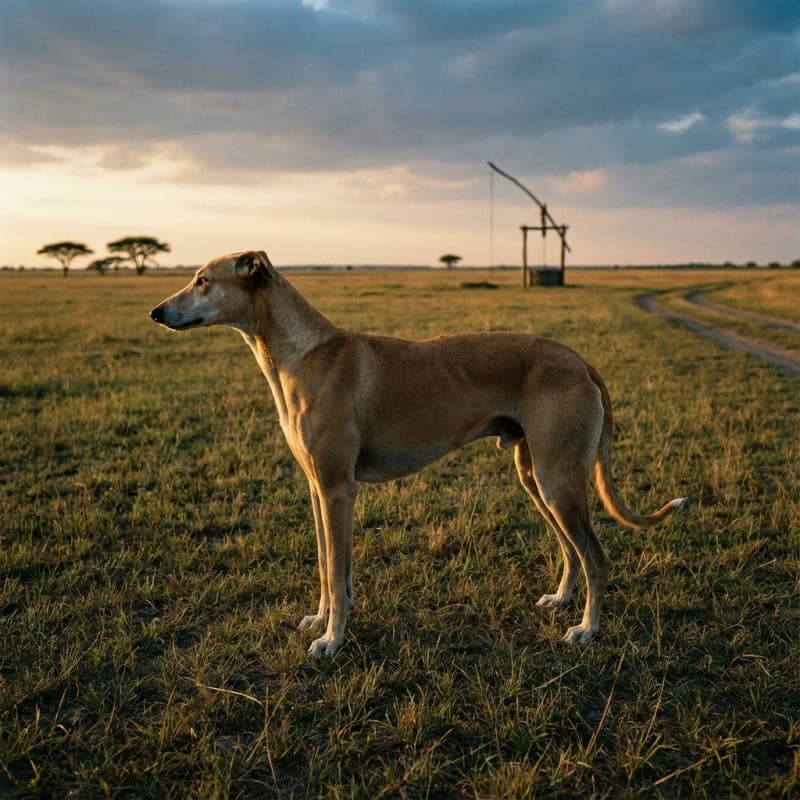
Azawakh is a dog with a remarkably slender and elegant silhouette, giving an impression of lightness, grace, and sophistication. Its appearance reflects a perfect adaptation to life in the harsh conditions of the African Sahel.
Dimensions: The height at the withers ranges from 60 to 74 cm (males usually 64-74 cm, females 60-70 cm), and the weight oscillates between 15 and 25 kg, depending on the gender. The body proportions are exceptionally slender, and every detail of the silhouette emphasizes athleticism and speed.
Head and expression: The head of the Azawakh is long, narrow, and of a dry construction, with a distinct, well-defined skull. The eyes are almond-shaped and can be dark or amber, giving the dog a piercing yet gentle expression. The ears are triangular, thin, and drooping, which adds a special charm and elegance.
Body structure: The body is proportional, with long limbs and well-defined, yet not overly pronounced muscles. The chest is shallow but well-developed, allowing for efficient breathing during fast running. The loins are slightly raised, and the belly is clearly tucked up, emphasizing the athletic silhouette.
Skin and coat: The skin of the Azawakh is thin and tight, perfectly adhering to the body. It is covered with short, fine fur, which comes in various shades:
- Light fawn (fauve)
- Fawn
- Red
- Dark fawn
- Brindle
There are often white markings on the limbs, chest, neck, or tip of the tail, which is characteristic of this breed. Some individuals may also have a black mask on their muzzle.
Tail: The tail is long, thin, and tapering towards the end, carried low with a slightly curled or curved tip. During movement, it may be raised above the line of the back, further emphasizing the elegance and dynamism of the dog.
The overall appearance of the Azawakh gives the impression of a perfectly sculpted statue, combining strength, speed, and an extraordinary harmony of proportions.
Azawakh is a dog with a distinctive and complex character, combining traits of liveliness, sensitivity, independence, and a deep attachment to family. His temperament reflects thousands of years of evolution alongside African nomads.
Vigilance and protection: Azawakh is an extremely alert dog that naturally takes on the role of a guardian. He can be distrustful of strangers, making him an excellent alarm and guard dog. However, this trait requires proper socialization from puppyhood so that the dog learns to distinguish real threats from ordinary guest visits.
Bond with family: In relation to his family, Azawakh is incredibly loyal, affectionate, and deeply attached. He forms strong emotional bonds with his owners and often chooses one or two people he is most connected to. He can be gentle and tender, especially with children, whom he treats with great patience.
Independence and intelligence: This breed is characterized by high intelligence, but also a strong tendency for independent thinking. Azawakh is not a dog that blindly follows commands – he prefers to understand the meaning of what he is supposed to do. This trait makes him require a gentle yet consistent approach in training.
Temperament and energy: Azawakh has two faces – at home, he can be calm, balanced, and even contemplative, but during outdoor activities, he shows great energy and liveliness. He loves to run, jump, and explore his surroundings. This is a dog that cannot stand prolonged solitude and feels best in the presence of his owner or family.
Vocal behaviors: Azawakh is rather a quiet dog and does not bark unnecessarily, making him an ideal companion for those who value peace. He mainly speaks up in alarm situations or during communication with family.
Relationships with other animals: With proper socialization, Azawakh can coexist well with other dogs, especially if he has grown up with them since puppyhood. However, due to his strong hunting instinct, he may show a tendency to chase small animals like cats or rodents. Owners should keep this in mind, especially during off-leash walks.
In summary, Azawakh is a dog for experienced owners who can appreciate his sensitivity, respect his independence, and provide him with the right amount of attention, activity, and love.
Azawakh is a breed of dogs characterized by generally good health and longevity. The average lifespan is between 10 to 12 years, although with proper care and a bit of luck, many individuals exceed this limit.
Natural immunity: Thanks to millennia of natural selection in the harsh conditions of the African Sahel, the Azawakh has developed a strong immune system and resistance to many diseases. This breed is less prone to health problems than many other dog breeds.
Potential health issues: Despite its natural immunity, the Azawakh may be susceptible to certain conditions:
- Bloat (gastric torsion): A serious issue that can lead to life-threatening situations. It is important to feed the dog smaller portions several times a day and avoid intense exercise immediately after meals.
- Dilated cardiomyopathy: A heart disease that may occur in some individuals. Regular cardiac check-ups are recommended, especially for older dogs.
- Hypothyroidism: Can affect the metabolism and overall condition of the dog.
- Skin allergies: Due to their delicate skin, some individuals may be prone to allergic reactions to food or environmental factors.
- Orthopedic problems: Although rare, joint conditions may occur, particularly in dogs that are heavily used for hunting or sports.
Diet and weight: It is important for owners to provide their dog with a proper diet rich in protein and nutrients to maintain its weight within a healthy range. Azawakh naturally has a very slim physique – visible ribs are a normal aspect of this breed's anatomy and do not indicate malnutrition.
Temperature tolerance: Azawakh tolerates high temperatures well, but is very sensitive to cold due to its thin skin and short coat. On cooler days, it is essential to provide appropriate protective clothing or a warm resting place.
Prevention: Regular veterinary check-ups, vaccinations, deworming, and attention to a healthy diet and adequate exercise are crucial for keeping the Azawakh in excellent condition for many years. Owners should also monitor the condition of the skin, ears, and teeth.
With proper veterinary care and prevention, the Azawakh can enjoy a long, healthy, and happy life alongside its family.
The care of Azawakh is relatively easy and low-maintenance, mainly due to its short, delicate coat and clean nature. This breed is an ideal choice for people who do not want to spend excessive amounts of time on daily grooming.
Brushing the coat: Azawakh requires regular brushing at least once a week to remove dead hair, dirt, and to stimulate the skin. A rubber glove or a brush with soft natural bristles works best for this purpose. Brushing is also a great opportunity to strengthen the bond with the dog and check the condition of its skin.
Shedding: Azawakh does not shed heavily, making it a good choice for people sensitive to pet hair. Shedding is minimal and seasonal, usually in spring and autumn.
Bathing: Baths should only be given when truly necessary – for example, when the dog gets very dirty. Too frequent washing can irritate its sensitive skin and destroy the natural protective layer. It is important to use gentle shampoos designed for dogs with sensitive skin, and to thoroughly dry the dog with a towel after bathing.
Ear care: The ears of Azawakh require regular checks, especially if the dog spends a lot of time outdoors. Ears should be gently cleaned with special veterinary solutions and checked for signs of infection, such as unpleasant odor, redness, or excessive discharge.
Eye hygiene: The eyes should be regularly checked for irritation, redness, or discharge. Gently wiping around the eyes with a damp cloth can help keep them clean.
Nail trimming: The nails of Azawakh grow relatively quickly and require regular trimming, especially if the dog does not naturally wear them down during activities on hard surfaces. Overly long nails can cause discomfort and walking problems. It is recommended to trim the nails every 3-4 weeks.
Oral hygiene: Regular tooth brushing (2-3 times a week) using dog toothpaste will help prevent tartar buildup, gum disease, and bad breath. Special dental chews can also be used.
Insect protection: Because Azawakh has thin skin and short fur, it is more susceptible to insect bites and external parasites (ticks, fleas). Owners should regularly apply protective products and thoroughly check the dog's skin after walks, especially in tall grass or forests.
Protection from the cold: In cooler months, Azawakh should wear protective clothing during walks to prevent chilling. At home, it should be provided with a warm, comfortable bed away from drafts.
Caring for an Azawakh is not just a matter of aesthetics, but above all concern for its health and well-being. Regular grooming activities are also a great opportunity to strengthen the bond with the dog and monitor its overall condition.
Azawakh is a breed of dog that requires a large amount of regular physical activity to maintain physical and mental health. It is a high-energy dog, designed for running and hunting in the challenging conditions of the African Sahel.
Daily exercise needs: Azawakh needs a minimum of 1-2 hours of activity per day, divided into several sessions. Ideal forms of activity include:
- Long walks: Daily walks lasting at least 30-60 minutes, allowing the dog to explore the area and satisfy its natural needs.
- Running freely: Azawakh loves to run and needs regular opportunities for fast, free running in a safe, enclosed area. It can reach speeds of up to 60 km/h!
- Canine sports: Whippet racing (coursing), lure coursing, agility for sighthounds – all these activities are excellent for Azawakh and allow it to utilize its natural instincts and abilities.
- Play with other dogs: Socialization and play with other dogs is an excellent form of activity that develops social skills and provides mental stimulation.
Living conditions: Azawakh is ideally suited to living in homes with large gardens or in rural areas where it can move freely. This breed is not suitable for apartments without access to large outdoor spaces. If the owner lives in the city, they must ensure daily outings to parks or areas where the dog can run.
Safety during activities: Azawakh is known for its jumping ability – it can easily jump over a fence of 1.5-2 meters high. Fences should be high enough (at least 1.8-2 m) and secured at the base to prevent escapes. Due to its strong hunting instinct, Azawakh may chase small animals, so walks in urban areas should be on a leash.
Mental stimulation: In addition to physical activity, Azawakh also needs mental stimulation. Simple games and activities that engage its intelligence – such as searching for hidden treats or learning new commands – will help keep the dog in good mental condition.
Consequences of lack of activity: Without the appropriate amount of exercise, Azawakh can become bored, anxious, and destructive. It may exhibit behavioral problems such as excessive barking, destroying furniture, or attempts to escape. Therefore, it is crucial to incorporate regular, varied activity sessions into its daily routine.
Adjusting activity: Young puppies and young adult dogs need more activity than older individuals. Owners should adjust the intensity and duration of exercise to the age, condition, and health status of the dog. Older dogs may prefer calmer walks instead of intense runs.
In summary, Azawakh is a breed for active owners who can provide the dog with a daily dose of exercise, space to run, and various forms of activity that will allow it to live happily and healthily.
Training an Azawakh can be a challenge even for experienced owners, as this breed is characterized by strong independence, sensitivity, and intelligence combined with a natural distance from blind obedience. However, with the right approach, an Azawakh can become a well-trained and obedient companion.
The foundation – trust and respect: The key to success in training an Azawakh is building mutual trust and respect. This dog does not respond well to authoritarian, harsh methods or coercion. It requires an owner who is confident, consistent, but at the same time gentle and patient.
Positive reinforcement: Azawakh responds excellently to positive reinforcement, such as:
- Treats (favorite snacks)
- Verbal praise (calm, warm tone)
- Play as a reward
- Petting and physical contact (if the dog enjoys it)
Physical punishment, yelling, or aggressive methods are absolutely unacceptable and can ruin the bond with the dog and cause fear and distrust.
Early socialization (CRITICAL!): Socialization from the earliest weeks of life is absolutely crucial for Azawakh. Puppies should be gradually and positively exposed to:
- Different people (children, adults, seniors, people in various outfits)
- Other dogs and animals
- Different environments (city, park, forest, car)
- Various sounds (traffic, household noises, noise)
- Different experiences (vet visits, car rides, guest meetings)
A well-socialized Azawakh will be more confident, balanced, and less distrustful of unfamiliar situations.
Basic commands: Azawakh is intelligent enough to learn many commands, such as:
- Sit
- Lie down
- Stay
- Come (the most important command due to the hunting instinct!)
- Leave it
- No
However, due to its independence, an Azawakh may be inclined to ignore commands if it is not sufficiently motivated or if it does not see the point in a given action. Therefore, training should be short, varied, and engaging to maintain the dog's interest.
Consistency and routine: Azawakh needs clear rules and consistency. All family members should use the same commands and expectations to avoid confusion. A regular routine (meals, walks, training) will help the dog feel secure and understand what is expected of it.
Recall training: Due to its strong hunting instinct, teaching an Azawakh a reliable recall is a challenge but absolutely essential for safety. Training should take place gradually, in a controlled environment, using high-value rewards. Even a well-trained Azawakh may sometimes ignore the recall if it spots something interesting to chase.
Patience and time: Training an Azawakh requires immense patience. This is not a breed that learns in a few weeks – the training and socialization process takes months or even years. Owners must be prepared for a long-term commitment.
Professional help: If the owner lacks experience with independent breeds or sighthounds, it is advisable to seek the assistance of a professional behavior trainer who has experience with Azawakh or other African sighthounds.
In summary, training an Azawakh is a long, demanding process that requires patience, empathy, consistency, and understanding of the unique nature of this breed. With the right approach, an Azawakh can become a wonderful, loyal companion, although it will always retain its natural independence and dignity.
The Azawakh diet should be well-balanced, high-quality, and tailored to its active lifestyle to support its health, fitness, and maintain an appropriate body weight. Due to its unique body structure and metabolism, the Azawakh has specific nutritional needs.
Nutrition basics: The diet should be rich in high-quality protein, which is crucial for maintaining lean muscle mass. Protein sources should come from:
- Meat (chicken, beef, lamb, turkey, fish)
- Poultry
- Sea fish (rich in omega-3 fatty acids)
Additionally, the diet should include:
- Healthy fats: Omega-3 and omega-6 fatty acids support skin health, coat condition, and brain function
- Complex carbohydrates: Rice, oats, sweet potatoes provide energy
- Fiber: Vegetables and fruits (in moderate amounts)
- Vitamins and minerals: A full range of micronutrients supporting health
Type of food: Owners have several options to choose from:
- High-quality dry food: The most convenient option, dedicated to medium breeds with high activity or sighthounds
- Wet food: More palatable but more expensive and less convenient to store
- BARF diet (raw): Some Azawakh owners use a diet based on raw meat, bones, and vegetables that mimics natural feeding. However, it requires extensive knowledge and consultation with a veterinarian.
- Home-cooked diet: Prepared at home with high-quality ingredients under the supervision of a veterinary nutritionist
Regardless of the choice, the food should be high-quality, free from artificial preservatives, colors, and fillers.
Avoiding human food: Owners should avoid giving their dog human food that can be harmful to its health. Particularly dangerous are:
- Chocolate
- Onions and garlic
- Grapes and raisins
- Avocado
- Cooked bones (can splinter and injure the dog)
- Sweets, sugar, and excess salt
Sensitive digestive system: The Azawakh has a sensitive digestive system, so any changes in diet should be introduced gradually, over 7-10 days, to avoid stomach issues such as diarrhea or vomiting. New food should be mixed with the old, gradually increasing the proportion of the new.
Meal frequency: Due to the risk of bloat (gastric torsion), it is recommended to feed 2-3 smaller meals a day instead of one large one. Meals should be served at regular times to create a routine. It is important to avoid intense activity immediately before and after eating (at least 1 hour break).
Weight control: The Azawakh naturally has a very slim physique – visible ribs and lumbar vertebrae are a normal anatomical feature of this breed and do not indicate malnutrition. Owners should not try to fatten the dog to resemble other breeds. However, it is important to monitor that the dog is neither too thin (prominent pelvic bones) nor too heavy (lack of visible ribs, obesity).
Access to water: Owners should ensure their dog has constant access to fresh, clean water, especially on hot days or after intense activity, to avoid dehydration. The water bowl should be regularly cleaned and refilled.
Supplements: In most cases, high-quality food provides all necessary nutrients. However, in certain situations (puppies, pregnant or nursing females, older dogs, dogs with health issues), supplements may be needed, such as:
- Omega-3 fatty acids (for healthy skin and coat)
- Glucosamine and chondroitin (for joint health in older dogs)
- Probiotics (for a healthy digestive system)
Any supplements should be used only after consultation with a veterinarian.
Special dietary needs:
- Puppies: Require puppy food for medium breeds, rich in protein and calcium, to support bone and muscle growth
- Adult dogs: Food for adult, active dogs
- Senior dogs (7+ years): Senior food, often with joint supplements and reduced calories
- Dogs with allergies: Elimination diet or hypoallergenic food under veterinary supervision
In summary, proper nutrition for the Azawakh is the foundation of its health, longevity, and well-being. Owners should consult with a veterinarian or veterinary nutritionist to create an optimal feeding plan tailored to their dog's individual needs.
Characteristic Traits
Pros
- Elegant and slender silhouette
- Perfect companion and guardian
- Easy-to-care-for coat
- Exceptional speed and agility
- Healthy and resilient breed
- Minimal shedding.
Cons
- Requires a lot of space and movement
- May be distrustful of strangers
- Needs an experienced owner
- Strong hunting instinct
- Sensitive to cold.
Behavioral Ratings
Breed History
Azawakh is a breed of dog with a remarkably rich and fascinating history, dating back thousands of years and deeply rooted in the culture of nomads from West Africa. It is one of the oldest and most authentic breeds of sighthounds in the world.
Ancient roots: Images of dogs very similar to the Azawakh can be found in rock paintings in central Sahara, which date back thousands of years. This indicates that the ancestors of this breed accompanied humans at a time when the Sahara was a much more fertile and green land.
Region of origin: Azawakh originates from the northern borders of Mali and Niger, particularly from the region of the Azawakh River valley (from which the breed gets its name). It is a harsh land of the Sahel – a transitional zone between the Sahara and the savanna – where living conditions are extremely difficult: temperatures reaching 50°C, water shortages, and poor vegetation.
Nomads and their dogs: Azawakh was bred and selected by the nomadic tribes of the Tuaregs, Fulanis (Peuls), and Dahoussahaq, who led a pastoral lifestyle in the Sahel. For these peoples, the Azawakh was not just a dog – it was:
- A hunter: It hunted gazelles (dorcas, dama), hares, ostriches, and other animals, providing food for the tribes.
- A guardian: It protected camps, livestock (goats, sheep, camels), and people from predators (hyenas, jackals, and even lions).
- A companion: It shared the camp and daily life with the family, creating strong emotional bonds.
- A status symbol: Owning an Azawakh was a sign of prestige and wealth.
In the Tuareg language, Azawakh is known as Oska, which emphasizes its deep roots in the culture of this people.
Thousands of years of natural selection: In the harsh conditions of the Sahel, only the strongest, fastest, and most resilient individuals survived. Natural selection and deliberate breeding by nomads shaped the Azawakh into a remarkably healthy, resilient, and efficient breed, perfectly adapted to life in extreme conditions.
Discovery by Europeans: For centuries, the Azawakh remained unknown outside its native region. It was only in the 1960s, specifically starting from 1968, that European dog lovers – mainly diplomats, travelers, and enthusiasts – discovered this breed with delight during their travels in West Africa. Captivated by its unique appearance, character, and history, they began to import the first individuals to Europe, particularly to France.
Collaboration with indigenous breeders: European breeders worked closely with indigenous breeders who had the first lines exported to Europe. Thanks to this collaboration, the authenticity of the breed was preserved, avoiding excessive Europeanization. Indigenous tribes still breed Azawakh according to traditional principles.
Patronage of France: France took patronage over the Azawakh breed within the framework of the International Canine Federation (FCI). It was France that pioneered the official recognition and standardization of this breed in Europe.
Official recognition: Azawakh was officially recognized by the FCI as breed number 307 in group 10 (Sighthounds) section 3 (Short-haired Sighthounds). The date of publication of the applicable standard is 04.09.2019, confirming its formal status as a recognized international breed.
Azawakh today: Today, Azawakh has gained popularity worldwide – in Europe, North America, Australia – where it is valued not only as a show dog but primarily as a family companion, a sporting dog (lure coursing, racing), and a loyal friend for those who can appreciate its unique personality.
In its native region, Azawakh still fulfills traditional roles – accompanying nomads in their wanderings, hunting, and guarding camps, constituting a living part of the cultural heritage of the Sahel.
In summary, the history of Azawakh is a tale of thousands of years of coexistence between humans and dogs, of survival in the most challenging conditions, and of mutual respect and partnership. It is a breed that has preserved its authenticity and unique traits thanks to the dedication of both indigenous and European breeders. Azawakh is not just a dog – it is a living monument to the history and culture of West Africa.