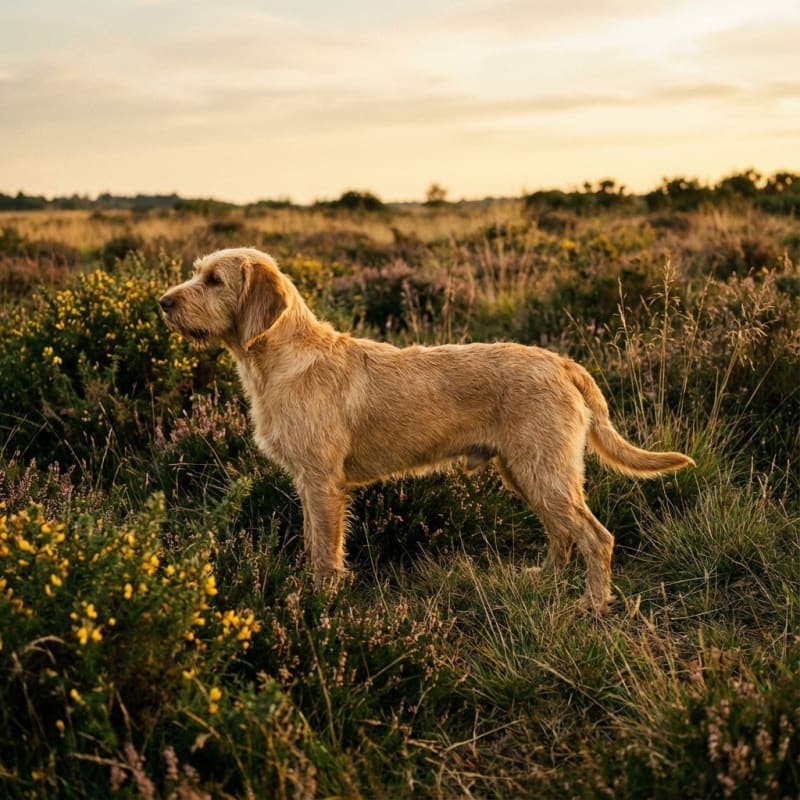
Brittany Basset
FCI Group
6• FCI 36
Size
Small
Origin Country
FR
Height
33-38 cm
Weight
14-16 kg
Lifespan
13-15 years
Temperament
Overview
Brittany Basset, also known as Basset Fauve de Bretagne, is a dog breed with a rich history dating back to the 19th century in the Brittany region of France. These dogs are distinguished not only by their remarkable energy but also by their characteristic appearance, which has attracted the attention of hunting dog enthusiasts for centuries.
Their short yet strong and stocky body is perfectly adapted for hunting various game:
- Rabbits and hares - the primary game
- Foxes - thanks to their endurance and determination
- Deer and wild boars - despite their small size
It is these traits that make the Brittany Basset a favorite among hunters. However, this breed is not just a hunting dog. Its lively temperament, unquenchable energy, and remarkable sociability make it an excellent family dog and companion.
From the very beginning, the Brittany Basset gained popularity due to its extraordinary hunting skills. Owners appreciate it for its reliability in the field, endurance, and ability to work even in the toughest conditions. Many dogs of this breed have won awards at the French Championships for rabbit hunting, which only confirms their exceptional hunting predispositions.
The body structure of the Brittany Basset is perfectly designed for hunting:
- A wide and deep chest ensures fitness
- A short and strong neck provides stability
- Well-defined muscles indicate strength
- Short, strong limbs allow for agility
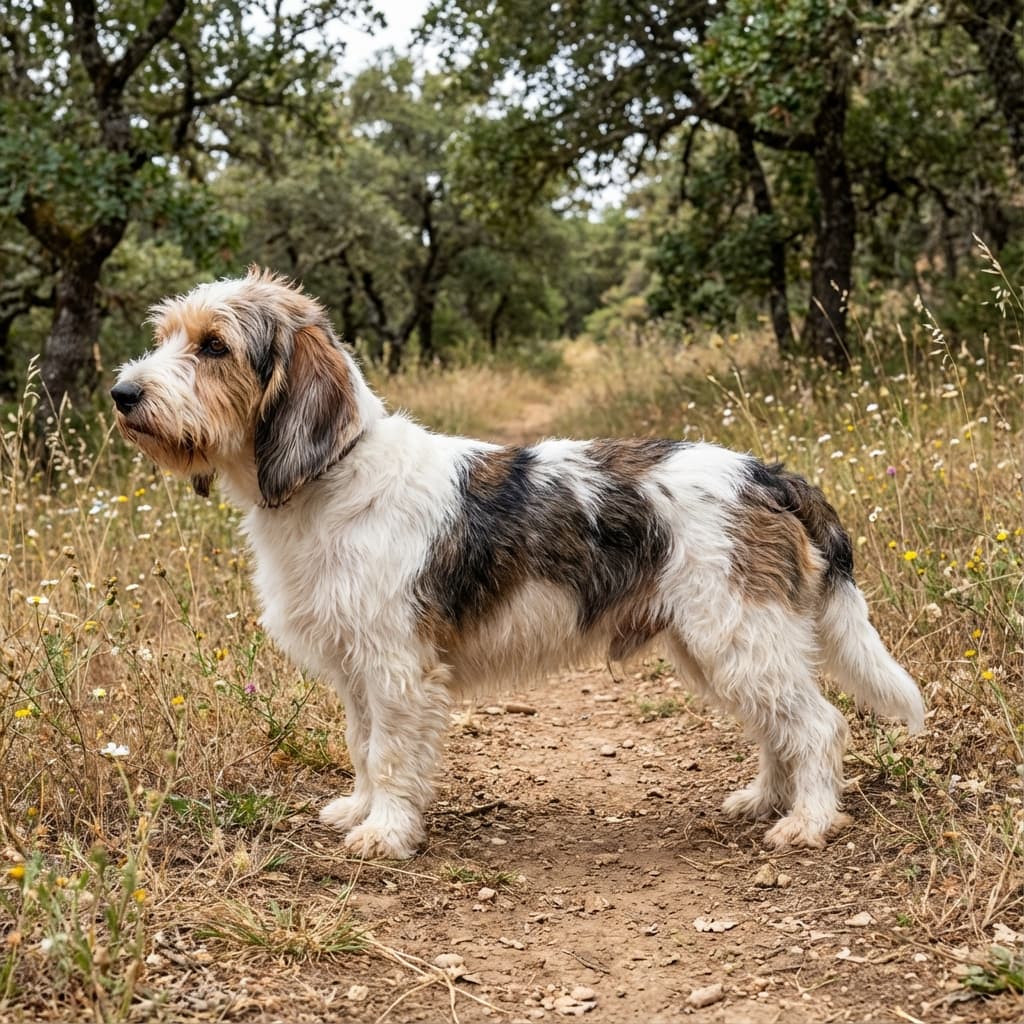
The coat of the Brittany Basset is short, rough, and firm to the touch, with its characteristic color ranging from light wheat to deep brick red, often with a slight mix of black hair.
Although the Basset Fauve de Bretagne is a hunting dog with strong instincts, it excels in the role of a companion dog. Its cheerful disposition, gentleness, and sociability make it easy to form strong emotional bonds with household members. It is devoted, balanced, and above all social and friendly, making it an ideal companion for everyday life for the whole family.
Nevertheless, to enjoy health and happiness, the Brittany Basset needs regular physical activity and consistent training. This is a dog that loves to spend time outdoors, exploring its surroundings and following scent trails. It can be a great motivation for owners to lead an active and healthy lifestyle.
The Brittany Basset is a dog full of passion, energy, and joy for life, bringing a lot of happiness to the home. Although its hunting instinct is strong, it adapts well to home conditions, provided it receives the right amount of exercise, mental stimulation, and attention. If you are looking for a dog that is both hardworking and friendly, a loyal hunter, as well as a loving family companion, the Brittany Basset is an excellent choice that will surely earn a lasting place in your heart.
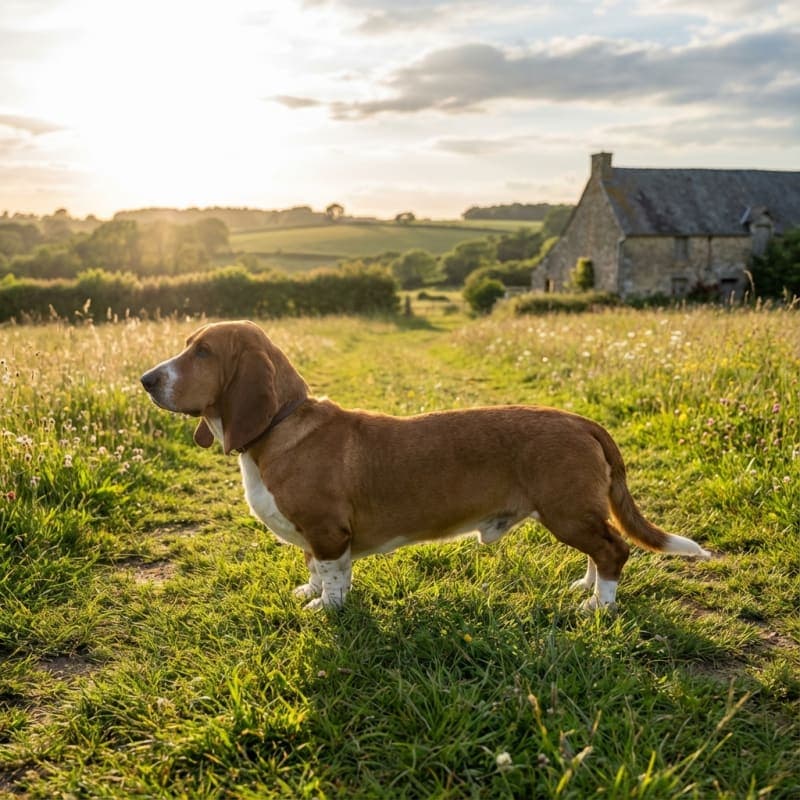
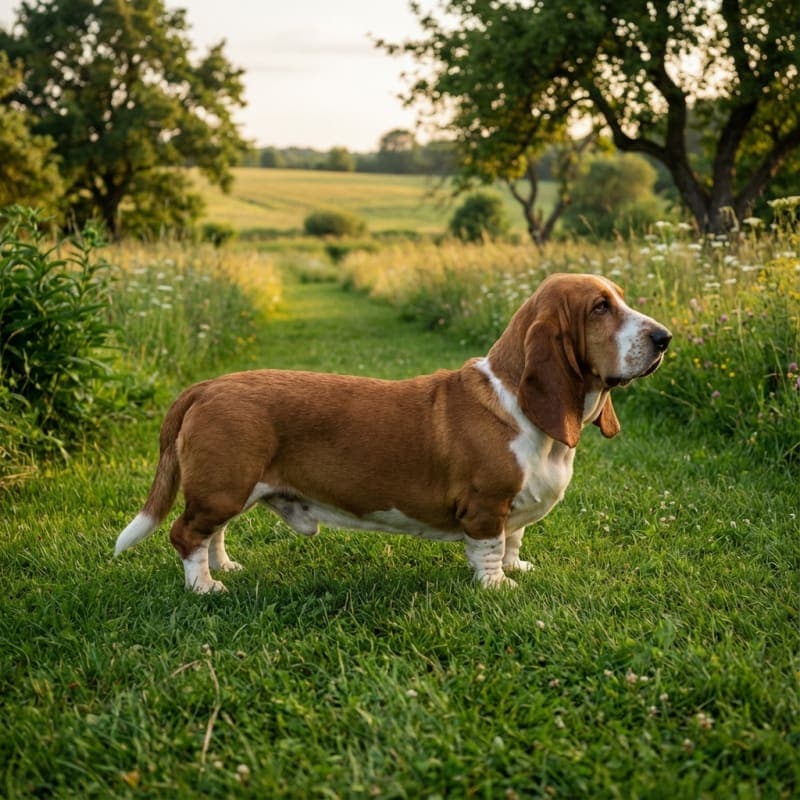
The Basset Fauve de Bretagne is a dog with a distinctive and easily recognizable appearance, characterized by a short, sturdy body and long, rough ears. It presents a typical look for a small basset - stocky, low, but full of vigor and energy.
Head and face:
- Head proportional to the rest of the body, quite long
- Prominent occipital protuberance
- Dark brown eyes, with a lively and friendly expression
- Black or dark brown nose with well-opened nostrils
- Long, thin ears covered with rough hair
Body structure:
The neck is short and strongly muscled, which adds strength and stability to the dog while working in the field. The back of the Basset Breton is short and wide, while the chest is deep and well-built, providing adequate lung capacity necessary for prolonged effort. The body is stocky, strong, well connecting the front with the rear.
Coat and color:
The coat of the Basset Breton is short, rough, and hard to the touch, never soft or silky. The characteristic color ranges from light fawn (wheaten) to deep brick, often with a small amount of black hairs sprinkled on the back. A white spot on the chest is allowed, although it should be small.
Tail and limbs:
These dogs have a medium-length tail that they carry slightly upwards, often with a characteristic tuft of hair. The tail is strong at the base, gradually tapering towards the end. The limbs are strong and well-boned, with well-muscled thighs, allowing for quick and agile movement despite their small size. The paws are compact, with hard pads.
Sizes:
The height at the withers for dogs of this breed typically ranges from 32 to 38 cm, making them small dogs, but extremely durable and physically agile. The body weight should be proportional to the height, maintaining musculature and condition.
Basset Fauve de Bretagne is a dog with a unique and charming temperament, harmoniously combining the traits of a hunting dog and a family companion. This dual nature makes the breed increasingly popular among both hunters and families looking for an active companion.
Character and disposition:
- Social and friendly - loves contact with people
- Full of energy and passion - never sits still
- Gentle and balanced - ideal for families with children
- Devoted and loyal to its family
- Brave and determined during work
In relationships with family:
Brittany Basset Hounds are exceptionally attached to their family and love spending time with household members. Their behavior is usually gentle, friendly, and sociable, making them excellent companions for children. They are patient and tolerant, although like any dog, they require supervision when playing with small children. These dogs are quite open to new acquaintances, are not afraid of strangers, and usually greet new people enthusiastically, though without excessive excitement.
Hunting instinct:
Despite their gentle nature, the Brittany Basset possesses a strong hunting instinct, deeply rooted in its nature. During walks, it may suddenly start following an interesting scent, which requires proper training and control. This strong instinct can lead to chasing small animals, such as cats, squirrels, or rabbits, so it is important for the dogs to be properly trained and controlled in such situations, especially in open areas.
With other animals:
Brittany Basset Hounds usually get along well with other dogs, especially if they have been properly socialized from a young age. They love the company of other four-legged friends and often prefer to play in groups. However, due to their strong hunting instinct, interactions with smaller pets may require caution and supervision.
Character traits during work:
During hunts, Brittany Basset Hounds reveal their true nature - they are brave, clever, and stubborn, making them extremely effective hunters. Their determination and persistence in pursuing goals are unwavering, and their energy seems inexhaustible. They can work in the toughest terrain and in any weather.
Personality and temperament:
Basset Fauve de Bretagne may exhibit some stubbornness and independence, which is typical for hunting breeds. This requires owners to be consistent, patient, and firm in training. They are also relatively vocal and enjoy communicating through barking, howling, or other sounds, which can be somewhat bothersome in urban environments or apartment buildings.
Adaptation to life:
Overall, Basset Fauve de Bretagne is a dog that combines the traits of an ideal family companion and an active hunting dog, making it a unique and versatile family member. It adapts to various living conditions, provided it is given adequate physical activity and mental stimulation.
Basset Fauve de Bretagne is a generally healthy and resilient breed that enjoys good condition and longevity. The average lifespan is usually between 11 to 14 years, although with proper care, diet, and regular check-ups, many individuals can live up to 15 years.
Overall health condition:
Most dogs of this breed do not show tendencies to serious genetic diseases, making them relatively problem-free in terms of health. However, as with any breed, there are certain conditions that owners should pay special attention to.
Eye problems:
- Corneal ulcers - mechanical injuries during fieldwork
- Cataracts - may appear in older age
- Progressive retinal atrophy (PRA) - rare but serious condition
- Regular eye examinations are recommended
Ear infections:
Due to their long, drooping ears, Brittany Basset Hounds are prone to ear infections and inflammations. The ear structure hinders natural ventilation of the ear canal, creating a moist environment conducive to the growth of bacteria and yeast. Regular ear cleaning and monitoring their condition are crucial for preventing problems. Owners should watch for symptoms such as:
- Ear flapping or scratching
- Unpleasant odor from the ears
- Redness or swelling
- Discharge from the ear canal
Systemic diseases:
Although rare, dogs of this breed may experience issues with the heart and kidneys, especially in older age. Regular veterinary check-ups, including blood tests, allow for early detection of any abnormalities.
Hip dysplasia:
Even though Brittany Basset Hounds are small dogs, cases of hip dysplasia can occur, though much less frequently than in larger breeds. Proper weight management and avoiding excessive jumping and strain at a young age can help minimize the risk.
Weight control and obesity:
It is essential for owners to monitor their dogs' weight, as Basset Fauve de Bretagne tends to gain weight, especially if not exercised properly or given too much food. Obesity can lead to:
- Joint and spine problems
- Heart diseases
- Diabetes
- Shortened lifespan
Health prevention:
For this reason, regular physical activity and a properly balanced diet are key to maintaining their health and condition. Recommended are:
- Annual check-ups with the veterinarian
- Regular vaccinations and deworming
- Dental and oral hygiene checks
- Blood tests for older individuals (over 7 years)
Summary:
With proper care, the Brittany Basset is a healthy and long-lived breed that can enjoy a full life for many years with minimal health issues. The key is proactive care, regular check-ups, and ensuring appropriate activity and diet.
The Basset Fauve de Bretagne has a short, rough, and hard coat, which is typical for hunting dogs working in difficult terrain. Fortunately, grooming this breed's coat is not particularly demanding, although it does require regularity and consistency.
Brushing the coat:
It is recommended to brush the dog at least once or twice a week to prevent tangling, matting, and to remove dead hair. The best tools for this purpose are:
- Hard-bristle brush - ideal for rough coats
- Metal comb - for removing tangles
- Shedding glove - during shedding
This breed does not shed heavily, which is a significant advantage for people suffering from allergies or those who value cleanliness in their homes. Shedding occurs seasonally, usually in spring and autumn, but is relatively moderate.
Hand-stripping (removing dead hair):
To maintain the proper structure and quality of the coat, it is recommended to perform hand-stripping at least twice a year, preferably in spring and autumn. This process involves manually pulling out dead hairs, which:
- Stimulates the growth of new, healthy hair
- Maintains the hard texture characteristic of the breed
- Improves the appearance and condition of the coat
- Prevents matting and tangling
Hand-stripping can be done independently after training or by using the services of a professional groomer specializing in rough-coated breeds.
Ear care (CRITICAL):
Ear care is particularly important for Basset Hounds, as their long, drooping ears are prone to infections and inflammations. Owners should:
- Regularly check the ears for dirt, odor, and redness
- Clean the ears every 1-2 weeks with a special ear cleaning solution
- Gently dry the ears after bathing or swimming
- Avoid inserting cotton swabs into the ear canal
- Regularly remove hair growing inside the ear canal
Bathing:
The Basset Hound does not require frequent baths. A bath every 2-3 months or as needed when the dog gets dirty is sufficient. Too frequent bathing can damage the natural protective fatty layer of the skin. Mild shampoos designed for rough-coated dogs should be used.
Nail trimming:
Regular nail trimming is important for the health of the paws and proper posture. If the dog runs a lot on hard surfaces, the nails wear down naturally, but they usually require trimming every 3-4 weeks. Overly long nails can lead to:
- Walking problems
- Pain and discomfort
- Improper positioning of the paws
- Damage to furniture and floors
Oral hygiene:
Maintaining oral hygiene is equally important for the overall health of the dog. It is recommended to:
- Brush teeth 2-3 times a week with a special toothbrush and toothpaste for dogs
- Provide dental chews
- Have regular dental check-ups with a veterinarian
- Remove tartar as needed
General health check:
During grooming, it is worth regularly checking:
- The condition of the skin for irritations, rashes, parasites
- The eyes - whether they are clear and free of discharge
- The condition of the paw pads - cracks, cuts
- The overall condition of the coat - shine, elasticity
Summary:
Overall, the Basset Fauve de Bretagne is a breed that is relatively easy to groom, which, with regular basic care, will maintain excellent appearance and health. The most important factors are consistency and paying special attention to the ears due to their specific structure.
Basset Fauve de Bretagne is a active and energetic dog that, despite its small size, requires a significant amount of exercise and physical stimulation every day. Its hunting roots make it love activity and exploration, and a lack of proper movement can lead to behavioral and health problems.
Daily exercise needs:
Ideally, the Basset requires at least 60-90 minutes of physical activity per day, spread over several sessions. This can include:
- Daily walks - at least two, each lasting 30-45 minutes
- Running - great as a jogging companion
- Playtime in the garden - fetching, searching, scent games
- Outdoor activities - hiking, trips to the forest
Hunting instinct and scenting:
Dogs of this breed, due to their strong hunting instinct and exceptional sense of smell, love to sniff and track. Therefore, it is worth providing them with the opportunity to explore diverse environments where they can follow scent trails. Ideal forms of scent-related activities include:
- Scent trails - hiding treats in grass or forest
- Searching games - nosework training
- Walks in wooded areas - a natural environment full of scents
- Canine scent sports - mantrailing, tracking
Preventing obesity:
Regular physical activity is crucial for preventing obesity, which is a common problem in this breed, especially in dogs not participating in hunts. Obesity can lead to:
- Joint and spine problems
- Heart diseases
- Diabetes
- Shortened lifespan
Therefore, consistently providing the right amount of exercise is not only a pleasure for the dog but, above all, a health necessity.
Versatility and terrain adaptation:
Basset Fauve de Bretagne does well in various terrain conditions, even in difficult, mountainous, or overgrown areas. Its low, strong body structure and endurance make it an ideal companion for those who value an active lifestyle and long trips in nature. This dog can handle both the forest, the meadow, and the mountain trails.
Water play:
Additionally, dogs of this breed often enjoy playing in the water and are willing to swim, which is an excellent form of exercise, especially on hot days. Swimming is a wonderful:
- Cardio exercise without stressing the joints
- Cooling off on hot days
- Diversity in the training routine
- Great fun for the dog
Socialization during exercise:
Basset Hounds are inclined to interact with other dogs, making them an ideal companion for play at dog parks or in groups. Playing with other dogs is an excellent form of:
- Social stimulation
- Physical effort
- Learning communication with other dogs
- Releasing energy
Mental exercises:
In addition to physical activity, the Basset also needs mental stimulation. Obedience training, strategic games, dog puzzles, or learning new tricks help:
- Tire the dog's mind
- Prevent boredom and behavioral problems
- Strengthen the bond with the owner
- Develop intelligence and cognitive abilities
Safety during activities:
Due to their strong hunting instinct, it is recommended during walks and exercises in open terrain to:
- Use a long training leash (10-15m) instead of letting them off-leash
- Train recall before letting them off-leash
- Avoid areas with a lot of wildlife
- Supervise the dog in a new environment
Summary:
Basset Fauve de Bretagne is an ideal breed for active individuals and families who enjoy spending time outdoors. Providing the right amount of exercise, exploration, and stimulation is key to a happy, healthy, and balanced dog. Without regular activity, they can become bored, destructive, and prone to health problems.
Training the Basset Fauve de Bretagne requires consistency, confidence, patience, and an understanding of the specific characteristics of the hunting breed. Although they are intelligent and eager to cooperate, they also possess independence and stubbornness typical of hounds, which can pose a challenge for inexperienced owners.
Training Characteristics:
Dogs of this breed are intelligent, but also easily distracted, especially when an interesting scent is in the air. Their hunting instincts can cause them to quickly lose focus on training tasks, especially in a stimulating environment. Additionally, Basset Hounds can become quickly bored with monotonous training, so it is important that sessions are:
- Short - 10-15 minutes per session
- Frequent - 2-3 sessions a day
- Diverse - different exercises and locations
- Interesting - games, challenges, rewards
Training Methods:
Owners should use only positive reinforcement, such as treats, verbal praise, toys, and play, to motivate the dog to learn. The Basset Fauve de Bretagne does not tolerate overly harsh training methods - physical punishment, yelling, or dominance can:
- Destroy the bond with the owner
- Cause fear and distrust
- Lead to stubbornness and refusal to cooperate
- Result in behavioral problems
Instead, a positive reward-based approach yields the best results and builds a strong, trust-based relationship between the dog and the owner.
Basic Commands:
Learning basic obedience commands is crucial for safety and comfort when living with a Basset Hound:
- Sit - basic control command
- Stay - important in potentially dangerous situations
- Come - crucial due to the hunting instinct
- Lie down - calming command
- Leave it - protection against eating something dangerous
- Heel - calm walking on a leash
Socialization (CRITICAL):
Early and intensive socialization from puppyhood is absolutely essential. The Basset Hound should be exposed to:
- Different environments - city, countryside, forest, parks
- Different people - adults, children, individuals of various ages
- Other animals - dogs, cats, possibly farm animals
- Various stimuli - sounds, smells, vehicles
Proper socialization will help shape a balanced, confident dog that copes well in various life situations.
Control of Hunting Instinct:
Due to the strong hunting instinct, particular emphasis should be placed on recall training and control in situations where the dog is focused on a scent. Helpful techniques include:
- Training with a long line (10-15m)
- Rewarding for immediate response to recall
- Exercises with controlled stimuli (toys mimicking prey)
- Gradually increasing the level of difficulty and distraction
Consistency and Hierarchy:
It is also important to remember that the Basset Fauve de Bretagne can exhibit stubbornness and independence, so it is crucial to not allow the dog to dominate the relationship. The owner must be:
- Consistent - the same rules always
- Firm - without aggression, but decisive
- Predictable - clear communication
- Fair - rewarding and ignoring undesirable behaviors
Training in the Form of Play:
Keeping training fun and providing the dog with opportunities to explore and discover the environment will aid in effective training. Great forms of training include:
- Agility - develops coordination and obedience
- Nosework - utilizes natural scenting abilities
- Trick training - fosters creativity and bonding
- Rally obedience - combines obedience with fun
Patience and Perseverance:
Regular training sessions will help form a strong bond between the dog and the owner and develop the dog's social skills. It is important to remember that progress may come slower than with more eager-to-please breeds, but with patience and consistency, any Basset Hound can become a well-mannered and obedient companion.
Group Classes and Professional Help:
For novice owners, it is recommended to participate in training classes led by experienced trainers who understand the specifics of hunting breeds. Professional help can significantly speed up the training process and help avoid common mistakes.
Summary:
The Basset Fauve de Bretagne is a dog that requires a patient, consistent, and positive approach to training. With the right approach, it can become a wonderful, obedient companion, although it will always retain a degree of independence characteristic of hound breeds. The key to success is understanding the nature of the dog and adapting training methods to its specific needs.
The nutrition of the Basset Fauve de Bretagne should be well-balanced, high-quality, and tailored to the individual needs of the dog to meet their energy and health requirements. A proper diet is crucial for maintaining the condition, health, and longevity of representatives of this breed.
Choosing food:
Owners should choose high-quality dog food that is tailored to:
- Dog's age - puppies, adults, seniors
- Weight and size - food for small breeds
- Activity level - working dogs vs. companion dogs
- Health status - any special dietary needs
It is best to choose foods that contain:
- High-quality animal protein (chicken, beef, fish) as the first ingredient
- Healthy fats (omega-3 and omega-6) for skin and coat
- Complex carbohydrates (rice, potatoes, vegetables)
- Vitamins and minerals essential for health
- No artificial colors, preservatives, or fillers
Weight and portion control:
Since dogs of this breed have a tendency to gain weight, especially when not active or participating in hunting, it is important to control portion sizes and avoid overfeeding. Obesity can lead to serious health problems such as:
- Joint diseases and dysplasia
- Heart problems
- Diabetes
- Shortened lifespan
- Reduced quality of life
Feeding frequency:
Regular meals are key to maintaining stable energy levels and a healthy metabolism. Recommended schedule:
- Puppies (2-6 months) - 3-4 meals a day
- Young dogs (6-12 months) - 2-3 meals a day
- Adult dogs (over 1 year) - 2 meals a day
- Seniors (over 7 years) - 2 meals a day, possibly reduced portions
It is best to feed the dog at regular times, which will help maintain regular digestion and prevent begging for food.
Fresh diet additions:
It is also worth including fresh fruits and vegetables in the diet of the Basset Fauve de Bretagne, which will provide essential vitamins, minerals, and fiber. Safe for dogs are:
- Carrots - great for a snack, good for teeth
- Apples (without seeds) - a source of vitamins and fiber
- Pumpkin - supports digestion
- Blueberries - antioxidants
- Spinach (in moderation) - minerals
- Broccoli - vitamins and fiber
What to avoid:
Never feed your dog:
- Chocolate - toxic to dogs
- Onions and garlic - damage red blood cells
- Grapes and raisins - damage kidneys
- Avocado - contains persin, toxic to dogs
- Xylitol (sweetener) - highly toxic
- Table scraps - often too fatty, salty, or seasoned
Snacks and treats:
Snacks should make up no more than 10% of daily caloric intake. It is worth choosing:
- Healthy, natural treats
- Pieces of vegetables or fruits
- Special training treats (low-calorie)
- Dental chews
Water - the foundation:
Remember to always provide your dog with access to fresh, clean water. Active dogs, such as the Basset Fauve de Bretagne, need proper hydration, especially after intense exercise or on hot days. Water bowls should be:
- Placed in an easily accessible location
- Regularly cleaned
- Refilled with fresh water at least once a day
Special dietary needs:
Some Basset Fauve de Bretagne may require special diets in cases of:
- Food allergies - elimination diet, hypoallergenic food
- Digestive issues - easily digestible food
- Joint problems - food with added glucosamine and chondroitin
- Overweight - light or weight management food
- Older age - senior food with tailored composition
In such cases, it is recommended to consult a veterinarian, who will help choose the appropriate diet.
Monitoring condition:
Regularly check the body condition of your dog:
- Ribs should be felt but not visible
- Visible waist when viewed from above
- Stomach tucked up when viewed from the side
- Regular weighing (every 2-4 weeks)
If you notice weight gain or loss, adjust the amount of food or consult a veterinarian.
Summary:
Proper nutrition for the Basset Fauve de Bretagne is the foundation of its health, condition, and long life. The key is high-quality food, portion control, regular meals, and avoiding overfeeding and unhealthy snacks. Remember that every dog is different, so observe your dog and adjust the diet to its individual needs.
Characteristic Traits
Pros
- Devoted and loyal companion
- Excellent hunting dog with an exceptional sense of smell
- Sociable and family-friendly
- Relatively easy to care for
- Energetic and resilient
- Adapts to various conditions.
Cons
- Requires a lot of movement and activity
- Strong hunting instinct can be problematic
- Needs consistent training
- Can be stubborn and independent
- Prone to ear infections
- Tendency to gain weight without exercise.
Behavioral Ratings
Breed History
Basset Fauve de Bretagne has a long and fascinating history that dates back deeply into the hunting traditions of the Brittany region in France. This unique breed is a living testament to the evolution of hunting dogs and the socio-cultural changes that have influenced dog breeding in Europe.
Ancient roots:
Basset Fauve de Bretagne descends from an older, now extinct breed Grand Fauve de Bretagne (Great Fawn of Brittany), which was popular among the French aristocracy for centuries. The Grand Fauve de Bretagne was a larger hound used for hunting wolves and wild boar. As the population of large game began to decline and hunters' preferences shifted towards smaller game, breeders started crossing the Grand Fauve with smaller breeds, creating the compact Brittany Basset.
Evolution of the breed in the 19th century:
In the 19th century, Basset Fauve de Bretagne gained immense popularity in its native region - Brittany. It was valued by hunters for:
- Exceptional scent - the ability to track over long distances
- Endurance - working in the challenging Breton terrain
- Versatility - hunting rabbits, hares, and foxes
- Size - easier to maintain than larger breeds
Initially, these dogs were used by the aristocracy, but after the French Revolution (1789-1799), when hunting rights were democratized, Brittany Bassets became available to ordinary people. It was during this time that the breed began to be widely used by local hunters for hunting small game.
The twilight and revival in the 20th century:
By the end of the 19th and the beginning of the 20th century, Basset Fauve de Bretagne went through a difficult period, and its population significantly decreased. The breed was on the brink of extinction, just like its ancestor Grand Fauve de Bretagne, which ultimately died out. However, thanks to the commitment of breeders and breed enthusiasts, the Brittany Basset was saved.
In the 1930s, the process of rebuilding the breed began. Through systematic breeding efforts and promoting the breed at shows and hunting competitions, Basset Fauve de Bretagne gained popularity throughout France. In the 1970s and 1980s, the breed experienced a true boom, becoming one of the most popular hunting breeds in France.
Hunting successes:
Basset Fauve de Bretagne, thanks to its exceptional hunting skills, has won numerous accolades at prestigious competitions. Many dogs of this breed have won the French Cup for rabbit hunting, which only confirmed their status as one of the best breeds for this type of hunting. Their ability to work in the toughest terrain, determination, and endurance have earned them recognition among professional hunters.
International expansion:
Basset Fauve de Bretagne was introduced to Great Britain in the 1980s, where it quickly gained popularity among enthusiasts of hunting breeds and companion dogs. In 2007, the breed was officially registered by The Kennel Club as a native vulnerable breed, which attests to its unique status.
Gradually, the breed began to gain popularity in other European countries and in the United States, although it remains relatively unknown outside France. In the USA, the breed was recognized by the American Kennel Club (AKC) and classified as a hound group.
FCI Standard:
Basset Fauve de Bretagne is officially recognized by the Fédération Cynologique Internationale (FCI) as a breed under standard number 36. It belongs to:
- Group 6 - Hounds, bloodhounds, and related breeds
- Section 1.3 - Small hounds
- With working trials - hunting tests required for full evaluation
The current breed standard was approved in 2003 and details the desired characteristics of appearance, temperament, and body structure.
Modern times:
Today, Basset Fauve de Bretagne enjoys a reputation as a wonderful companion dog and excellent hunting dog, combining the traits of both roles. It is valued for:
- Social and friendly character
- Endurance and energy
- Versatility in work and at home
- Ease of grooming
- Loyalty to the family
Although the breed has gained popularity in recent decades, it still remains relatively rare and little known outside France, making it a unique choice for those seeking an extraordinary companion with a rich history and unique character.
Heritage and future:
Basset Fauve de Bretagne is a living heritage of Breton hunting traditions that has survived centuries of social change, wars, and cultural shifts. Thanks to the dedication of breeders and enthusiasts, the breed continues its long and honorable history, bridging the past with the future as a versatile dog for both work and as a beloved family member.