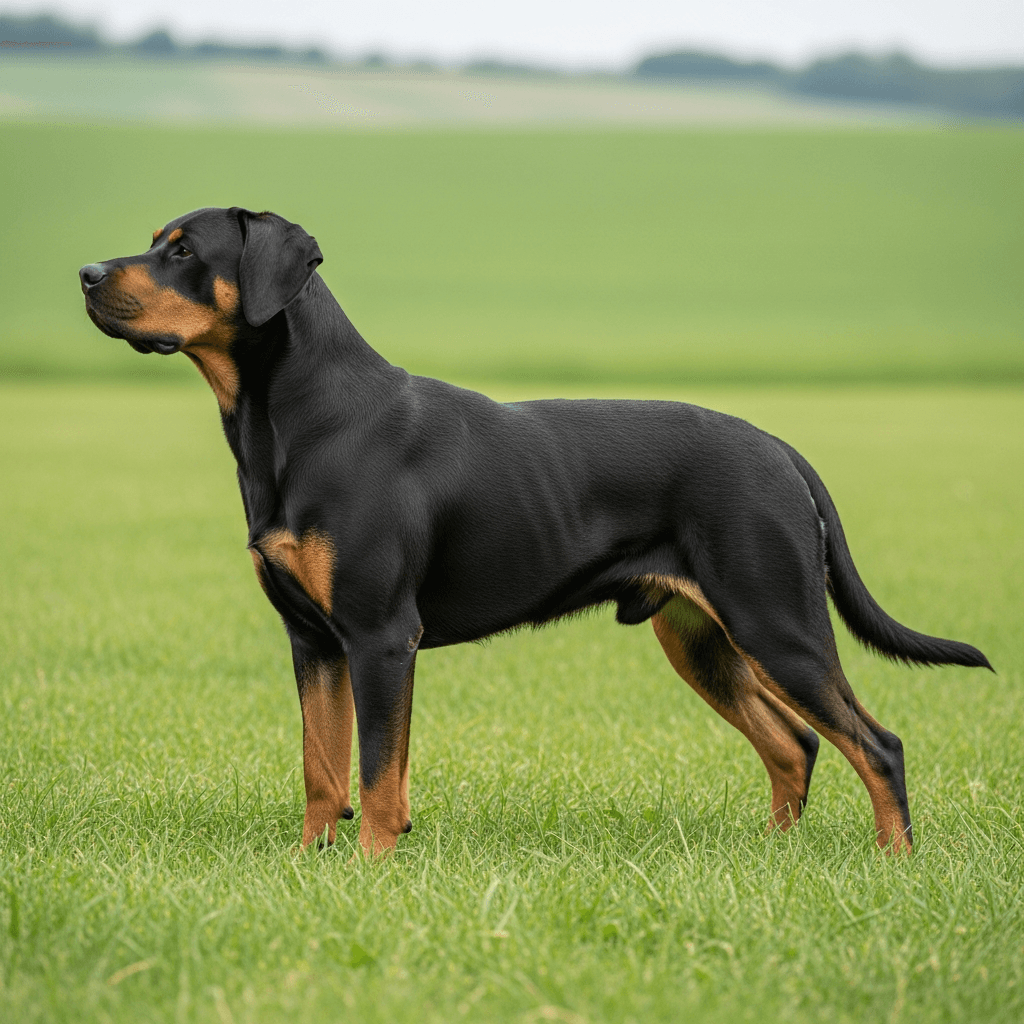
French Shepherd - Beauceron
FCI Group
1• FCI 44
Size
Large
Origin Country
FR
Height
61-70 cm
Weight
30-45 kg
Lifespan
10-12 years
Temperament
Overview
The French Shepherd - Beauceron, also known as Berger de Beauce or popularly Red Stocking (Bas-Rouge), is a unique breed of dog originating from the picturesque plains of France. The history of this breed dates back to the late 19th century when the Beauceron was an invaluable helper in herding sheep and cattle on the vast French plains. Today, it has gained international popularity as a service, sport, protection, and companion dog.
It is a large, sturdy dog with an impressive build – standing 61–70 cm at the withers and weighing 30–45 kg. The Beauceron exudes strength and muscularity while maintaining agility and athleticism. Its short, dense coat is usually black with intense rust-colored markings, particularly visible on the legs – hence the name Red Stocking. There is also a rarer harlequin variety (gray with black patches).
Remarkable anatomical feature: The Beauceron has double dewclaws on its hind legs – a unique hallmark of this breed! These are functional, well-formed toes that, according to the FCI standard, must be present.
The temperament of the Beauceron combines self-confidence, courage, and loyalty with gentleness towards family. It is a dog with a strong territorial and protective instinct, making it an excellent guardian. However, it requires early socialization and consistent training to ensure that its natural protective instinct does not turn into excessive suspicion. With proper upbringing, it becomes a devoted companion, thriving in families with children.
The Beauceron is a breed with a high energy level, needing at least 1.5–2 hours of intense exercise daily. It loves canine sports (agility, obedience, IPO), trekking, jogging, or scent work. Without adequate physical and mental stimulation, it can become destructive or hyperactive. It is ideal for active owners who can provide both physical and mental challenges.
Its remarkable intelligence and willingness to work make it easy to train – provided there is consistency and positive methods. The Beauceron is a dog that wants to have a task to perform and eagerly collaborates with its owner. It excels in law enforcement (police, military, rescue), as a therapy dog, and in protection sports.
We encourage you to continue exploring this fascinating breed through the subsequent sections of our guide – detailed information about the health, grooming, training, nutrition, and history of the French Shepherd - Beauceron will help you understand the full potential of this exceptional breed, which can become your loyal companion and partner for many years.
The French Shepherd Beauceron is a large, sturdy dog with a harmonious, muscular build. Its appearance emanates strength, endurance, and courage, while not losing athletic agility. This breed has well-balanced proportions, according to the FCI standard from 2023.
Basic physical parameters:
- Height at the withers for males: 65–70 cm (ideal 67–68 cm)
- Height at the withers for females: 61–68 cm (ideal 64–65 cm)
- Weight: 30–45 kg (depending on gender and build)
- Body length slightly greater than height at the withers
- Head length: 2/5 of height at the withers
- Skull length equal to muzzle length (proportions 1:1)
Head and expression:
The head is long, well-defined, with a flat skull and a moderate stop. The muzzle is neither too pointed nor too wide, well-filled under the eyes. The nose is always black, well-developed. The eyes are slightly oval, set on a straight line, in dark brown color (in harlequins, hazel eyes or slightly different colors are permissible – strabismus). The expression of the eyes is sincere, open, confident – never unreasonable, shy, or anxious.
Ears:
The ears are high-set, semi-erect (naturally falling or slightly raised). Traditionally cropped (now banned in most EU countries), which gave the dog a more alert appearance. Naturally carried ears should be flat, not exceeding half the length of the head.
Coat and coloration:
The coat is short, dense, close-fitting, rough, with a length of 3–4 cm on the body. The undercoat is well-developed, short, dense, mouse-gray, not visible through the outer coat. On the hind legs and under the tail, the coat may be slightly longer.
Permissible colorations:
- Black and tan (Bas-Rouge – Red Sock) – the most popular, black coat with intense reddish-brown tan markings on:
- Paws (from feet to wrists/hocks – hence the name Red Sock)
- Muzzle, around the eyes, on the chest, under the tail
- Small white spots on the chest are permissible
- Harlequin – gray (blue-gray) tan with black spots evenly distributed over the body. The spots should be distinct, and the gray color should be dominant. Tan markings as in the black and tan variety.
UNIQUE IDENTIFYING FEATURE – Double wolf claws:
The Beauceron has double, well-formed wolf claws (dewclaws) on the hind legs, close together, with well-developed claws. This is not a defect, but a characteristic feature of the breed required by the FCI standard! They form an additional, functional toe.
Build and movement:
The Beauceron moves freely, efficiently, with a long stride, with strong propulsion from the hind legs. The trot should be harmonious, flexible, with minimal effort. The line of the back remains stable during movement, indicating a strong, muscular build.
Overall, the Beauceron is a dog with a majestic, impressive appearance that attracts attention with its strength, confidence, and harmonious proportions. Its striking silhouette and characteristic red tan markings make it an extremely recognizable breed.
The French Shepherd Beauceron is a breed with a strong, confident character that combines courage, intelligence, and loyalty with gentleness towards its family. According to the FCI standard, its temperament is characterized by an honest, straightforward approach – the expression is always open, never unreasonable, shy, or anxious.
Key character traits:
- Loyalty and attachment to family – The Beauceron is a true one-family dog that forms strong bonds with its guardians and is ready to defend them at all costs.
- Confidence and courage – Naturally self-assured, it shows no fear or nervousness in new situations.
- Intelligence and work abilities – It quickly learns new commands and willingly cooperates with its owner.
- Strong territorial and protective instinct – An excellent guard that vigilantly observes its surroundings and reacts to unfamiliar stimuli.
- Some reserve towards strangers – Not aggressive, but distancing; it needs time to trust unfamiliar people.
- High energy and need for activity – Loves to have a task to perform.
Relationship with family and children:
Within the family, the Beauceron is gentle, patient, and caring. It gets along well with children, provided it has been properly socialized from puppyhood. It is tolerant of children's play, although due to its size and energy, it requires supervision during interactions with small children. Its natural herding instinct may manifest as gently herding children – a behavior that requires control.
Behavior towards strangers:
The Beauceron is naturally reserved towards strangers, making it an excellent guard dog. It is not aggressive without reason but vigilantly observes its surroundings and may react defensively if it perceives a threat to its family. Early and intensive socialization is crucial for the Beauceron to learn to distinguish normal situations from real threats.
Relationship with other animals:
- With dogs – with proper socialization, it can live with other dogs, although males may show dominance towards other males.
- With cats and small animals – with early contact, it may accept house cats, but its natural herding and hunting instincts require supervision.
- With cattle and sheep – as a herding dog, it excels in working with sheep and cattle.
Behavioral challenges:
- Dominance and boundary testing – The Beauceron is a dog with a strong character that needs a consistent, confident owner. It may try to test boundaries, especially during the adolescent period (12–24 months).
- Excessive vigilance – without proper training, it may overreact to stimuli (barking, anxiety).
- Destructiveness from boredom – without sufficient physical and mental stimulation, it may destroy objects or dig holes in the garden.
- Separation – strongly attached to its family, it may struggle with long periods of solitude.
Ideal applications:
- Family dog for experienced, active owners
- Service dog (police, military, rescue)
- Canine sports (agility, obedience, IPO, mondio ring)
- Herding and guarding dog
- Therapy dog (after appropriate training)
Overall, the Beauceron is a dog with a noble, strong character that requires an experienced owner capable of providing consistent training, socialization, and the right amount of physical and mental activity. With the right approach, it becomes a reliable companion, devoted protector, and intelligent partner ready for any challenge.
The French Shepherd Beauceron is generally a healthy and resilient breed, but like any large dog, it can be prone to certain genetic and orthopedic conditions. With proper veterinary care, a balanced diet, and regular activity, a Beauceron can enjoy a healthy life for 10–12 years.
The most common health issues in Beaucerons:
- Hip dysplasia (HD) – a common problem in large breeds. It involves improper development of the hip joint, leading to pain, weakness, and arthritis. Reputable breeders conduct X-ray examinations of breeding dogs (HD A/B certificates).
- Elbow dysplasia (ED) – similar to HD, it can lead to pain and limited mobility. Weight control and avoiding excessive strain on the joints in puppies are crucial.
- Gastric torsion (GDV – Gastric Dilatation-Volvulus) – a serious, life-threatening condition in large dogs with deep chests. The stomach fills with gas and may twist on itself. WARNING: requires immediate veterinary intervention! Prevention: feeding 2–3 times a day in smaller portions, avoiding intense exercise immediately after meals.
- Progressive retinal atrophy (PRA) – a genetic eye condition leading to vision loss. Genetic testing of breeding dogs can detect carriers.
- Cataracts – may occur in older individuals.
- Cardiomyopathies – heart conditions occurring in some breeding lines.
- Obesity – Beaucerons may be prone to weight gain, especially with insufficient physical activity. Obesity puts strain on joints, the heart, and overall health.
- Allergic skin disease (atopic dermatitis) – may occur in some individuals.
Prevention and health recommendations:
- Regular veterinary visits – at least once a year (more frequently for older dogs), vaccinations, deworming, and prevention against ticks and fleas.
- Weight control – maintaining a proper body weight is the most important element in preventing joint and heart diseases. A Beauceron should have a visible waist, and ribs should be palpable under a thin layer of fat.
- Moderate activity in puppies – avoiding jumping and intense running on hard surfaces until 12–18 months of age (protects developing joints).
- Genetic testing of parents – when choosing a puppy, check for HD/ED certificates, eye examinations, and any genetic tests.
- Prevention of gastric torsion:
- Feeding 2–3 times a day in smaller portions
- Avoiding intense exercise 1–2 hours before and after meals
- Feeding meals at an elevated position (reduces air swallowing)
- Avoiding giving large amounts of water immediately after eating
- Considering preventive gastropexy (surgical attachment of the stomach to the abdominal wall)
- High-quality diet – balanced, tailored to age and activity level, with joint supplements (glucosamine, chondroitin) for older dogs.
- Regular check-ups – blood tests, eye examinations, heart tests for dogs over 7 years old.
Symptoms requiring immediate intervention:
- Distended abdomen, ineffective vomiting, anxiety – suspicion of gastric torsion – immediate veterinary attention!
- Lameness lasting longer than 24–48 hours
- Sudden loss of appetite, lethargy, fever
- Shortness of breath, coughing, fainting – possible heart problems
- Changes in vision (bumping into objects, uncertainty)
With proper veterinary care, a correct diet, and regular activity, a Beauceron can enjoy a long, healthy life full of energy and joy. The key is a proactive approach from the owner and regular monitoring of the dog's health.
The French Shepherd Beauceron has a short, dense coat that is relatively easy to maintain, although it requires regularity. Thanks to its short hair and well-developed undercoat, the Beauceron is resistant to changing weather conditions.
Brushing:
- During normal periods: 1–2 times a week with a brush with dense bristles or a rubber glove to remove dead hair and dirt.
- During the spring and autumn shedding periods: daily or every other day – Beaucerons shed moderately intensely twice a year. Use a furminator or an undercoat comb.
- Regular brushing also helps with even distribution of natural skin oils, making the coat shiny and healthy.
Bathing:
The Beauceron does not require frequent bathing – just bath every 2–4 months or when the dog is particularly dirty. Excessive washing can lead to dry skin and loss of natural oils that protect the coat. Use mild shampoos designed for short-haired dogs.
Ear care:
The ears of the Beauceron (especially those that naturally droop) require regular checking – check them once a week for:
- Debris and wax
- Redness or swelling
- Unpleasant odor (may indicate infection)
- Clean the ears with a gentle ear cleaning solution for dogs (on a cotton ball or pad)
Dental care:
Oral hygiene is very important! Brush your dog's teeth 2–3 times a week with a special toothbrush and toothpaste for dogs. Regular care prevents:
- Tartar buildup
- Gum inflammation (gingivitis)
- Tooth loss in older age
- Additionally, dental treats or chew toys can be used
Nail trimming:
Nails (including double dewclaws on the hind legs!) should be trimmed every 3–4 weeks if they do not wear down naturally during walks. Too long nails can:
- Cause discomfort and pain while walking
- Affect improper paw alignment
- Grow into the pads (especially dewclaws that do not touch the ground!)
- If you don't feel confident, ask a veterinarian or groomer for help
BEWARE OF DOUBLE DEWCLAWS: The Beauceron has functional, well-shaped double dewclaws on its hind legs – they should not be removed! They require regular trimming as they do not wear down naturally.
Paw and pad inspection:
- Regularly check the paws for wounds, cracked pads, ingrown nails
- In winter, check the pads after walks (road salt can irritate them) – you can use protective balm
- Trim the hair between the pads if it is excessively long (to prevent mud and snow accumulation)
Skin and coat inspection:
- While brushing, check the skin for:
- Ticks (especially in the spring-summer season)
- Fleas and their droppings
- Redness, rashes, bald spots
- Growths or skin changes
- Early detection of problems allows for quick intervention
Overall, grooming a Beauceron is not demanding, but requires consistency and attention. Regular brushing, checking, and hygiene sessions are also a great opportunity to strengthen the bond with your dog and to detect any potential health issues early. With proper care, the Beauceron has a beautiful, shiny coat and enjoys good health!
The French Shepherd Beauceron is a breed with a very high energy level that requires regular, intense physical and mental activity to maintain physical and mental health. This is not a dog for people leading a sedentary lifestyle – the Beauceron needs an active owner who will provide at least 1.5–2 hours of intense exercise daily.
Recommended amount and types of activities:
- Daily walks – at least 2–3 walks a day, including at least one long (60–90 minutes), vigorous walk or hike.
- Running/jogging – an excellent companion for runners, can run 10–15 km a day (after reaching physical maturity around 18 months).
- Cycling – a great form of activity for Beauceron (at a suitable pace and in safe conditions).
- Fetch games – ball, frisbee, retrieving sticks.
- Swimming – an excellent, joint-safe form of activity (under supervision).
- Trekking, mountain hiking – Beauceron loves long hikes in the terrain.
Cynological sports (HIGHLY RECOMMENDED!):
The Beauceron loves to have a task to perform and excels in dog sports:
- Agility – an obstacle course that develops agility, speed, and cooperation with the owner.
- Obedience – precise execution of commands, perfect for the intelligent Beauceron.
- IPO/Schutzhund – a protection sport combining obedience, tracking, and defense. The Beauceron has historically been used in police and military work.
- Mondio Ring, Ring Français – French protection sports perfectly suited to this breed.
- Nosework/Mantrailing – scent work, tracking, detecting odors.
- Herding – a natural application for this breed!
- Canicross, bikejoring – running/cycling with a dog in harness.
Mental stimulation (EQUALLY IMPORTANT AS EXERCISE!):
The Beauceron is a very intelligent breed that needs mental challenges:
- Interactive toys and puzzles for dogs
- Learning new tricks and commands
- Scent games (searching for hidden treats, toys)
- Obedience training, various exercises
- Changing walking routes (new scent and visual stimuli)
Consequences of insufficient activity:
A Beauceron without the appropriate amount of exercise and mental stimulation can develop serious behavioral problems:
- Destructiveness – destroying furniture, chewing on objects
- Excessive barking and howling
- Digging holes in the garden
- Hyperactivity, nervousness
- Obedience issues
- Frustration, aggression
- Obesity and health problems
IMPORTANT RESTRICTIONS:
- ❌ Avoid intense exercise immediately after a meal – risk of gastric torsion! Wait 1–2 hours after feeding.
- ❌ In puppies up to 12–18 months, avoid intense running on hard surfaces, jumping from heights – protects developing joints.
- ❌ In hot weather, limit exercise to cooler parts of the day – Beauceron can overheat.
- ✅ Always provide access to fresh water during activities.
Who is the Beauceron for?
The Beauceron is a breed for:
- Active owners who love long hikes, jogging, and sports
- People engaged in dog sports
- Owners with experience in dog training
- Families with a large garden and time for daily activities with the dog
- People looking for a training and cooperation partner
❌ IT IS NOT a breed for:
- People leading a sedentary lifestyle
- Residents of small apartments without access to walking areas
- Owners without time for at least 2 hours of activity daily
- People expecting a calm, low-maintenance dog
With the right amount of exercise, mental stimulation, and owner engagement, the Beauceron becomes a happy, balanced dog that joyfully shares every adventure with its guardian. Joint training, sports, and activities are not only a way to ensure the dog's health but also to build an incredible bond and partnership!
The French Shepherd Beauceron is a very intelligent, hardworking breed that quickly learns new commands and eagerly takes on challenges. Its natural desire to work and cooperate with its owner can be utilized in various forms of training – from basic obedience, through canine sports, to advanced defense or rescue work.
Key training principles for Beauceron:
- Early start – training and socialization should begin as early as 8–10 weeks of age. The sooner, the better!
- Consistency and confidence of the owner – Beauceron is a dog with a strong character that tests boundaries. It requires a confident, consistent owner who will establish clear rules.
- Positive reinforcement – the best method for this breed. Reward desired behaviors with treats, praise, and play. Avoid physical punishment and yelling – they lead to a loss of trust.
- Short, intense sessions – 10–15 minutes of training 2–3 times a day. Avoid monotony!
- Diversity – Beauceron gets bored quickly. Vary the training, introduce new commands, exercises, and games.
- Patience and calmness – despite its intelligence, Beauceron needs time for emotional maturity (full maturity around 2–3 years).
Socialization (CRITICALLY IMPORTANT!):
Due to its strong territorial and protective instinct, early and intensive socialization is absolutely crucial. The puppy should be exposed to a variety of stimuli:
- Different people – adults, children, men, women, people in hats, glasses, uniforms
- Other dogs and animals – controlled meetings with various breeds, sizes, temperaments
- Different environments – city, park, forest, shops, public transport, veterinarian
- Different sounds – cars, sirens, children playing, household appliances, thunder
- Different surfaces – asphalt, grass, sand, metal grates, stairs
A well-socialized Beauceron is confident, calm, and balanced in various situations, maintaining a natural reserve towards strangers but without excessive suspicion or aggression.
Basic commands to teach:
- Sit, Lie Down, Stay
- Recall (Come) – the most important safety command!
- Leave it / Drop it
- Heel (walking at heel without pulling)
- Place (return to the bed)
- Quiet (control barking)
Advanced training and sports:
Beauceron excels in advanced disciplines:
- Agility – an obstacle course that develops agility and cooperation
- Obedience – precise obedience at the competition level
- IPO/Schutzhund – protection sport (obedience + tracking + defense)
- Mondio Ring, Ring Français – French protection sports
- Nosework/Mantrailing – scent work, tracking, detecting scents
- Herding – natural application!
- Rescue training – Beauceron is effective in water and mountain rescue
- Therapy dog – after appropriate training and certification
Common challenges in training:
- Testing boundaries and dominance – Beauceron may try to take control, especially during adolescence (12–24 months). It requires consistency and confidence from the owner.
- Excessive alertness and barking – without proper training, it may overreact to stimuli. Learning the Quiet command is crucial.
- Excessive territorial protection – the natural instinct requires control to avoid aggression towards guests.
- Herding instinct – may herd children, other animals, nip at heels. This behavior should be suppressed from puppyhood.
- Independence – Beauceron can be independent and make its own decisions. It requires training based on cooperation, not blind obedience.
❌ What to AVOID:
- Physical punishment – never hit the dog! It leads to fear, aggression, and loss of trust.
- Yelling and aggression – Beauceron reacts poorly to emotional violence.
- Monotony – boring training leads to boredom and refusal to cooperate.
- Lack of consistency – inconsistent rules confuse the dog and lead to behavioral problems.
Recommendations for future owners:
- Consider professional training classes (puppy school, obedience courses)
- If you plan advanced training (IPO, protection), look for an experienced trainer specializing in Beauceron
- Join a breed club – support from experienced breeders and owners
- Remember: Beauceron is a breed for experienced owners or those willing to invest time in learning and consulting with professionals
With the right approach based on positive reinforcement, consistency, and diversity, Beauceron becomes a well-trained, obedient dog that eagerly takes on every challenge and creates an incredible bond with its owner. This is a dog that loves to learn and work – harness its potential!
The appropriate diet is the foundation of health for the Beauceron Shepherd. As a large, active breed, the Beauceron has high energy requirements, but at the same time can be prone to obesity if calorie intake is not adjusted to the level of activity. Weight control is crucial for preventing joint and heart problems!
Basic nutrition principles:
- High-quality food – choose premium products with a high meat content (min. 60–70%), low grain content, and no artificial additives, preservatives, or colorings.
- Adjust portion sizes according to age, weight, and activity – puppies, adult dogs, and seniors have different needs.
- Regular, set feeding times – adult dogs: 2–3 meals a day (never one large meal – risk of gastric torsion!), puppies: 3–4 times a day.
- Accurate portion measurement – according to the manufacturer's or veterinarian's recommendations.
- Avoid feeding from the table – human food often contains ingredients harmful to dogs and leads to obesity.
Type of food:
- Dry food – convenient, helps clean teeth, stores well. For Beaucerons, choose food for large breeds and active dogs.
- Wet food – higher hydration level, tasty, but spoils faster. Can be mixed with dry food.
- BARF diet (raw meat, bones, vegetables) – requires knowledge, consultation with a veterinarian or nutrition specialist. Can be beneficial but risky if not properly balanced.
- Homemade diet – cooked meat, rice, vegetables – requires supplementation of vitamins and minerals.
Key nutrients for Beaucerons:
- Protein (25–30%) – building block of muscles, preferably from animal sources (chicken, beef, lamb, fish). Active Beaucerons need a high level of protein.
- Fats (12–18%) – energy, healthy skin, and shiny coat. Omega-3 and omega-6 fatty acids.
- Carbohydrates (moderately) – source of energy, fiber. Best: potatoes, rice, oats (avoid wheat, which can cause allergies).
- Glucosamine and chondroitin – joint support (especially important in large breeds!). Found in premium foods or as supplements.
- Vitamins and minerals – calcium, phosphorus (correct ratio for bone health), vitamins A, D, E.
- Probiotics – digestive health.
WEIGHT CONTROL (CRITICALLY IMPORTANT!):
Due to the risk of obesity and joint strain, regularly monitor the weight of your Beauceron:
- Weigh every 2–4 weeks
- Adult male: 35–45 kg (depending on build)
- Adult female: 30–40 kg
- Visual and tactile test: The Beauceron should have a visible waist (when viewed from above) and ribs that are palpable under a slight layer of fat (when touching the sides).
- If the dog is gaining weight – reduce portions by 10–15% and increase physical activity.
- If the dog is losing weight excessively – increase portions or consult a veterinarian (it may indicate health problems).
PREVENTION OF GASTRIC TORSION (GDV):
The Beauceron, as a large dog with a deep chest, is at risk of gastric torsion – a life-threatening condition. Feeding recommendations:
- Feed 2–3 times a day in smaller portions (never one large meal!)
- Avoid intense exercise 1–2 hours before and after meals
- Serve meals at an elevated position (bowl on a stand – reduces air swallowing)
- Avoid giving large amounts of water immediately after eating
- Calm eating – avoid situations where the dog eats quickly (e.g., competition with other dogs)
Treats and rewards:
- Should make up at most 10% of the daily calorie intake
- Choose healthy, low-calorie options: carrot, apple (without seeds!), dried meat, special diet treats
- During training, use small pieces – taste, not quantity motivates the dog
- ❌ Avoid: chocolate (toxic!), onions, garlic, grapes, raisins, avocados, cooked bones (can splinter and injure the digestive tract)
Access to water:
Ensure your dog has constant access to fresh, clean water. Change the water daily and clean the bowl regularly. During intense activity, bring a water bottle for your dog.
Supplementation:
- Glucosamine and chondroitin – joint support (especially important from 5–6 years of age or earlier if orthopedic issues arise)
- Omega-3 fatty acids (salmon oil, krill oil) – support for joints, coat, cognitive functions
- Probiotics – digestive health
- Antioxidant vitamins (E, C) – immune system support in older dogs
- Consult supplementation with a veterinarian!
Diet and age:
- Puppies (0–18 months) – food for large breed puppies, rich in protein and calcium (but don’t overdo it – excess calcium harms developing joints!), 3–4 meals a day.
- Adults (18 months – 7 years) – food for adult large breed dogs, active, 2–3 meals a day.
- Seniors (7+ years) – food for older dogs, reduced calorie content, joint and cognitive function support, 2–3 meals a day.
With a properly balanced diet, weight control, and prevention of gastric torsion, the Beauceron can enjoy a healthy life for many years. Regular consultations with a veterinarian will help tailor the diet to the individual needs of your dog. Remember: proper nutrition is an investment in the longevity and quality of life of your Beauceron!
Characteristic Traits
Pros
- Very intelligent and easy to train
- Loyal and devoted to family
- Excellent guard and protection dog
- Versatile – great in canine sports
- Resilient and resistant to changing weather conditions
- Minimal grooming requirements (short coat)
- Great for active owners and families.
Cons
- Requires a lot of physical and mental activity (at least 1.5–2 hours a day)
- Strong territorial instinct – requires early socialization
- Dominant character – not for beginner owners
- May be overly alert and bark
- Prone to joint dysplasia and gastric torsion
- Not a breed for people leading a sedentary lifestyle
- Needs a consistent
- experienced owner.
Behavioral Ratings
Breed History
The French herding dog Beauceron has a long and rich history that reaches deep into the traditions of the French plains. It is one of the oldest French herding breeds, with roots that can be traced back at least to the 16th century, although it likely existed much earlier.
The origins of the breed – the French plains:
Beauceron originates from the Beauce region – vast, fertile plains located around Paris and other French lowlands, where for centuries it was used as a herding dog for driving sheep and cattle. Its main task was to protect the herds from predators (wolves, lynxes) and to ensure order while driving animals to market.
The first mentions of dogs of this type appeared as early as the 16th century, and in 1578, manuscripts referred to lowland dogs with short coats, used for working with sheep and cattle. These early herding dogs were very versatile – they not only herded flocks but also defended them against attacks from wild animals and thieves.
Official recognition and breed separation:
- In 1863, during the first dog show in Paris, two types of French herding dogs were presented: long-haired shepherds (ancestors of the Briard) and short-haired ones (ancestors of the Beauceron).
- In 1896, Pierre Mégnin, a French veterinarian and cynologist, officially differentiated and named these two breeds: Berger de Beauce (Beauceron) for short-haired dogs and Berger de Brie (Briard) for long-haired ones.
- In 1911, the Club des Amis du Beauceron (Friends of Beauceron Club) was established, which created the first breed standard.
- The standard was accepted by the FCI (Fédération Cynologique Internationale), and the breed was classified into group 1, section 1 (Shepherds) with a working trial.
The nickname Bas-Rouge (Red Sock):
The Beauceron earned its distinctive nickname Red Sock (Bas-Rouge) due to the intense reddish-brown markings on its legs, which look as if the dog is wearing red socks or stockings. This is one of the most recognizable features of this breed!
Role in the military and services:
Thanks to its intelligence, courage, and versatility, the Beauceron was used in uniformed services:
- During World War I, Beaucerons served as messenger dogs, reconnaissance dogs, and for mine detection.
- In World War II, these dogs were used by the French army and the resistance.
- After the war, the Beauceron gained popularity as a police, military, and rescue dog in France.
The evolution of use – from herder to companion:
As agriculture modernized and the demand for herding dogs decreased, the Beauceron transformed from a working dog into a companion and sport dog. Today it is valued as:
- A family and companion dog
- A service dog (police, military, rescue)
- A sport dog (agility, obedience, IPO, ring)
- A guard and protection dog
- To a lesser extent, still used for herding work
Contemporary popularity:
- In France, the Beauceron remains a popular and respected breed, deeply rooted in the national herding tradition.
- In the United States, the Beauceron was officially recognized by the American Kennel Club (AKC) in 2007, gaining increasing popularity among working breed enthusiasts.
- In other European countries (Germany, Belgium, Netherlands, Switzerland), the breed is gaining more supporters.
- In Poland, the Beauceron is still a relatively rare breed, although more and more breeders and owners appreciate its versatility.
Update of the FCI standard:
The latest breed standard was published by the FCI in 2023 (August 1, 2023), reflecting active efforts to preserve the authentic characteristics of the breed and adapt to contemporary animal welfare requirements (e.g., the ban on cropping ears in most countries).
Unique anatomical feature – double dewclaws:
One of the most distinctive features of the Beauceron is its double, functional dewclaws on the hind legs. This feature was valued by shepherds as it provided the dog with better stability on uneven terrain. It is a mandatory element of the breed standard, and the absence of this disqualifies the dog from breeding and shows.
The history of the Beauceron is a story of a versatile, loyal dog that has served French shepherds, farmers, soldiers, and families for centuries. Today, the Beauceron is a breed that combines the richness of herding tradition with modern applications in canine sports, uniformed services, and as a devoted family companion. Its courage, intelligence, and loyalty remain unchanged – the same qualities that have made it an invaluable partner to humans for centuries.