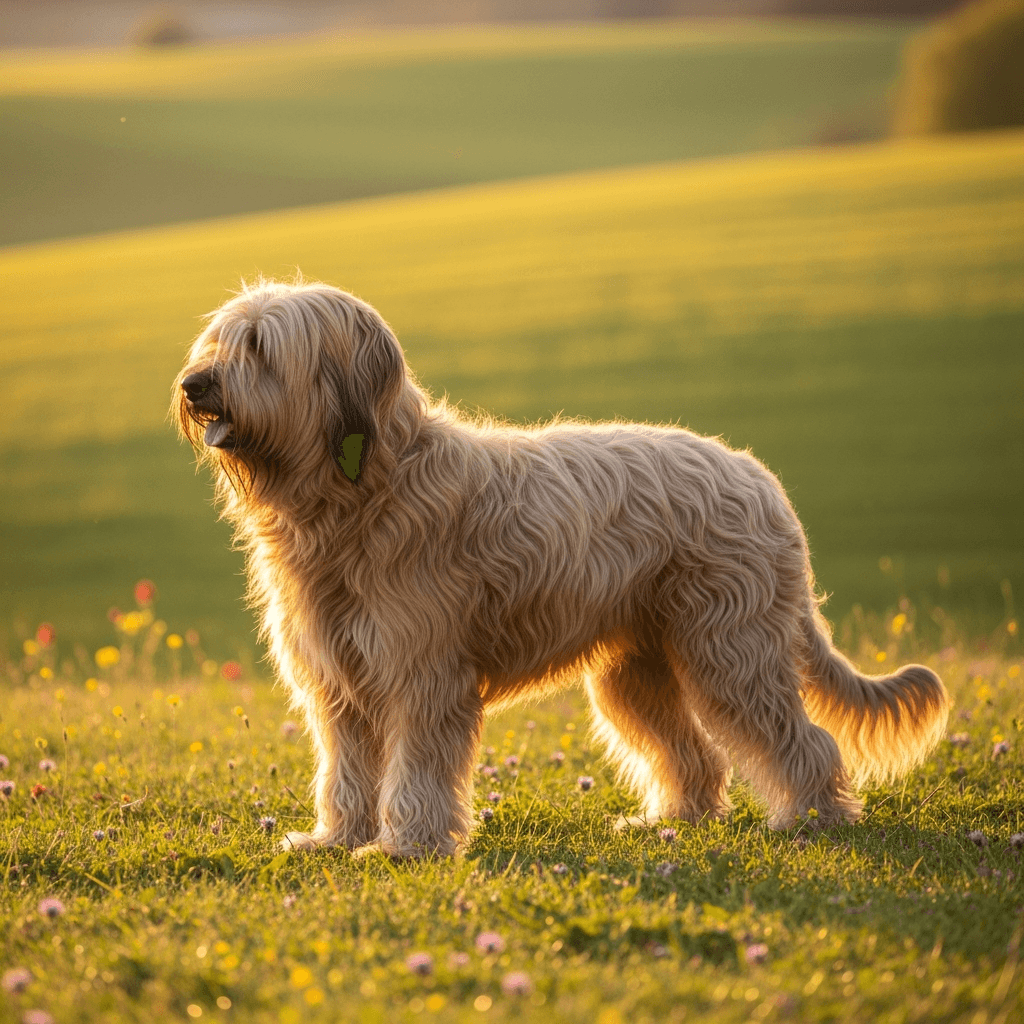
French Shepherd - Briard (Berger de Brie)
FCI Group
1• FCI 113
Size
Large
Origin Country
FR
Height
56-69 cm
Weight
30-40 kg
Lifespan
10-12 years
Temperament
Overview
The French Shepherd Briard, also known as Berger de Brie (pastoral dog from Brie), is a breed with a fascinating and rich history dating back to medieval France, where as early as the 13th century these dogs gained recognition for their extraordinary skills in herding and guarding sheep flocks in the French lowlands. Its name comes from the Brie region in France, although it was originally known as Chien de Berger français de Plaine (French lowland shepherd).
This is a medium-sized dog with an impressive, distinctive silhouette that combines agility, strength, endurance, and remarkable alertness typical of herding breeds. Its strong build, confidence, and natural intelligence make it not only an effective, versatile worker but also a wonderful family companion for active and experienced individuals. The temperament of the Briard is balanced according to the FCI standard – it is neither aggressive nor timid, able to be serious and alert during work, but also playful and affectionate with family, making it an ideal companion for active families with children.
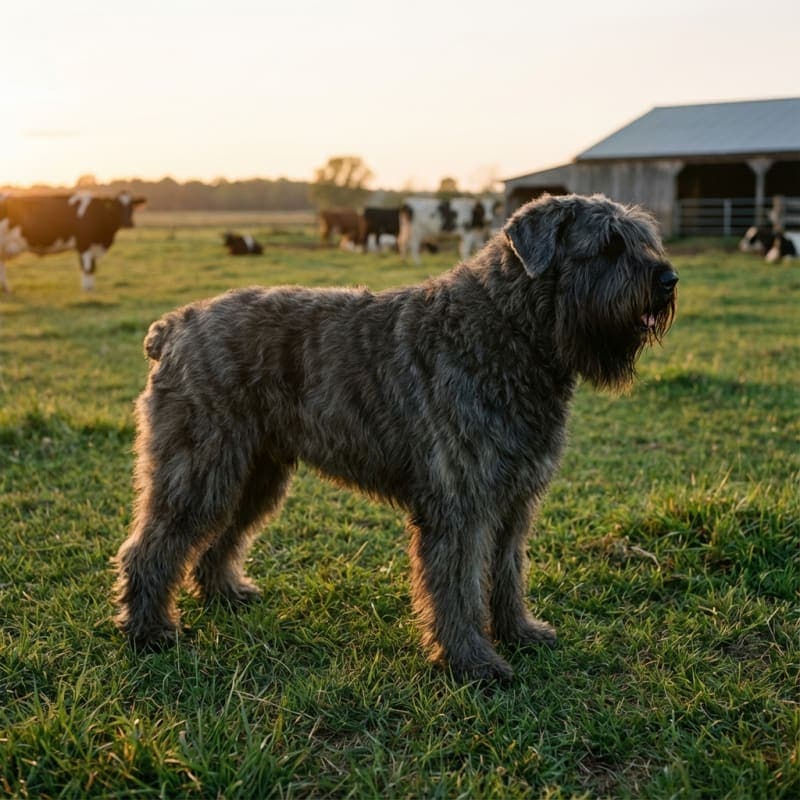
The characteristic appearance of the Briard immediately attracts attention and admiration. Its long, coarse, slightly wavy coat covering its entire body, including the distinctive beard, whiskers, and eyebrows that obscure its eyes, not only gives it a majestic, unique look but also effectively protects against adverse weather conditions – cold, rain, wind, and thorny underbrush during fieldwork.
Briards are extremely social, loyal, and devoted dogs that crave close contact with their guardians and deeply engage in family life. They do not tolerate prolonged solitude and isolation; they need to participate in the daily activities of their household. Therefore, they excel as companions for active individuals who can provide them with the right amount of exercise, work, and mental stimulation.
It is worth noting that the French Shepherd Briard requires regular, intense stimulation both physically (long walks, running, agility) and mentally (training, tasks to perform, intellectual games) to avoid boredom and frustration. Boredom in this intelligent, active breed can lead to undesirable destructive behaviors, such as destroying objects, excessive barking, or attempts to escape. Therefore, it is crucial to provide it with regular, varied activities that engage both body and mind.
Owners must be prepared for intensive, consistent training sessions and have experience working with intelligent but independent breeds. Briards, although very intelligent and quick learners, can be stubborn and independent, which requires patience, consistency, confidence, and the ability to motivate the dog. Their rich history includes participation in both world wars as messenger, rescue, and guard dogs, which only emphasizes their versatility, intelligence, courage, and ability to work in extremely challenging conditions.
Therefore, if you are looking for a dog that will not only amaze you with its majestic, fairy-tale appearance but also provide unforgettable moments of shared adventures, be a loyal protector of your home, and a devoted family member, Briard is an excellent choice – provided you are ready to invest time, energy, and commitment into its upbringing, training, and daily care. In return for time, patience, and love, it offers unconditional loyalty, deep attachment, and devotion that lasts a lifetime.
In the following sections of this comprehensive guide, you will learn more about the health, grooming requirements, exercise needs, training methods, nutrition, fascinating history, detailed appearance, and complex behavior of this extraordinary, charismatic breed of French shepherds.
The Briard is a medium-sized dog with a strong, harmonious, and well-proportioned silhouette that emanates strength, agility, and alertness. According to the FCI standard, the height at the withers ranges from 58 to 69 cm for males (ideally 62-68 cm) and from 56 to 64 cm for females (ideally 58-62 cm). The weight typically oscillates between 30 and 40 kg depending on gender, build, and physical condition. The body length from the top of the shoulder to the ischial tuberosity is slightly greater than the height at the withers, giving the silhouette a slightly rectangular profile.
The head is strong, long (making up 2/5 of the height at the withers), and covered with rich fur that forms a characteristic beard, whiskers, and eyebrows that slightly obscure the eyes, giving the breed its unique, recognizable appearance. The skull is strong, slightly rounded, and a bit longer than wide, with a distinct but not too deep stop. The muzzle and skull are roughly equal in length. The nose is large, always black (in gray or blue dogs, it may have a gray or blue tint). The muzzle is strong, wide, and ends rather squarely, never tapering too narrowly.
The eyes are oval or oval-round, set horizontally, dark (preferably very dark brown, regardless of coat color), and quite large, giving the dog an expression of intelligence, alertness, and gentleness. In dogs with light coat colors, lighter eyes are permissible, but dark ones are preferred. The gaze is open, sincere, and intelligent.
The ears are set high, covered with long, rich fur, and can be either natural (short, flat, and close-lying) or cropped (in countries where this is allowed), standing and slightly forward-facing. In many European countries, ear cropping is banned, so natural ears are the standard.
The neck is strong, muscular, and well-set into the shoulders. The body is strong with a straight, well-muscled back, short, strong loins, and a slightly sloping croup. The chest is deep, wide, and long, reaching at least to the level of the elbows.
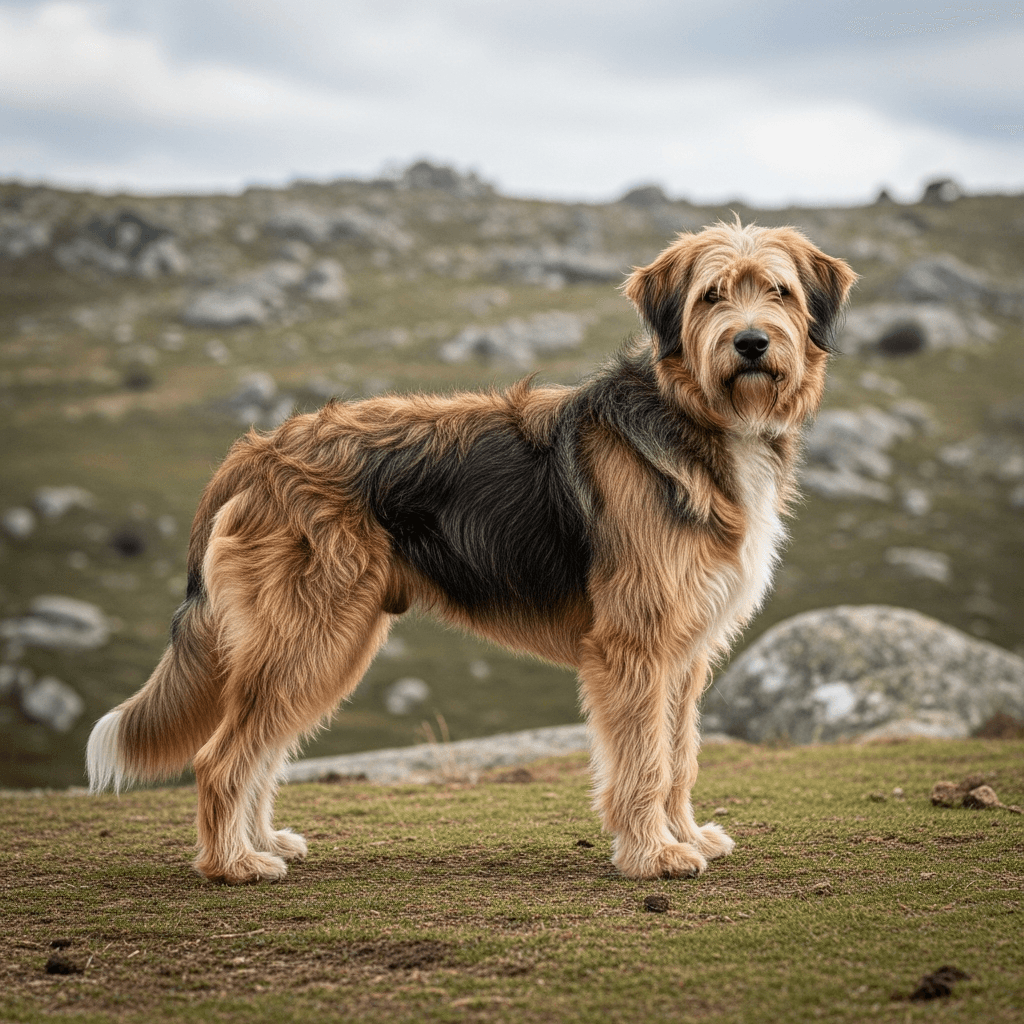
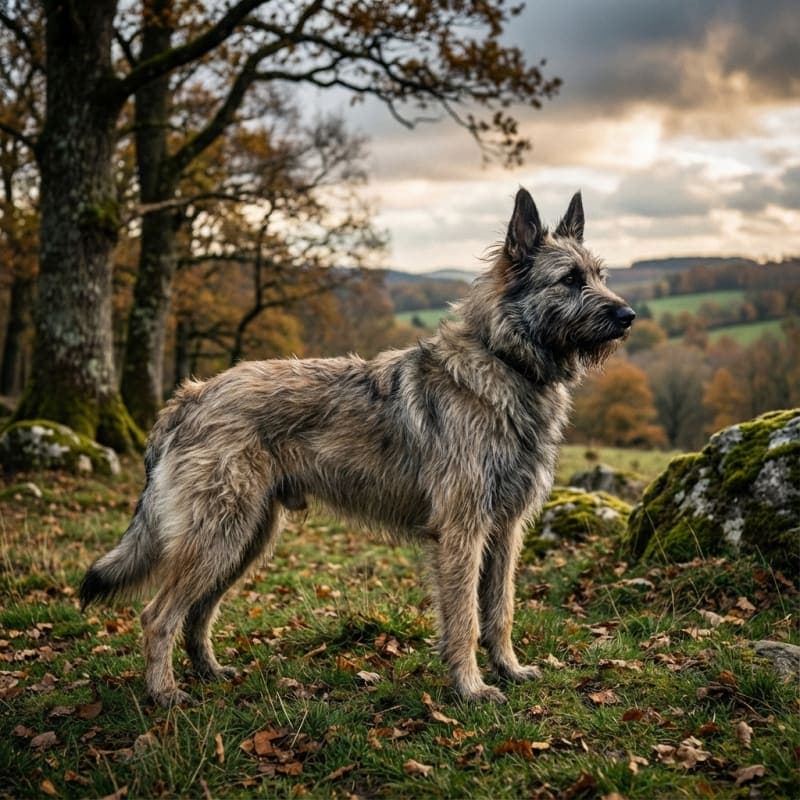
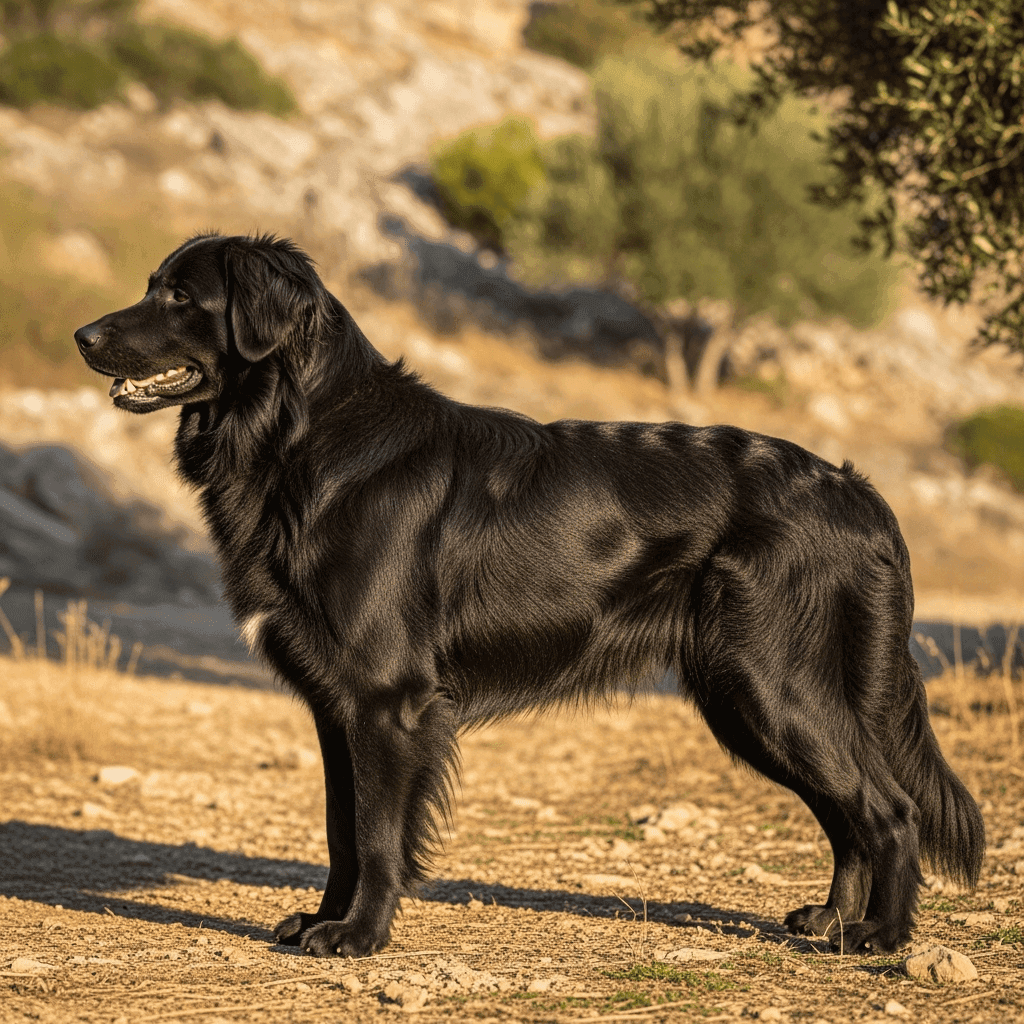
The coat of the Briard is one of the most characteristic features of the breed. It is long (at least 7 cm all over the body), rough to the touch, dry, slightly wavy (never fluffy or curly), and elastic, resembling goat hair. It covers the entire body, including the head, forming characteristic fringes on the limbs and long, abundant hair on the tail. The undercoat is minimal, making the coat less prone to matting than breeds with dense undercoats, but it requires regular grooming.
The colors of the Briard can be diverse and include:
- Black – solid black, the most classic
- Fawn (fauve) – from light wheat through gold, honey to dark reddish-brown
- Gray – from light silvery to dark graphite
- Blue (blue) – grayish-blue shades
Two-color varieties with a darker overlay (charbonné) creating a mask on the muzzle or scattered darker hairs are also permissible. White spots are not desirable, although a small white mark on the chest is tolerated.
The limbs are strong, muscular, well-angled, and parallel. A distinctive feature of the Briard is the double dewclaws (ergot) on the hind limbs – a characteristic feature of the breed required by the FCI standard. The paws are strong, round, and compact with thick pads and curved claws.
The tail is naturally long, set low, and reaches at least to the hock. When at rest, it is carried low with a slight curl at the end forming a characteristic hook (crosse); during movement or excitement, it may be carried higher but never curled over the back.
The entire posture of the Briard expresses strength, vigor, confidence, and readiness for action. The movement is flexible, efficient, and energetic with a good thrust of the front limbs and strong drive from the rear. The characteristic trot resembling that of a wolf, with a slightly swaying gait, is typical of the breed and emphasizes its herding origins.
Briard is a dog with a balanced, harmonious temperament, which according to the FCI standard is steady and fearless, neither aggressive nor timid. This breed is characterized by deep devotion and loyalty to the family, forming strong, lasting emotional bonds with its caregivers. Briard is a single-family dog that wholeheartedly engages in the lives of its household members and needs to participate in daily activities.
Their behavior is often situation and context-dependent. In contact with family, they can be exceptionally affectionate, gentle, playful, and full of energy, while during work or in situations requiring alertness, they become serious, focused, and ready for action. This versatility of temperament makes them excellent dogs for both work and as family companions.
Briards can be somewhat distrustful and cautious towards strangers, which is a natural trait of herding and guarding breeds. They are not aggressive but need time to accept new people. This trait makes them excellent watchdogs that will alert to approaching strangers and defend the home and family when necessary. However, proper socialization from a young age is crucial for them to develop the ability to distinguish real threats from normal social situations.
Briards are exceptionally intelligent and quick learners, which means they require both intense physical activity and regular mental stimulation. Without appropriate activities engaging their intelligence, they can become bored, leading to behavioral problems. They love challenges, problem-solving, and new tasks to accomplish.
They are very sociable with the family, and their need for close contact with their caregiver means that they do not tolerate being left alone for long periods. They can become anxious, frustrated, and exhibit separation anxiety if left without companionship for too long (more than a few hours a day). This leads to destructive behaviors such as:
- Destruction of furniture, cushions, and objects
- Excessive, persistent barking and howling
- Digging and destroying the garden
- Attempts to escape
- Hyperactivity upon the owner's return
In relation to children, Briards are usually very gentle, patient, and protective, forming strong bonds with younger family members. However, due to their size, strength, and energy, they may accidentally knock over small children during play. They do not tolerate aggressive, noisy, or pulling on their fur, so interactions with very small children should always be supervised. Older children (6+) will make excellent playmates for a Briard.
Regarding other dogs, Briards can be dominant and confident, especially towards same-sex dogs. Early socialization with a variety of dogs is crucial for developing appropriate social skills. With dogs they grew up with and live in the same household, they usually get along very well, forming strong pack bonds.
Their moderate hunting instinct means they may chase smaller, fast-moving animals (cats, rabbits, squirrels), although it is not as strong as in hunting breeds. Proper socialization and training will teach a Briard to accept other pets, especially if they grew up together.
Their natural curiosity and intelligence make Briards inclined to explore their surroundings, investigate new places and situations. They are alert, carefully observing their environment and quickly responding to any changes or unusual sounds, making them excellent alarm dogs.
Owners should ensure appropriate, intensive socialization of the Briard from 8-10 weeks of age to develop into a confident, balanced dog that can navigate various social situations, is not overly distrustful or timid, but retains the natural guarding traits typical of the breed.
In summary, the Briard is a loyal, intelligent, versatile, and affectionate companion that requires an experienced owner who can provide the right amount of activity, training, socialization, and above all, close emotional contact with the family.
The French Shepherd Briard is generally a healthy and resilient breed, developed over centuries of work in difficult conditions, which has positively influenced its endurance and condition. However, like many purebred breeds, it can be prone to certain health issues related to genetics, body size, and anatomical structure. The average lifespan of a Briard is between 10 to 12 years, although with proper care, a healthy diet, and regular activity, many individuals live to be 13-14 years old.
Owners should be aware of potential health problems characteristic of the breed and pay attention to early signs of diseases:
- Hip Dysplasia (Hip Dysplasia, HD) – a developmental defect involving the abnormal shape of the hip joint socket, leading to pain, lameness, and degenerative changes. Checking the parents for HD before breeding is crucial.
- Elbow Dysplasia (Elbow Dysplasia, ED) – a similar condition affecting the elbow joints.
- Gastric Dilatation-Volvulus (Gastric Dilatation-Volvulus, GDV) – a life-threatening sudden expansion and twisting of the stomach, common in deep-chested large breeds. It requires immediate veterinary intervention.
- Progressive Retinal Atrophy (Progressive Retinal Atrophy, PRA) – a hereditary condition leading to gradual vision loss and blindness.
- Congenital Stationary Night Blindness (Congenital Stationary Night Blindness, CSNB) – a hereditary condition causing problems with vision in low light.
- Cataract (Cataract) – clouding of the eye lens leading to impaired vision.
- Hypothyroidism (Hypothyroidism) – hormonal disorders leading to weight gain, lethargy, skin problems, and hair loss.
- Lymphoma (Lymphoma) – a malignant tumor of the lymphatic system.
- Epilepsy – neurological disorders causing seizures.
- Allergic Skin Diseases – atopic dermatitis, food allergies, or contact allergies.
Health prevention is key to keeping the Briard in good condition:
- Regular veterinary visits (at least once a year, more often for older dogs).
- Current vaccinations and deworming.
- Genetic testing of parents before breeding (HD, ED, PRA, CSNB).
- Monitoring weight and body condition.
- Proper nutrition and avoiding overfeeding.
- Regular physical activity to support joint condition.
- Prevention of bloat (small portions, avoiding exercise after meals).
Briards tolerate various weather conditions well due to their long, coarse coat, which provides excellent protection against cold, rain, and wind. In winter, their fur serves as natural thermal insulation. However, during the summer, their double, dense coat makes them intolerant of high temperatures and prone to overheating. On hot days, it is advisable to:
- Provide access to shade and fresh water.
- Avoid intense exertion during the hottest hours (11:00 AM - 5:00 PM).
- Consider a light trim of the coat (not shaving!) to help with thermoregulation.
- Monitor for signs of overheating (heavy panting, excessive drooling, weakness).
Owners should also manage weight carefully, as Briards can easily gain weight, especially if they are not active enough or receive too many treats. Obesity leads to serious health problems:
- Increased joint stress and accelerated arthritis.
- Cardiovascular problems.
- Diabetes.
- Increased risk of gastric bloat.
- Shortened lifespan by 2-3 years.
With proper veterinary care, a healthy diet, regular physical activity, and love from their owner, the French Shepherd Briard can enjoy a long, healthy, and active life as a devoted family companion.
Grooming a Briard is demanding and time-consuming, but absolutely necessary to keep its characteristic long, coarse coat in good health and aesthetic condition. Owners must be prepared for regular, intensive grooming sessions or to use the services of a professional groomer specializing in long-haired breeds.
Brushing the coat is the most important element of the grooming routine. Dogs of this breed do not shed heavily seasonally like breeds with an undercoat, but dead hair remains in the coat and must be regularly removed. It is recommended:
- At least 3-4 times a week to thoroughly brush the entire body (30-60 minutes)
- Daily brushing during periods of intense coat growth or for show dogs
- Layer brushing – lifting the coat and brushing from the skin to the tips of the hair
- Using appropriate tools: pin brushes, wide-toothed combs, and dematting tools
During grooming, it is important to pay special attention to areas prone to matting:
- Behind the ears and on the neck
- Under the armpits and in the groin
- Around the genitals
- On the limbs (fringes)
- Chin and whiskers (often wet and dirty after eating/drinking)
Mats and tangles are a serious problem for Briards if the coat is not regularly brushed. Neglected coats quickly form mats that adhere to the skin, which:
- Cause pain and discomfort
- Prevent proper air circulation to the skin
- Create an environment for bacteria, fungi, and parasites
- Can lead to skin infections
- In extreme cases, require shaving the dog
While brushing, it is also worth checking the coat for contaminants:
- Mud and dirt from walks
- Grass seeds, thorns, fish bones (can embed in the skin)
- Ticks and other external parasites
- Small twigs and leaves
Regular brushing is also an excellent opportunity to examine the dog's skin for any potential health issues:
- Irritations, redness, rashes
- Growths, lumps, skin changes
- Wounds, scratches, bites
- Parasites (fleas, ticks)
- Dry skin, dandruff
Baths should be performed every 6-8 weeks or when the dog is truly dirty or smells. Too frequent washing can disrupt the skin's natural lipid barrier. It is important to:
- Use mild shampoos designed for long-haired dogs
- Thoroughly rinse out the shampoo (residues can cause irritation)
- Consider using a conditioner to facilitate combing
- Thoroughly dry the coat with a hairdryer (damp fur encourages matting and infections)
Owners should also regularly check and care for:
- Ears – check and clean once a week with a specialized solution. Long, fur-covered ears create a moist environment conducive to infections
- Eyes – daily wiping of the corners of the eyes with a damp gauze, removing discharge. Eyebrows obscuring the eyes can cause irritation
- Teeth – brushing 2-3 times a week with special dog toothpaste to prevent tartar and gum disease
- Nails – trimming every 3-4 weeks or when they make a clicking sound on the floor. Overly long nails cause walking problems
- Double dewclaws – special attention! Briards have characteristic double dewclaws on their hind legs that do not wear down during walks and require regular trimming
- Paw pads – checking and trimming hair between the toes (prevents dirt accumulation and matting)
Many owners choose to shorten the Briard's coat for easier grooming, especially in the summer. The coat can be trimmed to 5-10 cm in length while maintaining the breed's characteristic appearance, significantly facilitating daily grooming. Never shave a Briard – the coat protects the skin from the sun, insects, and injuries.
Proper, regular grooming is not only about aesthetics, but primarily about the health, comfort, and well-being of the dog. Neglecting grooming leads to serious skin problems, infections, and pain, so owners must be ready to devote time and effort to keep their Briard in excellent condition.
The French Shepherd Briard is a dog with very high exercise and activity needs, requiring regular, intense physical and mental exercise to remain healthy, happy, and mentally balanced. As a herding breed designed for all-day work in the field, Briards are accustomed to long, active days filled with movement, tasks to perform, and challenges.
Minimum physical activity requirements:
- 90-120 minutes of intense activity daily – preferably divided into 2-3 sessions
- Long, vigorous walks (at least 2 times a day for 45-60 minutes)
- Running, playing, and training in a fenced area
- Diverse forms of activity engaging both body and mind
Ideal forms of activity for a Briard include:
- Long walks and hikes – in varied terrain (forest, field, mountains), where the dog can explore, sniff, and run
- Running – alongside a bicycle (canicross), jogging with the owner, or free running in a fenced area
- Fetching – balls, frisbees, dummies, or other toys. Briards love fetching, and it’s an excellent way to burn off energy
- Dog sports – agility (obstacle courses), obedience, rally-o, frisbee, herding trials
- Herding training – for Briards from working lines, working with sheep or ducks is ideal
- Nosework and tracking – searching for hidden objects by scent, mantrailing
- Swimming – for dogs that enjoy water (not all Briards are swimming enthusiasts)
- Interactive play – tug-of-war, hiding toys, movement games with the owner
Owners should plan diverse, variable activities to meet both the physical and mental needs of the dog. Briards are intelligent and quickly become bored with monotonous, repetitive tasks. They love challenges, new tasks, and activities that stimulate their natural herding and guarding instincts, such as:
- Obedience training with new commands
- Games of searching and retrieving
- Interactive puzzle toys that require problem-solving
- Learning tricks and advanced skills
- Diverse walking routes (new places = new scents and stimuli)
This breed of dog is not suitable for people leading a sedentary lifestyle, living in small apartments without access to fenced spaces, or preferring quiet, short walks around the block. The Briard is a dog for active families, outdoor sports enthusiasts, owners with large fenced properties, or those living close to areas where the dog can run freely.
Insufficient exercise and stimulation lead to serious behavioral problems:
- Hyperactivity and inability to settle down calmly at home
- Destructive behaviors – damaging furniture, cushions, shoes, doors
- Digging holes in the garden
- Excessive, persistent barking and howling
- Attempts to escape from the garden (jumping, digging under)
- Frustration aggression
- Stereotypies (repetitive, aimless behaviors)
- Separation anxiety
- Health problems (obesity, joint diseases, heart issues)
A well organized, consistent exercise plan will help keep the Briard in excellent physical and mental condition. The plan should include:
- Daily activity routine (regular times for walks and play)
- Diversity of activity forms (avoiding monotony)
- Adjusting intensity to age, condition, and weather conditions
- Combining physical effort with mental stimulation
- Social interactions with other dogs
- Time for rest and recovery
Remember that a tired Briard is a happy Briard! The right amount of activity makes them a calm, relaxed, and content companion at home, ready to rest at the owner's feet after a day full of adventures and work.
Training a Briard can be a significant challenge due to its intelligence combined with independence, strong personality, and natural tendency to make decisions on its own, typical of herding breeds. However, with the right approach, patience, consistency, and positive reinforcement methods, it can also be extremely rewarding and lead to wonderful results.
Key training principles for Briards:
- Start early – training and socialization should begin at 8-10 weeks of age when the puppy is most open to new experiences
- Be confident and consistent – a Briard needs an owner who is a calm, self-assured leader. Indecision or inconsistency leads to problems
- Use only positive methods – rewards (treats, toys, praise) are much more effective than punishment or coercion
- Avoid repetition – Briards quickly get bored with monotonous training. Introduce variety, new challenges, and creative tasks
- Keep sessions short and intense – 10-15 minutes several times a day is better than one long, exhausting session
Dogs of this breed are very intelligent and learn quickly, which is both an advantage and a challenge. They not only learn desired behaviors but also quickly discover the owner's weaknesses, test boundaries, and try to negotiate rules. They can also be stubborn and independent, especially during adolescence (6-18 months), which requires immense patience and commitment from the owner.
Basic commands that should be introduced gradually and reinforced throughout the growth period:
- Sit – basic obedience command
- Stay – impulse control, safety
- Come – a key life command, especially important for a dog with a strong personality
- Lie down – calming, control
- No/Leave it – prevents dangerous behaviors
- Wait – patience before eating, going through doors
- Heel – walking at heel without pulling on the leash
- Quiet – control barking
It is crucial for the owner to be confident and consistent in using commands. Briards quickly detect inconsistency and will take every opportunity to negotiate rules. All commands must be:
- Consistently applied by all family members
- Given in a clear, calm, confident tone
- Reinforced with rewards for correct execution
- Used in various contexts and situations
Positive reinforcement methods are the most effective for Briards:
- High-value treats (meat, cheese, liver) for more challenging tasks
- Vocal praise in an enthusiastic, joyful tone
- Play with a favorite toy as a reward
- Petting and physical expressions of approval
- Marker (clicker training) for precise marking of desired behavior
Briards react poorly to harsh training methods, physical punishment, yelling, or coercion, which:
- Destroys trust and the bond with the owner
- Can provoke fear, defensive aggression, or stubbornness
- Reduces motivation to cooperate
- Leads to behavioral problems
Early and intensive socialization is absolutely crucial for the proper development of a Briard. The puppy should be gradually and positively exposed to:
- Different people (various ages, genders, appearances, behaviors)
- Other dogs of different sizes and temperaments
- Different animals (cats, rabbits, horses)
- Various environments (city, forest, beach, stores, public transport)
- Different sounds (traffic, thunder, fireworks, children)
- Various surfaces (metal, glass, stairs, elevator)
- Visits to the veterinarian and groomer (positive experiences)
A well-socialized Briard is confident, balanced, and friendly in various life situations, maintaining natural alertness towards strangers, but without excessive distrust or aggression.
Training structure: Regular sessions should be short (10-15 minutes), intense, and frequent (2-3 times a day) to:
- Maintain the dog's interest
- Prevent boredom and frustration
- Maximize concentration and knowledge retention
- End on a positive note (always finish on a success)
It is worth using varied training methods to keep the intelligent Briard engaged:
- Clicker training – precise marking of desired behaviors
- Shaping – gradually developing complex behaviors
- Target training – teaching to touch targets with nose or paw
- Capturing – rewarding naturally occurring desired behaviors
- Luring – guiding with a treat
Briards excel in advanced activities that combine physical and mental challenges:
- Agility – obstacle courses, speed, and precision
- Obedience – advanced obedience
- Rally-O – obedience with elements of a course
- Herding trials – herding tests with sheep or ducks
- Nosework – tracking by scent
- Freestyle – dancing with the dog
These activities not only provide physical exertion and mental stimulation but also build a deep bond between the dog and the handler, giving the dog a sense of purpose and satisfaction from the work done.
With the right approach, patience, and consistency, a Briard can become a well-behaved, obedient, and versatile dog that is equally comfortable as a household companion and as a participant in advanced sports or working activities. The key is a positive attitude, rewarding desired behaviors, and making training a pleasure rather than a chore.
The nutrition of the Briard is crucial for its health, condition, and longevity. As an active, working breed of large size, Briards require a carefully balanced, high-quality diet that provides the right amount of nutrients to support their intense lifestyle, muscle mass, and overall health.
Owners should choose high-quality premium or super-premium dog food that contains the appropriate proportions of nutrients:
- Animal protein – a minimum of 25-30% for adult dogs (sources: meat, poultry, fish) – builds and maintains muscle mass, supports tissue regeneration
- Fats – 12-18% to provide energy and support healthy skin and a shiny coat. Sources: salmon oil, flaxseed oil, poultry fat
- Complex carbohydrates – brown rice, oats, sweet potatoes, quinoa as a source of long-lasting energy
- Omega-3 and Omega-6 fatty acids – for healthy skin, beautiful coat, immune system support, and anti-inflammatory properties
- Vitamins and minerals – a complete set for overall health, strong bones, efficient joints, and vitality
- Glucosamine and chondroitin – for joint protection (especially important for large, active breeds)
- Fiber – for proper digestive system function
Feeding schedule by age:
- Puppies (2-6 months) – 3-4 meals a day, puppy food for large or medium breeds with controlled calcium content (prevents joint issues)
- Young dogs (6-12 months) – 2-3 meals a day, gradually transitioning to adult food
- Adult dogs (1-7 years) – 2 meals a day (morning and evening) for stable energy levels and reduced risk of gastric bloat
- Senior dogs (over 7-8 years) – 2 meals, senior food with lower calories, higher fiber content, and joint-supporting ingredients
- Active/working dogs – possible increase in portions by 10-30% during periods of intense work or training
Weight control and obesity prevention: It is also important to pay attention to the fat and carbohydrate content to ensure adequate energy for daily activities. As dogs age, their nutritional needs may change, so it is important to adjust the diet according to age, weight, and activity level.
Briards tend to be overweight, especially if they are not sufficiently active or receive too many treats. It is necessary to:
- Carefully measure portions according to the manufacturer's recommendations
- Adjust the amount of food to the activity level (less active days = smaller portions)
- Regularly monitor weight and body condition (rib test – should be felt under a thin layer of fat)
- Limit treats to a maximum of 10% of daily calorie intake
- Avoid giving table scraps
Obesity leads to serious health problems:
- Increased joint stress leading to arthritis
- Cardiovascular problems
- Diabetes
- Significantly increased risk of gastric bloat
- Respiratory issues
- Reduced lifespan by 2-3 years
Prevention of gastric bloat (GDV) – a life-threatening condition typical for deep-chested large breeds:
- Dividing the daily portion into 2-3 smaller meals
- Avoiding intense exercise 1-2 hours before and after meals
- Feeding from an elevated bowl (controversial – consult a veterinarian)
- Avoiding gulping food (slow feeder bowl)
- Minimizing stress during meals
- Preventing drinking large amounts of water immediately after meals
Healthy, natural snacks as a supplement to meals or training rewards:
- Fresh carrots (clean teeth, low calorie)
- Seedless apples (source of vitamins and fiber)
- Cucumbers (hydrating, low-calorie)
- Broccoli in small amounts (vitamins and minerals)
- Cooked meat without seasoning (chicken, beef, turkey)
- Fish (salmon, mackerel – source of Omega-3)
- Boiled eggs (high-quality protein)
It is absolutely essential to avoid giving human food, especially products:
- Toxic – chocolate, cocoa, xylitol (deadly!), grapes, raisins, onions, garlic, avocados, macadamia nuts
- High in fats and salt – lead to obesity, pancreatic and heart problems
- Cooked bones – can splinter and damage the digestive tract
- Spicy and seasoned – irritate the digestive system
Access to fresh water: It is important to ensure that the dog has constant access to fresh, clean water to avoid dehydration, especially during intense exercise or on warm days. An active dog needs adequate hydration for proper thermoregulation and body function. Water should be changed daily, and the bowl should be regularly cleaned.
Types of diets – nutritional options:
- Dry food (kibble) – convenient, economical, long shelf life, supports dental hygiene
- Wet food (canned) – more palatable, easier to digest, higher water content
- BARF diet (raw meat and bones) – requires knowledge, careful balancing, and consultation with a veterinarian or animal nutritionist
- Homemade food – cooked meat, vegetables, and carbohydrates, carefully balanced by a specialist
- Veterinary food – for dogs with health issues, allergies, or sensitive digestive systems
If you have any doubts regarding the diet, food allergies (symptoms: skin itching, digestive problems, hair loss, ear infections), special nutritional needs, or health issues, it is advisable to consult a veterinarian or a certified animal nutritionist to choose the optimal, personalized diet for your Briard.
Proper, carefully balanced nutrition combined with regular physical activity, appropriate grooming, and veterinary care is the foundation of a long, healthy, and energetic life for the French Briard Shepherd.
Characteristic Traits
Pros
- Deep loyalty and devotion to family
- High intelligence and versatility
- Excellent companion for active families with children
- Majestic and unique appearance
- Great watchdog and alert protector
- Naturally clean and low odor
- Long-lived and generally healthy
- Success in dog sports and herding trials.
Cons
- Requires intensive training and an experienced owner
- Can be stubborn and independent
- Needs a lot of physical and mental stimulation
- Demands grooming for long fur
- Does not tolerate prolonged solitude
- May be distrustful of strangers
- Quite a rare breed - difficult to find a breeder.
Behavioral Ratings
Breed History
The history of the French Shepherd Briard breed dates back deep into the medieval past of France, where written sources from the 13th century mention large, long-haired herding dogs used for herding and guarding sheep flocks on the French plains. Its roots are closely associated with the region of Brie in France (east of Paris), from which its name is derived, although these dogs were widespread throughout northern and central France.
Originally known as Chien de Berger français de Plaine (French plain shepherd) or simply Berger de France. The name Chien de Brie (dog from Brie) first appeared in 1809 in the work of Abbot Rozier Cours complet d'agriculture (Complete Course in Agriculture), where the author described the characteristics and skills of these versatile herding dogs.
For centuries, Briards were bred and selected primarily for their herding and guarding skills:
- Herding and directing sheep flocks
- Protecting the flock from predators (wolves, foxes)
- Guarding the farm and property
- Versatility and independence in work
- Resilience to harsh weather conditions
- Intelligence and ability to make independent decisions
Its popularity significantly increased after the French Revolution (1789-1799), when land ownership and the right to raise sheep ceased to be the privilege of the aristocracy. Farmers and shepherds began to appreciate the advantages of the Briard as a versatile, durable, and intelligent working dog – not only for herding sheep but also for guarding, protection, and companionship.
Over the centuries, Briards have been present in art, literature, and French culture, reflecting their significance and recognition. They appear in paintings, sculptures, and literary descriptions from various eras, often symbolizing loyalty, hard work, and the French countryside.
A turning point in the breed's history was the late 19th century, when formal breeding began according to breeding books and the appearance and temperament of the breed were standardized. In 1897, the first breed club was established in France (Club Français du Chien de Berger), and in 1925, a specialized Club des Amis du Briard dedicated solely to this breed was founded.
During World War I (1914-1918), Briards played a crucial, heroic role in the French army, serving in the following capacities:
- Messenger dogs – carrying messages between units in difficult, dangerous terrain
- Rescue dogs (ambulance dogs) – searching for wounded soldiers on the battlefield
- Guard and patrol dogs – ensuring the safety of camps
- Transport dogs – pulling small carts with ammunition or supplies
Their versatility, intelligence, courage, loyalty, and survival skills in extremely challenging wartime conditions earned them immense respect among soldiers and command. Unfortunately, many Briards perished during the war, significantly reducing the breed's population.
A similar situation occurred during World War II (1939-1945), where Briards again served in the French army and the resistance movement. After the war, breeders had to work hard to rebuild the breed's population from the surviving individuals.
After the wars, Briards gradually became popular as companion and family dogs, thanks to their loyalty, intelligence, majestic appearance, and versatility. Their herding skills were still valued on farms, but more and more Briards found their way into homes as companions for active families.
International recognition:
- The Fédération Cynologique Internationale (FCI) recognized the breed and classified it in Group 1 (Shepherds and Herding Dogs), Section 1 (Shepherds)
- The American Kennel Club (AKC) recognized the breed in 1928
- The Kennel Club (UK) recognized the breed in 1966
- The Canadian Kennel Club (CKC) also officially recognizes the breed
Today, Briards are valued not only as working dogs on farms or in herding trials but also as:
- Wonderful companions for active families
- Sporting dogs (agility, obedience, rally-o)
- Therapeutic dogs
- Companion dogs for active individuals
- Show dogs
Despite their rich history and excellent traits, the breed remains relatively rare outside of France. Breeders worldwide strive to preserve the authentic working traits, temperament, and appearance of the breed, balancing tradition with adaptation to modern needs as companion dogs.
Currently, the breed is recognized by all major kennel organizations and classified as a sheepdog with working trials. The FCI standard was recently updated in 2009, specifying the requirements for appearance, structure, temperament, and characteristic features of the breed.
Throughout its long, fascinating history, the French Shepherd Briard has evolved from a simple working dog into a versatile, intelligent companion that has retained its herding instincts, fearless courage, and deep loyalty. Its versatility, strong character, and majestic appearance make it a unique, valued breed for those who can appreciate its exceptional qualities and provide it with an appropriate lifestyle.