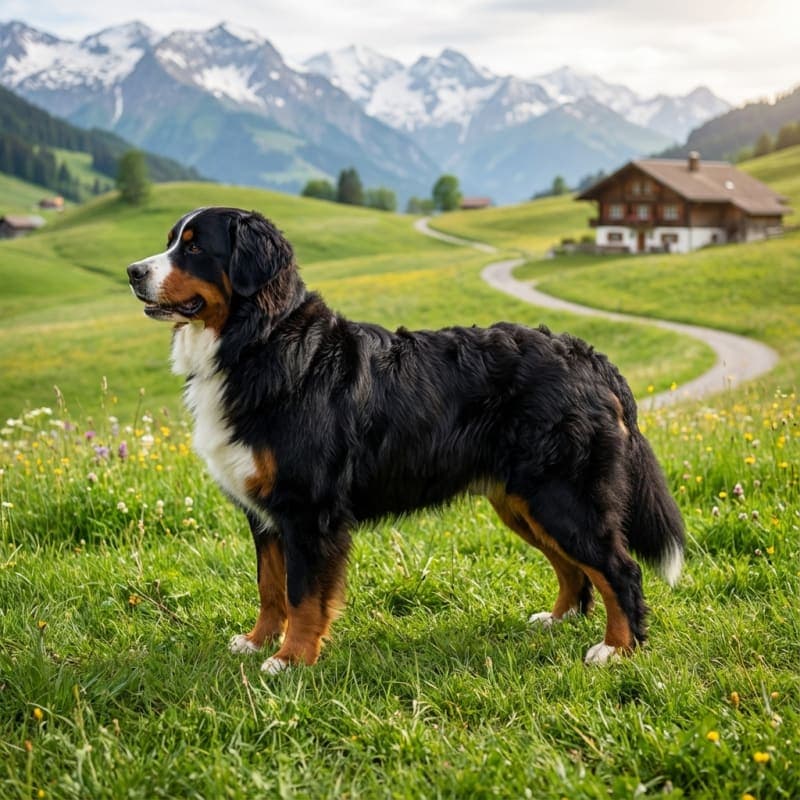
Bernese Mountain Dog
FCI Group
2• FCI 45
Size
Large
Origin Country
CH
Height
58-70 cm
Weight
40-60 kg
Lifespan
8-10 years
Temperament
Overview
The Bernese Mountain Dog, also known as Berner Sennenhund, is a majestic breed originating from the Swiss canton of Bern. It is characterized by its striking tricolor coat - black with rust markings and white markings on the chest, legs, and tip of the tail. This large dog stands 58-70 cm tall at the shoulder and weighs 40-60 kg, with a strong, harmonious body structure that combines strength with agility.
The breed's history dates back to the times when Bernese dogs served on Swiss farms as draft dogs, guardians, and helpers in herding cattle. Originally known as Dürrbächler - named after the village of Dürrbach near Riggisberg - these dogs were particularly numerous in the Burgdorf region. In 1907, breeders established the Swiss Dürrbachler Club to preserve the breed's distinctive characteristics. By 1910, 107 individuals were showcased at an exhibition in Burgdorf.
Today, the Bernese Mountain Dog is primarily an excellent family dog. It is distinguished by its gentle, friendly temperament and strong attachment to its caregivers. It thrives in the company of children, with whom it is patient and gentle. Its intelligence and willingness to cooperate make training relatively easy, although emotional maturity comes a bit later than in other breeds.
Its dark brown, almond-shaped eyes express intelligence and affection, while medium-sized triangular ears add to its dignity. The long, dense coat requires regular grooming - brushing at least once a week, and even daily during shedding. The Bernese needs moderate physical activity - daily walks and playtime, but without excessive strain, especially during the growth period.
Due to its large size, it is best suited for homes with a garden, where it has space to live and participate in family activities. It does not tolerate prolonged solitude and needs constant contact with its family. Proper socialization from a young age and positive training methods help develop a balanced, happy companion that will enjoy life alongside its loved ones for 8-10 years.
The Bernese Mountain Dog is a large, harmoniously built dog standing 58-70 cm at the withers and weighing 40-60 kg. Its silhouette combines strength and elegance - a strong, well-muscled body with a broad chest reaching to the elbows gives an impression of both power and grace. The line of the back is straight and horizontal, with strong and wide loins.
The head is strong, proportional to the rest of the body, with a slightly convex skull and a clearly defined stop. The dark brown eyes are almond-shaped, giving the gaze an expression of tenderness and intelligence. The medium-sized ears are triangular and slightly rounded at the tips, hanging down by the head, which gives the dog a gentle, friendly expression.
A characteristic feature of the breed is its beautiful, long, and dense coat with a natural sheen. The coloration is tricolor: a black base coat with rust markings on the cheeks, above the eyes, on the chest and limbs, as well as symmetrical white markings on the head, chest, paws, and tip of the tail. This distinctive pattern makes the Bernese Mountain Dog one of the most recognizable breeds in the world, attracting attention with its majestic beauty and elegance.
The Bernese Mountain Dog is characterized by an exceptionally friendly and gentle temperament, making it an excellent family dog. Its temperament can be described as moderate - the dog is calm but simultaneously full of energy and eager to play. It loves the company of people and feels great around children, showing patience and gentleness towards them.
Bernese Mountain Dogs are intelligent and easy to train, although their emotional maturity comes a bit later than in other breeds - they may need more time to grasp certain commands. They have a low hunting instinct, which allows them to get along well with other pets, including cats. Their strong attachment to family and natural guarding instinct mean they will watch over their territory and alert to strangers.
Despite their large size and strength, Bernese Mountain Dogs are not aggressive. In threatening situations, they prefer to take a defensive stance rather than attack. However, it is important to note that these dogs do not cope well with loneliness - left alone for long periods, they can become destructive. Regular interaction with family members, spending time together, and participating in daily activities are crucial for their well-being. They are the ideal companion for those who value closeness with their pet.
The Bernese Mountain Dog is generally a healthy breed, although like most large dogs, it can be prone to certain health issues. The average lifespan is 8-10 years. The most common health problems include hip and elbow dysplasia, gastric torsion (GDV), otitis externa, and ectropion, which can lead to ophthalmic issues.
Particular attention should be paid to the dog's weight - Bernese Mountain Dogs are prone to obesity, which can lead to additional health problems, especially with the joints. A proper diet and regular, moderate physical activity are key to maintaining a healthy body weight.
The thick coat provides good protection against low temperatures; however, dogs should not be exposed to extreme weather conditions without proper supervision. On hot days, access to fresh water and a shaded area is necessary, as the long coat increases the risk of overheating.
Regular veterinary visits and preventive check-ups allow for the early detection of potential health problems. Particularly important are hip and elbow examinations in puppies and monitoring of ear health. Proper veterinary care combined with a suitable diet and physical activity contributes to a long and healthy life for the dog.
Caring for a Bernese Mountain Dog requires regularity and time commitment. Their thick, long coat needs to be brushed at least once a week to remove dead hair and prevent matting. During shedding periods, which occur twice a year - in spring and autumn - daily brushing is recommended to manage the intense hair loss and keep the coat in good condition.
The ears require special attention, as about 20% of Bernese Mountain Dogs suffer from outer ear infections. It is important to regularly check and clean the ears to prevent the buildup of wax and dirt, which can lead to infections. This check should be done at least once a week.
Nails should be trimmed regularly if they do not wear down naturally during walks on hard surfaces. Overly long nails can cause walking problems and discomfort. Checking every 2-3 weeks helps maintain the appropriate length.
Bathing should only be done as needed, to avoid disrupting the natural protective layer of the skin. Using appropriate shampoos for long-haired dogs will help maintain skin health and coat shine. Grooming is not just a matter of aesthetics - regular care allows for the early detection of potential skin issues or parasites.
The Bernese Mountain Dog has moderate exercise needs but requires daily physical activity to maintain good physical and mental condition. Although it does not need intense training like sporting breeds, regular walks and playtime are essential. It is ideally suited for long walks and can also accompany you on jogs or bike rides, with gradual acclimatization to the effort.
During walks, it is beneficial to allow the dog to explore its surroundings - this stimulates the mind and satisfies its natural curiosity. Bernese Mountain Dogs love the company of their owners, making them excellent companions for family outings in nature. They can be engaged in various games that develop skills and provide entertainment - they have a great potential for learning and eagerly participate in activities.
It is important to avoid overexertion, especially in puppies and young dogs during their growth period - their joints and bones are still developing and are susceptible to injuries. Intense exercises, jumping, or long runs should be introduced gradually after reaching full physical maturity, around 18-24 months of age.
The type and intensity of activity should be tailored to the dog's age and condition. Regular physical activity not only positively impacts health and helps maintain a healthy weight but also improves well-being and behavior. Spending time outdoors together strengthens the bond between the dog and its owner.
Training a Bernese Mountain Dog requires patience and consistency, but with the right approach, it can be very rewarding. These intelligent dogs quickly learn new commands; however, their emotional maturity comes later than in many other breeds - they may need more time to solidify certain skills. Education should start at a young age to ensure proper socialization and to develop good habits.
The key to success is positive reinforcement - Bernese Mountain Dogs are sensitive and do not respond well to harsh training methods. Rewarding them with treats, praise, and play during the learning of new commands significantly speeds up the learning process. These dogs need constant mental stimulation, so it’s worth introducing a variety of exercises and games that develop cognitive abilities.
Teaching leash walking is particularly important. Due to their large size, it is crucial to teach the dog to walk beside you without pulling - this ensures safety and comfort during walks together. It is beneficial to practice obedience in different places and situations so that the dog learns to respond to commands even in the presence of distractions.
Remember that training should be enjoyable for both parties - this helps build a positive relationship based on trust. Short, regular training sessions are more effective than long, exhausting lessons. The right approach to education allows you to develop a well-behaved, balanced companion who will be a joy for the whole family.
Proper nutrition for the Bernese Mountain Dog is crucial for its health and longevity. Due to their large size and tendency to gain weight, it is necessary to adjust their diet according to age, body weight, and activity level. It is best to choose high-quality food specifically designed for large breeds, which contains the right proportions of protein, fat, and carbohydrates, and supports joint health.
Controlling the amount of food is extremely important - Bernese Mountain Dogs tend to gain weight, which can lead to joint problems and other health issues. Avoid giving snacks between meals, and if you reward your dog during training, account for those calories in the daily allowance. It is recommended to divide the daily portion into 2-3 smaller meals, which improves digestion and reduces the risk of dangerous gastric torsion.
Fresh water should be available at all times, especially after physical activity and on hot days. Due to their thick fur, Bernese Mountain Dogs are prone to overheating, so proper hydration is key.
Older dogs or those with joint problems may require supplementation - glucosamine and chondroitin support joint cartilage health. Before introducing any supplements, it is advisable to consult with a veterinarian who can help determine the optimal diet and any necessary supplementation tailored to the individual needs of the dog.
Characteristic Traits
Pros
- Child-friendly
- Gentle temperament
- Easy to train
- Devoted to family
- Good with other animals.
Cons
- Large space requirements
- Needs daily activity
- Intense shedding
- Shorter lifespan
- Prone to obesity.
Behavioral Ratings
Breed History
The history of the Bernese Mountain Dog dates back to ancient times and is closely linked to the region of the Swiss canton of Bern. The breed descends from dogs used by farmers in the mountainous pre-Alpine areas, where they served as herding, guarding, and draft dogs. They assisted in herding cattle, watched over farms, and transported goods on carts - their strength and endurance were invaluable in the challenging alpine terrain.
Originally, the breed was known as Dürrbächler - named after the village and inn of Dürrbach near Riggisberg in the canton of Bern, where these long-haired, tricolor dogs were particularly numerous. In 1902, 1904, and 1907, individuals of this breed were already presented at dog shows, and in 1907, breeders from the Burgdorf region decided to organize themselves to promote the pure breeding of these dogs.
They founded the Schweizerischer Dürrbach-Klub (Swiss Dürrbachler Club) and began systematic work to establish the breed's distinctive characteristics. A breakthrough moment occurred in 1910 during a show in Burgdorf, where farmers from the entire region presented as many as 107 individuals. From that moment on, the dog was renamed the Berner Sennenhund (Bernese Mountain Dog) and began its journey to international recognition.
As the years went by, the breed gained popularity not only in Switzerland but also in Germany, France, and other European countries, and later around the world. Today, the Bernese Mountain Dog is valued primarily as an excellent family dog, although some individuals are still used in traditional roles - for draft work or in animal therapy. Its unique appearance and gentle temperament have attracted a multitude of enthusiasts, making it one of the most recognizable and cherished breeds in the world.