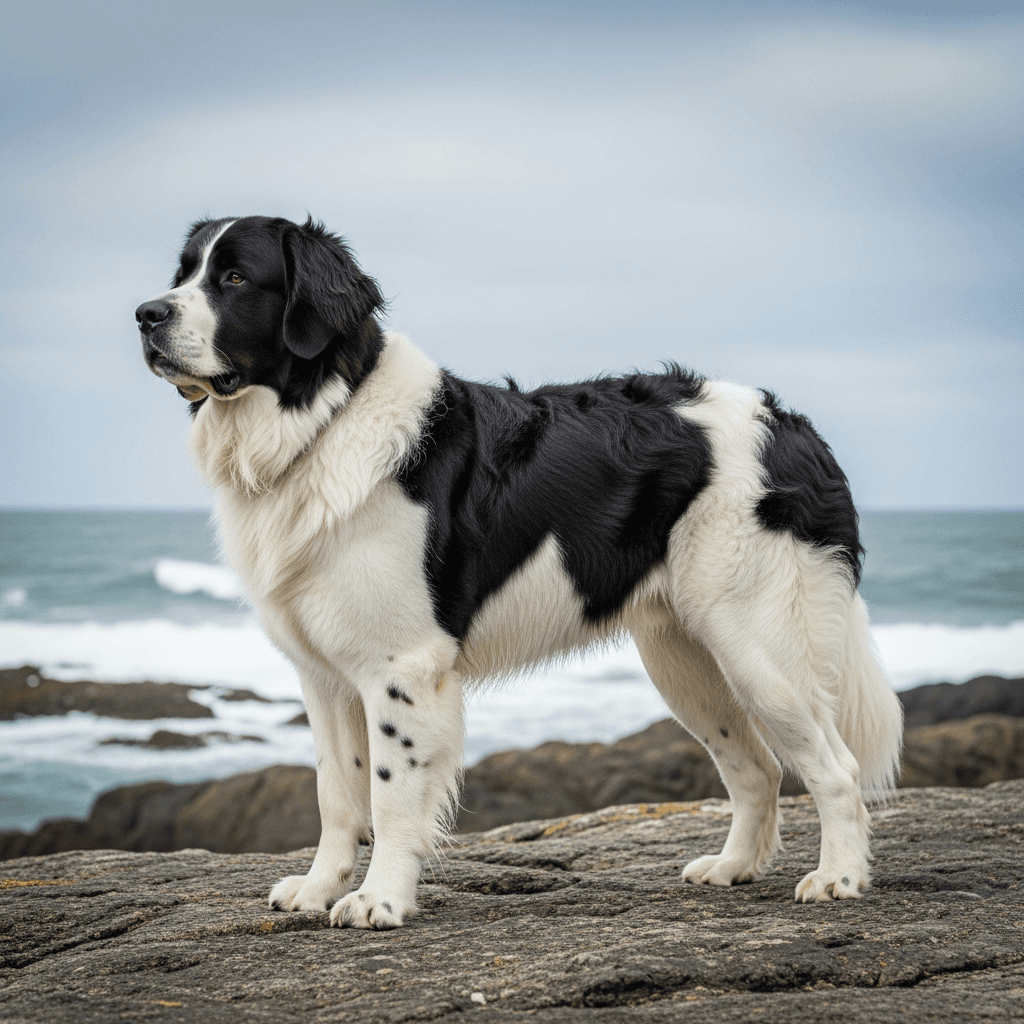
Landseer (continental-European type)
FCI Group
2• FCI 226
Size
Large
Origin Country
XX
Height
67-80 cm
Weight
50-70 kg
Lifespan
7-9 years
Temperament
Overview
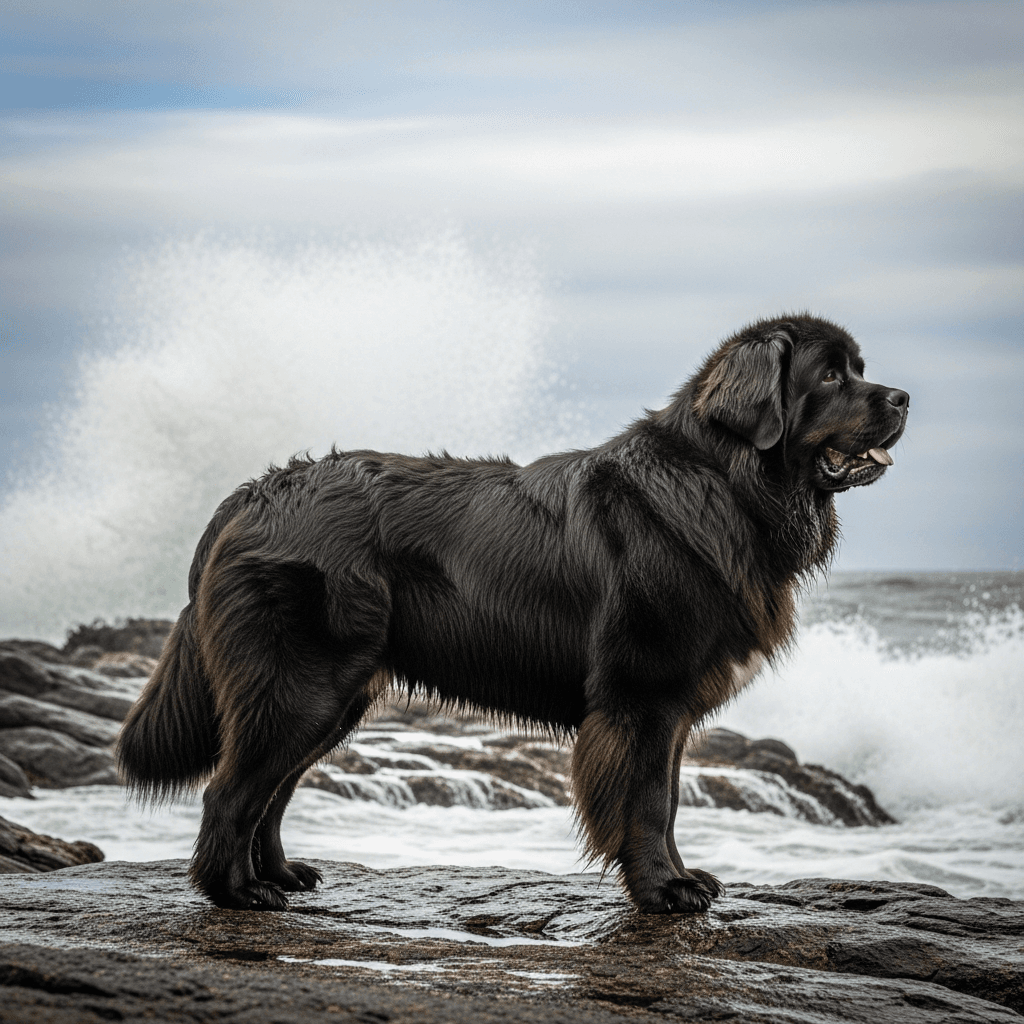
Landseer (continental-European type) is an extraordinary dog breed with a history dating back to the 19th century. The name of this breed comes from the famous English painter Edwin Landseer, who immortalized these majestic animals in his paintings. Landseers originate from Europe, mainly from Germany and Switzerland, and are closely related to Newfoundlanders. However, they differ not only in their characteristic black and white coat but also in their body structure – their proportionally longer legs give them a harmonious and dignified appearance that attracts attention.
The coat of the Landseer is thick, straight, and soft to the touch, making petting this dog a true pleasure. The primary color of their coat is pure white with distinctive black patches on the back and hindquarters, which makes their appearance extremely elegant and recognizable. These dogs are known for their exceptional friendliness, gentleness, and sensitivity, making them excellent companions for families with children.
Thanks to their calm disposition and high intelligence, Landseers excel in various roles – from family dogs to water rescue dogs. Their balanced temperament makes them patient and caring in the company of children, which is particularly appreciated by parents. Historically, these dogs helped fishermen rescue drowning individuals and pull in nets, and their love for water has endured to this day.
Landseer is a dog that needs space and regular exercise. They feel best in homes with large gardens and near water, where they can swim and play. Despite their moderate independence, Landseers require close contact with their family and regular grooming. Owners must be prepared to dedicate time to brushing their thick coat, which is crucial for the dog's health and comfort.
Like many large breeds, the Landseer is prone to certain health issues, such as hip dysplasia and heart diseases. Owners should be active individuals experienced in caring for large dogs to adequately meet their needs. Despite these challenges, the Landseer is a dog that brings immense joy to the lives of its guardians – their presence in the home is a source of endless warmth and love. We encourage you to further explore the fascinating details of this noble breed in the following sections of our guide.
Landseer is a dog with a large, strong, and harmonious body structure, which gives the impression of being powerful and majestic. The height at the withers is:
- Males: 72-80 cm
- Females: 67-72 cm
With these dimensions, the Landseer is one of the larger representatives of dog breeds. Dogs of this breed have a wide, massive skull with a prominent occipital bump and a well-developed muzzle that is equal in length to the depth measured from the base of the muzzle. Their eyes are medium-sized, set moderately deep, in shades from dark brown (preferred) to light brown (tolerated), with a friendly and gentle expression.
The ears of the Landseer are triangular, set high but not too far back on the head – they hang along the cheeks and are covered with short, soft fur. The coat of the Landseer is long, dense, and straight (a slight wave is permissible), providing excellent protection against cold and moisture.
The most characteristic feature of the breed is the coloration: a white background with black patches on the back and hindquarters. The head is black with a white muzzle and a symmetrical white blaze running across the skull, which is a highly desirable element of the breed standard. The neck should be white or have a black collar.
The body of the Landseer is strong and well-muscled, with a wide chest reaching to the elbows and a straight, broad back. The belly is moderately tucked up. The tail is strong, densely furred, reaching slightly below the hock – when at rest, it hangs loosely, and in motion, it rises gently, but it is never carried over the back.
The limbs of the Landseer are strong, proportional, and well-muscled, allowing for free, elegant, and efficient movements. The paws are large, round, and compact, with webbing between the toes, which facilitates swimming. The entire silhouette of the dog exudes strength, dignity, and innate elegance.
The character of the Landseer is one of its greatest assets. These dogs are known for being very friendly, calm, gentle, and patient, making them excellent companions for families with children. Their balanced temperament means that a well-trained Landseer is a dog with a mild disposition, capable of showing both nurturing and protective instincts towards its family.
Landseers have a moderate level of intelligence and are capable of learning, although they can be somewhat stubborn – this requires consistency in training. By nature, they are a bit suspicious of strangers, which makes them good guard dogs, but they are not aggressive. Their impressive size may deter intruders, but in reality, the Landseer is a gentle and tender dog.
Landseers generally get along well with other dogs and cats, especially if they are socialized from a young age. Their moderate hunting instinct means they are not very inclined to chase after game. However, they can be loud and bark to get attention or signal something unusual.
Importantly, Landseers tolerate solitude well for short periods, but they need regular contact with their family and should not be left alone for long periods. Their sensitivity means they react poorly to isolation and emotional neglect. They are dogs that love human companionship and are happiest when they can participate in family life.
Overall, the Landseer is a dog that brings joy, harmony, and a sense of security to the lives of its guardians. Their presence in the home makes it fuller, warmer, and friendlier – they are ideal companions for those who value gentleness combined with impressive presence.
Landseer is a breed of dog that, despite its impressive stature, has a relatively short lifespan, averaging from 8 to 10 years. They are generally healthy dogs, but like many large breeds, they are predisposed to various health issues that owners should be aware of.
The most common conditions in Landseers are:
- Hip and elbow dysplasia – can lead to pain, lameness, and limited mobility, so regular check-ups and maintaining an appropriate weight are important.
- Bloat and gastric torsion – a dangerous condition requiring immediate veterinary intervention. It is advisable to feed the dog smaller portions and avoid intense exercise immediately after meals.
- Heart diseases – such as aortic stenosis, which can affect the dog's fitness and lifespan.
- Blood clotting disorders – including thrombopathy, which involves problems with platelet function.
For this reason, regular veterinary visits are essential, as well as ensuring a proper diet to avoid obesity, which can further strain the joints and heart. Owners should also pay attention to ear, eye, and skin hygiene to prevent infections that can be particularly severe in this breed.
Landseer does well in cold conditions, but in hot climates, it may struggle to maintain comfort due to its large size and thick, dense coat. On hot days, it is important to provide the dog with access to shade and fresh water, and to limit the intensity of exercise.
Proper healthcare, a balanced diet, and regular check-ups can significantly contribute to extending the lifespan of a Landseer and improving its quality of life. Choosing a dog from a responsible breeder who screens parents for genetic diseases can minimize the risk of many health issues.
Grooming a Landseer is essential to keep its coat in excellent condition and to prevent skin problems. Dogs of this breed have a thick, straight coat with a soft, delicate undercoat that requires regular care.
Brushing:
- The Landseer should be brushed at least once a week using a brush with coarse bristles or a rake.
- During shedding periods (spring and autumn), the brushing frequency should be increased to 3-4 times a week to remove dead hair and prevent it from accumulating in the home.
- Landseers tend to shed heavily, so owners should be prepared for this.
Bathing:
- The Landseer does not require frequent baths – a few times a year or as needed is sufficient.
- After bathing in saltwater (the sea), it is important to rinse the coat thoroughly with fresh water to avoid skin irritation and damage to the hair.
Ears:
- Landseers are prone to ear infections due to their drooping ears, which restrict airflow.
- Regularly checking and cleaning the ears (every 1-2 weeks) is essential to prevent the buildup of wax and moisture.
Nails:
- Nails should be regularly trimmed (every 4-6 weeks) to prevent discomfort while walking and possible injuries.
Teeth:
- Dental care is important to prevent oral diseases, such as tartar and gum disease.
- Regular brushing of the dog's teeth (a few times a week) or using dental chews is recommended.
Proper grooming not only enhances the appearance of the Landseer but also significantly impacts its health, well-being, and quality of life. Investing time in regular grooming is key to keeping the dog in excellent condition.
Landseer is a dog that needs a moderate amount of exercise to maintain health, good physical condition, and mental balance. Although they are not the most active dogs, regular walks and play are essential for their well-being.
Walks and physical activity:
- Ideally, a Landseer should walk for at least 45-60 minutes a day, preferably divided into two or three sessions.
- Access to open space, such as a garden or park, where the dog can move freely, is very important.
- Regular physical activity helps maintain an appropriate weight and prevents joint dysplasia issues.
Swimming:
- Due to their close association with water, Landseers love to swim – it is an excellent form of exercise that does not strain the joints.
- Owners should try to provide them with opportunities to bathe in rivers, lakes, or the sea, which brings joy and stimulation.
- Swimming is especially recommended for older dogs or those with joint problems.
Mental stimulation:
- A Landseer should be regularly mentally stimulated – interactive toys, fetch games, obedience training, and shared activities are excellent ways to ensure the dog has an appropriate level of mental engagement.
- Dogs of this breed can get bored, which can lead to undesirable behaviors, such as chewing furniture or excessive barking.
Limitations:
- It is important to avoid prolonged exposure of the Landseer to high temperatures, as their large body mass and thick coat can lead to overheating.
- On hot days, it is better to schedule walks early in the morning or late in the evening, and also provide access to shade and fresh water.
- Young dogs should not be overexerted with intense exercise – their joints and bones are still growing.
The proper balance between physical activity and rest is crucial for the health of a Landseer. Regular exercise, especially in water, is the best way to ensure this dog has a happy, healthy, and long life.
Training Landseers can be a challenge, but it is also very rewarding. These dogs are intelligent and sensitive, which means they respond best to positive training methods, such as rewards, praise, and play. Landseers can be a bit stubborn, so it is important that training is consistent, patient, and well-planned.
Basic training principles:
- Owners should avoid harsh or aggressive methods, as they can lead to undesirable behaviors, anxiety, or loss of trust in the caregiver.
- Landseer responds best to short, regular training sessions lasting 5-10 minutes, which keep the dog's interest and prevent boredom.
- Commands should be clear, consistent, and repeated regularly – examples: Sit, Stay, Come, Lie down, No.
Socialization:
- Socialization is a key element of training Landseers – they should be exposed to various situations, sounds, people, children, and animals from a young age.
- This helps the Landseer become a confident, balanced dog that does not react fearfully or aggressively in new situations.
Diversity in training:
- It is worth ensuring variety in exercises to maintain the dog's interest and stimulate its mind.
- As progress is made, owners can introduce new commands, games like fetch, searching for objects, and even water training (water rescue).
Guard dog role:
- Due to their strong protective instinct, Landseers do well as guard dogs, which can also be included in the training program.
- However, excessive barking should be controlled, and the dog should be taught when such behavior is appropriate.
Bond and trust:
- Training should be fun for both the dog and the owner, which will strengthen their bond and increase trust.
- The Landseer is a dog that wants to please its caregiver, so positive reinforcement and patience yield the best results.
Proper training of a Landseer is the key to raising a well-behaved, balanced, and happy dog that will be an excellent family companion for many years.
The nutrition of the Landseer is crucial for its health, well-being, and longevity. Due to their large stature and predisposition to health problems, it is important that the diet is well-balanced, high-quality, and tailored to the individual needs of the dog.
Basic nutrition guidelines:
- Owners should choose high-quality food that contains the appropriate amount of protein (min. 22-26% for adult dogs), healthy fats (12-16%), as well as vitamins, minerals, and omega-3 and omega-6 fatty acids.
- It is important to avoid low-quality food that is full of fillers and artificial additives, as this can lead to health problems, including issues with the digestive system, skin, and joints.
- It is advisable to consult with a veterinarian to determine the appropriate amount of food and feeding frequency tailored to the dog's age, weight, and activity level.
Feeding frequency:
- Typically, a Landseer should be fed 2-3 times a day to avoid problems with bloating and gastric torsion, which are common conditions in large breeds.
- Do not feed the dog a large portion at once, or just before or after intense physical activity.
Weight and obesity:
- Maintaining an appropriate weight is crucial to prevent obesity, which can lead to many health problems, including joint dysplasia, heart diseases, and a shortened lifespan.
- Owners should regularly monitor the dog's weight and adjust the amount of food as needed.
Treats and additions:
- Owners should be cautious when introducing treats into the dog's diet to not exceed the daily calorie limit (treats should not make up more than 10% of the daily calorie intake).
- Healthy treats such as dried meat, pieces of vegetables (carrots, broccoli), or special dental chews can be used.
Water:
- Water should be always available, especially after physical activity, during hot days, and after meals.
- Large dogs like the Landseer drink significant amounts of water, so the bowl should be regularly refilled.
Supplements:
- In case of joint problems, supplementation with glucosamine, chondroitin, or omega-3 fatty acids can be considered, which support joint and coat health.
- Any changes in diet and the addition of supplements should be consulted with a veterinarian.
Proper nutrition is a fundamental part of caring for a Landseer. Investing in high-quality food and a balanced diet translates to the dog's health, energy, and a long, happy life alongside its family.
Characteristic Traits
Pros
- Friendly and gentle nature
- Balanced temperament
- Excellent companion for families with children
- High intelligence and ability to learn
- Outstanding rescue skills in water
- Beautiful and elegant black-and-white coat.
Cons
- Requires a lot of space and regular exercise
- Intense shedding and the need for regular grooming
- Possible health issues such as joint dysplasia and heart diseases
- Relatively short lifespan (8-10 years)
- Not suitable for beginner owners
- Prone to bloating and gastric torsion.
Behavioral Ratings
Breed History
Landseer is a dog breed with a rich and fascinating history that has its roots in Europe, mainly in Germany and Switzerland, where it was developed from Newfoundlands. This breed was named in honor of Sir Edwin Landseer, a famous English painter of the Victorian era, who immortalized the image of these majestic dogs in his works in the 19th century. His famous painting A Distinguished Member of the Humane Society from 1838 depicts a black-and-white dog rescuing a drowning man, which contributed to the breed's popularity.
The history of the Landseer dates back to the times when these dogs were used by fishermen and sailors to help pull in nets and rescue drowning people. Thanks to their strength, endurance, love of water, and rescue instincts, Landseers became invaluable companions for people working on the water, particularly along the coasts of the North and Baltic Seas.
In the 19th century, the breed gained popularity, and its representatives began to be showcased at dog shows in Europe. Landseers were also used as guard dogs and companions for families, further highlighting their versatility and gentle nature. This breed was crossed with other large dogs, such as Saint Bernards and mastiffs, which influenced their appearance, temperament, and size.
As the years went by, the Landseer became a valued family dog, known for its gentleness, friendly disposition, and protective instinct towards children. In 1960, the International Canine Federation (FCI) recognized the Landseer as a separate breed (FCI no. 226), officially separating it from the black-and-white Newfoundland. The main difference lies in body structure – the Landseer has proportionally longer legs and a more athletic build.
Today, the Landseer is considered a relatively rare breed, especially outside of Europe, but still enjoys great recognition among lovers of large breeds. Modern Landseers are often used in various fields, including as therapy dogs, rescue dogs, companions, and in water sports. Their history, associated with saving people and loyalty to their guardians, makes them unique and valued companions in life, combining strength, gentleness, and nobility of character.