White Swiss Shepherd
FCI Group
1• FCI 347
Size
Medium
Origin Country
CH
Height
53-66 cm
Weight
25-40 kg
Lifespan
10-14 years
Temperament
Overview
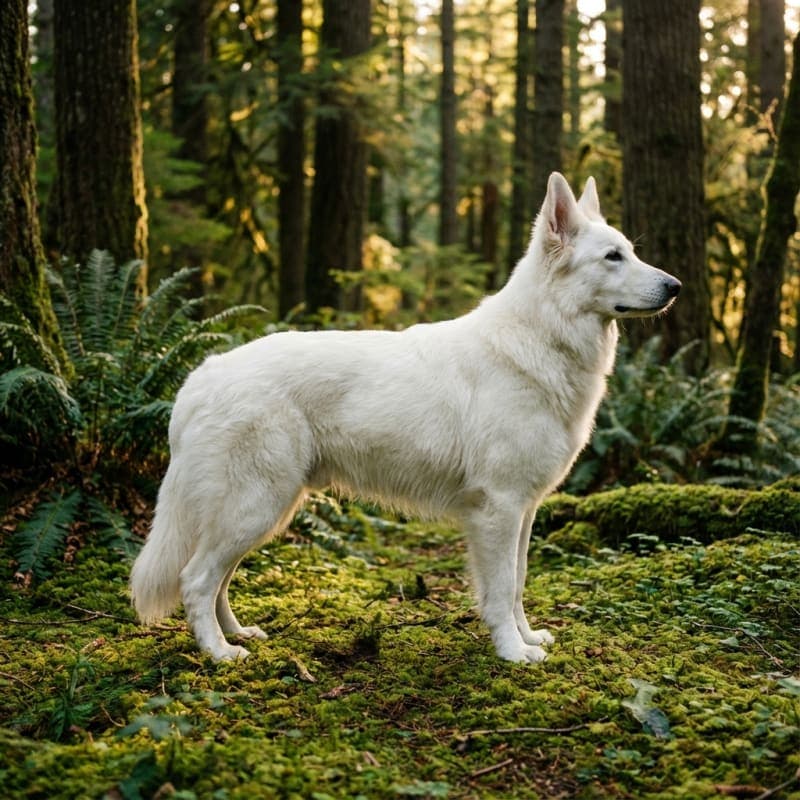
The Swiss White Shepherd, also known as Berger Blanc Suisse, is a breed that attracts attention with its immaculately white coat, elegance, and exceptional intelligence. This medium-sized dog originates from Switzerland and is characterized by a harmonious, muscular build and a friendly, balanced character. Its spectacular appearance combined with a gentle disposition makes it a favorite among dog lovers worldwide.
Although the Swiss White Shepherd is primarily an excellent family dog and companion, its versatility allows it to be utilized in many different roles. It excels as a guide dog for the blind, in dog therapy, in law enforcement, and in canine sports such as agility and obedience. Its strong attachment to its owner and family, along with its willingness to cooperate, make it a unique partner in everyday life.
The history of the breed dates back to the 1970s when the first white shepherds were brought to Switzerland from the USA and Canada. The legendary Lobo, born on March 5, 1966, in America, is considered the progenitor of this breed in Switzerland. His descendants, systematically entered into the Swiss breeding book, gave rise to the European line of white shepherds. In 2002, the breed was officially recognized by the FCI under standard number 347, which ensured its international status and protection of blood purity.
Characteristic features of the Swiss White Shepherd include high intelligence, alertness, and ease of training. Its liveliness and natural herding instinct require proper direction through early socialization and consistent training based on positive reinforcement. This dog can maintain calm and composure in various situations, which is a highly valued trait in both family and working dogs.
While its herding instincts make it excel in outdoor activities, it also requires regular training and appropriate mental stimulation. Owners should provide their dogs with sufficient exercise and intellectual challenges to ensure their happiness and health for many years. It is important to establish clear rules and boundaries from a puppy age to develop a balanced, confident dog free from behavioral issues.
The Swiss White Shepherd is a medium-sized dog with a strong, well-muscled physique and harmonious body proportions. Its appearance is both elegant and athletic, reflecting its herding roots and versatile abilities. According to FCI standard no. 347, the height at the withers is:
- Males: 58-66 cm (ideally 60-65 cm)
- Females: 53-61 cm (ideally 55-60 cm)
The weight of adult individuals ranges from 25-40 kg, with males typically being heavier and more massive than females.
The coat is one of the most distinctive features of the breed. It can be medium or long, always with a rich, dense undercoat, providing excellent thermal insulation in both heat and cold. The outer coat is straight or slightly wavy, resistant to adverse weather conditions, and has natural self-cleaning properties. The only acceptable coat color is pure, intense white.
The ears are erect, set high, triangular, and pointed forward, giving the dog a vigilant, attentive expression. The eyes are almond-shaped, medium-sized, and have a brown or dark brown color, which gives them an intelligent and gentle expression. The nose is medium-sized, preferably black, although lighter shades are also acceptable. The muzzle is strong, moderately long, and the jaws are well-developed with a scissor bite.
The tail is long, fluffy, and saber-shaped. When at rest, it is carried down, reaching at least to the hock joint, while during movement or in a state of excitement, it is raised higher, but it should never be carried over the back.
The overall silhouette of the Swiss White Shepherd presents an image of a strong, agile, and harmonious dog, which, thanks to its elegant posture and beautiful white coat, attracts attention and evokes admiration.
The Swiss White Shepherd is a dog with a friendly, balanced, and gentle temperament. It is exceptionally strongly attached to its owner and family, making it an excellent companion and family dog. Its high intelligence and willingness to cooperate make it easy to train, quickly learning new commands and tasks.
This breed is characterized by a great need for human contact and does not tolerate prolonged loneliness. Dogs left alone for many hours may exhibit signs of separation anxiety, such as excessive barking, destruction of objects, or reluctance to eat. For this reason, the Swiss White Shepherd is ideal for individuals who can dedicate a lot of time and attention to it.
In relation to strangers, White Shepherds are usually reserved and observant, but they should never show aggression or unwarranted distrust. Properly socialized dogs are polite and calm in interactions with unfamiliar people. Their sensitivity to external stimuli makes them excellent guard dogs, alerting to the approach of strangers in time.
With children, Swiss White Shepherds are patient, gentle, and protective. They form strong bonds with them and willingly participate in play, while remaining alert and instinctively protective. However, it is important to teach children respect and appropriate communication with the dog to avoid misunderstandings or accidental injury to both the dog and the child.
The Swiss White Shepherd is an active and energetic dog that requires a significant amount of exercise and mental stimulation. Without proper activity, it may develop behavioral problems such as destructiveness, excessive excitability, or difficulties in concentration. Thanks to its versatility, it excels in various roles: as a guide dog, therapy dog, rescue dog, in obedience, agility, tracking, or dog dancing.
The key to raising a balanced Swiss White Shepherd is early socialization, consistent training based on positive reinforcement, and providing it with the right amount of exercise and intellectual tasks. In return, the owner will receive a loyal, devoted companion who will be a source of joy and pride for many years.
The Swiss White Shepherd is generally a healthy and resilient breed, enjoying a lifespan of 10 to 14 years. Their solid body structure and well-managed breeding contribute to the good health of representatives of this breed. However, like any dog breed, there are predispositions to certain health issues that prospective owners should be aware of.
The most common health problems are:
- Hip dysplasia (HD) and elbow dysplasia (ED) – conditions related to abnormal joint development, which can lead to pain, lameness, and arthritis. Before being allowed to breed, dogs should undergo radiographic examinations.
- MDR1 gene mutation – some Swiss White Shepherds may carry a mutation of the gene responsible for sensitivity to certain medications, such as ivermectin, loperamide, or some antibiotics. A genetic test is necessary, and the veterinarian should be informed of the results before administering medications.
- Skin allergies – which can have food, contact, or inhalant origins. They manifest as itching, skin redness, hair loss, or skin infections.
- Gastrointestinal issues – a sensitive stomach can lead to diarrhea, bloating, or vomiting. It is important to use high-quality food and avoid sudden diet changes.
Owners should regularly check their dog's health with a veterinarian, conducting annual preventive examinations, vaccinations, and deworming. Early detection of health problems significantly increases the chances of effective treatment and good prognosis.
Due to their thick, double coat, Swiss White Shepherds are sensitive to extreme temperatures. On hot days, they should be provided with shade, good ventilation, and constant access to fresh, cool water to avoid overheating and heatstroke. In winter, despite the natural protection provided by the undercoat, these dogs prefer to stay warm at home, close to their beloved owners.
Proper grooming, a balanced diet, regular physical activity, and care for mental health are the foundations of a long, healthy, and happy life for the Swiss White Shepherd.
The care of the Swiss White Shepherd is relatively simple and undemanding, even though its snow-white coat may suggest a need for intensive care. In reality, the coat of this breed has natural self-cleaning properties, which means it does not require frequent baths. Usually, one to two baths a year are sufficient, unless the dog is particularly muddy or dirty after intense outdoor play.
Brushing is a key element of grooming, and its frequency depends on the type of coat:
- Short-haired varieties – brushing once a week is enough to remove dead hair and dirt.
- Long-haired varieties – it is recommended to brush two to three times a week, and during periods of heavy shedding, even daily.
Swiss White Shepherds go through two main shedding seasons – in spring and autumn, when they change their undercoat. During these times, daily brushing is essential to remove dead hair, prevent matting, and keep the home clean. Using the right brushes, such as a furminator or a brush with stiff bristles, will greatly facilitate this process.
Additional grooming aspects:
- Ears – should be regularly checked and gently cleaned to prevent infections. If redness, unpleasant odor, or discharge is noticed, a veterinarian should be consulted immediately.
- Eyes – should be regularly checked and rinsed with a mild solution or clean water in case of contamination.
- Nails – require regular trimming, especially if the dog does not naturally wear them down while walking on hard surfaces. Overly long nails can cause discomfort and walking problems.
- Teeth – regular tooth cleaning or the use of dental chews is recommended to prevent tartar buildup and gum disease.
Caring for a Swiss White Shepherd requires regularity and consistency, but it is not time-consuming or complicated. With systematic care, the dog will enjoy a beautiful, healthy coat and excellent well-being throughout its life.
The Swiss White Shepherd is a breed that is very active, energetic, and full of life, requiring a significant amount of exercise and mental stimulation. Its herding roots make it suited for intense physical work and it cannot thrive in conditions of inactivity. A lack of appropriate activity quickly leads to behavioral problems such as excessive destructiveness, nervousness, disobedience, or separation anxiety.
Owners should provide their dog with at least two hours of physical activity daily, which may include:
- Long walks in varied terrain that allow for exploration and sensory stimulation
- Running alongside a bike, rollerblades, or during jogging
- Playtime in the park with other dogs that develops social skills
- Fetching balls, frisbees, or other toys
- Swimming – an excellent form of exercise, especially on hot days
Thanks to its high intelligence and willingness to cooperate, the Swiss White Shepherd excels in various sports and canine disciplines:
- Agility – an obstacle course that develops agility, speed, and coordination
- Obedience – obedience based on the precise execution of commands
- Tracking and nosework – utilizing natural scenting instincts
- Dog dancing – a dance with the dog that combines elements of obedience and creativity
- Canicross – running with the dog in a harness
- Frisbee – a dynamic game that develops reflexes and fitness
In addition to physical effort, mental stimulation is equally important. Swiss White Shepherds love solving puzzles, learning new tricks, and performing tasks that require thinking. It is worth introducing:
- Interactive toys and puzzles for dogs
- Learning new commands and tricks
- Scent exercises, e.g., searching for hidden treats
- Obedience training in various locations
Regular exercise not only keeps the dog in excellent physical condition but also strengthens the bond between the dog and the owner, builds trust, and ensures mutual satisfaction. A Swiss White Shepherd that receives the right amount of exercise and intellectual challenges is a happy, balanced, and obedient dog – a true joy for the whole family.
The Swiss White Shepherd is a breed that is extremely intelligent, eager to cooperate, and easy to train. Its natural inclination to learn and strong bond with its owner make it particularly receptive to training, quickly assimilating new commands and tasks. The key to success in raising this breed is to use methods based on positive reinforcement, which means rewarding desired behaviors instead of punishing undesired ones.
Principles of effective training:
- Start early – training and socialization should begin in puppyhood, ideally between 8 and 16 weeks of age.
- Be consistent – clear rules and boundaries help the dog understand what is expected of it.
- Use positive reinforcement – reward good behavior with treats, praise, and play.
- Avoid punishment and violence – aggressive methods destroy trust and can lead to behavioral problems.
- Regularity – short, daily training sessions (10-15 minutes) are more effective than occasional long training sessions.
- Variety – introduce diverse exercises to prevent boredom and maintain the dog's motivation.
Socialization is an extremely important element in raising a Swiss White Shepherd. The dog should be systematically introduced to various people, dogs, animals, places, sounds, and situations to learn how to respond correctly in diverse conditions. A properly socialized dog is confident, calm, and does not show fear or aggression towards new stimuli.
Basic commands to teach:
- Sit – a basic command for teaching obedience
- Lie down – useful in many situations
- Stay – teaches self-control and patience
- Come – crucial for the dog's safety
- No or Leave it – prevents dangerous behaviors
- Heel – walking at heel without pulling on the leash
Thanks to their versatility, Swiss White Shepherds excel in advanced forms of training, such as:
- Guide dogs for the blind
- Dog therapy and emotional support
- Rescue dogs in search and rescue operations
- Tracking dogs in law enforcement
- Cynological sports: agility, obedience, rally obedience, dog dancing
It is worth using a variety of training methods and techniques to provide the dog with appropriate intellectual challenges and maintain its interest. This way, the dog not only develops its skills but also builds a deeper bond with the owner through shared play and cooperation.
However, we must remember that each dog is an individual, so it is important to tailor training methods to the personality, temperament, and energy level of the specific Swiss White Shepherd. Patience, a positive approach, and regular practice are the foundation of success in raising this wonderful breed.
The Swiss White Shepherd, like any dog breed, requires a properly balanced diet that provides energy, health, and a long life. The basis of nutrition should be high-quality foods rich in complete animal protein, vitamins, minerals, and omega-3 and omega-6 fatty acids, which support healthy skin and a shiny coat.
Key nutrition principles:
- High-quality ingredients – choose foods that list real meat (chicken, beef, lamb, fish) as the first ingredient.
- Avoid fillers – products with a high amount of grains, corn, soy, or artificial additives can lead to allergies and digestive problems.
- Adjust portions – the amount of food should be tailored to the dog's age, weight, activity level, and health condition.
- Regular meals – adult dogs should be fed twice a day, while puppies 3-4 times a day.
- Fresh water – constant access to clean, fresh water is essential, especially on hot days and after intense exercise.
Types of feeding:
- Dry food – convenient, helps maintain oral hygiene by mechanically cleaning teeth.
- Wet food – more palatable, contains more moisture, suitable for dogs with sensitive digestive systems.
- BARF diet (Biologically Appropriate Raw Food) – raw meat, bones, vegetables, and fruits; requires knowledge and proper balancing.
- Homemade diet – prepared independently, should be consulted with a veterinarian or animal nutritionist.
As the dog ages, its nutritional needs change. Older dogs are less active, have a slower metabolism, and may develop health issues such as joint disease or kidney failure. In such cases, it is advisable to consult a veterinarian to adjust the diet to individual needs.
Some Swiss White Shepherds may have a tendency to gain weight, especially if they do not get enough exercise. It is important to monitor the dog's weight, weigh them regularly, and control portion sizes. Excess body weight can lead to serious health problems such as diabetes, heart disease, or joint dysplasia.
Recommended dietary supplements:
- Omega-3 and omega-6 fatty acids – support healthy skin, a shiny coat, and immune system function.
- Glucosamine and chondroitin – support joint health, especially in older dogs.
- Probiotics – improve digestion and support gut microbiota.
Remember to avoid harmful products for dogs, such as chocolate, onions, garlic, grapes, raisins, xylitol, avocado, or alcohol. Additionally, some Swiss White Shepherds may carry the MDR1 gene mutation, which causes sensitivity to certain medications – this should also be considered when administering supplements.
A well-balanced diet, appropriate portions, regular meals, and access to fresh water are the foundations of health, vitality, and a long life for the Swiss White Shepherd.
Characteristic Traits
Pros
- High intelligence and ease of training
- Friendly
- loyal
- and devoted to family
- Gentle
- balanced temperament
- Versatility and adaptability
- Excellent in canine sports
- Beautiful
- spectacular white coat.
Cons
- Requires a lot of movement and physical activity
- Needs early socialization and consistent training
- Sensitive to loneliness and separation anxiety
- Intense shedding twice a year
- May be sensitive to certain medications (MDR1 mutation)
Behavioral Ratings
Breed History
The history of the Swiss White Shepherd is a fascinating tale of international origins, breeding, and recognition of the breed. Although the name suggests Switzerland, the roots of this breed trace back to the United States and Canada, where white German Shepherds were bred as early as the beginning of the 20th century. In Europe, white shepherds were known much earlier, particularly in the region of Alsace and Lorraine before 1900, as well as in the Austro-Hungarian Empire, where they were valued at the Habsburg court.
A key figure in the development of the breed was Lobo, a white shepherd born in the USA on March 5, 1966. He is recognized as the progenitor of the Swiss line of white shepherds. In the early 1970s, Lobo was brought to Switzerland, where his descendants were systematically entered into the Swiss breeding book (LOS – Livre des Origines Suisses). Concurrently, other white shepherds from the USA and Canada were imported to Europe, leading to the establishment of a stable purebred population.
In the United States and Canada, white shepherds were initially treated as a variant of the German Shepherd, but in Europe, particularly in Switzerland, they began to be recognized as a distinct breed. Over the years, breeders aimed to stabilize breed characteristics, improve the health and temperament of the dogs.
A breakthrough moment in the breed's history was the official recognition by the FCI (Fédération Cynologique Internationale) in 2002. The breed was registered under the name Berger Blanc Suisse (Swiss White Shepherd) and received the standard number FCI 347. The standard was ultimately approved and published on July 4, 2011, which provided the breed with international protection and recognition.
The breed was classified into Group 1 FCI (Herding Dogs and Cattle Dogs, except Swiss Cattle Dogs), Section 1 (Herding Dogs), without a working trial. This means that testing for herding ability is not required, although many individuals retain natural instincts and abilities to work.
Over the past few decades, the Swiss White Shepherd has gained immense popularity in many countries across Europe, Asia, and both Americas. It is valued not only as a family and companion dog but also as a working dog in various roles:
- Guide dog for the blind
- Therapeutic dog in dog therapy
- Rescue dog in search and rescue operations
- Tracking dog in law enforcement
- Sporting dog in agility, obedience, and other disciplines
Modern breeding of the Swiss White Shepherd focuses on maintaining breed purity, improving health (eliminating hip dysplasia, testing for the MDR1 gene mutation), solidifying a gentle and balanced temperament, and achieving excellent, spectacular white coats. Breeders worldwide collaborate, share experiences, and conduct selective breeding to ensure a bright future for the breed.
The history of the Swiss White Shepherd is a testament to the passion of breeders, international cooperation, and the pursuit of excellence. Thanks to this, today we can enjoy the presence of this wonderful, beautiful, and versatile breed that captures the hearts of dog lovers around the world.