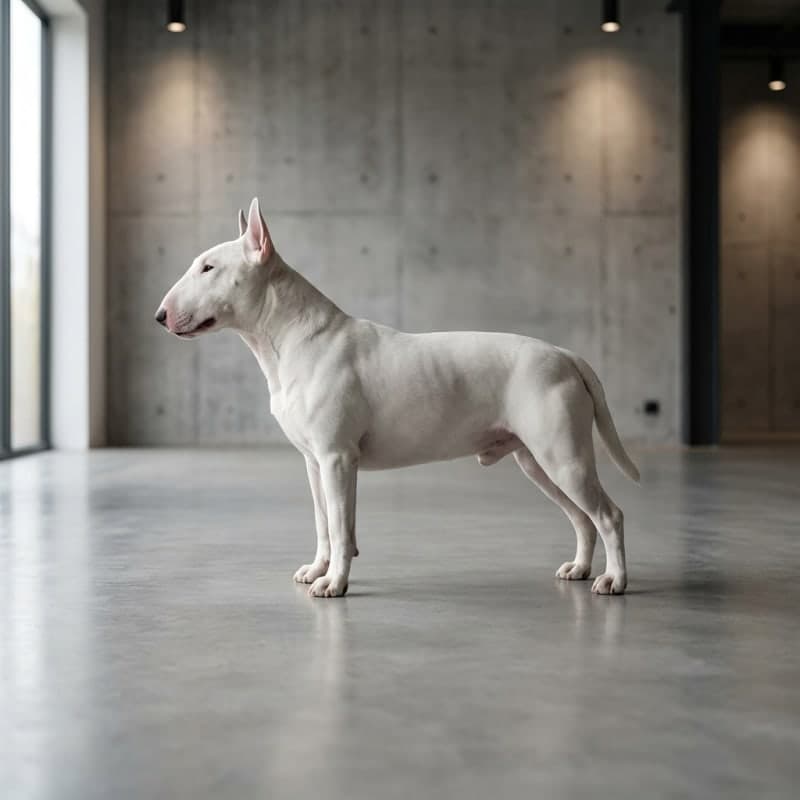
Bull Terrier
FCI Group
3• FCI 11
Size
Medium
Origin Country
GB
Height
N/A
Weight
20-36 kg
Lifespan
10-14 years
Temperament
Overview
Bull Terrier is one of the most recognizable and controversial dog breeds in the world. Its unique, egg-shaped head and muscular build make it impossible to confuse with any other breed. This is a dog that fascinates and raises concerns, surrounded by myths and stereotypes, but in reality, it is a loyal, fun, and extremely devoted companion for the right family.
The history of the Bull Terrier dates back to the 1850s when James Hinks, a breeder from Birmingham, decided to create a 'gentleman's companion' - an elegant, white terrier with a refined appearance, yet retaining the terrier's courage and strength. Hinks crossed the Old English Bulldog, Old English White Terrier (extinct), Dalmatian, and probably Spanish Pointer to achieve the characteristic profile and white coat. The Bull Terrier was first presented in its current form at a show in Birmingham in 1862, causing a sensation.
The FCI standard emphasizes the philosophy of the breed with the words: 'There are neither weight nor height limits', but the dog should give the impression of maximum substance while maintaining quality and harmony of build appropriate for its sex. This unique approach means that the Bull Terrier is evaluated not by dimensions, but by proportions, strength, and character.
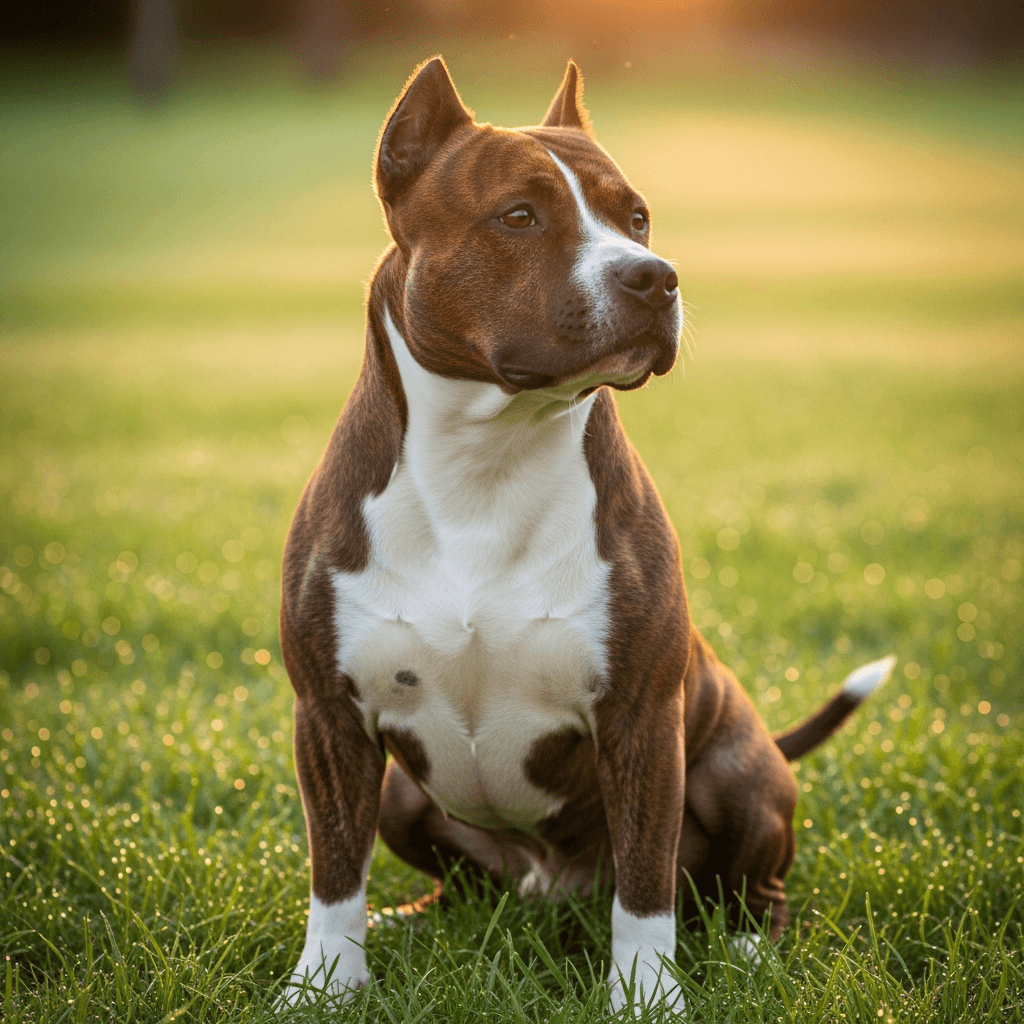
The appearance of the Bull Terrier is truly distinctive. Its downfaced, egg-shaped head is a unique feature - the head is long, strong, and deep from the skull to the end of the muzzle, curved in an arc from the top of the skull to the tip of the nose. Small, dark, deeply set triangular eyes give it an intense, piercing expression. The ears are small, thin, and closely set, which the dog carries stiffly upright. The body is strongly built, muscular, and well-balanced, with a broad chest and strong back.
The Bull Terrier's coat is short, flat, hard to the touch, and shiny. It comes in two color variants:
- White: pure white, skin markings and pigmentation on the head are permissible
- Coloured: color should dominate over white; brindle, red, fawn, and tricolor are preferred
In terms of character, the Bull Terrier is a lively, brave dog with an even temperament. The FCI standard describes it as 'amenable to discipline', which is key - with proper upbringing, it becomes a wonderful companion. It has a strong will and determination, typical of terriers, but at the same time, it is extremely devoted to its family and loves to be the center of attention.
The Bull Terrier requires an experienced owner who will provide early socialization, consistent training, and plenty of physical activity. This is not a dog for those looking for a calm, obedient companion - it is an energetic, fun, sometimes stubborn 'clown in a gladiator suit' that needs structure, boundaries, and a lot of love. With proper guidance, the Bull Terrier is a wonderful family dog that loves children and will protect its family at all costs.
Bull Terrier has a truly unique appearance that makes it one of the most recognizable breeds in the world. The FCI standard describes it as 'strongly built, muscular, well balanced and active'. Remarkably, there are no weight or height restrictions - the philosophy of the breed states that the dog should give the impression of maximum substance for its size while maintaining quality and proportion.
Head - a unique feature of the breed:
The head of the Bull Terrier is its most distinctive feature - the FCI standard describes it as 'downfaced, egg-shaped head':
- Egg-shaped: The head is long, strong, and deep throughout its length, but not thick. When viewed from the front, it should be full, egg-shaped, without indentations or depressions.
- Downfaced profile: From the top of the skull to the tip of the nose, it should be gently curved downwards.
- No stop: The transition from the skull to the muzzle (stop) should be invisible - a smooth descent.
- Muzzle: Strong, deep throughout its length, filled under the eyes.
- Lower jaw: Deep and well-developed, strong.
- Teeth: Ideal scissor bite, but a pincer bite is accepted. Teeth should be healthy, strong, even, and complete.
- Nose: Black, with well-developed nostrils, curved downwards at the tip.
Eyes:
- Small, dark, deeply set.
- Triangular shape or slanting.
- Shiny, with a piercing expression.
- The distance from the tip of the nose to the eyes should be clearly greater than from the eyes to the top of the skull.
Ears:
- Small, thin, closely set.
- The dog should be able to carry them stiffly erect, pointing straight up.
Body structure:
Neck:
- Very muscular, long, arched.
- Tapers from the shoulders to the head.
- Free of loose skin.
Body:
- Well-rounded with a clearly arched ribcage.
- Great depth from the withers to the sternum (the chest should be closer to the ground than the belly).
- Back: Short, strong, with a straight line behind the withers, slightly arched in the loins.
- Loins: Wide, well-muscled.
- Chest: Wide when viewed from the front, with a broad sternum.
- Undercarriage: From the sternum to the belly forms a neat upward arch (but the belly should not be tucked up).
Tail:
- Short, low-set.
- Carried horizontally.
- Thick at the base, tapering to the end.
Front limbs:
- Shoulders strong and muscular, without heaviness.
- Shoulder blades wide, flat, closely adhering to the chest.
- Legs: Perfectly straight, with strong, round bones. The length of the legs should be proportional to the depth of the body.
- Paws: Round and compact, with well-arched toes.
Hind limbs:
- Seen from the back, parallel.
- Thighs: Muscular.
- Shanks: Well-developed.
- Hock joints: Well-angled, strong bones.
- Hind paws: Compact, like the front ones.
Coat and color:
Coat:
- Short, flat, even all over the body.
- Hard to the touch, shiny.
- A soft undercoat may appear in winter.
Color:
There are two varieties:
- White: Pure white. Skin pigmentation and markings on the head are not a fault. Color elsewhere is undesirable.
- Coloured: Color should prevail over white. Preferred are: - Brindle - most often preferred. - Red. - Fawn. - Tricolour. - Blue and black are acceptable but not favored.
Size and weight:
The FCI standard has a unique approach - DOES NOT specify weight or height limits:
- Philosophy: 'Maximum substance for size of dog consistent with quality and sex'.
- Typical weight: 20-36 kg (males heavier, females lighter).
- Typical height at the withers: 45-55 cm (unofficially).
- What matters is the impression of strength, harmony, and proportion, not specific measurements.
Movement:
- When moving, the dog appears well-connected, striding with ease, taking free and typical steps.
- In a trot, the dog moves effortlessly, with a long stride.
- Front and hind legs move in parallel.
- Only at a fast trot do the legs converge to the center line (single tracking).
Disqualifications and faults:
- Blue or partially blue eyes.
- Nose other than black.
- Ears not erect.
- Faults in bite (undershot, overshot).
- Aggression or excessive shyness.
Miniature Bull Terrier:
There is also a Miniature Bull Terrier, which has the same standard with one exception:
- Height at the withers: maximum 35.5 cm (14 inches).
- The dog should give the impression of substance and strength for its size.
- Separate FCI standard (no. 359), separate breed.
Summary:
The Bull Terrier is a dog with a truly unique appearance, dominated by its characteristic egg-shaped head with no stop, small triangular eyes, and stiffly erect ears. Its muscular, well-balanced body conveys strength and athleticism. The lack of weight/height limits makes the breed unique - what counts is harmony, proportions, and the impression of strength, not specific centimeters. Males should look masculine, females feminine. It is an appearance that cannot be confused with any other breed - 'a gladiator in the world of dogs', as the Bull Terrier is often referred to.
Bull Terrier has a fascinating, contradictory character. It is a dog that combines terrier-like courage and determination with an extraordinary attachment to people and a funny, almost clown-like personality. The FCI standard describes it as 'full of fire', but also 'amenable to discipline' - a combination that defines the breed.
Basic temperament:
- Brave and determined: The Bull Terrier has immense courage (gameness) and does not shy away from challenges. This trait is inherited from its ancestors - fighting dogs.
- Full of life and energy: The standard states 'active with a keen, determined and intelligent expression'.
- Even temperament: Despite its strength and courage, a well-mannered Bull Terrier is emotionally stable.
- Amenable to discipline: A key trait - the Bull Terrier can be obedient and cooperative if properly guided.
Relationship with family:
The Bull Terrier is an extremely family-oriented dog that loves to be the center of attention:
- Strong attachment: The Bull Terrier is deeply devoted to its family and suffers when separated for long periods.
- Loves children: With proper socialization, the Bull Terrier is a wonderful companion for children. It has a great tolerance for their play and loves to be part of family life.
- Need for physical contact: The Bull Terrier loves to cuddle, sleep in the owner's bed (if allowed), and be close to the family.
- 'Velcro dog': Follows the owner from room to room, does not like to be alone.
- Comedic character: The Bull Terrier has a great sense of humor and loves to entertain its family with funny behaviors.
With children:
- The Bull Terrier is nicknamed 'kid in a dog suit' due to its playful nature.
- It loves active play with children and has a great tolerance for their energy.
- IMPORTANT: Due to its strength and energy, interactions with small children should be supervised. The Bull Terrier may unintentionally knock over a small child during play.
- Best suited for families with children aged 6+ who understand how to interact with a dog.
Relationships with other animals:
This is an area that requires special attention:
- With other dogs: The Bull Terrier has a strong heritage of dog fighting and can be aggressive towards other dogs, especially of the same sex. Early and ongoing socialization is KEY. Some Bull Terriers tolerate other dogs well, while others do not - it varies greatly.
- Dominance: The Bull Terrier often tries to dominate other dogs. Males, in particular, can be conflictual with other males.
- Strong prey drive: The Bull Terrier has a high prey drive - cats, rabbits, hamsters may be seen as prey. Living with a cat is only possible if raised from puppyhood, but it is never fully safe.
- Does not let go: If the Bull Terrier decides to attack, its gameness means it will not let go easily. This requires responsible management.
Characteristic behaviors:
- 'Bull Terrier spin': Many Bull Terriers exhibit obsessive behavior of spinning in circles, chasing their own tails. It can be amusing, but excessive spinning requires intervention (OCD).
- Destructiveness: A bored Bull Terrier can destroy a home in a short time. It has extremely strong jaws and determination.
- Digging: Loves to dig - in the garden, on the sofa, in the bed.
- Loudness: The Bull Terrier can be noisy - snorting, panting, making funny sounds.
- Eating non-food items (pica): The Bull Terrier tends to eat things that are not food - socks, toys, stones. Requires supervision.
Intelligence and training:
- Intelligent but stubborn: The Bull Terrier is intelligent but has a strong will and can be very stubborn.
- Selective hearing: If something more interesting catches its attention, it may ignore commands.
- Requires motivation: The Bull Terrier is not a 'eager to please' breed like a retriever. It needs to be convinced that cooperation is worthwhile.
- Tests boundaries: Especially during adolescence (1-3 years), the Bull Terrier will test every rule. Consistency is key.
Behavioral issues (if poorly managed):
- Aggression towards other dogs.
- Separation anxiety (suffering when alone).
- Obsessive-compulsive behaviors (spinning, chasing lights/shadows).
- Excessive destructiveness.
- Dominance towards people (if hierarchy is not established).
Ideal family for a Bull Terrier:
- Experienced dog owners who understand strong breeds.
- Active individuals with time for long walks and play.
- Capable of providing structure, boundaries, and consistent training.
- With a sense of humor (the Bull Terrier is funny!).
- Without other dogs of the same sex (or with very good socialization).
- With a securely fenced yard.
- Ready for commitment - the Bull Terrier is a demanding dog.
Who is NOT a Bull Terrier for?
- Beginner dog owners.
- People looking for a calm, obedient dog.
- Families with very small children (under 6 years old).
- People who are often away from home.
- People with many other animals.
Summary:
The Bull Terrier is a 'gladiator in a gentleman's suit' - a combination of strength, courage, and determination with an extraordinary attachment to family and a funny personality. It is a dog full of contradictions: brave yet loving; strong yet sensitive; stubborn yet amenable to discipline. It requires a experienced, committed owner who will provide it with structure, socialization, and plenty of love. With proper guidance, the Bull Terrier is a wonderful, loyal family companion who loves children and makes its family laugh every day. But it is not a dog for everyone - it requires understanding of its nature and a willingness to work on the relationship.
Bull Terrier is generally a healthy and resilient breed, but like all purebred dogs, it has predispositions to certain genetic disorders. Responsible breeder selection, who tests breeding stock, and proper care can minimize the risk of health issues.
Life expectancy:
- Average: 10-14 years
- With proper care, many individuals live 12-13 years
- There are cases of Bull Terriers living to 15-16 years
Main health issues specific to the breed:
1. Deafness:
- Especially white Bull Terriers are prone to congenital deafness
- About 18-20% of white Bull Terriers are born deaf in one or both ears
- Deafness is associated with the white coat gene (piebald gene)
- The BAER (Brainstem Auditory Evoked Response) test should be performed on puppies at 5-6 weeks of age
- Responsible breeders do NOT use deaf dogs for breeding
- Deaf Bull Terriers can lead normal lives but require special training methods (visual signals)
2. Lethal Acrodermatitis (LAD):
- Rare, fatal genetic disease specific to Bull Terriers
- Symptoms: poor growth, limb deformities, skin problems, immunological issues
- Puppies with LAD typically do not survive the first years of life
- DNA testing available - responsible breeders test breeding stock
- Recessive inheritance - two carriers are needed for the disease to manifest
3. Kidney diseases:
- Hereditary Nephritis: A serious condition leading to kidney failure, often at a young age (3-5 years)
- Polycystic Kidney Disease (PKD): Cysts in the kidneys
- Symptoms: excessive drinking, frequent urination, weight loss, vomiting
- Urine and blood tests should be performed regularly
- Protein traces in urine (proteinuria) can be an early signal
4. Skin problems:
- Skin allergies: Bull Terriers often suffer from food and environmental allergies
- Symptoms: itching, redness, hair loss, skin infections
- Demodicosis: Skin parasites (Demodex), particularly in young dogs
- Dermatitis: May be related to allergies or bacterial infections
- White Bull Terriers are prone to sunburn - they require sunscreen on their noses and ears on sunny days
5. Heart problems:
- Aortic Stenosis: Congenital heart defect
- Mitral Valve Disease: More common in older dogs
- Cardiac evaluation recommended for breeding stock
- Symptoms: fatigue, shortness of breath, fainting
6. Luxating Patella:
- The kneecap 'pops' out of its normal position
- Can cause limping, pain, arthritis in the future
- Milder cases may not require treatment, more severe - surgery
7. Obsessive-Compulsive Disorders (OCD - Canine Compulsive Disorder):
- Bull Terriers are particularly prone to OCD
- Symptoms: tail chasing, spinning in circles, chasing lights/shadows, excessive licking
- May be related to boredom, anxiety, or genetic predisposition
- Requires behavioral management, sometimes medication (Prozac)
- 'Bull Terrier spin' is a classic example - the dog spins obsessively
8. Eye problems:
- Primary Lens Luxation (PLL): Displacement of the eye lens, can lead to blindness
- DNA testing available - breeders should test
- Symptoms: eye pain, tearing, corneal opacity
9. Hip Dysplasia:
- Less common than in large breeds, but it occurs
- Can lead to arthritis and pain
- Hip scoring recommended for breeding stock
Other issues:
- Thyroid disorders: Hypothyroidism may occur
- Epilepsy: Some lines of Bull Terriers are prone to seizures
- Pica: Tendency to eat non-food items - can lead to intestinal obstruction
Temperature sensitivity:
- Heat: Bull Terrier with its short coat and massive build can easily overheat. Avoid intense activity on hot days
- Cold: Short coat means that Bull Terrier is not well insulated. On cold days, it may need a coat
- White dogs: Particularly prone to sunburn - sunscreen is essential!
Prevention and healthcare:
- Breeder selection: KEY! Responsible breeders test breeding stock for: - Deafness (BAER test) - LAD (DNA test) - PLL (DNA test) - Kidney diseases (urine protein tests) - Heart (cardiac evaluation) - Joints (hip/elbow scoring)
- Regular veterinary check-ups: Annual check-ups, vaccinations, parasite prevention
- Kidney monitoring: Regular urine and blood tests, especially in dogs 3+ years
- Weight control: Bull Terrier tends to overeat. Obesity strains the heart and joints
- Physical activity: Regular exercise keeps muscles and joints in good condition
- Dental health: Brushing teeth 2-3 times a week
- Sun protection: Sunscreen for white dogs
- Managing OCD: Plenty of mental and physical stimulation, avoiding triggers
Summary:
Bull Terrier is generally a healthy breed, but has some specific issues that prospective owners should be aware of. Deafness in white individuals (18-20%), LAD (rare but fatal), kidney diseases, and OCD are major concerns. The key is choosing a responsible breeder who tests breeding stock genetically and health-wise. With proper care, a balanced diet, and regular veterinary check-ups, a Bull Terrier can enjoy a long, healthy life of 10-14 years. White dogs require additional sun protection. Kidney monitoring from a young age is recommended due to hereditary nephritis.
Grooming a Bull Terrier is relatively simple and low-maintenance, making the breed attractive for those who do not want to spend hours on grooming procedures. Its short, flat coat requires minimal work, but consistency is key to maintaining skin health and overall condition.
Coat:
The Bull Terrier has a short, hard, shiny coat that is easy to maintain:
- Brushing: 2-3 times a week with a natural bristle brush or rubber glove
- Brushing removes dead hair, distributes natural oils, and stimulates the skin
- It's also a great time for bonding with your dog - Bull Terriers love attention
- Increase frequency during shedding (spring and fall) - to daily brushing
Shedding:
- The Bull Terrier sheds moderately year-round
- Twice a year (spring/fall) it sheds more intensely
- White hairs are particularly noticeable on dark furniture and clothing!
- Regular brushing minimizes the amount of hair in the home
Bathing:
- The Bull Terrier requires bathing relatively rarely - every 2-3 months or when dirty
- Too frequent baths can dry out the skin and cause irritation
- Use a mild dog shampoo, preferably hypoallergenic (Bull Terriers can have sensitive skin)
- Rinse the shampoo thoroughly - residues can cause itching
- White Bull Terriers: May require more frequent baths to maintain the cleanliness of their white coat. Whitening shampoo can help
Skin:
The Bull Terrier is prone to skin issues, so skin care is important:
- Regularly check the skin while brushing - redness, rashes, hair loss, scratches
- Allergies: If the dog is scratching, has red skin, consult a veterinarian. It could be a food or environmental allergy
- White dogs - sunburn: The nose, ears, and belly of white Bull Terriers can get sunburned. Apply sunscreen (SPF 30+) designed for dogs or children, especially on the nose and ears
- Moisture after bathing: Thoroughly dry the dog, especially skin folds (if any) - moisture can lead to fungal infections
Nails:
- Trim nails every 2-4 weeks, if they do not wear down naturally
- Long nails can cause discomfort, walking problems, and paw deformities
- If you hear 'clicking' on the floor, the nails are too long
- Use a sharp clipper or grinder (Dremel)
- White dogs: Transparent nails - you can see the pink quick (blood vessel). Avoid cutting it!
- Colored dogs: Black nails - harder to see the quick. Trim in small portions
- If you do not feel confident, a groomer or veterinarian can do this
Ears:
- The Bull Terrier has erect ears, which means good ventilation - fewer problems than breeds with drooping ears
- Check ears weekly - dirt, wax, redness, unpleasant odor
- Clean with ear cleaner when needed - moisten a cotton ball and gently wipe the visible part of the ear
- DO NOT insert cotton swabs deep into the ear canal!
- If the dog frequently shakes its head or scratches its ears - a visit to the veterinarian (possible infection)
Eyes:
- The Bull Terrier's small, deep-set eyes rarely require special care
- Wipe tear stains with a damp cotton ball
- If you notice redness, tearing, discharge - visit a veterinarian
Teeth:
- Oral hygiene is very important - Bull Terriers can be prone to tartar and periodontal disease
- Teeth brushing: Ideally daily, at least 2-3 times a week
- Use a dog toothbrush and toothpaste (human toothpaste is toxic!)
- If the dog does not tolerate a toothbrush, dental chews or gels can help
- Dental treats: Dental chews, raw bones (under supervision) help clean teeth
- Regularly check teeth - tartar, pain, bleeding gums
- Professional cleaning: A veterinarian may recommend professional teeth cleaning (scaling) under anesthesia every few years
Wrinkles and folds:
- Most Bull Terriers have tight skin without folds
- Some individuals may have slight wrinkles on their heads
- If present, keep them clean and dry to avoid infections
Additional tips:
- Start early: Get your puppy used to grooming from a young age - brushing, nail trimming, bathing. An adult Bull Terrier that is not used to it may resist
- Positive reinforcement: Reward your dog after each grooming session. The Bull Terrier should associate grooming with something pleasant
- Consistency: Routine is better than sporadic intense sessions
- Health check: Grooming is also a time to check overall condition - lumps, skin changes, limping, pain
Professional groomer:
- The Bull Terrier DOES NOT require a professional groomer regularly (no clipping, trimming)
- You may visit a groomer for: - Bathing and drying (if you do not want to do this at home) - Nail trimming (if you do not feel confident) - Cleaning anal glands (if there is a problem)
Summary:
Grooming a Bull Terrier is simple and low-maintenance. The short coat requires only regular brushing 2-3 times a week and occasional baths. Key aspects include monitoring the skin (allergies!), brushing teeth (2-3 times a week), trimming nails (every 2-4 weeks), and checking ears. White Bull Terriers require sun protection - sunscreen on the nose and ears on sunny days. Consistency and getting the puppy accustomed to grooming early are crucial. This is one of the breed's advantages - low-maintenance compared to many other breeds, making it attractive for busy owners.
Bull Terrier is a dog with a high energy level that requires a significant amount of exercise and mental stimulation to be happy and healthy. This is not a breed that will be satisfied with a short walk around the block - the Bull Terrier needs activity, challenges, and interaction with the family.
Minimum exercise requirements:
- 1-2 hours of intense activity daily - absolute minimum
- This should include a combination of walks, running, play, and training
- Young Bull Terriers (1-3 years) may require even more - 2-3 hours
- A simple walk is not enough - the Bull Terrier needs intense effort to burn off its energy
Types of activities ideal for a Bull Terrier:
1. Long walks and hikes:
- The Bull Terrier loves long walks, preferably in varied terrain
- The walk should be dynamic, not lazy - the Bull Terrier needs pace
- IMPORTANT: Always on a leash in public places! The Bull Terrier can be aggressive towards other dogs and has a strong prey drive
- Safe fencing or a long line in unsecured areas
2. Running:
- The Bull Terrier can be a great jogging partner for those running at a moderate pace
- An adult dog can run 5-10 km without any problem
- NOTE: Puppies and young dogs (up to 18 months) should not run long distances - risk of joint and growth plate injuries
- Avoid running on hot days - the Bull Terrier can easily overheat
3. Fetch games:
- Most Bull Terriers love to fetch - balls, frisbees, toys
- 15-20 minutes of intense fetching can tire a dog as much as an hour of walking
- Use durable toys: Kong Extreme, Chuckit! Ultra Ball - the Bull Terrier has extremely strong jaws and will destroy regular toys in minutes
- Avoid overly hard objects (stones, very hard balls) - risk of tooth damage
4. Wrestling and tug-of-war:
- The Bull Terrier loves to wrestle and play tug-of-war
- This is an excellent bonding activity that allows them to burn off energy
- Rules: You control the game - start and end it. The command 'drop it' must be respected
- Some trainers advise against this play with Bull Terriers due to their strength, but with the right rules, it is safe
5. Dog sports:
- Weight pulling: The Bull Terrier, with its strength and determination, can excel in weight pulling. This is a sport where the dog pulls a cart with a load
- Agility: Some Bull Terriers can perform well in agility, although their independence can be a challenge. Great mental and physical stimulation
- Obedience / Rally: Obedience training as a sport
- Dock diving: Jumping into water - if the Bull Terrier likes water
6. Swimming:
- Many Bull Terriers enjoy water and swimming (though not all!)
- Swimming is an excellent full-body workout, gentle on the joints
- NOTE: Due to their massive build and heavy head, the Bull Terrier is not a natural swimmer. They may need a life jacket
- Never force a dog into the water if they are afraid
7. Mental games and training:
- The Bull Terrier also needs mental stimulation
- 10-15 minutes of training to learn new commands can tire a dog more than half an hour of walking
- Puzzle toys: Kong filled with food/peanut butter, puzzle feeders, interactive toys
- Nosework / scent work: Hiding treats for the dog to find
- Trick training: Teaching tricks - the Bull Terrier is intelligent and enjoys challenges
8. Play with other dogs:
- WITH CAUTION: The Bull Terrier can be aggressive towards other dogs
- If well-socialized, controlled play with dog friends can be a great way to burn off energy
- Best with dogs of the opposite sex, with similar energy levels
- ALWAYS supervised - play can quickly turn into conflict
What happens if a Bull Terrier does not get enough exercise?
A bored, insufficiently stimulated Bull Terrier can develop serious behavioral problems:
- Extremely destructive behavior: The Bull Terrier, with its strong jaws, can destroy furniture, doors, and walls in no time. There are cases of Bull Terriers chewing holes in walls!
- Obsessive-compulsive behaviors: Chasing tails, spinning, chasing lights/shadows - 'Bull Terrier spin'
- Excessive barking and howling
- Aggression: Frustration can manifest as aggression towards people or other dogs
- Separation anxiety: Destructiveness when left alone at home
- Hyperactivity: Inability to calm down, hyperactivity
Adjusting exercise to age:
- Puppies (2-12 months): Short, frequent sessions (10-15 minutes several times a day). Avoid long distances, jumping, intense exercise - bones and growth plates are still developing. Excessive exercise can lead to joint problems
- Young dogs (1-3 years): Highest energy level - 'terrier on steroids'. Require 2-3 hours of activity daily. This is also the age of testing boundaries - consistency is key
- Adult dogs (3-8 years): 1-2 hours of intense activity. More balanced, but still energetic
- Seniors (8+ years): Adjust to fitness level. Still need exercise, but less intense. Walks, gentle play, swimming (gentle on joints)
Weather conditions:
- Heat: The Bull Terrier, with its short coat, massive build, and brachycephalic tendencies (short muzzle in some individuals), can easily overheat. On hot days (25°C+): - Exercise early in the morning or late in the evening - Avoid intense exertion in the middle of the day - Provide shade and water - Watch for signs of overheating (heavy panting, red tongue, weakness)
- Cold: Short coat means lack of insulation. On freezing days (below 0°C), consider dog clothing, especially for lean individuals
- White dogs in the sun: Sunburns! Sunscreen or avoid prolonged exposure to direct sunlight
Safety during exercise:
- ALWAYS on a leash in public places (unless securely fenced)
- Strong leash and collar/harness: The Bull Terrier is strong and can pull with great force
- Identification: Microchip and ID tag on collar - in case of escape
- Avoid dog parks if the Bull Terrier is aggressive towards other dogs
Summary:
The Bull Terrier is a energetic, athletic dog that requires 1-2 hours of intense activity daily. Ideal activities include long walks, running, fetching, tugging, weight pulling, and mental games. A bored Bull Terrier can be extremely destructive and develop OCD. A combination of physical activity and mental stimulation is key. The Bull Terrier is not a breed for sedentary individuals - it needs an active owner. But for the right person who dedicates time to exercise and play, the Bull Terrier is a wonderful, energetic companion, ready for any adventure. Remember: 'A tired Bull Terrier is a good Bull Terrier'!
Training a Bull Terrier is one of the most demanding yet rewarding experiences in the dog world. This dog is intelligent but incredibly stubborn, with a strong will and terrier determination. The FCI standard describes it as 'amenable to discipline', but this requires the right approach, consistency, and understanding of the breed's nature.
Learning characteristics of the Bull Terrier:
- High intelligence: The Bull Terrier quickly understands what you expect from it - it is not 'stupid'
- Strong will and stubbornness: But will it want to do it? That’s another question. The Bull Terrier has its own opinion about everything
- Not 'eager to please': Unlike a retriever or herding dog, the Bull Terrier does not live to please its owner. It needs to be convinced that cooperation is worthwhile
- Tests boundaries: Especially during adolescence (1-3 years), the Bull Terrier will test EVERY rule, EVERY day. Consistency is absolutely crucial
- Selective hearing: If something more interesting catches its attention, it may completely ignore commands
- Long memory: The Bull Terrier remembers - both good and bad experiences. Past trauma can affect behavior for years
Key training principles for the Bull Terrier:
1. Start early:
- Training should begin from the first day at home (usually 8 weeks)
- A Bull Terrier puppy is like a sponge - it absorbs knowledge. Waiting for it to 'grow up' is a missed opportunity
- The first 16 weeks of life is a critical period for socialization
2. Positive reinforcement:
- The Bull Terrier responds best to reward-based training (positive reinforcement)
- Use high-value treats (chicken, cheese, liver), praise, toys
- NEVER use harsh punishments, violence, or 'alpha roll' methods: The Bull Terrier may become aggressive, stubborn, or scared. Trust will be destroyed
- Timing is key - the reward must occur within 1-2 seconds of the desired behavior
3. Consistency - absolutely crucial:
- The Bull Terrier constantly tests boundaries relentlessly
- If you allow something once (e.g., jumping on the couch), and then prohibit it the next time - the dog will fight for 'its right'
- All family members must apply the same rules. If mom forbids it but dad allows it - the Bull Terrier will take advantage of that
- Consistency does not mean harshness, but predictability and clear boundaries
4. Short, varied sessions:
- 5-10 minutes of training several times a day is better than a one-hour session
- The Bull Terrier quickly gets bored with repetition - introduce variety
- End the session on a positive note, while the dog still wants more
5. Firm but fair:
- The Bull Terrier needs a strong leader, but not a tyrant
- Clear boundaries, consistency, but also respect and love
- Do not be intimidated by the dog's stubbornness, but do not be cruel
Basic commands and skills:
1. Socialization - THE MOST IMPORTANT:
- Due to the history of dog fighting and potential aggression towards other dogs, socialization is absolutely crucial
- Age 8-16 weeks: Critical period. Introduce the puppy to: - Different people (men, women, children, elderly, in hats, glasses) - Other dogs (puppy classes, controlled meetings) - Different places (city, forest, beach, shops, cars) - Different sounds (vacuum cleaner, cars, screaming children) - Different surfaces (grass, asphalt, metal, stairs)
- Positive experiences: Every encounter should be positive - rewards, praise
- Socialization lasts a lifetime: It does not end in puppyhood. Regular, positive interactions with other dogs are essential
2. Basic obedience:
- 'Sit': The first command. The Bull Terrier can learn it in a few minutes
- 'Stay': Requires patience. The Bull Terrier does not like to be still
- 'Heel': Walking on a loose leash. VERY important - the Bull Terrier tends to pull
- 'Down': A submissive position, some Bull Terriers resist
- 'Wait': Stopping before crossing a threshold, before eating
3. Recall - CRITICAL:
- Due to prey drive and potential aggression, reliable recall can save a life
- Train in controlled conditions with a long line initially
- Use VERY high-value rewards (the best treats reserved ONLY for recall)
- Never call the dog to punish it - always associate recall with a positive
- WARNING: Even a well-trained Bull Terrier may ignore recall if it sees a cat or another dog. A secure fence is a must
4. 'Leave it' / 'Drop it':
- Extremely important due to the tendency to eat inedible things (pica)
- Train exchanges - the dog drops the item in exchange for something better
- Can save a life if the dog grabs something toxic
5. Impulse control:
- Learning to wait before eating, before going through doors, before throwing a ball
- The Bull Terrier is impulsive - learning self-control is key
Challenges in training the Bull Terrier:
- Stubbornness: It may refuse to perform a command it already knows perfectly. 'I don't feel like it' is a common attitude
- Adolescence (1-3 years): The Bull Terrier becomes particularly difficult. It tests EVERYTHING. Some owners call it the 'terrible twos'
- Aggression towards other dogs: The toughest challenge. Requires professional help if it develops
- Obsessive behaviors: Spinning, chasing its tail - hard to train
- High arousal: The Bull Terrier can be so excited that it does not listen. Learning to 'settle' is important
Advanced training and sports:
- Weight pulling: A natural sport for the Bull Terrier - strength and determination
- Obedience competition: Requires a lot of work, but some Bull Terriers achieve titles
- Agility: Possible, though independence can be a challenge
- Therapy dog: A well-socialized Bull Terrier can be a wonderful therapy dog
When to seek professional help?
- Aggression towards people or dogs
- Obsessive-compulsive behaviors
- Separation anxiety
- Extreme destructiveness
- Dominance issues
- Don't wait: The sooner you start working with a professional behaviorist, the better the results
Summary:
Training a Bull Terrier is a marathon, not a sprint. This is an intelligent but stubborn dog that requires an experienced, consistent owner with a sense of humor and a lot of patience. The key is early socialization, positive reinforcement, consistency, and firm leadership. The Bull Terrier will never be as obedient as a Border Collie or Golden Retriever - it will always have its own opinion. But with the right guidance, it can be a well-mannered, responsive companion. This is not a dog for novice owners. But for someone willing to invest time, effort, and understanding of the breed's nature, the Bull Terrier can be a wonderful, loyal partner for life. Remember: 'Bull Terrier is amenable to discipline' - but you must know how to do it!
The Bull Terrier's diet should be balanced, high-quality, and tailored to its activity level. This is a muscular, athletic breed with high energy that needs the right fuel, but it also tends to overeat and become obese, which requires portion control.
Basic feeding guidelines:
- High-quality food: Choose food with meat as the first ingredient (chicken, beef, lamb, fish), without unnecessary fillers (corn, wheat, soy as main ingredients)
- Protein: The Bull Terrier, as an active, muscular dog, needs a diet rich in protein (min. 25-30% for adult dogs, 28-32% for puppies)
- Fats: Healthy fats (omega-3, omega-6) for energy and healthy skin/coats (15-20%)
- Carbohydrates: A moderate amount from quality sources (sweet potatoes, brown rice, oats, peas)
- Avoid too many artificial additives: Dyes, preservatives, flavors can cause allergies
Food quantity:
The Bull Terrier is a medium-sized dog, but its caloric needs are relatively high due to its activity and muscles:
- Adult dog (20-30 kg): about 1000-1400 kcal per day, depending on activity level
- Very active dog (weight pulling, agility, long hikes): may need up to 1600-1800 kcal
- Less active / senior: 800-1000 kcal
- Always check the manufacturer's feeding guidelines and adjust to the individual needs of the dog
- The Bull Terrier easily gains weight - it's better to slightly underfeed than to overfeed
Feeding frequency:
- Puppies (8 weeks - 6 months): 3-4 meals a day
- Young dogs (6-18 months): 2-3 meals a day
- Adult dogs (18+ months): 2 meals a day (better than one large meal)
- Dividing the daily portion into 2 meals reduces the risk of bloat (gastric torsion) and maintains stable energy levels
Weight control - CRITICAL:
The Bull Terrier has a strong tendency to overeat and become obese:
- Ideal weight: 20-36 kg (males heavier, females lighter), but proportions are more important than the specific number
- Condition test: - You should feel the ribs under a thin layer of fat (but they should not be clearly visible) - Visible waist when viewed from above (narrowing behind the ribs) - Slight tuck of the belly line when viewed from the side - If you can't feel the ribs under the layer of fat - the dog is overweight!
- Obesity is a serious problem: It burdens the joints, heart, increases the risk of diabetes, joint problems, shortens lifespan
- Weigh the dog regularly (every 2-4 weeks) and adjust portions
- The Bull Terrier will beg - those sad eyes! But don't give in. Obesity is not love
Treats and snacks:
- Training treats should make up max 10% of daily caloric intake
- The Bull Terrier is VERY food motivated, which makes training easier, but it's easy to exceed the calorie limit
- Use small treats (pea-sized) during training
- Alternative: use part of the daily food portion as training rewards
- Healthy options: carrot, apple (without seeds), green beans, cooked chicken, plain yogurt (unsweetened)
- Avoid: chocolate (toxic!), grapes, raisins, onion, garlic, xylitol (artificial sweetener), avocado, fatty meats
Water:
- Fresh water available at all times
- Especially important after intense activity and on hot days
- Change the water daily, clean the bowl regularly
- The Bull Terrier may drink a lot of water - this is normal
Types of diet:
1. Dry food (kibble):
- The most convenient option, easy to store
- Helps maintain dental health (scraping tartar)
- High-quality brands: Orijen, Acana, Taste of the Wild, Carnilove, Royal Canin, Hill's Science Diet
- Check the ingredients: meat as the first ingredient, min. 25-30% protein
2. Wet food:
- Higher water content (75-80%), more palatable
- More expensive, less convenient
- Can be mixed with dry food (e.g., 75% dry, 25% wet)
- Less beneficial for teeth
3. BARF / raw diet:
- Raw meat, meaty bones, vegetables, fruits, organs
- Requires knowledge, time, and diligence
- Potential benefits: better condition, healthy coat, fewer allergies, clean teeth
- Risks: unbalanced diet, bacteria (Salmonella, E. coli), risk of choking on bones
- Consultation with a veterinarian or nutrition specialist recommended
4. Home-cooked diet:
- Meat, rice, vegetables, supplements
- Requires consultation with a veterinary nutritionist to ensure balance (calcium, phosphorus, vitamins)
- Time-consuming, but full control over ingredients
Special dietary considerations:
Food allergies:
- The Bull Terrier is prone to allergies, including food allergies
- Symptoms: itchy skin, redness, hair loss, digestive problems (vomiting, diarrhea), ear infections
- Most common allergens: beef, chicken, wheat, soy, corn, dairy, eggs
- Elimination diet: If you suspect an allergy, try a diet with a single protein source that the dog hasn't eaten before (e.g., lamb, duck, fish) for 8-12 weeks
- Hypoallergenic foods or limited ingredient diets (LID)
Lethal Acrodermatitis (LAD):
- Dogs with this genetic condition may require a special diet rich in zinc
- Consultation with a veterinarian is necessary
Skin problems:
- Omega-3 and omega-6 fatty acids may help with skin health
- Salmon oil, flaxseed oil as an addition to food
Adjusting diet by age:
- Puppies (up to 18 months): Large/medium breed puppy food, higher protein and calorie content. MONITOR growth - too rapid growth can lead to joint problems
- Adults (18 months - 7 years): Adult dog food, tailored to activity level
- Seniors (7+ years): Senior dog food, lower calorie content (less activity), joint supplements (glucosamine, chondroitin), easier to digest
Supplements:
- Omega-3 fatty acids (fish oil): Healthy skin and coat, joint support, anti-inflammatory
- Glucosamine and chondroitin: Joint support, especially for older or active dogs
- Probiotics: Gut health, especially if the dog has a sensitive stomach
- Zinc: May help with skin problems (under veterinary supervision)
- Most high-quality foods contain appropriate nutrients - supplements only after consulting with a veterinarian
Bloat (gastric torsion) - awareness:
- The Bull Terrier, with its deep chest, has some risk of bloat (though not as high as in giant breeds)
- Prevention: - Feed 2 times a day (not 1 large meal) - Avoid intense activity 1-2 hours before and after eating - Serve food at a slower pace (slow feeder bowls) - Avoid drinking large amounts of water immediately after eating
- Bloat symptoms: swollen belly, restlessness, attempts to vomit with no effect, heavy panting - IMMEDIATE visit to the veterinarian! This is life-threatening!
Summary:
The Bull Terrier needs a high-quality, balanced diet rich in protein and healthy fats, tailored to its high activity level and muscular build. Portion control is CRITICAL - the Bull Terrier easily gains weight and will beg endlessly. Ideal condition: feel the ribs under a thin layer of fat. Feed the dog twice a day, monitor treats (max 10% of calories), and regularly check weight. The Bull Terrier is prone to food allergies - consider a limited ingredient diet if symptoms occur. With proper nutrition, the Bull Terrier can maintain great physical condition, healthy skin, and a shiny coat throughout its life. Remember: obesity is not love - a lean, muscular Bull Terrier is a healthy Bull Terrier!
Characteristic Traits
Pros
- Extremely loyal and devoted to family
- Wonderful with children when properly socialized
- Funny and full of personality ('a clown in a gladiator suit')
- Brave and confident
- Low maintenance (short coat)
- Great for dog sports (weight pulling agility)
- Unique appearance - impossible to confuse
- Energetic and athletic - ideal for active individuals.
Cons
- Requires an experienced owner with consistency
- Stubborn and independent - not 'eager to please'
- May be aggressive towards other dogs (especially of the same sex)
- Strong prey drive - dangerous for small animals
- Prone to obsessive-compulsive behaviors (OCD)
- Tendency to obesity - requires portion control
- Predisposed to certain health issues (deafness in white dogs
- allergies)
- Very destructive when bored
- Requires 1-2 hours of intense activity daily
- Can be loud (snoring
- panting)
- Prone to skin and food allergies
- Suffers when alone - separation anxiety
- May eat inedible things (pica).
Behavioral Ratings
Breed History
Bull Terrier has a fascinating history that reflects the social changes in 19th century Britain - from brutal dog fights to the elegant 'gentleman's companion'. It is a story of transformation from a fighting dog to a beloved family companion.
Roots: dog fighting and bull-baiting (18th-19th century):
The prehistory of the Bull Terrier dates back to the dark times of bull-baiting and dog fighting in England:
- Bull-baiting: A popular 'sport' from the Middle Ages to the 19th century, involving dogs attacking a tethered bull. It was believed that the meat of the bull would be softer if it had been 'trained' by dogs before slaughter.
- Bulldog: Dogs used for bull-baiting - massive, low, with strong jaws and the courage to attack bulls.
- Terrier: Small, agile dogs used for hunting rats and foxes - intelligent, fast, determined.
- When bull-baiting was banned in 1835 (Cruelty to Animals Act), people turned to dog fighting - easier to hide from the law.
Crossbreeding Bulldog × Terrier:
- Breeders began to cross Bulldogs with Terriers to create a dog that combined: - The strength and courage of the Bulldog (gameness, strong jaws, determination) - The agility and intelligence of the Terrier (speed, reflexes, tenacity)
- Result: Bull-and-Terrier - dogs used for fighting, rat-baiting, and other 'blood sports.'
- These early Bull-and-Terriers were diverse in appearance - different sizes, colors, with no established standard.
James Hinks and the birth of the modern Bull Terrier (1850s):
A true breakthrough came thanks to James Hinks, a breeder from Birmingham:
- Hinks' vision: To create an elegant, white 'gentleman's dog' - a dog for gentlemen, not for criminals. A dog that would retain the terrier's courage and strength but have a refined appearance.
- Crossbreeding (1850s): Hinks crossed: - Old English Bulldog - Old English White Terrier (an extinct breed) - Dalmatian (for an elegant silhouette and white color) - Possibly Spanish Pointer (for the characteristic downfaced head) - Possibly other breeds: Whippet (for long legs and elegance), Fox Terrier.
- Result: A white dog with a unique, egg-shaped head, an elegant, muscular body, without the extreme features of the Bulldog (short muzzle, massiveness).
First presentation (1862):
- Hinks presented his dogs for the first time at a show in Birmingham in 1862.
- They caused a sensation - some were delighted, while others criticized the 'Dalmatian in disguise.'
- Legend has it that Hinks bet £5 (a huge sum!) that his white bitch 'Puss' would defeat an old-style Bull-and-Terrier in a fight, and then win the beauty contest on the same day. Puss won both and died two days later from her injuries - brutal times.
Growing popularity (late 19th century):
- Hinks' Bull Terrier quickly gained popularity among young gentlemen, university students (Oxford, Cambridge).
- Referred to as the 'White Cavalier' - a symbol of courage and honor.
- 1887: The Bull Terrier Club was founded.
- 1897: The White Bull Terrier was officially recognized by the Kennel Club.
- For a long time, only white Bull Terriers were accepted. Colored ones were considered 'impure,' a result of undesirable crossbreeding.
Introduction of colored Bull Terriers (early 20th century):
- Problem: White Bull Terriers suffered from deafness (associated with the white color gene) and genetic problems due to inbreeding.
- Breeders began to cross white Bull Terriers with Staffordshire Bull Terriers (colored) to introduce fresh blood and reduce deafness.
- 1919: The first colored Bull Terrier was registered with the Kennel Club - a bitch named 'Lady Winifred.'
- 1933: Colored Bull Terriers were officially recognized by the Kennel Club.
- Initially, white and colored were judged separately, later they were combined into one breed.
Miniature Bull Terrier (1930s):
- Smaller Bull Terriers existed from the beginning but fell out of fashion before World War I.
- 1938: Colonel Richard Glyn and a group of enthusiasts founded the Miniature Bull Terrier Club, starting a revival of the breed.
- 1963: The Miniature Bull Terrier was recognized by the Kennel Club as a separate breed (FCI no. 359).
- Standard identical to the Bull Terrier, except for the height limit: a maximum of 35.5 cm (14 inches).
Bull Terrier in the 20th and 21st centuries:
World War I and II:
- The Bull Terrier served as a mascot dog in the British army.
- A symbol of courage and the British spirit.
- The number of Bull Terriers dramatically decreased during the wars.
1970s-80s: Rise in popularity:
- The Bull Terrier became a cult dog thanks to advertisements (Budweiser beer, Target - 'Bullseye' as a mascot).
- Popular among celebrities.
- Unfortunately, the rise in popularity attracted irresponsible breeders - problems with aggression, health.
Popular culture:
- 'Spuds MacKenzie' (1980s): The mascot of Bud Light beer - a white Bull Terrier, a pop culture icon.
- 'Bullseye': The mascot of Target stores in the USA.
- General Patton: The famous general had a Bull Terrier named Willie, who accompanied him during World War II.
- Film 'Toy Story': Spunky - Bull Terrier of Sid.
- Literature: Walter the Farting Dog - a series of children's books.
Modern times:
- The Bull Terrier is moderately popular - not as rare as some breeds, but not overly widespread (which protects against commercialization).
- Responsible breeders test genetically for deafness, LAD, PLL.
- The breed has a dedicated fan base that understands and loves its unique character.
- Challenges: Stereotypes about aggression (BSL - Breed Specific Legislation in some countries), but the truth is that a well-raised Bull Terrier is a wonderful companion.
Evolution of the standard:
- The characteristic egg-shaped head has become more pronounced over the years - modern Bull Terriers have a more exaggerated downface than early Hinks individuals.
- The philosophy of 'no weight or height limits' remains - harmony, proportions, and the impression of strength matter.
- Current FCI standard: 07.05.2011.
Summary:
The history of the Bull Terrier is a tale of transformation: from brutal dog fights to an elegant gentleman's dog thanks to the vision of James Hinks in the 1850s. The crossbreeding of Bulldogs, Terriers, Dalmatians, and possibly other breeds resulted in a dog with a unique egg-shaped head, white coat, and elegant yet strong build. From the presentation in Birmingham in 1862, through recognition by the Kennel Club in 1897, the introduction of colored varieties in the 1920s-30s, to the modern pop culture icon - the Bull Terrier has come a long way. Today, it is a beloved family companion that has retained its terrier courage and determination, but with proper upbringing, it is a wonderful dog for experienced owners. The history of the Bull Terrier shows how humans can transform a breed from a brutal warrior into a loving companion - while preserving its unique, distinctive character.