Wire-haired Fox Terrier
FCI Group
3• FCI 169
Size
Medium
Origin Country
GB
Height
35-39 cm
Weight
7-9 kg
Lifespan
12-15 years
Temperament
Overview
Wire Fox Terrier, also known as Fox Terrier Wire, is one of the most charismatic breeds of terrier dogs. Originating from the United Kingdom, this dog gained immense popularity in the 19th century due to its active temperament, sharp mind, and remarkable determination. Despite its small size, it is characterized by a strong body structure and solid bone structure, which allow it surprising strength and endurance.
The Wire Fox Terrier is a typical representative of the terrier group, originally bred for hunting rodents and other small animals in their burrows. Its harmonious proportions – the balance between the length of the muzzle and the skull, as well as between the height at the withers and the length of the body – give it exceptional elegance combined with athleticism. It is not only a wonderful home companion but also an excellent partner for outdoor activities, successfully participating in canine sports.
The temperament of this breed is characterized by alertness and vivacity, making the Wire Fox Terrier an excellent alarm dog. At the same time, it is a friendly and sociable animal that finds itself perfectly in the role of a full-fledged family member. Thanks to its intelligence and ability to learn quickly, the Wire Fox Terrier excels in various canine disciplines that require engagement and cooperation with the handler. However, its strong hunting instinct requires proper socialization and consistent training from puppyhood to prevent undesirable behaviors.
The Wire Fox Terrier requires regular physical activity and mental stimulation to maintain physical health and mental balance. In the right conditions, filled with love, attention, and consistent guidance, it will become a wonderful, devoted companion for many years. In the following sections of our guide, we present detailed information regarding appearance, character, health, grooming, exercise, training, nutrition, and the fascinating history of this extraordinary breed.
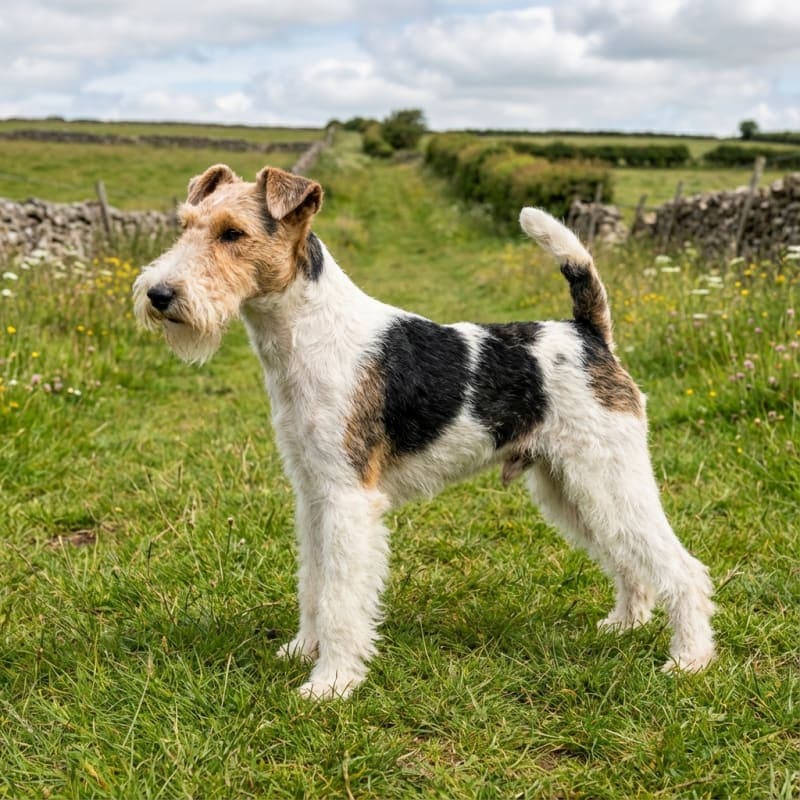
The Wire Fox Terrier is a dog with a characteristic, athletic build and strong body structure. According to the FCI standard, the height at the withers should not exceed 39 cm, with the ideal weight for an adult male being around 8.25 kg. A proportional skeleton and well-defined muscles provide it with agility, strength, and endurance.
The most recognizable feature of the breed is its dense, rough coat with a specific texture. On the shoulders, the hair reaches a length of about 2 cm, while on the back it can reach up to 4 cm. The dominant color is white with black or reddish patches, although other color combinations, such as black and tan, are also possible. The proper structure of the coat requires regular grooming, including trimming, to maintain the appropriate hardness and appearance.
The head of the Fox Terrier is strong and expressive, with a flat skull that gradually narrows towards the eyes. The muzzle of appropriate length harmoniously transitions into the braincase. Dark, round eyes express intelligence and alertness, typical of this breed. Small V-shaped ears fall forward, lying close to the cheeks, giving the dog a characteristic expression.
The neck is muscular and dry, gradually widening towards the shoulders. The torso is short and straight, with a deep chest, emphasizing the sporty character of its build. The front and hind limbs are straight, strong, and well-muscled, providing excellent mobility and the ability for quick direction changes. The tail, traditionally carried high, is thicker at the base and tapers towards the end. In many countries, tails are no longer docked, allowing the Fox Terrier to maintain its natural silhouette.
The overall appearance of the Wire Fox Terrier emanates energy, agility, and readiness for action. Its harmonious proportions and distinctive coat make it easily recognizable and valued among terrier breed enthusiasts worldwide.
The Wire Fox Terrier is a dog with a lively, active, and friendly disposition that loves the company of people and other animals. It is an extremely sociable breed that forms strong emotional bonds with its family members and eagerly participates in all household activities.
A characteristic feature of the Fox Terrier is its alertness and courage. Thanks to these traits, it excels as an alarm dog, reliably warning of approaching strangers. However, it is not aggressive – its reactions are more a reflection of alertness than hostility. The innate hunting instinct may cause the Fox Terrier to show interest in smaller animals, which is why early socialization with other household members, including cats and rabbits, is extremely important.
Fox Terriers are intelligent and eager to learn, making them excellent participants in various forms of training and canine sports. Their energy and liveliness are contagious, making them wonderful companions for active families with children. However, it is important to remember that their strong temperament requires consistent guidance and clearly established boundaries to avoid behavioral problems.
Fox Terriers can be somewhat stubborn and independent in their decisions, which is typical for most terriers. Therefore, training should be based on positive reinforcement, patience, and consistency. Reward-based methods – such as treats, praise, or play – are much more effective than punishment or coercion. With the right approach, the Wire Fox Terrier will become a loyal, devoted, and joyful companion that will fill the home with energy and love for many years.
The Wire Fox Terrier is a breed that is relatively healthy and long-lived, which can enjoy life for 12-15 years with proper care. However, like most purebred breeds, there are certain conditions that Wire Fox Terriers may be more prone to.
The most common health issues include ocular disorders, such as cataracts, corneal dystrophy, or primary lens luxation (PLL). Regular eye examinations by a veterinary specialist allow for early detection and monitoring of these conditions. It is also important to pay attention to skin diseases, as the dense, rough coat can promote the accumulation of dirt, bacteria, and moisture, increasing the risk of skin infections and folliculitis.
Some individuals may experience orthopedic problems, such as patellar luxation or hip dysplasia, although these are relatively rare in this breed. Wire Fox Terriers may also be susceptible to neurological diseases, including idiopathic epilepsy, which requires long-term treatment and monitoring.
The key to maintaining good health in a Wire Fox Terrier is regular veterinary visits, up-to-date vaccinations, deworming, and prevention against external parasites. Equally important is a properly balanced diet, tailored to the dog's age, weight, and activity level, which helps prevent obesity—a problem that can lead to many health complications.
An active lifestyle and regular physical exercise not only support physical condition but also positively impact the mental health of the Wire Fox Terrier. Dogs of this breed require mental and physical stimulation to maintain emotional balance and avoid behavioral problems stemming from boredom. Proper health prevention and a holistic approach to care are the foundation of a long, happy, and active life for the Wire Fox Terrier.
The care of the Wire Fox Terrier is a key element in maintaining its health, comfort, and characteristic appearance. This breed has a dense, rough coat with a specific texture that requires regular and specialized grooming.
The most important procedure is brushing, which should take place at least once a week, preferably 2-3 times. Using a brush with stiff bristles or a special comb, we remove dead hair, dirt, and prevent matting. Regular brushing also stimulates blood circulation in the skin and improves coat condition.
Trimming is an absolutely essential procedure for the Wire Fox Terrier. Unlike clipping, trimming involves manually plucking out dead hair, which helps maintain the proper, coarse structure of the coat. This procedure should be performed by an experienced groomer every 2-3 months. Clipping with a machine is not recommended, as it alters the hair texture, making it soft and devoid of its characteristic roughness.
Bathing should not be too frequent – 3-4 times a year or when absolutely necessary is sufficient. Too frequent washing can disrupt the natural protective layer of the skin and lead to dryness. It is important to use specialized shampoos for dogs with rough coats that do not damage the hair structure. After bathing, the dog should be thoroughly dried to prevent colds and skin infections.
Caring for the ears requires regular checking and cleaning – at least once a week, the inside of the ears should be checked for redness, unpleasant odors, or excess wax. Cleaning the ears with special veterinary solutions prevents infections. Oral hygiene is equally important – brushing teeth 2-3 times a week prevents the formation of tartar and periodontal disease.
Nails should be regularly trimmed – usually every 3-4 weeks, depending on the intensity of walks. Overgrown nails can cause discomfort while walking and lead to orthopedic problems. Checking the eye area and removing discharge should also be part of the daily grooming routine.
The Wire Fox Terrier requires commitment to grooming, but with regular procedures and cooperation with a professional groomer, its coat will always be in excellent condition, and the dog will be healthy and comfortable.
The Wire Fox Terrier is a breed that is extremely energetic and active, requiring a significant amount of exercise and physical stimulation to maintain physical health and mental balance. These lively dogs are not suited for a calm, sedentary lifestyle – they need owners who are equally active and engaged.
The minimum amount of physical activity is 1-2 hours a day, divided into several sessions. Daily walks should be varied with different forms of movement: brisk walking, running, fetching a ball or frisbee, and playing hide-and-seek with treats. Fox Terriers love activities that engage their hunting instinct, such as scent tracking or playing hide and seek.
Due to their strong temperament and intelligence, Fox Terriers excel in canine sports such as agility, flyball, obedience, or rally-o. These disciplines not only provide physical exertion but also stimulate the dog's mind, which is just as important as physical activity. Boring, repetitive training can quickly bore a Fox Terrier, so it's worth introducing variety and new challenges.
It is important to provide the Fox Terrier with access to a safe, fenced area where it can run freely and explore. Due to their strong hunting instinct, Fox Terriers should not be let loose in places where they can chase small animals or wander off in pursuit of a scent. Leashed walks in new, interesting places are an excellent form of sensory stimulation.
Lack of appropriate activity can lead to behavioral problems, such as excessive barking, destructive behaviors, or disobedience. A Fox Terrier that does not have the opportunity to release energy becomes frustrated and may seek to relieve itself in undesirable ways for the owner.
Training and exercises should be tailored to the age and condition of the dog. Puppies require shorter but more frequent activity sessions, while older dogs may need calmer forms of movement. Regular, moderate activity throughout life is the key to longevity, health, and happiness for the Wire Fox Terrier.
Training a wire-haired fox terrier is a fascinating challenge that requires consistency, patience, and a positive attitude. This breed is intelligent, learns quickly, but can also be stubborn and independent, which is typical for most terriers. Proper training from puppyhood is key to raising a balanced, obedient, and confident dog.
Early socialization is absolutely essential. A fox terrier puppy should be exposed to various environments, people, animals, sounds, and situations from the youngest weeks of life (after vaccinations are completed). Exposure to new stimuli in a positive way will help the young dog develop confidence and prevent anxiety or aggression issues in the future. Interaction with other dogs in controlled conditions, such as puppy classes, is an excellent way to learn appropriate social behaviors.
Fox terriers respond best to positive reinforcement methods, based on rewards, praise, and play. Physical punishment or aggressive training methods are not only ineffective but can lead to behavioral problems and a loss of trust in the caregiver. Treats, a favorite toy, or enthusiastic praise are excellent motivators for a fox terrier.
Basic obedience commands, such as Sit, Stay, Come, Lie down, or Leave it, should be introduced gradually, in short, intense training sessions. Fox terriers have a short attention span, so sessions of 5-10 minutes, several times a day, are more effective than long, monotonous training. Consistency in giving commands and expectations is absolutely crucial – a fox terrier will quickly pick up on inconsistencies and will try to test the boundaries.
Due to their strong hunting instinct, the command Come is particularly important and requires intensive training. Fox terriers tend to ignore calls when they are focused on a scent, so it is worth training this command in various environments and with increasing levels of distraction. Using a long training leash in the early stages of learning can be very helpful.
Fox terriers excel in canine sports that combine physical effort with mental tasks. Agility, flyball, obedience, dog dancing, or nosework are just some of the disciplines in which fox terriers perform excellently. Participation in such activities not only develops the dog's skills but also strengthens the bond with the caregiver and provides stimulation on many levels.
Behavioral problems, such as excessive barking or digging, are often the result of lack of stimulation or improper redirection of natural instincts. Instead of punishing undesirable behaviors, it is essential to provide the fox terrier with appropriate activities and teach them alternative, acceptable forms of behavior. Regular training, physical and mental activity, and consistent handling will ensure that the wire-haired fox terrier becomes a wonderful, confident, and obedient companion.
A properly balanced diet is the foundation of health and condition for the wire-haired fox terrier. The composition of the food, its quality, and quantity should be carefully tailored to the age, weight, activity level, and individual health needs of each dog.
Fox terriers tend to be prone to obesity if their food rations are not controlled. Being overweight can lead to a range of health problems, including joint strain, heart disease, or diabetes. Therefore, it is crucial to adhere to the recommended daily calorie intake and avoid overfeeding with treats or table scraps.
High-quality food – dry or wet – should form the basis of the diet. It is advisable to choose products containing natural ingredients, with animal protein as the first ingredient on the list. The food should be rich in high-quality protein (25-30% of the composition), healthy fats (about 12-16%), a moderate amount of carbohydrates, and essential vitamins and minerals. Foods with a high content of fillers, artificial colors, preservatives, or unnamed by-products should be avoided.
Supplementation can be beneficial, especially for older or active dogs. Omega-3 and omega-6 fatty acids support skin and coat health, which is particularly important for fox terriers due to their specific hair structure. Glucosamine and chondroitin can support joint health in older or very active dogs. Before introducing any supplements, it is advisable to consult with a veterinarian.
Fox terriers can benefit from natural treats, such as raw carrots, apples (without seeds), broccoli, or green beans. They work well as training rewards and provide additional vitamins. However, it is important to avoid feeding dogs foods that are toxic to them, such as chocolate, onions, garlic, grapes, raisins, avocados, or products containing xylitol.
The number of meals should be adjusted to the dog's age: puppies should eat 3-4 times a day, young dogs (6-12 months) 2-3 times, and adult dogs most often 2 times a day. Older dogs can also benefit from two smaller meals. It is important to ensure that the dog has access to fresh water throughout the day.
Regular monitoring of the weight and body condition of the fox terrier is crucial. Visits to the veterinarian and periodic assessment of the BCS (Body Condition Score) allow for ongoing adjustments to the diet according to the changing needs of the dog. Proper nutrition is an investment in a long, healthy, and active life for the wire-haired fox terrier.
Characteristic Traits
Pros
- Friendly and sociable
- Very active and alert
- Intelligent and easy to train
- Excellent for canine sports
- A healthy and long-lived breed.
Cons
- Requires a large amount of physical activity
- Strong hunting instinct
- Can be stubborn and independent
- Requires regular trimming
- Needs consistent training and socialization.
Behavioral Ratings
Breed History
The Wire Fox Terrier has a fascinating history dating back to the late 18th and early 19th centuries, when it was bred in Great Britain as a specialized hunting dog. Its ancestors were used by English hunters to hunt foxes, badgers, and other burrowing animals. The name fox terrier comes from the English word fox, which clearly indicates the breed's original purpose.
At that time, hunters needed dogs of small size, courage, and determination that could penetrate narrow burrows and flush out or catch game. Fox Terriers also had to be intelligent, independent in decision-making, and extremely resilient to meet the demands of intense hunting. Their wiry coat provided natural protection against thorns, underbrush, and changing weather conditions.
The Wire Fox Terrier and its smooth-coated cousin were initially treated as one breed, differing only in coat type. It was not until 1876 that the English Kennel Club officially recognized both varieties as separate breeds. From that moment on, breeders began systematically working to establish the distinctive traits of each variety.
At the turn of the 19th and 20th centuries, Fox Terriers gained immense popularity not only as hunting dogs but also as companion and show dogs. Their elegant appearance, lively temperament, and charismatic personality attracted the attention of aristocrats and dog lovers worldwide. Fox Terriers regularly won top awards at prestigious shows, including the famous Westminster Kennel Club Dog Show in the United States.
In the 20th century, the breed was developed and refined by experienced breeders who aimed to preserve the original working traits while also perfecting the exterior. The breed standard has been updated multiple times to reflect the desired traits of structure, temperament, and coat. The modern Wire Fox Terrier has retained many characteristics of its ancestors—courage, intelligence, energy, and determination—but has also become a wonderful family dog.
Today, the Wire Fox Terrier is valued worldwide as a versatile companion that excels both as a sporting dog and a beloved family member. Its rich history and heritage make it one of the most recognizable and respected breeds among terriers. The breed is recognized by the FCI (Fédération Cynologique Internationale) and is classified in Group 3, Section 1 – Large and Medium Terriers.