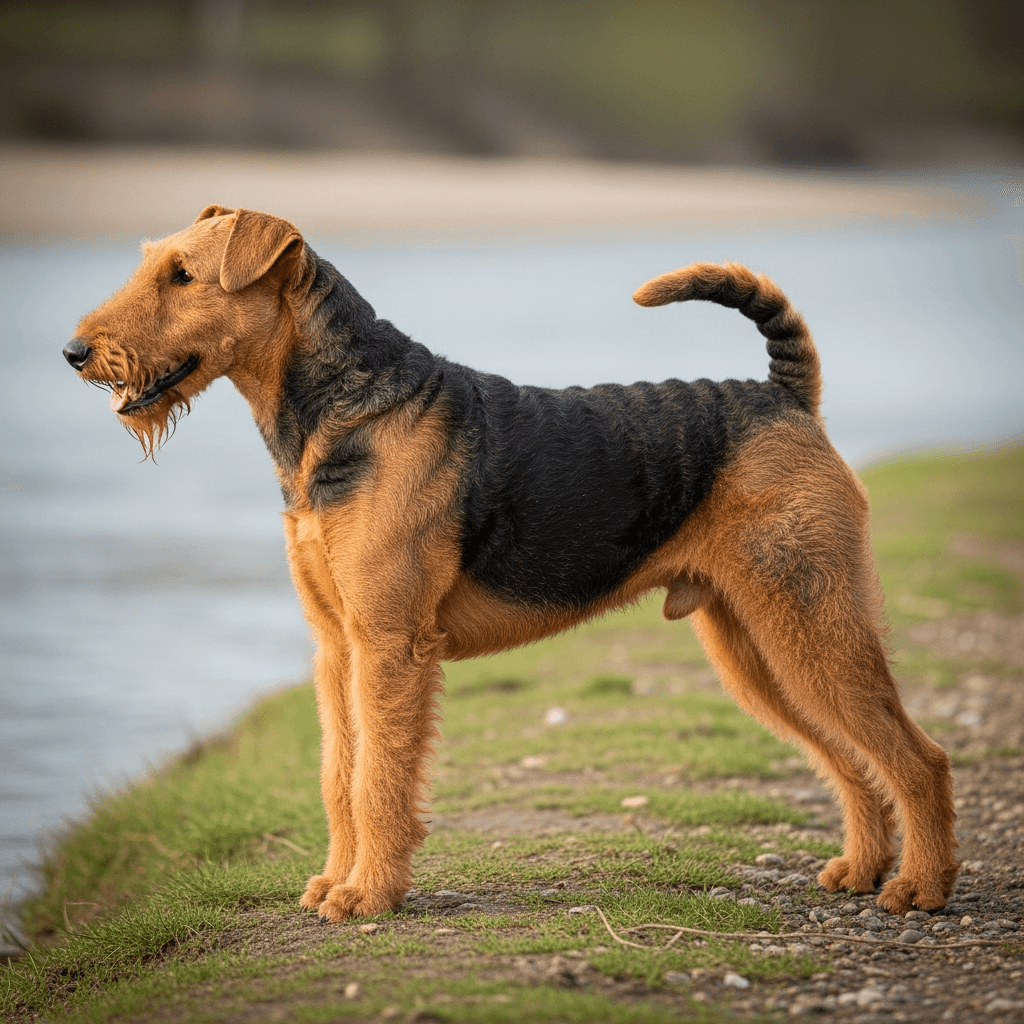
Airedale Terrier
FCI Group
3• FCI 7
Size
Medium
Origin Country
GB
Height
56-61 cm
Weight
20-29 kg
Lifespan
10-12 years
Temperament
Overview
Airedale Terrier, proudly known as the king of terriers, is a breed of remarkable versatility, outstanding intelligence, and exceptional character. Bred in the Aire Valley in Yorkshire, England, the Airedale Terrier has gained worldwide recognition not only as a superb hunting and working dog but also as an unparalleled family companion, combining elegance with strength, courage with gentleness.
Its balanced temperament, combined with outstanding intelligence, bravery, and loyal devotion, makes it an ideal choice for active families seeking a faithful partner for shared adventures. As the largest representative of the terrier group, the Airedale embodies all the characteristic traits of this family of dogs - fearless character, keen interest in the environment, independent thinking - with an impressive physique and versatility of use.
Historical achievements of the Airedale Terrier:
- Tracking dog - used in Africa, India, and Canada for tracking game
- Military service - supported the British and Russian armies during World War I and II
- Red Cross dog - located injured soldiers on battlefields
- Police dog - served in British, German, and American police forces
- Rescue dog - used for searching missing persons
In the past, thanks to its excellent sense of smell and remarkable endurance, the Airedale served as a tracking dog in various parts of the world, working in the most challenging climatic conditions. During World War I and II, Airedale Terriers were invaluable support for the Red Cross, locating injured soldiers on the battlefield, delivering messages through enemy lines under fire, and supporting intelligence operations. Their loyalty, courage, and ability to work in extreme conditions made them legendary war dogs.
Their history dates back to the 19th century, when they were bred by the working class of the Aire Valley, needing versatile dogs capable of hunting otters and rats in harsh coastal conditions. The Airedale, as a large, muscular, and athletic dog, is an excellent companion for an active lifestyle - it loves long hikes, swimming, agility, and all forms of cooperation with humans. It requires regular, intense physical activity and mental challenges, which promote its healthy physical and mental development.
However, its outstanding intelligence makes it easy to train with the right approach, although it may sometimes exhibit the typical independence and stubbornness of terriers. Properly socialized and trained Airedale Terriers become wonderful family members, enjoying playtime with children and guarding their home with a vigilance worthy of a professional guardian. Their sensitivity to new stimuli, combined with natural courage, makes them excellent home guardians without excessive aggression.
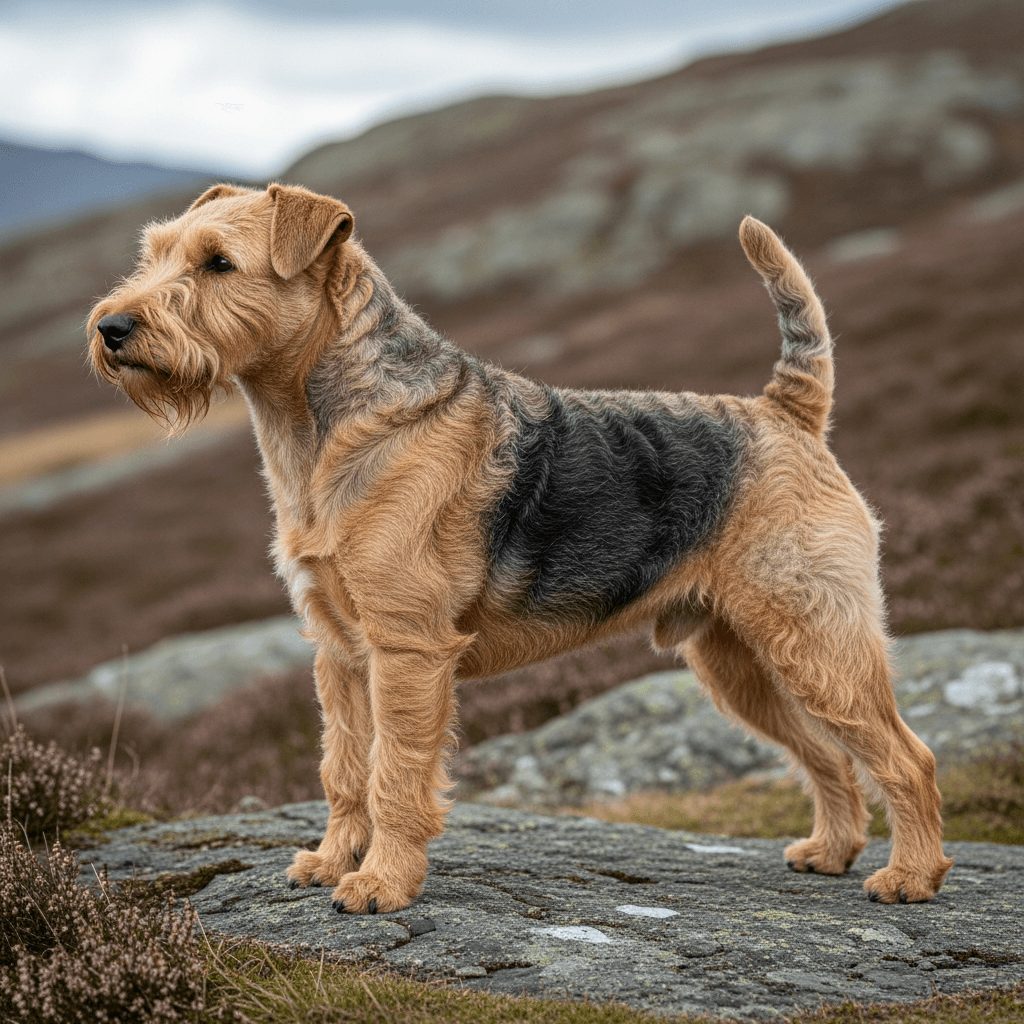
This breed requires constant interaction with people and regular mental stimulation to develop its rich social and intellectual skills. With its characteristic dense, hard, and wiry coat, Airedale Terriers stand out among other breeds with an elegant and aristocratic appearance. Their beautiful coloration - typically a black or gray-black saddle on the back with rich tan markings on the head, ears, legs, and belly - adds to their unique charm and recognizability.
Moreover, their resistance to cold and moisture due to their double coat makes them comfortable even in challenging weather conditions, making them ideal companions for outdoor enthusiasts year-round. The Airedale Terrier is the perfect choice for active families looking for an intelligent, loyal dog for companionship and shared sporting adventures.
In the following sections of this comprehensive guide, you will learn in detail about health, professional grooming, activity requirements, training methods, proper nutrition, fascinating history, appearance details, and the behavior of this exceptional and noble dog breed.
The Airedale Terrier is a dog with a unique, muscular body structure, distinguished as the largest representative of the terrier group by its impressive silhouette and harmonious proportions. It is a medium-built dog, without signs of excessive leg or body length, with an athletic build suggesting strength and endurance. According to the FCI standard from 2021, the height at the withers is:
- Males: about 58-61 cm (ideal 59-60 cm)
- Females: about 56-59 cm (ideal 56-58 cm)
- Weight: from 20 to 29 kg depending on gender and build
The characteristic head of the Airedale Terrier is well-balanced, with no visible difference in length between the skull and the muzzle, free of wrinkles. The skull is long and flat, not too wide between the ears, tapering slightly towards the eyes. The stop (forehead break) is barely noticeable. The muzzle is neither concave nor convex, with a well-filled area under the eyes, without deepening at the muzzle or hollowness of the cheeks.
The eyes are dark, small, neither protruding nor deeply set, full of terrier expression - alertness and intelligence. The ears are 'V' shaped with a break above the skull line, small but proportional to the size of the dog, carried close to the head, indicating alertness and keen interest in the surroundings. The jaws are strong, deep, and powerful, with an excellent, regular, and complete scissor bite.
The coat of the Airedale Terrier is its trademark - consisting of a hard, dense, and wiry outer coat lying close to the body and a shorter, soft undercoat. The outer coat is rough, hard, and wire-like, not long enough to appear shaggy. Some parts of the body are covered with shorter hair: the skull, ears, belly, inner thighs, and the area under the tail as well as above the elbows.
The coloration is characteristic and unique:
- Saddle - black or grizzle (gray-black) on the back, neck, and upper part of the tail
- Tan markings - rich tan (reddish-brown) on the head, ears, limbs, belly, and sides of the body
- Acceptable - a few white hairs between the front limbs are acceptable
- Not acceptable - white feet, visible white chest, red tan markings
The body structure reflects strength and athleticism:
- Neck - clean, muscular, of medium length and thickness, gradually widening towards the shoulders, without loose skin
- Back - short, strong, straight, and level, with muscular loins
- Chest - deep (reaching the elbows), but not wide, with well-arched ribs
- Front limbs - perfectly straight, with a strong bone structure, long and well-retracted shoulders
- Hind limbs - muscular, strong, with good angles at the knee joint
The tail is set high and carried joyfully, but not curved over the back. It should be strong and substantial. Traditionally, it was docked to about 2/3 of its length (where legal), but increasingly it is left at its natural length.
In motion, the Airedale Terrier moves with characteristic liveliness and agility, with both front and hind limbs moving straight forward, carried effortlessly. The elbows move freely along the sides of the body. From the front view: the front limbs should form a continuation of straight lines at the front. From the rear view: the hind limbs move parallel. The overall impression is of a smooth, fluid, energetic movement typical of an athletic terrier.
The Airedale Terrier is a dog with a unique, terrier-like personality that combines seemingly contradictory traits: friendliness and alertness, courage and balance, independence and loyalty. According to the FCI standard, this breed should be bright in expression, quick in movement, always on the lookout for any movement. Character is expressed and shown through the expression of the eyes, the position of the ears, and the erect tail.
Key temperament traits:
- Open and confident - approaches new situations with curiosity
- Friendly - very warm towards family and familiar people
- Brave - fearless in the face of challenges, a typical terrier
- Intelligent - quick to learn, sharp, capable of solving problems
- Always alert - an excellent watchdog, reacts to any suspicious sound
- Non-aggressive, yet fearless - defends without excessive aggression
Their temperament is generally stable and predictable, and with proper socialization from puppyhood, they become wonderful family companions for all family members. Airedales are extremely sharp and quick to learn new commands and tricks, making them one of the most intelligent terrier breeds. However, their independent character and terrier stubbornness can lead to challenges in training, so it is important to have a consistent, positive, and firm approach from a young age.
Airedales have a strong hunting and territorial instinct, a heritage from ancestors bred to hunt otters, rats, and other game. This makes them potentially fascinated by small animals (cats, rabbits, squirrels) and show a desire to chase, so caution should be exercised during walks and a leash should always be used in uncontrolled areas. Their alertness and sensitivity to unusual sounds make them excellent home guardians, who will warn of an intruder with loud barking, while maintaining balance and not showing excessive aggression.
In relationships with children, Airedale Terriers are usually patient, affectionate, and caring, but due to their large size and energy, play with small children should be supervised by adults. Older children often find in Airedales a wonderful playmate for games, hikes, and shared adventures. This breed responds well to respect and gentleness, but it is worth remembering that as a typical terrier, they may not tolerate overly intense, rough play or teasing.
Airedales are also very sensitive to their owners' emotions and the atmosphere in the home, which means they need a stable, calm, and loving environment. In stressful or conflict situations, they may show anxiety. Their moderate tendency to dominate means they can be somewhat territorial towards unfamiliar dogs of the same sex, so it is important to introduce them to new situations, people, and animals in a gradual, controlled, and positive manner.
Socialization and environment:
- Proper socialization between 8-16 weeks is crucial
- Exposure to various places, people, sounds, and animals prevents anxiety
- They need a lot of love, attention, consistent boundaries, and structure
- They do not cope well with prolonged solitude - they can become destructive
- They feel best as an integral part of the family with plenty of interaction
- They like to have a 'task to perform' - work, training, dog sports
These are dogs that need a lot of love, attention, activity, and clear boundaries to function well in a family and society. A bored or neglected Airedale may develop undesirable behaviors such as excessive barking, digging in the garden, or destroying objects. A well-cared-for Airedale Terrier is a loyal, loving, fun, and incredibly devoted companion for many years.
The Airedale Terrier is generally a healthy and resilient breed with a strong build and good immunity, allowing it to enjoy a long and active life with proper care. The average lifespan is between 10 to 13 years, with many individuals reaching 12-14 years under optimal living conditions and health care.
Potential health issues in the breed:
- Gastric torsion (GDV) - potentially fatal, requires immediate veterinary intervention
- Hip dysplasia (HD) - choose puppies from parents with BVA/OFA testing
- Cataracts and eye problems - progressive retinal atrophy (PRA)
- Hypothyroidism - affects metabolism, energy, coat
- Cerebellar ataxia - sporadic neurological disease
- Heart diseases - dilated cardiomyopathy, aortic stenosis
- Skin diseases - allergic dermatitis, hot spots
- Cancer - lymphoma, hemangiosarcoma in older individuals
Preventing gastric torsion (GDV) - particularly important for deep-chested breeds:
- Feeding 2-3 smaller meals a day instead of one large one
- Avoiding intense exercise 1-2 hours before and after meals
- Preventing rapid eating (slow feeder bowls)
- Feeding in a calm atmosphere without stress and competition
- Avoiding large amounts of water immediately after eating
- Considering preventive gastropexy during spaying/neutering
It is also important to note their sensitivity to high temperatures, as their double, dense coat can make it difficult for them to cope in hot, humid climates. On hot days, they should have access to shade, fresh water, and avoid intense exertion during the hottest hours. Conversely, in winter, Airedales tolerate the cold exceptionally well due to their insulating undercoat, which keeps them warm and protects them from moisture.
Owners should also be cautious of the tendency to obesity, as some Airedales may have a large appetite, and a combination with insufficient activity can lead to overweight. Obesity significantly increases the risk of joint problems, heart issues, diabetes, and shortens lifespan.
Health prevention:
- Regular veterinary visits - at least once a year, seniors twice a year
- Screening tests for parents - dysplasia, eye problems, thyroid
- Monitoring weight and physical condition (BCS - Body Condition Score)
- Vaccinations according to schedule and parasite prevention
- Teeth cleaning 2-3 times a week (preventing periodontal disease)
- Regular ear checks (especially after swimming)
- An active lifestyle supporting joint and heart health
When choosing a puppy, always check the health tests of the parents for hip dysplasia, eye problems (ophthalmologist certificate), and thyroid function, which significantly reduces the risk of these conditions in offspring. Responsible breeders conduct comprehensive health testing and are ready to provide medical documentation of the breeding line.
The grooming of the Airedale Terrier is a key aspect of caring for this breed and requires regularity, commitment, and proper technique to maintain the characteristic appearance and health of the coat. Their coat consists of two layers: a hard, coarse, and dense outer coat and a soft, shorter undercoat, which together provide excellent protection against water, cold, and mechanical damage.
Professional coat grooming - Hand Stripping:
- Hand stripping - a traditional method for show dogs, preserves the hardness and structure of the coat
- Frequency - every 8-12 weeks to maintain optimal coat condition
- Technique - manual removal of dead outer hair using a stripping knife or fingers
- Benefits - preservation of proper texture, color, and protective properties of the coat
- Alternative - clipping with a machine (for non-show dogs), but it causes softening and lightening of the coat
For owners of non-show dogs, regular clipping every 6-8 weeks is acceptable, which is easier and cheaper; however, it should be noted that it gradually changes the coat structure from hard and coarse to soft and fluffy. It is important to avoid excessive daily brushing of the hard outer coat, as this can damage its structure and lead to excessive removal of the undercoat.
Basic grooming schedule:
- Brushing - 2-3 times a week with a bristle brush and metal comb
- Bathing - every 4-8 weeks or when the dog is dirty, using shampoos for coarse coats
- Hand stripping/clipping - every 8-12 weeks to maintain shape
- Nail trimming - every 3-4 weeks or when tapping on the floor is heard
- Ear cleaning - weekly, especially after swimming (to prevent infections)
- Tooth brushing - 2-3 times a week (ideally daily)
- Trimming the beard and whiskers - shaping monthly for aesthetics
Airedales do not shed heavily like double-coated breeds, making them a relatively good choice for people with mild allergies (however, they are not hypoallergenic!). However, their coat can attract dirt, twigs, and debris during walks in the woods or outdoor play, so it is advisable to regularly check and clean the coat after active outings.
Owners should also remember to regularly clean the ears with special solutions, which will help prevent ear infections, especially in dogs that swim actively. Airedale ears, although not long and floppy like some breeds, require attention. During grooming, it is important to ensure the dog’s comfort and positive experiences by introducing brushing, bathing, and clipping gradually from puppyhood to avoid stress and resistance in adulthood.
Special areas requiring attention:
- Beard and whiskers - can collect food and water, requiring daily cleaning
- Paws and pads - trimming hair between the toes prevents slipping and collecting snow/ice
- Eye area - gentle trimming for better visibility
- Genital area - hygiene requires regular hair shortening
Maintaining the Airedale Terrier's cleanliness and caring for its beautiful, characteristic coat contributes not only to aesthetic and elegant appearance but also to the overall well-being of the dog, skin health, protection against parasites, and thermal comfort in various weather conditions.
The Airedale Terrier is a breed of dogs with very high energy, endurance, and activity needs, requiring a significant amount of intense exercise every day to remain happy, healthy, and mentally balanced. Originally bred for intensive hunting work - hunting otters in rivers and chasing game across difficult terrain - they possess immense energy reserves and incredible stamina.
Minimum activity requirements:
- Daily activity time - at least 60-90 minutes of intense effort
- Ideal - 90-120 minutes of varied activity for young, healthy individuals
- Types of activities - long walks, running, swimming, agility, play
- Mental stimulation - just as important as physical, 15-30 minutes daily
Ideal forms of activity for the Airedale Terrier:
- Long, energetic walks - 5-10 km daily in varied terrain
- Running alongside a bike - an excellent way to exercise for active owners (15-20 km)
- Jogging - Airedales make great long-distance running partners
- Swimming - a natural love for water, low-impact activity for joints
- Fetching - balls, artificial game, frisbees - satisfies the work instinct
- Agility - an obstacle course that utilizes intelligence and athleticism
- Flyball - a dynamic team play
- Nosework/tracking - utilizing their natural sense of smell
- Wandering/trekking - long mountain or forest hikes
- Playing with other dogs - socialization and physical effort
Airedales were originally bred as hunting dogs working in water, which is why they have a high motivation to run, swim, and explore new areas, making them excellent companions for active families, runners, cyclists, and outdoor enthusiasts. Their name comes from the valley of the River Aire, where they assisted hunters in hunting otters - hence their natural love for water and swimming.
It is important to keep them on a leash during walks in uncontrolled areas, as their strong hunting instinct can lead to chases after prey - squirrels, cats, rabbits, or birds. In a safe, enclosed area, they can be allowed to run freely, which is extremely important for their physical and mental well-being.
In addition to physical activity, Airedales also need intensive mental challenges, such as:
- Scent games (hiding treats, scent mats)
- Interactive toys and puzzles for dogs (Kong, Nina Ottosson)
- Learning new tricks and commands
- Obedience training and impulse control
- Clicker sessions and shaping
These activities prevent boredom and behavioral problems resulting from a lack of stimulation. This breed tolerates various forms of activity well, so it is worth introducing variety into daily training to maintain their interest and motivation.
Consequences of insufficient activity:
- Behavioral problems - anxiety, hyperactivity, difficulty relaxing
- Destructive behaviors - chewing furniture, destroying items, tearing cushions
- Excessive barking or howling out of frustration and boredom
- Digging in the garden (tracking instinct)
- Escaping and wandering in search of adventures
- Weight problems, obesity, and related diseases
- Depression, apathy, and health issues
- Training difficulties due to excess unused energy
Therefore, it is extremely important for Airedale Terrier owners to be active, engaged, and sport-oriented, ready for daily long activities with their dogs regardless of the weather or season. A bored, under-exercised Airedale is an unhappy dog and a challenge for the owner. A physically and mentally tired Airedale is a calm, balanced, and happy companion at home.
Training an Airedale Terrier can be both a satisfying challenge and a source of immense joy, provided the right methods are applied and the terrier nature of the breed is understood. They are exceptionally intelligent dogs that quickly learn new commands, tricks, and tasks; however, their independent, terrier-like character and stubbornness sometimes lead them to question authority or choose their own solutions.
Key principles for effective Airedale Terrier training:
- Positive reinforcement - praise, high-value treats, play as rewards
- Consistency and firmness - clear rules from all family members
- Early start - training from 8-10 weeks of puppy life
- Short, dynamic sessions - 10-15 minutes several times a day (avoiding boredom)
- Diversity and creativity - changing exercises, locations, challenges
- Patience without harshness - avoiding frustration, yelling, and physical punishment
- Immediate rewards - timing is crucial for effective learning
- Play as motivation - Airedales learn best through play
The key to effective training is using only positive reinforcement methods, which means rewarding the dog with high-value treats (meat, cheese, chicken), enthusiastic praise, and their favorite toy for good behavior. Harsh, punitive methods, yelling, or physical punishment are completely ineffective and harmful to the Airedale - they destroy trust, lead to fear, defensive aggression, and a complete lack of willingness to cooperate.
Airedale Terriers are very sensitive to their owners' emotions and the atmosphere during training, so it is important that training takes place in a calm, positive, and fun environment. If the owner is frustrated, upset, or impatient, the dog will sense this and disengage from learning. The best results are achieved when training is seen by the dog as fun and quality time with their favorite person.
Socialization - absolutely crucial!
- Start during the critical period of 8-16 weeks of life
- Exposure to different people (children, adults, seniors, various ethnicities)
- Contact with various dogs (sizes, breeds, ages, temperaments)
- Diverse locations (city, park, forest, beach, shops, train station)
- Different sounds (traffic, thunder, fireworks, children, tools)
- New surfaces (stairs, metal grates, slippery floors)
- Animals (cats, birds, rabbits - under control)
Socialization is extremely important to prevent behavioral problems such as anxiety, excessive vigilance turning into reactivity, or aggression towards unfamiliar dogs or people. Owners should also remember that Airedales need constant mental stimulation throughout their lives, so it is worth continuing to teach new commands, tricks, and activities even in adulthood.
Priority training areas:
- Basic commands - sit, stay, come (the most important!), leave it, heel, lie down
- Reliable recall - crucial for safety and off-leash play
- Loose-leash walking - no pulling, focusing on the owner
- Impulse control - wait, leave it, look at me
- Staying alone - gradually getting used to short absences
- Control of hunting instinct - not chasing cats, birds, squirrels, bicycles
- Meetings with strangers - polite greetings without jumping
- Quiet on command - controlling barking
Regular, fun and engaging training sessions will help maintain the terrier's attention and make learning enjoyable for both parties. It is important not to allow puppies to develop bad habits (such as jumping on people, biting hands during play, pulling on the leash, barking at every sound), as correcting these later is much more difficult and time-consuming. What is funny in a 3-month-old puppy (jumping, nipping) becomes a serious problem in a 25-kilogram adult dog.
Airedale Terriers excel in advanced forms of training and dog sports such as:
- Agility - utilizing athleticism and intelligence
- Obedience - advanced obedience
- Nosework/K9 Scent Work - tracking scents
- Flyball - dynamic team play
- Rally Obedience - obedience with elements of fun
- Tracking - following trails
These types of activities are an excellent way to build a deep bond with the dog, utilize their full intellectual potential, and ensure satisfaction from teamwork. Airedales love to have a 'task to perform' - it gives meaning to their energy and intelligence.
The nutrition of the Airedale Terrier is an essential aspect of caring for its health, energy, and well-being throughout its life. Owners should provide their dog with high-quality food tailored to its age, weight, activity level, and health status to support its athletic build and active lifestyle.
Basic nutrition guidelines for Airedale Terriers:
- Premium food - high animal protein content (minimum 25-30%)
- Healthy fats - omega-3 and omega-6 for healthy coat, skin, and joints (12-18%)
- Controlled carbohydrates - complex sources (brown rice, oats, sweet potatoes)
- Glucosamine and chondroitin - joint support (important for an active breed)
- Fiber - for healthy digestion and a feeling of fullness
- Vitamins and minerals - a comprehensive set for health
Ingredients to look for in high-quality food:
- Animal protein as the first ingredient - chicken, beef, fish, lamb, turkey
- Named meat sources (not 'meat and animal derivatives')
- Healthy fats - salmon oil, flaxseed oil, poultry fat
- Fruits and vegetables - berries, carrots, spinach, pumpkin (antioxidants)
- Prebiotics and probiotics for gut health
- NO artificial additives - colors, preservatives, artificial flavors
- Limited amounts of fillers (corn, excess wheat)
Owners should pay special attention to the composition of the food and avoid low-quality products with artificial substances, excessive grains as cheap fillers, and unclear meat sources ('meat and animal derivatives'), which can be harmful to the dog's health and lead to food allergies, digestive problems, or low energy levels.
Feeding schedule by age:
- Puppies (2-6 months) - 3-4 meals a day, large breed puppy food
- Young dogs (6-12 months) - 2-3 meals a day, gradual transition to adult food
- Adult dogs (1-7 years) - 2 meals a day (morning and evening)
- Active/work dogs - possible increase in portions or high energy food
- Seniors (7+ years) - 2 meals a day, senior food with reduced calories
Airedales, due to their high activity, large size, and muscular build, may require more calories than the average dog of their weight - especially during intense sports training, hunting, or in cold weather. However, it is equally important to prevent overeating and obesity, which can strain joints, lead to heart problems, diabetes, and significantly shorten lifespan.
Preventing gastric torsion (GDV) through proper feeding:
- Feeding 2-3 smaller meals instead of one large meal
- Avoiding intense exercise 1-2 hours before and after meals
- Feeding in a calm atmosphere without stress, haste, or competition
- Using slow-feeding bowls for dogs that eat too quickly
- Ensuring access to water at all times, but not in large amounts right after meals
- Avoiding excitement and running immediately after eating
Some Airedales may be picky eaters, while others have a big appetite and a tendency to overeat. Therefore, it is worth:
- Experimenting with different types of food (dry, wet, mixed)
- Considering rotating proteins (chicken, beef, fish every few months)
- Monitoring the dog's reaction to individual ingredients
- Controlling portions according to the manufacturer's guidelines and the dog's condition
- Using treats as rewards in training (counting them against the daily portion)
It is also important to ensure the dog has access to fresh, clean water at all times, especially on hot days, after intense exercise, during the summer, and after eating dry food. Regular monitoring of the dog's weight and physical condition (BCS - Body Condition Score assessment: ribs should be felt under a thin layer of fat, visible waist from above and marked from the side) and adjusting food portions according to its activity level, season, and age will help maintain a healthy weight and prevent obesity or underweight.
In case of any health issues, food allergies, digestive problems, or unusual reactions, owners should immediately consult a veterinarian to adjust the diet to the dog's individual health needs. Some Airedales may require special diets (low grain, grain-free, limited ingredient) due to allergies or food sensitivities.
Characteristic Traits
Pros
- Exceptionally intelligent and easy to train with the right approach
- Excellent companion for active families and athletes
- Versatile - suitable for many activities
- Resistance to cold and harsh conditions thanks to double coat
- Balanced temperament without excessive aggression
- Friendly and gentle attitude towards the family
- Excellent guardian - alert without excessive barking
- Exceptional courage and loyalty.
Cons
- Requires a lot of physical and mental activity (90-120 minutes daily)
- Can be stubborn and independent in training (typical terrier)
- Needs constant interaction with people - does not cope well with loneliness
- Requires professional grooming (hand stripping or clipping)
- Strong hunting instinct - may chase small animals
- Can be territorial towards unfamiliar dogs of the same sex
- Tendency to obesity with insufficient activity
- Not suitable for inactive people or those living in small spaces.
Behavioral Ratings
Breed History
The Airedale Terrier is a breed with a rich, fascinating history dating back to the mid-19th century, deeply rooted in industrial Yorkshire in northern England. It originates from the Aire River valley (hence the name 'Airedale'), where it was bred by the working class - miners, factory workers, and hunters - who needed versatile, tough dogs capable of working in the most challenging conditions.
Origin and development of the breed:
This breed was created through careful crossbreeding conducted around the towns of Bingley, Keighley, and Skipton in Yorkshire. The goal was to create the ideal hunting dog for otters in the Wharfe, Calder, and Aire rivers - hence the original name 'Waterside Terrier'. Breeders crossed the following breeds:
- Otterhound - added scenting ability, love of water, and endurance
- Old English Black and Tan Terrier (now extinct) - contributed terrier-like character and courage
- Bull Terrier - increased strength, determination, and toughness
- Probably Irish Terrier and Bedlington Terrier - influence on appearance and character
The result was the creation of the largest of all terriers - a dog that combines terrier-like courage and determination with the size, strength, and versatility of larger working breeds.
Key stages in the breed's development:
- 1850-1860 - Early crossbreeding in the Aire valley, emergence of the 'Waterside Terrier'
- 1864 - First dog shows at the Airedale Show (which named the breed)
- 1879 - Official recognition of the name 'Airedale Terrier'
- 1886 - Establishment of the breed club in England (Airedale Terrier Club)
- 1888 - Official recognition by the Kennel Club in the UK
- 1900 - First Airedales in America
- 1910 - Recognition by the American Kennel Club
Versatility of use:
Originally, Airedales were used for hunting otters in rivers - dangerous, demanding dogs capable of working in cold water and fighting aggressive game. However, their intelligence, courage, and versatility quickly led them to find roles in many other areas:
- Hunting various animals - otters, rats, foxes, wild boars
- Herding dogs - guarding sheep and cattle
- Guard dogs - protecting farms and estates
- Police dogs - in the UK, Germany, USA
- Military dogs - World War I and II
- Rescue dogs - searching for missing persons
- Companion dogs - loyal family members
Military service - a heroic story:
During World War I (1914-1918), Airedale Terriers played an indispensable role in the military operations of the British, Russian, and German armies. Their tasks included:
- Messenger dogs - delivering messages across the front lines under fire
- Red Cross sanitary dogs - locating wounded soldiers on the battlefield
- Guard dogs - protecting camps and warning of danger
- Tracking dogs - detecting enemy patrols
- Material transport - carrying ammunition, water, and medical supplies in difficult terrain
One of the most famous war Airedales, Jack, was posthumously awarded the Victoria Cross for bravery - he ran 7 miles through enemy lines with a critical message that saved a battalion, despite being severely wounded. He reached his destination and died shortly after delivering the message.
During World War II, the role of Airedales was diminished due to the popularity of German Shepherds, but they still served in various auxiliary roles.
Police and service dogs:
In the early 20th century, before the popularity of German Shepherds, the Airedale Terrier was the most commonly used police dog in the UK and the United States. Their intelligence, courage, loyalty, and versatility made them ideal for:
- Tracking criminals
- Patrolling areas
- Protecting officers
- Searching for missing persons
Popularity and modernity:
After World War I, the Airedale Terrier gained immense popularity as a family dog and companion, especially in America and the UK, where it was valued by presidents (Theodore Roosevelt, Warren Harding, Calvin Coolidge owned Airedales) and the aristocracy. In the 1920s and 1930s, it was one of the most popular breeds in the USA.
Today, the Airedale Terrier remains a respected breed valued for its distinctive traits - intelligence, versatility, friendliness, and ability to work in various roles. It is a symbol of terrier courage, British canine heritage, and the extraordinary bond between humans and working dogs. Although it is no longer as common as in its peak popularity, it still has a loyal group of enthusiasts worldwide who appreciate its unique qualities.