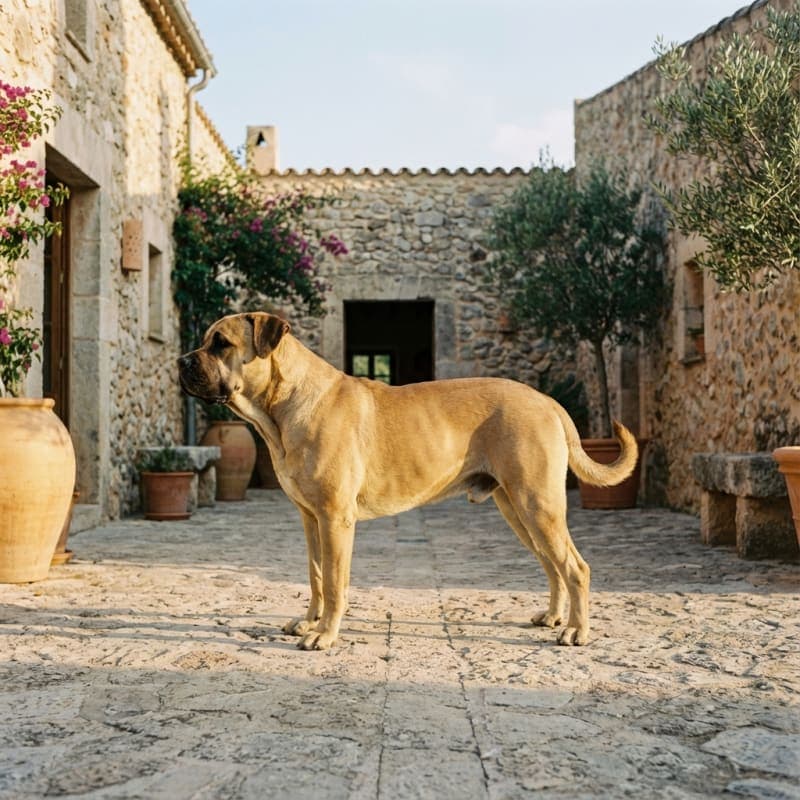
Dog from Mallorca
FCI Group
2• FCI 249
Size
Medium
Origin Country
ES
Height
52-58 cm
Weight
30-38 kg
Lifespan
10-12 years
Temperament
Overview
Dog from Mallorca, also known as Perro Dogo Mallorquín or Ca de Bou, is a fascinating breed originating from the picturesque Spanish island of Mallorca. This typical molosser with a solid build and musculature attracts attention with its powerful appearance and noble character. This breed combines strength and courage with extraordinary gentleness towards its loved ones.
The history of this breed dates back to ancient times when these dogs protected Mediterranean ports from pirates and robbers. Dog from Mallorca was created by crossing Iberian mastiffs with fighting dogs brought by the British in the 17th century. For centuries, it served various functions - from guarding and hunting to bullfighting, which was popular in the 18th century.
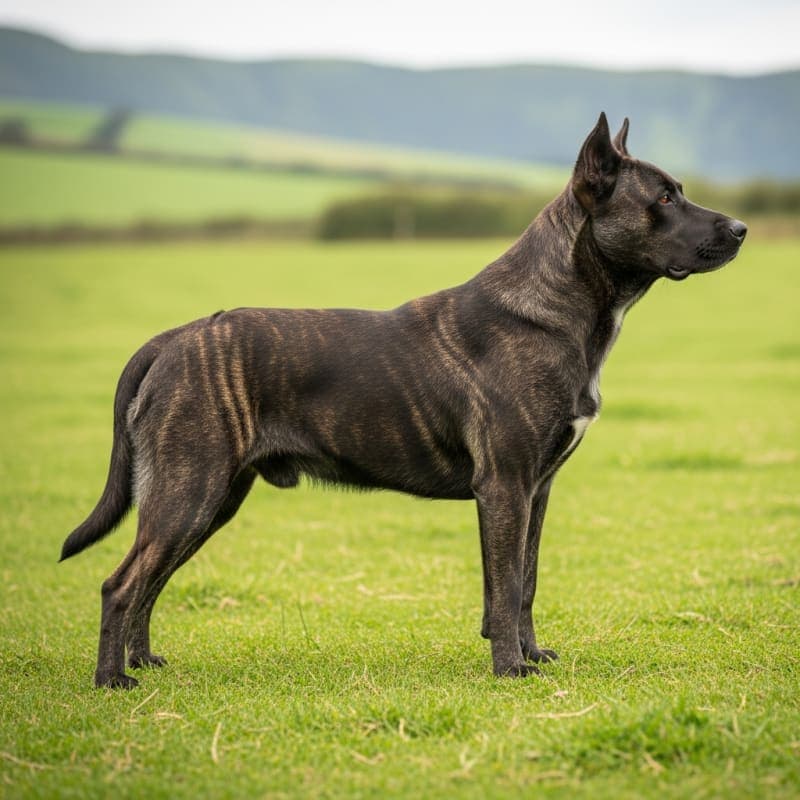
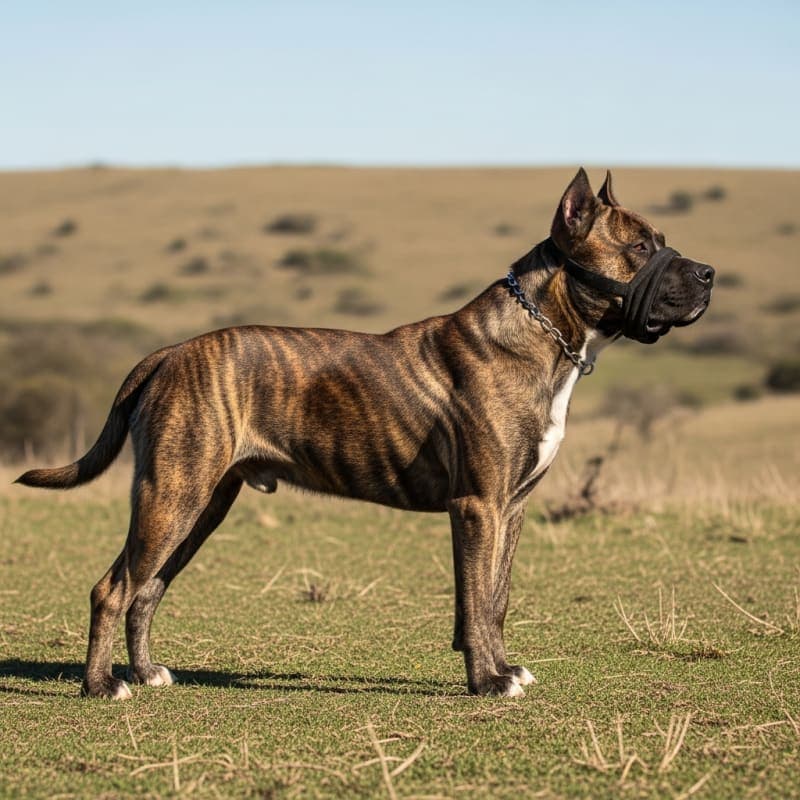
Physically, it is a medium-sized dog, reaching a height at the withers of 52 to 58 cm and a weight of 30 to 38 kg. Its most characteristic feature is the massive head with a broad skull and powerfully developed jaw muscles. The short, hard coat comes in various color variations - brindle, fawn, and black, often with white markings.
The temperament of the Dog from Mallorca is extremely balanced. In a home environment, it presents a calm, gentle disposition and a deep attachment to the family. It is exceptionally patient with children, although due to its strength, supervision is required during play with the youngest. Its natural guarding instinct makes it alert and decisive in threatening situations, but when properly raised, it does not show unwarranted aggression.
This breed requires consistent training and early socialization. Although intelligent, it may exhibit some stubbornness, so it responds best to positive training methods based on rewards. The owner of a Dog from Mallorca should be experienced and able to firmly, yet respectfully, establish a hierarchy in the relationship with the dog.
In terms of grooming, the breed is relatively easy to maintain. The short coat requires only regular brushing, and baths are needed only when dirty. However, attention to oral hygiene, ear checks, and regular nail trimming is essential.
Dog from Mallorca needs a moderate amount of exercise - daily walks and play sessions are sufficient to maintain good condition. It is important to avoid overexerting young dogs to prevent joint problems. Special attention should be paid to weight control, as the breed tends to gain weight.
Currently, the Dog from Mallorca is valued both as a reliable guard dog and a wonderful family companion. Its combination of strength, courage, and gentleness makes it an ideal choice for experienced owners looking for a loyal, balanced companion. In the following sections, you will find detailed information about the health, grooming, training, and diet of this extraordinary representative of the molosser breeds.
The Dog from Mallorca displays the typical body structure of molossers - strong, compact, and muscular. The height at the withers ranges from 52 to 58 cm for males, with a weight of 30 to 38 kg. The body proportions are harmonious, with the length of the torso slightly exceeding the height at the withers.
The head is the most characteristic element of this breed. It is massive, wide, and powerful, with well-developed jaw muscles. The skull is broad and flat, with a distinct stop (transition from forehead to muzzle). The muzzle is also wide and powerful, slightly shorter than the skull. The nose is black, with wide nostrils.
The eyes are large, oval, deeply set, and widely spaced. Their color should be as dark as possible, in accordance with the coat color. The gaze expresses intelligence and confidence. The eyelids are well pigmented, preferably black or dark.
The ears are of medium size and have a characteristic shape resembling a rose petal - they are set high, folded back, exposing the ear canal. The skin of the ears is thin and delicate.
The torso is strong and well-built. The chest is wide and deep, reaching to the elbows, with well-arched ribs. The back is straight and strong, with short and muscular loins. The croup is slightly sloped, with wide hips.
The front limbs are strong, straight, and well-muscled, with strong shoulder blades closely adhering to the chest. The elbows are parallel to the torso, not turned inwards or outwards.
The hind limbs are even more massive and muscular than the front ones. The thighs are very strong, and the shins are well developed. The hock joints are relatively low set, providing the dog with stability.
The tail is set low, strong at the base, gradually tapering towards the end. When at rest, it hangs naturally; during movement, it rises to the level of the back but never curls over it.
The coat is short, smooth, and hard to the touch, closely adhering to the body. There are three basic coat colors available:
- Brindle (tiger) - the most common, with dark stripes on a lighter background
- Fawn - ranging from light beige to dark deer shade
- Black - less commonly seen
White markings are permissible on the front paws, chest, and muzzle, but should not exceed 30% of the body surface. A black mask on the muzzle is desirable.
The overall appearance of the Dog from Mallorca exudes strength, confidence, and nobility. It is a dog with an impressive presence, whose body structure reflects its historical purpose as a guardian and fighting dog.
The Mallorcan Mastiff is a breed with an exceptionally balanced and calm temperament, combining seemingly contradictory traits - powerful strength with extraordinary gentleness, a vigilant guardian with a homebody's tranquility. Properly raised and socialized, the Mallorcan Mastiff is an exemplary family dog.
Loyalty and attachment to family are among the strongest character traits of this breed. These dogs form deep emotional bonds with their owners and family members. They are incredibly devoted, and their love for their loved ones is unconditional. In a home environment, they exhibit a calm, almost phlegmatic disposition - they can lie for hours near their people, enjoying their presence.
Relationships with children are usually excellent. The Mallorcan Mastiff is patient, tolerant, and gentle with the youngest family members. However, due to their significant body mass and strength, interactions with small children should always be supervised - not due to aggression, but to avoid accidental knocking over or overly energetic play.
Guarding instinct is natural and strongly developed in this breed. The dog is alert to its territory and family, immediately reacting to unusual sounds or the presence of strangers. It shows reserve and distrust towards unfamiliar people, not displaying spontaneous friendliness. This is not a dog that joyfully greets every guest - it maintains distance and observes the situation, ready to act if necessary.
Controlled assertiveness characterizes the Mallorcan Mastiff's approach to potential threats. This is not a nervous breed or prone to unwarranted aggression - on the contrary, a well-raised dog exhibits excellent control over its reactions. It can distinguish between real threats and normal social situations. Its strength lies in its self-confidence and ability to respond calmly yet firmly.
Intelligence and independence are other characteristic traits. The Mallorcan Mastiff is a thinking dog, capable of assessing situations independently. This is not a breed that blindly follows commands - it likes to understand the purpose of the task at hand. This independence of thought may be interpreted as stubbornness, but it actually stems from natural self-confidence and decision-making ability.
Relationships with other animals mainly depend on early socialization. Males may exhibit dominance over other dogs of the same sex, although proper socialization significantly minimizes this behavior. With dogs from its own home, especially when they grow up together, the Mallorcan Mastiff usually lives in harmony. It is tolerant towards smaller pets, particularly if it has known them since puppyhood.
The need for family contact is significant in this breed. Despite its independent nature, the Mallorcan Mastiff does not cope well with prolonged loneliness and isolation. Deprived of contact with loved ones, it may develop behavioral problems. This is not a dog to be kept on a chain or in a kennel - it needs to live close to the family, participating in daily home life.
Calmness and emotional balance are traits that develop with age. Young Mallorcan Mastiffs are energetic and playful, but upon reaching maturity (around 2-3 years), they become significantly calmer. Adult dogs of this breed exhibit a philosophical approach to life - nothing irritates them, and they remain composed even in stressful situations.
Territoriality is moderate. The dog protects its home and family but does not show excessive aggression towards people passing by the property. During walks, it is usually calm, although it maintains a certain distance from unfamiliar dogs and people.
In summary, the Mallorcan Mastiff is a wonderful family companion that combines the roles of a guardian and a companion. Its balanced character, loyalty, and gentleness towards loved ones make it an ideal dog for experienced owners who value the combination of strength and nobility. However, it requires consistent training and socialization to fully develop its remarkable character potential.
The Majorca Mastiff is generally a healthy and resilient breed, with an average lifespan of 10-12 years. With proper care, a balanced diet, and regular activity, many individuals can reach the age of 12-14 years in good condition. However, like any breed, especially those belonging to the molosser group, the Majorca Mastiff can be prone to certain health issues.
Hip dysplasia (HD) is one of the most common health problems in this breed. It is a developmental defect involving the improper formation of the hip joint socket and the head of the femur. It can lead to pain, lameness, and limited mobility, and in advanced cases, to arthritis. Prevention includes:
- Breeding selection - acquiring puppies from parents with good X-ray results
- Weight control - avoiding obesity reduces strain on the joints
- Moderate exercise - especially in young dogs, avoiding excessive jumping and sudden movements
- Supplementation with glucosamine and chondroitin after consulting a veterinarian
Elbow dysplasia (ED) occurs less frequently than hip dysplasia but can also affect Majorca Mastiffs. Symptoms and prevention are similar to those of HD.
Gastric torsion (GDV) is a sudden and life-threatening condition, particularly affecting deep-chested breeds. The stomach fills with gas and can twist around its own axis, blocking blood flow. It requires immediate veterinary intervention. Prevention includes:
- Dividing the daily food portion into 2-3 smaller meals
- Avoiding intense exercise immediately before and after feeding (1-2 hours)
- Using slow-feeding bowls that slow down the eating pace
- Limiting drinking large amounts of water at once
- Providing a calm environment during feeding
Dermatological problems may occur, although the short coat facilitates early detection. The most common issues include:
- Allergic dermatitis - reactions to food or environmental allergens
- Bacterial and fungal infections - particularly in skin folds
- Skin parasitosis - regular antiparasitic prevention is necessary
Ophthalmic problems occur relatively rarely, but it is worth paying attention to:
- Cataracts - especially in older dogs
- Entropion (inward rolling of the eyelid) - may require surgical correction
- Cherry eye (prolapse of the third eyelid gland) - requires veterinary treatment
Obesity is a serious problem in Majorca Mastiffs due to their moderate activity and tendency to gain weight. Being overweight puts strain on the joints, heart, and can lead to diabetes. Weight control through a proper diet and regular exercise is crucial.
Cardiovascular problems may arise in older individuals. Regular veterinary check-ups allow for early detection of potential disorders.
Preventive recommendations:
- Regular veterinary visits (at least once a year, every 6 months for older dogs)
- Up-to-date vaccinations according to the vaccination schedule
- Regular antiparasitic prevention (worms, fleas, ticks)
- Weight and body condition monitoring
- Maintaining oral hygiene - regular tooth brushing
- X-ray examinations of the hips before breeding
- Observation of behavioral changes - early detection of changes
Examinations before purchasing a puppy: A responsible breeder should present the health test results of the puppy's parents, particularly hip and elbow X-rays. It is also worth asking about the longevity of the breeding line and the occurrence of genetic diseases.
With proper care, a balanced diet, and regular health monitoring, the Majorca Mastiff can enjoy a long, active life alongside its family. The key is to prevent problems through responsible puppy selection, proper diet and lifestyle, and a quick response to any concerning symptoms.
The Majorcan Dog belongs to breeds with relatively low grooming requirements, making it an attractive choice for those who value practicality. Its short, stiff coat does not require complicated treatments, but regular grooming is essential for maintaining the dog's health and well-being.
Coat care is simple due to the short, close-fitting coat. Brushing once a week with a rubber glove or a natural bristle brush is sufficient. Regular brushing:
- Removes dead hair and stimulates skin circulation
- Distributes natural oils, giving the coat a healthy shine
- Allows for early detection of skin problems, ticks, or wounds
- Provides an excellent opportunity to strengthen the bond with the dog
Shedding usually occurs twice a year - in spring and autumn. During this time, it is advisable to increase the brushing frequency to 2-3 times a week to control the amount of hair shed in the home. Despite their short coat, Majorcan Dogs can lose a lot of hair during shedding.
Bathing should be done relatively infrequently - only in case of noticeable dirt or unpleasant odor, usually no more than once every 2-3 months. Too frequent bathing removes the skin's natural protective layer and can lead to dermatological problems. When bathing, one should:
- Use shampoos specifically designed for dogs (human cosmetics have the wrong pH)
- Thoroughly rinse out the shampoo to avoid irritation
- Dry the dog with a towel; the short coat dries quickly on its own
- Check and clean the ears after bathing
Oral hygiene is particularly important in molosser breeds. One should:
- Brush teeth 2-3 times a week (ideally daily) with a special toothbrush and toothpaste for dogs
- Provide dental chews that help remove tartar
- Regularly check the condition of gums and teeth
- Consult a veterinarian if there is an unpleasant odor from the mouth
- If necessary, have professional cleaning done by a veterinarian
Neglecting oral hygiene can lead to tartar buildup, periodontal disease, and consequently tooth loss and internal organ health issues.
Ear care requires regular checks, especially since rose-type ears are relatively open:
- Check once a week - looking for odor, discharge, redness
- Clean as needed with a special ear cleaning solution for dogs
- Never use cotton swabs - they can damage the ear canal
- In case of signs of infection (unpleasant odor, excessive discharge, head shaking), consult a veterinarian immediately
Nail trimming should be done every 3-4 weeks, although the frequency depends on the dog's activity and the surfaces it walks on. Overly long nails:
- Cause discomfort while walking
- Can lead to posture problems and joint pain
- Increase the risk of nail breakage
- Can damage floors in the home
Nail trimming should be done with special dog clippers, taking care not to damage the living part of the nail (quick). If the owner feels unsure, it is advisable to seek help from a veterinarian or groomer.
Skin and fold checks - although the Majorcan Dog does not have excess skin folds, it is worth checking during brushing for:
- The presence of parasites (fleas, ticks)
- Skin changes, rashes, redness
- Wounds, scratches, lumps
- The condition of the folds around the mouth - they should be clean and dry
Eye care usually does not require special treatments. One should check the eyes during daily interactions and remove any discharge with a clean, damp cloth. If there is excessive tearing, redness, or cloudiness of the cornea, consult a veterinarian.
Grooming routine - a sample schedule:
- Daily: general visual check, check paws after walks
- Once a week: brushing the coat, checking ears, checking nail length
- 2-3 times a week: brushing teeth
- Every 3-4 weeks: nail trimming
- If necessary: bathing (no more than every 2-3 months)
- Shedding period: brushing 2-3 times a week
Regular grooming not only keeps the dog clean and healthy but also provides an excellent opportunity to build bonds and detect potential health issues early. Majorcan Dogs usually tolerate grooming well, especially if they have been accustomed to it since puppyhood.
The Majorca Mastiff is a breed with moderate exercise needs, making it suitable for both homeowners with gardens and apartment dwellers, provided regular activity is ensured. Although it is a powerful dog with an athletic build, it does not require intense training typical of sporting or herding breeds.
Daily exercise needs for an adult Majorca Mastiff include:
- 2-3 walks a day, totaling about 60-90 minutes
- At least one longer walk (30-45 minutes) at a calm, leisurely pace
- The opportunity to move freely and explore during walks
- Shorter hygiene walks in the morning and evening
Forms of activity suitable for this breed:
- Walks - the basic form of exercise, best in varied terrain (park, forest, meadow)
- Free running in a fenced area where the dog can move off-leash
- Swimming - an excellent form of exercise that does not strain the joints, although not all individuals enjoy water
- Fetch games - moderate, without excessive jumping
- Hiking - Majorca Mastiffs enjoy accompanying their owners on longer walks
- Biking alongside - for healthy adult dogs, at a moderate pace
Mental activity is just as important as physical:
- Scent games - searching for hidden treats
- Simple intellectual games and puzzles for dogs
- Learning new commands and tricks
- Socialization - contact with various people, dogs, and environments
- Diversity of walking routes - new scents and stimuli
Puppy and young dog exercise (up to 18 months) requires special caution. During this period, bones, joints, and ligaments are still developing, and excessive strain can lead to permanent damage:
- Avoid: intense running on hard surfaces, jumping, going up and down stairs (especially down), agility, biking alongside
- Prefer: short walks (5 minutes for each month of age, 2-3 times a day), free play on soft grass, controlled interactions with other puppies
- Rule: the puppy regulates the intensity of play itself - when it gets tired, it should be able to rest
Temperature and weather conditions:
- Heat: The Majorca Mastiff has a short muzzle (brachycephalic profile), which limits the effectiveness of thermoregulation. On hot days, plan walks early in the morning and late in the evening, avoid exertion in full sun, and provide access to water and shade
- Cold: short fur provides little protection against low temperatures. On freezing days, walks can be shortened or protective clothing can be used
- Rain: most Majorca Mastiffs have no problem walking in the rain, although some may show reluctance
Weight and condition control is crucial, as the breed tends to gain weight with insufficient activity. Regular movement helps:
- Maintain a healthy weight and prevent obesity
- Support joint and muscle health
- Provide mental stimulation and prevent boredom
- Reduce the risk of behavioral problems
- Strengthen the bond between dog and owner
Activity for older dogs (over 7-8 years) should be adjusted to their capabilities:
- Continue regular walks, but at a slower pace
- Avoid excessive strain on injured joints
- Prefer shorter, more frequent walks instead of one long trip
- Monitor for signs of pain or discomfort
- Consult with a veterinarian for the optimal level of activity
Social play with other dogs can be a valuable form of activity, provided the Majorca Mastiff is well-socialized. However, it is important to:
- Supervise play with smaller dogs due to size differences
- Be cautious of overly vigorous play that may lead to injuries
- Observe the body language of both your dog and the play partner
- Remember that some individuals (especially males) may prefer calmer forms of interaction
Garden and free movement: If you have a fenced garden, the Majorca Mastiff will enjoy using it, although it is not a dog that organizes its own activity. It prefers the company of its owner during play and movement. The fence should be sturdy - at least 1.5 m high.
Signs of excessive or insufficient movement:
- Too little movement: weight gain, anxiety, destructive behaviors, excessive barking, difficulty sleeping
- Too much movement: limping, refusal to continue walking, excessive heavy breathing, stiffness after exercise
The ideal activity program for a Majorca Mastiff consists of regular, moderate exercise tailored to the age, condition, and preferences of the individual dog, combining physical activity with mental stimulation and socialization opportunities. This is not a breed for marathon runners, but it will excel as a companion for daily walks and family outings.
The training of the Majorca Mastiff is crucial for developing its wonderful character potential and requires consistency, patience, and understanding of the specifics of this breed. A properly raised Majorca Mastiff is a pleasure in everyday life, while neglecting education can lead to behavioral problems.
Early socialization (8-16 weeks of age - critical period):
This is the most important stage in the life of a Majorca Mastiff. The puppy should be gently but systematically exposed to a variety of stimuli:
- People: different individuals (of various ages, genders, races, appearances), in different outfits (hats, glasses, umbrellas)
- Animals: other dogs (of different sizes and breeds), cats, farm animals
- Places: various environments (city, countryside, parks, shopping centers, veterinary clinics)
- Sounds: cars, trains, loud noises, fireworks (in a controlled manner)
- Surfaces: different ground types (grass, asphalt, gravel, grids, stairs)
- Situations: car travel, visits to the veterinarian, puppy training classes
Socialization rules:
- All experiences must be positive - use rewards, praise
- Do not force the puppy - allow it to explore at its own pace
- Avoid overload - a few new experiences daily, not everything at once
- Observe the puppy's body language - do not continue if it shows fear
Basic obedience:
The Majorca Mastiff is an intelligent dog, but also independent and self-confident. It is not a breed that follows commands uncritically - it needs to understand why it should do something.
Training methods:
- Positive reinforcement - rewarding desired behaviors (treats, play, praise)
- Consistency - the same rules applied by all household members, always
- Patience - the Majorca Mastiff needs time to understand and accept the rules
- Short sessions - 5-10 minutes, several times a day, ending successfully
- Variety - practicing commands in different places and situations
Avoid:
- Brutal methods, physical punishment - will destroy trust and may provoke defensive aggression
- Shouting and frustration - the dog shuts down and stops cooperating
- Monotony - the Majorca Mastiff gets bored with repetition
- Forceful confrontation - you cannot win a battle of wills with this breed through dominance
Basic commands to teach:
- Sit - basic control command
- Lie down - calming, control
- Stay/Wait - impulse control, safety
- Come/Recall - key safety command
- Leave/No - preventing dangerous behaviors
- Heel - walking on a loose leash
- Place - sending the dog to its bed
Specific training challenges:
1. Stubbornness and independence: The Majorca Mastiff is a thinking dog that does not mechanically follow commands. If it does not see the point in a command, it may ignore it. Solution: motivation through high-value rewards, short and interesting sessions, building positive associations.
2. Late maturation: This breed matures late - full emotional and behavioral maturity appears around 2-3 years of age. Young dogs can be distracted and playful. Solution: patience, adjusting expectations to the dog's age.
3. Distance towards strangers: The natural guarding instinct may cause reserve or distrust towards strangers. Solution: intensive socialization from puppyhood, positive experiences with various people, rewarding calm reactions to strangers.
4. Dominance towards other dogs (mainly males): Some individuals may show assertiveness towards same-sex dogs. Solution: early and continuous socialization with dogs, controlled interactions, rewarding friendly behaviors.
Advanced training and sports:
The Majorca Mastiff can participate in various forms of sports activities, although it is not a typical sporting breed:
- Obedience - can achieve good results with proper motivation
- Rally obedience - a good form combining obedience with dynamism
- Tracking - utilizing natural scenting abilities
- Therapy dog - calm individuals can be excellent therapy dogs
- Weight pulling - utilizing natural strength (only for adult, healthy dogs)
The role of the owner - leader, not dictator:
The Majorca Mastiff needs an owner who is:
- Consistent - establishes clear rules and adheres to them
- Calm - self-confident, not nervous or aggressive
- Fair - rewards good behaviors, ignores/redirects undesirable ones
- Patient - understands that learning takes time
- Positive - builds on reinforcement, not punishment
Training groups and dog schools:
Participation in group classes is highly recommended, as it offers:
- Socialization with other dogs in a controlled environment
- Professional guidance from a trainer familiar with the specifics of mastiffs
- Learning focus despite distractions
- Support for the owner in the education process
Important: choose schools that use positive methods, avoid those promoting dominance and punishment.
Behavioral problems and their solutions:
- Aggression towards strangers: intensive socialization, desensitization, consultation with a behaviorist
- Disobedience: verifying motivation, increasing reward value, shorter sessions
- Destructiveness: increasing physical and mental activity, interactive toys
- Excessive barking: teaching the Quiet command, identifying the cause, redirecting attention
- Pulling on the leash: teaching loose leash walking, stopping when the dog pulls
Summary: The Majorca Mastiff is a breed for an experienced owner who understands the psychology of molosser dogs. It requires consistent but positive training based on mutual respect and trust. With the right approach, it becomes a wonderful, obedient, and balanced companion that combines loyalty with dignity and independence of character.
The proper diet is the foundation of health and longevity for the Majorca Mastiff. Due to its molosser build, moderate activity, and tendency to gain weight, a balanced diet tailored to age, weight, and activity level is crucial.
Basic nutrition principles:
- High-quality food - containing the right balance of protein, fats, carbohydrates, vitamins, and minerals
- Breed size adaptation - food for medium or large breed dogs
- Age adaptation - food for puppies, adult dogs, seniors
- Portion control - feeding according to the manufacturer's or veterinarian's recommendations, tailored to individual needs
- Regular feeding times - a consistent daily rhythm aids digestion
- Access to fresh water - always available, especially with dry food
Feeding puppies (2-12 months):
Puppies of the Majorca Mastiff grow relatively quickly and need an appropriate diet to support the proper development of bones, joints, and muscles:
- Food for large/medium breed puppies - specially formulated for controlled growth rate
- Feeding frequency: - 2-3 months: 4 meals a day - 3-6 months: 3 meals a day - 6-12 months: 2 meals a day
- Avoid excessive feeding - too rapid growth puts stress on joints and increases the risk of dysplasia
- Avoid calcium supplementation - good quality food already contains the right proportions; excess can be harmful
- Gradual transition to adult food around 12-18 months of age
Feeding adult dogs (1-7 years):
- 2 meals a day - reduces the risk of gastric torsion
- Food for adult medium/large breed dogs
- Average caloric requirement: about 1400-1800 kcal per day (depending on weight and activity)
- Body condition control: the dog should have a discernible waist, visible ribs with gentle pressure (not clearly visible)
- Adjust portions to activity level - less active dogs need fewer calories
Composition of ideal food for an adult Majorca Mastiff:
- Protein: 22-26% - supports the maintenance of muscle mass; sources: meat (chicken, beef, fish)
- Fat: 12-16% - provides energy, supports skin and coat condition
- Fiber: 3-5% - aids digestion
- Glucosamine and chondroitin - support joint health
- Omega-3 and omega-6 fatty acids - healthy skin, coat, anti-inflammatory action
- Antioxidants - vitamins E, C, beta-carotene
Feeding senior dogs (7+ years):
Older dogs have a slower metabolism and are less active:
- Senior food - lower caloric content, higher fiber level
- Increased glucosamine and chondroitin content - joint support
- Reduce portions by about 20% compared to adult food (if the dog has gained weight)
- Higher antioxidant content - supports cognitive functions and the immune system
- Easy-to-digest ingredients - less burden on the digestive system
- Weight monitoring - both overweight and weight loss can signal health problems
Types of food:
- Dry food - convenient, supports oral hygiene, long shelf life, economical
- Wet food - high moisture content, tastier for picky dogs, good for dogs with dental issues
- Mixed food - a combination of dry and wet
- B.A.R.F. diet (raw meat and bones) - requires knowledge and diligence, risk of imbalance
- Homemade cooked diet - control of ingredients, requires consultation with a veterinarian/nutritionist
Preventing gastric torsion:
The Majorca Mastiff, as a breed with a deep chest, is prone to gastric torsion. Prevention principles:
- Divide the daily portion into 2-3 smaller meals
- Avoid intense exercise 1-2 hours before and after feeding
- Use slow-feeding bowls for dogs that gulp their food
- Calm environment during feeding - no stress or competition
- Avoid drinking large amounts of water immediately before/after meals
- Feeding from an elevated position is controversial - some sources suggest it may increase risk
Weight control and obesity:
Obesity is a serious problem in Majorca Mastiffs due to their moderate activity:
- Regular weighing - monthly, recording weight
- Body condition assessment (BCS): - Ideal: ribs palpable with gentle pressure, visible waist from above, belly tucked in from the side - Overweight: ribs difficult to feel, no waist, protruding belly
- Caloric reduction for overweight: reduce portions by 10-20%, increase activity
- Healthy treats: raw vegetables (carrots, broccoli), pieces of fruit (apple, banana - in moderation)
- Limit treats - no more than 10% of daily caloric requirement
Prohibited and harmful products:
- Toxic: chocolate, coffee, alcohol, onion, garlic, grapes, raisins, avocado, xylitol (sweetener)
- Dangerous: cooked bones (break into sharp fragments), fatty meat, spices
- Not recommended: table scraps, sweets, bread
Supplementation:
Good quality food is complete and balanced, but in some cases, supplementation may be indicated:
- Glucosamine and chondroitin - for dogs with joint problems (after consultation with a veterinarian)
- Fish oil (omega-3) - supports skin, coat, anti-inflammatory action
- Probiotics - supports gut microflora, especially after antibiotic therapy
- Vitamins and minerals - only in cases of diagnosed deficiencies
IMPORTANT: Before introducing any supplementation, consult with a veterinarian - excess vitamins and minerals can be as harmful as deficiencies.
Changing food:
When changing the type or brand of food, use a gradual transition over 7-10 days:
- Days 1-2: 25% new food + 75% old
- Days 3-4: 50% new + 50% old
- Days 5-6: 75% new + 25% old
- Day 7+: 100% new food
A sudden change can cause digestive problems (diarrhea, vomiting).
Monitoring nutritional status:
- Coat condition - should be shiny, dense
- Energy and vitality - a well-nourished dog is active and cheerful
- Stool quality - firm, well-formed
- Body condition - neither too thin nor too fat
An appropriate diet, tailored to the individual needs of the Majorca Mastiff, is an investment in its long, healthy, and happy life. Regular consultations with a veterinarian and monitoring the dog's condition will help maintain an optimal diet throughout its life.
Characteristic Traits
Pros
- Strong and sturdy build
- Loyal and devoted to family
- Calm and balanced temperament
- Brave guardian
- Gentle with children
- Easy to care for
- Relatively healthy breed.
Cons
- Requires consistent training
- May be wary of strangers
- Needs early socialization
- Tendency to gain weight
- Matures slowly
- May show dominance over other dogs.
Behavioral Ratings
Breed History
The history of the Dog from Mallorca is a fascinating tale of dogs that have served various functions for centuries - from guardians of Mediterranean ports to fighting and hunting dogs. The roots of this breed date back to ancient times, and its development was closely linked to the history of the island of Mallorca and the entire Mediterranean basin.
Ancient beginnings (before the 13th century):
Since ancient times, navigation in the Mediterranean basin led to cultural and trade exchanges between nations. Along with goods, domestic animals traveled, including guard dogs essential in ports and coastal settlements as protection against pirates and robbers attacking from the sea.
Among these mostly large, strong, and resilient dogs with massive heads and powerful jaws, one type stood out - the Iberian mastiff. In Spain, these dogs were used for various purposes: as hunting dogs and in fights with bulls and other dogs. This type became the foundation for the future breed of Dog from Mallorca.
Arrival in the Balearics (13th century):
In 1230, King James I the Conqueror (Jaime I de Aragón) conquered the Balearics, expelling the Moors who had occupied the islands since the 8th century. Along with the royal troops, Iberian mastiffs arrived on the islands, which began to breed and adapt to local conditions. These dogs served as guardians and protectors for the new settlers.
British influence (18th century):
Based on the Treaty of Utrecht (1713), Minorca and other areas of the Balearics came under British control. British settlers brought their own fighting and guard dogs, which were crossed with local Iberian mastiffs. This crossbreeding enhanced the functional traits of the breed and contributed to the development of a characteristic phenotype.
The era of bullfighting (18th-19th century):
In the 18th century, dog fights with bulls became extremely popular in Mallorca and other islands. These dogs were known as Ca de Bou (the Catalan term meaning bullfighting dog) or Perro Dogo Mallorquín. Their task was to grab the bull by the nose or ears and hold it, which required extraordinary courage, strength, and determination.
During this period, the breed was deliberately bred for fighting traits - massive build, powerful jaws, courage, and insensitivity to pain. This selection shaped the physical and mental profile of the modern Dog from Mallorca.
First records and exhibitions (early 20th century):
In 1923, the Dog from Mallorca was first registered in the Spanish pedigree book (Libro de Orígenes Español - LOE). The first official presentation of the breed at a dog show took place in Barcelona in 1928 and 1929, which attracted the attention of breeders and enthusiasts beyond the Balearics.
However, after these initial successes, the breed experienced a drastic decline in numbers in the following decades. The reasons were manifold:
- Prohibition of dog fights with bulls and fights between dogs
- Socio-economic changes on the islands
- Lack of interest in breeding
- Competition from other breeds
By the mid-20th century, the breed was on the brink of extinction - only a few dozen purebred individuals remained.
Revival of the breed (1980s-1990s):
In the 1980s, a group of enthusiasts, mainly from Mallorca, undertook efforts to save and rebuild the breed. Systematic breeding was initiated based on preserved individuals, carefully documenting pedigree lines and striving for stabilization of the breed type.
The first official breed standard was developed, which was approved by Spanish cynological organizations. In 1996, the FCI (Fédération Cynologique Internationale) officially recognized the breed, publishing the international standard in December of that year (effective from December 11, 1996, with amendments from June 13, 1997).
The Dog from Mallorca was classified as:
- Group 2: Pinscher and Schnauzer, Molossers, Swiss herding dogs
- Section 2.1: Mastiff-type Molossers
- Without working trial
- FCI standard number: 249
International expansion (1990s - 21st century):
After official recognition by the FCI, the breed began to gain popularity outside Spain. Interest particularly increased in:
- Russia and Eastern Europe - 1990s, where the breed was valued for its guarding traits and impressive appearance
- Great Britain - the first individuals arrived around 2001
- Germany, France, the Netherlands - stable breeding populations since the early 21st century
- North and South America - growing interest in the last two decades
Contemporary times (21st century):
Today, the Dog from Mallorca is an established breed with a stable breeding population in many countries. Although it is not one of the most numerous breeds, it is respected among molosser enthusiasts as a dog with:
- An authentic history and functional purpose
- A balanced character combining strength with gentleness
- Versatility - a family dog and guardian
- Relatively good health compared to other molossers
Evolution of functions:
The transformation of the role of the Dog from Mallorca over the centuries:
- Ancient-Middle Ages: guardian of ports and settlements against pirates
- 18th-19th century: fighting dog (bullfights)
- 19th-20th century: hunting dog, estate guardian
- Contemporary times: family dog and companion, guard dog, show dog
This evolution reflects social changes and the human attitude towards animals - from exploitation in brutal entertainments to appreciation as companions and family members.
Significance of the name:
- Ca de Bou (Catalan) - literally bull dog, referring to its historical function
- Perro Dogo Mallorquín (Spanish) - Mallorcan dog, emphasizing geographical origin
- Majorca Mastiff (English) - mastiff from Mallorca
Cultural heritage:
The Dog from Mallorca is part of the cultural heritage of the Balearics. The breed symbolizes the history of the islands, their connection to the sea, the spirit of independence, and courage. For the people of Mallorca, this dog is a source of regional pride and a symbol of authenticity.
The history of the Dog from Mallorca is a story of survival, adaptation, and transformation - from brutal fights to family salons, from the brink of extinction to international recognition. It is a living monument to the history of the Mediterranean and proof that even breeds with a fighting past can become noble companions of humans.