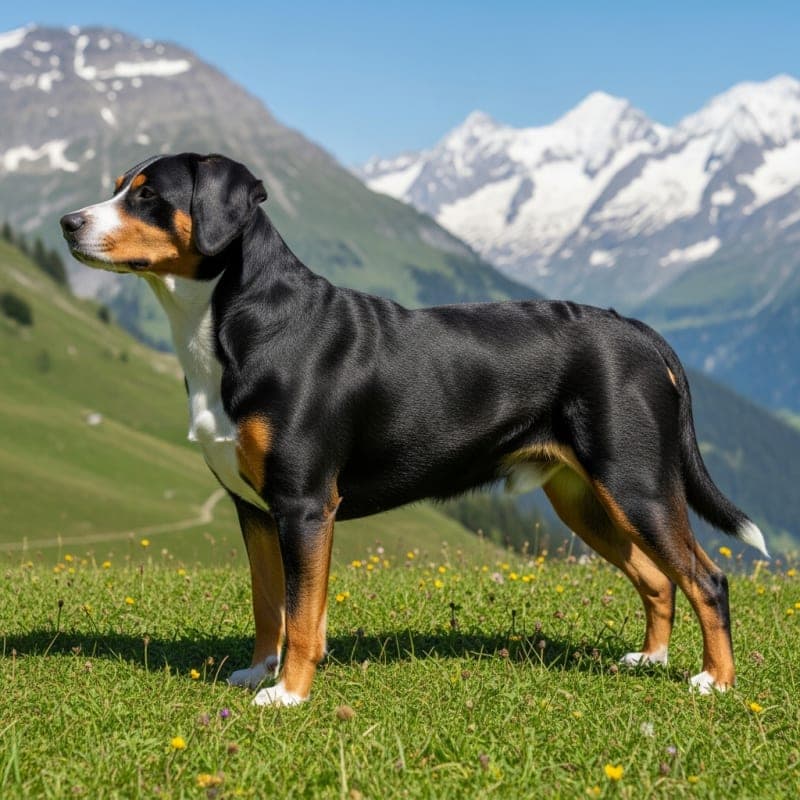
Entlebucher Mountain Dog
FCI Group
2• FCI 47
Size
Medium
Origin Country
CH
Height
42-50 cm
Weight
20-30 kg
Lifespan
12-14 years
Temperament
Overview
Entlebucher Sennenhund, also known as the Entlebucher Cattle Dog, is a fascinating breed originating from the picturesque Entlebuch valley, located in the heart of the Swiss cantons of Lucerne and Bern. It is the smallest representative of Swiss herding dog breeds, but it is not lacking in energy or charisma.
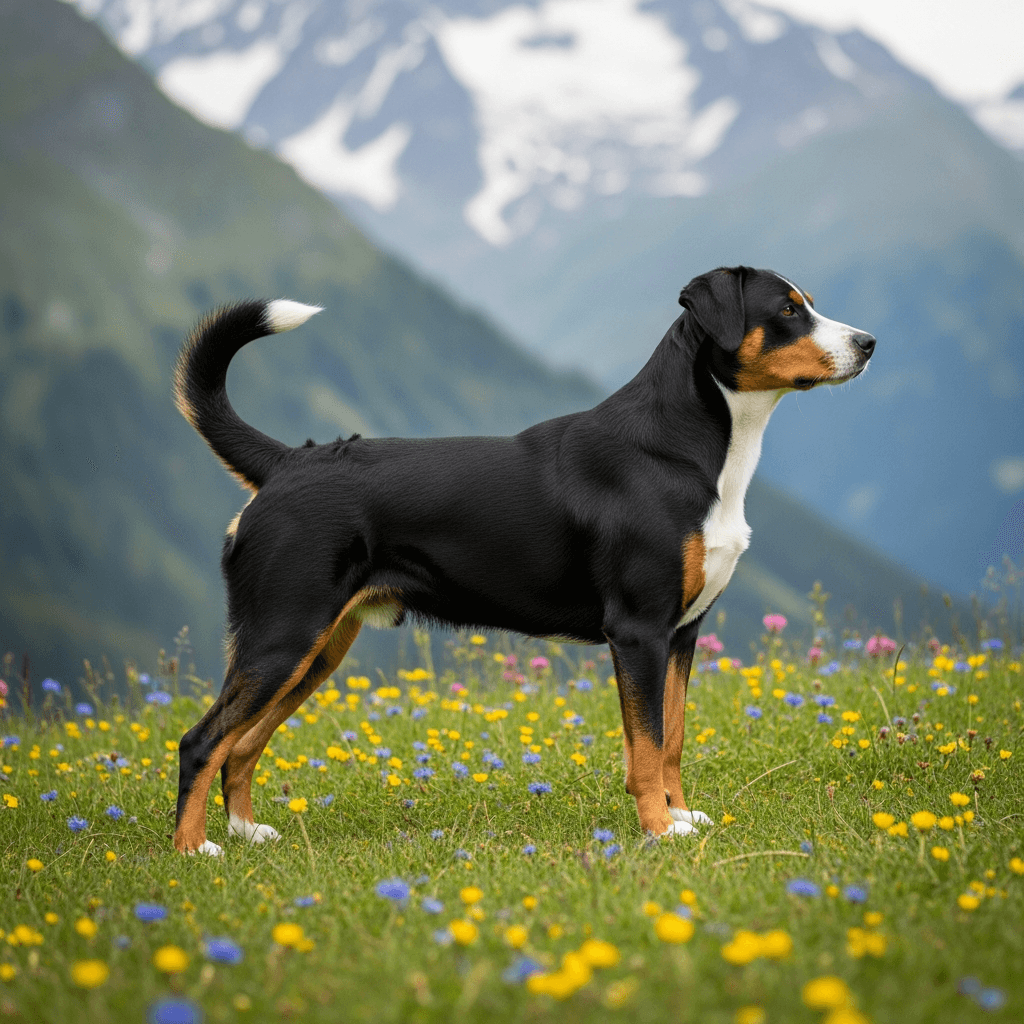
This four-legged herder is characterized by a compact, slightly elongated silhouette and a distinctive tricolor coat. The striking color arrangement - black, brown, and white - catches the eye and gives the dog a unique appearance. For many, it is a dog that is not only beautiful but also incredibly functional, combining aesthetic qualities with practical skills.
Entlebucher is the embodiment of temperament, energy, and intelligence. With its lively disposition and unwavering character, it makes a wonderful companion for families and active individuals who can provide it with the right amount of exercise and mental stimulation. Its character traits include:
- Boundless devotion to owners and family
- Healthy distrust of strangers, making it an excellent guard dog
- Courage and confidence in any situation
- Agility and speed of reaction
Due to its high intelligence, the Entlebucher quickly learns new skills and commands. However, it requires a consistent and patient approach to fully realize its potential. Training based on positive methods strengthens the bond between the dog and its handler, which is crucial for proper development. It gets along well with children and other animals, although it shows tendencies to herd that should be controlled.
This is a dog with boundless energy that needs regular exercise. Long walks, running, and active play outdoors are essential for its physical and mental health. Owners must be prepared to provide it with various forms of physical activity to avoid boredom and potential behavioral issues. It is important to note that the Entlebucher tends to gain weight if not adequately active, so maintaining its fitness is crucial.
In summary, the Entlebucher Sennenhund is an exceptional breed that combines a rich history with extraordinary character traits. It is a dog that excels both in herding work and as a devoted family member. Its versatility, beauty, and unwavering character make it an ideal choice for those seeking an active and loyal companion for many years to come.
Entlebucher Sennenhund is a dog with a compact, slightly elongated silhouette, which makes it appear strong, agile, and well-built. Their height at the withers according to the FCI standard is:
- Males: 44-50 cm at the withers
- Females: 42-48 cm at the withers
This breed is characterized by its distinctive tricolor coat, consisting of a black base with brown (tan) and white markings. The coat is short, hard, and close-lying, with a dense undercoat, providing excellent protection against the adverse weather conditions typical of the Swiss Alps.
Head and face characteristics:
- The head is proportional to the body, with a slightly wedge-shaped skull
- The ears are well-set, triangular, and hanging
- The eyes are dark brown or hazel, with a lively and friendly expression, full of intelligence
- The muzzle is strong and appropriately shaped, giving the dog a balanced and harmonious appearance
Body structure: The body is well-muscled, with a strong back and deep chest. The tail is of natural length, set on the continuation of the hindquarters, and its movements are free and fluid. The limbs are straight, strong, and well-placed, providing the dog with stability and agility during work.
The Entlebucher Sennenhund is a dog that attracts attention with its attractive appearance, dynamic posture, and proud, confident behavior. Its silhouette emanates strength and endurance, which were crucial for herding work in challenging mountainous conditions.
Entlebucher Sennenhund is a dog with a distinct temperament, full of energy and an unceasing desire to act. It is a very intelligent breed, which makes it easy to train and eager to perform various tasks. In relationships with family, it is devoted, caring, and extremely loyal, but it can be wary of strangers, making it an excellent guardian of the home.
Character traits in family relationships:
- Cheerful disposition makes it an excellent companion for children
- Herding instincts may lead to herding children, which requires supervision
- Strong bond with family members and a need for close contact
- Alertness and protective instinct towards loved ones
Entlebucher is a dog that does not tolerate prolonged solitude, which is why it feels best in the company of people. It can be quite vocal, which may be problematic in apartments, but in the right conditions, its barking can be minimized through proper training. This is a dog that needs mental and physical activity to avoid destructive behaviors stemming from boredom.
Temperament in work and play: Entlebucher maintains a strong herding instinct, which manifests as a natural tendency to herd and control movement. It is a dog energetic, lively, and full of vigor, who loves activity and playing together. Its intelligence means it quickly gets bored with repetitive tasks, so it requires a variety of stimulation.
Proper training and socialization are crucial for the Entlebucher to become a balanced and obedient companion. With the right approach, it is a dog ready for fun, work, and constant companionship in daily life. Its cheerful disposition and devotion to family make it an ideal dog for active households.
Entlebucher Sennenhund, although generally a healthy and resilient breed, may be prone to certain health issues that are common in herding dogs of this size. Awareness of these conditions aids in early detection and effective treatment.
Most common health issues:
- Hip dysplasia (HD) - a hereditary defect that can lead to pain and limited mobility. Regular X-ray screenings by breeders help minimize the risk.
- Progressive retinal atrophy (PRA) - a degenerative eye disease that can lead to vision loss. Eye examinations are recommended.
- Hemolytic anemia - an autoimmune disease in which the immune system attacks red blood cells. It requires prompt veterinary intervention.
- Tendency to overweight - with an improper diet and lack of exercise, which can lead to joint and heart problems.
Sensitivity to weather conditions: Despite their Swiss origin, Entlebuchers are sensitive to extreme temperatures. They can suffer from heatstroke on hot days, so intense exertion should be avoided during heat. Their double coat provides protection in winter, but in extreme winter conditions, they may need additional care.
Prevention and healthcare: Proper diet and regular exercise are crucial for maintaining the health of an Entlebucher. The following are recommended:
- Regular veterinary visits (at least once a year)
- Screening for hip joints
- Ophthalmic checks
- Monitoring weight and physical condition
- Vaccinations and deworming according to schedule
With proper care and prevention, the Entlebucher Sennenhund can enjoy a long and healthy life of 11-15 years. The key is early detection of potential problems and informed care by the owner.
Grooming the Entlebucher Sennenhund is relatively simple and low-maintenance, making this breed attractive to many dog owners. Their coat is short, dense, and close-lying, which significantly facilitates daily care.
Brushing and coat care:
- Regular brushing once a week or every two weeks to remove dead hair, dirt, and dandruff
- Increased shedding occurs in spring and autumn - during these times, brushing should be more frequent (2-3 times a week)
- Bathing only as needed when the dog is dirty - too frequent bathing can dry out the skin
- A brush with stiff bristles or a furminator works best for removing undercoat
Ear care: The ears of the Entlebucher require regular inspection, especially after walks in the field. They should be clean and dry to prevent bacterial or fungal infections. It is recommended to clean the ears once a week with a special ear solution for dogs.
Oral hygiene: Teeth should be brushed at least 2-3 times a week, preferably daily, to prevent dental issues such as tartar or gum disease. Regular tooth brushing significantly extends the dog's life and improves its overall health.
Nail trimming: Nails should be trimmed every 3-4 weeks when they become too long. Overly long nails can cause discomfort while walking and lead to posture problems. If you can hear the nails clicking on the floor, it means they are too long.
General check-up: During grooming, it is worth checking the skin for:
- Ticks and fleas (especially after walks in the woods)
- Rashes, redness, or other skin changes
- Wounds or abrasions
- Abnormalities around the paws and pads
With proper and regular grooming, the Entlebucher Sennenhund will enjoy healthy skin, shiny coat, and excellent well-being for many years. Grooming is also a great opportunity to strengthen the bond between the dog and its owner.
Entlebucher Sennenhund is a breed that requires a significant amount of exercise and physical activity to maintain health, happiness, and mental balance. These active herding dogs need daily long walks and intense physical activity to meet their natural movement needs.
Minimum exercise requirements:
- 2-3 walks per day totaling at least 60-90 minutes
- Active play outdoors for at least 30-45 minutes daily
- Intense effort several times a week (running, agility, frisbee)
- Mental stimulation - scent games, training, learning new commands
Ideal forms of activity: Entlebuchers are well-suited for various forms of physical activity. They excel in:
- Long walks in the countryside, on forest paths or mountain trails
- Running alongside a bicycle (canicross) - excellent for the dog's endurance
- Agility - utilizes the breed's intelligence and agility
- Frisbee or retrieving - satisfies the hunting instinct
- Swimming - a great form of exercise, especially on hot days
- Mountain trekking - an ideal activity for this Swiss breed
- Play with other dogs - socialization combined with physical effort
Consequences of lack of exercise: Owners should remember that insufficient exercise can lead to serious behavioral problems:
- Excess energy and irritability
- Destructive behaviors (destroying furniture, digging holes)
- Excessive barking and vocalization
- Obedience issues resulting from frustration
- Tendency to overweight and health problems
Mental stimulation: Entlebuchers also love tasks that require thinking. Scent games, search games, learning new commands or tricks are excellent ways to utilize their high intelligence. A dog that is physically and mentally tired is a balanced and happy companion.
Therefore, it is important to provide the Entlebucher with various forms of activity every day - both physical and mental. This guarantees health, happiness, and harmonious coexistence with this energetic Swiss herder.
Training the Entlebucher Sennenhund is crucial for ensuring proper behavior and full development of this intelligent and energetic breed. Due to their exceptional intelligence and willingness to work, Entlebuchers are easy to train but require a consistent and thoughtful approach.
Basic training principles:
- Positive reinforcement - rewards for good behavior (treats, praise, play) are the most effective
- Consistency - the same rules and commands used by all family members
- Patience and firmness - Entlebuchers can be stubborn and require a steady hand
- Early socialization - from puppy age with various people, animals, and environments
- Short, frequent sessions - 5-15 minutes several times a day is better than long training sessions
Basic commands to learn: The Entlebucher should master basic obedience commands:
- Sit - a basic control command
- Stay - crucial for the dog's safety
- Come - the most important command in the field
- Lie down - calming in stressful situations
- Leave it - protection against eating something dangerous
- Heel - walking at the heel during walks
Characteristics of Entlebucher training: These dogs are known for being stubborn and independent, which means owners must be patient and firm. Regular training sessions lasting from 5 to 15 minutes can be more effective than long, monotonous training. It is beneficial to introduce a variety of commands and exercises to develop the dog's skills and maintain their interest.
Advanced training: After mastering the basics, the Entlebucher can participate in more advanced forms of training:
- Agility - ideal for the agile Entlebucher
- Obedience - advanced obedience
- Tracking - utilizing the natural scenting instinct
- Herding - herding training for dogs with a strong instinct
Typical challenges: During the training of an Entlebucher, one may encounter challenges typical of this breed:
- Tendency to herd - requires redirecting energy to acceptable behaviors
- Barking - a natural form of communication for herding dogs that requires control
- Distrust of strangers - early socialization is key
- Stubbornness - requires patience and consistency
Training should be fun for both the dog and the owner, which will help build a strong bond between them. With the right approach, the Entlebucher Sennenhund will become a well-behaved, balanced, and wonderful companion for many years.
The diet of the Entlebucher Sennenhund should be well-balanced and precisely tailored to the dog's activity level, age, and health condition. These dogs tend to gain weight, so it is important to avoid overfeeding and to use only high-quality food.
Basic nutrition rules:
- High-quality food - with meat as the first ingredient
- Appropriate portion - according to weight, age, and activity level
- Two meals a day - better than one large feeding
- Constant access to fresh water - especially after physical activity
- Avoid feeding before intense exercise - risk of gastric torsion
Dietary requirements: Entlebuchers may need a high-protein diet, especially if they are active and working. Recommended ingredient proportions:
- Protein: 22-26% - for adult, active dogs
- Fats: 12-16% - energy source for active dogs
- Complex carbohydrates - brown rice, sweet potatoes, oats
- Vegetables and fruits - source of vitamins and fiber
- Omega-3 and omega-6 fatty acids - healthy skin and shiny coat
Portion size: The average adult Entlebucher weighs 20-30 kg and needs about:
- Low activity: 2-2.5 cups of food per day
- Medium activity: 2.5-3 cups of food per day
- High activity: 3-3.5 cups of food per day
Supplements: In some cases, it may be worth considering supplementation:
- Omega-3 fatty acids - for skin and coat health
- Glucosamine and chondroitin - joint support, especially in older dogs
- Probiotics - digestive health
- Multivitamins - only after consulting with a veterinarian
Prohibited products: Entlebuchers, like all dogs, should not consume:
- Chocolate and cocoa
- Onions and garlic
- Grapes and raisins
- Avocado
- Xylitol (artificial sweetener)
- Alcohol and caffeine
Weight monitoring: Regular weight checks are crucial - an Entlebucher in good condition should have a visible waist and palpable ribs under light pressure. Being overweight can lead to joint dysplasia, heart problems, and a shortened lifespan.
Regular consultations with a veterinarian can help adjust the diet and prevent health issues related to overweight or nutrient deficiencies. Proper nutrition is essential for maintaining the health, energy, and good condition of the Entlebucher throughout its life.
Characteristic Traits
Pros
- Loyal and devoted companion
- High intelligence and ease of learning
- Excellent guard dog
- Energetic and full of vigor
- Gets along well with children
- Versatile and agile.
Cons
- Requires a lot of movement and activity
- Can be stubborn during training
- Distrustful of strangers
- Tendency to herd
- Does not tolerate loneliness
- Can be loud.
Behavioral Ratings
Breed History
The history of the Entlebucher Sennenhund dates back to Roman times when the ancestors of modern herding dogs accompanied Roman legions in their expansion into the Alpine regions. After the fall of the Roman Empire, these dogs remained in the Swiss valleys, where they developed over the centuries as working breeds alongside the Senns - pastoral people living in the mountains of Switzerland.
Origins of the breed: The Entlebucher is the smallest of the four Swiss herding and mountain dog breeds (alongside the Bernese Mountain Dog, Greater Swiss Mountain Dog, and Appenzeller Sennenhund). The breed originates from the picturesque Entlebuch valley, located in the cantons of Lucerne and Bern, where it served for centuries as a herding, guarding, and draft dog.
First written mentions: Initially, the Entlebucher was not distinguished from other herding breeds, especially the Appenzeller. It was not until 1889 that the first written mentions describing the Entlebucherhund as a separate breed appeared. For a long time, however, systematic breeding was not conducted, nor was there attention paid to maintaining blood purity.
Recognition as a separate breed: A turning point came in 1913 when four specimens of small herding dogs with a naturally short tail were presented at a dog show in Langenthal. They were introduced to the famous Prof. Albert Heim - a great patron of Swiss mountain dog breeds. Based on the judges' reports, these dogs were entered into the Swiss Stud Book (SHSB) as the fourth breed of mountain and herding dogs.
Formation of the club and breed development:
- 1926: Establishment of the Swiss Herding Dog Club for Entlebuch by Dr. B. Kobler
- 1927: Development of the first official breed standard
- 2001: Update of the FCI standard
- 2002: Publication of the current breed standard (valid to this day)
Difficult years: Despite official recognition, the population of the Entlebucher remained small for many decades. The low number of entries in the pedigree book indicated limited interest in the breed. It was only through the systematic efforts of breeders and breed enthusiasts that the population gradually increased.
Modern times: Today, the Entlebucher Sennenhund enjoys growing popularity not only in Switzerland but also beyond its borders. Its traits, such as herding abilities, loyalty, intelligence, and versatility, have begun to be appreciated in other European countries and in North America as well. The breed finds a place in the hearts of many families as a companion, sporting, and working dog.
The Entlebucher Sennenhund remains a living testament to the traditions of Swiss pastoralism and mountain life. It is a breed that combines historical roots with the modern requirements of a canine companion, while maintaining its authentic character and unique traits shaped by centuries of work in the Alps.