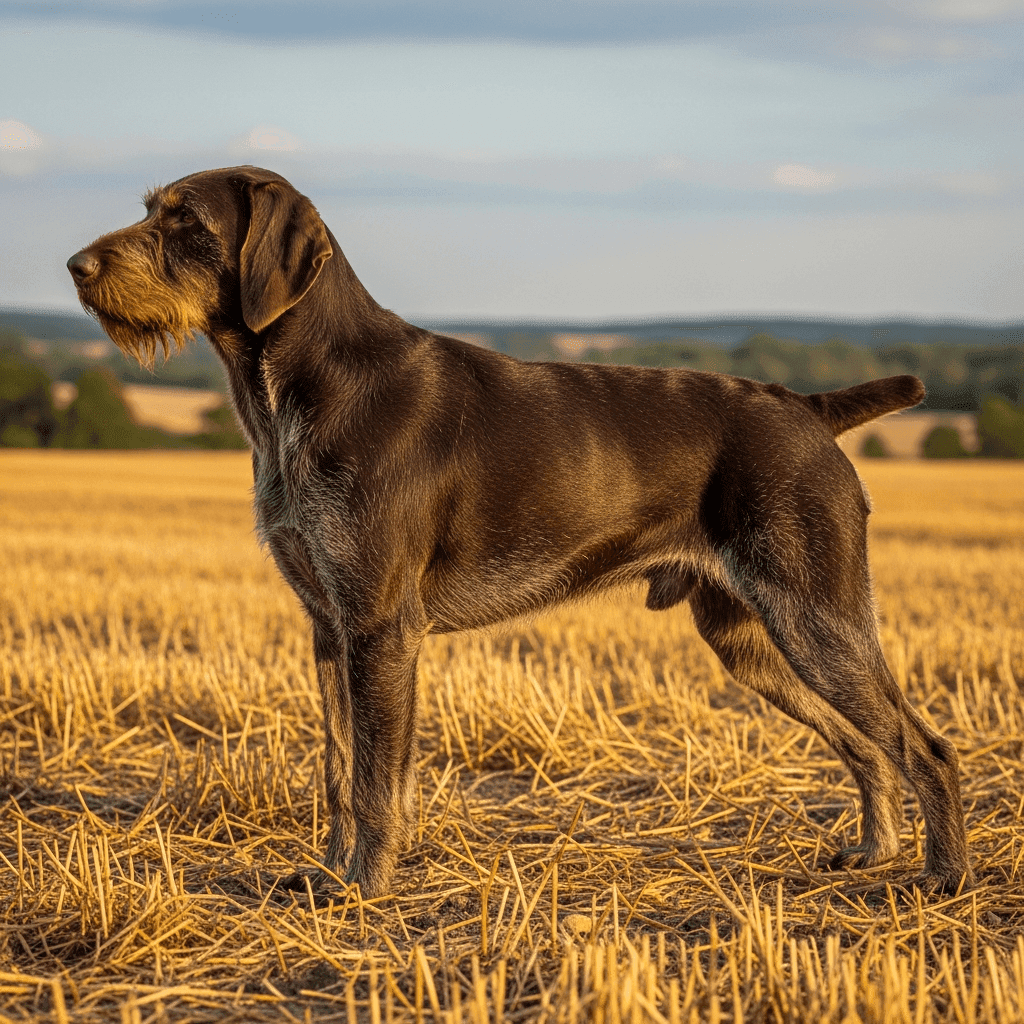
Czech Wire-Haired Pointer
FCI Group
7• FCI 245
Size
Medium
Origin Country
CZ
Height
58-66 cm
Weight
22-34 kg
Lifespan
11-13 years
Temperament
Overview
The Czech Wirehaired Pointer, also known as fousek, is a fascinating breed with a rich history dating back to the former lands of Czechoslovakia. Today, it enjoys popularity in both the Czech Republic and Slovakia, attracting the attention of dog lovers with its unique blend of endurance, strength, and versatility. Fousek is a medium-sized dog whose almost square body structure emphasizes its strong and balanced silhouette. Its history as a versatile hunting dog, capable of working both on land and in water as well as in the forest, makes it an ideal companion for hunters and those leading an active lifestyle.
One of the greatest assets of the fousek is its strong hunting instinct and innate abilities to work in the field. These traits make it an excellent multifunctional hunting dog. Its characteristic long, narrow head with a muzzle slightly longer than the skull and almond-shaped eyes gives it an intelligent and friendly expression. Ears, set high and wide at the base, taper to rounded tips, further enhancing its noble appearance.
The coat of the fousek consists of three layers: a soft, dense undercoat, a rough outer coat, and a long, straight protective hair. This three-layer structure not only adds to its charm but also protects against harsh weather conditions, which is particularly important during hunts in diverse terrain. Fousek is known for its ease of training due to its intelligence and willingness to cooperate with its handler, making it an excellent choice for those seeking a devoted partner. Its friendly disposition allows it to get along well with other animals and children, making it an ideal family companion.
Despite its many advantages, the fousek requires regular physical activity to be happy and healthy. This social dog needs the right amount of exercise and mental challenges to fully utilize its natural predispositions. Despite its innate sharpness towards game, it is easy to handle and extremely devoted to its handler. In the following sections of our guide, you can delve into detailed information about the health, grooming, exercise needs, training, nutrition, history, appearance, and behavior of this exceptional breed. We invite you to continue reading to discover all the fascinating aspects of life with a Czech Wirehaired Pointer.
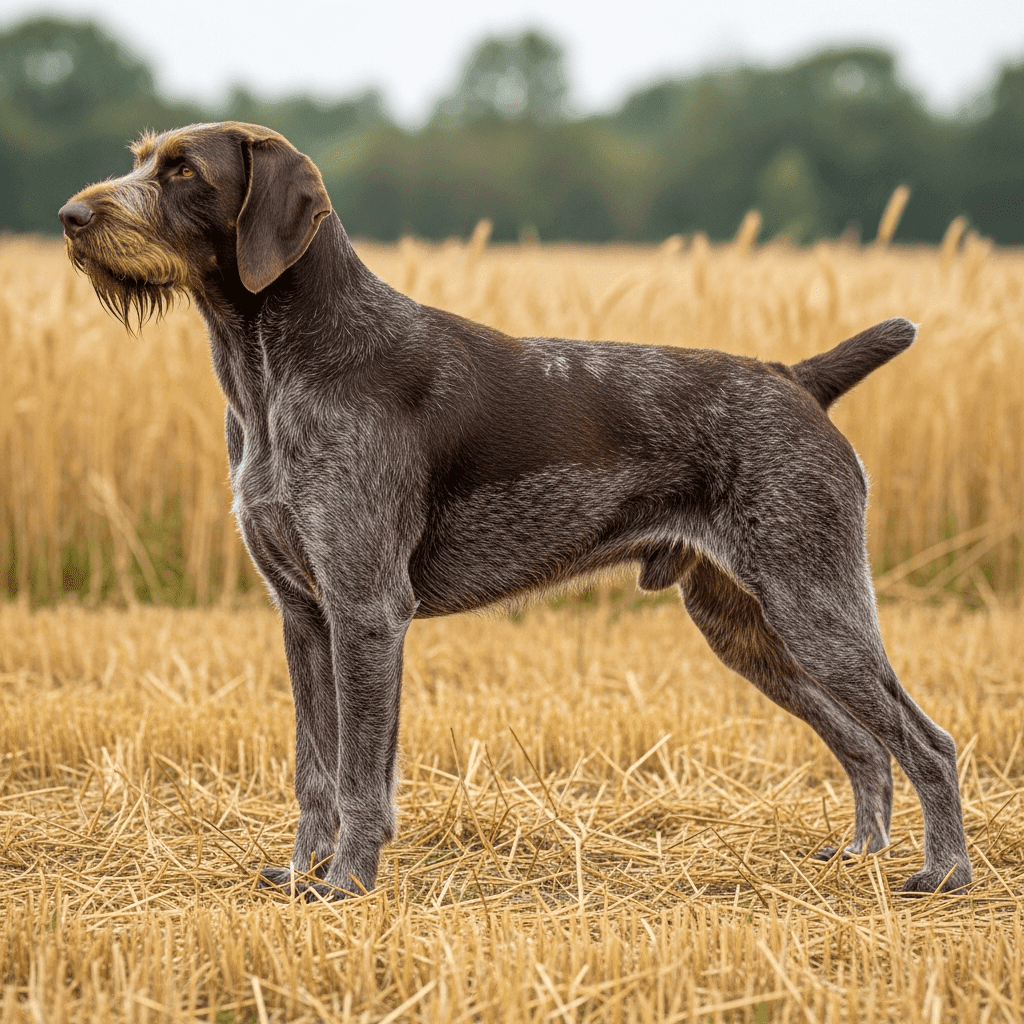
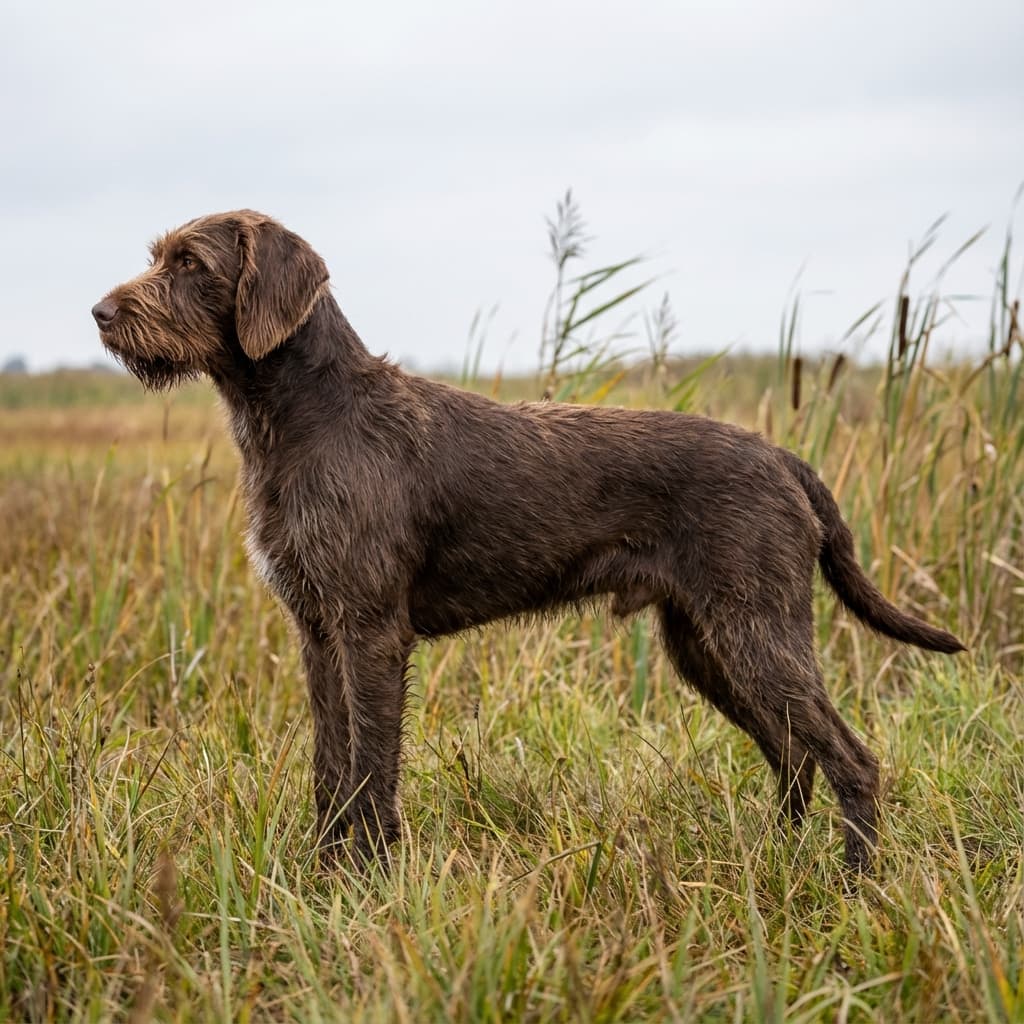
Czech Wirehaired Pointer is a medium-sized dog that attracts attention with its noble yet strong silhouette, expressing power and endurance. Its body structure indicates a versatile dog, adapted for work in the field, water, and forest.
Proportions and dimensions: The height at the withers is 60-66 cm for males and 58-62 cm for females, with ideal proportions being a ratio of height at the withers to body length of 10:11. The weight ranges from 28 to 34 kg for males and from 22 to 28 kg for females, providing an optimal balance between strength and agility.
Head and expression: The head is slender, somewhat narrow and long, set high on the neck. The muzzle is slightly longer than the skull, with a straight or slightly arched bridge of the nose. The stop is moderately pronounced. The eyes are almond-shaped and deeply set, with a dark brown color that gives the dog an attentive and intelligent expression. The eyelids fit closely to the eyeball. The ears are wide at the base, set high, hanging flat along the cheeks, and tapering to rounded tips. The lips are tightly fitting, without loose corners.
Neck and body: The neck is of medium length, strong, well-muscled, with a slightly arched top line. The body is strong and straight, with a well-developed withers. The back is straight, the loins are wide and muscular, and the croup slightly slopes towards the tail. The chest is oval in cross-section, with well-arched ribs, reaching to the level of the elbows. The underline is moderately tucked up.
Limbs: The front limbs are straight, parallel, and strong, with well-fitting shoulders and muscular upper arms. The elbows are well-adhered to the chest. The hind limbs are parallel when viewed from behind, with well-muscled thighs and clearly defined hock joints. The paws are rounded, with compact toes and strong, dark claws.
Tail: The tail is strong, set at a medium height, carried horizontally or slightly above the top line. In countries where it is permitted, it may be docked to 3/5 of its length. When at rest, it hangs freely.
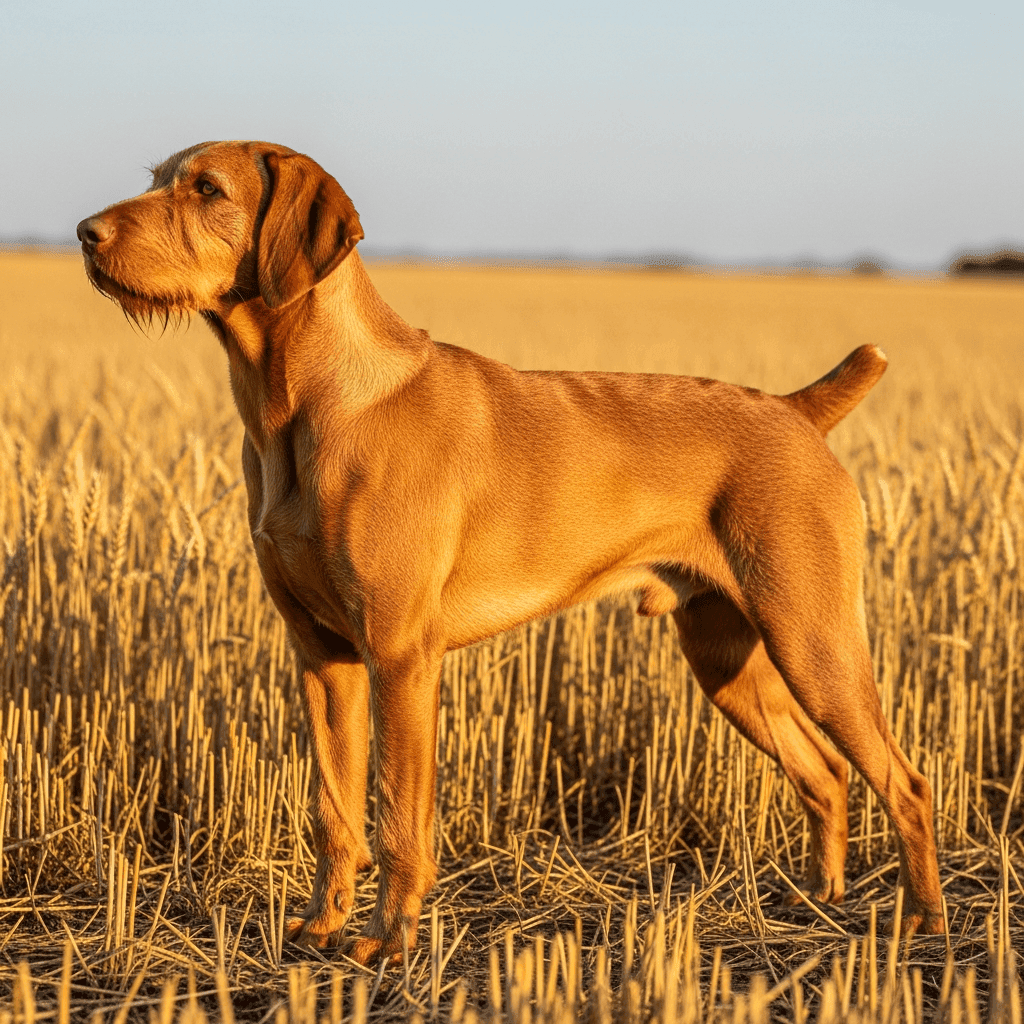
Coat and color: The coat consists of three layers: a soft, dense undercoat, a rough, hard outer coat (3-4 cm long), and longer, straight protective hair. The face features distinctive eyebrows, whiskers, and a beard. The colors include brown speckled with brown spots or without them, dark brown speckled with brown spots or without them, and solid brown without speckling. White markings on the chest and under the neck are permissible.
Overall, the fousek is a dog that exudes strength, elegance, and functionality, making it an ideal companion for active individuals and hunters.
Czech Wirehaired Pointer is a dog with a balanced and stable temperament, combining the traits of an excellent hunter and a devoted family companion. This breed is characterized by high intelligence and a well-developed hunting instinct, making the fousek very observant, quick-witted, and fast at acquiring new skills.
Character and family relationships: It is a friendly and sociable dog that gets along well with children and other pets, provided it receives proper early socialization. The fousek does not show tendencies towards aggression or excessive distrust of strangers, making it a good family dog. Despite a certain independence typical of hunting dogs, the fousek is deeply devoted to its handler and forms a strong bond based on trust and cooperation.
Hunting predispositions: The natural hunting instinct of the fousek is evident in its strong interest in tracking, retrieving, and working in diverse terrain. Despite its inherent sharpness towards game, it is easy to handle and willingly cooperates during hunting training. Its versatility allows for effective work in fields, forests, and water.
Activity and social behaviors: The fousek can be somewhat noisy, especially when excited or sensing something interesting, so it is important to consistently teach it voice control. This breed is very social and does not tolerate prolonged solitude well, which can lead to separation anxiety and behavioral problems. It requires a lot of attention, physical activity, and mental stimulation to be a happy and balanced dog.
Temperament and personality: The fousek tends to explore its surroundings and follow interesting scents, so it is important to provide it with a safe area to play and consistent obedience training. It is an energetic and persistent dog that does not get bored easily but requires an owner willing to dedicate the right amount of time and commitment.
Overall, the fousek is a dog that combines the traits of a professional hunter and a loyal family friend, making it an ideal companion for active individuals who value versatility and intelligence.
Czech Wirehaired Pointer, like most medium-sized dog breeds, enjoys relatively good health and resilience. The average lifespan of this breed ranges from 12 to 15 years, which is above average for dogs of this size. However, like any breed, the fousek may be prone to certain conditions that are worth monitoring.
Most common health issues:
- Hip and elbow dysplasia – This is a genetic condition related to the improper development of joints, which can lead to pain, stiffness, and limited mobility. Responsible breeders should conduct screening tests on the parents before breeding to minimize the risk of inheriting this condition.
- Skin diseases – The fousek may be susceptible to various dermatological issues, including alopecia (hair loss) and allergic skin reactions. Regular skin checks and proper grooming are essential.
- Entropion – This is an anatomical defect of the eyelids, where they turn inward, causing irritation of the cornea by the eyelashes. It requires surgical intervention.
- Gastric dilatation with volvulus – A serious and potentially fatal condition, especially in dogs with deep chests. It manifests as sudden abdominal bloating and requires immediate veterinary assistance.
Resistance to weather conditions: Thanks to its triple-layer coat, the fousek is well protected against cold and moisture, making it resilient to harsh weather conditions during hunts. However, on hot days, it can easily overheat, so it is important to provide access to shade and fresh water and to avoid intense exertion during hot hours.
Prevention: Regular veterinary visits, vaccinations according to schedule, deworming, and monitoring the health of the skin, ears, eyes, and teeth are essential for keeping the fousek in excellent condition. A balanced diet tailored to the dog's activity level and an appropriate amount of exercise support its health and longevity.
With proper care, prevention, and the choice of healthy breeding lines, the Czech Wirehaired Pointer can enjoy a long, healthy, and active life alongside its owner.
Grooming a Czech Wirehaired Pointer requires regular attention, but it is not overly demanding if approached systematically. Its characteristic triple-layer coat, consisting of a soft undercoat, coarse guard hair, and longer protective hair, requires proper care to maintain skin health and the dog's aesthetic appearance.
Brushing: It is recommended to brush the dog at least 2-3 times a week to prevent matting and remove dead hair. It is best to use a brush with stiff bristles or a comb suitable for coarse coat types. During the heavy shedding period, which usually occurs in spring and autumn, the frequency of brushing should be increased to daily to effectively control the shedding of the undercoat.
Bathing: The dog does not require frequent baths – it is advised to wash the dog only when necessary, when it is clearly dirty or starts to smell unpleasant. Excessive bathing can destroy the natural oils in the skin and weaken the coat's structure. After bathing, the dog should be thoroughly dried with a towel or a dryer on a low setting to avoid catching a cold, especially in cooler months.
Trimming: The dog's coat requires periodic trimming (plucking dead hair) instead of clipping to maintain its hard, coarse texture. Trimming should be done 2-3 times a year, preferably by a professional groomer familiar with the specifics of this breed. Clipping can soften the coat and lead to a loss of its natural protective properties.
Ear care: Due to the drooping ear structure, the dog is prone to ear infections. Ears should be regularly checked, cleaned with a gentle ear cleaning solution, and excess moisture should be removed after bathing or swimming.
Oral hygiene: Regular teeth cleaning (ideally daily or at least several times a week) using dog toothpaste helps prevent tartar buildup, gum disease, and bad breath.
Nail trimming: Nails should be trimmed regularly, usually every 3-4 weeks, if they do not wear down naturally during activity. Overly long nails can cause discomfort and walking problems.
Systematic grooming not only ensures a healthy appearance for the dog but also provides an excellent opportunity to strengthen the bond with the dog and monitor its overall health.
Czech Wirehaired Pointer is a high-energy dog that requires a significant amount of exercise and activity to maintain physical health and mental balance. This breed was developed as a versatile hunting dog, capable of intense work in the field, which is why its exercise needs are well above average.
Minimum activity: The Fousek needs at least 90-120 minutes of daily physical activity, preferably divided into several sessions. Calm walks around the neighborhood are not enough for him – he requires intense forms of movement, such as running, long hikes, swimming, or active games involving retrieving.
Exploring terrain: The Fousek loves to explore new areas and follow interesting scents. Ideal places for activity include forests, meadows, water areas, and open spaces where he can run freely and utilize his natural instincts. Regular trips to diverse terrains provide him with both physical and mental stimulation.
Cynological sports: The Fousek excels in various dog sports and activities, including:
- Agility – develops agility, coordination, and strengthens the bond with the handler
- Working trials – utilize natural hunting instincts and allow the dog to fulfill its predispositions
- Scent tracking – engages the sense of smell and intelligence
- Canicross – running with the dog in harness
- Dock diving – jumping into water
Mental stimulation: In addition to physical activity, the Fousek also needs mental challenges. Interactive games, setting up simple tasks, training new commands, and scent games help prevent boredom and behavioral problems.
Consequences of lack of exercise: Insufficient activity can lead to behavioral problems such as excessive barking, destructive behaviors, hyperactivity, separation anxiety, and frustration. A Fousek that does not have the opportunity to expend energy can become restless and difficult to manage.
Practical notes: The Fousek is not a suitable breed for people with a sedentary lifestyle or those living in small apartments without access to recreational areas. It requires an active owner who has the time and willingness for daily, long outdoor activities.
Regular, intense physical activity not only keeps the Fousek in excellent condition but also makes him a happy, balanced, and content dog.
Czech Wirehaired Pointer is a breed characterized by high intelligence, a willingness to cooperate, and natural predispositions for learning, making it relatively easy to train for experienced owners. An appropriate, consistent, and positive approach to training allows for the full potential of this versatile breed to be realized.
Early socialization: Training of the pointer should begin as early as possible, preferably during the puppy stage. Key is early and intensive socialization, which involves gradually introducing the puppy to a variety of people, animals, places, sounds, and situations. A well-socialized pointer will grow into a confident, friendly, and balanced adult dog.
Positive training methods: The most effective methods are based on positive reinforcement, which means rewarding desired behaviors with treats, verbal praise, play, or petting. The pointer is sensitive to the tone of the handler's voice and responds well to praise. Harsh, punitive training methods should be avoided, as they can discourage the dog and weaken its natural desire to cooperate.
Consistency and patience: Despite its high intelligence, the pointer may exhibit some independence typical of hunting dogs. Therefore, consistency in enforcing rules and patience are important. Training should be short, varied, and interesting to maintain the dog's attention and prevent boredom.
Basic commands: The pointer should be taught basic obedience commands such as: Sit, Lie down, Stay, Come, No. These commands form the foundation for further training and ensure control over the dog in various situations.
Utilization of hunting instincts: The pointer has a well-developed hunting instinct, so it is worthwhile to incorporate elements of fieldwork, retrieving, scent games, and tracking into the training. This allows the dog to fulfill its natural predispositions and provides satisfaction. Training can include both basic obedience and specialized working trials for hunting dogs.
Mental stimulation: In addition to standard training, the pointer needs regular mental challenges, such as solving simple tasks, learning new commands, interactive play with educational toys, or scent tracking. All of this engages its intelligence and prevents behavioral problems stemming from boredom.
Voice control: The pointer can be noisy, so it is important to consistently teach it voice control through commands like Quiet or Enough. The dog should not be punished for barking, but rather rewarded for silence and calm behavior.
Definitely without dominance: The pointer respects a confident, assertive handler but does not tolerate brutality. The key is consistency, clarity of rules, and positive reinforcement, not forceful dominance.
With proper training, the Czech Wirehaired Pointer becomes a perfectly obedient, versatile dog that is a joy both in hunting and in everyday life as a family companion.
Nutrition for the Czech Wirehaired Pointer should be carefully balanced and tailored to its activity level, age, health status, and individual needs. The Fousek is a dog with a high energy level, so it requires a high-quality diet that provides the right amount of nutrients.
Quality of food: The best choice is high-quality food designed for active medium-sized dogs. The food should contain a high-quality source of animal protein (chicken, beef, fish, lamb) as the main ingredient, an appropriate amount of healthy fats, and carbohydrates with a low glycemic index. Foods with excessive fillers, artificial colors, and preservatives should be avoided.
Meal division: It is recommended to divide the daily portion into two meals – in the morning and in the evening. This feeding schedule helps maintain a stable energy level throughout the day and reduces the risk of gastric dilatation-volvulus, to which deep-chested dogs are particularly susceptible. Intense activity should be avoided immediately before and after meals.
Portion adjustment: The amount of food should be adjusted to the individual needs of the dog, taking into account:
- Age – puppies and young dogs require more calories than adult dogs
- Activity level – working and very active dogs require larger portions than less active dogs
- Physiological state – pregnant and nursing females have increased energy needs
- Health status – some health conditions may require a specialized diet
Weight control: The Fousek is prone to obesity if it does not get enough exercise or receives too many calories. Regular weight monitoring and body condition assessment (ribs should be palpable, waist visible) are crucial for maintaining a healthy physique. Obesity can lead to health problems, including joint dysplasia, heart disease, and diabetes.
Supplementation: With a balanced, high-quality diet, supplementation is usually not necessary. In some cases, a veterinarian may recommend joint-supporting supplements (glucosamine, chondroitin), Omega-3 fatty acids, or vitamins, especially for older or actively working dogs.
Water: The Fousek should have constant access to fresh, clean water, especially after intense activity and on hot days. Proper hydration is essential for the body's functioning.
Prohibited products: It is imperative to avoid giving the dog human food, especially:
- Chocolate, coffee, caffeine
- Onions, garlic, grapes, raisins
- Sweets, products containing xylitol
- Fatty, spicy foods
- Poultry and fish bones (they can splinter and injure the dog)
A properly selected, balanced diet tailored to the activity level helps the Czech Wirehaired Pointer maintain excellent condition, health, and longevity.
Characteristic Traits
Pros
- High intelligence and ease of training
- Versatility in hunting work
- Friendly and devoted character
- Excellent endurance and energy
- Good rapport with children and other animals.
Cons
- Requires a lot of movement and activity
- Struggles with loneliness
- Regular grooming is necessary
- Can be noisy
- Strong hunting instinct requires control.
Behavioral Ratings
Breed History
The history of the Czech Wirehaired Pointer, known as fousek, is a testament to the determination and passion of breeders who saved this breed from oblivion. The roots of the fousek date back to before World War I, when it was the most commonly encountered wirehaired hunting dog in what is now Czechia and Slovakia. At that time, the breed was highly popular among hunters who valued its versatility, endurance, and excellent abilities to work in diverse terrain.
Crises and near extinction: Unfortunately, World War I and its catastrophic socio-economic consequences led to a dramatic decline in the fousek population. In the 1920s, the breed was nearly completely extinct – the number of purebred representatives dwindled to just a few individuals. This was a tragic situation for a breed that just a few years earlier was widely recognized and valued.
Rebuilding the breed: In the face of a real threat of total extinction, a group of dedicated breeders and enthusiasts decided to undertake planned actions aimed at regenerating the fousek population. The foundation of these efforts was to find and utilize a few typical, original representatives of the breed that retained the characteristic morphological and functional traits. Based on these dogs, a carefully planned breeding program was initiated to restore the breed's original appearance and functionality.
Development of the modern type: Thanks to the perseverance and knowledge of breeders, it was possible to develop the modern type of fousek, which retained the authentic traits of its ancestors while being adapted to contemporary breeding standards. This process required many years of consistent selective work, verification of breeding lines, and attention to genetic diversity.
International recognition: In 1963, the breed was officially recognized by the International Canine Federation (FCI) as standard number 245, in group 7 (pointing dogs) section 1.3 (continental pointing dogs of the griffon type). This was a milestone in the history of the fousek, which officially confirmed its status as a distinct, recognized breed.
Contemporary popularity: Today, the fousek ranks second in population among all hunting dog breeds in Czechia and Slovakia, which is an extraordinary success considering its dramatic history. The breed has also gained recognition beyond its borders, becoming an increasingly popular companion and hunting dog in other European countries.
Heritage and symbolism: The fousek is a symbol of success in breed restoration and proof that with determination, knowledge, and passion, unique canine heritage can be preserved. Today, it is not only an excellent hunting dog capable of working in fields, forests, and water, but also a wonderful companion for active families, combining functionality, intelligence, and a friendly character.
The history of the Czech Wirehaired Pointer is a story of survival, regeneration, and triumph – from near total extinction to the status of one of the most valued hunting breeds in Central Europe.