Clumber Spaniel
FCI Group
8• FCI 109
Size
Large
Origin Country
GB
Height
43-51 cm
Weight
25-34 kg
Lifespan
10-12 years
Temperament
Overview
The Clumber Spaniel is one of the most fascinating and unique breeds of spaniels, distinguished by its impressive, massive body structure and extremely calm temperament. This majestic breed has its roots in 18th century France, from where it was brought to Great Britain by the Duke of Newcastle, who developed the breeding at Clumber Park estate in Nottinghamshire. The Clumber Spaniel represents a type of hunting dog that excels in hunting in dense underbrush and difficult terrain, working methodically and with remarkable precision.
Unlike its more energetic cousins, the Clumber Spaniel is characterized by a calmer work pace and a more thoughtful approach to performing tasks. Dogs of this breed can reach significant weights – males can weigh up to 34 kilograms, while females range from 25 to 29.5 kilograms. Their solid, strong build makes them incredibly durable and capable of working all day in the field. This, however, requires special attention from the owner regarding weight control and ensuring an adequate amount of exercise, as the breed has a natural tendency to gain weight.
What makes the Clumber Spaniel a unique companion is its unmatched combination of dignity, intelligence, and devotion. It is a dog that can be both a calm household member and an efficient working dog. Its loyalty to the family is legendary, and its stoic calmness makes it perfectly suited for homes with children as well as with elderly individuals. Despite its gentleness, the Clumber maintains a certain distance from strangers, making it an excellent, albeit non-aggressive, guardian of the home.
It is worth noting that the Clumber Spaniel has gained particular recognition among the British aristocracy, including members of the royal family. King Edward VII and his son, King George V, were great admirers of this breed, which significantly contributed to its popularity and prestige. Today, although less popular than other spaniel breeds, Clumbers enjoy a dedicated group of enthusiasts around the world who appreciate their unique character, intelligence, and unmatched loyalty.
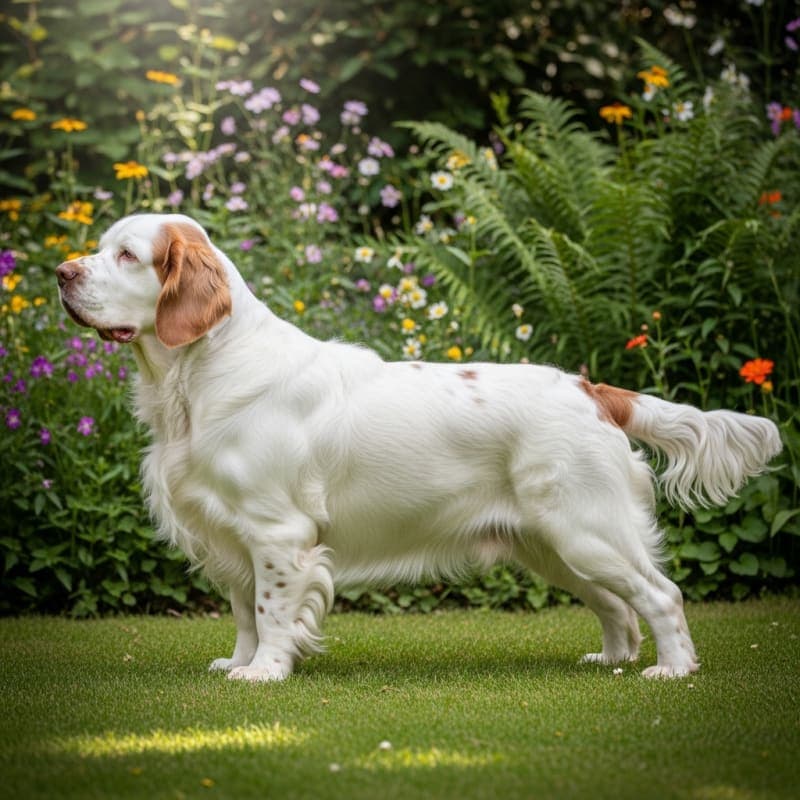
The Clumber Spaniel presents itself as a powerful and heavily built dog, being one of the heaviest representatives of the spaniel family. Its characteristic, strong silhouette combines strength with elegance, creating a harmonious whole that immediately attracts attention. The head of the Clumber is large and square, with a broad skull and a distinctly marked stop. The muzzle is relatively short, but strong and square, ending with a large, square nose in a flesh or cherry color.
The eyes of this breed are one of its most distinctive features – deep-set, diamond-shaped, in amber or dark amber color. Their expression is full of intelligence, seriousness, and a certain melancholy, giving the Clumber a unique, dignified appearance. The ears are large, wide, and low-set, hanging in the shape of a grape leaf, covered with thick, straight fur that forms characteristic fringes.
The coat of the Clumber Spaniel is abundant, dense, and silky to the touch, fitting closely to the body and providing excellent protection against weather conditions. The basic color of the coat is pure white with characteristic markings in lemon or orange, most commonly found around the ears and eyes. Small spots on the muzzle and limbs are permissible, adding charm to this breed.
- Height at the withers: males 48-51 cm, females 43-48 cm
- Weight: males 29.5-34 kg, females 25-29.5 kg
- Neck: long, thick, and strong, smoothly transitioning into a powerful back
- Body: long, strong, and low-set, with a deep chest
- Limbs: short, straight, with a strong bone structure and large, round paws
- Tail: low-set, carried level with the back, well-feathered
The characteristic gait of the Clumber Spaniel is a swaying, rolling movement, which may seem awkward, but is actually very efficient and allows the dog to move through dense underbrush for hours without fatigue. This particular way of moving is a result of its strong build and relatively short limbs in relation to its massive body.
The Clumber Spaniel is distinguished by its exceptionally calm and balanced temperament, making it an ideal companion for those who value harmony and predictability in their relationship with a dog. This breed is characterized by stoic calmness and dignity, rarely losing control. Unlike more reactive spaniels, the Clumber approaches life with a certain philosophical caution, carefully observing its surroundings before taking action.
The loyalty of the Clumber Spaniel to its family is legendary – it forms incredibly strong emotional bonds with its caregivers, showing them boundless love and devotion. At the same time, it maintains a certain aristocratic distance that sets it apart from more effusive breeds. This is not a pushy dog or one that demands excessive attention, but it certainly appreciates time spent with its people and gently seeks affection when it desires it.
In interactions with children, the Clumber Spaniel exhibits angelic patience and gentleness. Its calm temperament allows it to tolerate children's play perfectly, although due to its size, interactions with very small children should be supervised. This is a dog that instinctively understands the need for gentleness in its interactions with younger family members and often takes on the role of a protective companion.
Towards strangers, the Clumber maintains courteous reserve – it is not aggressive, but it also does not show excessive enthusiasm. This natural distrust makes it a good, albeit calm, guardian that will alert you to the presence of an intruder but will not bark without reason. Its hunting instinct remains strong, which means it may show interest in small animals, although proper socialization allows it to live harmoniously with other household members.
The intelligence of the Clumber Spaniel is undeniable, although it manifests itself in a more thoughtful than brilliant manner. It is a thinker, not a doer – it prefers to contemplate a command before executing it, which can sometimes be misinterpreted as stubbornness. In reality, this is a reflection of its independent thinking and desire to understand the meaning of the task at hand.
The Clumber Spaniel is a breed with moderately good health condition, with an average lifespan of 10 to 12 years. Despite its impressive build and overall endurance, representatives of this breed may be prone to certain conditions that require awareness and prevention from the owner. The key to maintaining a Clumber's health is regular veterinary care and an appropriate lifestyle tailored to the breed's needs.
One of the most serious health issues in Clumber Spaniels is hip and elbow dysplasia, which can develop partly due to the significant body mass of these dogs. This issue can lead to pain, lameness, and limited mobility. Early diagnosis through radiological examinations and maintaining a proper weight are crucial for minimizing risk and alleviating symptoms. Breeders should screen their breeding dogs.
Clumbers are also prone to spinal problems, particularly intervertebral disc disease (IVDD), which can lead to serious neurological consequences. Due to their long back and relatively short limbs, situations where the dog must jump from heights or excessively strain the spine should be avoided. Particular caution should be exercised when going down stairs.
- Entropion (inward rolling of the eyelids) – often requires surgical correction
- Ectropion (outward rolling of the eyelids) – can lead to chronic eye inflammation
- Otitis externa – common due to drooping, densely furred ears
- Hypothyroidism – manifests as lethargy, weight gain, and skin problems
- Dry eye syndrome – requires regular moisturizing and treatment
- Epilepsy – may occur in some breeding lines
Obesity poses a particular threat to the health of Clumber Spaniels. Their natural tendency to gain weight, combined with a calm temperament and moderate exercise requirements, makes it easy for them to become excessively overweight. Excess weight exacerbates orthopedic problems, strains the heart, and can shorten the dog's life by several years. Strict diet control and regular weighing are absolutely essential.
Sensitivity to high temperatures is another health aspect that requires attention. The dense, double coat of the Clumber, while providing excellent protection against the cold, can lead to overheating on hot days. Owners should ensure the dog has access to shade and fresh water, avoid intense exercise on hot days, and consider trimming the fur on the belly during the summer for better thermoregulation.
Clumber Spaniel grooming requires a systematic and thorough approach, which is essential for maintaining its magnificent, silky coat in excellent condition. This abundant, double-layered coat, consisting of a dense undercoat and a straight outer coat, requires regular attention to keep its healthy appearance and functionality. Proper grooming is not just a matter of aesthetics, but primarily of skin health and the dog's comfort.
Brushing should occur at least 3-4 times a week, and during heavy shedding periods – which occur twice a year, in spring and autumn – even daily. A brush with natural bristles and a metal comb should be used to thoroughly detangle the undercoat. Particular attention should be paid to the areas around the ears, groin, and feathering on the legs, where the hair tends to mat and tangle.
The ears of the Clumber Spaniel require special care due to their structure – long, drooping ear flaps covered with dense hair create a warm, moist environment conducive to the development of infections. Ear cleaning should be done weekly, using a special ear cleaning solution for dogs. It is also important to regularly trim excess hair inside the ear flap to improve ventilation.
- Bathing: every 6-8 weeks or as needed, using a shampoo for dogs with dense coats
- Nail trimming: every 3-4 weeks, particularly important due to the dog's weight
- Cleaning skin folds: regularly check around the eyes and muzzle
- Hygienic trimming: around the paws, belly, and intimate areas every 4-6 weeks
- Trimming: professional show grooming 3-4 times a year
- Teeth cleaning: 2-3 times a week to prevent tartar buildup
Professional grooming is recommended at least once a quarter, especially for show dogs. A groomer can perform precise grooming according to breed standards, highlighting the natural lines of the Clumber's silhouette. Show grooming includes shaping the hair on the ears, chest, and legs, while maintaining the breed's natural appearance. For companion dogs, a more practical cut can be applied, shortening the feathering and making daily grooming easier.
Shedding in Clumber Spaniels is significant and occurs year-round, intensifying during seasonal changes. During this time, the amount of hair lost can be impressive, so owners should be prepared for regular vacuuming and removing hair from furniture. Using a de-shedding tool during heavy shedding can significantly reduce the amount of hair in the home, but it should be used carefully to avoid damaging the healthy outer coat.
The Clumber Spaniel, despite its massive build, has moderate exercise needs that differ significantly from the requirements of more energetic spaniels. This breed prefers calm, regular exercise rather than intense runs, making it ideal for individuals leading a more subdued lifestyle. A daily dose of exercise is, however, absolutely essential for maintaining the physical and mental health of this dignified dog.
An adult Clumber Spaniel needs about 60 minutes of moderate activity daily, which is best divided into two 30-minute walks. They prefer calm, exploratory hikes where they can use their excellent sense of smell to investigate their surroundings. Walks should be conducted at a steady but unhurried pace, allowing the dog to thoroughly explore interesting scents – remember, this is a hunting dog with a strong tracking instinct.
Particular caution should be exercised with young Clumber Spaniels. Due to their rapid weight gain and slower development of the skeletal system, excessive exertion in the first year of life can lead to permanent damage to joints and bones. Puppies up to 12 months old should have limited activity – the rule of 5 minutes of walking for each month of age (e.g., a 4-month-old puppy = 20 minutes of walking) is a good guideline.
- Swimming – an excellent form of exercise that is gentle on the joints, ideal for Clumbers
- Fetching – at a moderate pace, it greatly stimulates the hunting instinct
- Scent work and tracking – scent games and searching for treats develop their natural talent
- Forest walks – the opportunity to explore in the breed's natural working environment
- Obedience training – combines physical activity with mental stimulation
Clumber Spaniels do well in cooler climates, but require special attention during heat. Their thick coat and massive build make them prone to overheating. In summer, walks should be planned for early morning or late evening, avoiding the hottest hours. Always have water on hand and take frequent breaks in the shade. Some owners use cooling vests during summer walks.
It is important to remember that the Clumber Spaniel is a dog with a strong hunting instinct, which may suddenly lead them to follow an interesting scent. Therefore, it is crucial to keep them on a leash in unsecured areas or ensure they have a solid recall. Fenced areas for free running are ideal, allowing the dog to explore in safe conditions. Regular exercise not only keeps the Clumber in good physical shape but also prevents boredom and associated behavioral issues.
Training a Clumber Spaniel is a fascinating challenge that requires an understanding of the unique psyche of this breed. Although they are incredibly intelligent dogs, their approach to learning differs significantly from that of more eager breeds. Clumber thinks before acting – it analyzes the command, considers its meaning, and only then decides whether it is worth executing. This trait, often mistakenly interpreted as stubbornness, is actually a manifestation of deep intelligence and independent thinking.
The key to success in training a Clumber is patience, consistency, and positive reinforcement. These dogs are extremely sensitive to the tone of voice and mood of their owner – harsh criticism or overly strict methods can cause the dog to withdraw and lose motivation to cooperate. Rewards in the form of treats are particularly effective, as Clumbers are known foodies. However, it is important to monitor the amount of treats given to avoid obesity.
Early socialization is absolutely crucial for the proper development of a Clumber Spaniel. Between 3 and 14 weeks of age, the puppy should have contact with a variety of people, dogs, sounds, and situations. A well-socialized Clumber grows into a confident, balanced dog that remains calm in new situations. Without proper socialization, it may become overly distrustful or fearful of strangers.
- Basic commands: Sit, Stay, Come, Leave it, No – taught step by step
- Recall: particularly important due to the hunting instinct – train in a safe area
- Loose leash walking: necessary due to the dog's strength – start from puppyhood
- Calmly greeting guests: preventing jumping due to the dog's mass
- Being alone: gradually getting used to solitude, preventing separation anxiety
- Impulse control: teaching to wait for food, toys, going for a walk
Clumber Spaniels have a natural talent for scent work, which can be utilized in training. Games involving searching for hidden treats or toys not only provide mental stimulation but also strengthen the bond between the dog and the owner. Nosework or mantrailing are excellent activities for this breed, allowing them to use their innate abilities in a constructive way. Many Clumbers also achieve success in obedience competitions, although their style of performing exercises is more dignified than swift.
The biggest challenge in training a Clumber is often motivating them to act quickly. These dogs prefer to work at their own pace and may seem lazy when they are actually just carefully considering the situation. Short, 5-10 minute training sessions are more effective than long, exhausting classes. Ending the training on a positive note, while the dog is still interested, makes them more eager to return to learning the next day. It is also important to remember that the Clumber Spaniel matures emotionally more slowly than many other breeds – they achieve full mental maturity only around the age of 3.
Feeding a Clumber Spaniel requires special attention and precise planning, as this breed has a natural tendency to gain weight, which can lead to serious health problems. The proper diet must provide all the essential nutrients while controlling the caloric intake of meals. The key is to find a balance between satisfying this food-loving dog's appetite and maintaining optimal condition.
An adult Clumber Spaniel should receive high-quality food tailored for large breed dogs with moderate activity levels. The daily portion typically ranges from 2.5 to 3.5 cups of dry food, depending on the dog's weight, age, and activity level. It is absolutely necessary to divide the daily ration into two meals – morning and evening – which helps prevent gastric torsion, to which deep-chested dogs are prone.
When choosing food for a Clumber, pay attention to ingredients and nutritional values. The first ingredient should be high-quality meat (chicken, lamb, salmon), and the protein content should be around 22-26% for an adult dog. Avoid foods with high grain and filler content, which provide empty calories. The addition of glucosamine and chondroitin is beneficial for joint health, particularly important in this heavy breed.
- Puppies (up to 12 months): large breed puppy food, 3-4 meals a day
- Young dogs (1-2 years): gradual transition to adult food, 2-3 meals
- Adults (2-7 years): food for large breeds, 2 meals a day, portion control
- Seniors (7+ years): food for older dogs with reduced calories
- Overweight dogs: light or weight reduction food, precise portion measurement
- Fresh water: always available, especially important when feeding dry food
Weight control is absolutely crucial for the health of a Clumber Spaniel. An ideal dog should have palpable but not visible ribs, a visible waist when viewed from above, and a tucked abdomen when viewed from the side. Regular weighing every 2-4 weeks allows for early detection of weight gain tendencies. If the dog starts to gain weight, portions should be immediately reduced or switched to lower-calorie food.
Treats pose a particular challenge in a Clumber's diet, as these dogs are masters at begging and can be very persuasive. Treats should not make up more than 10% of the daily caloric intake. Instead of high-calorie treats, you can use pieces of carrot, apple (without seeds), or green beans. During training, it's worth using very small pieces of treats or even measuring out part of the daily food portion for training rewards.
Some Clumber Spaniels may have sensitive stomachs or food allergies, manifesting as diarrhea, vomiting, or skin problems. In such cases, an elimination diet or hypoallergenic food may be necessary. Introducing new food should be gradual, spread over 7-10 days, mixing gradually increasing proportions of the new food with the old. Also, remember to give the dog at least an hour of rest after meals before engaging in physical activity, which reduces the risk of gastric torsion.
Characteristic Traits
Pros
- Calm and balanced temperament
- Excellent family companion
- Gentle with children
- Loyal and devoted to the owner
- Intelligent and thoughtful
- Good watchdog without aggression.
Cons
- Tendency to overweight and obesity
- Intense shedding throughout the year
- Requires regular grooming
- May be stubborn during training
- Prone to joint health issues
- Distrustful of strangers.
Behavioral Ratings
Breed History
The history of the Clumber Spaniel is a fascinating tale of aristocracy, revolution, and canine loyalty that dates back to the 18th century. Although the exact origin of the breed is shrouded in mystery, the most likely theory suggests that the ancestors of Clumbers originated from France, where they were bred by the Duke de Noailles. During the turmoil of the French Revolution, anticipating the impending danger, the duke sent his beloved dogs to England, to his friend, the second Duke of Newcastle.
The Duchy of Newcastle at Clumber Park in Nottinghamshire became the cradle of the breed, from which it took its name. The second Duke of Newcastle, Henry Pelham-Clinton, was an avid hunter and breeder who appreciated the unique qualities of the French spaniels. Under his care, the breed was refined through probable crossbreeding with basset hounds and early forms of Sussex spaniels, which gave Clumbers their characteristic, robust build and calm temperament.
In the 19th century, Clumber Spaniels became a status symbol among the British aristocracy. Owning a pack of these dignified dogs was a sign of wealth and sophistication. The Duke of Albany, the son of Queen Victoria, was a passionate enthusiast of the breed, as was King Edward VII, who kept Clumbers at Sandringham House. King George V continued the family tradition, and his Clumber Spaniel named Sandringham Spark won the champion title at shows.
- 1844 - The first Clumber Spaniels shown at a show in England
- 1859 - Official recognition of the breed by The Kennel Club (one of the first 9 recognized breeds)
- 1878 - The first Clumbers arrived in North America with a shipment for the Canadian Governor
- 1884 - The American Kennel Club recognized the breed (one of the first 10 recognized)
- 1925 - Establishment of the Clumber Spaniel Club in the UK
- 1972 - Reactivation of the Clumber Spaniel Club of America after a period of decline
The First and Second World Wars nearly brought the breed to the brink of extinction. Many kennels were destroyed, and keeping large dogs during food rationing was extremely difficult. After the Second World War, only a few dozen individuals remained in the UK. Thanks to dedicated breeders who preserved the best bloodlines, the breed was gradually rebuilt, although it never regained its pre-war popularity.
Today, the Clumber Spaniel remains a relatively rare breed, ranking low in popularity charts. In the UK, about 200-300 puppies are registered annually, similarly in the USA. This exclusivity is partly intentional – dedicated breeders prefer to maintain high quality in the breed rather than increase its popularity at the expense of health and temperament. The Clumber Spaniel has been recognized by The Kennel Club as a native breed at risk, highlighting the need to protect this living heritage of British history.
Today's Clumber Spaniels are primarily companion dogs, although some still work as hunting dogs, especially in the UK and Scandinavia. Their calm temperament makes them excellent therapy dogs, and their superb sense of smell allows some to work in substance detection. The breed has retained its aristocratic charm and remains a favorite choice among connoisseurs who value the combination of dignity, intelligence, and unwavering loyalty that defines a true Clumber Spaniel.