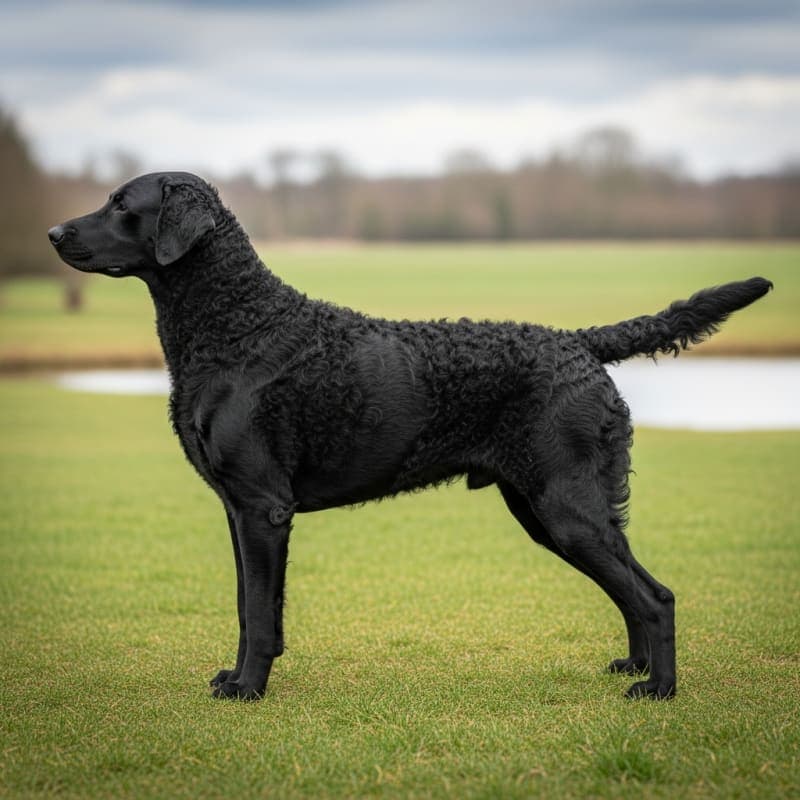
Curly Coated Retriever
FCI Group
8• FCI 110
Size
Medium
Origin Country
GB
Height
64-69 cm
Weight
23-36 kg
Lifespan
10-12 years
Temperament
Overview
The Curly Coated Retriever, commonly known as Curly, is an extraordinary dog breed originating from Great Britain that has fascinated dog lovers around the world since the 19th century. The Curly Coated Retriever is the tallest breed in the retriever group, and its most distinctive feature is the unique, curly coat that covers its entire body. This unique coat not only adds elegance and charm but also serves a practical function – it effectively repels water and protects against overgrown areas, making these dogs indispensable companions during hunts in challenging conditions such as marshy terrains or cold waters.
Their exceptional intelligence and innate willingness to cooperate make them excellent partners not only in hunting work but also in everyday family life. This is a dynamic and friendly dog, known for its gentle temperament and loyalty to its owners. Thanks to these traits, Curly excels as a family dog, thriving with children and forming strong emotional bonds with the entire family.
However, it is important to remember that high energy and a significant need for exercise require owners to provide an adequate amount of physical activity and mental stimulation. Their moderate independence means they are self-sufficient in decision-making, but they also crave closeness with people and do not like prolonged solitude. Curly may initially seem reserved towards strangers, but once a relationship is established, they show deep attachment.
The health of this breed is generally good, although like any breed, Curly Coated Retrievers can be prone to certain conditions such as hip dysplasia, elbow dysplasia, or eye problems. Therefore, regular veterinary visits and conscious monitoring of the dog's health are crucial for ensuring a long and happy life.
Grooming the distinctive coat of the Curly is relatively simple and less demanding than it may seem. Their curly locks do not require frequent trimming or intensive brushing, making them easier to maintain compared to other long-haired breeds. Regular checks and occasional brushing are sufficient to keep the coat healthy and functional.
We encourage you to explore more detailed information in the following sections of our comprehensive guide. Here you will find everything you need to know about the health, grooming, training, nutrition, history, appearance, and behavior of the Curly Coated Retriever, so you can fully enjoy the companionship of this wonderful dog for many years.
The Curly Coated Retriever is a dog with a strong, harmonious body structure combined with distinct elegance. It is the tallest breed among all retrievers, reaching impressive sizes while maintaining a proportional silhouette.
Dimensions and build:
- Height at the withers: 64-69 cm (males) and 58-64 cm (females)
- Weight: 32-36 kg (males) and 23-32 kg (females)
- Body slightly longer than high (measured from the point of the shoulder to the point of the buttock)
- Strong, straight back line with a short, deep, and strong loin
- Deep chest reaching to the elbows
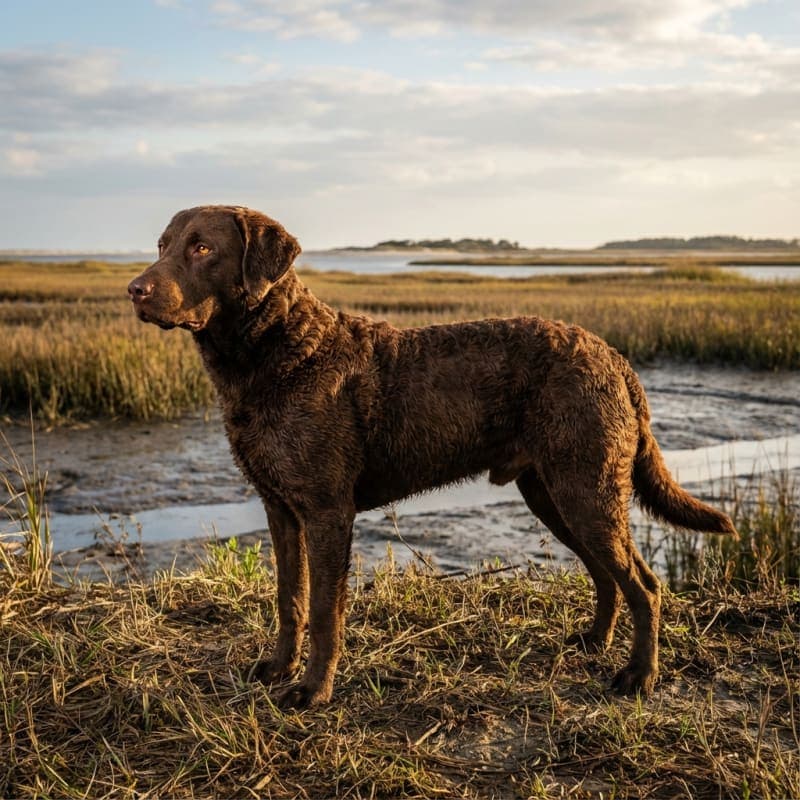
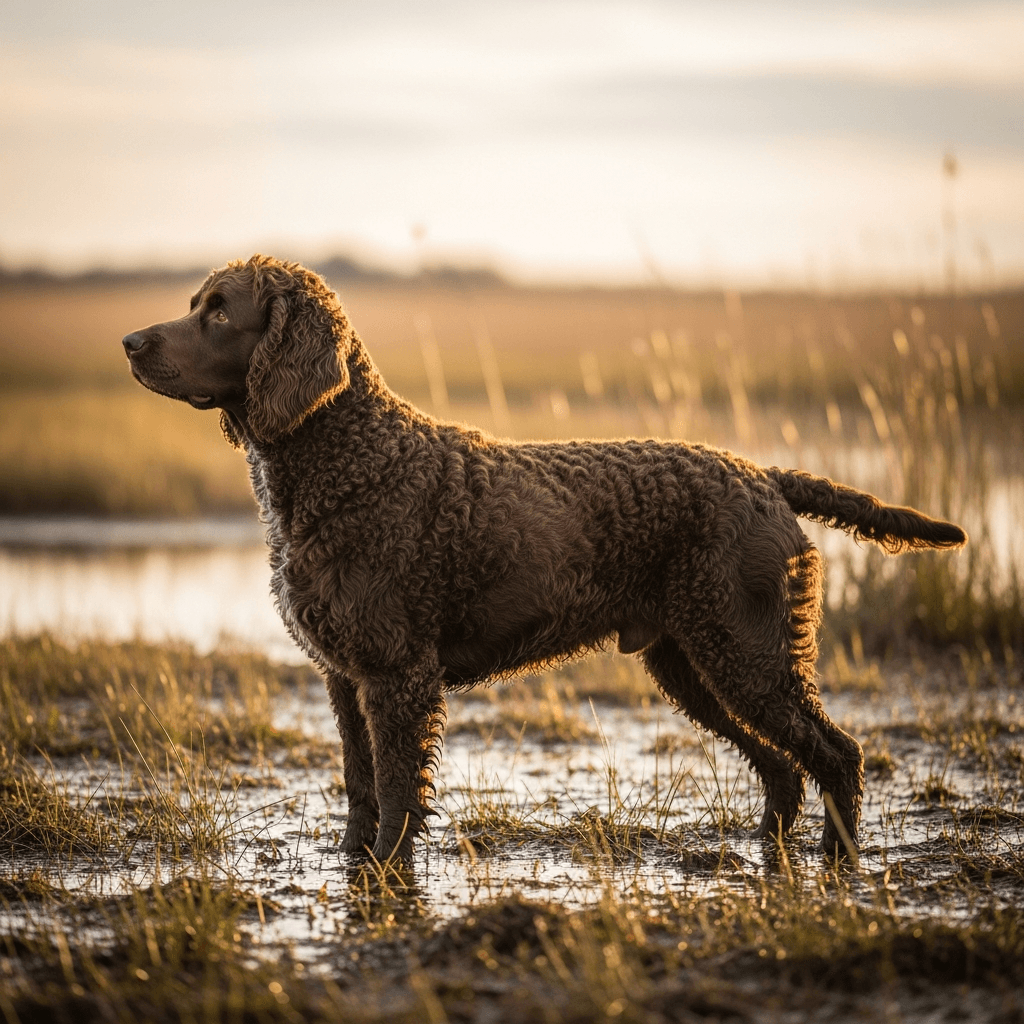
Characteristic coat: The most recognizable feature of the breed is its dense coat covered with small, tightly curled ringlets that lie close to the skin and create a natural waterproof protective layer. The coat lacks an undercoat, making it unique among water-working breeds. Acceptable colors are black or liver (brown), with each shade being solid and deep.
Head and muzzle structure: The head has a characteristic wedge shape both in profile and from the front. The length of the muzzle and skull is equal, and their planes are parallel. The nose is black in black individuals and brown in liver-colored ones. The eyes are large, oval, and set at a slant, giving them an intelligent and attentive expression. The eye color is dark brown in black dogs, while in liver-colored ones, the brown tone harmonizes with the coat color.
Ears and neck: The ears are relatively small, set slightly above the eye line, lying close to the head and covered with small curls. The neck is strong, slightly arched, of medium length, without loose skin, and smoothly transitions into well-muscled shoulders.
Limbs and tail: The limbs are strong, straight, and well-muscled, providing a sure, energetic movement. The tail is a natural extension of the back line, carried straight or slightly raised during movement, covered with characteristic curls.
The Curly Coated Retriever is a dog with a smart, balanced, and reliable character. Its temperament combines courage, friendliness, confidence, and independence, making it a unique companion both at work and in family life.
Character traits:
- High intelligence – they quickly learn new commands and understand complex instructions
- Emotional balance – calm, composed approach to various situations
- Reliability and loyalty to the owner
- Courage combined with prudence
- Confidence without aggression
- Moderate independence in thinking and acting
Social relationships: Curly may initially seem reserved or somewhat cool towards strangers, which is a natural trait of this breed and should not be mistaken for shyness or aggression. This caution stems from their innate intelligence and observant nature. Once a relationship is established, they prove to be extremely friendly and loyal. They feel great in the company of children, with whom they form strong bonds, as well as other dogs, provided they are properly socialized from a young age.
Social and emotional needs: These dogs require a lot of interaction with people and should not be left alone for long periods. Prolonged solitude can lead to behavioral problems such as excessive barking, destruction of objects, or separation anxiety. Curly are generally quiet and do not tend to bark excessively unless warranted by the situation.
Activity and motivation: Their high motivation for work and food makes them respond well to positive reinforcement during training. However, this same trait can lead to obesity, especially in older individuals, so diet control and regular exercise are crucial. Curly have a strong hunting instinct and may tend to follow scents or chase game, so it is important to keep them on a leash or in a well-fenced area during walks.
Working temperament: As typical retrievers, Curly love retrieving and working in water. They have a natural passion for swimming and fetching items, which makes them excellent hunting dogs, especially for waterfowl hunting. This same energy and enthusiasm translate into their behavior at home, where they need mental and physical stimulation to be happy and balanced companions.
The Curly Coated Retriever is generally a healthy and resilient breed with good vitality, with an average lifespan of 10-12 years, although many individuals live longer with proper care.
Overall health: These dogs are strong, hardy, and well adapted to living in various climatic conditions. Their characteristic curly coat provides excellent protection against cold and moisture, making them particularly resistant to harsh weather conditions. However, in warmer months, they may shed more intensely, which requires regular monitoring and occasional brushing of dead hair.
Common genetic conditions: Despite their generally good health, the breed may have predispositions to the following issues:
- Hip dysplasia (HD) – a partially hereditary condition concerning the improper development of the hip joint
- Elbow dysplasia (ED) – a similar developmental disorder affecting the elbow joint
- Progressive retinal atrophy (PRA) – a hereditary eye condition leading to gradual vision loss
- Cataracts – may develop in older age
- Gastric torsion – a life-threatening condition, especially in deep-chested dogs
- Heart diseases – including dilated cardiomyopathy
Weight management: Owners should be aware that Curly Coated Retrievers tend to gain weight as they age, especially if their activity level decreases. Controlling food portions, avoiding excessive treats, and ensuring regular physical activity is crucial for maintaining a healthy body weight and preventing joint and metabolic issues.
Prevention and veterinary care: Regular veterinary visits are essential for early detection of potential health problems. It is recommended to:
- Have annual check-ups with assessments of joints and heart
- Conduct regular eye examinations, especially for breeding dogs
- Perform genetic testing of parents before breeding (HD, ED, PRA)
- Monitor weight and physical condition
- Vaccinate according to schedule and provide regular deworming
- Protect against external parasites (ticks, fleas)
Environment and activity: Providing adequate exercise, mental stimulation, and a balanced diet significantly impacts the overall health and longevity of the Curly Coated Retriever. Access to swimming water is an additional benefit, supporting their natural needs and physical condition without overloading their joints.
The grooming of a Curly Coated Retriever is relatively simple and less demanding than it might seem at first glance, especially compared to other long-haired or curly breeds.
Coat characteristics: The unique curly coat of the Curly is dense, covered with small, tightly curled locks that create a natural waterproof layer. Importantly, this coat does not have an undercoat, which significantly simplifies the grooming process and reduces shedding intensity compared to double-coated breeds.
Combing and brushing:
- Regular combing is recommended once a week during non-shedding periods
- Use of a wide-toothed comb or a brush with metal pins
- Gently combing in the direction of hair growth to avoid damaging the curl structure
- During shedding periods (spring and autumn), increase frequency to 2-3 times a week
- Removing dead hair prevents matting and improves coat appearance
Clipping and trimming: The coat of the Curly Coated Retriever does not require regular clipping like that of poodles or other curly breeds. It is only recommended to:
- Occasionally trim every 3-4 months to maintain an aesthetic appearance
- Trim excessively grown hair around the ears, paws, and tail
- Maintain the natural look of curls without intensive intervention
Bathing and washing: The frequency of bathing depends on the dog's lifestyle:
- Show dogs: bathe before each show for optimal appearance
- Household/work dogs: bathe every 6-8 weeks or as needed
- Dogs that frequently swim or play in mud: more frequent washing to remove dirt and odors
- Use of gentle dog shampoos that do not dry out the coat
- Thorough rinsing to avoid detergent residue
- Natural drying or lightly towel drying (avoid using a dryer, which can damage the curl structure)
Additional care:
- Ears: Regular checking and cleaning every 1-2 weeks, especially after swimming, to prevent infections
- Teeth: Brushing 2-3 times a week to prevent tartar buildup and periodontal disease
- Nails: Trimming every 3-4 weeks or as needed (if the dog walks a lot on hard surfaces, they wear down naturally)
- Eyes: Regular checking and gentle cleaning with a damp gauze if discharge is present
Seasonal notes: During periods of heavy shedding (usually twice a year), it is advisable to increase the frequency of grooming to help the dog shed excess dead hair. Despite the lack of an undercoat, Curly may shed moderately, so regular grooming will help keep the home clean and the coat healthy.
The Curly Coated Retriever is a breed with a high energy level and significant exercise needs, requiring a substantial amount of daily physical activity to remain healthy, happy, and balanced.
Minimum exercise requirements: Due to their energy and inherent working instincts, these dogs need at least 1-2 hours of intense effort every day. This is not a breed for those leading a sedentary lifestyle or living in small apartments without access to recreational areas.
Ideal forms of activity:
- Long walks and jogging: A minimum of 2 walks per day, each lasting 30-45 minutes, at a moderate or brisk pace
- Fetching: A natural and favorite activity for retrievers – throwing balls, frisbees, or retrieves
- Swimming: Absolutely the favorite form of exercise for Curly, utilizing their natural water predispositions
- Biking: For adult, healthy individuals after consulting with a veterinarian
- Obedience training: Combines physical and mental stimulation
- Agility: An excellent form of activity that utilizes agility and intelligence
- Dog frisbee: An intense game combining running, jumping, and fetching
- Hiking: Longer trips through forests, mountains, or by the water
Access to water: Swimming is a natural passion of the Curly Coated Retriever and is one of the best ways to meet their exercise needs. If possible, providing regular access to safe bodies of water (lakes, rivers, safe ponds) significantly improves the dog's quality of life. Swimming is also an excellent form of low-impact exercise, particularly beneficial for dogs with joint issues.
Mental stimulation: In addition to physical activity, Curlies also need intellectual stimulation:
- Training advanced commands and tricks
- Scent and search games (e.g., hidden treats)
- Interactive toys and puzzles for dogs
- Hunting training or work trials
- Learning new skills and tasks
Consequences of insufficient exercise: Owners should be aware that insufficient activity can lead to serious behavioral problems:
- Prolonged boredom and frustration
- Destructive behaviors (destroying furniture, items)
- Excessive barking or whining
- Hyperactivity and difficulty concentrating
- Weight and physical condition issues
- Low mood and apathy
Age adaptation: The level of activity should be adjusted to the age and health status of the dog:
- Puppies (up to 12 months): Shorter, more frequent exercise sessions, avoiding excessive strain on developing joints
- Adult dogs (1-7 years): Full intensity of activity according to breed requirements
- Seniors (8+ years): Adjusting intensity to fitness, still maintaining regular activity but at a lower intensity
Safety during exercise: Curlies have a strong hunting instinct and may follow scents or chase wildlife, so it is important to:
- Keep on a leash in unenclosed areas or near roads
- Train a solid recall before letting them off-leash
- Choose safe, enclosed areas for free play
- Avoid exercising in extreme temperatures
The Curly Coated Retriever is a breed that is intelligent, eager to cooperate, and relatively easy to train, provided that appropriate methods and a consistent approach are applied.
Learning abilities: Their natural intelligence and innate desire to please their owners make them quick learners of new commands, tricks, and complex behaviors. Curly Coated Retrievers have excellent memory and can combine different commands into sequences, making them wonderful students in both basic obedience and advanced disciplines.
Training methods - positive reinforcement: Due to the sensitive nature of this breed, training MUST be based on:
- Positive motivation: Treat rewards, verbal praise, play
- Consistency without physical punishment: Curly Coated Retrievers are emotionally sensitive and do not respond well to harsh treatment
- Fun and engagement: Training should be enjoyable and interesting
- Short, intense sessions: 10-15 minutes 2-3 times a day is better than one long session
- Diversity: Changing exercises prevents boredom
Independent nature - a challenge and an advantage: Curly Coated Retrievers exhibit some independence in thinking, which is typical of hunting dogs that work independently. This means that:
- They may make their own decisions if training is not consistent
- They require patience and clear, consistent communication
- They need to understand WHY they should perform a given command
- They respond best to a logical, fair approach
- They may test boundaries, especially during adolescence
Early start - key to success: Owners should start training as early as possible, preferably from the moment the puppy arrives home (around 8 weeks of age):
- Basic commands: Sit, Stay, Lie down, Come, Leave it
- House training and hygiene
- Walking on a loose leash
- Basic good behavior at home
- Cage/transport crate training
Socialization - the foundation of a balanced dog: Intensive socialization during the critical period (8-16 weeks of age) is absolutely crucial:
- Contact with different people: Children, adults, seniors, people in various outfits
- Interactions with other dogs: Different breeds, sizes, ages
- Exposure to various environments: City, forest, beach, dog-friendly stores
- Getting used to stimuli: Street noise, cars, bicycles, loud sounds
- Positive experiences: Every new experience should be pleasant and rewarded
Advanced training and sports disciplines: Curly Coated Retrievers excel in:
- Hunting training: The breed's natural specialty
- Agility: Utilizing agility and intelligence
- Obedience: Precise execution of commands
- Rally-O: A combination of obedience and navigation
- Work-trial: Retriever work tests
- Nosework: Scent work and searching
- Dock diving: Jumps into water
Typical training challenges:
- Strong hunting instinct: Solid recall training is key
- Selective deafness: When the dog is focused on a scent, it may ignore commands
- Slow maturation: Full emotional maturity around 2-3 years of age
- Testing boundaries: Especially in young adult dogs (12-24 months)
Regularity and consistency: Regular training sessions, even short but daily, yield the best results. All family members should use the same commands and rules to avoid confusing the dog. The Curly Coated Retriever is a dog that, with the right approach, grows into a remarkably obedient, reliable, and versatile companion both in work and family life.
Proper nutrition is a key element of health and longevity for the Curly Coated Retriever. A well-balanced diet affects physical condition, coat quality, immune system function, and the overall well-being of the dog.
High-quality food - the foundation of a healthy diet: Curly should be fed premium or super-premium food that is tailored to their specific needs:
- Age: Puppies, adult dogs, seniors – each group has different nutritional requirements
- Weight: Adjusting calories to the actual body weight
- Activity level: Very active dogs vs. moderately active dogs
- Health status: Specialized foods for health issues (e.g., for joints, heart)
- Breed size: Food for large breeds
Nutrients - what should be in the bowl:
- High-quality protein (25-30%): From meat, fish, or poultry – builds muscles and supports recovery
- Fats (12-18%): Omega-3 and omega-6 fatty acids for healthy coat and skin
- Carbohydrates: Source of energy from whole grains, rice, or potatoes
- Fiber: Supports proper digestion
- Vitamins and minerals: Calcium, phosphorus for healthy bones and joints; vitamins A, E, B complex
- Glucosamine and chondroitin: Especially important for large breeds, support joint health
Portion control and feeding frequency: Owners should avoid overfeeding, as Curly Coated Retrievers tend to gain weight, especially:
- In older age, when metabolism slows down
- After neutering/spaying (reducing caloric needs by 20-30%)
- With decreased physical activity
Recommended feeding schedule:
- Puppies (2-6 months): 3-4 meals a day
- Young dogs (6-12 months): 2-3 meals a day
- Adult dogs (1+ year): 2 meals a day (morning and evening)
- Seniors (8+ years): 2 smaller meals, possibly senior food
Treats - pleasure in moderation: Owners should limit the amount of treats, which should not make up more than 10% of the daily calorie intake:
- Choose healthy treats (dried meat, vegetables, specialized snacks)
- Avoid sweets, chocolate, fatty leftovers from the table
- Use treats during training thoughtfully
- Account for calories from treats in the main meal
Hydration - often overlooked element: Fresh water should always be available, especially:
- After intense physical activity
- During hot weather
- If the dog eats dry food (higher water needs)
- After swimming in saltwater (need to replenish fluids)
Prevention of gastric torsion: Curly, as deep-chested dogs, are at risk of gastric torsion – a life-threatening condition. To minimize the risk:
- Divide the daily food allowance into 2-3 smaller meals
- Avoid intense exercise 1-2 hours before and after feeding
- Feed in a calm environment, without rushing
- Consider using slow feeders
- Avoid large amounts of water immediately after meals
Monitoring body condition: Regularly check the dog's weight and body shape:
- Ribs should be palpable under a thin layer of fat
- Visible waist when viewed from above
- Tucked belly when viewed from the side
- Regular weighing (monthly) for early detection of changes
Consultations with a veterinarian: Regular consultations with a veterinarian or pet nutrition specialist can help with:
- Adjusting the diet to the dog's individual needs
- Preventing health problems related to nutrition
- Developing a feeding plan for special needs (allergies, diseases)
- Monitoring weight and condition
A properly balanced diet, portion control, and avoiding overfeeding are the foundation of a long, healthy life for the Curly Coated Retriever.
Characteristic Traits
Pros
- Intelligent and eager to work
- Excellent swimming and retrieving abilities
- Friendly and gentle temperament
- Ideal for active families
- Relatively easy coat care
- Loyal and devoted to their owners.
Cons
- They require a lot of daily exercise
- They can be independent in their thinking
- Prone to joint dysplasia and eye problems
- Slow emotional maturity
- They may be reserved towards strangers
- Tendency to overweight in older age.
Behavioral Ratings
Breed History
The history of the Curly Coated Retriever dates back to the early 19th century, when this breed was developed in England as one of the oldest types of retrievers recognized today. Its development was closely linked to the needs of hunters who sought dogs capable of working in the most challenging terrain, particularly in wet and marshy areas.
Origin and crossbreeding: The exact origin of the Curly Coated Retriever remains partly shrouded in mystery, but dog breed historians suggest that its bloodline carries the heritage of several breeds:
- Newfoundland (smaller variety): Provided a love for water and a strong build
- Irish Water Spaniel: Likely source of the curly coat and water retrieving skills
- Poodle (presumably): The characteristic curls raise suspicions of poodle involvement, although this has not been definitively confirmed
- Setters: May have contributed agility and hunting instincts
- Hunting dogs from England: Local working breeds
Development as a working breed: The Curly Coated Retriever quickly gained a reputation as an exceptional hunting dog, particularly valued for:
- Excellent waterfowl retrieving skills
- Endurance in cold water and difficult terrain
- Intelligence and independence in decision-making
- Waterproof coat that protected against weather conditions
- Calm temperament and reliability
During its peak popularity (the second half of the 19th century), Curly was one of the most valued hunting dogs among the British aristocracy and professional hunters.
Decline in popularity and threat: Unfortunately, with the advancing industrialization in the early 20th century, the number of Curly Coated Retrievers significantly declined. Contributing factors included:
- Changes in hunting styles
- Growing popularity of other retriever breeds (Labrador, Golden Retriever)
- World War I and II, which significantly impacted dog breeding in Europe
- Lack of systematic breeding and promotion of the breed
In the 1920s and 1930s, the breed was on the brink of extinction.
Breed revival: Fortunately, in the 1930s, groups of enthusiasts and breeders emerged who undertook efforts to preserve and rebuild the population of the Curly Coated Retriever:
- Establishment of breed clubs in the UK
- Creation of breeding programs based on the best preserved lines
- Promotion of the breed at shows and competitions
- Export to other countries to broaden the gene pool
International spread: Thanks to the efforts of breeders, the Curly gained popularity beyond the borders of the UK:
- Sweden: One of the first countries to enthusiastically adopt the breed
- Australia: Curly became popular among hunters and as family dogs
- United States: The breed was officially recognized by the American Kennel Club (AKC) in 1924
- New Zealand, Canada, European countries: Gradual spread
British paradox: Although the Curly Coated Retriever is a British breed, it remains relatively rarely chosen by dog owners in the UK compared to more popular Labradors or Golden Retrievers. The breed is more valued abroad than in its country of origin.
Contemporary status: Currently, the Curly Coated Retriever is a recognizable, though still relatively rare breed. It is valued as:
- A versatile hunting dog, especially for waterfowl
- An excellent family dog for active families
- A show dog with a unique appearance
- A participant in canine sports (agility, obedience, work-trial)
The breeding of this breed is carried out by dedicated enthusiasts who care about preserving working traits, health, and the distinctive appearance of this exceptional breed. The Curly Coated Retriever remains a living testament to British tradition in hunting dog breeding and an example of successful collaboration among breeders in saving an endangered breed.