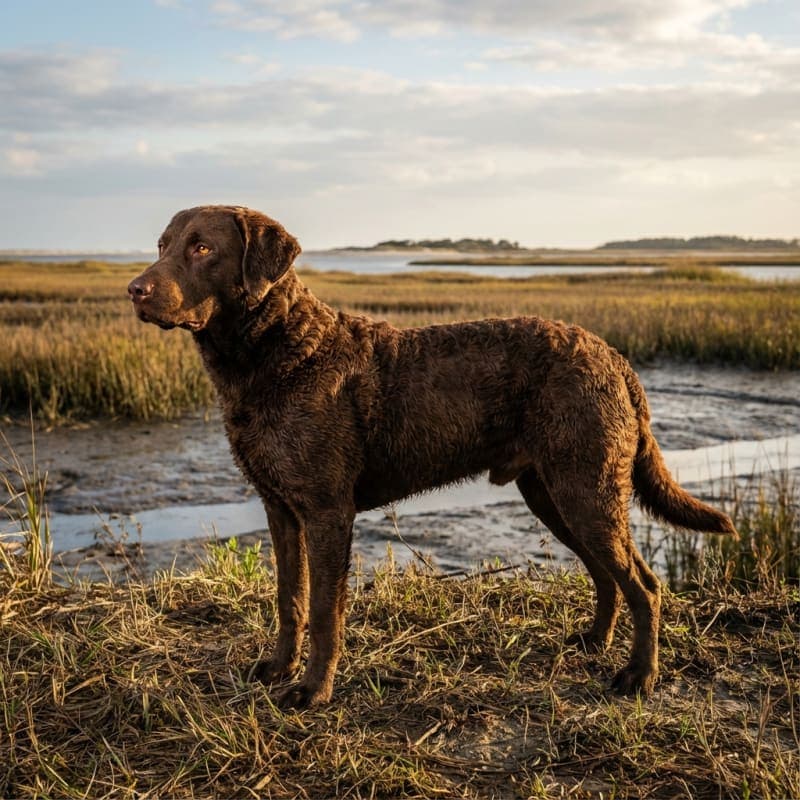
Chesapeake Bay Retriever
FCI Group
8• FCI 263
Size
Medium
Origin Country
XX
Height
53-66 cm
Weight
25-32 kg
Lifespan
10-12 years
Temperament
Overview
The Chesapeake Bay Retriever, also known as Chessie, is a unique breed of dog originating from the United States. Bred in the Chesapeake Bay area, this dog was created to work in extremely challenging conditions – in cold water, strong winds, and among ice flows. It is these challenges that shaped a dog with remarkable endurance, resilience, and versatile skills.
Chessie is a medium-sized dog with a solid build and deep chest. Its body structure is designed to provide maximum efficiency while swimming and retrieving in the toughest weather conditions. Intelligence, loyalty, and a friendly disposition make the Chesapeake Bay Retriever not only an excellent hunting dog but also a wonderful family companion. It excels in various dog sports disciplines such as agility and obedience.
One of the most fascinating aspects of this breed is their coat. It consists of a dense, woolly undercoat and a short, coarse, slightly wavy outer coat that contains natural oils. This unique structure provides excellent protection against cold and water, allowing dogs to work for hours in icy water without discomfort. Chessies are also known for their distinctive pleasant expression, which appears when they are happy – this subtle smile adds charm to their strong character.
Webbed feet make the Chesapeake Bay Retriever a wonderful and tireless swimmer. Their high intelligence facilitates training, but they can also be stubborn and independent, requiring consistency and patience from their owner. They have a strong hunting instinct, which means they may chase after other animals, birds, or moving objects. Therefore, proper socialization from a young age and consistent training are crucial.
The Chesapeake Bay Retriever requires regular and intense physical activity as well as mental stimulation. This is absolutely essential for maintaining the mental and physical health of this breed. It is ideally suited as a family dog, especially in homes with children, with whom it forms strong bonds. This breed is full of energy, endurance, and a willingness to work, making it an ideal choice for active families, outdoor enthusiasts, and owners who can provide the right amount of exercise and challenges.
In summary, the Chesapeake Bay Retriever is a dog that combines strength, endurance, intelligence, and deep loyalty to its family. Its unique physical and mental traits, shaped by over 200 years of working in the toughest conditions, create a captivating picture. If you are looking for a dog that will be both a devoted companion and an tireless activity partner, the Chesapeake Bay Retriever may be the perfect choice – it is worth exploring the details of this breed in the following sections of our guide.
The Chesapeake Bay Retriever is a medium-sized dog with a strong, well-built, and proportionate physique. The height at the withers ranges from 58 to 66 cm for males and from 53 to 61 cm for females. The weight of adult males falls between 29.5 to 36.5 kg, while females range from 25 to 32 kg.
The body of the Chesapeake is harmonious and balanced, with a deep, broad chest that provides a large lung capacity – essential for prolonged swimming. The shoulders are wide and well-muscled, allowing for full freedom of movement while swimming. The legs are strong and muscular, both front and back, making the dog agile both on land and in water.
The head of the Chesapeake is wide and rounded, with a moderately defined stop between the skull and the muzzle. The eyes have a characteristic yellowish or amber color, giving them an intelligent and alert expression. The ears are small, high-set, and hanging close to the head.
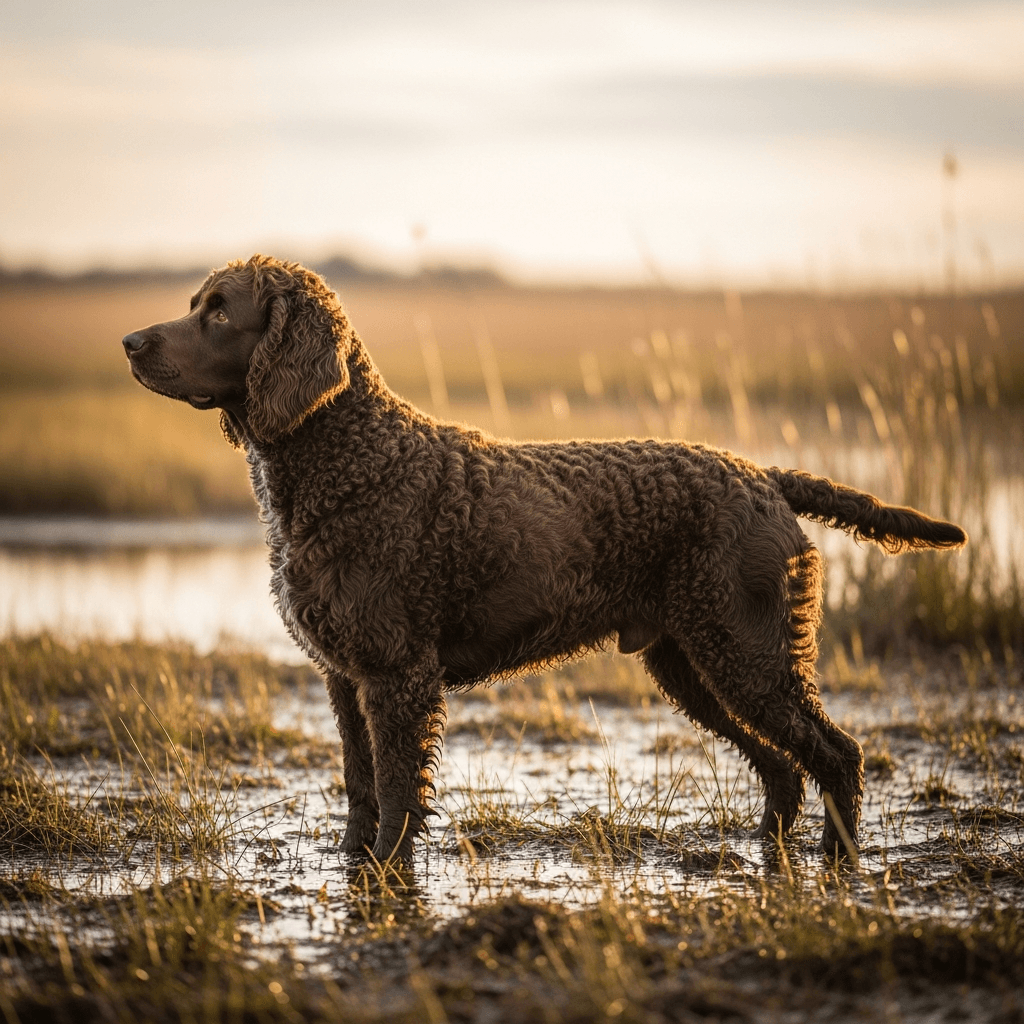
The coat of the Chesapeake Bay Retriever is double – consisting of a short, wavy outer coat and a dense, woolly undercoat rich in natural oils. This structure makes the coat waterproof and insulating, providing protection against cold and moisture. The coloration can occur in various shades of brown – from light beige to dark chocolate – as well as in the color of sedge or dry grass.
The tail is of medium length, straight or slightly curved, well-set, and should not be curled over the back. The paws are webbed, which is a natural adaptation for swimming and makes the Chesapeake one of the best swimmers among dogs.
At first glance, the Chesapeake Bay Retriever appears strong, durable, and ready to work in the toughest conditions. Their movements are smooth, graceful, and confident, making them excellent swimmers and working dogs with exceptional physical capabilities.
The Chesapeake Bay Retriever is known for its loyal, friendly, and devoted temperament. These dogs form strong attachments to their owners and family members, creating deep emotional bonds. They are excellent companions who eagerly participate in all household activities.
Chessies are intelligent and quick learners, which makes them successfully trainable in various disciplines. However, they can also be independent and stubborn, requiring a patient, consistent approach from their owner. This breed responds best to positive training methods based on reinforcement and rewards.
The Chesapeake Bay Retriever has a strongly developed hunting instinct, which means they may chase birds, other animals, or moving objects. Therefore, it is important for the dog to have opportunities for retrieving training and channeling these natural instincts in a productive way.
This breed is quite alert and can be somewhat wary of strangers, making it a good watchdog—not in an aggressive way, but through observation and signaling the presence of unknown individuals. With proper socialization from a young age, Chesapeake becomes more open and friendly towards new people and situations.
The Chesapeake Bay Retriever loves activity and play, making it an ideal companion for families with children. They are patient, gentle, and protective of the youngest family members. Their social needs are quite high—they should not be left alone for extended periods, as this can lead to undesirable behaviors such as destruction of belongings or excessive barking.
Owners should ensure that Chesapeake has regular interactions with other dogs and people, which will help them in their social-emotional development. This breed is suitable for various canine activities, including retrieving, swimming, agility, obedience, and scent work, making them versatile and fulfilled dogs.
The Chesapeake Bay Retriever is a breed that generally enjoys good health and resilience, however, like many large working dogs, they can be prone to certain genetic and age-related conditions.
The most common health issues are hip dysplasia and elbow dysplasia, which can lead to mobility problems and arthritis. It is important for breeders to conduct appropriate tests and select dogs with good hip and elbow scores for breeding.
Chesapeakes may also be prone to various eye conditions, including progressive retinal atrophy (PRA) and cataracts. Regular eye examinations help detect these issues early and manage the dog's eye health appropriately.
This breed has an average lifespan of 10 to 13 years. Chesapeake is a dog with great endurance and resilience, loving to swim and retrieve, which supports its physical condition and overall health.
Owners should be vigilant for signs of allergies, which may occur in response to certain types of food, pollen, dust mites, or household chemicals. Symptoms may include itching skin, redness, excessive licking of paws, or ear infections.
Particular attention should be paid to the condition of the ears, especially after swimming. It is important to thoroughly dry the dog's ears after prolonged contact with water to prevent bacterial or fungal infections that can develop in a moist environment.
After the end of their hunting career or a decrease in physical activity, Chesapeake Bay Retrievers may tend to gain weight. Therefore, it is crucial to monitor their diet, adjusting it to their activity level to avoid obesity, which can lead to joint, heart, and diabetes issues.
Regular veterinary visits, vaccinations, deworming, and flea and tick prevention are essential to maintain the health of the Chesapeake Bay Retriever at an optimal level throughout their life.
The Chesapeake Bay Retriever has a coat that is relatively easy to maintain, but requires regular attention to keep the skin healthy and the appearance beautiful. The hair is short, dense, and waterproof due to natural oils, which makes this dog not particularly susceptible to dirt and debris.
Regular brushing is recommended at least once or twice a week to remove dead hair, minimize shedding, and distribute natural oils throughout the coat. Shedding can be intense, especially in spring and autumn, when the dog sheds its undercoat – during these times, brushing should be more frequent, even daily.
In addition to regular brushing, Chesapeake Bay Retrievers should only be bathed when absolutely necessary – excessive washing can strip the natural oils that protect the coat from water. Typically, a bath every few months is sufficient, unless the dog is particularly dirty or has an unpleasant odor.
Particular attention should be paid to the condition of the ears, which can be prone to infections, especially after swimming. Owners should regularly check their dog's ears, keep them clean, and thoroughly dry them after contact with water. Special ear cleaning solutions can be used or they can be gently dried with a soft cloth.
Other grooming elements include regular nail trimming, which should occur every few weeks to prevent cracking and discomfort. Oral hygiene should also be maintained through regular tooth brushing or providing special dental chews, which will help prevent tartar buildup and gum disease.
In summary, the Chesapeake Bay Retriever does not require excessive grooming, but regular attention and care for the coat, ears, nails, and teeth will ensure the dog’s health, comfort, and good appearance throughout its life.
The Chesapeake Bay Retriever is a dog with high energy and endurance that needs regular and intense physical activity to maintain health, well-being, and balanced behavior. This breed was created for hard work in tough conditions, which is why it requires a lot of movement and challenges.
Chessies need daily long walks – at least 60-90 minutes a day, and preferably even more. Walks should be dynamic, engaging, and varied to provide stimulation both physically and mentally. Ideally, walks can include different terrains – forests, fields, beaches, or other natural environments.
One of the most important aspects of the Chesapeake Bay Retriever's activity is swimming, which is their natural element. They are ideally suited to live in homes with large gardens or near water bodies – rivers, lakes, or the sea – where they can run and swim freely. Swimming is an excellent form of exercise that engages the dog's entire body while being gentle on the joints.
Owners should provide their dogs with various forms of activity, such as:
- Fetching – a natural instinct that brings immense joy
- Running – alongside a bike or during jogging
- Agility – a canine sport that engages both body and mind
- Obedience – training for obedience and command execution
- Scent work – tracking scents, searching for hidden objects
- Hunting and working trials – for dogs with a hunting instinct
A dog that does not get enough exercise can become destructive, exhibiting undesirable behaviors such as destroying furniture, excessive barking, digging holes in the garden, or escaping. Therefore, it is crucial for the Chesapeake Bay Retriever to have the opportunity to run daily and engage in activities that satisfy its physical and mental needs.
In summary, the Chesapeake Bay Retriever is a breed for active people who love spending time outdoors and can provide the dog with the appropriate amount of intense exercise every day.
The Chesapeake Bay Retriever is a breed known for its high intelligence and ability to learn quickly, but it can also exhibit some independence and stubbornness. Therefore, it is crucial to start training as early as possible, preferably during puppyhood, when the dog is most receptive to learning and socialization.
Owners should use positive training methods based on reinforcement, rewards, and praise to encourage the dog to follow commands. Chesapeake do not respond well to harsh training methods – they may become distrustful or resistant. Instead, training should be consistent, patient, and fun, as Chessies love to play and need mental stimulation.
This breed excels in various forms of training, including:
- Obedience – basic commands: Sit, Stay, Come, Lie down, Wait
- Agility – an obstacle course engaging both body and mind
- Scent work – scent tracking, mantrailing, detection
- Retrieving – retriever training, work in water and on land
- Hunting trials – for dogs with a hunting instinct
Owners should also focus on socializing their dog to teach it proper interactions with other dogs, people, children, and various environments and situations. A well-socialized Chesapeake is confident, calm, and friendly in different circumstances.
The Chesapeake Bay Retriever is a dog that values its owner as a guide and leader. Therefore, it is essential to show it a clear family structure and rules that must be followed. The dog needs to know what is expected of it, and rewards for appropriate behavior will reinforce positive patterns.
In summary, with the right approach, consistency, and positive training methods, the Chesapeake Bay Retriever can become an excellent companion, working dog, and partner in various canine sports disciplines.
The diet of a Chesapeake Bay Retriever should be well-balanced and high-quality to provide the dog with the appropriate amount of nutrients that support its activity, health, and physical condition. Dogs of this breed are quite large animals with a high energy level, so their nutritional needs are greater than those of smaller breeds.
Owners should use food that is rich in protein and fats to meet the energy needs of active dogs. It is best to choose high-quality foods that contain meat as the main ingredient – chicken, beef, fish, or game. Protein is essential for building and repairing muscles, while fats provide energy and support skin and coat health.
It is important to avoid food containing excess grains, artificial preservatives, colorings, and fillers, which can cause allergies, digestive problems, or obesity. Some Chesapeake may be sensitive to certain ingredients, so it is worth observing the dog's reactions to different types of food and adjusting the diet to individual needs.
Regular meals, preferably twice a day, will help maintain a healthy weight and prevent bloating and stomach problems. Feeding once a day with a large portion can lead to dangerous gastric torsion, especially in large dogs.
It is also important to remember that Chesapeake, like many large breeds, has a tendency to gain weight, especially after the end of their hunting career or a decrease in physical activity. Therefore, it is essential to monitor the amount of food given, avoid snacks and table scraps, and adjust portions according to the dog's activity level.
Water should always be available in a clean bowl to ensure proper hydration, especially after intense physical activity, swimming, or on warm days. Dehydration can lead to serious health problems.
Owners can also supplement the diet of a Chesapeake Bay Retriever with additives such as:
- Fish oil – supports joint, skin, and coat health
- Glucosamine and chondroitin – support joint health, especially in older dogs
- Probiotics – support digestive health
In summary, a high-quality diet tailored to the age, weight, and activity level of the dog is key to a long, healthy, and happy life for a Chesapeake Bay Retriever.
Characteristic Traits
Pros
- Intelligent and eager to work
- Excellent swimming skills
- Friendly towards children and families
- Resistant to cold and water
- Loyal and devoted to their owners.
Cons
- They can be stubborn and independent
- Require a lot of exercise and activity
- Strong hunting instinct
- Distrustful of strangers.
Behavioral Ratings
Breed History
The Chesapeake Bay Retriever has a rich and fascinating history that dates back over 200 years. This breed was developed in the Chesapeake Bay area of the United States, where the first representatives of the breed were rescued from a shipwreck in 1807.
According to legend, a British brig was shipwrecked off the coast of Maryland, and its crew along with passengers were rescued by an American ship. On board the British brigantine were two puppies – a red male named Sailor and a black female named Canton. These two dogs exhibited traits similar to Newfoundlands and were excellent swimmers, resistant to cold water.
Sailor and Canton were given to American owners on the eastern shore of Maryland. They were then crossed with local hunting dogs, including retrievers, setters, water spaniels, and other breeds, which led to the creation of the Chesapeake Bay Retriever as we know it today.
The breed was designed for waterfowl hunting in extremely challenging conditions. Hunters in the Chesapeake Bay area needed a dog that could work for hours in icy waters, retrieve hundreds of ducks daily, break through ice, and contend with strong currents and winds. The Chesapeake Bay Retriever met all these requirements with its endurance, strength, waterproof coat, and unwavering determination.
In the 19th century, Chesapeake Bay Retrievers were invaluable companions for hunters who hunted waterfowl for commercial purposes. One dog could retrieve as many as 100-200 ducks a day, making it extremely valuable at that time.
In 1878, the Chesapeake Bay Retriever was officially recognized as a distinct breed by the American Kennel Club (AKC). In 1918, the first breed club – the American Chesapeake Club – was established to set breed standards and promote it.
Today, the Chesapeake Bay Retriever is not only a superb hunting dog but also a wonderful family companion, a rescue dog, a tracking dog, and a participant in canine sports. It is a breed valued for its swimming abilities, endurance, intelligence, and deep loyalty to its owner.
The Chesapeake Bay Retriever has also been the official dog of the state of Maryland since 1964, highlighting its historical and cultural significance to this region of the United States.