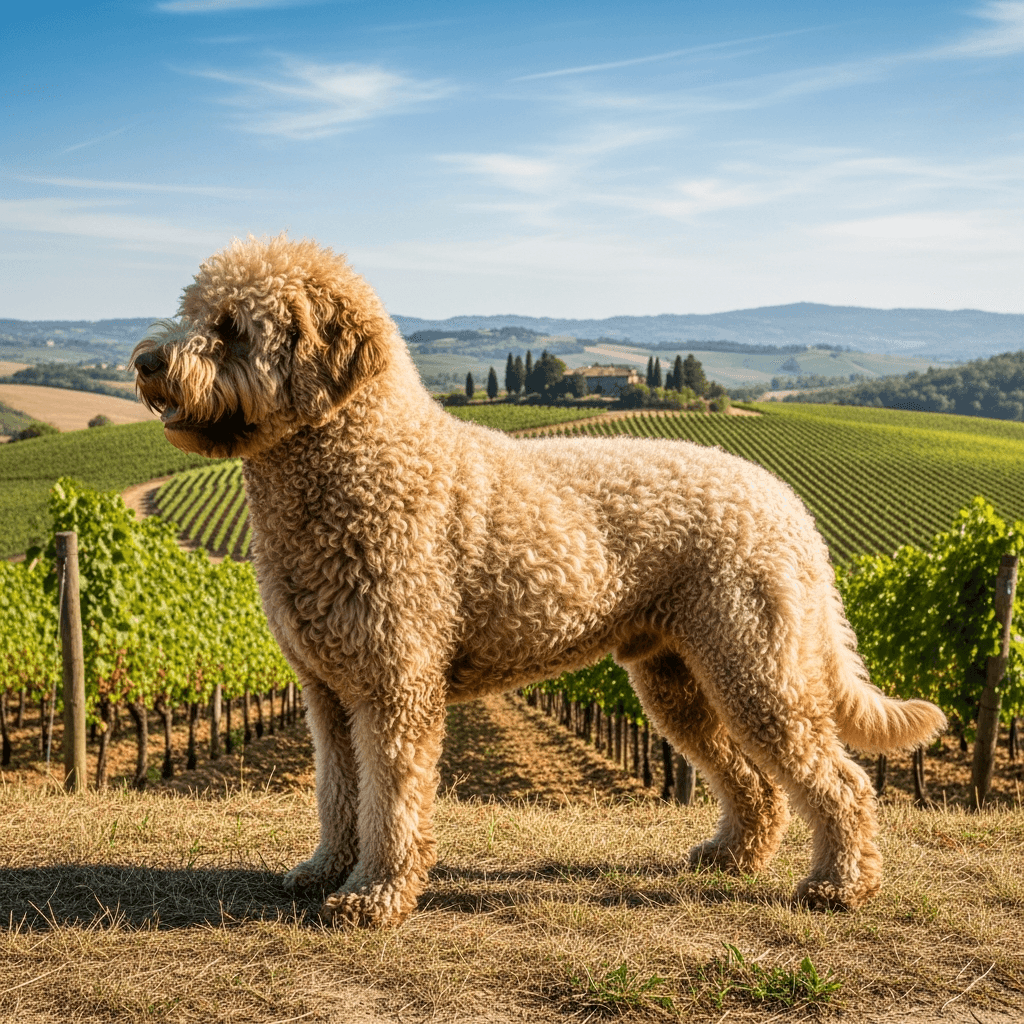
Lagotto Romagnolo
FCI Group
8• FCI 298
Size
Medium
Origin Country
IT
Height
41-48 cm
Weight
11-16 kg
Lifespan
12-14 years
Temperament
Overview
Lagotto Romagnolo, also known as the Italian water dog from Romagna, is a breed with a fascinating history and extraordinary abilities. This medium-sized dog initially served to retrieve from the water in the marshes of Comacchio and around Ravenna. Today, thanks to its exceptional sense of smell and intelligence, the Lagotto Romagnolo is an undisputed master in truffle hunting – valuable mushrooms that grow underground.
Its characteristic dense, curly coat with a woolly texture serves as protection against cold and moisture, allowing it to work freely in difficult terrain conditions. This is not just an aesthetic element but primarily a functional one that enables the Lagotto to work in any weather conditions. This breed is distinguished by a strong attachment to its owner and family members, making it an ideal companion dog.
Lagotto Romagnolo excels in families with children – its gentle and patient temperament makes it eager to play with the youngest household members. At the same time, it remains alert and will warn the owner of the presence of strangers, although it does not show aggression. It requires regular physical and mental activity to satisfy its natural curiosity about the world and need for exploration.
This breed eagerly engages in activities that require the use of senses, such as truffle hunting, scent games, or obedience training. The high intelligence of the Lagotto Romagnolo means it quickly learns new commands and easily participates in various forms of training. Its willingness to cooperate with humans is one of the greatest advantages of this breed.
In terms of health, the Lagotto Romagnolo is a relatively resilient breed, although like any purebred dog, it can be prone to certain genetic conditions such as hip dysplasia or neuroaxonal dystrophy. The key to maintaining good condition is a balanced diet, regular veterinary visits, and systematic coat care, which requires special attention due to its structure.
The Lagotto Romagnolo combines many valuable traits: intelligence, sociability, diligence, and devotion. It is an excellent choice for those seeking an active, intelligent companion with a gentle disposition that will perform well both as a working dog and a family member.
The Lagotto Romagnolo is a dog with a strong, proportional body structure, whose silhouette emanates a natural, rustic charm. According to the FCI standard, the height at the withers for males ranges from 43 to 48 cm, and for females from 41 to 46 cm, with weights of 13–16 kg for males and 11–14 kg for females. The body shape is nearly square – the length of the torso is close to the height at the withers.
The head has a trapezoidal shape when viewed from above, with a wider skull gradually narrowing towards the muzzle. The ratio of the length of the skull to the muzzle is about 5.6:4.4, which means the skull is slightly longer. The eyes are large, round, and well-set, with colors ranging from ochre to hazel to dark brown, depending on the coat color. The ears are medium-sized, triangular with rounded tips, set just above the zygomatic arch and raised when the dog is alert.
The coat is one of the most distinctive features of the Lagotto – it has a woolly, dense texture with tightly curled locks covering the entire body. It is waterproof, which protects the dog from cold water and moisture. The undercoat is also well developed. Due to the tendency to mat, the coat requires regular grooming and trimming.
The coloration can be diverse: dirty white solid, white with brown or orange spots, brown in various shades (with or without white), orange (with or without white). Some dogs have a distinctive brown mask on their muzzle. In brown and brown-and-white dogs, brown pigmentation of the nose is permissible.
The overall appearance of the Lagotto Romagnolo is harmonious and functional – it is a dog built for work in the field, with a strong, compact body and protective coat, while also maintaining elegance and proportionality in its build.
Lagotto Romagnolo is a breed with a remarkably balanced and friendly temperament, which makes it an excellent companion and working dog. It is characterized by a deep attachment to its owner and all family members, with whom it forms strong emotional bonds. This is a sociable dog that does not tolerate prolonged solitude well and prefers to spend as much time as possible in the company of its people.
Its intelligence and willingness to work are among the breed's most important assets. Lagotto shows a natural inclination to cooperate with humans and enthusiastically engages in various tasks. The former hunting instinct has largely been eliminated through selective breeding, allowing the modern Lagotto to focus its scenting skills primarily on truffle hunting rather than chasing game.
In relationships with children, Lagotto Romagnolo displays gentleness and patience, eagerly participating in play and becoming a loyal companion to younger household members. It is an active dog outdoors, full of energy during walks and play, but can be calm and balanced at home, adjusting its behavior to the situation.
Towards strangers, Lagotto shows moderate reserve, without signs of fear or aggression. It is alert and will warn its owner of approaching unknown individuals, making it a good alarm dog; however, it does not possess the traits of a typical guard dog. After proper socialization, it quickly accepts new people and animals.
This breed requires regular mental stimulation – when bored, it may exhibit undesirable behaviors such as excessive barking or destroying objects. Activities that engage its sense of smell are ideal for Lagotto: searching for hidden objects, nosework training, or, of course, professional truffle hunting.
The natural instinct to work in water means that most Lagotto love swimming and water-related play. This is an excellent way to provide them with physical activity, especially on hot days. Overall, Lagotto Romagnolo is a breed that combines intelligence, emotional sensitivity, and social skills, making it a wonderful choice for families and active individuals.
Lagotto Romagnolo is a breed characterized by relatively good health and longevity, with an average lifespan of 14 to 16 years, which is above average for dogs of this size. These dogs are known for their endurance and resilience, making them excellent companions for active owners.
However, like any breed, Lagotto may be prone to certain genetic disorders, which responsible breeders strive to eliminate through testing and selection:
- Hip dysplasia – a malformation of the hip joint socket that can lead to pain and limited mobility. Breeders should conduct X-ray examinations of breeding dogs.
- Neuroaxonal dystrophy (NAD) – a rare neurodegenerative disease affecting the nervous system, causing balance and coordination disorders. Genetic tests are available to detect carriers of the gene.
- Elbow dysplasia – abnormal development of the elbow joints, which can occur in active breeds.
- Juvenile epilepsy – occurring in young dogs, usually between 5 and 9 weeks of age.
Due to the active lifestyle and appetite of Lagotto, owners should monitor their pets' weight, as this breed tends to gain weight with an improper diet and lack of exercise. Obesity can lead to additional health problems, particularly joint strain.
Regular veterinary visits – at least once a year – allow for early detection of potential health issues. Testing is also recommended before including a dog in breeding, including hip and elbow examinations and genetic tests for NAD.
Lagotto Romagnolo naturally loves water, which can be utilized as a form of physical activity that promotes health. In winter, despite low temperatures, their waterproof coat provides thermal protection, although after bathing, the dog should be thoroughly dried to prevent skin problems.
The key to keeping a Lagotto in good condition is a balanced diet tailored to age and activity level, regular physical activity, and systematic coat care. With proper care, most Lagotto enjoy good health throughout their long lives.
Grooming a Lagotto Romagnolo requires regularity and consistency to keep their characteristic coat in good condition and to prevent matting. Their woolly, curly coat has a natural tendency to form tangles, so neglecting grooming can lead to serious problems.
Brushing should be done at least 2–3 times a week, and during periods of heavier shedding, even daily. It is best to use brushes with metal pins or combs with wide teeth that effectively detangle curls without overly straightening them. It is important to brush the coat in layers, reaching the skin and not just superficially.
Clipping is essential and should be done at least 2–3 times a year, preferably by an experienced groomer familiar with the breed's specifics. The coat should be trimmed to a length of about 2–4 cm to maintain the natural, rustic look of the Lagotto. It is important to:
- Avoid styling like that of a poodle – the coat should look natural and somewhat tousled
- Leave the hair on the head longer, but it should not cover the eyes
- Regularly clip the areas around the genitals and anus short for hygiene reasons
- Trim the hair between the paw pads as well to prevent dirt accumulation
Bathing should be done relatively rarely – once every 6–8 weeks or as needed when the dog is very dirty. Too frequent washing can strip the coat of its natural protective oils. Mild shampoos designed for curly-coated dogs should be used.
Other grooming aspects:
- Regularly check and clean the ears – their drooping structure promotes moisture accumulation
- Trim nails every 3–4 weeks if they do not wear down naturally
- Check teeth and clean regularly to prevent tartar buildup
- Inspect the skin under the coat for irritations, ticks, or other issues
The Lagotto Romagnolo is considered a hypoallergenic breed due to minimal shedding and the lack of an undercoat typical for most breeds. It is an excellent choice for people with mild dog hair allergies, although it should be noted that no dog is 100% hypoallergenic.
Owners should acclimate puppies to grooming from a young age so that the adult dog tolerates all procedures calmly. Regular and proper grooming not only ensures an aesthetic appearance but, most importantly, protects the health of the skin and the overall comfort of the dog.
Lagotto Romagnolo is a breed with moderately high exercise needs, requiring regular physical and mental activity to stay healthy and balanced. Although they can be calm at home, they exhibit significant energy and enthusiasm for play and work outdoors.
Daily walks are an absolute necessity – a minimum of 60–90 minutes a day divided into 2–3 sessions. Walks should be varied, encompassing different terrains and environments to provide both physical and mental stimulation. Lagotto love to explore new places and make extensive use of their sense of smell during hikes.
Ideal forms of activity for Lagotto Romagnolo include:
- Truffle hunting or nosework training – engaging their natural instincts and sense of smell, providing deep satisfaction
- Swimming – most Lagotto love water due to their roots as water dogs; it's an excellent form of low-impact activity
- Fetching – although they no longer have a strong hunting instinct, they enjoy playing fetch with balls or toys
- Agility and obstacle courses – their agility and intelligence make them excel in dog sports
- Long hikes and jogging – they are durable and happily accompany active owners
- Play with other dogs – well-socialized Lagotto enjoy playing with other canines
Mental stimulation is just as important as physical activity. Lagotto are intelligent dogs that need mental challenges:
- Scent games and hiding treats
- Puzzles and interactive toys
- Learning new commands and tricks
- Obedience training and advanced training
Lack of proper activity can lead to behavioral problems such as:
- Excessive barking
- Destructive behaviors (destroying furniture, digging holes)
- Hyperactivity and difficulty calming down
- Concentration problems during training
It is worth noting that Lagotto adapt well to different lifestyles – they can live both in the city and in the countryside, as long as they are provided with sufficient exercise and stimulation. They are ideal companions for active families, outdoor enthusiasts, and people who engage in sports with their dogs.
On hot days, it is advisable to avoid intense exercise during midday – Lagotto can overheat despite their water-resistant coat. In winter, their natural thermal insulation allows for activity even in low temperatures.
Lagotto Romagnolo is a breed exceptionally easy to train, making it an excellent choice for both experienced guardians and those who are getting a dog for the first time. Their high intelligence, willingness to work, and natural tendency to cooperate make them particularly receptive to learning new commands and behaviors.
Training should begin as early as possible – by the age of 8–10 weeks, a puppy can absorb the basic rules of coexistence and simple commands. Early socialization is crucial: the puppy should meet different people, animals, environments, and situations to grow into a confident, balanced adult dog.
Training methods – Lagottos respond best to positive reinforcement:
- Treat rewards – most Lagottos are motivated by food and are eager to work for treats
- Verbal praise – they are sensitive to tone of voice and highly value their owner's approval
- Play – training sessions should be seen as a form of fun, not coercion
- Consistency – clear rules and regular repetition of commands yield the best results
Physical punishment or shouting is completely inappropriate – it can discourage the dog from learning and harm the bond with the owner. Lagottos are emotionally sensitive and do not cope well with harsh treatment.
Basic commands to learn:
- Sit, Stay, Lie down – basics of obedience
- Stay, Wait – impulse control
- Come, Here – recall
- Leave it, No – preventing unwanted behaviors
- Loose leash walking – the foundation for comfortable walks
Advanced training – due to their intelligence, Lagottos excel in:
- Truffle hunting – their original purpose, requiring specialized training
- Nosework and tracking – utilizing their natural scenting abilities
- Agility – sports that engage both body and mind
- Tricks and stunts – they quickly learn complex sequences of movements
- Rally obedience – a combination of obedience and navigation through an obstacle course
Guarding functions – Lagotto Romagnolo is not a typical guard dog, but its natural alertness makes it an excellent alarm dog. It will warn the owner of approaching individuals without aggression. They can be taught to bark on command in a controlled manner.
Typical challenges in training:
- Strong scent instinct – they can be distracted by smells during training
- Social nature – they may become overly excited in the presence of other dogs
- Sensitivity – they react poorly to monotonous training and need variety
Training sessions should be short (10–15 minutes) and frequent to maintain the dog's interest. Lagottos quickly get bored with repetitive exercises, so it's worth introducing diverse tasks and locations.
Regular training not only strengthens the bond between the dog and the owner but also develops the dog's social skills, making them a more balanced and confident companion in any situation.
Nutrition for the Lagotto Romagnolo is a key element in maintaining the health, condition, and longevity of this breed. Due to their active lifestyle and medium body size, Lagotto requires a balanced diet that provides all essential nutrients in the right proportions.
Basic nutritional requirements:
- High-quality protein – should make up 22–28% of the diet for adult dogs and 28–32% for puppies. The best sources are meat (chicken, beef, lamb, fish), not by-products or plant fillers.
- Fats – 12–18% for adults, 14–20% for puppies. Omega-3 and omega-6 fatty acids support healthy skin and coat.
- Carbohydrates – sources of energy, preferably from whole grains, rice, sweet potatoes, or yams.
- Vitamins and minerals – a complete set necessary for the proper functioning of the body.
Types of food:
- Dry food – convenient, helps clean teeth, easy to store
- Wet food – more palatable, higher water content, but more expensive
- BARF diet (raw meat and bones) – requires knowledge and time, but can be very beneficial
- Homemade food – prepared under the supervision of a veterinarian or pet nutritionist
Nutritional recommendations by age:
- Puppies (2–12 months) – 3–4 meals a day, medium breed puppy food, rich in protein and calcium for proper development
- Adults (1–7 years) – 2 meals a day, food for active medium breed dogs
- Seniors (7+ years) – 2 meals, lower-calorie food that supports joints
Portion and weight control – Lagotto tend to gain weight if overfed or insufficiently active. It is important to:
- Carefully measure portions according to the manufacturer's recommendations
- Adjust the amount of food to the dog's activity level
- Regularly weigh the dog and monitor body condition
- Limit treats to a maximum of 10% of the daily calorie intake
Prohibited products:
- Chocolate, coffee, tea (toxic to dogs)
- Onions, garlic, grapes, raisins (damage kidneys and red blood cells)
- Avocado, macadamia nuts (toxic)
- Sweets containing xylitol (deadly dangerous)
- Fatty, fried foods (digestive problems)
Water – fresh, clean water should be available at all times. Lagotto, especially after physical activity, need regular hydration.
Supplementation – with high-quality, balanced food, additional supplements are usually unnecessary. Exceptions include:
- Joint supplements (glucosamine, chondroitin) for older dogs or those predisposed to dysplasia
- Fish oils for coat and skin support
- Probiotics for digestive issues
Any changes in diet should be introduced gradually over 7–10 days, mixing the new food with the old in increasing proportions. Sudden changes can cause digestive problems.
It is recommended to consult a veterinarian when establishing a feeding plan, especially for puppies, dogs with health issues, or those with special needs. A good diet is an investment in a long, healthy life for the Lagotto Romagnolo.
Characteristic Traits
Pros
- Exceptionally intelligent and easy to train
- Excellent companion for children and families
- Specialist in truffle hunting and nosework
- Gentle and balanced temperament
- Hypoallergenic coat
- Healthy and long-lived breed.
Cons
- Requires regular and costly coat care
- Needs a lot of exercise and mental stimulation
- May be prone to dysplasia and hip dysplasia
- Struggles with prolonged loneliness
- Coat requires professional grooming.
Behavioral Ratings
Breed History
Lagotto Romagnolo is a breed of dogs with a fascinating and long history, dating back several centuries. It originates from the Romagna region in eastern Italy, particularly from the area around the city of Ravenna and the surrounding Comacchio marshlands. The breed's name comes from the Italian word càn lagòt, which in the Romagna dialect means water dog.
Origins of the breed (16th–18th century) – Lagotto Romagnolo is one of the oldest breeds of water dogs in Europe. The first mentions of dogs resembling modern Lagotto date back to the Renaissance, where they appear in paintings and documents describing hunts in the marshes of northern Italy. These dogs were used by hunters to retrieve shot game from the water, particularly wild ducks.
Transformation of function (19th century) – In the 19th century, intensive drainage of the marshes in the Po Valley began, radically changing the landscape of the Romagna region. With the disappearance of wetland areas, the traditional role of Lagotto as a water retriever became less significant. At the same time, the truffle hunting industry was developing in the region – valuable underground mushrooms used in cooking.
Local breeders noticed that the unique sense of smell of Lagotto and its willingness to work made it perfectly suited for truffle hunting. Therefore, a selection process was initiated that eliminated hunting instincts (chasing game) while enhancing scent abilities and task concentration. As a result, Lagotto Romagnolo became the only dog breed in the world specializing exclusively in truffle hunting.
Period of decline (early 20th century) – In the 1920s and 1930s, the breed was on the brink of extinction. The mechanization of agriculture, social changes, and the effects of the world wars led to a drastic reduction in population. Only a few breeders in isolated villages of Romagna continued traditional breeding.
Rebuilding and recognition (1970s–1990s) – In the 1970s, a group of enthusiasts led by Quintino Toschi and other breeders began systematic work on rebuilding the breed. In 1988, the breed club Club Italiano Lagotto was established, which developed the breed standard and registered the first pedigree lines.
A breakthrough moment was the official recognition of the breed by FCI (Fédération Cynologique Internationale) in 1995 under standard number 298, group 8 (retrievers, flushing dogs, water dogs), section 3 (water dogs). The current standard has been in effect since 2019.
Modern times (21st century) – Today, Lagotto Romagnolo enjoys growing popularity not only in Italy but around the world. Although it is still used as a professional truffle dog in the Romagna region and other parts of Europe, it increasingly serves as a companion and family dog. Its gentle nature, intelligence, and hypoallergenic coat make it valued by families with children and individuals with allergies.
The breed has also become popular in dog sports such as nosework, agility, and rally obedience, where it can utilize its natural abilities. Lagotto Romagnolo is a symbol of the Emilia-Romagna region and serves as a living reminder of the cultural and economic traditions of northern Italy.
The history of Lagotto Romagnolo is a story of adaptation and survival – from a water dog, to a truffle specialist, to a beloved family companion, preserving its unique heritage over the centuries.