Golden Retriever
FCI Group
8• FCI 111
Size
Medium
Origin Country
GB
Height
51-61 cm
Weight
25-34 kg
Lifespan
12-14 years
Temperament
Overview
Golden Retriever is one of the most beloved dog breeds in the world, captivating with its extraordinarily friendly disposition, intelligence, and versatility. This magnificent hunting breed, originating from Great Britain, has been winning the hearts of dog lovers on all continents since the 19th century. It was created by Lord Tweedmouth, who meticulously combined different breeds to achieve the ideal hunting dog, embodying strength, intelligence, and a gentle temperament.
The modern Golden Retriever is known not only for its exceptional skills in retrieving game but also primarily as an excellent companion, therapy, and rescue dog. Its ability to form deep emotional bonds with people and its natural empathy make it an irreplaceable companion in various life situations. This breed is characterized by a particular sensitivity to human emotions and the ability to adapt its behavior to the needs of its owner.
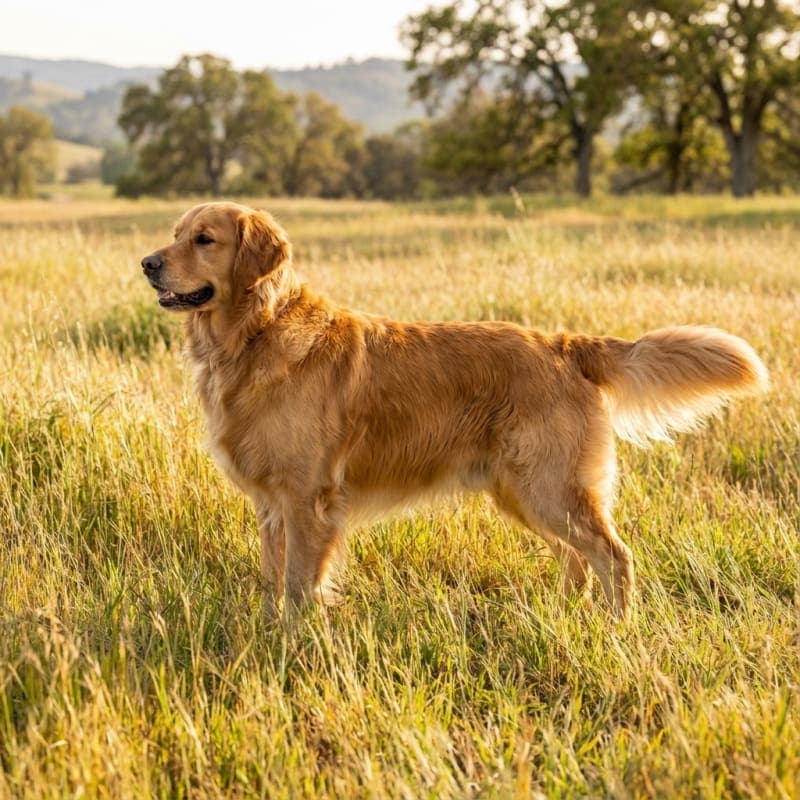
The Golden Retriever is a medium-sized dog with an extraordinarily harmonious silhouette and a strong, athletic build. Its distinctive coat, which can be smooth or gently wavy, comes in a wide spectrum of golden shades—from light cream to deep, dark gold—that catches the eye and adds to its unique charm. This breed is distinguished by its exceptional temperament, being gentle, patient, and full of boundless energy and enthusiasm for life.
Thanks to its incredibly gentle nature, strong bond with people, and natural patience, the Golden Retriever is an ideal companion for families with children, elderly individuals, and anyone seeking a loyal friend. Its adaptability means it thrives both in an urban apartment and in a house with a garden, though it will always need an appropriate amount of physical activity and mental stimulation.
The Golden Retriever requires a significant amount of love, attention, and regular physical activity to fully develop its potential. Its emotional and physical needs are high, and neglecting them can lead to the development of undesirable behaviors and health problems. Despite these requirements, the Golden Retriever continually delights with its exceptional personality, intelligence, and remarkable adaptability skills.
The following sections of this comprehensive guide delve into all aspects of caring for this extraordinary breed, covering health, grooming, physical activity requirements, training methods, proper nutrition, fascinating history, and a detailed description of appearance and behavior. Immerse yourself in the fascinating world of Golden Retrievers and discover all the secrets of this breed, which makes its presence in the family a true, invaluable treasure for a lifetime.
Golden Retriever is a medium-sized dog characterized by an exceptionally harmonious silhouette and a strong, athletic build that reflects its original hunting purpose. The height at the withers ranges from 51 to 61 cm, with males typically being slightly larger than females, and the body weight varies from 25 to 34 kg, maintaining appropriate proportions to height.
The coat of the Golden Retriever is one of the most distinctive features of this breed. It is of medium length, can be smooth or slightly wavy, but should never be curly. Beneath the outer layer lies a dense, waterproof undercoat that provides excellent protection against moisture and cold, making it an ideal dog for work in water and in challenging terrain conditions. The coat color can take on various shades of gold - from light, almost cream color, through classic golden hue, to deep, dark golden tone. Small white markings on the chest are permissible but are not desirable in show breeding.
The head of the Golden Retriever is perfectly balanced and proportional to the rest of the body, with a broad skull that should not appear heavy or thick. The stop, which is the transition between the forehead and the nose, is well-defined but not overly steep. The muzzle is strong, wide, and deep, with a length equal to the distance from the stop to the occiput, giving the dog a characteristic, noble profile.
The eyes of the Golden Retriever are dark brown, well-set and widely spaced, with an intelligent, friendly expression that is so characteristic of this breed. The edges of the eyelids should be dark, which further emphasizes the expressiveness of the gaze. The ears are medium-sized, set approximately at eye level, hanging down and close to the cheeks, covered with short, silky hair.
The neck is strong, muscular, and appropriately elongated, smoothly transitioning into well-angled shoulders. The body of the Golden Retriever is perfectly balanced, with a deep chest reaching at least to the elbows and well-arched ribs that provide adequate lung capacity necessary for intensive work. The back is straight and strong, and the loins are short and muscular, indicating the dog's strength and endurance.
The tail is a characteristic element of the Golden Retriever's silhouette - it is set on the line of the back, reaching to the hock joint, carried in a natural position at the level of the back or slightly below. It should never be curled over the back or carried too high. The tail is densely coated, with a characteristic plume on the underside.
The limbs of the Golden Retriever are strong and straight, with a solid bone structure that provides the dog with excellent mobility and the ability to work in various terrain conditions. The front limbs are parallel, with well-fitting shoulders, while the hind limbs are strong and muscular, with well-angled knee joints. The paws are round, compact, with thick pads and strong claws, perfectly adapted for moving across different terrains.
The overall image of the Golden Retriever presents a dog that is both elegant and strong, agile and resilient. Its build reflects its original purpose as a retrieving dog, capable of hours of work in challenging conditions while maintaining the grace and lightness of movement that make it not only visually appealing but, above all, an extremely functional companion for humans.
Golden Retriever is a dog with an exceptional temperament, known for its unmatched friendly and gentle disposition, making it one of the most sought-after companion breeds in the world. This breed is characterized by extraordinary sociability and a natural desire to interact with people of all ages, which makes it an excellent companion for both families with children and older individuals seeking a loyal friend.
Golden Retrievers stand out for their above-average intelligence, consistently ranking among the most intelligent dog breeds. This high intelligence, combined with a natural willingness to cooperate, means they respond excellently to training and can quickly master new commands and complex task sequences. Their cognitive abilities allow them to fulfill various demanding roles - from therapy and assistance dogs for people with disabilities to search and rescue dogs participating in rescue operations.
Although Golden Retrievers have retained a moderate hunting instinct due to their original purpose as retrieving dogs, it does not manifest in an aggressive manner. They can still be used in hunting as retrieving dogs, but they require appropriate, specialized training to fully develop their natural predispositions. Their gentle nature ensures that even while working, they behave calmly and methodically.
Golden Retrievers are extremely attached to their owners and the entire family. This deep emotional bond means they do not tolerate prolonged periods of solitude. Extended isolation can lead to the development of undesirable behaviors, such as destroying household items, excessive barking, or compulsively licking their paws. Their need for closeness and contact with humans is so strong that they are often referred to as shadow dogs, following their owner from room to room.
A characteristic feature of Golden Retrievers is their unending patience and tolerance, especially towards children. They can endure even the rough play of the youngest family members while maintaining calmness and gentleness. This trait, combined with their natural caution and delicacy in interactions with people, makes them ideal family dogs that can be trusted around even very small children.
Golden Retrievers also exhibit high emotional sensitivity and empathy. They can sense their owner's mood and adjust their behavior accordingly - being energetic and joyful during play, but calm and comforting when they sense sadness or stress in their caregiver. This ability to read human emotions makes them excellent therapy dogs, working in hospitals, nursing homes, or rehabilitation centers.
It is worth noting that Golden Retrievers have a tendency to be greedy and easily succumb to the temptation of food. This trait can be used during training as motivation, but it also requires the owner to be consistent and controlling to prevent overeating and related obesity. Their appetite often leads to amusing situations when they try to convince household members to give them extra treats with their characteristic pleading look.
In interactions with other animals, Golden Retrievers typically display a friendly attitude and a desire to play. Well-socialized from puppyhood, they can coexist harmoniously with other dogs, cats, or smaller pets. Their gentle nature means they rarely initiate conflicts, preferring peaceful resolutions to disputes.
With proper training, socialization, and regular physical and mental activity, a Golden Retriever develops into a loyal, balanced, and incredibly devoted companion that becomes an integral part of the family, bringing joy and love every day.
Golden Retriever is a breed that generally enjoys good health, and with proper care, the average lifespan ranges from 12 to 14 years, although some individuals with exemplary care may live even 15-16 years. Nevertheless, like most purebred dogs, Golden Retrievers have certain genetic predispositions to specific health issues that every responsible owner should be aware of.
One of the most serious health problems affecting this breed is joint diseases, particularly hip dysplasia and elbow dysplasia. These hereditary conditions can lead to chronic pain, lameness, and significant mobility limitations for the dog. Early detection through radiological examinations and appropriate treatment, including physiotherapy, supplementation, and in extreme cases, surgical intervention, can significantly improve the dog's quality of life.
Golden Retrievers also show increased predisposition to cancers, which is one of the main causes of premature mortality in this breed. Particularly common are hemangiosarcoma (a cancer of blood vessels), lymphoma (a cancer of the lymphatic system), and osteosarcoma (a bone cancer). Regular check-ups, monitoring for unusual lumps or changes in the dog's behavior, and early diagnosis are crucial for effective treatment.
Ophthalmic issues represent another group of conditions characteristic of this breed. Cataracts, which can develop in both young and older dogs, progressive retinal atrophy (PRA) leading to gradual vision loss, and other eye conditions require regular ophthalmic check-ups. Early diagnosis allows for appropriate therapeutic measures or adjustments to the dog's living environment to accommodate its visual limitations.
Due to their ear structure - long, drooping ear flaps create a warm, moist environment - Golden Retrievers are particularly susceptible to ear infections. Regular cleaning and inspection of the ears, especially after baths or swimming, are essential to prevent painful inflammatory conditions. Symptoms such as frequent head shaking, unpleasant odor, or excessive wax production should be monitored.
Cardiological problems, including dilated cardiomyopathy and aortic valve stenosis, can also affect Golden Retrievers. Regular heart examinations, especially in older dogs, allow for early detection and appropriate treatment of these conditions, significantly extending life and improving its quality.
Golden Retrievers often suffer from skin and food allergies, which can manifest as itching, skin redness, hair loss, or digestive issues. Identifying allergens through allergy tests or elimination diets and adjusting the dog's diet and living environment are crucial for managing these ailments.
Due to their cheerful disposition and tendency to be greedy, Golden Retrievers are particularly prone to obesity. Being overweight not only burdens the joints and heart but also increases the risk of diabetes, liver problems, and shortens overall lifespan. Strict diet control, regular weighing, and ensuring adequate exercise are essential for maintaining a healthy body weight.
Other conditions that may affect Golden Retrievers include epilepsy, hypothyroidism, von Willebrand disease (a bleeding disorder), and various dermatological issues. Regular veterinary check-ups, parasite prevention, vaccinations, and blood tests allow for early detection and treatment of many of these conditions.
The key to ensuring a Golden Retriever lives a long and healthy life is prevention - choosing a puppy from a responsible breeder who conducts genetic testing on the parents, regular veterinary check-ups, a proper diet, regular physical activity, and prompt responses to any concerning symptoms. With proper care, a Golden Retriever can enjoy a full life for many years, being a healthy and happy companion to its family.
Golden Retriever Care is a process that requires consistency and commitment, but with the right approach, it becomes a pleasant ritual that strengthens the bond between the dog and the owner. The coat of this breed, one of its most characteristic attributes, requires regular and careful grooming to maintain a healthy appearance and functionality.
The Golden Retriever has a double coat - a medium-length outer coat that can be smooth or slightly wavy, and a dense, waterproof undercoat. This combination provides excellent protection against weather conditions, but it also requires proper care. This dog sheds throughout the year, with increased shedding during the spring and autumn when the coat is being changed.
Regular brushing is the foundation of Golden Retriever care. During normal shedding periods, brushing 2-3 times a week is sufficient; however, during intense shedding, daily grooming is necessary. It is best to use a brush with metal pins to remove loose undercoat and a comb with widely spaced teeth for detangling longer hair. Special attention should be paid to areas prone to mats - behind the ears, under the armpits, in the groin, and on the thighs.
The brushing technique should be methodical and thorough. Start from the head, gradually moving through the neck, back, sides, down to the tail and limbs. It is important to brush in the direction of hair growth, gently reaching the skin, which additionally stimulates blood circulation and the production of natural oils that protect the coat. While brushing, it is worth checking the skin for any changes, redness, or parasites.
Bathing the Golden Retriever should be done as needed, usually every 6-8 weeks, or more frequently if the dog is very active or enjoys swimming in natural bodies of water. Too frequent baths can lead to dry skin and loss of the natural protective layer. High-quality shampoos specifically designed for dogs should be used, preferably suited to the type of coat of the Golden Retriever. After bathing, it is essential to thoroughly rinse out the shampoo and dry the dog, especially the dense undercoat, to prevent the development of fungi or other skin infections.
The ears of the Golden Retriever require special attention due to their structure - long, drooping flaps create a warm, moist environment conducive to the growth of bacteria and fungi. Ear checks should be done at least once a week, and cleaning as needed, using special ear cleaning solutions for dogs. Gently wipe the visible part of the ear with a cotton ball or gauze, never inserting anything deep into the ear canal. After bathing or swimming, it is crucial to dry the ears thoroughly.
Dental care is often overlooked but is an extremely important aspect of Golden Retriever hygiene. Regular tooth brushing, ideally 2-3 times a week, using dog toothpaste, prevents the formation of tartar, gum disease, and bad breath. Additionally, special dental chews can be used to support oral hygiene.
Trimming nails should be done regularly, usually every 3-4 weeks, depending on their growth rate and natural wear during walks. Overgrown nails can cause discomfort while walking, affect the dog's posture, and grow into the pads of the paws. Nails should be trimmed carefully, avoiding cutting into the living part that contains blood vessels and nerves.
Additional grooming elements include regularly checking and cleaning around the eyes, where discharge may accumulate, especially in dogs with lighter coats. The intimate areas also require periodic trimming of hair for hygiene reasons. It is also worth paying attention to the paws - checking the spaces between the toes, trimming the hair between the pads, and applying protective balms in winter or during heat.
Introducing a grooming routine from the earliest years of the dog's life helps the Golden Retriever get accustomed to all procedures and treat them as a natural part of its life. Regular grooming not only ensures the dog's health and comfort but also allows for the early detection of potential health issues and strengthens the bond between the dog and the caregiver, making these moments a pleasant time spent together.
Golden Retriever is a breed characterized by a high level of energy and an extraordinary need for physical activity, stemming from its original purpose as a hunting dog. This natural energy requires proper direction through regular and varied forms of movement to ensure the dog’s optimal physical health and mental balance.
An adult Golden Retriever needs a minimum of 2 hours of physical activity per day, divided into at least two walks and additional play or training sessions. Ideally, one long, intense hike lasting 45-60 minutes should be provided, along with several shorter walks throughout the day. Young puppies require shorter but more frequent activity sessions, tailored to their developing musculoskeletal system - the rule of 5 minutes of exercise for each month of age is a good starting point.
Swimming is an ideal form of activity for Golden Retrievers, utilizing their natural predispositions and love for water. This low-impact form of exercise is particularly beneficial for dogs with joint problems, providing an intense full-body workout without overloading the limbs. Regular swimming strengthens muscles, improves cardiovascular fitness, and provides immense mental satisfaction.
Games of fetch are deeply rooted in the instincts of Golden Retrievers and are an excellent way to combine physical activity with mental stimulation. Using a variety of objects for fetching - balls, frisbees, special dummies for hunting dogs - adds variety to the play and keeps the dog engaged. It is worth gradually increasing the difficulty level by hiding objects or giving commands from a distance.
Golden Retrievers excel in dog sports that combine physical effort with mental work. Agility develops agility and coordination, obedience enhances obedience and concentration, flyball combines speed with teamwork, and rally obedience is a dynamic form of competitive obedience. Nosework or mantrailing utilize this breed's excellent sense of smell, providing satisfying search work.
When planning activities, it is important to consider weather conditions. Golden Retrievers, despite their endurance, are sensitive to high temperatures due to their thick coat. On hot days, it is best to schedule activities for early morning or late evening, ensuring constant access to water and shade. In winter, however, most Golden Retrievers cope well with low temperatures, often loving to play in the snow.
Hiking and trekking are an excellent way to spend time with a Golden Retriever, allowing for the exploration of new terrains and scents. Gradually increasing distances and the difficulty of trails develops the dog’s endurance and strengthens the bond with the owner. During longer trips, it is important to remember to bring proper equipment - water, snacks, a first aid kit, and paw protection for rough terrain.
An important aspect is providing mental stimulation during physical activities. Golden Retrievers are intelligent dogs that need mental challenges as much as physical ones. Incorporating training elements during walks, hiding treats for the dog to find, or teaching new tricks makes the time spent active a comprehensive training session that develops the dog on many levels.
Socialization with other dogs during joint walks or visits to dog parks is a crucial element of a Golden Retriever's proper social development. Interactions with other canines teach proper communication, help release energy through play, and prevent the development of fears or aggression.
It is important to remember that lack of adequate exercise can lead to serious consequences. A Golden Retriever deprived of the opportunity to expend energy may develop destructive behaviors, such as chewing furniture, digging holes in the garden, excessive barking, or hyperactivity. Behavioral problems often arise from unmet exercise needs rather than from the dog's malice.
When planning activities, it is worth considering the individual predispositions of the specific dog - its age, condition, health status, and personal preferences. Some Golden Retrievers may prefer long, calm walks, while others may desire intense sessions of running or jumping. Observing the dog and adjusting the activity program to its needs will ensure optimal development and a happy, balanced life.
Golden Retriever is among the topmost intelligent dog breeds, consistently ranking 4th in the intelligence ranking of dogs according to Stanley Coren. This exceptional intelligence, combined with a natural willingness to cooperate and a desire to please its owner, makes it one of the easiest breeds to train, which is utilized in both basic and specialized training.
Training a Golden Retriever should begin as early as the first weeks of the puppy's life. The socialization period between 3 and 14 weeks of age is critical for proper mental and behavioral development. During this time, the puppy should be exposed to a variety of stimuli - people of different ages, other animals, sounds, surfaces, and situations. Early positive exposure to the diversity of the outside world builds confidence and prevents the development of fears.
The foundation of effective training for a Golden Retriever is positive reinforcement. This method is based on rewarding desired behaviors, which motivates the dog to repeat them. Golden Retrievers respond particularly well to verbal praise delivered in an enthusiastic tone, treats, and play with their favorite toy. Physical punishment or yelling is not only ineffective but can destroy the dog's natural willingness to cooperate and trust in humans.
The reward system should be varied and tailored to the individual preferences of the dog. Some Golden Retrievers are more motivated by food, while others prefer play or praise. Utilizing a hierarchy of rewards - the best treats for the most challenging tasks, standard ones for routine exercises - helps maintain motivation at a high level. It is important to gradually decrease the frequency of material rewards in favor of verbal praise as the behavior becomes established.
Consistency and patience are the foundations of effective training. All family members must use the same commands and rules. A Golden Retriever will quickly learn to exploit inconsistencies, for example, by asking for food from the table from someone who sometimes gives in. Commands should be short, clear, and delivered in a calm, firm tone. Basic commands such as Sit, Stay, Come, Stay, Heel should be mastered in the first months of life.
Training sessions should be short but frequent - a young puppy can concentrate for only 5-10 minutes, while an adult dog can endure 15-20 minutes of intense training. It is better to conduct several short sessions throughout the day than one long one that tires the dog and lowers its motivation. Each session should end with success, even if it means returning to an easier exercise.
Golden Retrievers excel in advanced and specialized training. Their natural predisposition for retrieving can be developed through dummy training, preparing dogs for hunting work. Training for therapy dogs utilizes their empathy and gentleness. As assistance dogs for people with disabilities, they learn complex sequences of tasks, such as opening doors, retrieving items, or alerting to an impending seizure.
Addressing behavioral problems in Golden Retrievers usually requires understanding the cause, not just eliminating the symptoms. Jumping on people often stems from excessive enthusiasm - alternative greeting behaviors should be taught. Pulling on the leash can be corrected by stopping every time the leash is tight and continuing the walk only when it is loose. Excessive barking may result from boredom, anxiety, or a desire for attention - identifying the cause allows for the selection of the appropriate corrective method.
Mental stimulation is just as important as obedience training. Golden Retrievers need regular intellectual challenges. Games of hide-and-seek, where the dog must find hidden treats or toys, develop their scent abilities. Learning new tricks, even simple ones like shaking hands or rolling over, provides satisfaction from overcoming challenges. Interactive toys and puzzles for dogs encourage thinking and problem-solving.
An important aspect is continuing training throughout the dog's life. Golden Retrievers love to learn new things even in old age. Regularly refreshing learned commands, introducing new challenges, and participating in group classes or canine sports keep the dog's mind in good condition and strengthen the bond with the owner.
During training, it is essential to remember the individual pace of development of each dog. Some Golden Retrievers learn quickly, while others need more time and repetitions. Comparing progress with other dogs can lead to frustration. The key is patience, a positive attitude, and celebrating every success, no matter how small. With the right approach, a Golden Retriever becomes not only an obedient but also a happy and confident companion.
Proper nutrition for a Golden Retriever is the foundation of its health, condition, and longevity. This active breed requires a carefully balanced diet that provides all essential nutrients while preventing obesity - one of the most common health problems affecting Golden Retrievers.
The diet of a Golden Retriever should be based on high-quality food, with meat as the main ingredient. Animal protein should make up 18-22% of an adult dog's diet and 22-25% of a puppy's diet, ensuring proper development and maintenance of muscle mass. Fats, comprising 12-15% of the diet, provide energy and support skin and coat health. Complex carbohydrates from whole grains or vegetables ensure a stable energy level throughout the day.
It is particularly important to adjust the amount and composition of food to the dog's age. Golden Retriever puppies aged 2-6 months should receive 3-4 meals a day, with food specially formulated for large breed puppies, which ensures controlled growth and development of the skeletal system. From the 6th month, they can transition to 2-3 meals a day. Adult dogs over 12-15 months should be fed twice a day, which helps prevent gastric torsion and maintains a stable energy level.
The dosage of food depends on many individual factors - age, weight, activity level, health status, and metabolism. An average adult Golden Retriever weighing 30 kg and with moderate activity needs about 1500-1700 calories a day. Very active dogs, working or engaging in sports, may require even 2000-2500 calories. Older, less active dogs should receive a reduced amount of calories to prevent obesity.
Weight control is crucial for the health of a Golden Retriever. This breed has a natural tendency to gain weight and an insatiable appetite, which, combined with a pleading look, often leads to overfeeding. Ideal condition is when the ribs are felt under a thin layer of fat, and the waist is clearly defined when viewed from above. Regular weighing, preferably once a month, allows for early detection of weight gain tendencies.
The choice between dry food, wet food, or a BARF diet should be considered and consulted with a veterinarian. Dry food is convenient, supports oral hygiene by mechanically cleaning teeth, but requires providing constant access to fresh water. Wet food is more palatable and hydrating but may contribute to dental problems. The BARF diet (raw meat and bones) requires precise knowledge of balancing nutrients and maintaining high hygiene standards.
Supplementation can be beneficial, especially for Golden Retrievers with health issues. Omega-3 fatty acids from fish oil support skin, coat, and joint health. Glucosamine and chondroitin help in the prevention and treatment of joint problems. Probiotics support digestive health. However, any supplementation should be discussed with a veterinarian to avoid overdosing.
The list of forbidden foods is long, and every owner should be aware of it. Chocolate contains theobromine, which is toxic to dogs. Grapes and raisins can cause kidney failure. Onions and garlic destroy red blood cells. Xylitol, an artificial sweetener, causes a rapid drop in blood sugar levels. Macadamia nuts, avocados, alcohol, caffeine - all these products can be deadly.
Organizing feeding is as important as the quality of the food. Meals should be served at regular times, in a calm place, without stress or competition from other animals. After eating, a Golden Retriever should rest for at least an hour before engaging in intense activity to reduce the risk of gastric torsion. The bowl should be placed at an appropriate height, especially for older dogs with joint problems.
Water must be available at all times, fresh and clean. Golden Retrievers, especially active ones or in warm weather, can drink significant amounts of water. Bowls should be regularly washed and refilled, and during longer walks or trips, portable containers should be taken along.
Special nutritional needs may arise in various situations. Pregnant and nursing females require increased amounts of calories and nutrients. Dogs with food allergies may need elimination or hypoallergenic diets. Golden Retrievers with health issues, such as kidney, heart, or diabetes problems, need specialized veterinary diets.
Monitoring the dog's response to the diet is crucial - a shiny coat, proper weight, high energy levels, regular bowel movements, and no digestive issues indicate appropriate nutrition. Any dietary changes should be introduced gradually over 7-10 days, mixing the new food with the old in increasing proportions to avoid stomach problems. Regular consultations with a veterinarian help adjust the diet to the changing needs of the dog at different stages of its life.
Characteristic Traits
Pros
- Exceptionally friendly and gentle disposition
- Very high intelligence and ease of training
- Excellent family dog ideal for children
- Versatility in various service roles
- Strong emotional bond with the owner.
Cons
- Very high physical activity needs
- Intense shedding throughout the year
- Tendency to obesity and gluttony
- Requires a lot of attention and cannot stand loneliness
- Predispositions to health problems.
Behavioral Ratings
Breed History
The History of the Golden Retriever is a fascinating tale of intentional breeding and the vision of one man that led to the creation of one of the most beloved dog breeds in the world. Although the breed was officially recognized by the Kennel Club only in 1931, its roots trace back to the mid-19th century in the Scottish Highlands.
The breed's creator was Sir Dudley Marjoribanks, later known as Lord Tweedmouth, a Scottish aristocrat and avid hunter. In the 1860s, at his estate Guisachan in Scotland, he initiated an ambitious breeding program aimed at creating the perfect retrieving dog. Lord Tweedmouth kept detailed breeding records from 1835 to 1890, which have survived to this day and serve as a priceless source of knowledge about the breed's beginnings.
The foundation of the Golden Retriever line was a yellow puppy named Nous, which Lord Tweedmouth acquired in 1865 in Brighton from a shoemaker who received the dog as payment for a debt from a gamekeeper. Nous was the only yellow puppy in a litter of black Wavy-Coated Retrievers (now known as Flat-Coated Retrievers). In 1868, Nous was mated with Belle, a female Tweed Water Spaniel - a now-extinct breed of water dogs from the border of Scotland and England, known for their intelligence and swimming abilities.
From this first litter, four yellow puppies were born - Primrose, Cowslip, Crocus, and Ada - which became the foundation of the new breed. Lord Tweedmouth continued his breeding program for another 20 years, carefully selecting pairs and documenting each litter. He introduced blood from other breeds, including the Irish Setter (to improve color and temperament), Bloodhound (to enhance scenting abilities), and again the Tweed Water Spaniel and Wavy-Coated Retriever.
The legend of Russian circus dogs long circulated around the origins of Golden Retrievers. According to this story, Lord Tweedmouth was said to have purchased a team of Russian herding dogs performing in a circus in 1858. However, Lord Tweedmouth's breeding records and historical research ultimately debunked this romantic but false version of events.
By the end of the 19th century, descendants of Lord Tweedmouth's dogs began appearing at dog shows in the UK, initially classified as Flat-Coats - Golden or Yellow Retrievers. In 1913, the first breed club was established in the UK, and in 1920 the official name Golden Retriever was set. The official recognition by The Kennel Club occurred in 1931.
The spread of the breed worldwide happened gradually but systematically. The first Golden Retrievers arrived in North America in the early 20th century, with official recognition by the American Kennel Club in 1925. In Canada, the breed was registered in 1927. After World War II, the popularity of Golden Retrievers surged, especially in the United States, where they became one of the most popular family breeds.
Modern breeding lines of Golden Retrievers have developed in somewhat different directions depending on the region. British Golden Retrievers are typically stockier, with broader heads and lighter, cream-colored coats. American lines are leaner, with darker, more golden colors and slightly different coat textures. Canadian Golden Retrievers combine features of both types, often being taller and slimmer than British ones but with similar coat coloring.
The evolution of the breed's use reflects the changing needs of society. Initially bred solely as hunting dogs for retrieving waterfowl, Golden Retrievers quickly proved their versatility. During both World Wars, they served as sanitary and messenger dogs. Since the 1960s, they have been among the most frequently chosen guide dogs for the blind.
Today, Golden Retrievers serve in various service roles: therapy dogs in hospitals and nursing homes, assistance dogs for people with various disabilities, detection dogs for drugs and explosives, and search and rescue dogs in emergency operations. Their intelligence, gentleness, and willingness to cooperate make them invaluable in serving humanity.
The cultural impact of Golden Retrievers is immense. They appear in countless films, television shows, books, and advertisements as a symbol of the ideal family dog. Famous Golden Retrievers, such as Buddy from the Air Bud film series or Liberty, President Gerald Ford's dog, have solidified the breed's image in pop culture.
Today, the Golden Retriever consistently ranks among the top breeds in popularity worldwide. According to the American Kennel Club, it has remained in the top five most popular breeds in the USA for decades. Their success stems from a unique combination of beauty, intelligence, gentleness, and versatility - traits that Lord Tweedmouth visionary planned over 150 years ago. The history of the Golden Retriever is a testament to how thoughtful breeding and clearly defined goals can create a breed that not only meets original intentions but exceeds all expectations, becoming a true treasure of humanity.