Labrador Retriever
FCI Group
8• FCI 122
Size
Medium
Origin Country
GB
Height
54-57 cm
Weight
25-36 kg
Lifespan
10-14 years
Temperament
Overview
Labrador Retriever is undoubtedly one of the most popular and beloved dog breeds in the world. For many years, it consistently ranks among the top in popularity charts in the United States, the United Kingdom, and many other countries, which is a direct testament to its exceptional qualities as a family companion, working dog, and friend. This versatile British breed combines a gentle, friendly temperament with intelligence, devotion, and an almost limitless willingness to cooperate with humans.
The history of the Labrador Retriever dates back to the coasts of Newfoundland, off the eastern coast of Canada, where fishermen used dogs of similar appearance for retrieving fish, pulling nets, and other fishing-related tasks. An excellent water dog with waterproof coat and a unique otter-like tail due to its shape – these features highlight its natural predisposition for working in water.
Comparatively, the Labrador is not a very old breed – its breed club was established in 1916, and the Yellow Labrador Club was founded in 1925. It was in field trials that the Labrador gained early fame, having been originally brought to British shores in the late 1800s by Colonel Peter Hawker and the Earl of Malmesbury.
It was a dog named Malmesbury Tramp that was described by Lorna, Countess Howe, as one of the tap roots of the modern Labrador – in other words, one of the fundamental ancestors that had the greatest influence on the breed's development.
The modern Labrador Retriever is a truly versatile dog that excels in countless roles: as a hunting dog (retriever for game birds), companion dog for families (one of the best dogs for children), service dog (detecting drugs, explosives), rescue dog (searching in rubble, on water), guide dog for the blind, therapy dog, and show dog. This extraordinary versatility stems from its gentle nature, intelligence, willingness to cooperate, and adaptability.
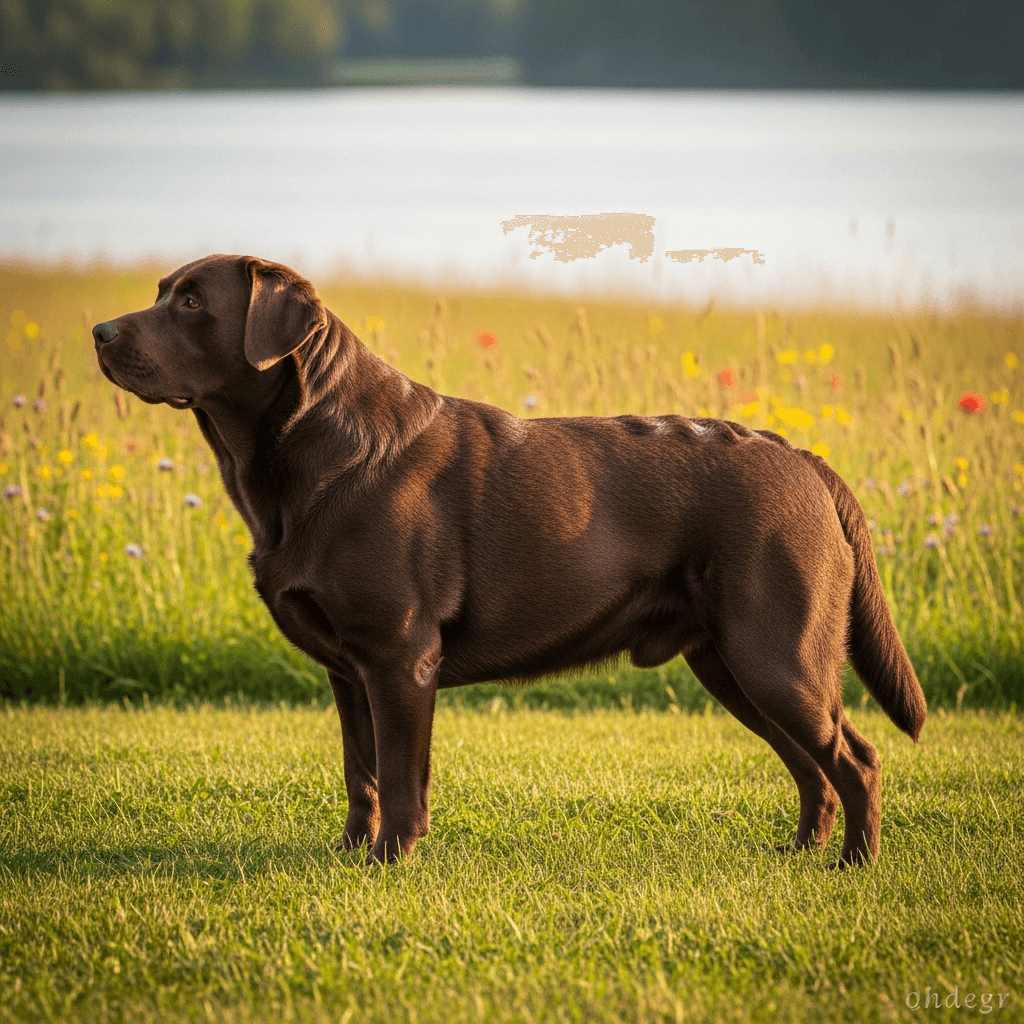
The characteristic appearance of the Labrador is a strong, compact body (strongly built, short-coupled), a very active silhouette (which excludes excessive body weight or bulkiness), a broad skull, a wide and deep chest and ribs, and strong, wide loins and hindquarters. Its short, dense, waterproof coat comes in three classic colors: black (solid black), yellow (yellow – from pale cream to fox red), and chocolate (liver/chocolate).
The temperament of the Labrador is balanced, friendly, and very agile. It has an excellent sense of smell and a soft mouth (soft mouth – the ability to carry game gently without damaging it). It is an avid water lover, an adaptable and devoted companion. Intelligent, eager, and obedient (keen and biddable) with a strong will to please its owner. Its nature is gentle, with no trace of aggression or excessive shyness.
This dog is suitable for active families, hunters, people with disabilities, and anyone looking for a devoted, intelligent companion. It requires a minimum of 60-90 minutes of intense exercise daily and mental stimulation. This is not a breed for those leading a completely sedentary lifestyle or living in very small apartments without access to running and playing areas.
Due to its intelligence and willingness to cooperate, the Labrador Retriever is one of the easiest dogs to train, making it an ideal choice for novice dog owners (who are, however, active). Its friendly disposition towards everyone – people, children, other dogs, and animals – makes it a wonderful family dog, although it also means that it is not a good guard dog (too friendly towards strangers).
We invite you to further explore this fascinating, versatile, and beloved breed – its detailed appearance, wonderful character, health requirements, grooming, nutritional, training needs, and rich history in the subsequent parts of our comprehensive guide. Labrador Retriever is much more than a dog; it is a family member, a devoted friend, and a partner in life’s adventures.
The Labrador Retriever is a dog with a strong, compact body structure (strongly built, short-coupled) and a very active silhouette that combines strength with agility and elegance. Its build is functional – designed for enduring work as a retriever, which excludes excess body weight or massiveness. The overall appearance presents a dog ready for action, full of energy and athleticism.
Dimensions: According to the FCI standard, the ideal height at the withers is 56-57 cm for males and 54-56 cm for females. Weight is not strictly defined in the standard, but typically ranges from 29-36 kg for males and 25-32 kg for females, depending on build, condition, and breeding line (show line dogs are usually heavier than working line dogs).
The head is wide, well-defined without fleshy cheeks (clean-cut). The skull is broad with a distinct stop (transition between the skull and the muzzle). The muzzle is wide, of medium length, not pointed. The nose is broad with well-developed nostrils. The color of the nose, eye rims, and lips depends on the coat color: black for black and yellow dogs, brown (liver) for chocolate dogs.
The jaws and teeth are strong with an excellent, regular, and complete scissor bite (upper teeth closely overlapping lower teeth). A characteristic feature of the Labrador is its soft mouth (soft mouth) – the ability to carry game birds gently without damage, which is crucial for a retrieving dog.
The eyes are medium-sized, expressing intelligence and good temperament. Color: brown or hazel for black and yellow dogs, brown or hazel for chocolate dogs (the darker, the better). The eyelids are well-fitting, without a distinct haw (third eyelid).
The ears are not large or heavy, hanging close to the head, set rather far back, giving the dog an intelligent expression. They should reach approximately to the eye when pulled forward.
The neck is well-set, clean (clean), strong, and powerful, allowing for the carrying of game.
The coat is one of the most characteristic features of the Labrador. It is short, dense, without waves or feathers, rough to the touch (weather-resistant), with a waterproof undercoat. This coat structure allows the Labrador to perform excellently in cold water and adverse weather conditions.
Coat colors: The Labrador Retriever comes in three classic, solid colors:
Black (Solid Black) – completely black without any white markings (only a small white spot on the chest is permissible). Yellow (Yellow) – the color ranges from light cream to red fox. Shades can vary even within a single litter. A small white spot on the chest is permissible. Chocolate (Chocolate/Liver) – from light chocolate to dark chocolate. A small white spot on the chest is permissible.
All three colors are equally accepted according to the FCI and AKC standards. There is no hierarchy of preference among colors. Other colors (silver, champagne) are not recognized by major kennel organizations as standard for the breed.
Body structure: The chest is wide and deep, with well-arched ribs (barrel-ribbed), providing enough space for the heart and lungs. The loins are wide, short, and strong. The back line is level (level topline). The hindquarters are wide and strong, with well-developed muscles, without drooping towards the tail.
Limbs: The front limbs are straight from the elbow to the ground, seen both from the front and the side. The shoulders are long and sloping. The hind limbs are well-developed, not narrow at the hock joints. The knee joints are well angulated. The feet are round, compact with well-arched toes and well-developed pads.
The tail is one of the most characteristic features of the Labrador. It is unique, very thick at the base, gradually tapering towards the end, of medium length, without feathers, covered entirely with short, dense fur, giving it a rounded appearance referred to as otter tail. It can be carried gaily but should not curve over the back. It is a natural extension of the back line. The tail serves as a rudder while swimming and is a distinctive hallmark of the breed.
Movement: The movement is free, covering ground effortlessly (free, covering adequate ground), with straight and true front and hind limbs. When galloping, the Labrador moves with great endurance and efficiency, which is crucial for a working dog that must work for many hours.
Differences between lines: It is worth noting that there are two main lines of Labradors:
Show line (show/English type) – heavier, bulkier, with broader heads, shorter legs, more compact bodies, calmer temperament. Working line (field/American type) – lighter, more athletic, with narrower heads, longer legs, higher energy levels, more intense temperament.
Both lines are purebred Labradors, but they differ in build and temperament due to different breeding goals (show vs. field work).
The overall silhouette of the Labrador Retriever presents itself harmoniously, functionally, and with dignity, combining strength with agility, making it not only an excellent working and hunting dog but also an visually appealing companion with an athletic, friendly appearance.
The Labrador Retriever is a dog with a remarkably friendly, gentle, and balanced temperament, which has made it one of the most popular companion dog breeds in the world. Its character has been shaped by centuries of work alongside fishermen and hunters, and later as a family member, resulting in a remarkable willingness to cooperate with humans, gentleness towards all, and an almost unlimited love for people.
Basic character traits according to the FCI standard are: friendliness (good-tempered), high agility, excellent sense of smell, soft mouth, passionate love for water, adaptability, devotion, intelligence, eagerness to learn, and obedience (keen and biddable) with a strong will to please the owner. The nature is gentle, with no trace of aggression or excessive shyness.
Relationship with family and owner: The Labrador Retriever is extremely attached to its family and forms deep emotional bonds with all household members. Its love for people is almost boundless – it wants to be close to its people, participate in all family activities, and receive attention. It does not tolerate prolonged solitude and may develop separation anxiety or destructive behaviors if regularly left alone for many hours. This is a dog for people who can spend most of their time with it or provide it with active companionship.
Relationship with children: The Labrador Retriever is considered one of the best family dogs for children. It is exceptionally patient, gentle, playful, and tolerant of children of all ages. Its high pain threshold and tolerance make it endure accidental tugging, bumping, or stepping on without an aggressive reaction. It loves playing with children – retrieving, running, swimming. However, due to its size, enthusiasm, and energy (especially as a young dog), it may accidentally knock over small children during play. Adult supervision is recommended with very small children (under 5 years old). Older children will find in the Labrador the best friend and playmate.
Intelligence and willingness to cooperate: The Labrador Retriever is one of the most intelligent dogs, consistently ranking among the top in dog intelligence rankings (usually 7th-10th place according to Stanley Coren). It learns quickly, is eager to cooperate with its owner, and has a strong will to please, making it one of the easiest dogs to train. This trait is crucial for its success as a guide dog, rescue dog, therapy dog, and service dog.
Relationship with strangers: One of the most characteristic (and sometimes problematic) traits of the Labrador is that it is friendly towards EVERYONE. It does not show distrust, reserve, or aggression towards strangers. On the contrary, it usually greets strangers with enthusiasm, joy, and a desire to meet. This makes the Labrador a wonderful companion and therapy dog, but a very poor guard dog – it will not aggressively defend the home against intruders (it may at most bark to inform about the arrival of a guest, but it is more likely to lick a thief than bite them).
Relationship with other dogs: The Labrador Retriever generally tolerates other dogs very well and loves their company. It is friendly, sociable, and enjoys playing together. Aggression towards other dogs is exceptionally rare and considered a serious temperament flaw. Most Labradors do well in multi-dog households and at dog parks. However, they may exhibit excessive enthusiasm when meeting other dogs (jumping, bouncing), which requires training in etiquette.
Relationship with other animals: With proper socialization, Labradors usually accept cats, rabbits, and other pets well. Their hunting instinct is moderate – they were bred to retrieve already killed game, not to chase or kill it. However, young Labradors may show a desire to chase fast-moving animals, which requires appropriate training.
Energy and activity level: The Labrador Retriever is a dog with a high to very high energy level, especially at a young age (up to 3-4 years). It requires a significant amount of physical activity and mental stimulation. Without adequate exercise, it can become hyperactive, destructive, and difficult to control. A minimum of 60-90 minutes of intense exercise daily is essential, and active working lines may require even more. Labradors love retrieving, swimming, running, and any activities with their owner.
Love for water: The Labrador Retriever is a keen lover of water. Most Labradors will jump into any puddle, pond, lake, or river at the first opportunity. Their waterproof coat, otter-like tail, and body structure make them excellent swimmers. Access to water (pool, lake, river) is a great way to satisfy their need for movement.
Characteristic behaviors of the breed include:
Obsessive retrieving – most Labradors have an almost obsessive desire to retrieve balls, sticks, toys. They can do this for hours without getting bored. Carrying things in their mouth – Labradors love to carry various items in their mouths (soft mouth). Jumping on people – out of excessive enthusiasm and joy (requires training). Begging for food – Labradors are notoriously greedy and will beg for food at every opportunity. Loud snoring and sighing – while resting. Following the owner – throughout the house, desiring closeness. Joyful greetings – wagging tails, jumping, bringing toys.
Potential behavioral problems: The Labrador Retriever may be prone to certain behavioral issues if it does not receive adequate activity and training:
Destructiveness (chewing furniture, shoes, damaging the home) – from boredom and excess energy. Hyperactivity and lack of focus (if there is not enough exercise). Jumping on people (excessive enthusiasm, lack of training). Greediness and stealing food (strong feeding instinct). Separation anxiety (if left alone for long periods). Excessive barking (rather rare). Pulling on the leash (excessive enthusiasm, lack of training).
Maturation: It is worth noting that Labradors mature slowly both physically and mentally. They may retain a puppy-like, playful temperament until 3-4 years, which is both charming and exhausting for owners. This requires patience and consistent training.
In summary, the Labrador Retriever is a remarkably friendly, intelligent, and versatile companion that combines a gentle, loving nature with a high energy level and willingness to work. It requires an active, engaged owner who can provide it with the right amount of activity, training, love, and, above all, participation in family life. For the right person or family, the Labrador will become the best friend, a loyal companion, and an inseparable family member for life.
The Labrador Retriever is generally a healthy and resilient breed, but like most purebred dogs, it can be prone to certain hereditary conditions and health issues. The average lifespan is between 10 to 12 years, although many Labradors with good genetics, proper care, and a healthy weight live to be 13-14 years old. Unfortunately, their average lifespan has been declining in recent years, partly due to an obesity epidemic in this breed.
Most common health issues in Labrador Retrievers:
Obesity – THIS IS THE MOST SERIOUS HEALTH ISSUE in Labradors! This breed has a genetic predisposition to obesity (a mutation in the POMC gene, which occurs in about 25% of Labradors, causing a constant feeling of hunger and decreased sense of fullness). Labradors are notoriously greedy and will eat anything they find. Obesity leads to dramatic consequences: a shortened lifespan by 2-3 years, increased strain on joints and accelerated arthritis, cardiovascular problems, type 2 diabetes, increased risk of cancers, breathing issues, and significantly reduced quality of life. Weight control is absolutely crucial for a Labrador's health!
Hip dysplasia (Hip Dysplasia, HD) – very common in Labradors. A developmental defect of the hip joint leading to pain, lameness, and degenerative changes. Checking the parents for HD before breeding (X-rays, FCI or OFA/BVA evaluation) is key.
Elbow dysplasia (Elbow Dysplasia, ED) – as common as HD. A condition affecting the elbow joints, leading to lameness and arthritis.
Progressive retinal atrophy (Progressive Retinal Atrophy, PRA) – a hereditary condition leading to gradual degeneration of the retina and blindness. Genetic tests for parents are available (prcd-PRA).
Cataracts (Cataract) – relatively common in Labradors, can be hereditary or develop with age. Leads to impaired vision or blindness.
Hereditary myopathy (Hereditary Myopathy, CNM – Centronuclear Myopathy) – a rare hereditary muscle disorder causing weakness and exercise intolerance. Genetic tests available.
Exercise-induced collapse (Exercise-Induced Collapse, EIC) – a hereditary condition causing collapse and weakness of the hind limbs during intense exercise. Genetic tests available. Particularly important for working dogs.
Heart diseases – dilated cardiomyopathy (DCM), subvalvular aortic stenosis (SAS).
Cancers – mast cell tumors, lymphoma, hemangiosarcoma (cancer of blood vessels), osteosarcoma (bone cancer). Labradors have an increased risk of cancers, especially in older age.
Ear diseases – otitis externa is common due to floppy ears and love of swimming (moisture in the ears).
Hot spots (acute moist dermatitis) – sudden, moist skin inflammation, common in Labradors, especially in warm, humid months.
Gastric dilatation-volvulus (Gastric Dilatation-Volvulus, GDV) – less common than in deep-chested breeds, but can occur. A life-threatening sudden expansion and twisting of the stomach.
Laryngeal paralysis – more common in older Labradors, causing breathing difficulties.
Allergic, Prevention and healthcare: To maximize the chances of a long, healthy life for a Labrador Retriever:
Regular veterinary visits (at least once or twice a year, more often for older dogs). Up-to-date vaccinations and deworming. WEIGHT CONTROL – this is the most important! Regular weighing, body condition monitoring (rib test), adjusting food portions. Genetic testing of parents before breeding (HD, ED, PRA, EIC, CNM, eye and heart exams). Proper diet and physical activity. Regular ear checks (cleaning, especially after swimming). Dental examinations and oral hygiene. Regular blood tests for older dogs (organ function monitoring). Monitoring for tumors (lumps, skin changes). Tick and flea prevention.
Activity-related issues: Puppies and young dogs (up to 12-18 months) are prone to joint and bone injuries during intense exercise. Avoid long runs, intense jumping, and long stairs until full skeletal maturity. Swimming is an excellent low-impact activity for puppies.
Weather resistance: With their dense, water-resistant coat with an undercoat, Labradors do well in various weather conditions. They tolerate cold, moisture, and water excellently (they were bred for this). However, in extreme heat, they can be sensitive to overheating – provide shade, water, and avoid intense exercise in the middle of the day.
Obesity – detailed prevention: Due to the enormous significance of this issue, it is worth emphasizing the key principles:
Carefully measure food portions (use a measuring cup, do not guess). Adjust the amount of food to the level of activity, age, and metabolism. Limit treats to a maximum of 10% of daily calorie intake. Do not give table scraps (even if the dog begs!). Weigh the dog regularly (once a month). Perform a rib test – ribs should be palpable but not visible. A visible waist when viewed from above and a tucked belly from the side are correct. If the dog is gaining weight – reduce portions and increase activity. Consider light/weight control food for dogs prone to obesity. Do not give in to manipulation – Labradors are masters at pretending to be hungry!
With proper, careful veterinary care, strict weight control, a healthy diet, regular physical activity, and love from the owner, a Labrador Retriever can enjoy a long, healthy, and active life as a devoted family companion. Potential owners should choose puppies from responsible breeders who conduct all recommended health tests on the parents and can provide HD/ED certificates and genetic test results.
The care of a Labrador Retriever is relatively simple and low-maintenance, making it an attractive choice for people who do not have time for intensive grooming. Its short, dense coat with a waterproof undercoat is easy to maintain, although it requires regular attention, especially during heavy shedding periods.
Coat brushing: The Labrador Retriever has a short, dense coat that requires regular brushing 1-2 times a week during normal periods and daily during shedding. Use a slicker brush, a natural bristle brush, or a rubber grooming glove. Brushing helps remove dead hair, stimulates the skin and blood circulation, distributes natural skin oils for a healthy shine, and reduces the amount of hair in the home.
Shedding: The Labrador Retriever sheds HEAVILY – it is one of the breeds that shed the most profusely. It sheds year-round at a low level, with two periods of intense, massive shedding in spring (losing the winter undercoat) and autumn (preparing for winter). During these periods (lasting 2-3 weeks), the amount of shedding is enormous – daily brushing is necessary, preferably outdoors. Tools like the Furminator or undercoat rake can be helpful in removing the undercoat, but they should be used carefully to avoid damaging the topcoat.
Potential owners must be prepared for a large amount of hair in the home – on the floor, furniture, and clothing. This is not a breed for people with allergies or a cleanliness obsession.
Bathing: The Labrador Retriever does not require frequent baths. It is sufficient to bathe them once every 2-3 months or when they are really dirty (mud, unpleasant odors, contact with carrion or rotting fish – Labradors love to roll in disgusting things!). Bathing too frequently can disrupt the natural, waterproof lipid protection of the coat and dry out the skin.
Use mild shampoos designed for dogs. After bathing, you can dry the dog with a towel or allow it to air dry. Labradors often love baths, especially in a tub or pool.
Post-swimming care: Due to Labradors' love for water, it is important to rinse the dog with clean water after swimming (especially in lakes, rivers, or the sea) to remove chlorine, salt, algae, or bacteria. Thoroughly dry the ears to prevent infections.
Ear care: This is a key aspect of grooming for Labradors due to their floppy ears and love for swimming. Ears can accumulate moisture, dirt, and wax, leading to frequent ear infections (otitis externa). Regularly check the ears (once a week or after each swim), clean them with a specialized dog ear cleaning solution, thoroughly dry the ears after bathing or swimming, and monitor for redness, discharge, unpleasant odors, or the dog scratching its ears. If any signs of infection occur – consult a veterinarian immediately. Some Labrador owners who swim regularly use special ear-drying solutions or ear plugs (consultation with a veterinarian).
Nail care: Nails should be trimmed every 3-4 weeks or when you can hear them clicking on hard floors. Overgrown nails can cause discomfort, paw deformities, and mobility issues. If the dog regularly runs on hard surfaces (asphalt, concrete), the nails may wear down naturally to some extent, but they still require monitoring.
Oral hygiene: Brushing teeth 2-3 times a week (preferably daily) with a special dog toothpaste will help prevent tartar buildup, gum disease, and bad breath. Labradors are prone to dental problems in older age. Dental chews and specialized treats can also be used.
Paw and pad care: Regularly check the paws for wounds, cracked pads, and foreign objects between the toes. Labradors actively explore their surroundings and may get scratches or injuries. In winter, pay attention to road salt, which can irritate the pads.
Hot spot checks: Labradors are prone to hot spots (sudden, moist dermatitis), especially in warm, humid months. Regularly check the skin for redness, moist patches, or areas that the dog is licking or biting intensely. Early intervention (drying, disinfecting, visiting a veterinarian) prevents the problem from spreading.
Tail checks: The Labrador's otter tail can sometimes suffer an injury known as limp tail or cold tail – a sudden drooping of the tail, usually after intense swimming in cold water or vigorous exercise. It is characterized by pain at the base of the tail and an inability to lift it. It usually resolves on its own within a few days but requires rest and possibly pain relief from a veterinarian.
In summary, the care of a Labrador Retriever is easy and low-maintenance in terms of brushing and bathing, but it requires regular attention to the ears (after swimming), weight monitoring, and intensive brushing during shedding. Potential owners must be prepared for a large amount of shedding, especially in spring and autumn. Besides that, the Labrador is relatively easy to maintain in terms of grooming.
The Labrador Retriever is a high-energy dog that was bred for endurance work as a retriever (fetching game for many hours). Its physical activity needs are significant and should not be underestimated. This is not a breed for people who lead a completely sedentary lifestyle or live in small apartments without access to running areas.
Minimum activity requirements: An adult, healthy Labrador Retriever requires a minimum of 60-90 minutes of intense exercise daily, divided into 2-3 sessions. Active working lines may require even 90-120 minutes. This does not mean a leisurely walk on a leash, but active, engaging effort – running, swimming, fetching.
Ideal forms of activity for a Labrador Retriever:
Fetching – this is the FAVORITE activity of most Labradors! Fetching balls, frisbees, training dummies, sticks is an excellent way to burn energy and utilize the natural instincts of a retriever. Many Labradors can fetch endlessly – for hours.
Swimming – the Labrador Retriever LOVES water! Swimming is not only a huge pleasure for them but also an excellent, low-impact exercise that engages the whole body, ideal for dogs with joint issues or overweight. Access to water (pool, lake, river, sea) is one of the best gifts for a Labrador.
Long walks and hikes – walks should last at least 60-90 minutes daily. Ideal are hikes in the forest, park, by the water, where the dog can run freely (under recall control) and explore.
Running alongside a bike – for adult dogs (18+ months) with a fully developed skeletal system and healthy weight, running alongside a bike is a good form of endurance exercise.
Canine sports – Labradors are well-suited for: obedience, agility (although they are not the fastest), tracking, nosework, dock diving (THEY LOVE IT!), flyball, rally-o, gundog training (hunting training - fetching dummies).
Hunting – for Labradors used for hunting (waterfowl retrieving), regular fieldwork.
Play with other dogs – meetings at dog parks, organized playdates with dog friends are a great form of social and physical activity.
Mental stimulation is as important as physical: The Labrador Retriever is an intelligent dog that needs not only physical effort but also intellectual challenges. Introduce:
Scent games (hiding treats, nosework, searching for dummies). Interactive toys and puzzles for dogs (Kong stuffed with food, toys with hidden treats). Training new commands and tricks. Variety of activities (not just the same thing every day). Hide and seek games.
Caution with puppies and young dogs: Puppies and young dogs (up to 12-18 months) are prone to joint injuries and growth plate damage during excessive exertion. Labradors mature slowly, and their skeletal system is not fully developed until 18 months. Avoid:
Long running alongside a bike (wait until 18-24 months). Intense jumps from heights. Long, steep stairs (up and down). Long, monotonous runs on hard surfaces. Excessive fetching with intense jumps.
Better are: short (15-30 minutes), frequent activity sessions, free play on grass, swimming (excellent, low-impact exercise - ideal for puppies!), gradually increasing intensity as they mature.
Consequences of insufficient activity: A Labrador Retriever that does not receive adequate exercise and stimulation may develop serious problems:
Destructiveness (chewing furniture, shoes, destroying cushions, carpets). Hyperactivity and lack of concentration. Jumping on people (excessive, uncontrolled enthusiasm). Obesity (with insufficient activity and diet control - a serious problem!). Begging for food and stealing food (boredom leads to food obsession). Excessive barking or howling. Separation anxiety (unmet needs lead to stress). Digging holes in the garden.
Activity in various weather conditions: The Labrador Retriever is a working dog that does well in various weather conditions:
In winter – Labradors LOVE the cold, snow, and cold water. Their thick undercoat protects them well from the frost. They can play in the snow and swim in cold water without any issues (cold water retriever).
In summer – they may be sensitive to overheating in extreme heat. Provide shade, water, access to swimming, and avoid intense exertion during the middle of the day (10:00 AM - 6:00 PM). Walks early in the morning or late in the evening.
Rain and mud – Labradors LOVE it! Most Labradors will joyfully run through puddles and roll in the mud. Owners must be prepared for a dirty dog after walks in the rain.
Safety around water: Although Labradors are excellent swimmers, safety is important:
Teach the dog where the exits are from the pool/pond. Monitor the dog while swimming in rivers with strong currents. Avoid swimming in very cold water for very long (hypothermia). After swimming, rinse the dog and thoroughly dry their ears.
Labrador Retriever owners must be prepared to dedicate a significant amount of time to ensure their dog receives adequate activity. If you lead an active lifestyle, love spending time outdoors, hiking, swimming, biking – the Labrador will be an ideal, enthusiastic companion who will joyfully follow you on every adventure (especially if it involves water!).
Training a Labrador Retriever is relatively easy and enjoyable due to its high intelligence, willingness to cooperate, and strong desire to please its owner. It is one of the breeds that is easiest to train, making it an ideal choice even for novice dog owners. However, starting training early and maintaining consistency are crucial for developing a well-behaved dog.
Breed characteristics in the context of training: The Labrador Retriever is a very intelligent breed (ranked 7th-10th in dog intelligence rankings), which learns quickly and is eager to work with its owner. It has a strong will to please, meaning it wants to satisfy its owner and receive praise. This trait is key to its success in training and as a service dog (guide, rescue, therapy).
Key training principles for the Labrador Retriever:
Positive reinforcement only – rewards (treats, praise, play, retrieving) are the most effective. Labradors LOVE to eat, so treats are extremely motivating (but watch the quantity - risk of obesity!). Never use physical punishment or harsh methods.
Consistency – all commands and rules must be consistently applied by all family members. Inconsistency leads to confusion.
Early start – training and socialization must begin at 8-10 weeks of age.
Short, frequent sessions – 10-15 minutes 2-3 times a day is better than one long session. Labradors can get distracted, especially when young.
Fun and joy – Labradors learn best when training is fun and engaging. Use their love for retrieving as a reward.
Patience with young dogs – Labradors mature slowly (3-4 years) and can retain a puppy-like temperament for a long time. This requires patience.
Basic life commands to teach first:
Name – responding to their name. Sit – basic command for order, controlling the dog. Lie down – calming, relaxation. Stay – impulse control, steadiness (key for a hunting dog). Come – A KEY life command for safety. No / Leave it – prevents eating things off the ground or jumping on people. Heel – walking at heel without pulling on the leash (VERY important - Labradors can pull with enthusiasm). Fetch / Bring – natural command, great for play. Drop it / Give – releasing items from the mouth. Go to your place / Bed – calmness in the house.
Early and intensive socialization is crucial, although Labradors are naturally friendly. The puppy should be positively exposed to:
Different people (all types, ages, appearances). Other dogs (various breeds, sizes). Different environments (city, forest, water, stores, transportation). Different sounds (thunder, fireworks, gunshots for hunting dogs). Handling of the body (touching paws, ears, mouth - vet visits). Different surfaces.
Recall training (Come) is important, although Labradors usually do not have a strong flight instinct (they want to be close to their owner). However, their enthusiasm and desire to explore can cause them to wander off. Train recall regularly, use high-value rewards, and never punish the dog for coming.
Food control training: This is specific and KEY training for Labradors due to their voraciousness:
Teach the dog Leave it and No in the context of food. Train patience while preparing meals (the dog must wait calmly). Teach the dog to eat slower (use a slow feeder bowl). Train no begging at the table (absolutely do not give food from the table!). Teach the dog that not everything on the ground is for eating.
Jumping control training: Young Labradors tend to jump on people with enthusiasm and joy. This requires consistent training:
Ignore the dog when it jumps (turn away, do not look, do not touch). Reward the dog when it has all four paws on the ground. Teach an alternative behavior (e.g., Sit when greeting). All family members and guests must follow the same rules.
Leash pulling control training: Labradors can pull on the leash out of excessive enthusiasm. Train loose-leash walking from puppyhood. Stop when the dog pulls. Reward walking next to you. Use a harness instead of a collar (less pressure on the neck).
Hunting training / gundog training (for working dogs): If you plan to use your Labrador for hunting (waterfowl retrieving), professional gundog training should include:
Steadiness (remaining calm when game is shot). Retrieving from water and land (dummy, game). Soft mouth (gentle carrying without damage). Marking (remembering where the game fell). Blinds (retrieving without seeing, on command). Working at a distance (guiding the dog with gestures and whistles).
Many people use professional gundog trainers or retriever clubs.
Training as a guide dog / assistance dog: Labradors are among the most popular breeds of guide dogs for the blind and assistance dogs for the disabled. This requires specialized, long-term training by organizations that train guide dogs.
What to avoid in training: Physical punishment, yelling, tugging on the leash. Long, boring sessions. Excessive use of treats (risk of obesity - use small pieces, healthy options like carrots). Inconsistency. Giving up (Labradors may try to manipulate).
Potential training challenges:
Distraction (especially young dogs - high energy and enthusiasm). Excessive face licking (expressing love - some may find it bothersome). Bringing everything in their mouth (natural instinct - redirect to appropriate toys). Begging for food (requires absolute consistency from everyone in the house!).
With proper, consistent training based on positive methods and utilizing the Labrador's natural desire to cooperate, it can become a well-behaved, obedient, and versatile companion. The key is an early start, consistency, positive reinforcement, and control over voraciousness (using healthy, low-calorie training rewards).
A proper diet is absolutely crucial for the health of a Labrador Retriever due to its genetic predisposition to obesity. Weight control through a balanced diet and appropriate portions is the most important factor affecting the length and quality of life of this breed. Feeding a Labrador requires special attention, discipline, and resistance to the manipulations of a begging dog.
Basic nutritional recommendations:
Animal protein – 22-26% for adult dogs. Source: meat (beef, poultry, lamb, fish). Protein builds and maintains muscle mass.
Fats – 12-16% for adult dogs (lower fat content helps control weight). Source: poultry fat, fish oil. For overweight dogs, consider light food with 8-10% fat.
Carbohydrates – rice, oats, sweet potatoes as energy sources. Avoid excessive amounts of grains.
Fiber – increased fiber content (4-6%) helps with the feeling of fullness, which is beneficial for Labradors with the POMC gene mutation (constant feeling of hunger).
Glucosamine and chondroitin – for joint protection (400-800 mg/kg), particularly important due to susceptibility to dysplasia.
Omega-3 fatty acids – for joint, heart, skin, and coat health.
L-carnitine – supports fat metabolism, beneficial for weight control.
Feeding schedule by age:
Puppies (8 weeks - 6 months) – 3-4 meals a day. Puppy food for large breeds with controlled calcium content. Protein 26-28%, fats 14-16%. AVOID OVERFEEDING – a fat puppy ≠ a healthy puppy!
Young dogs (6-18 months) – 2-3 meals a day. Junior food. Gradual transition to adult food around 12-15 months.
Adult dogs (18 months - 7 years) – 2 meals a day. Adult food for large breeds. For active dogs, consider performance/working dog food.
Senior dogs (over 7-8 years) – 2 meals. Senior food with lower calorie content (older Labradors tend to decrease activity and gain weight).
Portion size: This is the MOST CRITICAL ASPECT of Labrador nutrition! Portion size depends on:
Target weight (NOT current, if the dog is overweight!). Age (older dogs need fewer calories). Activity level (very active dogs may need more). Individual metabolism. Type of food (calories per kg vary between brands).
A typical adult Labrador at a healthy weight (27-32 kg male, 25-30 kg female, active) may require about 1300-1600 kcal per day (about 350-420 g of premium dry food). But ALWAYS adjust portions to individual needs and regularly monitor weight!
WEIGHT CONTROL – absolute priority: Due to the obesity epidemic in Labradors, weight control is a matter of life and death. Obesity shortens life by 2-3 years and dramatically lowers its quality.
Golden weight control rules:
Carefully measure portions – use a measuring cup, DO NOT guess! Do not fill the bowl to the brim. Weigh the dog regularly – once a month, record the weight. Perform a rib test – ribs should be easily felt under a thin layer of fat, but NOT visible. Visible waist – when viewed from above, there should be a clear narrowing behind the ribs. Tucked belly – when viewed from the side, the belly should be slightly tucked (not hanging). Limit treats – a maximum of 10% of the daily calorie portion! Use healthy options: carrots, cucumbers, apples, green beans. NEVER give table scraps – absolutely never! Even if the dog begs (and it will!). Adjust portions – if the dog is gaining weight, DECREASE portions by 10-15% and increase activity. Do not succumb to manipulation – Labradors are MASTERS at pretending to be hungry. They will always look like they are starving. THIS IS MANIPULATION!
Light/weight control food: If your Labrador is overweight or prone to obesity, consider light/weight management food:
Lower calorie content (about 300-320 kcal/100g instead of 350-380 kcal/100g). Higher fiber content (helps with the feeling of fullness). Lower fat content (8-10%). High-quality protein (maintaining muscle mass during weight loss).
Prevention of gastric torsion (GDV): Although less common than in deep-chested breeds, it can occur:
Divide the daily portion into 2-3 smaller meals. AVOID intense exercise 1-2 hours before and after meals. Use a slow feeder bowl (prevents gulping). Minimize stress during meals. Prevent drinking large amounts of water immediately after eating.
Healthy, low-calorie snacks:
Fresh carrots (5 kcal/piece - EXCELLENT!) - cleans teeth, low calorie, Labradors love them. Cucumbers (very low calorie, hydrating). Green beans (cooked or fresh - low calorie). Seedless apples (sliced). Frozen bone broth (without salt) - great for hot days. Small pieces of cooked chicken (skinless, unseasoned). Small pieces of specialized training treats (divide them into even smaller pieces!).
TOXIC FOODS – NEVER: Chocolate, cocoa (deadly!). Xylitol (deadly!). Grapes, raisins (damage kidneys). Onions, garlic (destroy red blood cells). Avocado, macadamia nuts. Alcohol, caffeine. Cooked bones (can splinter). Fatty table scraps, bacon, sausages (obesity, pancreatitis!).
Access to water: Always provide constant access to fresh, clean water. Labradors, especially active and swimming ones, need plenty of water. Water should be changed daily.
Types of diets: Premium dry food (convenient, well-balanced - recommended). Wet food (more palatable, fewer calories per volume - can help with weight control). BARF diet (requires knowledge - risk of imbalance and excess calories). Light/weight management food (for overweight dogs). Veterinary food (for dogs with health issues).
Special nutritional needs: In case of food allergies (symptoms: skin itching, digestive problems, ear infections, hair loss), consider hypoallergenic food with novel protein (duck, venison) or hydrolyzed protein. For dogs with dysplasia, osteoarthritis - food with increased glucosamine, chondroitin, omega-3 content.
Feeding and training: If you use a lot of training treats, subtract their calories from the daily food portion! Many Labradors have gained weight due to extra calories from training.
Proper, disciplined feeding with strict portion control and absolute resistance to begging dog manipulations is the FOUNDATION of a long, healthy life for a Labrador Retriever. Remember: The best thing you can do for your Labrador is NOT to overfeed him, even if he looks at you with those big, pleading eyes. A lean Labrador = a healthy, long-lived Labrador!
Characteristic Traits
Pros
- Incredibly friendly and gentle towards everyone
- One of the most intelligent and easy-to-train dogs
- An excellent family dog - patient and safe with children
- Versatile - suitable for many roles (hunting
- guide
- rescue
- companion)
- Loves water - an excellent swimmer
- Sociable with other dogs and animals
- Adaptable to different environments
- Short coat that is easy to maintain
- A healthy breed with a relatively long life when kept at the proper weight.
Cons
- Very intense shedding (huge amount of fur)
- Requires a lot of movement and activity (60-90 minutes a day minimum)
- Genetic predisposition to obesity - requires strict weight control
- Gluttonous - will beg and steal food
- Can be destructive without sufficient activity
- Hyperactive and puppy-like for the first 3-4 years
- Jumps on people out of excessive enthusiasm
- Too friendly towards strangers - not a good guard dog
- Prone to hip and elbow dysplasia.
Behavioral Ratings
Breed History
The history of the Labrador Retriever is a fascinating tale of transformation from a hardworking fishing dog from the rugged shores of Newfoundland to one of the most popular, beloved, and versatile companion dogs worldwide. Its journey from the cold waters of Canada to living rooms, hunting fields, and the hearts of millions around the globe is a testament to its exceptional traits.
Origins in Newfoundland (17th-19th century): It is widely believed that the Labrador Retriever originated from the shores of Newfoundland in eastern Canada (now a Canadian province), rather than from Labrador, as the name might suggest. There, fishermen were seen using dogs that resembled retrievers for fetching fish that slipped off hooks, pulling fishing nets from the water, and performing other tasks related to fishing in the cold Atlantic waters.
These early dogs, known locally as St. John's dogs or Lesser Newfoundland dogs, were smaller than today's Newfoundland dogs. They had short, dense, waterproof coats and a unique otter-like tail due to its shape (thick at the base, tapering, covered with dense fur), highlighting their natural predisposition for working in water.
These traits – waterproof coat, otter tail as a rudder, strong body structure, endurance, intelligence, and willingness to work with humans – were shaped by harsh working conditions and became fundamental characteristics of the modern Labrador.
The Journey to Britain (early 19th century): In the late 18th and early 19th centuries, Colonel Peter Hawker and Earl of Malmesbury (2nd and 3rd Earls of Malmesbury) brought these dogs from Newfoundland to England on trading ships carrying cod. The British aristocracy quickly recognized the exceptional abilities of these dogs as retrievers for fetching downed birds, particularly waterfowl.
The 3rd Earl of Malmesbury referred to these dogs as Labradors in a letter from 1887, although they came from Newfoundland, not Labrador. This name eventually stuck.
Malmesbury Tramp and the Breed's Roots: It was a dog named Malmesbury Tramp (born around 1878), owned by the 3rd Earl of Malmesbury, that was described by Lorna, Countess Howe as one of the tap roots (cone roots/fundamental ancestors) of the modern Labrador Retriever. He was one of the key dogs that had the most significant impact on the breed's development.
Formalization of the Breed (late 19th - early 20th century): By the late 19th century, British breeders, including the Malmesbury, Buccleuch, and Home families, began planned breeding of these dogs, focusing on their abilities as retrievers and their gentle temperament.
In 1903, the Labrador Retriever was officially recognized by The Kennel Club (UK) as a distinct breed. The first breed club, The Labrador Retriever Club, was founded in 1916 in the UK. The Yellow Labrador Club was established in 1925 because initially, black colors were preferred, and yellow was considered less desirable.
Success in Field Trials: It was in field trials that the Labrador gained early fame in the UK. Its versatility, soft mouth (gentle carrying of game without damage), excellent scenting ability, endurance, and willingness to work in water made it an ideal hunting dog for retrieving birds, particularly ducks and geese.
Development of Three Colors: Initially, black was the preferred color. Yellow puppies (which appeared sporadically) were often rejected or euthanized as undesirable. It wasn't until the 1920s that yellow (ranging from pale cream to fox red) began to gain acceptance. The chocolate color was even rarer and only gained popularity in the mid-20th century. Today, all three colors are equally accepted and valued.
Expansion to North America (early 20th century): The Labrador Retriever reached the United States and Canada in the early 20th century. The American Kennel Club (AKC) recognized the breed in 1917. In America, the Labrador quickly gained immense popularity among hunters (especially for waterfowl hunting) and as a companion dog.
Near Extinction in Newfoundland: Paradoxically, while the Labrador thrived in Britain and America, it nearly went extinct in its homeland of Newfoundland in the late 19th and early 20th centuries due to local tax laws (high taxes on dog ownership) and restrictions on dog imports to Britain (quarantine). Today's Labradors are almost exclusively descended from dogs exported to Britain.
Development as a Multi-Purpose Dog (mid-20th century - present): By the mid-20th century, the Labrador began to be used for much more than just hunting:
Guide Dog for the Blind – Labradors became one of the most popular breeds of guide dogs since the 1940s. Rescue Dog – searching in rubble, on water, in avalanches. Service Dog – detecting drugs, explosives, searching for missing persons. Therapy Dog – providing emotional support in hospitals, schools, nursing homes. Family Companion Dog – one of the most popular family dogs in the world.
The Phenomenon of Popularity (late 20th - 21st century): Since the 1990s to the present, the Labrador Retriever has consistently ranked first in popularity among dog breeds in the United States (according to the AKC) for nearly 30 years! (only recently has the Golden Retriever surpassed it). It is also extremely popular in the UK, Canada, Australia, and many other countries.
This phenomenal popularity stems from its unique combination of traits: gentle, friendly temperament (excellent for families with children), intelligence and ease of training, versatility (hunting, sports, work, companionship), adaptability to various environments, and beautiful, friendly appearance.
Fédération Cynologique Internationale (FCI): The FCI recognized the breed and classified it in Group 8 (Retrievers, Flushing Dogs, Water Dogs), Section 1 (Retrievers) with working trials. The FCI standard was recently updated in 2022 (validity date: 16.06.2022, publication date: 30.09.2022) - one of the latest standards!
Breeding Lines – Show vs. Field: In the 20th century, two main lines of Labradors developed:
Show Line (show/bench/English type) – bred for appearance and temperament, heavier, broader heads, shorter legs, bulkier bodies, calmer temperament. Field Line (field/working/American type) – bred for hunting and working abilities, lighter, athletic, narrower heads, longer legs, higher energy levels, more intense temperament.
Both lines are purebred Labradors according to the standard, but they differ in appearance and temperament.
Modern Labrador Retriever (21st century): Today, the Labrador Retriever is one of the most versatile dog breeds in the world. It can be found as: a hunting dog (still an excellent retriever!), a family dog (probably the most popular family dog), a guide and assistance dog, a rescue dog (SAR), a service dog (police, border patrol, military), a therapy dog, a sporting dog (agility, obedience, dock diving), a show dog, and simply a beloved companion to millions of people.
Its long, remarkable journey from the cold waters of Newfoundland, through British hunting fields, to the hearts and homes of people worldwide makes it one of the most extraordinary success stories in the world of dog breeds. The Labrador Retriever has proven that the combination of functionality, intelligence, versatility, and above all, a gentle, loving character can create a breed that serves humanity in countless roles while maintaining its status as man's best friend.