Dalmatian
FCI Group
6• FCI 153
Size
Medium
Origin Country
XX
Height
54-62 cm
Weight
25-32 kg
Lifespan
10-12 years
Temperament
Overview
The Dalmatian is one of the most recognizable dog breeds in the world, captivating with its unique spotted coat on snow-white fur. This elegant and energetic breed originates from Croatia, and its history dates back to the 16th century when it appeared in paintings and frescoes from the Dalmatia region.
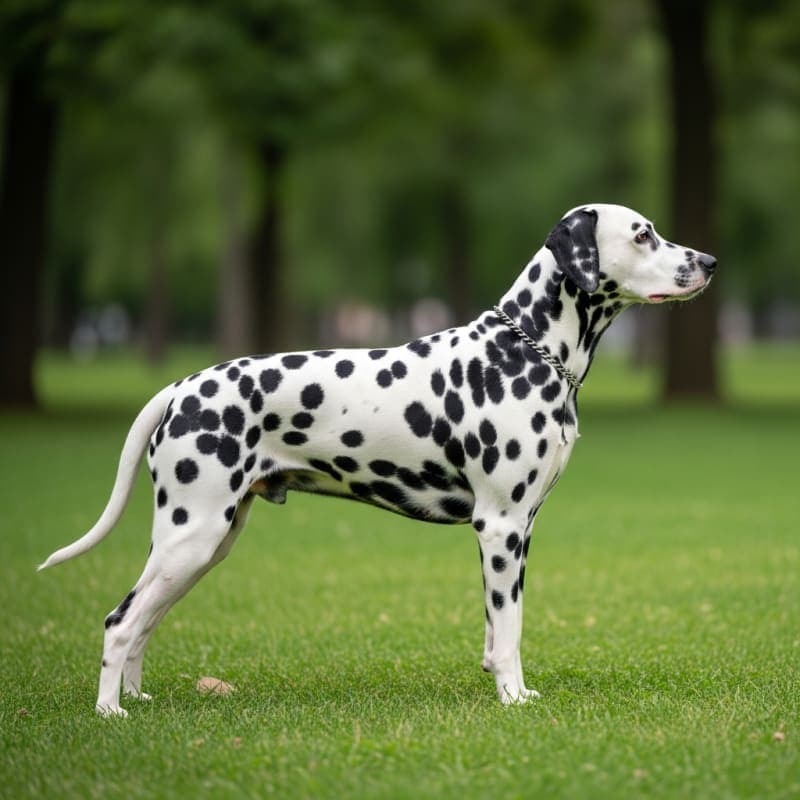
It is a medium-sized dog – its weight ranges from 25 to 32 kg, and its height at the withers is 54-62 cm. It is characterized by a harmonious body structure, short and dense fur, and distinctive black or brown spots evenly distributed on a white background. Its proportional head with oval, dark eyes gives it expressiveness and highlights its penetrating, intelligent gaze.
The Dalmatian is an extremely energetic and friendly dog that will thrive in an active family. Its lively temperament requires a regular dose of exercise and mental stimulation. Although it is independent, it becomes very attached to its caregivers and loves spending time with them. It is worth noting that Dalmatians have a strong hunting instinct, which can pose a challenge for less experienced owners.
This breed gained worldwide fame thanks to the movie 101 Dalmatians, but potential owners should remember to choose a breeder responsibly. The breed's popularity unfortunately comes with the risk of irresponsible breeding, which can lead to health problems in puppies.
In our guide, you will learn everything about the care, health, nutrition, training, and history of the Dalmatian. Get to know this fascinating breed better and find out if it will be the perfect companion for your family!
The Dalmatian is a dog with a unique and distinctive appearance, making it one of the most recognizable breeds in the world. Its characteristic white coat is dotted with black or brown spots, which should be clear, round, and evenly distributed across the body – without blending into each other.
Body structure:
- Height at the withers: 54-62 cm
- Weight: 25-32 kg
- Build: strong, well-muscled, with a rectangular torso
- Back: distinctly defined, straight
- Limbs: strong, well-muscled, providing great mobility
Head and muzzle:
The head is proportional to the body, with a narrow skull and slightly rounded ears. The eyes are oval, dark, with a penetrating and intelligent expression. The ears are set high, medium-sized, tapering towards the ends.
Coat:
Short, hard, and dense, giving the dog an elegant appearance. The spots can be black or chocolate (brown), but they should be clearly defined against the white background. Puppies are born completely white – the spots appear only after a few weeks of life.
Tail:
Long, set on the extension of the hind line, tapering towards the end. At rest, it hangs down, while in motion, it is carried slightly above the line of the back.
The movement of the Dalmatian is elegant, fluid, and full of grace. During walks, it draws attention with its posture and harmonious stride. This is a dog made for shows and exhibitions, whose appearance is an inseparable element of popular culture.
The Dalmatian is a dog with a complex and fascinating character that becomes a wonderful companion in the right conditions. Its temperament combines friendliness, energy, and independence, making it an ideal dog for active families.
Character and temperament:
- Friendly and energetic
- Strongly attached to its family
- Independent but needing interaction with people
- Social, gets along well with children
- Intelligent and sharp
Relationships with family:
Dalmatians are usually very devoted to their owners and love spending time with them. Their independent nature allows them to be self-sufficient; however, they do not tolerate prolonged loneliness. Left alone for too long, they may exhibit behavioral problems such as destroying objects or excessive barking.
Relationships with other animals:
In interactions with other dogs, they are usually friendly, but early socialization is key to avoid potential conflicts. Dalmatians have a strong hunting instinct, which means they may have a tendency to chase smaller animals – cats, rodents, or birds.
Training and upbringing:
Training a Dalmatian requires patience and consistency. Dogs of this breed are known to be stubborn and sometimes pretend not to understand commands to avoid performing tasks. It is crucial to use methods based on positive reinforcement, which help build a strong bond between the dog and the owner.
Interaction with children:
Dalmatians are generally excellent companions for children – they are patient and sociable. However, due to their energy and strength, it is important for children to learn respect for the dog and to follow safety rules during play.
In summary, the Dalmatian is a dog that requires a lot of attention, exercise, and proper upbringing, which in return offers unconditional devotion and joy in being part of the family.
The Dalmatian is a relatively healthy and resilient breed; however, like any purebred dog, it may be predisposed to certain health issues. The average lifespan of a Dalmatian is 10-13 years.
Most common health problems:
1. Congenital deafness
One of the most serious health issues in this breed is the tendency towards deafness, which can be hereditary. Deafness may affect one or both ears. Thanks to the efforts of responsible breeders and hearing tests conducted on puppies, these cases are becoming increasingly rare.
2. Urinary stones and kidney diseases
Dalmatians have a unique purine metabolism, which leads to elevated levels of uric acid in their urine. This can result in the formation of urinary stones. A proper low-purine diet and regular veterinary check-ups are crucial in preventing this condition.
3. Hip dysplasia
Although it occurs less frequently than in larger breeds, dysplasia can also affect Dalmatians. Choosing puppies from breeders with documented health screenings of the parents' joints minimizes this risk.
4. Skin allergies
Some Dalmatians may suffer from food or environmental allergies, manifesting as itching, rashes, or hair loss.
Sensitivity to weather conditions:
The short coat does not provide Dalmatians with protection against extreme weather conditions. In winter, these dogs should sleep in warmth, and on hot days, their outdoor activity should be limited to avoid heatstroke.
Tendency to gain weight:
Dalmatians can easily gain weight if they are not adequately active or receive too many calories. Regular physical activity and a balanced diet are key to maintaining a healthy weight.
Prevention:
- Regular veterinary visits
- Hearing tests for puppies
- Low-purine diet (consultation with a veterinarian)
- Weight control and appropriate physical activity
- Choosing puppies from reputable breeders with health screenings of the parents
Grooming a Dalmatian is relatively simple, but requires consistency to keep its coat and skin in excellent condition. The short and dense coat does not need complicated treatments, but there are a few important aspects to keep in mind.
Brushing:
Although the Dalmatian has a short coat, it is prone to shedding, so regular brushing is necessary:
- During normal periods: 1-2 times a week
- During shedding periods (spring and autumn): daily, to remove dead hair
- Use a brush with natural bristles or a rubber grooming glove
Bathing:
Dalmatians do not require frequent bathing – it is sufficient to do it only when necessary to remove dirt or unpleasant odors. Too frequent baths can dry out the skin and remove the natural protective layer of the coat. Use gentle shampoos designed for dogs with sensitive skin.
Ear care:
Regularly check the Dalmatian's ears (once a week) to ensure there are no:
- Debris
- Excess wax buildup
- Parasites (ticks, fleas)
- Signs of infection (redness, unpleasant odor)
Gently clean the ears with a damp cotton ball or a special ear cleaning solution.
Oral hygiene:
Dental care is an important part of the routine:
- Brush teeth 2-3 times a week (preferably daily)
- Use toothpaste designed for dogs
- Provide dental chews to support oral hygiene
Nail trimming:
Nails should be regularly trimmed (every 3-4 weeks) to avoid discomfort while walking. If you hear the nails clicking on the floor, it means they are too long.
Skin check:
During brushing, check the skin for:
- Rashes or redness
- External parasites
- lumps or skin changes
- Wounds or abrasions
In summary, grooming a Dalmatian is not complicated, but requires consistency and attention to detail. With regular grooming practices, your Dalmatian will look beautiful and feel comfortable.
The Dalmatian is a dog with a particularly high need for exercise, requiring regular and intense physical activity to be healthy, happy, and mentally balanced. This breed was created for running – their history as carriage dogs perfectly illustrates this.
Minimum activity requirements:
- Walks: at least 3 times a day, for 30-45 minutes each
- Intense exercise: 1-2 hours a day (running, outdoor play)
- For dogs living in apartments: even more time outdoors
Types of activities for a Dalmatian:
1. Running
Dalmatians love to run and are ideal companions for runners. They can accompany you during jogging or long-distance runs. Their endurance allows them to run for an hour without getting tired.
2. Biking
An excellent form of activity – a Dalmatian can run alongside a bicycle, which helps burn off excess energy. Make sure to maintain a proper pace and take breaks for water.
3. Play in large spaces
Parks, forests, meadows – Dalmatians need space to run around. Fetching a ball or frisbee is a great form of activity that combines movement with training.
4. Dog sports
Dalmatians excel in many sports disciplines:
- Agility
- Obedience
- Flyball
- Canicross (running with a dog)
5. Company during horseback riding
Due to their history, Dalmatians make excellent companions for riders – they can run alongside a horse without any issues.
Consequences of insufficient activity:
If a Dalmatian's exercise needs are not met, it can lead to:
- Excessive excitement and stimulation
- Destructive behavior (destroying furniture, chewing objects)
- Excessive barking
- Behavioral problems
- Weight gain and health issues
Need for social interaction:
Dalmatians are very social and do not tolerate prolonged loneliness. Physical activity should be combined with interaction with the owner – playing and exercising together builds a bond and provides mental stimulation.
In summary, a Dalmatian is a dog for active individuals who can dedicate a significant amount of time to exercise and shared activities. If you lead a sedentary lifestyle, this breed is likely not suitable for you.
Training a Dalmatian can be a challenge even for experienced owners, as dogs of this breed combine intelligence with independence and stubbornness. The key to success is patience, consistency, and the right approach based on positive methods.
Characteristics of a Dalmatian in the context of training:
- Intelligent and sharp
- Independent and self-sufficient
- Stubborn – can pretend not to understand commands
- Requires being treated as an equal partner
- Cannot stand brutality or coercion
- Quickly gets bored with routine exercises
Basic training principles:
1. Positive reinforcement
The most effective method of training a Dalmatian is positive reinforcement – rewarding desired behaviors with treats, praise, and play. Avoid punishment and brutality, which can break the bond with the dog and make it distrustful.
2. Consistency from a young age
Establish clear boundaries and rules from the first days at home. The Dalmatian must know what is expected of it. If you allow it to do something once and then forbid it the next time – you will only confuse it.
3. Short and varied training sessions
Dalmatian dogs quickly get bored, so training sessions should be:
- Short (10-15 minutes)
- Diverse and fun
- Interspersed with play and rewards
- Ended on a positive note
4. Respect and partnership
Dalmatian dogs are not the type to blindly follow commands. They need respect and to be treated as partners, not as subordinate animals. Building a bond based on trust is crucial.
5. Mental stimulation
In addition to physical activity, Dalmatians need intellectual challenges:
- Interactive toys (puzzles, treat-dispensing toys)
- Learning new tricks and commands
- Games involving hiding objects
- Scent training
Early socialization:
It is extremely important to introduce a Dalmatian to:
- Different people (adults, children, strangers)
- Other dogs and animals
- Various environments (city, forest, parks)
- Sounds and situations (cars, crowds, noise)
Early socialization helps avoid fears and aggression in adult life.
Basic commands:
Focus on mastering basic commands:
- Sit
- Lie down
- Stay
- Come
- Leave it
Common training mistakes:
- Using punishment and violence
- Lack of consistency
- Too long, monotonous sessions
- Lack of patience
- Expecting immediate results
Professional help:
If you are a beginner owner, it is definitely worth seeking the help of a professional trainer or enrolling in an obedience course. A trainer will help you understand your Dalmatian's behavior and teach you how to work effectively with it.
In summary, training a Dalmatian requires commitment, patience, and the right approach. If you are ready for a long process of building a relationship based on trust and respect, you will be rewarded with a wonderful, well-behaved companion.
Proper nutrition for a Dalmatian is a key element in maintaining its health, condition, and longevity. Due to their active lifestyle and unique purine metabolism, the diet should be carefully selected and tailored to individual needs.
Basic nutrition principles:
1. High-quality food
Choose food rich in:
- Animal protein – the foundation of the diet (chicken, turkey, fish, beef)
- Healthy fats – omega-3 and omega-6 fatty acids support skin and coat health
- Low glycemic index carbohydrates – provide energy
- Vitamins and minerals – support the immune system and overall health
2. Low-purine diet (CRITICAL!)
Dalmatian dogs have a unique purine metabolism, which leads to elevated uric acid levels in urine and increases the risk of urinary stones. Therefore, owners should:
- Avoid food rich in purines (organ meats, offal, soy, yeast)
- Choose low-purine protein (eggs, dairy products, chicken)
- Consult a veterinarian about specialized low-purine food
- Ensure the dog has constant access to fresh water – proper hydration helps dilute urine
3. Regular meals
Feed meals at consistent times:
- Adult dogs: 2 meals a day (morning and evening)
- Puppies (up to 6 months): 3-4 meals a day
- Avoid feeding just before or after intense physical activity
4. Portion and weight control
Dalmatian dogs tend to gain weight, so:
- Monitor the dog's weight regularly
- Adjust the amount of food to the level of activity
- Avoid overfeeding
- Treat snacks as rewards, not a primary source of calories
What to avoid in the diet:
- Table scraps – high in fats, salt, and spices
- Offal – high in purines
- Sweets and sugar – lead to obesity and metabolic problems
- Chocolate, onions, garlic, grapes – toxic to dogs
- Fatty meat – can lead to digestive problems
- Soy and yeast – high in purines
Access to water:
Ensure the dog has unlimited access to fresh, clean water throughout the day. Proper hydration is especially important for Dalmatians due to their predisposition to urinary stones.
Supplementation:
In some cases, consider supplementation:
- Omega-3 fatty acids (fish oil) – support skin and coat health
- Glucosamine and chondroitin – support joint health
- Probiotics – support digestive health
Always consult with a veterinarian regarding supplementation.
Consultation with a veterinarian:
Due to the specific nutritional needs of Dalmatians, it is highly recommended to consult a veterinarian to determine the best dietary plan tailored to the dog's age, weight, activity level, and health status.
In summary, a Dalmatian's diet should be balanced, low-purine, and adapted to its activity to ensure its health, energy, and long life.
Characteristic Traits
Pros
- Friendly and energetic disposition
- Unusual and elegant appearance
- Relatively easy coat care
- Good family dog for active families
- Intelligent and sharp.
Cons
- Strong hunting instinct
- Requires a lot of movement and activity
- Stubborn in training
- Prone to congenital deafness
- Risk of urinary stones.
Behavioral Ratings
Breed History
The history of the Dalmatian is rich and full of fascinating facts that date back several hundred years. This breed has deep roots in the region of Dalmatia, a historical province in present-day Croatia, from which it gets its name.
Origins of the breed (16th-18th century):
The oldest mentions of dogs resembling Dalmatians date back to the 16th century. They can be found in:
- Paintings in the church of Gospa od andjela in the town of Veli Lošinj on the island of Lošinj in Croatia (1600-1630)
- Frescoes in Zaostrogi, Dalmatia
- Church chronicles of bishops Petar Bakic (1719) and Andreas Keczkeméty (1737) in the diocese of Đakovo
In these chronicles, the dog was referred to by the Latin name Canis Dalmaticus, and its height was described as 4-5 Spithamus (approximately 90-112 cm).
Spread in Europe (18th-19th century):
In the 18th century, Dalmatians began to gain popularity in England, where they were used as:
- Coach dogs – running alongside carriages, protecting them from attacks and adding prestige to their owners
- Hunting dogs – their endurance and sense of smell made them good hounds
- Guard dogs – watching over stables and estates
In 1771, Thomas Pennant described this breed in his work Synopsis of Quadrupeds, characterizing it as very independent and indicating Dalmatia as its place of origin. In 1790, Thomas Bewick published a work referring to this breed as Dalmatian or Coach Dog.
Recognition by kennel organizations:
In 1890, the English Dalmatian Club was established in England, contributing to the establishment of breed standards and its popularization. In 1955, the International Canine Federation (FCI) officially recognized the breed standard of the Dalmatian, classifying it in group 6 (hounds) section 3 (related breeds).
Popularity due to popular culture:
Dalmatians gained immense popularity worldwide thanks to Dodie Smith's novel 101 Dalmatians (1956) and its adaptations by Disney:
- The animated film from 1961
- The live-action film from 1996 starring Glenn Close
- The 2021 remake (Cruella)
Unfortunately, the popularity of the film also brought negative consequences – a sudden increase in demand for Dalmatians led to irresponsible breeding, resulting in health and behavioral problems in many puppies. Therefore, it is crucial to choose puppies from reputable, responsible breeders.
Modern times:
Today, Dalmatians are valued both as companion dogs, family pets, and athletes participating in various canine sports. Their unique appearance and character make them one of the most recognizable dog breeds in the world.
The history of the Dalmatian is a story of a breed that has preserved its unique character and appearance over the centuries, attracting the attention of dog lovers worldwide.